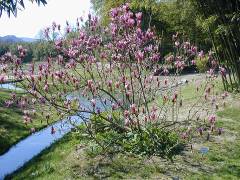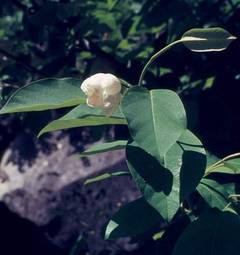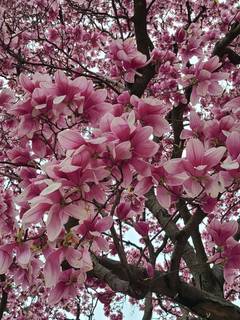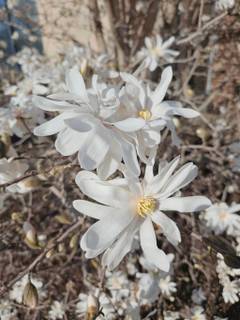
© Mfield, Matthew Field, http://www.photography.mattfield.com, some rights reserved (CC-BY-SA) · Wikimedia Commons
Magnolia, Genus, campbellii, Species,
- Genus & species
Campbell's magnolia
E Himalayas (Nepal, Sikkim, Bhutan, NE India, N Myanmar; temperate cloud forests; 8000-10000 ft / 2400-3000 m)
Overview
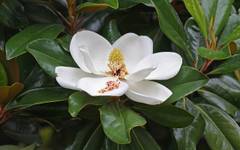
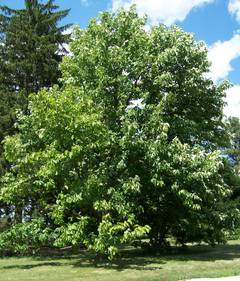
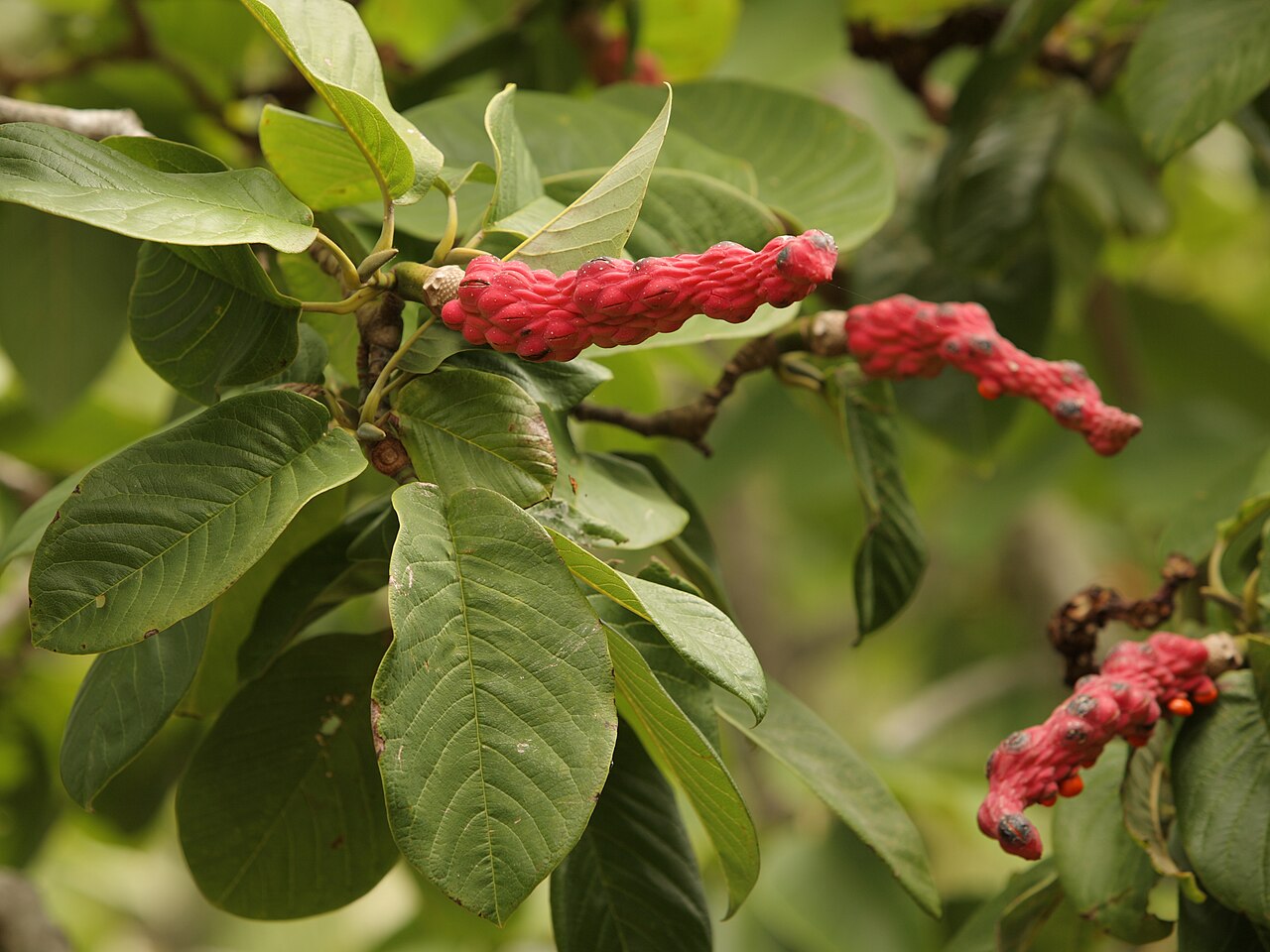
Magnolia campbellii is a large, deciduous tree reaching 40–60 feet (12–18 m) tall in cultivation (to 150 feet / 45 m in habitat) with a spread of 30–40 feet (9–12 m) and a broadly pyramidal to rounded crown. Native to the eastern Himalayas, this species produces the largest flowers of any temperate magnolia: goblet-shaped to cup-and-saucer-shaped blooms 8–12 inches (20–30 cm) across with 12–16 thick tepals, deep rose-pink on the exterior and paler pink to white within, on bare branches in February–March. The flowers take 15–30 years to appear from seed-grown trees—grafted plants bloom at 10–15 years. The alternate, elliptic to obovate leaves are 6–10 inches (15–25 cm) long, dark green above with a slightly pubescent underside. Cone-like aggregate fruit clusters 4–6 inches (10–15 cm) long ripen to pink-red in autumn. The bark is smooth and gray. Growth rate is moderate. Hardy to zone 7. The flowers are susceptible to late frost damage in exposed positions.
Native Range
Magnolia campbellii is native to the eastern Himalayas—Nepal, Sikkim, Bhutan, northeastern India (Assam, Arunachal Pradesh), and northern Myanmar—in temperate cloud forests at 8,000–10,000 feet (2,400–3,000 m) elevation.Suggested Uses
Planted as a specimen tree in large gardens, parks, and estates at 30–40 foot (9–12 m) spacing. The February–March bloom on bare branches requires a sheltered, frost-free position. The large mature size (40–60 feet) and the 15–30 year wait for flowers from seed require long-term planning. Late frost destroys the flowers in exposed sites. Not suitable for small gardens, cold inland valleys, frost pockets, or positions exposed to cold winds. Restricted to mild, maritime climates in North America (Pacific Northwest coastal, mild Southeast).How to Identify
Appearance
Size & Dimensions
Height40' - 60'
Width/Spread30' - 40'
Bloom Information
Goblet-shaped to cup-and-saucer-shaped flowers 8–12 inches (20–30 cm) across with 12–16 thick tepals, deep rose-pink exterior and paler pink to white interior, on bare branches in February–March. Flowers take 15–30 years from seed, 10–15 years from grafts. Bloom duration is 2–3 weeks. Flowers are highly susceptible to late frost damage. Cone-like fruit clusters 4–6 inches (10–15 cm) ripen pink-red in autumn.
Detailed Descriptions
Flower Description
Deep rose-pink exterior, paler pink to white interior; goblet to cup-and-saucer shape 8-12 inches; largest temperate magnolia flowersFoliage Description
Dark green above, slightly pubescent underside; alternate elliptic to obovate 6-10 inchesGrowing Conditions
Sun Requirements
Requires 4-8 hours of direct sunlight daily
• Full Sun: 6+ hours of direct sunlight
• Partial Shade: 3-6 hours of direct sunlight
• Full Shade: Less than 3 hours of direct sunlight
Care & Maintenance
Care Guide
Plant in full sun to partial shade in moist, rich, well-drained, acidic soil (pH 5.0–6.5). Hardy to zone 7. Requires a sheltered position protected from late frosts and cold winds—the early flowers are easily damaged. Requires high rainfall or supplemental irrigation. Mulch the root zone deeply. Transplant balled-and-burlapped in spring. Slow to establish. The long juvenile period (15–30 years from seed) requires patience—grafted plants reduce this to 10–15 years.Pruning
Minimal pruning required. Remove dead, crossing, or damaged branches in late spring after flowering. Do not prune in autumn or winter. The large mature size requires adequate space at planting rather than management through pruning.Pruning Schedule
Prune: May–June
late spring