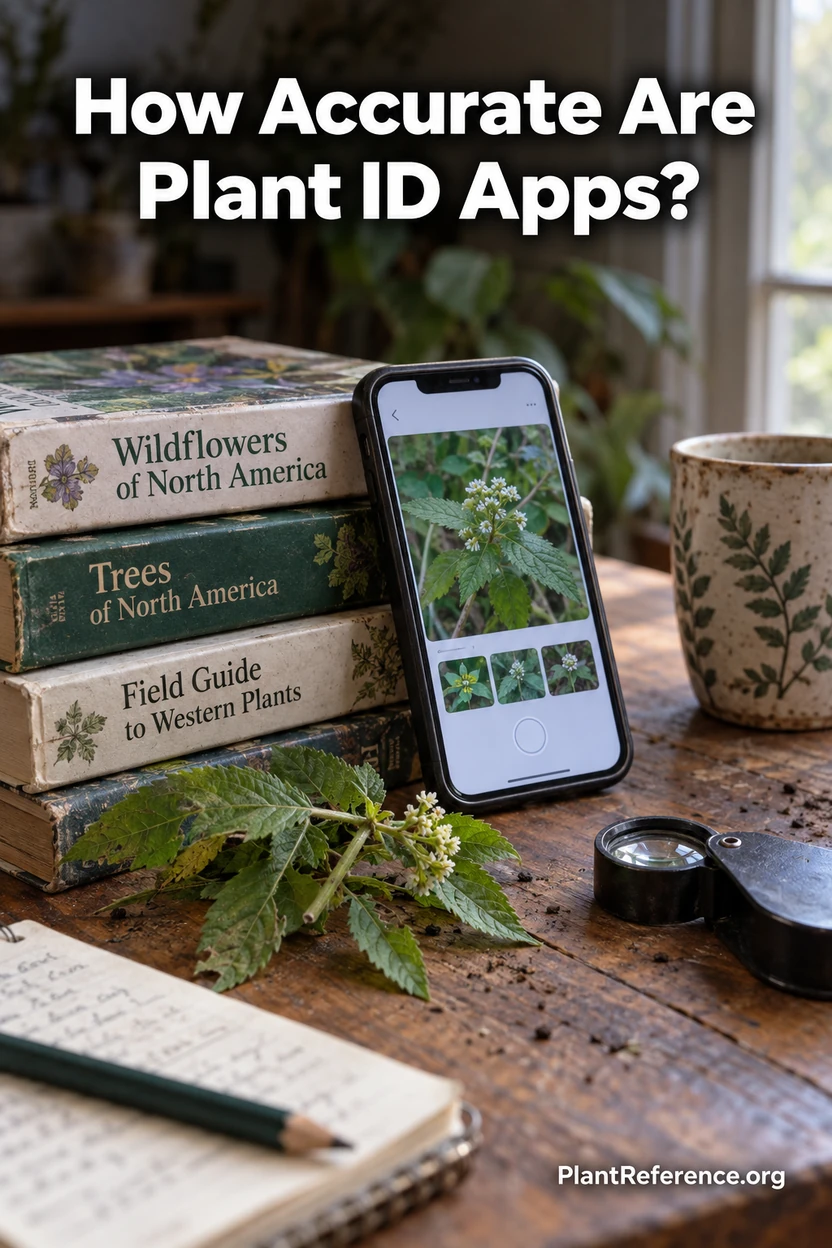
Plant Identification App Accuracy: Why Apps Get It Wrong
Pets & Toxicity
Recorded toxicity for plants linked in this guide. An unknown status is not a safety assessment.
Toxicodendron radicans — Toxicity Warning
Toxic to pets and humansView Toxicodendron radicans plant profile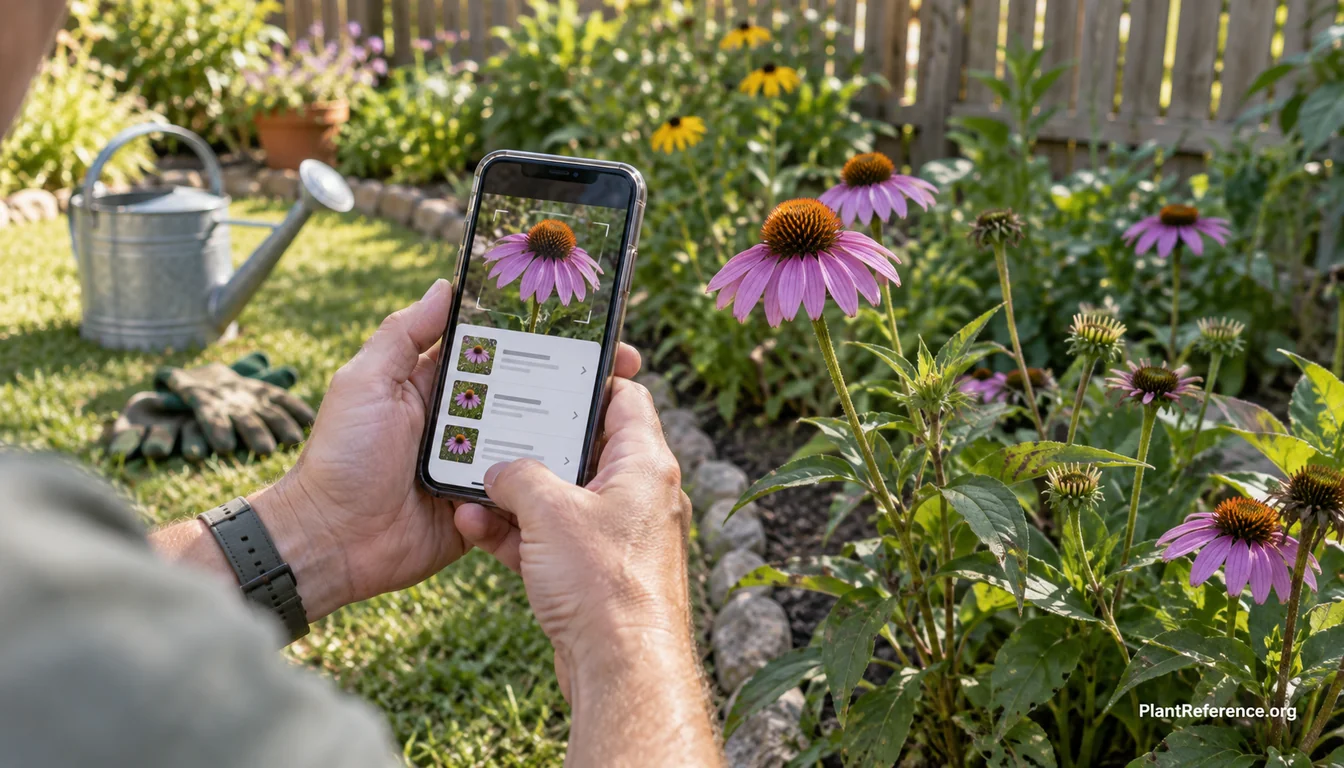
— Image © PlantReference.org 2026
Plant identification apps have put a botanist in everyone's pocket, and on a good day they feel like magic. Point your phone at a flower, and seconds later you have a name. But anyone who uses these tools regularly learns the same lesson: their accuracy is wildly inconsistent. The same app that nails a garden rose might confidently mislabel a roadside weed as something harmless when it is anything but. Understanding why apps get it wrong is the key to getting them right.
How Accurate Are Plant Identification Apps, Really?
There is no single accuracy number, because performance depends heavily on which app you use and what you photograph. Independent comparisons put the range somewhere between 40% and 98%, and that spread tells the real story. Apps perform best on showy, well-documented ornamentals and worst on subtle groups separated by tiny structural details.
App | Approx. Accuracy | Strengths | Weaknesses |
|---|---|---|---|
PictureThis | High (~78-98%) | Very fast; adds disease and care tips | Often shows one suggestion; pushes subscriptions |
PlantNet | Moderate (~68-80%) | Community-backed; multiple ranked options | Less polished interface |
iNaturalist | Moderate (~40-87%) | Scientific focus; expert verification | Slower; conservative with species-level IDs |
Seek | Low-Moderate | Kid-friendly; private; gamified | Struggles with sedges and uncommon weeds |
Flora Incognita | High (~8.9/10) | Shows confidence levels; multiple photos | Strongest for European flora |
Notice that the apps offering ranked lists and confidence levels—PlantNet, iNaturalist, and Flora Incognita—tend to be more trustworthy than those that hand you a single confident answer. A single suggestion hides the app's uncertainty, while a ranked list shows you when the top three guesses are botanically unrelated, which is your cue to dig deeper. If you want to understand the structures these algorithms are weighing, start with How to Identify Any Plant: A Beginner's Guide to Leaves, Flowers, and Stems.
The Most Common Mistakes Apps Make
App errors are rarely random. They cluster around a few predictable failure points, and once you know them you can anticipate when a result is likely wrong.
Confusing close lookalikes within a difficult family, such as the carrot family, where deadly 🌿Conium maculatum and harmless 🌿Daucus carota look nearly identical in a quick photo.
Defaulting to common species, so an uncommon native gets labeled as a familiar garden plant it superficially resembles.
Failing on grasses, sedges, and rushes, which require stem cross-sections and floral details no casual photo captures.
Misreading cultivated varieties and hybrids that do not exist cleanly in training data.
Returning a confident wrong answer with no warning, which is most dangerous with toxic plants and edible-foraging mistakes.
The toxic-plant failure mode deserves emphasis. Apps regularly stumble on poison ivy (🌿Toxicodendron radicans), wild parsnip, and the hemlocks, precisely the plants where being wrong has consequences. Never let an app be your only authority on whether a plant is safe to touch or eat. For the carrot family specifically, the stem and bract details that distinguish deadly species are the kind a photo often misses entirely, which is why our guide to the Flower Identification Guide: Petals, Shape & Color Explained stresses inflorescence structure over a single bloom shot.
Why Photo Quality Decides Everything
Here is the uncomfortable truth: most app errors are photographer errors. The algorithm can only work with what you show it, and a single blurry photo of one leaf simply does not contain enough information to separate similar species. Professional botanists never identify a plant from one image, and neither should an app.
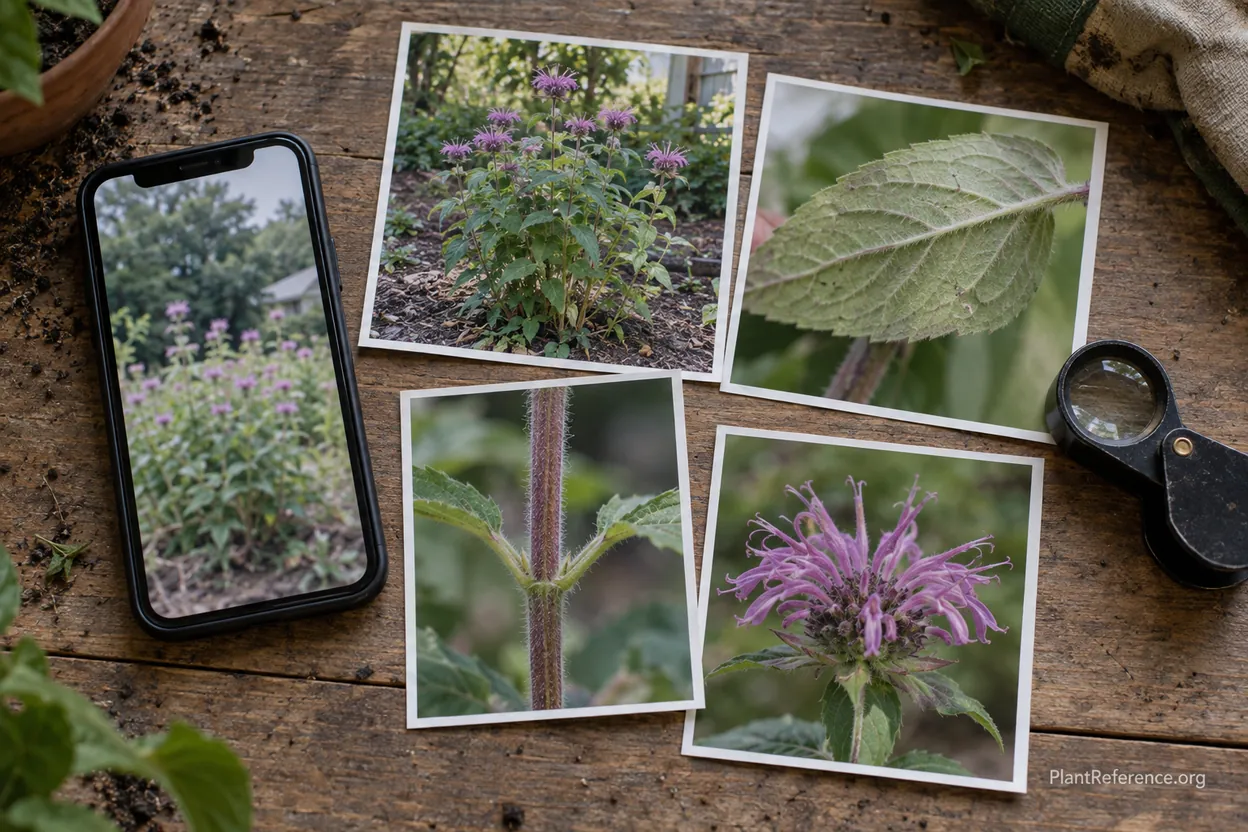
A complete observation captures the features that actually carry diagnostic weight. The same protocol that field botanists use so an expert can verify a specimen remotely works just as well for feeding an app the data it needs.
Habit and environment: a wide shot of the whole plant and its surroundings.
Stem and branching: a clear view of how leaves attach, including whether they are alternate or opposite.
Leaf detail: close-ups of both the upper and lower surfaces, since hairs, glands, and veins often show on only one side.
Reproductive structures: front and side views of the flower, including the bracts beneath the flower head.
Fruits and seeds: frequently the single most definitive trait when present.
Scale: a coin, ruler, or finger in the frame to convey size.
Leaf attachment matters more than beginners expect. Whether leaves sit alternate or opposite on the stem instantly narrows the possibilities, a trick covered in Alternate vs Opposite Leaf Arrangement: The MADCapHorse Mnemonic Explained. Photographing that single feature clearly can flip an app from wrong to right. The same goes for the leaf characteristics in How to Identify Trees by Their Leaves: Shapes, Margins, and Venation Explained, which apps lean on heavily for woody plants.
Different plant groups demand different evidence. Ferns require the underside of the frond to show the spore clusters. Carrot-family plants need a close-up of the fruit, because their flowers are nearly identical across genera. Cacti need pads, spines, and a side view of the flower. Aquatic plants photograph better submerged in a shallow bowl of clear water than through a pond's surface. Matching your photos to the group is how you stop fighting the algorithm.
How to Get Better Results Every Time
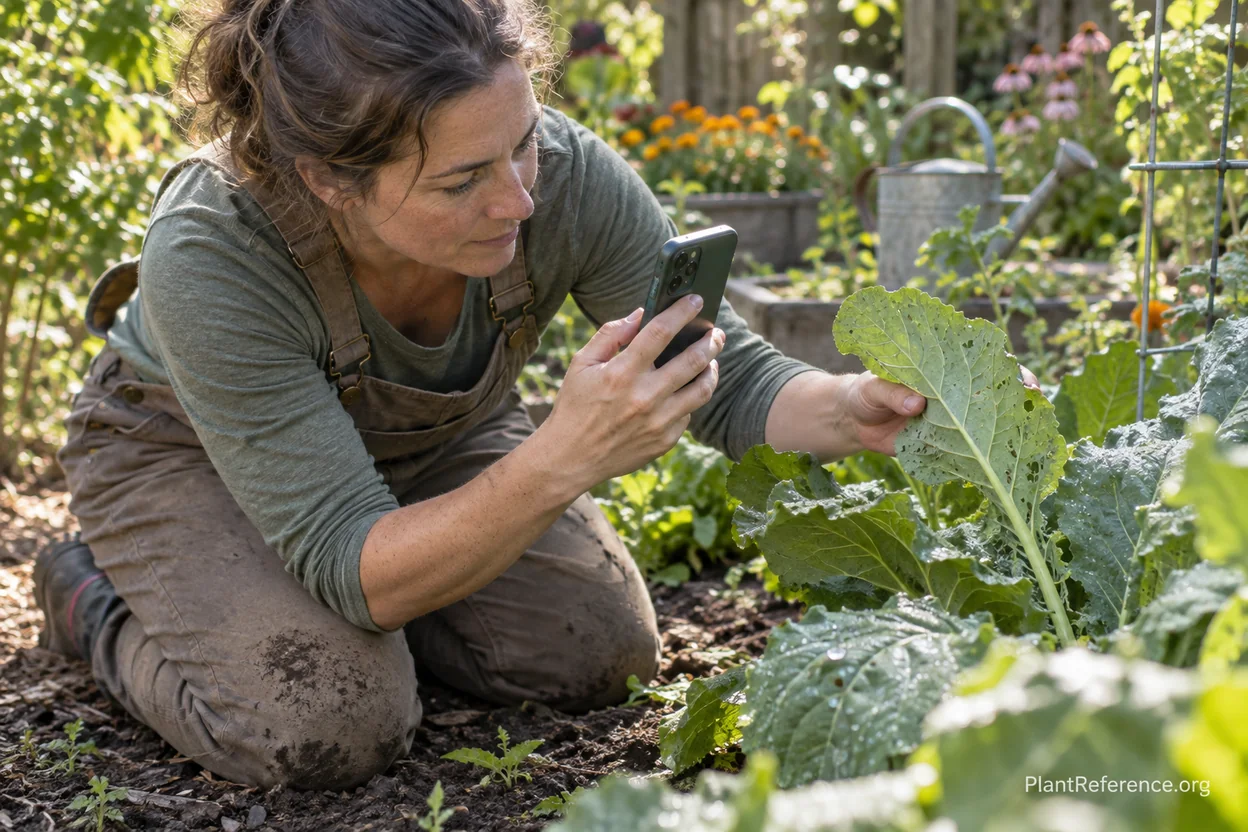
Improving your hit rate is less about chasing the perfect app and more about building a repeatable habit. A few practices dramatically raise accuracy across every tool.
First, use more than one app and compare. If PlantNet, iNaturalist, and Flora Incognita all converge on the same species, your confidence should rise; if they disagree, treat every answer as tentative. Apps offering ranked lists make this easy because you can see whether the runners-up are close relatives or wild guesses.
Second, cross-check against an online key or database rather than stopping at the app's suggestion. Tools like Go Botany from the Native Plant Trust, the USDA PLANTS Database, and the Lady Bird Johnson Wildflower Center let you verify range, habitat, and structure. A key walks you through a deliberate process of elimination, which is the opposite of an app's instant guess. If you have never used one, How to Use a Dichotomous Key: Step-by-Step Guide to Keying Out Any Plant makes the method approachable.
Third, sanity-check the suggestion against geography and habitat. If an app names a desert species while you are standing in a New England wetland, the answer is almost certainly wrong regardless of how confident it looks. Apps do not always weigh location, but you should.
Finally, learn the hard groups yourself. No app reliably handles grasses, sedges, and rushes, so knowing that sedges have triangular stems and grasses have jointed nodes will outperform any algorithm. The same is true for sorting lawn grasses in What Type of Grass Do I Have? Identify Your Lawn in 5 Steps or distinguishing the needled evergreens in How to Identify Conifers: Pines, Spruces, and Firs Simplified.
This is where a learning tool complements an identification tool. Apps identify plants for you; PlantReference teaches you to identify plants yourself. Our database pairs ID-focused descriptions with multiple images per species, and the flashcard system shows several photos of each plant so you learn the organism rather than one lucky snapshot. Spaced-repetition quizzes build the long-term recognition that turns you from someone who depends on an app into someone who can check the app's work.
When to Stop Trusting the App
There are moments when "pretty sure" is not good enough. Any time the answer affects safety—foraging, handling a possibly toxic plant, or deciding whether a plant near children or pets is dangerous—an app suggestion is a starting point, never a verdict. The same caution a homeowner applies in Is My Tree Dangerous? 10 Warning Signs Every Homeowner Should Know applies here: when the stakes are high, verify with an expert or an authoritative key.
Apps also struggle with cultivated houseplants and their many cultivars, where subtle leaf-pattern differences separate varieties. Sorting something like the dozens of look-alikes in Pothos Varieties: 15 Types and How to Identify Them often defeats image recognition entirely. And when you are clearing unknown plants from a bed, knowing what you are pulling matters; our guide to Raised Bed Weeds: Prevention Strategies and Control Methods pairs naturally with careful identification.
The bottom line is that plant identification apps are genuinely useful tools that get better every year, but they reward users who understand their limits. Feed them complete, well-chosen photos, compare multiple results, cross-check against a key, and lean on your own growing knowledge for the groups apps handle poorly. Do that, and the app becomes what it should be: a fast first opinion you are equipped to confirm or correct.
Frequently Asked Questions
Reading about plants and recognising them are different skills. These three build the second.
- Daily PlantIdentify the day’s mystery plant from a close-up photograph.
- Keyed OutWork a dichotomous key, lead by lead, to name a hidden specimen.
- Name That PlantName a specimen from botanical clues dealt hardest first.
Free to play, no account needed
Tagged with
Sarah earned her doctorate in plant biology and spent time working in botanical garden education before transitioning to freelance writing and consulting. Now based in Portland, Oregon, she teaches plant identification workshops at local community centers and maintains a modest collection of over 60 houseplants in her small apartment. Sarah specializes in helping beginners understand plant science without the jargon—her approach focuses on practical observation over theory. She's killed her fair share of fiddle leaf figs and finally cracked the code on keeping them alive.