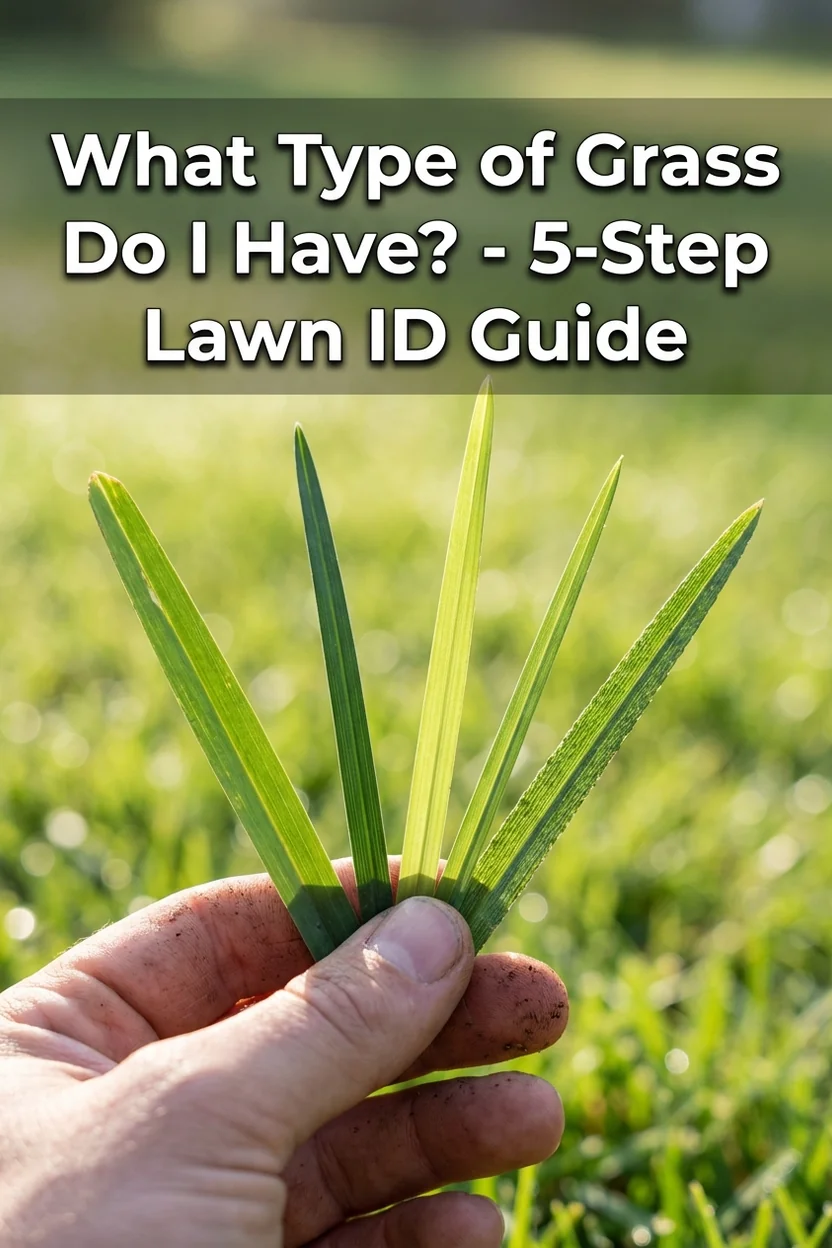
What Type of Grass Do I Have? Identify Your Lawn in 5 Steps
Pets & Toxicity
Recorded toxicity for plants linked in this guide. An unknown status is not a safety assessment.
— Image © Plant Reference 2026
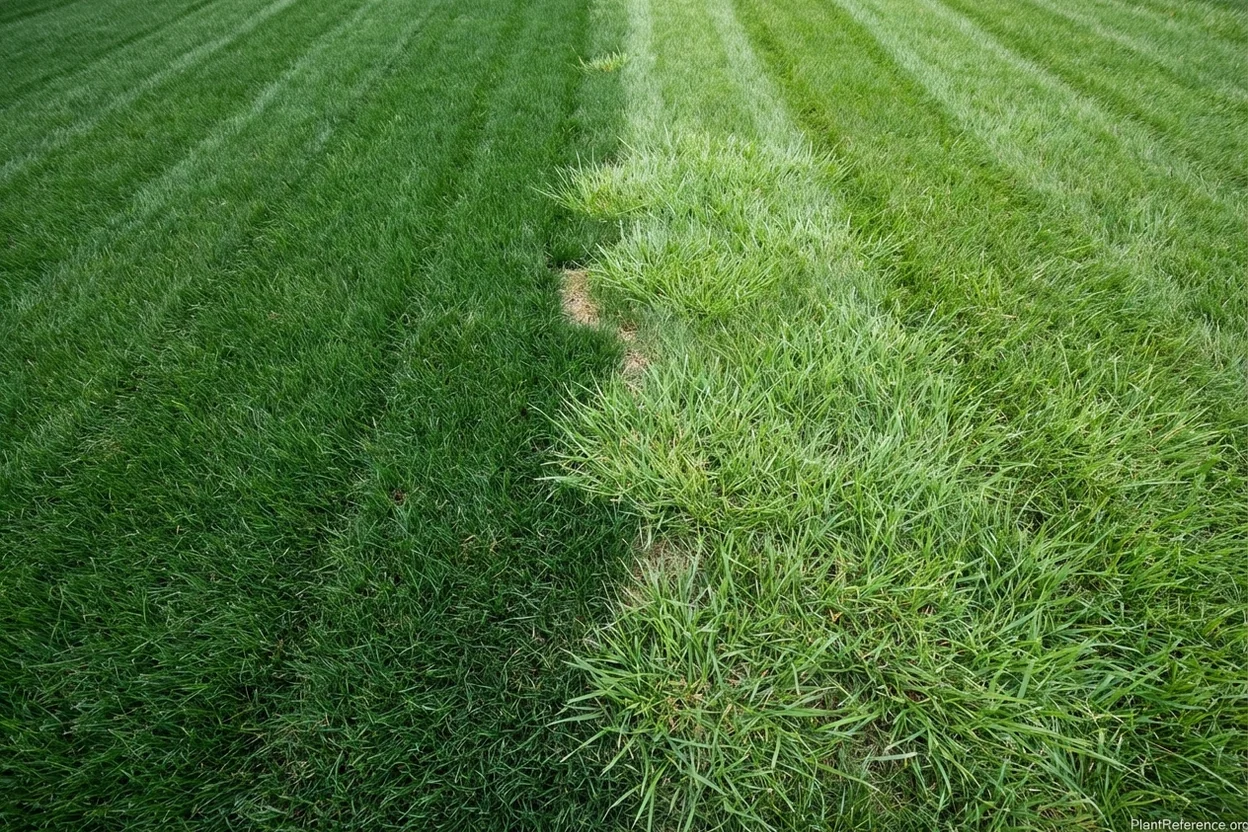
I get calls every week from homeowners who have been dumping the wrong fertilizer on their lawn, mowing at the wrong height, or overseeding with a grass species that does not match what they already have. The patchwork quilt look — dark clumps next to light patches, coarse texture mixed with fine — almost always traces back to one problem: they never identified what grass they were growing in the first place. Everything in lawn care flows from that single piece of information.
Why Identification Matters Before Anything Else
Mowing height, fertilization schedule, watering frequency, herbicide selection, and overseeding decisions all depend on your grass species. 🌿Cynodon dactylon (sy-NO-don DAK-tih-lon) bermudagrass wants to be mowed at 1-2 inches (3-5 cm) and fertilized in summer. 🌿Festuca arundinacea tall fescue needs 3-4 inches (8-10 cm) and fall fertilization. Apply a bermudagrass program to a tall fescue lawn and you will kill it by August. Lawn Care Schedule by Month: Your Complete Cool-Season Grass Calendar
Misidentification also leads to overseeding disasters. Mixing a fine-textured grass like 🌿Poa pratensis Kentucky bluegrass with a coarse-textured 🌿Festuca arundinacea tall fescue creates visible patches that look worse than the thin spots you were trying to fix. Each species has a distinct blade width, color, and texture that stands out when mixed with the wrong partner.
The good news: you do not need a lab or a degree to identify your grass. Five simple observations — blade width, tip shape, growth habit, color, and seasonal pattern — will narrow it down to one or two species in under five minutes.

Step 1: Check the Blade Width
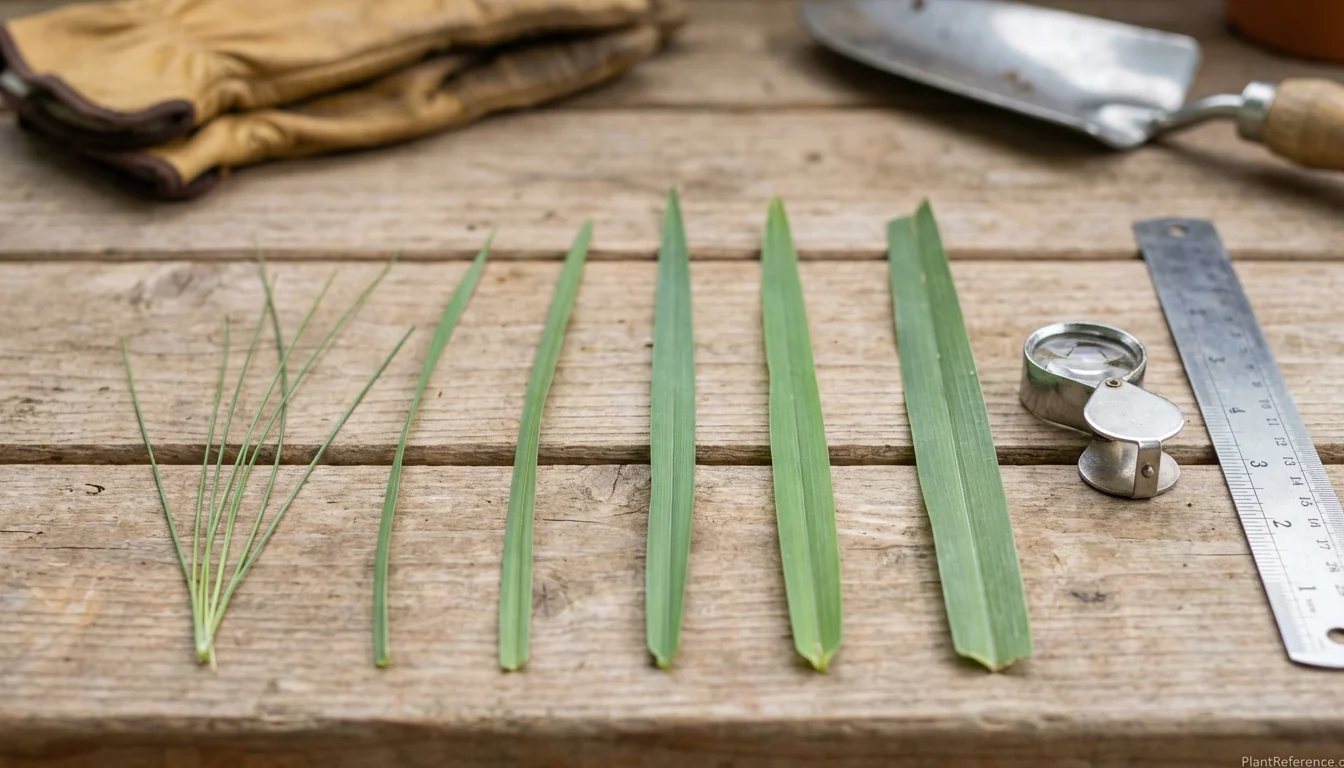
Pull a single grass blade from your lawn and hold it flat. Blade width is the fastest way to narrow your options to a shortlist.
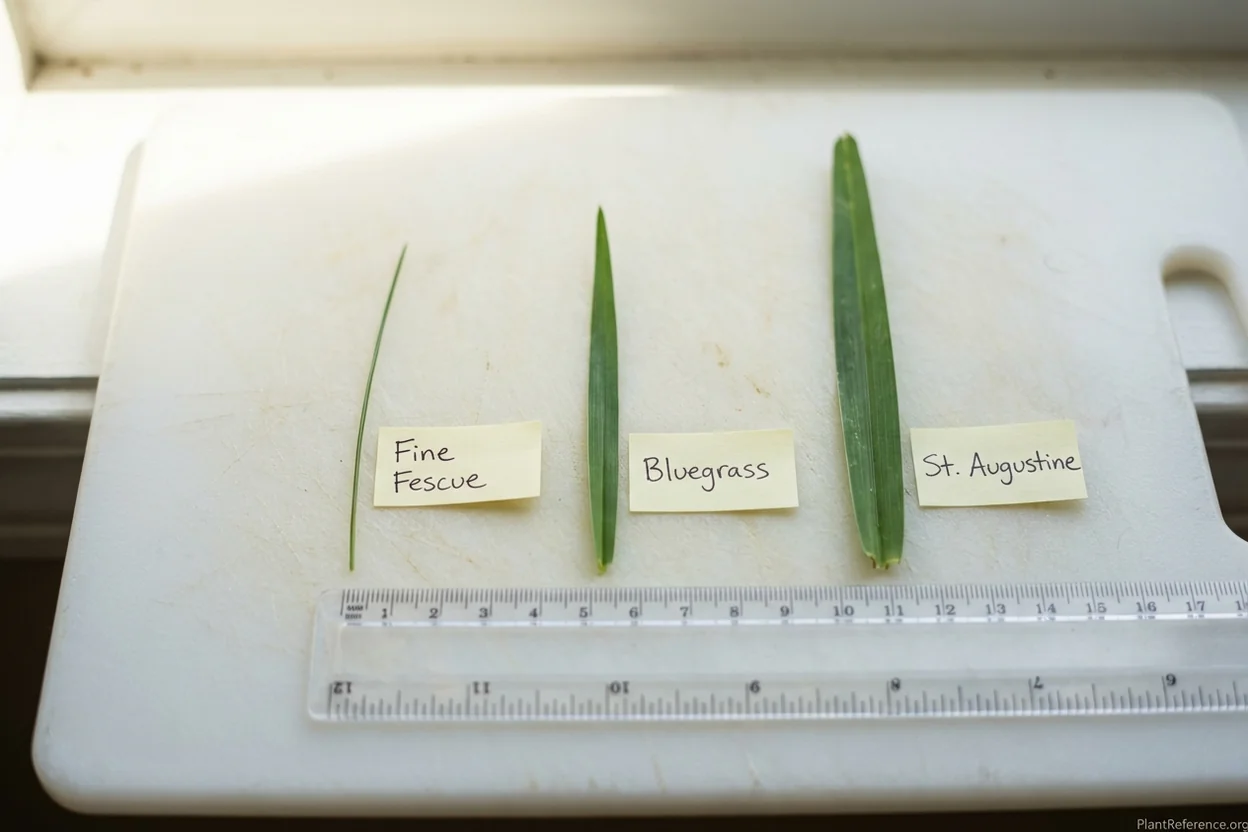
Fine texture (under 3mm wide): You likely have fine fescue, 🌿Cynodon dactylon bermudagrass, or 🌿Zoysia japonica zoysiagrass. Fine fescues feel almost needle-like — the narrowest blades of any lawn grass. 🌿Cynodon dactylon bermudagrass blades are fine but wiry and stiff. 🌿Zoysia japonica zoysiagrass is fine to medium with a distinctive dense, carpet-like feel underfoot.
Medium texture (3-6mm wide): The most common range. 🌿Poa pratensis Kentucky bluegrass and 🌿Lolium perenne perennial ryegrass both fall here. These are the standard "lawn look" grasses most people picture.
Coarse texture (over 6mm wide): You are looking at either 🌿Festuca arundinacea tall fescue or 🌿Stenotaphrum secundatum St. Augustinegrass. 🌿Festuca arundinacea tall fescue has wide blades with a rough texture on the upper surface — run your finger from tip to base and you will feel the resistance. 🌿Stenotaphrum secundatum St. Augustinegrass has the widest blades of any common lawn grass, flat and rounded at the tip.
Step 2: Look at the Blade Tip
The shape of the grass blade tip is one of the most reliable identification features, and most people never think to check it.
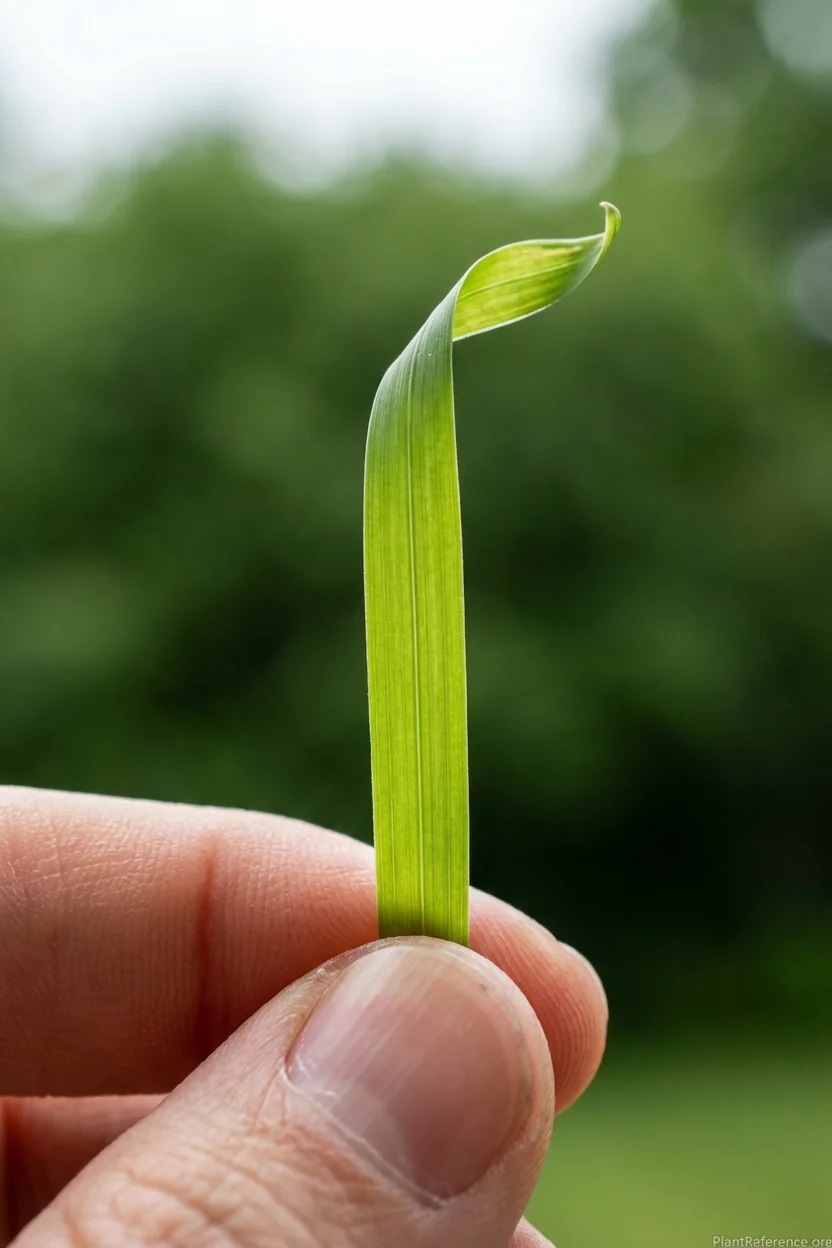
Boat-shaped tip: This is the signature of 🌿Poa pratensis Kentucky bluegrass. The blade tip curves upward and pinches together like the prow of a canoe. No other common lawn grass has this feature. If you see boat-shaped tips, you have Kentucky bluegrass — identification complete.
Pointed tip: Most grasses taper to a sharp or slightly rounded point. 🌿Festuca arundinacea Tall fescue, 🌿Lolium perenne perennial ryegrass, fine fescues, and 🌿Zoysia japonica zoysiagrass all have pointed tips. You will need other features to distinguish between them.
Rounded or blunt tip: 🌿Stenotaphrum secundatum St. Augustinegrass and 🌿Cynodon dactylon bermudagrass both have tips that are rounded rather than sharply pointed. 🌿Stenotaphrum secundatum St. Augustine tips are broad and flat. 🌿Cynodon dactylon bermudagrass tips are smaller and rounder.
The "Train Tracks" Test for Kentucky Bluegrass
Beyond the boat-shaped tip, 🌿Poa pratensis Kentucky bluegrass has another distinctive feature: two parallel light-colored lines running down the center of the blade on either side of the midrib. Turf professionals call these "train tracks." Pull a blade, hold it up to the light, and look for these translucent parallel lines. No other common lawn grass has this combination of boat tip plus train tracks. Cool-Season vs Warm-Season Grass: Which Type Is Right for Your Lawn?
Step 3: Examine the Growth Habit
How your grass spreads tells you both what species it is and how it repairs damage.
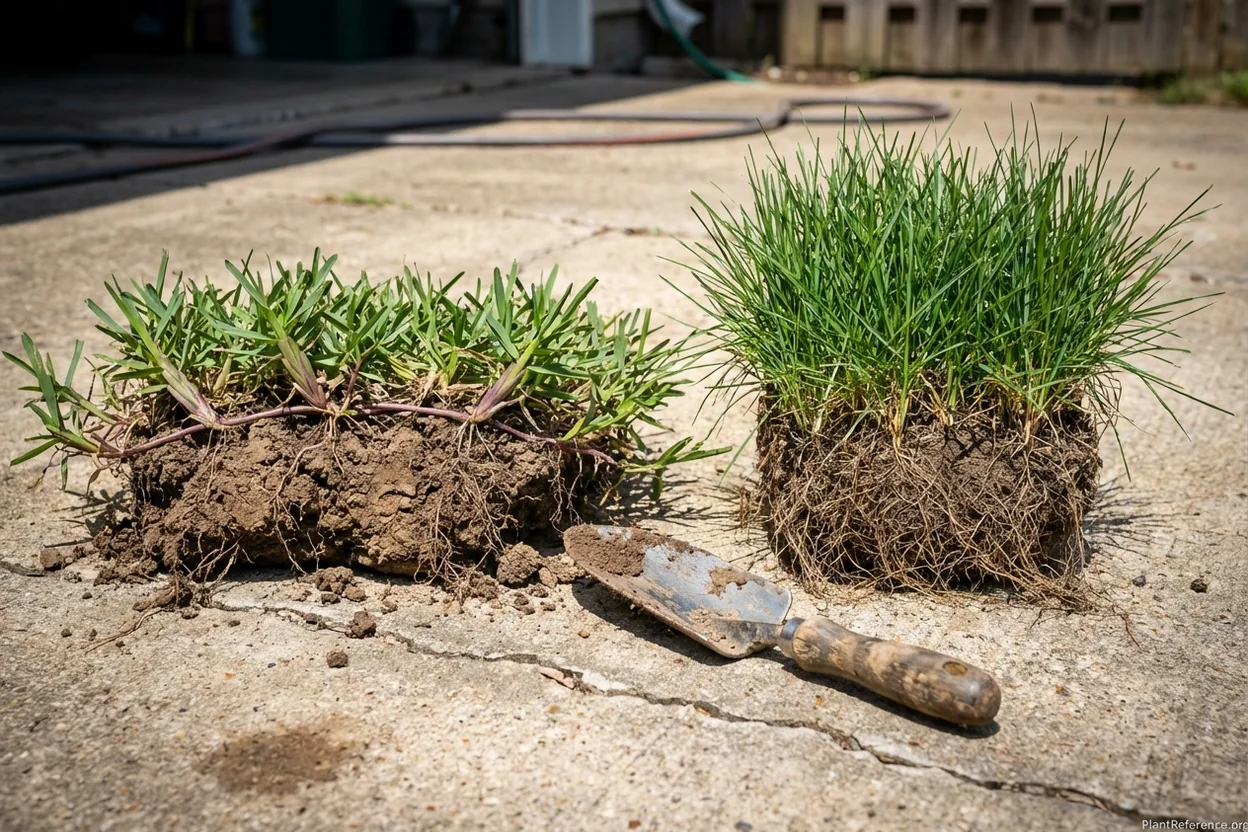
Stoloniferous (above-ground runners): Part the grass canopy and look at the soil surface. If you see horizontal stems running along the ground with roots and shoots emerging at nodes, you have a stoloniferous grass. 🌿Stenotaphrum secundatum St. Augustinegrass has thick, visible stolons — sometimes as thick as a pencil. 🌿Cynodon dactylon Bermudagrass also spreads by stolons, but its runners are thinner and more wiry. 🌿Bouteloua dactyloides Buffalograss produces fine stolons that creep outward slowly.
Rhizomatous (underground runners): If the grass fills in bare spots from underground without visible surface runners, it spreads by rhizomes. 🌿Poa pratensis Kentucky bluegrass is the classic rhizomatous lawn grass — its underground stems allow it to self-repair from traffic damage. You will not see the rhizomes without digging, but you will notice the lawn filling gaps on its own.
Both stolons and rhizomes: 🌿Cynodon dactylon Bermudagrass and 🌿Zoysia japonica zoysiagrass use both spreading mechanisms, making them the most aggressive colonizers. This is why bermuda is so hard to keep out of garden beds — it attacks from above and below ground simultaneously.
Bunch-type (no lateral spread): If your grass grows in distinct clumps with no runners, you have a bunch-type species. 🌿Festuca arundinacea Tall fescue, 🌿Lolium perenne perennial ryegrass, and fine fescues are all bunch-type grasses. They expand only through tillering — producing new shoots from the crown — and cannot fill bare spots on their own. Bunch-type lawns require overseeding to repair damage. Best Grass for Your Climate Zone: The Complete Selection Guide
Step 4: Note the Color
Grass color varies enough between species to serve as a useful confirmation tool, though it should not be your sole identifier since color shifts with fertility, season, and water.
Blue-green: 🌿Poa pratensis Kentucky bluegrass is named for its distinctive blue undertone. In healthy, well-fed lawns, the blue-green hue is unmistakable compared to the pure green of other cool-season species. This is most visible in spring and fall during peak growth.
Dark green: 🌿Festuca arundinacea Tall fescue and 🌿Lolium perenne perennial ryegrass are both dark green. 🌿Lolium perenne Ryegrass has a particularly shiny underside to the leaf blade — flip a blade over and look for a glossy dorsal surface that reflects light. This sheen is absent in tall fescue.
Yellow-green or light green: 🌿Stenotaphrum secundatum St. Augustinegrass and centipedegrass both tend toward a lighter, yellow-green color. If your grass is light green and you live in the Southeast or Gulf Coast, this narrows the field quickly.
Medium green with dense texture: 🌿Zoysia japonica Zoysiagrass produces a medium to dark green color with an extremely dense, carpet-like appearance. When dormant in winter, it turns a distinctive straw or tan color that differs from the gray-brown of dormant bermuda.
Purple stem bases: If you pull a grass plant and the stem base near the soil line shows a reddish-purple color, you are likely looking at 🌿Lolium perenne perennial ryegrass. This is one of the most reliable separation features between ryegrass and the visually similar 🌿Poa pratensis Kentucky bluegrass. Raised Bed Soil pH Problems: Testing, Adjusting, and Maintaining Balance
Step 5: Observe the Seasonal Growth Pattern
This is the simplest step and requires no magnifying glass — just patience across a few months.
Active in spring and fall, stressed in summer: You have a cool-season grass. These species grow most vigorously when temperatures sit between 60-75°F and slow down or go dormant in hot weather. 🌿Poa pratensis Kentucky bluegrass, 🌿Festuca arundinacea tall fescue, 🌿Lolium perenne perennial ryegrass, and fine fescues are all cool-season grasses. They dominate lawns in the Northeast, Midwest, Pacific Northwest, and higher elevations.
Active in summer, dormant (brown) in winter: You have a warm-season grass. These species peak when temperatures reach 80-95°F and go dormant after the first frost when soil drops below 55°F. 🌿Cynodon dactylon Bermudagrass, 🌿Stenotaphrum secundatum St. Augustinegrass, 🌿Zoysia japonica zoysiagrass, centipedegrass, and bahiagrass are warm-season species. They dominate the Southeast, Gulf Coast, and Southwest.
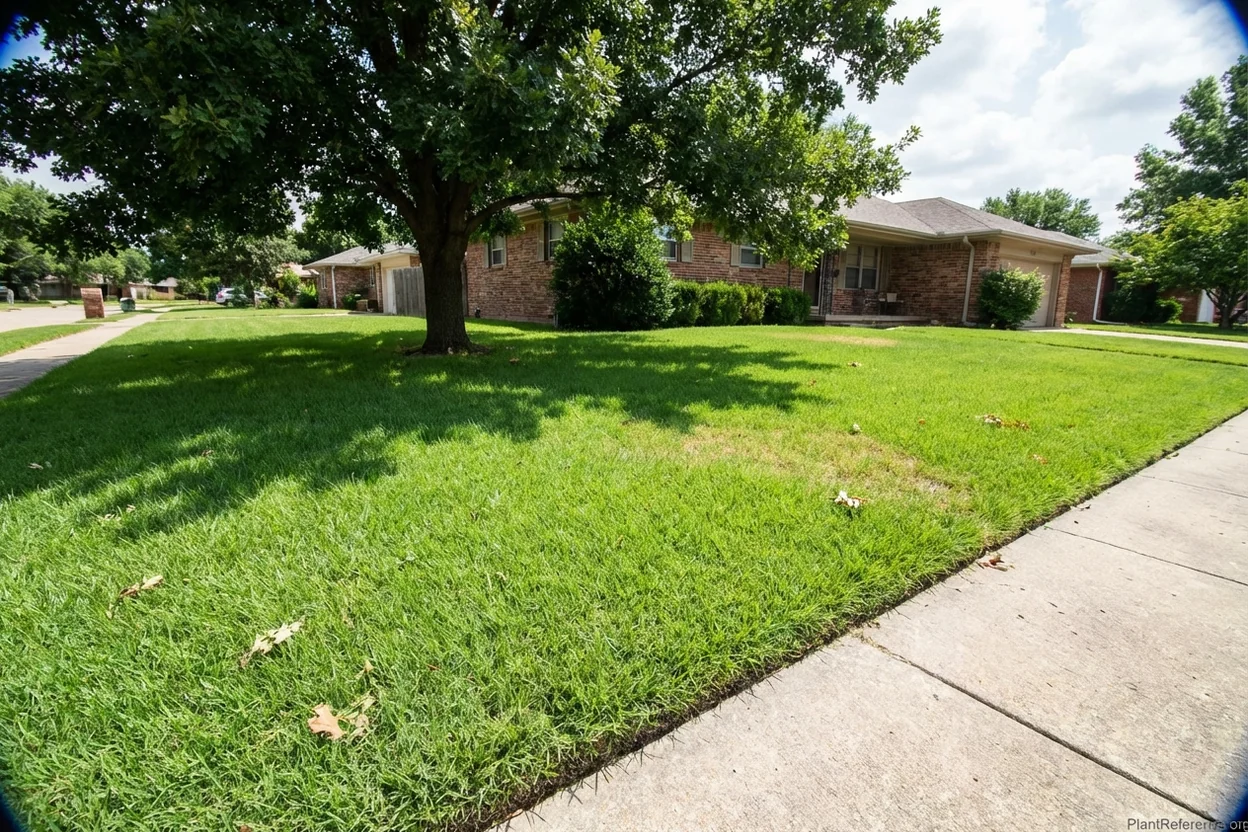
If your lawn never looks great in either season, you likely live in the transition zone — roughly Virginia through Missouri and into Kansas — where neither group thrives year-round. Transition zone lawns commonly use heat-tolerant cool-season grasses (🌿Festuca arundinacea tall fescue) or cold-hardy warm-season grasses (🌿Zoysia japonica zoysiagrass, hybrid bermuda). Best Soil Mix for Raised Beds: Creating the Perfect Growing Medium
Quick Identification Matrix
Use this table to cross-reference your observations from the five steps above. Match your blade width, tip shape, and growth habit to find your species.
Species | Blade Width | Tip Shape | Growth Habit | Color | Season |
|---|---|---|---|---|---|
🌿Poa pratensis Kentucky Bluegrass | Medium (3-5mm) | Boat-shaped | Rhizomatous | Blue-green | Cool |
🌿Festuca arundinacea Tall Fescue | Coarse (5-8mm) | Pointed | Bunch-type | Dark green | Cool |
🌿Lolium perenne Perennial Ryegrass | Medium (3-5mm) | Pointed | Bunch-type | Dark green, shiny underside | Cool |
Fine Fescues | Fine (1-2mm) | Pointed | Bunch/Rhizome | Medium green | Cool |
🌿Cynodon dactylon Bermudagrass | Fine (2-3mm) | Rounded | Stolons + Rhizomes | Medium green | Warm |
🌿Stenotaphrum secundatum St. Augustine | Very coarse (8-12mm) | Rounded/blunt | Stoloniferous | Yellow-green | Warm |
🌿Zoysia japonica Zoysiagrass | Fine-medium (2-4mm) | Pointed | Stolons + Rhizomes | Medium-dark green | Warm |
🌿Bouteloua dactyloides Buffalograss | Fine (2-3mm) | Curling | Stoloniferous | Gray-green | Warm |
The Eight Most Common Lawn Grasses
Cool-Season Grasses
🌿Poa pratensis Kentucky Bluegrass**: The most popular cool-season lawn grass. Self-repairs through rhizomes. Needs full sun, regular watering, and moderate to high fertility. Shallow root system makes it vulnerable to summer drought. Mow at 2.5-3.5 inches (6-9 cm). Found across the Northeast, upper Midwest, and higher elevations nationwide.
🌿Festuca arundinacea Tall Fescue**: The transition zone workhorse. Deep root system (2-3 feet / 60-90 cm) provides the best drought tolerance of any cool-season grass. Coarse texture does not blend well with other species — overseed only with the same type. Mow at 3-4 inches (8-10 cm). Dominates lawns from Virginia through Missouri.
🌿Lolium perenne Perennial Ryegrass**: Germinates fastest of any lawn grass (5-10 days). Used for quick patches and winter overseeding of warm-season lawns. Fine texture, shiny underside, purple stem base. Does not tolerate extreme heat or cold. Often blended with Kentucky bluegrass. Mow at 2-3 inches (5-8 cm).
Fine Fescues: The shade champions. Includes creeping red fescue, chewings fescue, hard fescue, and sheep fescue. Needle-like blades, lowest fertilizer requirements of any lawn grass (1-2 lbs nitrogen per 1,000 sq ft per year). Poor traffic tolerance. Can be left unmowed for a naturalized meadow look. Raised Bed Weeds: Prevention Strategies and Control Methods
Warm-Season Grasses
🌿Cynodon dactylon Bermudagrass**: The premier warm-season turf for sun, traffic, and drought. Spreads aggressively by both stolons and rhizomes. Demands full sun — as little as 4 hours of shade degrades performance. Goes dormant and turns brown in winter. Hybrid cultivars like 'TifTuf' and 'Tahoma 31' push cold tolerance into Zone 7. Mow at 0.5-2 inches (1-5 cm).
🌿Stenotaphrum secundatum St. Augustinegrass**: The best shade tolerance of any warm-season grass. Cannot be grown from seed — established only through sod or plugs. Thick stolons, wide flat blades. Vulnerable to chinch bugs and large patch disease. Dominates Gulf Coast and Florida lawns. Mow at 2.5-4 inches (6-10 cm).
🌿Zoysia japonica Zoysiagrass**: Forms an extremely dense, carpet-like turf. Uses roughly 50% less water than Kentucky bluegrass. Most cold-hardy warm-season option — performs into Zone 6. Slow to establish (1-2 full seasons) but requires less mowing and fertilizer once mature. Mow at 1-2 inches (3-5 cm). The Complete Guide to Raised Bed Gardening for Beginners (2025)
🌿Bouteloua dactyloides Buffalograss**: A native prairie species and the most drought-tolerant lawn grass available — survives on as little as 0.25 inches of water per week. Gray-green color with fine, curling blade tips. Low traffic tolerance. Best for low-input, naturalized lawns in the Great Plains and arid West. Mow at 2-3 inches (5-8 cm) or leave unmowed.
Not a Grass? Check for Sedges
If you find a plant in your lawn with a triangular stem — roll it between your fingers and feel for three sharp edges — you do not have a grass at all. You have nutsedge, a sedge weed that requires completely different treatment. Standard broadleaf herbicides and grassy weed killers have zero effect on sedges. You need sedge-specific products containing halosulfuron or sulfentrazone. The old turf professional's rule: "sedges have edges, rushes are round, grasses have nodes from the top to the ground." How to Build a Raised Garden Bed: Step-by-Step Construction Guide
Frequently Asked Questions
Reading about plants and recognising them are different skills. These three build the second.
- Daily PlantIdentify the day’s mystery plant from a close-up photograph.
- Keyed OutWork a dichotomous key, lead by lead, to name a hidden specimen.
- Name That PlantName a specimen from botanical clues dealt hardest first.
Free to play, no account needed
Tagged with
James is a lawn care professional in Dallas who runs a small residential maintenance company. He started mowing lawns as a teenager and worked his way up to running crews for a large landscaping firm before going out on his own. James specializes in warm-season turf grasses—Bermuda, St. Augustine, and Zoysia—and knows how to keep a lawn alive through Texas summers without wasting water. He's also experienced with the transition zone challenges that Dallas faces, where warm-season and cool-season grasses overlap. James takes a practical, science-informed approach to lawn care and pushes back on the idea that a good lawn requires heavy chemical inputs.