Bouteloua, Genus, dactyloides, Species,
- Genus & species
buffalo grass
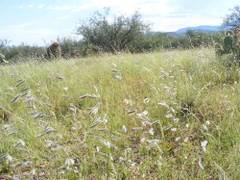
Native to the North American Great Plains from Montana south to Texas and Mexico, where the species evolved as a dominant component of the shortgrass prairie ecosystem alongside blue grama ({Bouteloua gracilis}); the species is the only native North American grass widely adopted as a lawn grass in the US, with cultivar selections from the wild populations developed for the home-lawn market through the late 20th century; the cool-summer-rainfall and dry-winter climate of the Great Plains is the species' adapted niche
Overview
Bouteloua dactyloides is buffalo grass (buffalograss), a warm-season perennial spreading grass in the grass family (Poaceae) native to the North American Great Plains, growing 2-6 inches (5-15 cm) mowed. Foliage is blue-green to gray-green narrow curling blades. Spreads by stolons (above-ground runners) without rhizomes — the lack of rhizomes separates the species from bermudagrass. The only native North American grass widely adopted as a lawn grass in the US. Warm-season grass that grows actively at 80-95°F (27-35°C). Goes dormant (turns golden-brown) from late fall through spring across a 5-7 month dormancy in northern zones. The lowest-maintenance lawn grass available: mow 2-3 times per year, no irrigation needed once established, no fertilization needed on native soils. Dioecious: male and female flowers on separate plants, with female-only cultivars producing no seed heads. Does not tolerate shade — requires 8+ hours of direct sun. Slow to establish from seed (1-2 years to full density). Does not tolerate high humidity or high rainfall — performs poorly in the eastern US. Zones 3-9. Drought-tolerant. Non-toxic. Perennial. Growth rate is slow.
Native Range
Native to North America — the Great Plains from Montana south to Texas and Mexico. The only native North American grass widely adopted as a lawn grass in the US.Suggested Uses
Used as a low-maintenance warm-season lawn grass in full sun (zones 3-9). Suited to Great Plains and western US climates where the species evolved. Naturalized meadows. No irrigation requirement. Not suited to shade positions. Not suited to humid eastern US climates where the species performs poorly. Dormant in winter (5-7 month brown period in northern zones). Native to North America. Perennial.How to Identify
Appearance
Size & Dimensions
Height2" - 6"
Width/Spread1' - 8'
Bloom Information
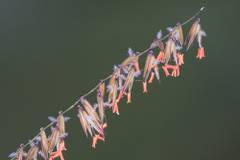
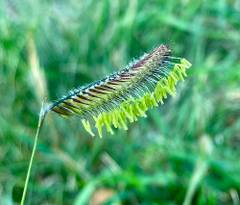
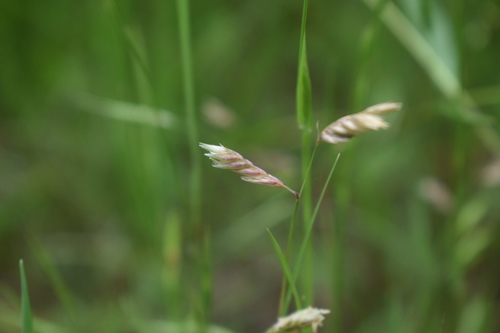
Summer (June-August). Visually understated: male flower stalks rise above the foliage as small flag-like spikes, while female flowers are hidden in the leaf axils. Wind-pollinated. Dioecious — male and female flowers carried on separate plants.
Detailed Descriptions
Foliage Description
Blue-green to gray-green narrow curling blades carried in a low spreading mat; the foliage turns golden-brown when dormant from late fall through springGrowing Conditions
Sun Requirements
Requires 8-12 hours of direct sunlight daily
• Full Sun: 6+ hours of direct sunlight
• Partial Shade: 3-6 hours of direct sunlight
• Full Shade: Less than 3 hours of direct sunlight