Bouteloua, Genus, gracilis, Species,
- Genus & species
blue grama grass
Native to central North America from Alberta, Saskatchewan, and Manitoba south through the Great Plains and southwestern United States into Mexico; dominant grass of the short-grass prairie biome covering the high plains of Colorado, Wyoming, eastern Montana, and western Kansas, Nebraska, and the Dakotas
Overview
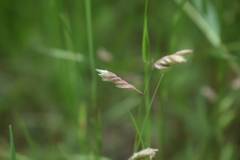
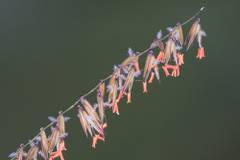
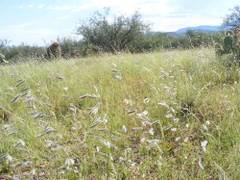
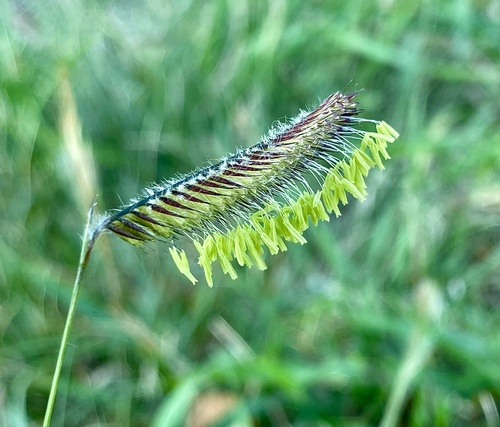
Bouteloua gracilis is a compact clump-forming warm-season native grass in the Poaceae family reaching 8–18 inches (20–45 cm) tall and 8–12 inches (20–30 cm) wide, with the foliage mound typically staying below 10 inches (25 cm) and the seed heads rising above. The species carries one to three horizontal spikelets per stem, each held perpendicular to the flowering stalk like a small flag or comb — the diagnostic morphological feature that distinguishes the species and the source of the common name 'mosquito grass'. Spikelets open purplish in midsummer and dry to tan-straw across the autumn. Blue-green to gray-green leaf blades are narrow and tend to curl at the edges during drought, a water-conservation adaptation that suits the species to low-rainfall continental climates. The species is the dominant grass of the short-grass prairie biome across the Great Plains, where seasonal rainfall runs 8–14 inches per year and other prairie grasses fail to establish — the dominance of B. gracilis across this xeric biome reflects strong drought tolerance among native North American grasses. Deep slender roots extend 4–6 feet (1.2–1.8 m) into the soil. The species tolerates an extreme range of soil types and pH levels, including alkaline clay and rocky limestone. The species is used as a low-water lawn alternative in arid climates, mowed to 2–3 inches (5–8 cm) or left unmowed as an ornamental bunchgrass. In irrigated fertile conditions, the grass loses the compact form and develops weedy-looking elongated stems. Self-sowing runs moderate. The plant gives seed for ground-nesting birds and cover for small wildlife. Not known to be toxic to pets or humans.
Native Range
Bouteloua gracilis is native to central North America, ranging from the Canadian provinces of Alberta, Saskatchewan, and Manitoba south through the Great Plains and the southwestern United States into Mexico. The species is the dominant grass of the short-grass prairie biome — a 200,000+ square-mile xeric grassland community covering the high plains of Colorado, Wyoming, eastern Montana, and western Kansas, Nebraska, and the Dakotas.Suggested Uses
Used as a low-water lawn alternative in arid and semi-arid climates, in native prairie restorations, and as an ornamental bunchgrass in dry borders and rock gardens. The compact size suits small-scale plantings and front-of-border positions. The species suits erosion control on slopes due to the deep root system extending 4–6 feet into the soil. Container culture works in pots of 3 gallons (11 liters) or more with lean media; rich potting mix produces floppy elongated stems and loss of the compact form. The horizontal flag-shaped seed heads add textural interest in naturalistic gardens, prairie-style plantings, and cut-flower arrangements where the dried spikelets hold their form for indoor use. The species is unsuitable for irrigated lawn-like settings — irrigation produces the elongated rank growth that loses the prairie character.How to Identify
Appearance
Size & Dimensions
Height8" - 1'6"
Width/Spread8" - 1'
Bloom Information
Flowering occurs from July through September. One to three flag-shaped spikelets per stem open purplish and dry to tan-straw across approximately 6 weeks. The horizontal spikelets catch light and create a textural display above the low foliage in mid-to-late summer continental sun. Seed heads persist through winter, holding their horizontal orientation on standing stems and giving year-round structural interest. Plants are wind-pollinated; insect activity at the flowers runs minimal compared to flowering forb species in the prairie community.
Detailed Descriptions
Flower Description
Purplish spikelets drying to tan-straw; flag-shaped held horizontally one to three per stemFoliage Description
Blue-green to gray-green; narrow blades that curl at the edges during droughtGrowing Conditions
Sun Requirements
Requires 6-12 hours of direct sunlight daily
• Full Sun: 6+ hours of direct sunlight
• Partial Shade: 3-6 hours of direct sunlight
• Full Shade: Less than 3 hours of direct sunlight
Care & Maintenance
Care Guide
Plant in full sun with at least 6 hours of direct light. Any well-drained soil suits the species, including poor rocky clay alkaline and sandy ground. No fertilization — lean conditions maintain the compact form. Do not irrigate once established; excess water produces rank floppy growth and loss of the compact prairie habit. As a warm-season grass, expect late spring emergence in May–June, 4–6 weeks after cool-season grasses begin spring growth. Cut all growth to 2–3 inches (5–8 cm) above ground in late February or March before new growth emerges. When used as a lawn alternative, mow to 2–3 inches (5–8 cm) once or twice during the growing season — the species tolerates mowing well in comparison to most warm-season ornamental grasses.Pruning
Cut all growth to 2–3 inches (5–8 cm) above ground in late winter before new spring growth. Leave stems standing through winter for wildlife habitat and seed availability for ground-nesting birds. When used as a lawn, mow once or twice per season to 2–3 inches (5–8 cm). No other pruning is needed.Pruning Schedule
Prune: February–March
winter
Container Growing
Suitable for container growing
Minimum container size: 3 gallons