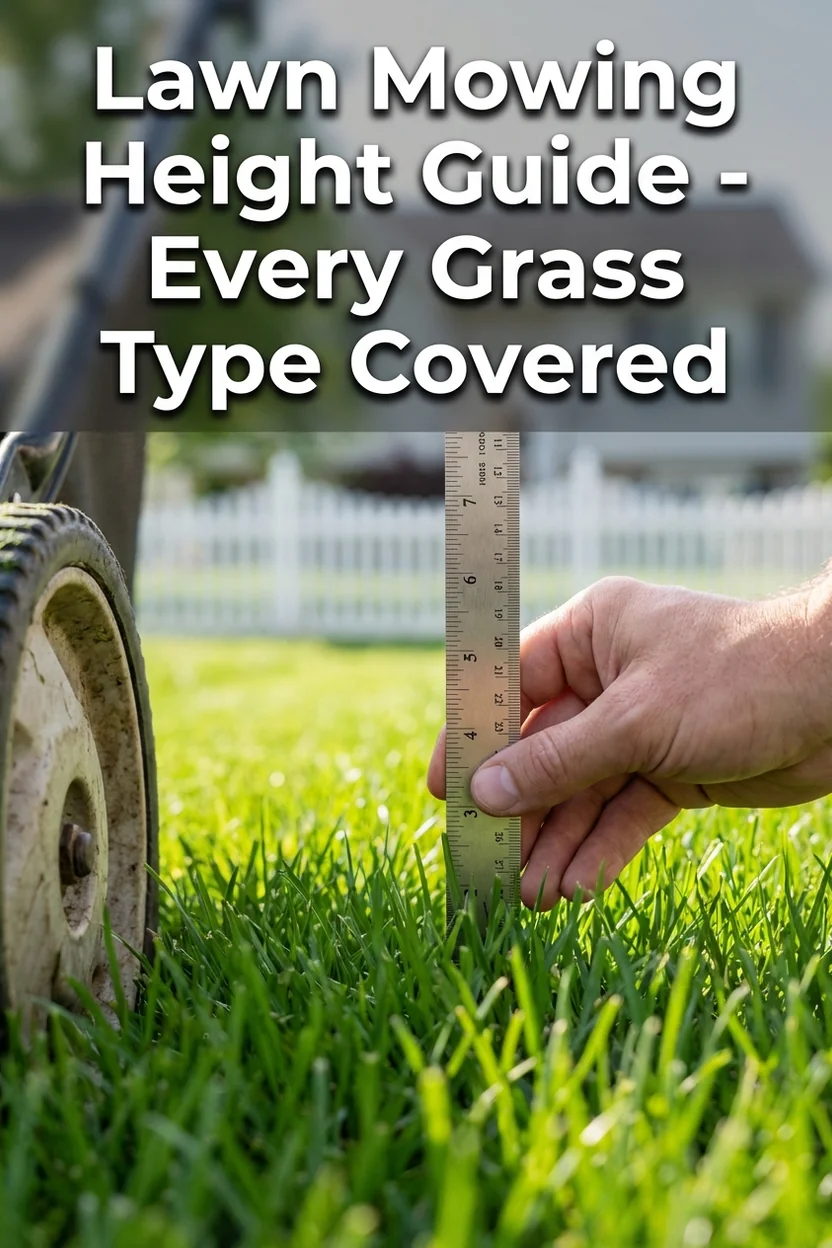
Lawn Mowing Height Guide: The One-Third Rule and Seasonal Timing
Pets & Toxicity
Recorded toxicity for plants linked in this guide. An unknown status is not a safety assessment.
No linked plant is recorded as toxicDetailsHide
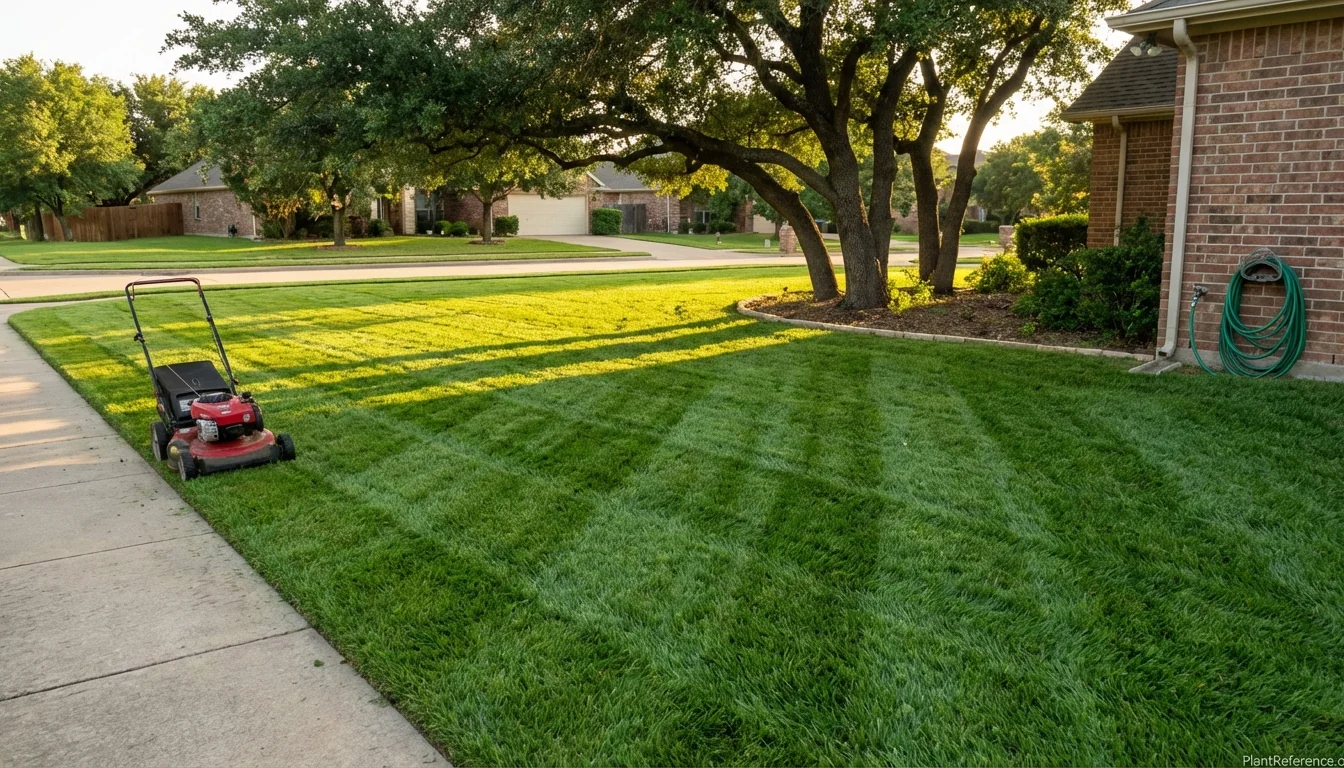
— Image © Plant Reference 2026
Most people think mowing is the simple part of lawn care — just push the machine and cut the grass. But after running lawn maintenance crews in Dallas for over a decade, I can tell you that mowing height is the single most impactful decision you make for your lawn every week. Get it right, and your turf develops deeper roots, outcompetes weeds naturally, and shrugs off drought. Get it wrong, and you create a stressed, shallow-rooted lawn that needs constant intervention to survive.
Why Mowing Height Matters More Than You Think
Every time you mow, you wound the plant. The grass blade is a solar panel — it captures sunlight and converts it into the sugars that fuel root growth, tillering, and disease resistance. When you scalp a lawn down to an inch, you remove the majority of that photosynthetic surface area, and the plant has to raid its carbohydrate reserves just to regrow leaves. That means less energy going underground to roots, and a lawn that depends on you for water and nutrients instead of fending for itself.
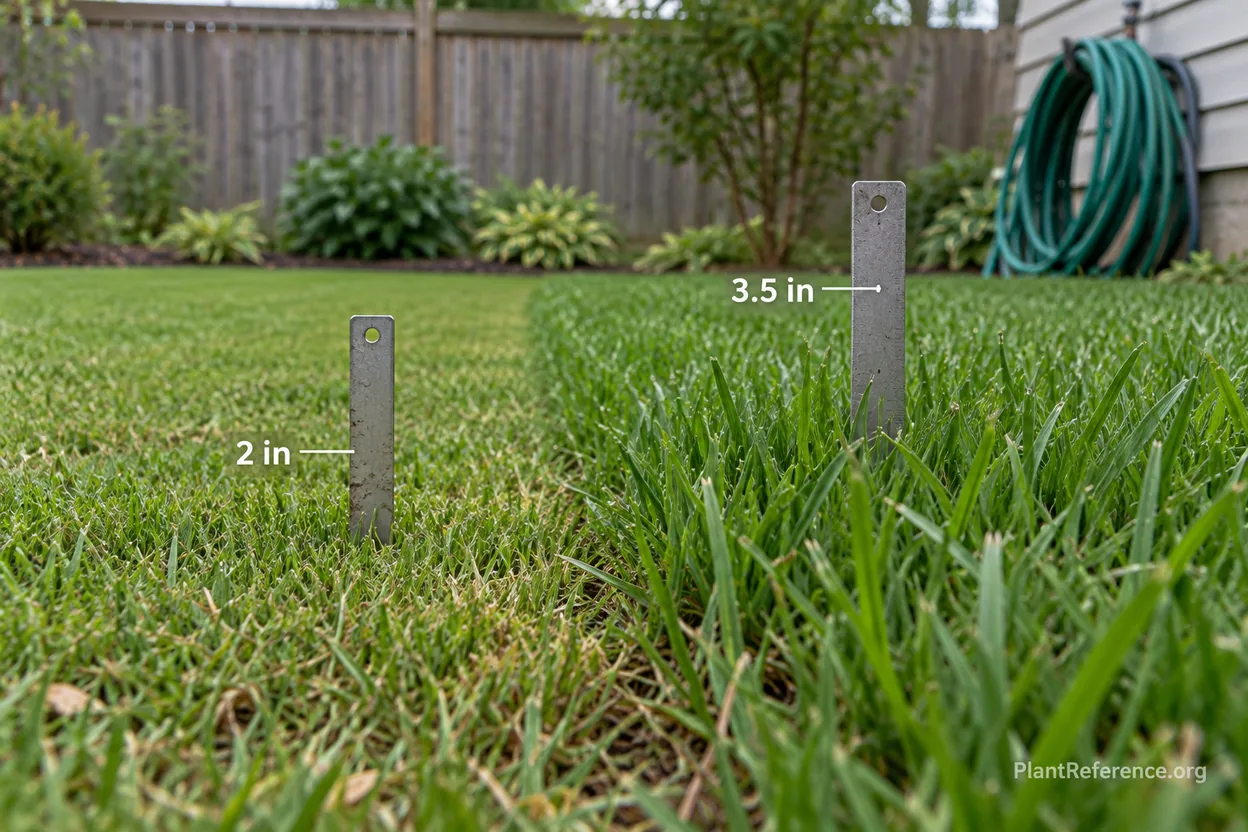
Research from the University of Nebraska demonstrated this clearly: raising 🌿Poa pratensis (poh-uh prah-TEN-sis) mowing height from 1.5 inches to 2.5 inches (4 to 6 cm) reduced crabgrass infestation from 80% to under 15%. That is not a typo. Taller grass shades the soil surface, keeping it cooler and blocking the sunlight that crabgrass seeds need to germinate. No herbicide on the market delivers that kind of result with zero cost and zero chemical input. Cool-Season vs Warm-Season Grass: Which Type Is Right for Your Lawn?
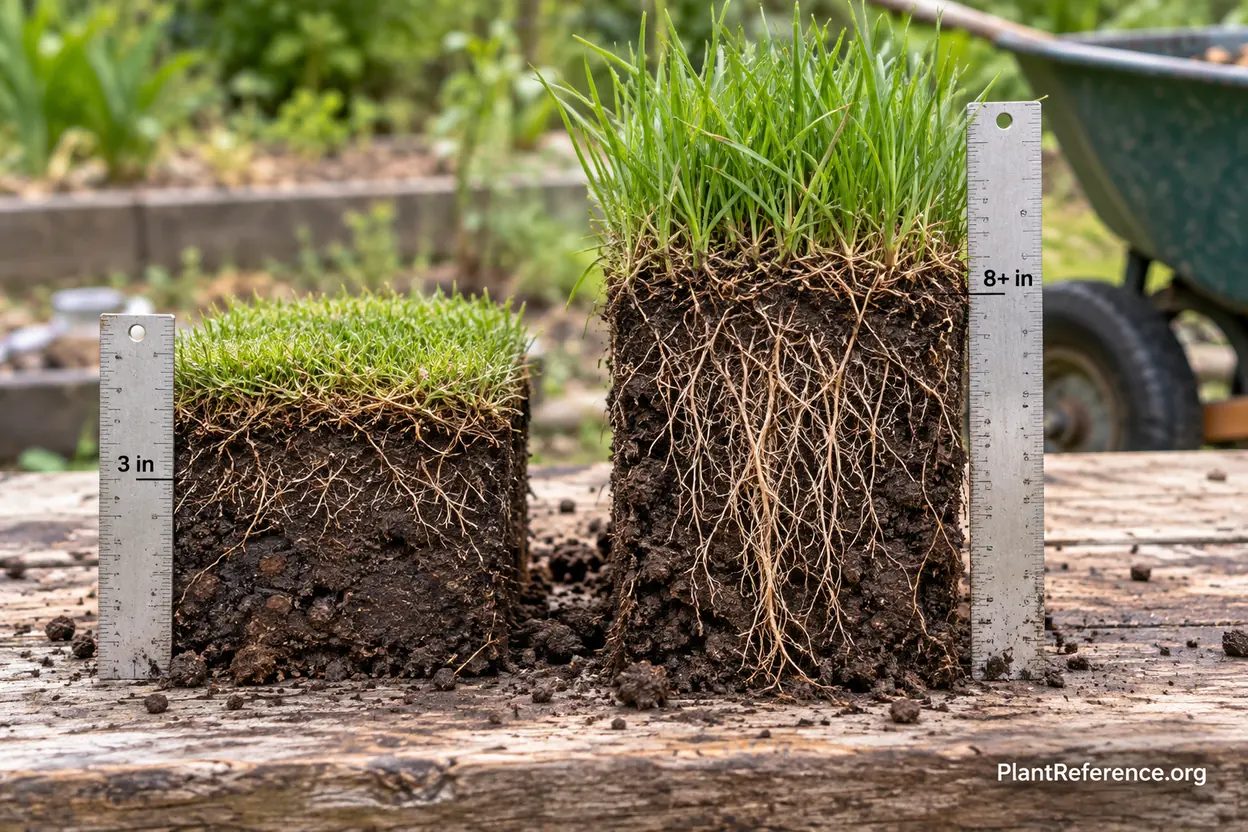
Taller mowing also drives deeper root development. A grass plant maintains a roughly proportional relationship between blade height and root depth. A 🌿Festuca arundinacea plant mowed at 3.5 inches (9 cm) can push roots down 2-3 feet (60-90 cm), reaching moisture that a scalped plant at 1.5 inches (4 cm) could never access. During a Texas July with no rain for three weeks, that root depth is the difference between a lawn that stays green and one that goes brown.
Recommended Mowing Heights by Grass Type
Not every grass species wants to be mowed at the same height. The distinction comes down to growth habit — low-growing, dense spreaders like 🌿Cynodon dactylon bermudagrass are built for tight cutting, while upright bunch-type grasses like 🌿Festuca arundinacea tall fescue need more leaf tissue to sustain themselves. Mowing outside your species' ideal range creates chronic stress that compounds over weeks and months.
Grass Species | Ideal Mowing Height | Maximum Height Before Mowing | Growth Habit |
|---|---|---|---|
🌿Poa pratensis Kentucky Bluegrass | 2.5-3.5 in (6-9 cm) | 4-5 in (10-13 cm) | Rhizomatous |
🌿Festuca arundinacea Tall Fescue | 3-4 in (8-10 cm) | 4.5-6 in (11-15 cm) | Bunch-type |
Fine Fescues | 2.5-3.5 in (6-9 cm) | 4-5 in (10-13 cm) | Bunch/Rhizome |
🌿Lolium perenne Perennial Ryegrass | 2-3 in (5-8 cm) | 3-4.5 in (8-11 cm) | Bunch-type |
🌿Cynodon dactylon Bermudagrass | 0.5-2 in (1-5 cm) | 1-3 in (3-8 cm) | Rhizome/Stolon |
🌿Stenotaphrum secundatum St. Augustine | 2.5-4 in (6-10 cm) | 4-6 in (10-15 cm) | Stoloniferous |
🌿Zoysia japonica Zoysiagrass | 1-2 in (3-5 cm) | 1.5-3 in (4-8 cm) | Rhizome/Stolon |
🌿Bouteloua dactyloides Buffalograss | 2-3 in (5-8 cm) | 3-4.5 in (8-11 cm) | Stoloniferous |
A few things to notice in that table. 🌿Cynodon dactylon bermudagrass has the widest acceptable range — 0.5 to 2 inches (1 to 5 cm) — because its aggressive spreading habit lets it recover quickly from tight mowing. Hybrid bermudas used on golf courses get mowed at half an inch; home lawns do fine at 1.5-2 inches (4-5 cm). At the other end, 🌿Stenotaphrum secundatum St. Augustine needs to stay tall at 2.5-4 inches (6-10 cm) because it grows on stolons above the soil surface. Cut it too low and you expose those stolons, which dries them out and opens the door to chinch bug damage. Best Grass for Your Climate Zone: The Complete Selection Guide
If you manage a 🌿Festuca arundinacea tall fescue lawn — the most popular choice in the transition zone — keep it at 3-4 inches (8-10 cm). This grass has the deepest root system of any cool-season species when mowed correctly, but scalping it below 2.5 inches (6 cm) eliminates that advantage entirely.
The One-Third Rule Explained
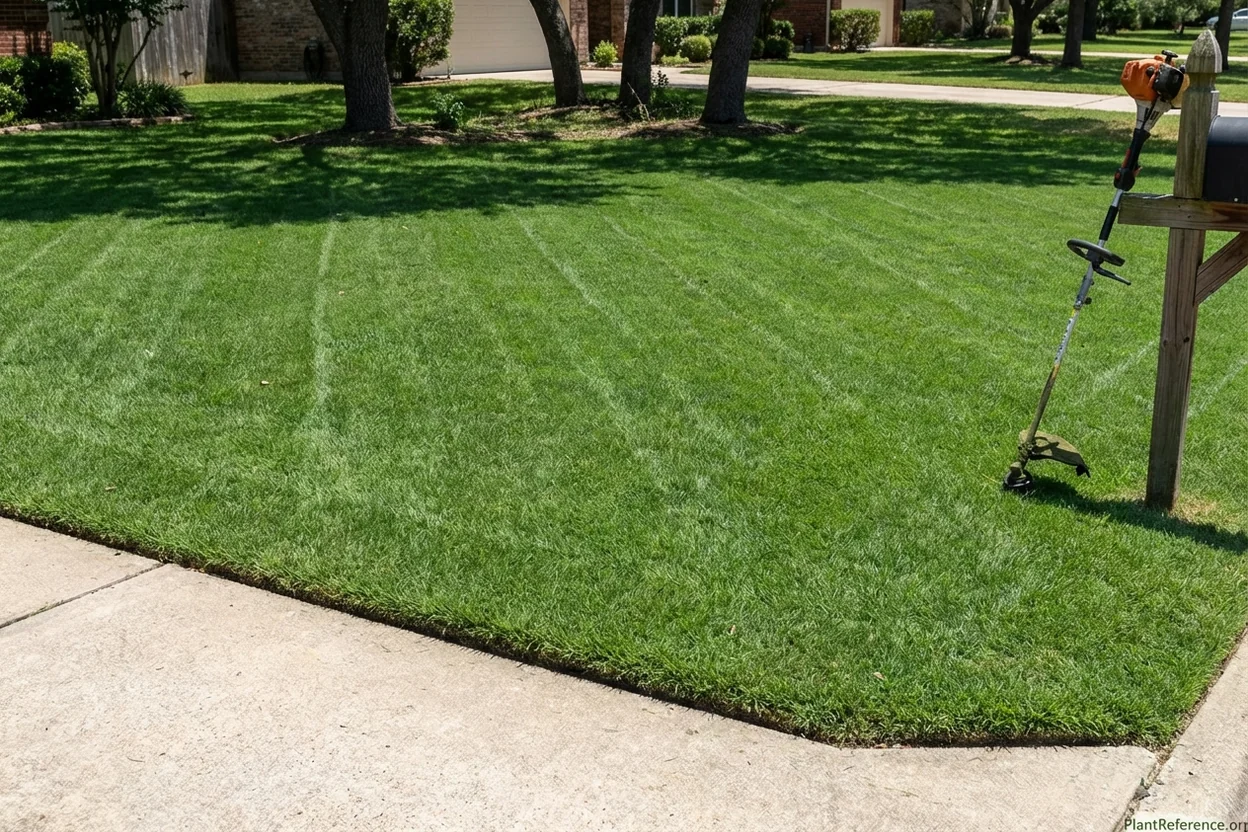
The one-third rule is not a suggestion — it is the single most important mowing principle in turfgrass science. Never remove more than one-third of the grass blade height in a single mowing. If your target mowing height is 3 inches (8 cm), you should mow before the grass exceeds 4.5 inches (11 cm). If your bermudagrass is kept at 1.5 inches (4 cm), mow when it reaches 2.25 inches (6 cm).
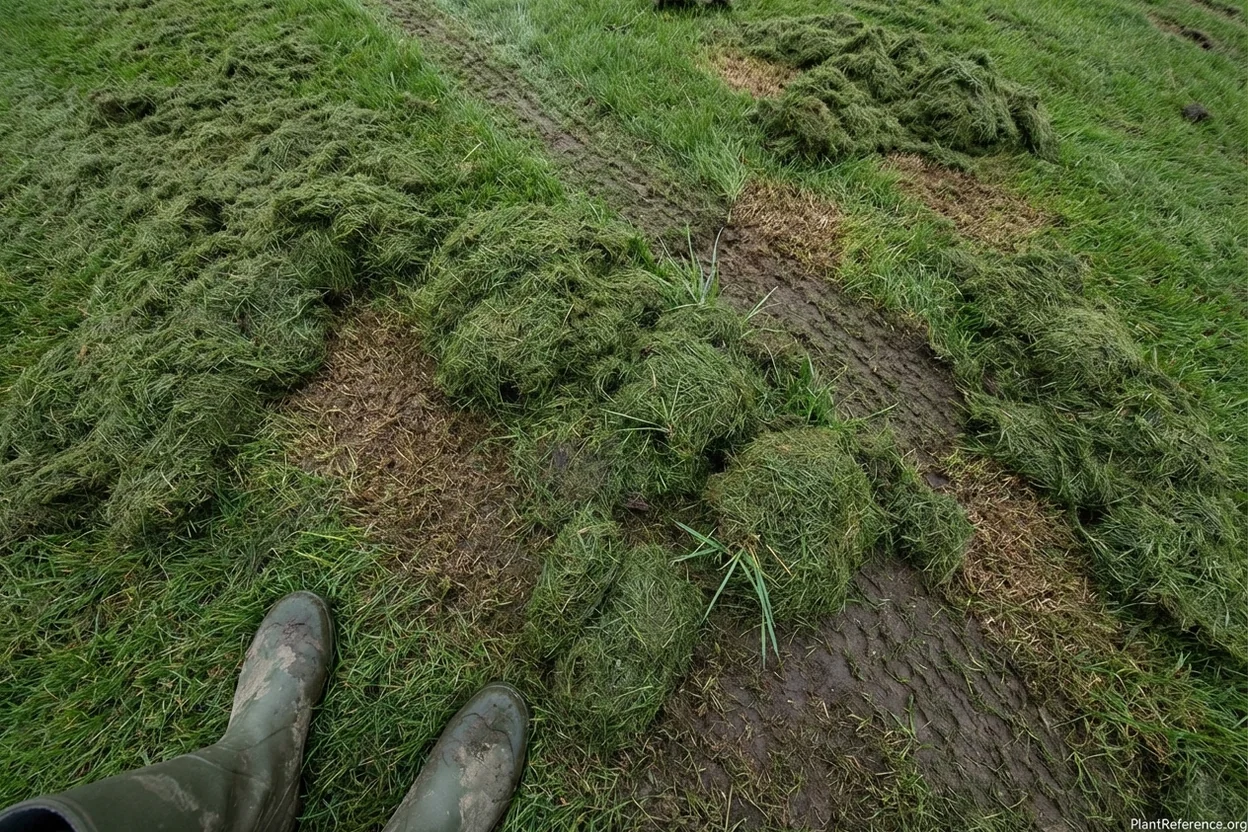
Why one-third? When you remove more than a third of the blade, the plant enters a stress response. It dumps carbohydrate reserves into emergency leaf regrowth, root growth stalls, and the weakened turf becomes vulnerable to weed invasion and disease. Scalped grass clippings are also longer and clump on the surface, smothering the turf underneath instead of filtering down to decompose.
Target Mowing Height | Mow When Grass Reaches | Maximum Cut Per Pass |
|---|---|---|
1.5 in (4 cm) | 2.25 in (6 cm) | 0.75 in (2 cm) |
2.0 in (5 cm) | 3.0 in (8 cm) | 1.0 in (3 cm) |
2.5 in (6 cm) | 3.75 in (10 cm) | 1.25 in (3 cm) |
3.0 in (8 cm) | 4.5 in (11 cm) | 1.5 in (4 cm) |
3.5 in (9 cm) | 5.25 in (13 cm) | 1.75 in (4 cm) |
4.0 in (10 cm) | 6.0 in (15 cm) | 2.0 in (5 cm) |
Here is the practical problem: if you skip a mowing and the grass gets too tall, you cannot just drop it back to height in one pass. You need to step it down. Mow at the highest setting first, wait two to three days, then mow again at a lower setting. Repeat until you reach your target height. Yes, it takes more time. But trying to cut 6-inch (15 cm) grass back to 3 inches (8 cm) in one pass will set your lawn back weeks.
What About Grass Clippings?
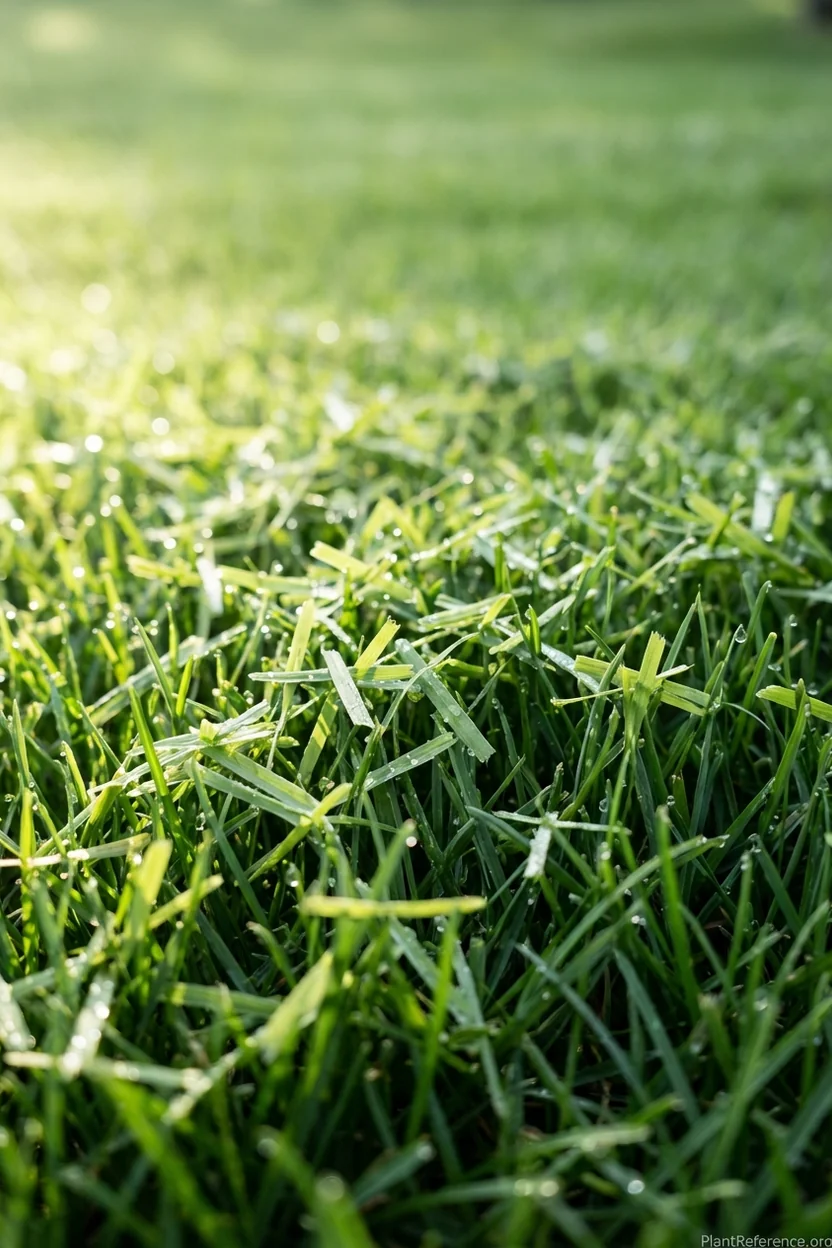
Always return clippings to the lawn. This is one of those old-school myths that will not die — people think clippings cause thatch. They do not. Grass clippings are mostly water and decompose within a week or two, recycling up to 1 pound of nitrogen per 1,000 square feet (0.5 kg per 93 sq m) per year back into the soil. That is essentially a free fertilizer application you get just by not bagging.
Clippings only cause problems when they clump into wet mats on the surface, which happens when you mow wet grass or violate the one-third rule. If you follow proper mowing frequency and avoid cutting in heavy dew, clippings disappear into the canopy within a day. Raised Bed Soil pH Problems: Testing, Adjusting, and Maintaining Balance
Seasonal Mowing Adjustments
Your mowing height should not stay the same year-round. Seasonal adjustments account for temperature stress, daylight changes, and disease pressure that shift throughout the year.
Cool-Season Grass Seasonal Heights
For 🌿Poa pratensis Kentucky bluegrass and 🌿Festuca arundinacea tall fescue, raise your mowing height by 0.5-1 inch (1-3 cm) during summer. The extra blade length shades soil, reduces surface temperature, and cuts evaporation — all critical during July and August heat. Drop back to your standard height in early fall to encourage tillering and prepare for overseeding.
Season | Cool-Season Height | Warm-Season Height | Notes |
|---|---|---|---|
Early Spring | 2.5-3 in (6-8 cm) | 1-1.5 in (3-4 cm) | First mow removes winter-damaged tips |
Late Spring | 3-3.5 in (8-9 cm) | 1.5-2 in (4-5 cm) | Ramp up frequency as growth peaks |
Summer | 3.5-4 in (9-10 cm) | 1.5-2 in (4-5 cm) | Raise cool-season height for heat protection |
Early Fall | 3-3.5 in (8-9 cm) | 1.5-2 in (4-5 cm) | Drop back down for fall recovery |
Late Fall | 2.5-3 in (6-8 cm) | 1-1.5 in (3-4 cm) | Gradually lower before dormancy |
Warm-Season Grass Seasonal Heights
🌿Cynodon dactylon Bermudagrass and 🌿Zoysia japonica zoysiagrass are actively growing in summer, so they get mowed at their regular heights during the hot months. The key adjustment for warm-season lawns comes in spring green-up and fall dormancy. In spring, lower your first mow slightly to scalp off dead brown tissue and let sunlight hit the crowns. This promotes faster green-up. In fall, gradually lower your height before the first frost to reduce the amount of dead leaf tissue that sits through winter. Best Soil Mix for Raised Beds: Creating the Perfect Growing Medium
Mowing Frequency: How Often Is Enough?
Mowing frequency is driven by growth rate, not by the calendar. During peak growth in spring and early summer, cool-season grasses may need mowing every 4-5 days. During a hot, dry July, that same lawn might only need cutting every 10-14 days. Warm-season grasses like 🌿Cynodon dactylon bermudagrass grow fastest in mid-summer and may demand twice-weekly mowing to stay within the one-third rule at low cutting heights.
The practical test is simple: walk out and look at your grass. If it has grown more than a third above your target height, it is time to mow regardless of what day of the week it is. Mowing every Saturday because that is "mowing day" leads to overgrown turf during active growth and unnecessary mowing during slow periods.
Spring cool-season lawns: every 4-5 days during peak growth
Summer cool-season lawns: every 7-14 days depending on heat and rainfall
Summer warm-season lawns: every 3-5 days for bermudagrass, every 7-10 days for zoysiagrass
Fall lawns (all types): every 7-10 days as growth slows
Drought-dormant lawns: stop mowing entirely until growth resumes
One thing I tell my clients constantly: if your grass goes dormant during drought, leave it alone. Mowing a dormant lawn does nothing productive and can damage the crowns. Let it rest until rain returns and green growth starts again.
Mower Blade Maintenance and Technique
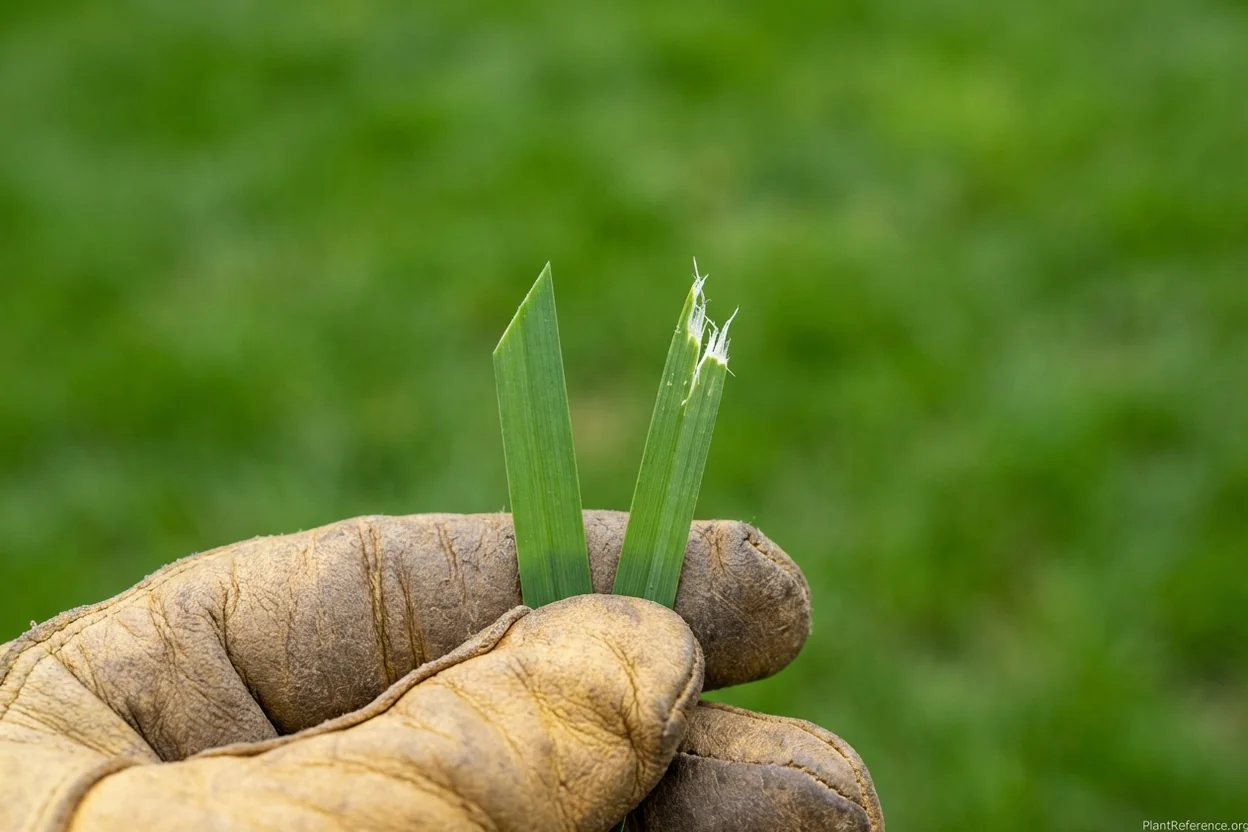
A dull mower blade tears grass instead of cutting it cleanly. Torn leaf tips turn white or brown at the ends, lose water faster through the ragged wound, and provide entry points for fungal pathogens like brown patch. The difference between a sharp blade and a dull one is visible from 10 feet away — clean-cut turf has a uniform green appearance, while torn turf looks gray or brownish across the surface. How to Build a Raised Garden Bed: Step-by-Step Construction Guide
How Often to Sharpen
Sharpen your mower blade every 20-25 hours of mowing time, or roughly every 8-10 mows for a typical residential lawn. If you hit rocks, sticks, or roots regularly, sharpen more often. A bench grinder or angle grinder works for DIY sharpening — maintain the factory bevel angle (usually 30-45 degrees) and remove equal material from both ends to keep the blade balanced. An unbalanced blade creates vibration that damages the mower spindle over time.
Mowing Pattern and Direction
Alternate your mowing direction every time you mow. Grass develops a "grain" — it starts leaning in the direction you consistently mow. Changing direction keeps blades growing upright and prevents soil compaction along the same wheel tracks. A simple four-pattern rotation — north-south, east-west, and both diagonals — is all you need.
Mow at a moderate, consistent pace. Rushing through a lawn at top speed gives the blade less time to cut each grass plant cleanly, especially in thick turf. Slow down in dense areas and when the grass is at the upper end of its acceptable height range.
Common Mowing Mistakes and How to Fix Them
Scalping
Scalping — cutting the grass so short that you expose brown stems and soil — is the most damaging mowing error. It strips the plant of nearly all its photosynthetic tissue, stops root growth cold, and creates bare patches where weeds establish immediately. If you have uneven ground with high spots that get scalped, top-dress those areas with compost or screened soil to level the surface over time rather than trying to mow around them. The Complete Guide to Raised Bed Gardening for Beginners (2025)
Mowing Wet Grass
Mowing when grass is wet from rain or heavy dew causes several problems at once. Wet clippings clump and smother the turf. The mower wheels compact saturated soil more than dry soil. And wet leaf tissue tears more easily, even with sharp blades. Wait until the grass dries — ideally mid-morning after dew evaporates — for the cleanest cut and least damage.
Mowing on a Fixed Schedule
I cannot say this enough: mow based on growth, not the calendar. A lawn fertilized with a fast-release nitrogen product in spring may need cutting every three days during its growth surge. That same lawn in an August drought might not need mowing for two weeks. The one-third rule dictates your schedule — check the grass, not your calendar app.
Cutting Too Infrequently
The flip side of overmowing is letting grass grow too tall between cuts. When you finally mow a lawn that has reached 8 inches (20 cm), you violate the one-third rule catastrophically, leave thick windrows of clippings, and shock the plant so badly that it may take weeks to recover. If you fall behind, step the height down gradually over multiple mowings rather than hacking it all off at once. Raised Bed Weeds: Prevention Strategies and Control Methods
Ignoring Mower Deck Height Settings
Most homeowners set their mower deck once and never adjust it again. Every mower settles and shifts over time — check your actual cutting height at the start of each season by parking on a flat surface and measuring from the ground to the blade edge. Many mowers have numbered positions that do not correspond to actual inches. Trust a ruler, not the lever markings. Best Wood for Raised Garden Beds: Material Comparison and Longevity Test
Frequently Asked Questions
Reading about plants and recognising them are different skills. These three build the second.
- Daily PlantIdentify the day’s mystery plant from a close-up photograph.
- Keyed OutWork a dichotomous key, lead by lead, to name a hidden specimen.
- Name That PlantName a specimen from botanical clues dealt hardest first.
Free to play, no account needed
Tagged with
James is a lawn care professional in Dallas who runs a small residential maintenance company. He started mowing lawns as a teenager and worked his way up to running crews for a large landscaping firm before going out on his own. James specializes in warm-season turf grasses—Bermuda, St. Augustine, and Zoysia—and knows how to keep a lawn alive through Texas summers without wasting water. He's also experienced with the transition zone challenges that Dallas faces, where warm-season and cool-season grasses overlap. James takes a practical, science-informed approach to lawn care and pushes back on the idea that a good lawn requires heavy chemical inputs.