Best Hand Lenses and Loupes for Botany
Pets & Toxicity
Recorded toxicity for plants linked in this guide. An unknown status is not a safety assessment.
— Image © PlantReference.org 2026
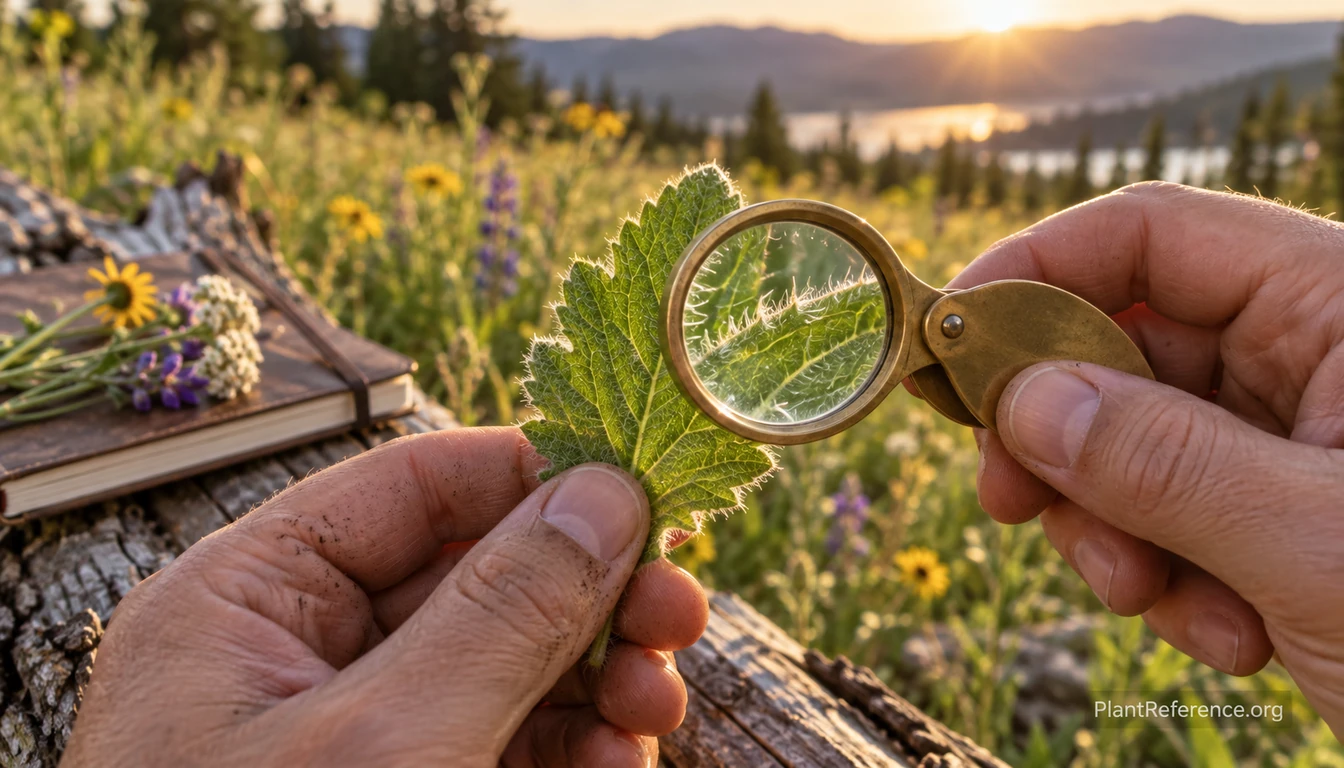
The best hand lens for botany is the one that finally lets you see the tiny features identification actually depends on, the hairs, glands, and vein tufts that no phone photo captures. A good 10x loupe costs less than a field guide and does more to improve your accuracy than almost any other tool. This guide compares the top options by optics, magnification, and price.
Why Every Botanist Needs a Hand Lens
Plant identification keys constantly ask about features you simply cannot resolve with the naked eye. Is the leaf surface hairy or smooth? Are there glandular dots along the margin? Does the sedge stem have three ranks of leaves? These are the questions that separate one species from its lookalike, and a hand lens answers them in seconds.
I learned this the hard way styling interiors, squinting at a tiny pest on a leaf and guessing wrong. The same lesson applies outdoors. Rushes in the genus Juncus (JUNG-kus) hide six tiny tepals that make their flowers look like miniature lilies, but only under magnification. Without a lens, you are guessing; with one, you are identifying.
Reveals leaf hairs, glands, and surface texture used in identification keys
Shows flower parts, stamens, and tepals far too small to count by eye
Exposes bark lenticels, bud scales, and twig details on woody plants
Helps spot pests, fungal spores, and disease symptoms early
Turns vague guesses into confident, key-based identification
If you are still building the vocabulary these features belong to, work through How to Identify Any Plant: A Beginner's Guide to Leaves, Flowers, and Stems first so you know what the lens is helping you see.
What to Look For: Magnification, Optics, and Light
Three things decide whether a loupe helps or frustrates you: how much it magnifies, how clean the glass is, and whether it has its own light. Get these right and even a budget lens performs well.
Magnification is the first choice, and for botany the answer is almost always 10x. That power resolves the features keys describe while keeping a usable field of view and enough working distance to position a sample. A 20x lens sounds better but has a tiny field, a shallow focus zone, and demands a steadier hand than most people have outdoors. Many botanists carry a 10x as their main lens and a 14x only for the occasional fine detail.
Optics matter just as much as power. Cheap single-lens loupes blur and color-fringe toward the edges, which is exactly where you are trying to read a subtle margin. A doublet corrects some of this; a triplet, like the classic Hastings design, corrects spherical and chromatic distortion across the whole field. Aspheric lenses are a modern budget alternative that performs surprisingly well.
Feature | What to Choose | Why It Matters |
|---|---|---|
Magnification | 10x (standard) | Best balance of detail, field of view, and working distance |
Lens type | Triplet or aspheric | Corrects edge blur and color fringing for sharp detail |
Lighting | LED for shade/indoors | Lets you see detail in deep forest shade or overcast light |
Build | Folding metal housing | Protects the lens and survives years of field use |
Lanyard | Yes, around the neck | Keeps the lens instantly reachable and prevents loss |
Light is the upgrade beginners underestimate. Botanical features often hide in shade, and an LED-illuminated loupe makes the difference between seeing a glandular dot and missing it. The trade-off is a little extra weight and a battery to manage. For working with conifers, where needle and stomatal detail matters, pair a good lens with the clues in How to Identify Conifers: Pines, Spruces, and Firs Simplified.
The Best Hand Lenses and Loupes for Botany
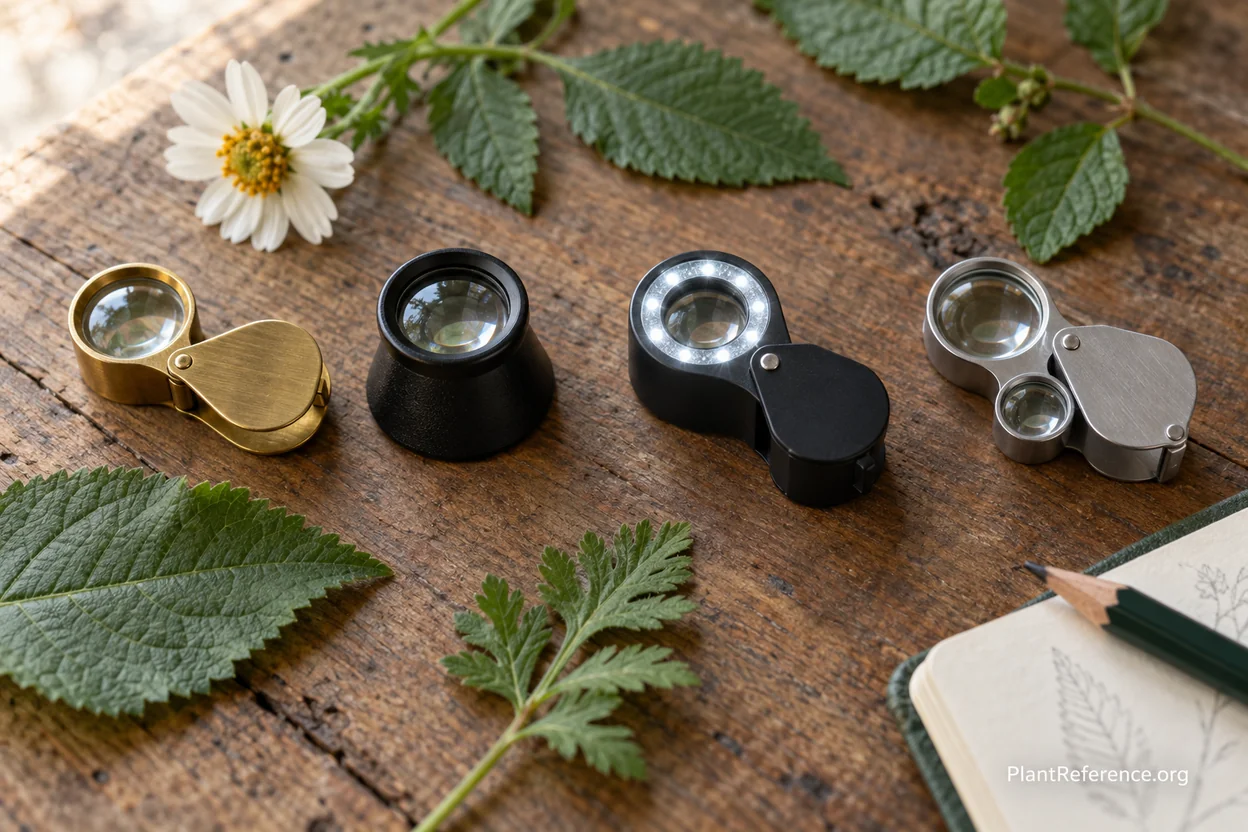
After comparing the options people actually buy, these rise to the top. Each one suits a different budget and working style, so match the pick to how and where you botanize.
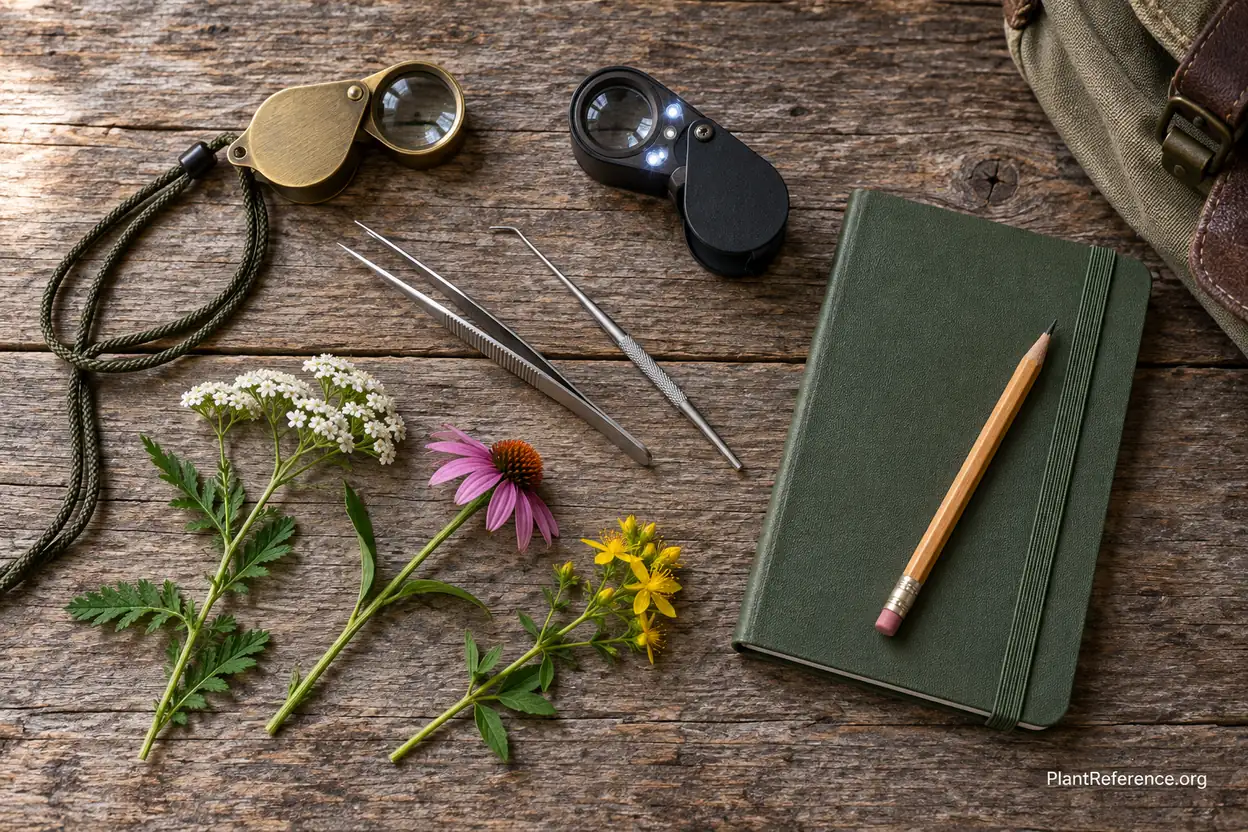
The Bausch & Lomb 10x Hastings Triplet is my top recommendation for serious plant identification. Its optically corrected triplet lens eliminates the edge distortion cheaper loupes suffer from, giving a crisp, color-true view of vein axil tufts, glandular dots, and hair types right out to the edge of the field. It is compact, durable, and the lens generations of botanists have trusted.
For shade and overcast days, the Carson MagniGrip 10x LED loupe pairs a clean aspheric lens with a built-in light, plus integrated grip tweezers for holding tiny structures steady. It is an ideal first loupe and cheap enough to keep a backup.
When you need both hands free, the Carson MagniVisor head-worn magnifier flips down over your eyes with an LED and interchangeable lens plates. It shines for dissecting flowers at a desk or examining pressed specimens, where holding a loupe and a probe at once is awkward.
On the tightest budget, the Carson MagniGrip 10x LED Lighted Magnifier delivers lighted 10x viewing for the price of lunch, a great way to try a hand lens before committing to premium glass. And no botanical kit is complete without a dissecting forceps and probe set for teasing apart the small parts you are magnifying.
If your focus is woody plants, the bark and lenticel details in Tree Bark Identification: A Visual Guide to 20 Trees come alive under any of these lenses, and the leaf clues in How to Identify Trees by Their Leaves: Shapes, Margins, and Venation Explained often hinge on margin hairs you can only see magnified.
How to Use a Hand Lens Correctly
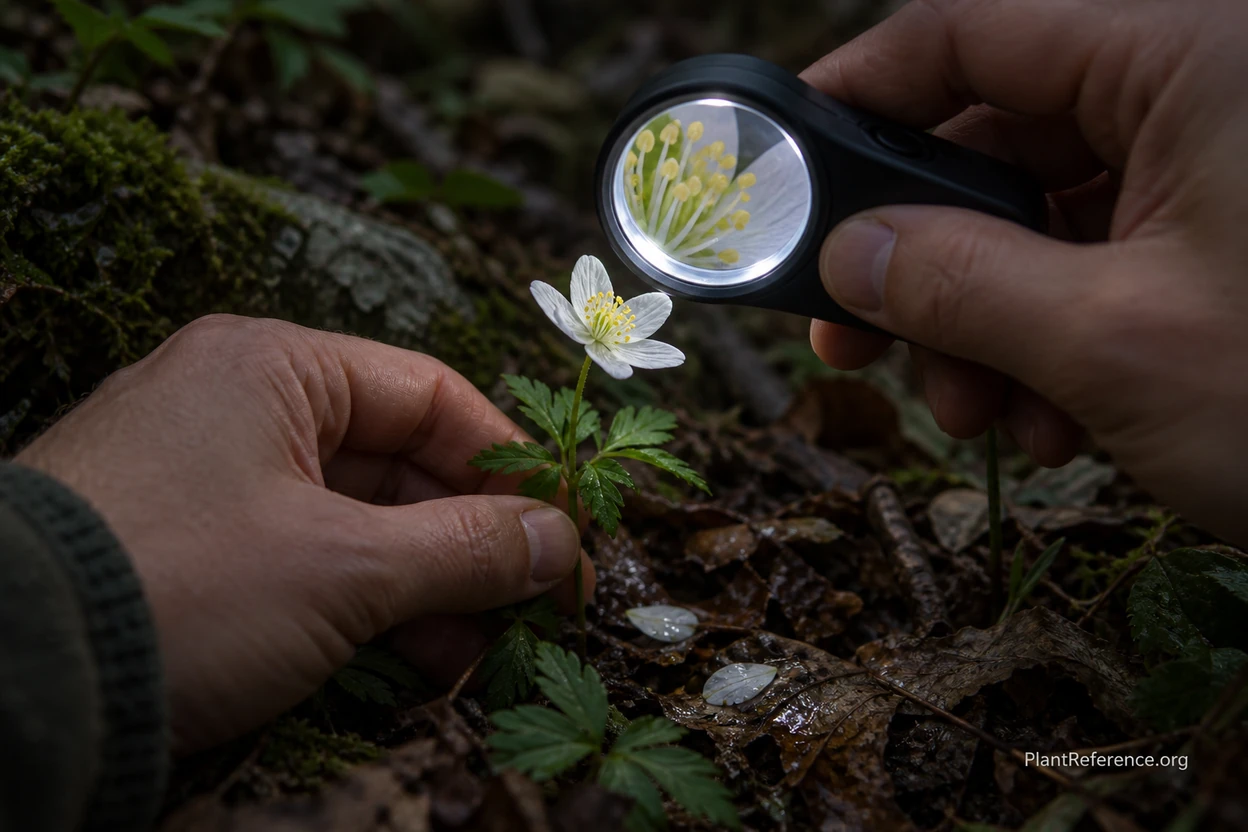
Most people use a hand lens backward, holding it out near the plant like a magnifying glass. That wastes most of its power. The correct technique feels odd at first but doubles what you can see.
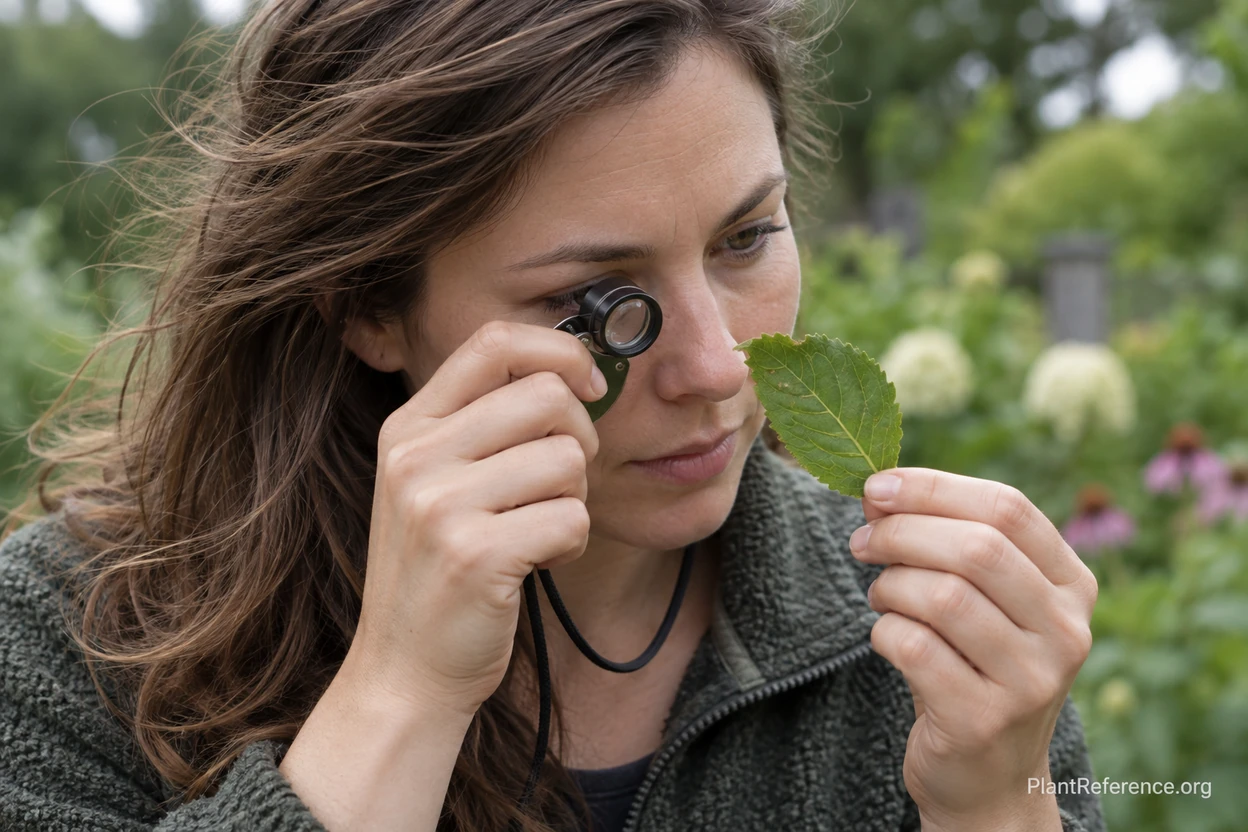
Hold the lens right up against your cheekbone, just below your eye, so it almost touches. Then bring the plant, or your whole head and the plant together, toward the lens until the detail snaps into focus, usually an inch or two away. Keeping the lens fixed to your face steadies the image far better than holding it at arm's length.
Hold the loupe against your eye socket, almost touching your cheek
Move the leaf or flower toward the lens until it focuses sharply
Brace your hands together or against your body to steady the view
Position the sun or LED to side-light the surface and reveal texture
Wear the lens on a lanyard so it is always within reach
Side-lighting is the secret most beginners miss. Angling light across a leaf surface throws tiny hairs and glands into relief, where flat front light flattens them out. The same trick that reveals leaf hairs also exposes the lenticels on a 🌿Prunus serotina (PROO-nus se-ROT-in-uh) black cherry twig. Once the technique clicks, distinguishing Simple vs Compound Leaves: How to Tell the Difference and reading the Alternate vs Opposite Leaf Arrangement: The MADCapHorse Mnemonic Explained becomes second nature.
Hand Lenses vs Phone Magnifiers and Apps
Phones zoom, and identification apps are everywhere, so why carry glass? Because a phone's digital zoom degrades fast, struggles to focus an inch from a subject, and washes out the very texture you need in shade. A dedicated loupe resolves fine detail a phone cannot, with no battery anxiety for the unlit models.
Apps go a step further and try to name the plant for you, which is convenient and frequently wrong. Apps identify plants for you. PlantReference teaches you to identify plants yourself. Our plant database shows ID-focused descriptions with multiple images per species, and the flashcard system trains you to recognize the magnified features a loupe reveals, so the knowledge sticks through spaced repetition and quizzes.
The best setup is simple: a 10x hand lens to see the truth on the plant, and a learning tool to make sense of it. For a clear-eyed look at where the software falls down, read Plant Identification App Accuracy: Why Apps Get It Wrong, and bring your new lens to the weeds in Common Lawn Weeds Identification Guide for easy practice close to home.
Choosing the Right Loupe for You
It really comes down to where you work and how much light you have. Be honest about that and the choice is easy.
Best overall optics: Bausch & Lomb 10x Hastings Triplet for sharp, true detail
Best for shade and beginners: a lighted Carson MagniGrip 10x LED loupe
Best hands-free for desk and lab work: a head-worn LED visor magnifier
Tightest budget: an entry lighted 10x loupe to learn the technique
Complete the kit: fine dissecting forceps and a probe for handling samples
Whatever you pick, buy 10x, choose corrected optics or an LED if you work in shade, and keep it on a lanyard so it is always there. A loupe you can reach in two seconds gets used; one buried in a bag does not. Once flowers become your focus, the magnified view pairs naturally with Flower Identification Guide: Petals, Shape & Color Explained.
Frequently Asked Questions
Reading about plants and recognising them are different skills. These three build the second.
- Daily PlantIdentify the day’s mystery plant from a close-up photograph.
- Keyed OutWork a dichotomous key, lead by lead, to name a hidden specimen.
- Name That PlantName a specimen from botanical clues dealt hardest first.
Free to play, no account needed
Tagged with
Helen is an interior plant stylist in Los Angeles who works with restaurants, offices, and residential clients to select and maintain indoor plants. She studied design in college and got into plants when a client asked her to "green up" a mid-century modern home. Helen's expertise sits at the intersection of design and plant care—she thinks about light, scale, texture, and color, but she also knows which plants will actually survive in a given space. She's killed enough fiddle leaf figs in dark corners to know better. Helen maintains her own collection of over 80 houseplants in her apartment and writes about indoor plant selection, styling, and the practical side of keeping plants alive in interior environments.