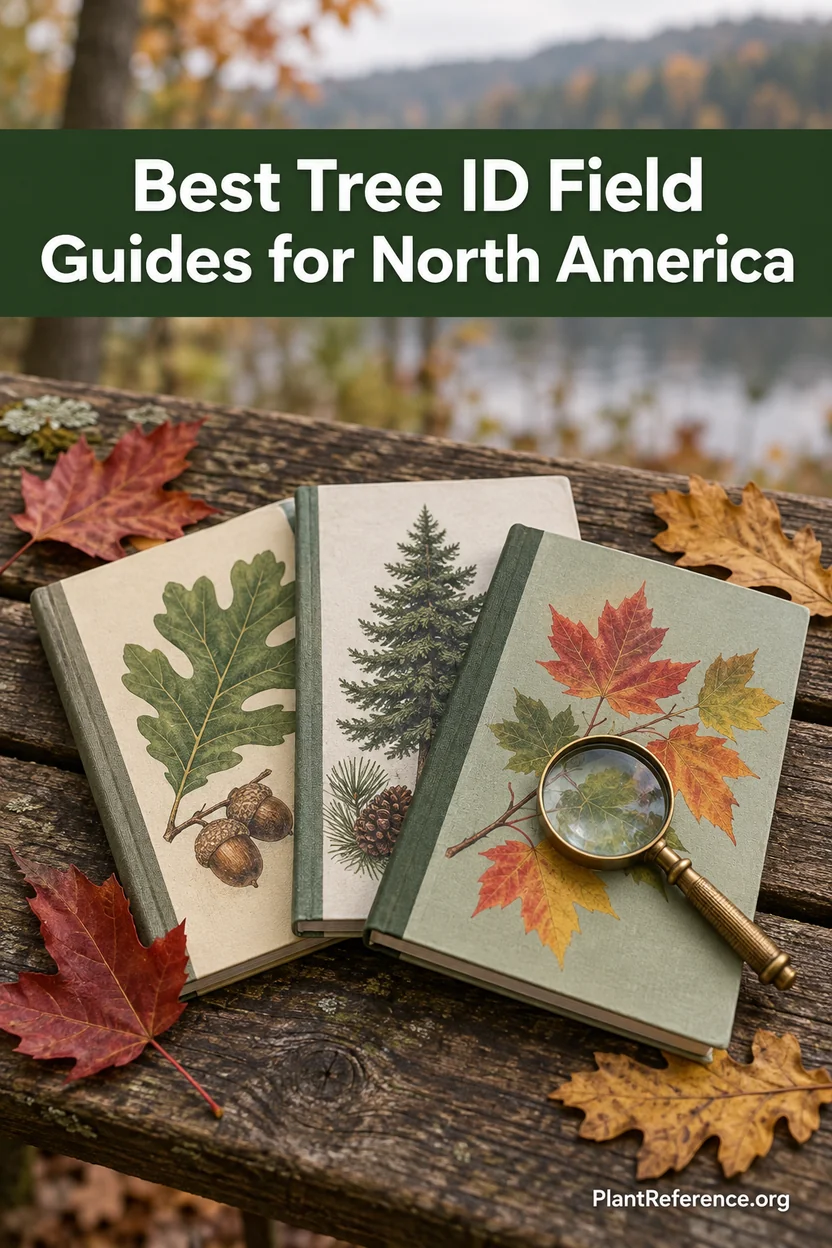
Best Tree Identification Field Guides for North America
Pets & Toxicity
Recorded toxicity for plants linked in this guide. An unknown status is not a safety assessment.
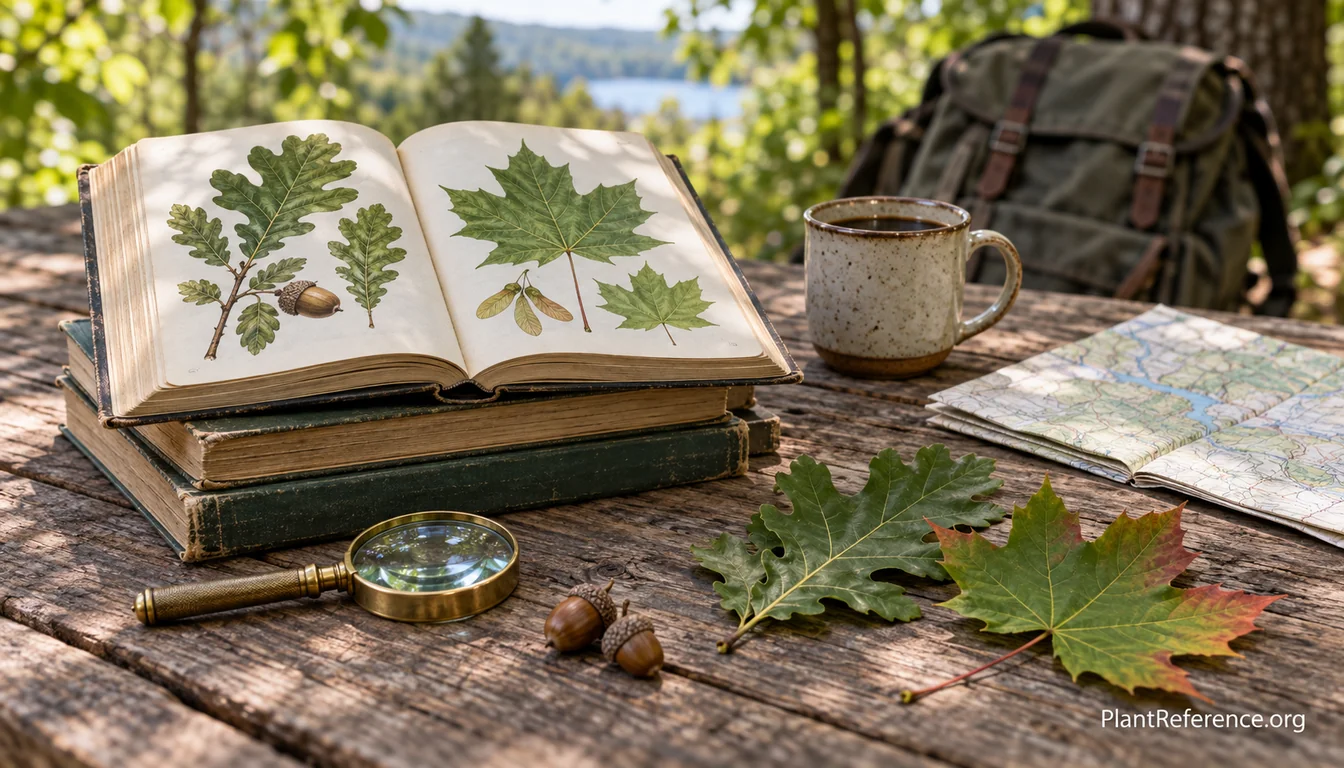
— Image © PlantReference.org 2026
Picking the best tree identification field guide for North America comes down to matching the book to how you actually learn. A continent-wide illustrated guide suits most people, but a beginner flipping through 800 species can feel just as lost as they did under the tree. This guide compares the top options by region, skill level, and budget so you buy once and use it for years.
What Makes a Great Tree Field Guide
A field guide lives in a backpack, gets rained on, and has to work while you are standing in dappled shade squinting at a leaf. The best ones share a few traits, and knowing them helps you judge any guide on the shelf.
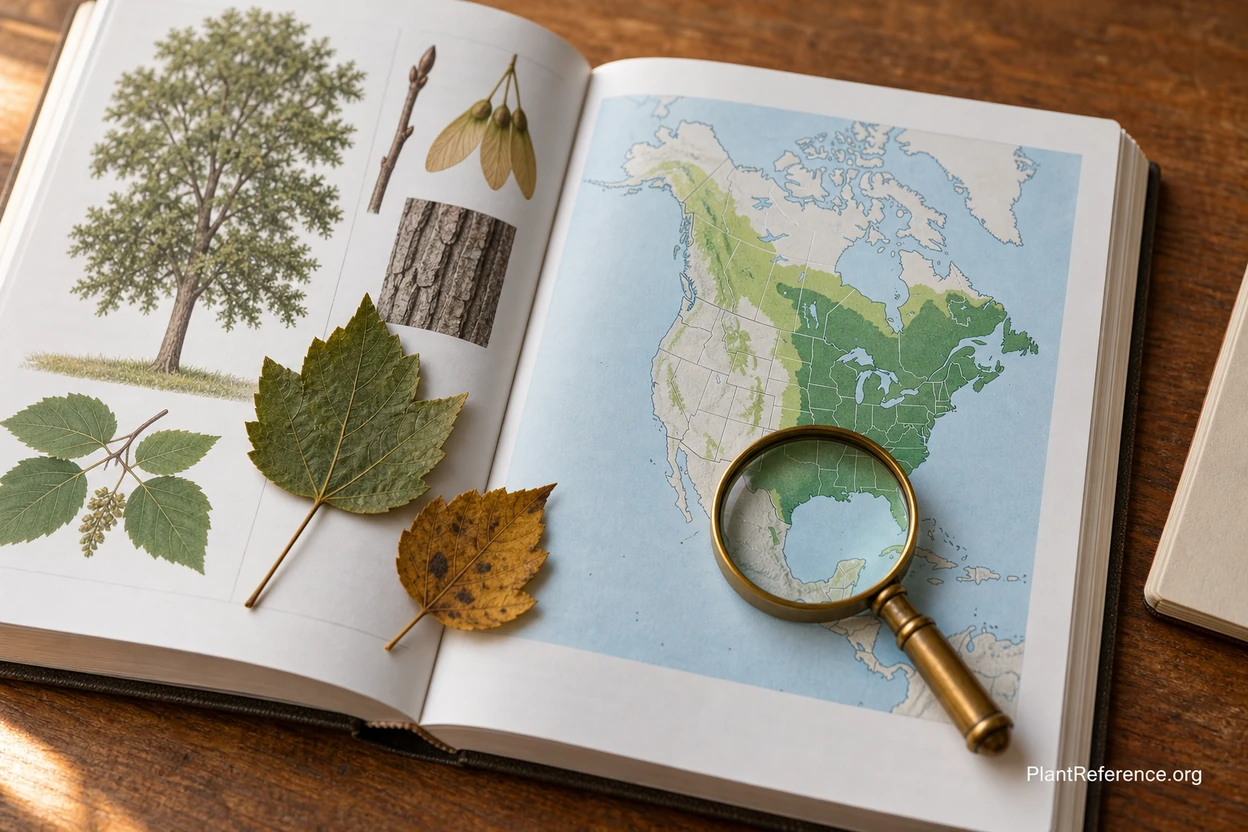
Coverage matters first. A continental guide like the Sibley spans the whole of the United States and Canada, while a regional flora covers one state in exhaustive detail. Range maps tell you whether a species even occurs where you are standing, which instantly narrows hundreds of candidates down to a workable handful.
Illustration quality is the next dividing line. Hand-drawn plates can exaggerate the exact field marks that separate a white oak from a bur oak, while photographs show a single real specimen that may or may not look like the tree in front of you. Both approaches work, and I will compare them in detail below.
Range maps that show where each species actually grows
Clear illustrations or photos of leaves, bark, twigs, and overall form
A usable identification key, organized by structure or by an easy question system
Durable binding and water-resistant or flexible covers for real field use
Size and weight you will genuinely carry, not leave in the car
Finally, think about the key. Some guides organize by botanical family, which assumes you already know a maple from an ash. Others use a beginner-friendly system, and that single design choice decides whether you finish an ID or give up. If you are still learning leaf basics, start with How to Identify Trees by Their Leaves: Shapes, Margins, and Venation Explained before investing in a technical flora.
The Best Tree Field Guides for North America
After years of recommending books to clients who want to learn the trees around their homes, a handful rise to the top. Each suits a slightly different person, so match the description to yourself rather than just grabbing the bestseller.
The Sibley Guide to Trees by David Allen Sibley is my default recommendation for anyone serious about North American trees. It covers the continent with elegant artwork that shows leaves, bark, silhouette, flowers, and fruit at multiple life stages. That multi-stage view matters because a tree looks different in spring, summer, and winter, and Sibley draws all of it. It is a reference you grow into rather than out of.
The Peterson Field Guide series remains a legend for good reason. The Peterson Identification System uses small arrows on the illustrations to point directly at the field marks that distinguish lookalike species. Regional Peterson volumes for eastern and western trees keep the page count manageable, which beginners appreciate.
National Audubon Society tree guides use crisp color photographs rather than drawings. They are visually appealing and compact, though photographs sometimes make fine-scale comparisons harder than a well-drawn plate would. For a gift or a casual nature lover, they shine.
For learning the logic behind identification rather than memorizing species, Botany in a Day by Thomas Elpel teaches you to recognize plant families on sight. Once you know the patterns that define a family, you can place an unfamiliar tree in the right neighborhood even without a species match. It pairs beautifully with any of the guides above.
Field Guide | Best For | Illustration Style | Coverage | Price |
|---|---|---|---|---|
Sibley Guide to Trees | Best overall, all skill levels | Hand-drawn plates | All of North America | $28-38 |
Peterson Field Guide (Trees) | Beginners, lookalike species | Illustrations w/ field-mark arrows | Eastern or Western regions | $18-25 |
National Audubon Society | Casual nature lovers, gifts | Color photographs | National | $20-28 |
Botany in a Day | Learning plant families | Illustrations + patterns | North America | $28-35 |
State or Regional Flora | Advanced botanists | Technical keys | Single state/region | $30-60 |
If your interest leans toward winter walks when the leaves are gone, you will rely on bark and buds, so read Tree Bark Identification: A Visual Guide to 20 Trees alongside whichever guide you choose. And if conifers are your stumbling block, How to Identify Conifers: Pines, Spruces, and Firs Simplified covers the needle and cone clues guides assume you know.
Illustrated vs Photographic Guides
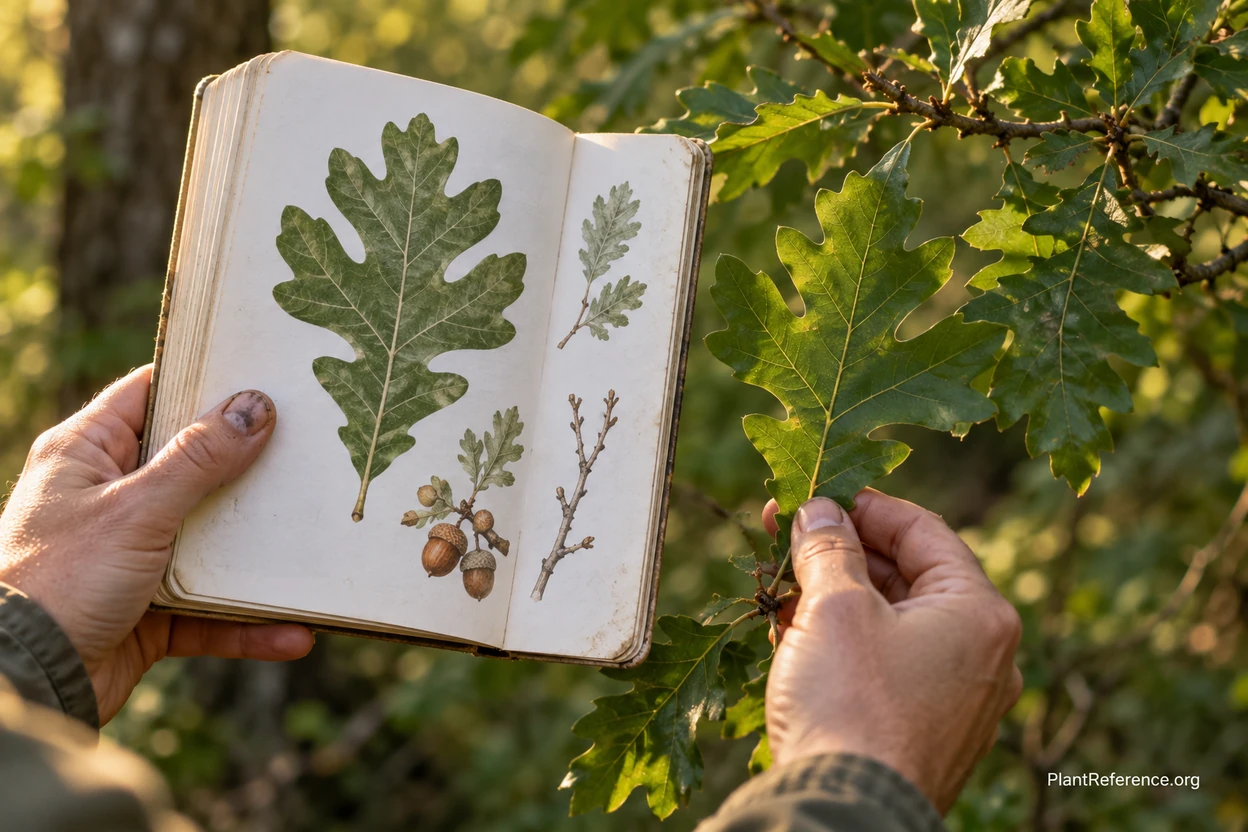
This is the question I get most often, and the honest answer is that it depends on how you think. Illustrated guides, like the work of 🌿Quercus alba (KWER-kus AL-buh) specialists who draw the white oak's rounded lobes just so, can highlight the single diagnostic detail a photo would bury. An artist chooses to emphasize the lenticels on a cherry or the winged twigs of sweetgum.
Photographic guides feel more reassuring to beginners because they look like what you see. The trade-off is that one photo captures one specimen on one day, and trees vary enormously. A sun leaf and a shade leaf on the same 🌿Acer saccharum (AY-ser sa-KAR-um) sugar maple can look like different species.
Choose illustrated guides for precise field-mark comparison and lookalike species
Choose photographic guides for quick visual confidence and casual learning
Serious learners often own one of each and cross-check between them
My practical advice: if you are buying one book, choose an illustrated guide like the Sibley, because the artwork will teach you what to look at. Once your eye is trained, a photo guide becomes a fast confirmation tool. Understanding Simple vs Compound Leaves: How to Tell the Difference and Alternate vs Opposite Leaf Arrangement: The MADCapHorse Mnemonic Explained will make either format click much faster.
Regional Guides Worth Owning
A continental guide is a fine starting point, but regional and state floras are where identification gets precise. They include every taxon recorded in their area, account for local variation, and often feature keys far more rigorous than any national guide.
For the Midwest, dedicated prairie and woodland floras cover the specific oaks, hickories, and ashes that define the region. In the Southwest, the Jepson manuals are the gold standard for arid-land species, with high-quality keys for trees most national guides barely mention. State floras, like a detailed flora of Pennsylvania or the Carolinas, give exhaustive descriptions for a single area, which is exactly what an advanced botanist accounting for every species needs.
Northeast and Midwest: regional tree floras emphasizing oaks, maples, and hickories
Southeast: state floras covering the diverse Appalachian and coastal-plain trees
Southwest: Jepson manuals for desert and arid-land woody plants
Pacific Northwest: regional conifer-focused guides for the continent's tallest forests
The catch is that technical floras assume botanical vocabulary. If a key asks about stipules or leaf venation and you are not sure what those mean, build the foundation first with How to Identify Any Plant: A Beginner's Guide to Leaves, Flowers, and Stems.
Field Guides vs Plant ID Apps
Apps are fast, and I use them. But they answer a different question than a field guide does. An app tells you what a tree probably is; a field guide teaches you why. That distinction matters once you have watched an app confidently misidentify a 🌿Fraxinus americana (FRAK-si-nus a-mer-i-KAH-na) white ash as something it clearly was not.
Apps identify plants for you. PlantReference teaches you to identify plants yourself. Our plant database pairs ID-focused descriptions with multiple images per species, and the flashcard study system shows several photos of each tree so you learn the plant rather than memorizing one lucky picture. Spaced repetition locks in what you learn, and the quizzes reinforce the botanical naming and field marks the best guides are built around.
The most reliable workflow combines all three: a field guide to understand structure, an app for a quick first guess, and a study tool to make the knowledge stick. For an honest look at where the software falls short, see Plant Identification App Accuracy: Why Apps Get It Wrong.
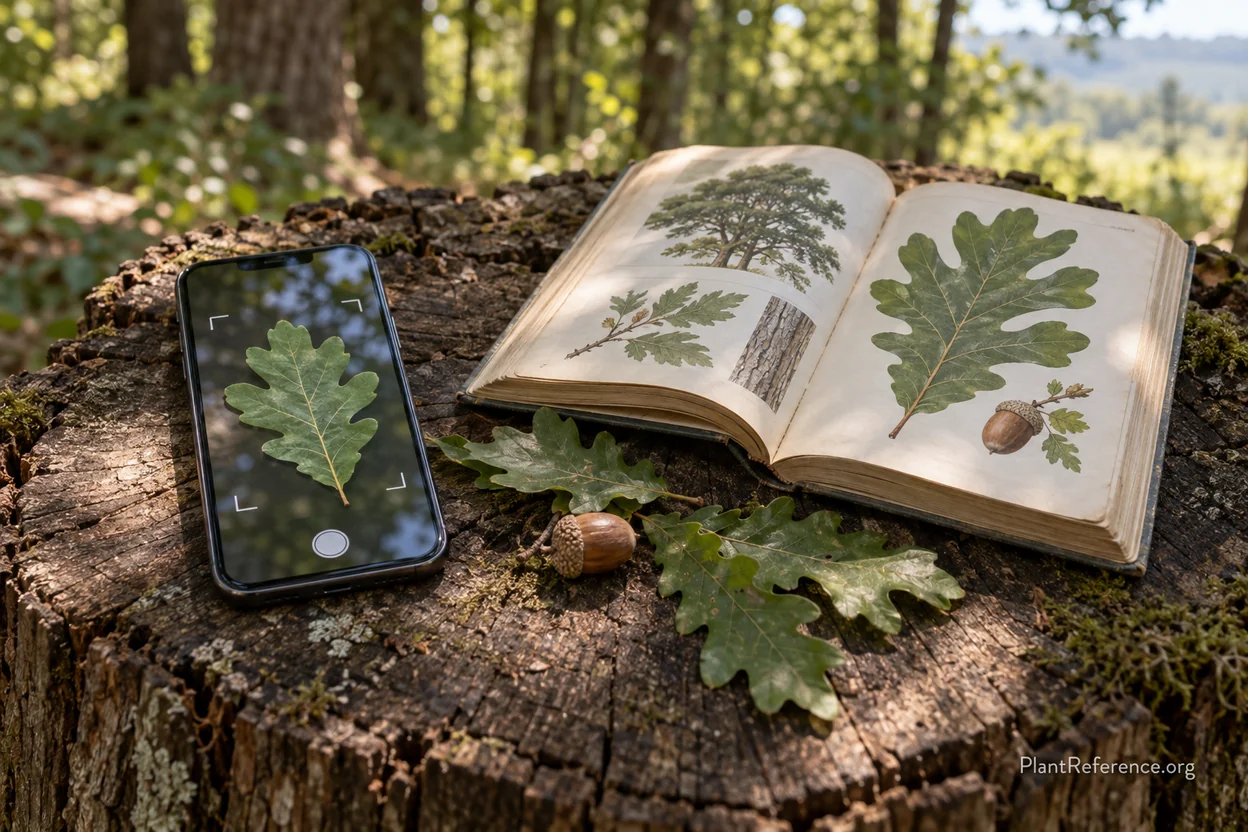
How to Choose the Right Guide for You
Pull it together by being honest about who you are. A weekend hiker who wants to name the big trees on the trail does not need a technical flora, and a botany student does not need a photo gift book.
New to trees: start with a Peterson regional guide or an illustrated beginner guide
Want one book for life: buy the Sibley Guide to Trees and grow into it
Learning the logic: add Botany in a Day to recognize families on sight
Serious or local focus: invest in a state or regional flora with full keys
Field-heavy use: add a weatherproof notebook and a 10x hand lens to your kit
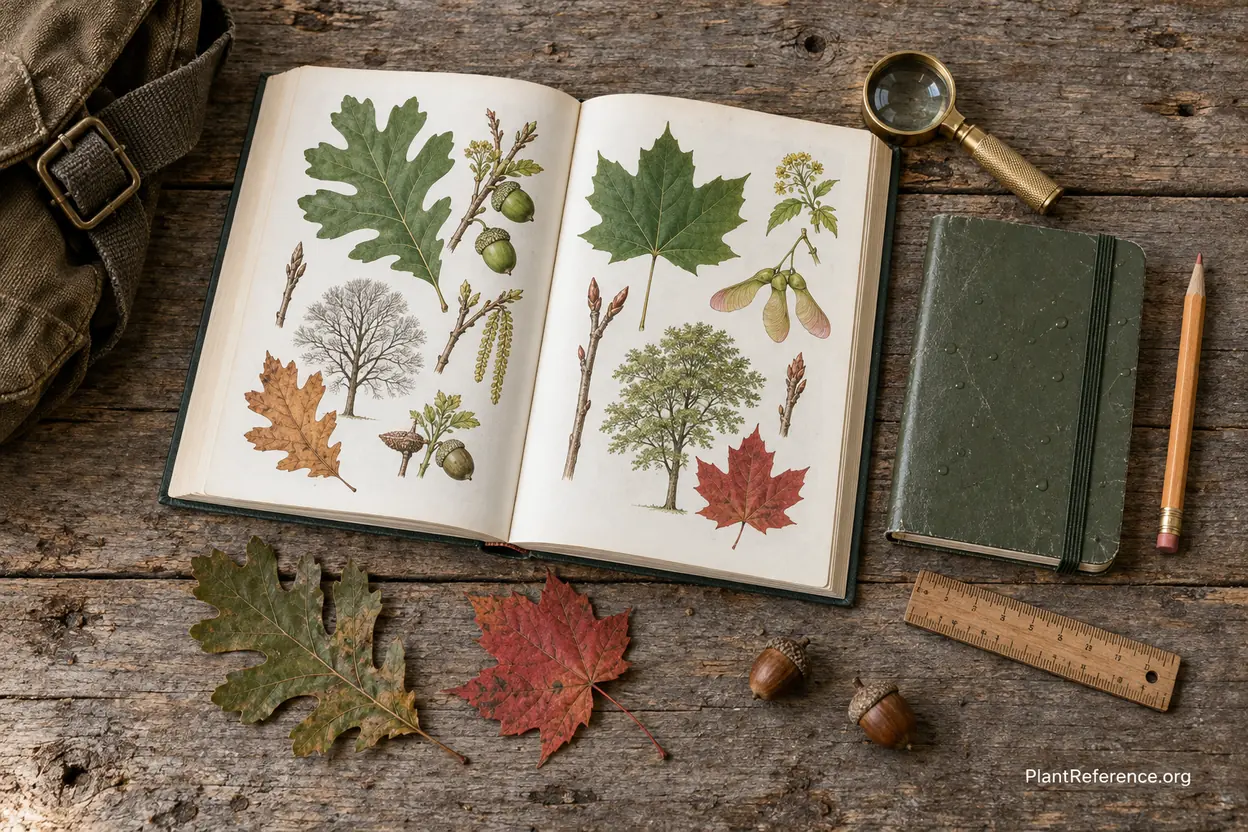
Whatever you choose, the single biggest upgrade most people skip is a hand lens. A 10x loupe reveals the hairs, glands, and vein details that field marks depend on, and it costs less than the guide. If you want to spread the skill to younger trees and shrubs around the yard, Best Grass Seed for Shade Under Trees: 5 Species That Actually Work is a fun next step once you know what is casting the shade.
Frequently Asked Questions
Reading about plants and recognising them are different skills. These three build the second.
- Daily PlantIdentify the day’s mystery plant from a close-up photograph.
- Keyed OutWork a dichotomous key, lead by lead, to name a hidden specimen.
- Name That PlantName a specimen from botanical clues dealt hardest first.
Free to play, no account needed
Tagged with
Helen is an interior plant stylist in Los Angeles who works with restaurants, offices, and residential clients to select and maintain indoor plants. She studied design in college and got into plants when a client asked her to "green up" a mid-century modern home. Helen's expertise sits at the intersection of design and plant care—she thinks about light, scale, texture, and color, but she also knows which plants will actually survive in a given space. She's killed enough fiddle leaf figs in dark corners to know better. Helen maintains her own collection of over 80 houseplants in her apartment and writes about indoor plant selection, styling, and the practical side of keeping plants alive in interior environments.