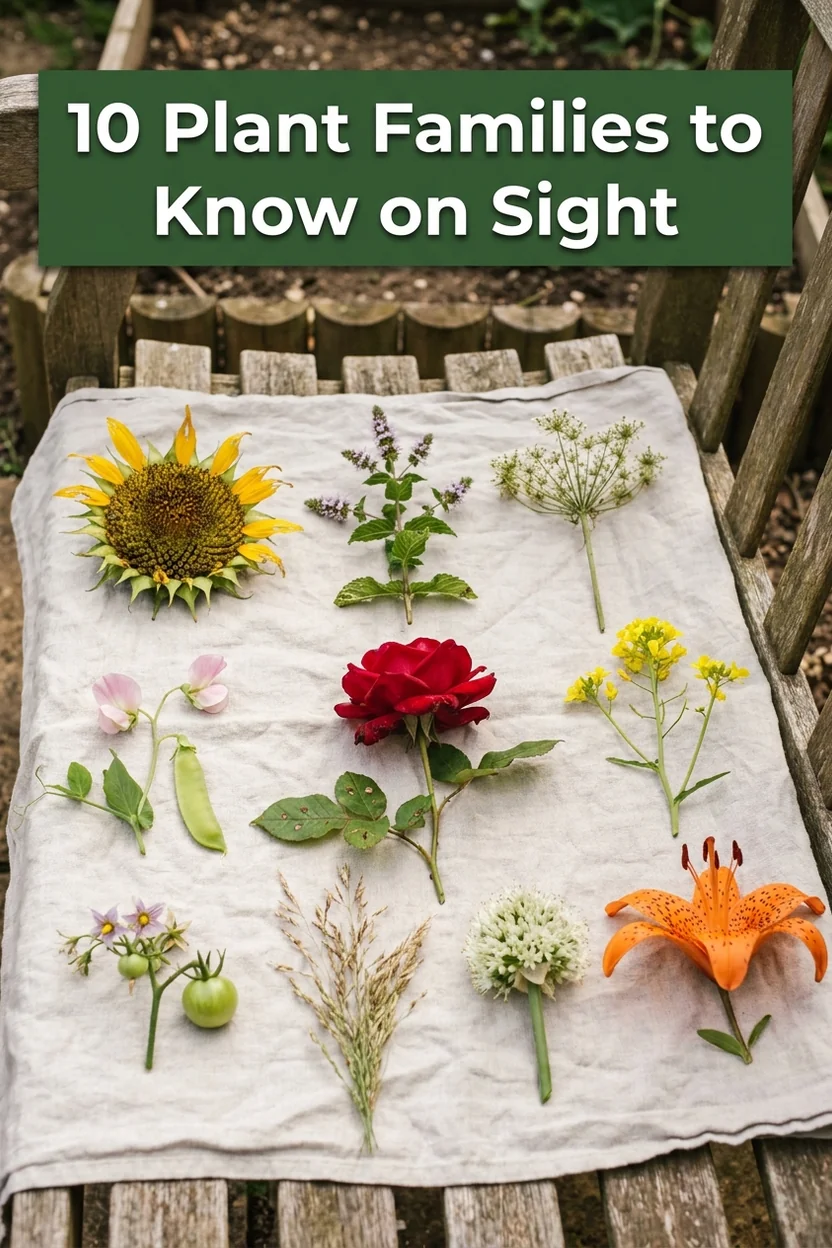
10 Plant Families to Recognize on Sight
Pets & Toxicity
Recorded toxicity for plants linked in this guide. An unknown status is not a safety assessment.
No linked plant is recorded as toxicDetailsHide
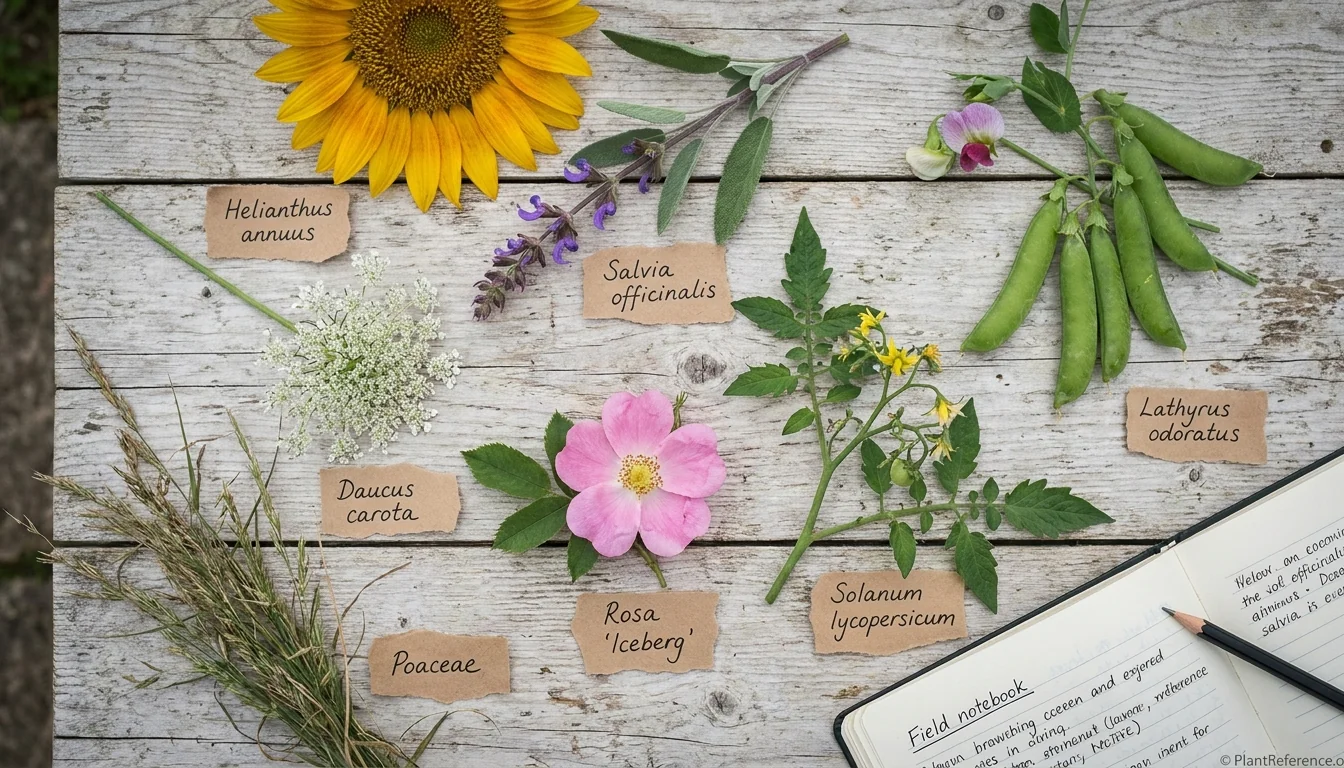
— Image © PlantReference.org 2026
Common plant families identification is the single biggest shortcut in botany. There are roughly 400,000 plant species on Earth, and no one memorizes them one by one. Experts recognize a few hundred family patterns—the square stem of a mint, the composite head of a daisy, the pea-shaped flower of a legume—and use those patterns to place an unfamiliar plant within seconds. Learn these ten families and you gain a framework that organizes thousands of garden and wild plants at once.
Why Families Beat Memorizing Species
A plant family groups species that share a common ancestor and, crucially, a set of repeating structural traits. Because flowers and fruits are far more stable than leaves—which shift with shade, age, and soil—family recognition leans heavily on reproductive features like petal number, symmetry, and how the seeds are packaged.
Once you can read those signatures, identification becomes a process of narrowing down rather than guessing. You see a flat-topped cluster of tiny white flowers, think "umbel, so Apiaceae," and you have already eliminated 99% of the plant kingdom. From there, a field guide, key, or app gets you to the species quickly. How to Identify Any Plant: A Beginner's Guide to Leaves, Flowers, and Stems
This approach also keeps you safe. Several families—the carrots and the nightshades especially—contain both beloved vegetables and deadly poisons, so knowing the family tells you when to slow down and verify. Poisonous Plants to Avoid: A Visual Safety Guide
Families share stable flower and fruit traits, not just leaf shape
Recognizing a family eliminates most of the plant kingdom instantly
Reproductive features (petals, symmetry, seed pods) are the best clues
Family knowledge flags which plants carry safety risks

Asteraceae — The Sunflower Family
The aster or sunflower family, Asteraceae (ass-ter-AY-see-ee), is one of the largest on Earth with over 23,000 species. Its signature is the composite head: what looks like a single flower is actually dozens or hundreds of tiny florets packed together. The outer ring of "petals" are individual ray florets, and the central button is made of disk florets.
Think of a sunflower, 🌿Helianthus annuus, a daisy, or a dandelion—each "flower" is really a community. After bloom, many members produce a pappus, the parachute of hairs that carries seeds on the wind, as on a dandelion clock. Leaves are highly variable, so always confirm with the head structure. Flower Identification Guide: Petals, Shape & Color Explained
Garden members include zinnias, marigolds, asters, and lettuce; weeds include dandelion and thistle. If you can see that one "flower" is a crowd of florets, you are looking at Asteraceae.
Brassicaceae — The Mustard Family
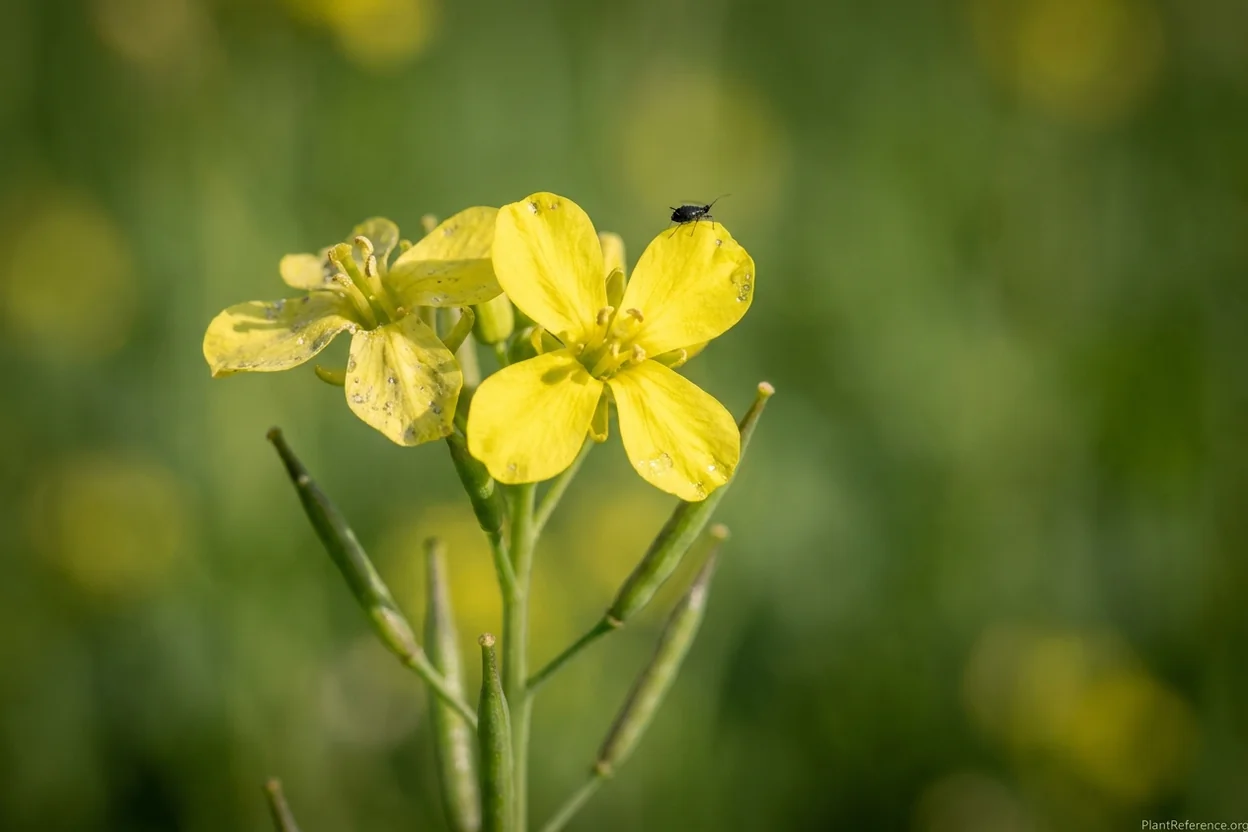
The mustard family, Brassicaceae (brass-ih-KAY-see-ee), wears its signature openly: four petals arranged in a cross, paired with four tall stamens and two short ones. This "crucifer" pattern gave the family its old name, Cruciferae. The flowers are usually small, in white or yellow, held in elongating clusters.
Look for the distinctive seed pods—a long, slender silique or a short, round silicle—that split to reveal a translucent inner partition. Crush a leaf and you often get a sharp, peppery mustard smell. Brassica oleracea alone gives us cabbage, kale, broccoli, and cauliflower, all bred from one species.
Garden brassicas, plus weeds like shepherd's purse and field mustard, all share that four-petal cross. It is one of the easiest families to confirm. Common Lawn Weeds Identification Guide
Fabaceae — The Pea Family
The pea or legume family, Fabaceae (fab-AY-see-ee), is unmistakable once you know its flower: a large upper banner petal, two side wing petals, and two lower petals fused into a keel that hides the reproductive parts. Garden peas, beans, sweet peas, lupines, and clover all show this shape.
The fruit seals the deal—a legume, a pod that splits along two seams, exactly like a pea pod. Leaves are usually compound, often with small leaf-like stipules at the base. Many family members host nitrogen-fixing bacteria in root nodules, which is why gardeners grow legumes to enrich soil. Simple vs Compound Leaves: How to Tell the Difference
Phaseolus vulgaris, the common bean, and Pisum sativum, the garden pea, are kitchen staples, while black locust and redbud bring the same flower to trees. Banner, wings, keel, and a pod: that is Fabaceae.
Rosaceae — The Rose Family
The rose family, Rosaceae (roh-ZAY-see-ee), gives us a huge share of temperate fruit. The typical flower is radially symmetric with five petals, five sepals, and many stamens arranged in a ring around a cup-like structure called the hypanthium. Roses, apples, cherries, strawberries, and blackberries all share this plan.
Leaves are usually alternate, often with serrated margins and a pair of stipules where the leaf meets the stem. The "many stamens in a ring" detail separates Rosaceae from other five-petaled families. Think of an open wild rose or an apple blossom and you have the template. How to Identify Trees by Their Leaves: Shapes, Margins, and Venation Explained
🌿Malus domestica (apple), Prunus cherries and plums, and Fragaria strawberries are all here, which makes this one of the most rewarding families for a fruit-growing gardener to recognize.
Lamiaceae — The Mint Family
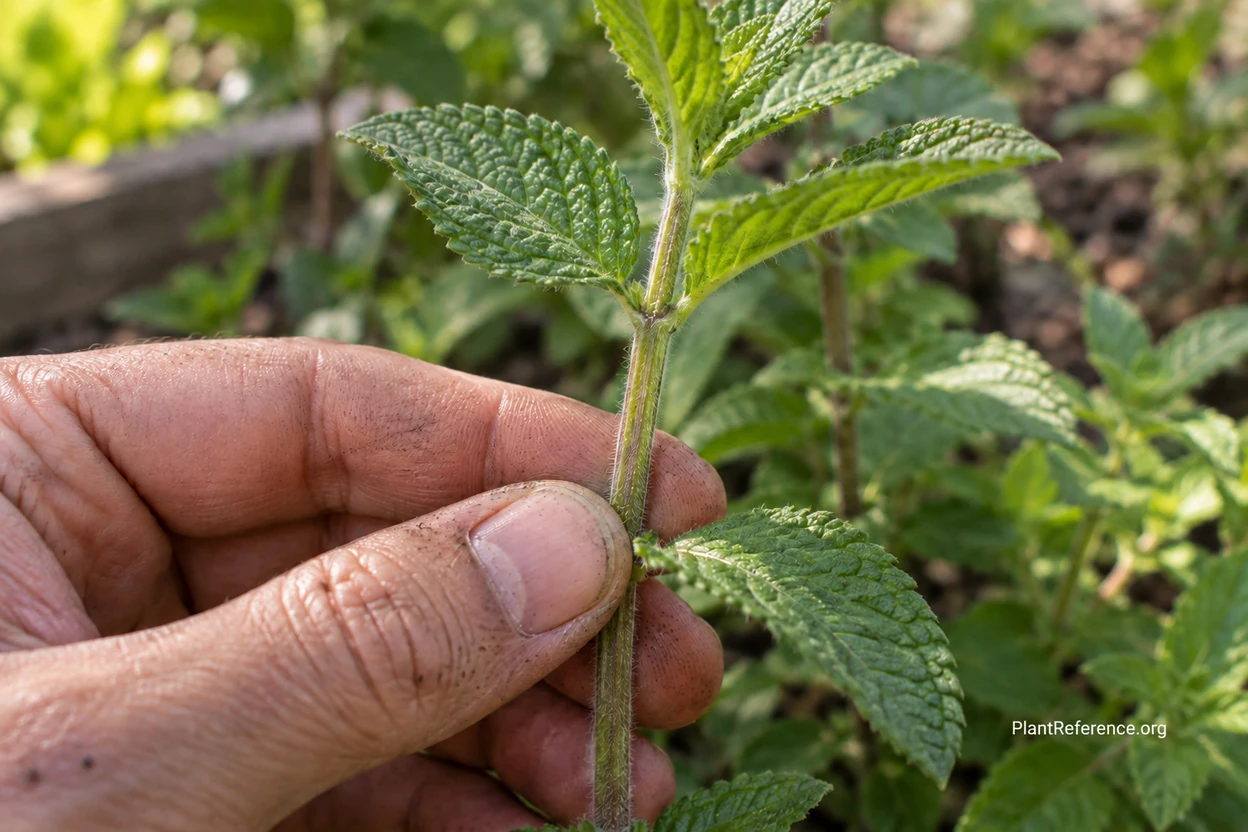
The mint family, Lamiaceae (lay-mee-AY-see-ee), offers the best tactile test in botany: roll the stem between your fingers and feel four distinct corners. A square stem, paired with opposite leaves and aromatic foliage, almost always means a mint. Alternate vs Opposite Leaf Arrangement: The MADCapHorse Mnemonic Explained
The flowers are typically two-lipped (bilaterally symmetric), often in whorls up the stem, with four stamens inside. Crush a leaf and the aroma confirms it—basil, mint, lavender, sage, rosemary, thyme, and oregano are all in this family. Ocimum basilicum (basil) and 🌿Lavandula angustifolia (lavender) are familiar examples.
Square stem, opposite leaves, fragrant when crushed: three quick checks and you have a mint. Few families are this satisfying to confirm in the field or the herb garden.
Apiaceae — The Carrot Family
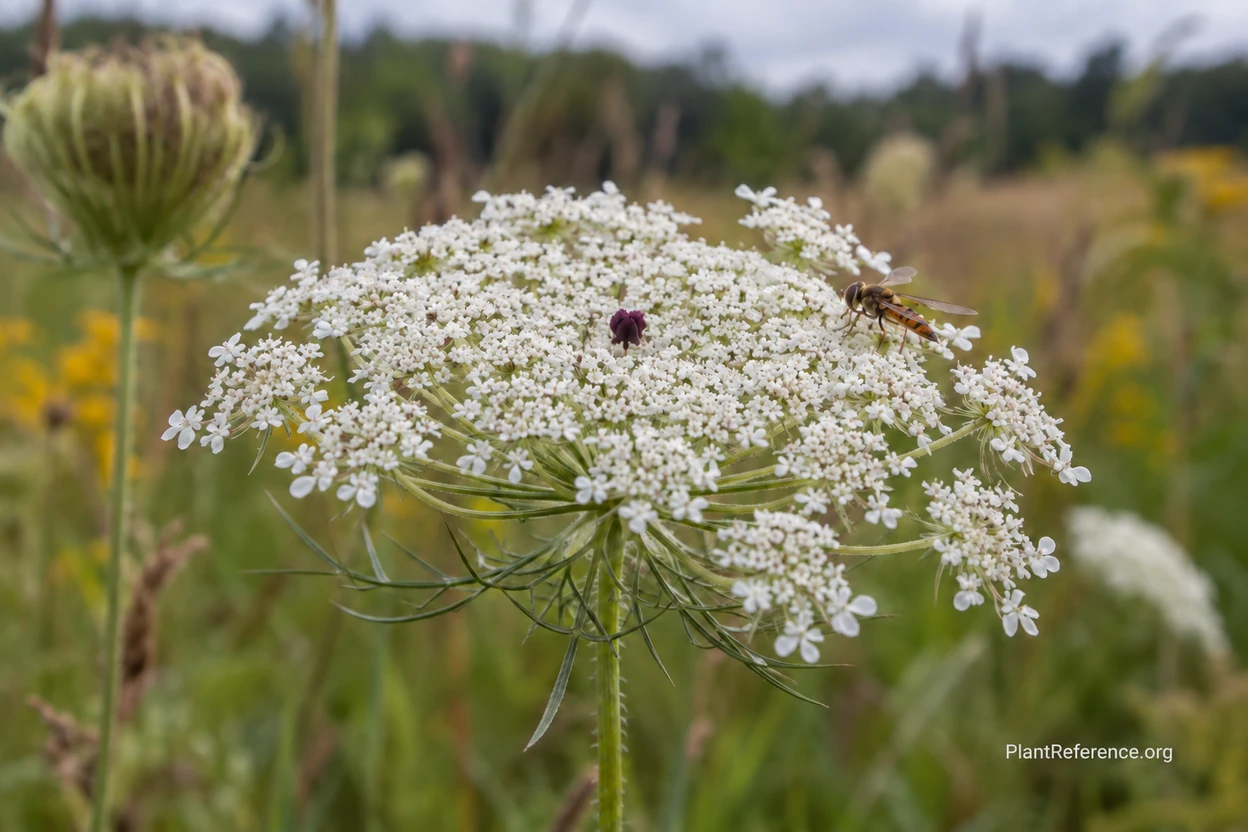
The carrot or parsley family, Apiaceae (ay-pee-AY-see-ee), is defined by its inflorescence: a compound umbel, where flower stalks of equal length radiate from one point like the ribs of an umbrella, and each rib ends in a smaller umbel. Picture the flat white lace of wild carrot.
Stems are often hollow and ridged, and leaves are usually finely divided and feathery, with a sheathing base that wraps the stem. Carrots, celery, parsley, dill, and fennel are all here—but so are some of the most toxic plants in North America.
This is the family where identification becomes a safety skill. Poison hemlock and water hemlock hide among the edible umbellifers, so never eat a wild umbel without certain identification. The fruit and stem details matter enormously here. Poison Hemlock vs Queen Anne's Lace: How to Tell Them Apart
Solanaceae, Cucurbitaceae, Poaceae & Amaryllidaceae
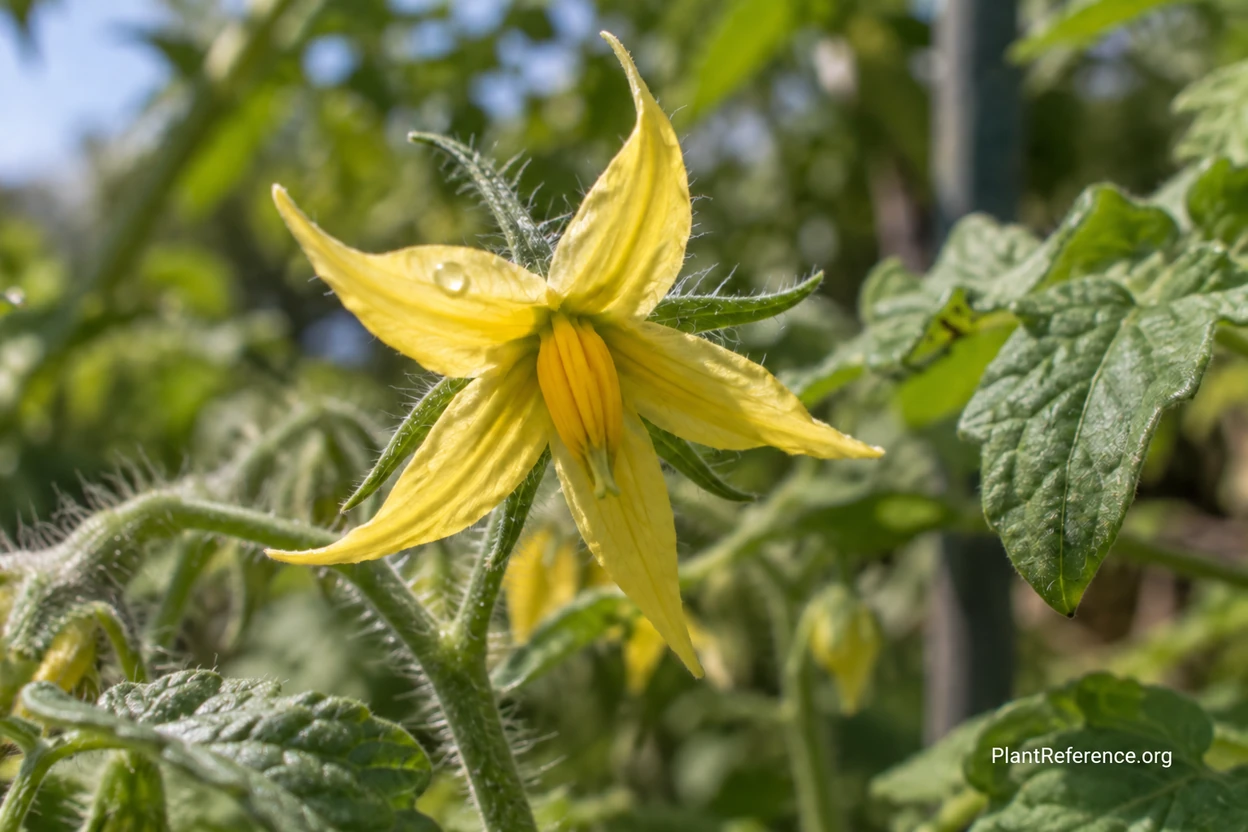
Four more families round out the essential gardener's set. The nightshade family, Solanaceae (so-lan-AY-see-ee), produces flowers with five petals fused into a star and a central cone of stamens—visible on any tomato or potato blossom. Solanum lycopersicum (tomato), peppers, eggplant, and potato all belong here, alongside toxic relatives like deadly nightshade, so the family flags both dinner and danger.
The gourd family, Cucurbitaceae (kew-ker-bih-TAY-see-ee), covers sprawling vines with tendrils, large lobed leaves, and separate male and female flowers, with the female bloom sitting atop a tiny immature fruit. Cucumbers, squash, melons, and pumpkins are all cucurbits.
The grass family, Poaceae (poh-AY-see-ee), has round, hollow, jointed stems with swollen nodes, leaves in two ranks with a sheath wrapping the stem, and wind-pollinated flowers reduced to tiny scales. Lawn grasses, corn, wheat, and bamboo are all grasses. Tree Bark Identification: A Visual Guide to 20 Trees
Finally, the amaryllis or onion family, Amaryllidaceae (am-uh-ril-ih-DAY-see-ee), includes alliums—onion, garlic, chives, and leeks—recognized by strap-like leaves, flowers clustered in a rounded umbel atop a leafless stalk, and an unmistakable onion or garlic scent when crushed. How to Identify Houseplants: A Visual Guide
Family | Signature Trait | Familiar Members |
|---|---|---|
Asteraceae | Composite head of many florets; pappus | Sunflower, daisy, dandelion, lettuce |
Brassicaceae | 4 petals in a cross; mustard smell | Cabbage, broccoli, kale, mustard |
Fabaceae | Banner-wings-keel flower; pod | Beans, peas, clover, lupine |
Rosaceae | 5 petals, many stamens; hypanthium | Rose, apple, cherry, strawberry |
Lamiaceae | Square stem, opposite aromatic leaves | Mint, basil, sage, lavender |
Apiaceae | Compound umbel; hollow stem | Carrot, dill, parsley, fennel |
Solanaceae | Fused 5-point star; stamen cone | Tomato, pepper, potato, eggplant |
Cucurbitaceae | Tendrils; separate male/female flowers | Cucumber, squash, melon, pumpkin |
Poaceae | Round jointed hollow stems; sheaths | Lawn grass, corn, wheat, bamboo |
Amaryllidaceae | Umbel of flowers; onion scent | Onion, garlic, chives, leek |
Build the Habit of Seeing Families
Family recognition is a pattern-recognition skill, and like any such skill it grows through repeated, structured exposure rather than a single read-through. The botanists who name a plant in two seconds are not recalling a list—they are matching a whole-shape impression they have built over hundreds of encounters.
That is exactly where deliberate practice helps. Apps identify plants for you, but PlantReference teaches you to identify plants yourself. Our database shows multiple images per species across seasons and growth stages, so you learn the family's range of looks rather than one frozen photo. Plant Identification App Accuracy: Why Apps Get It Wrong
Pair that with spaced-repetition flashcards and quizzes organized by family, and the signatures—composite heads, square stems, banner-and-keel flowers—become automatic. Quiz yourself on these ten families with our plant identification flashcard set, and you will start seeing the hidden order in every garden bed and roadside you pass.
Frequently Asked Questions
Reading about plants and recognising them are different skills. These three build the second.
- Daily PlantIdentify the day’s mystery plant from a close-up photograph.
- Keyed OutWork a dichotomous key, lead by lead, to name a hidden specimen.
- Name That PlantName a specimen from botanical clues dealt hardest first.
Free to play, no account needed
Tagged with
Sarah earned her doctorate in plant biology and spent time working in botanical garden education before transitioning to freelance writing and consulting. Now based in Portland, Oregon, she teaches plant identification workshops at local community centers and maintains a modest collection of over 60 houseplants in her small apartment. Sarah specializes in helping beginners understand plant science without the jargon—her approach focuses on practical observation over theory. She's killed her fair share of fiddle leaf figs and finally cracked the code on keeping them alive.