Image 1 of 14
1 / 14
Plant Reference
Malus, Genus, domestica, Species,
- Genus & species
apple
Descended primarily from {Malus sieversii} native to the wild apple forests of Kazakhstan and Kyrgyzstan in Central Asia, with later hybridization from {M. sylvestris} (European crabapple) and other wild species; cultivated for more than 4,000 years
Overview
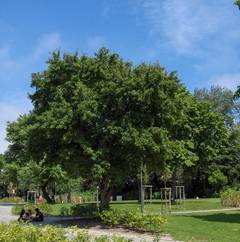
Malus domestica is a spreading deciduous tree in the family Rosaceae reaching 15–30 feet (4.5–9 m) tall and 15–25 feet (4.5–7.5 m) wide on standard rootstock, with grafted dwarf and semi-dwarf rootstocks producing smaller trees. The cultivated apple is descended primarily from Malus sieversii, a wild species native to the apple forests of the Tien Shan mountains of Kazakhstan and Kyrgyzstan, with later hybridization from M. sylvestris (European crabapple) and other wild Malus species during several millennia of cultivation across Europe and Asia. Leaves are simple, ovate, finely serrated, 2–5 inches (5–13 cm) long, medium green, and pubescent on the underside. White to pink 5-petaled flowers 1–1.5 inches (2.5–4 cm) across open in flat-topped clusters at the tips of the flowering spurs in April and May across a 2-week bloom period, and most cultivars are self-sterile and require a second compatible cultivar blooming at the same time within 50 feet (15 m) for cross-pollination by bees. Pome fruit 2–4 inches (5–10 cm) across develops through summer and ripens from August through October depending on cultivar. Tree size is controlled by the choice of rootstock: M9 produces dwarf trees 6–10 feet (1.8–3 m) tall, M26 produces semi-dwarf trees 10–14 feet (3–4 m) tall, and MM111 produces semi-standard trees 15–25 feet (4.5–7.5 m) tall. Limitation: M. domestica calls for more active disease and pest management than any other common fruit tree in temperate gardens: apple scab (Venturia inaequalis), fire blight (Erwinia amylovora), cedar-apple rust (Gymnosporangium juniperi-virginianae), codling moth (Cydia pomonella), and apple maggot (Rhagoletis pomonella) all require active seasonal management through dormant oil, fungicide sprays, pheromone traps, or disease-resistant cultivar selection; the disease-resistant cultivars 'Liberty', 'Enterprise', 'Freedom', and 'GoldRush' reduce but do not eliminate the spray program required for acceptable fruit quality.
Native Range
No true wild range. The cultivated apple Malus domestica is descended primarily from M. sieversii, a wild species native to the mountain apple forests of the Tien Shan in Kazakhstan and Kyrgyzstan in Central Asia, with later hybridization from M. sylvestris (European crabapple), M. baccata (Siberian crabapple), and other wild Malus species. The cultivated apple has been propagated vegetatively by grafting for more than 4,000 years and has spread from Central Asia through Europe and Asia and then to the Americas with European settlement.Suggested Uses
Used as a fruit tree in home orchards, edible landscapes, espaliered hedges, and residential yards at 15–25 foot (4.5–7.5 m) spacing on standard rootstock, 10–14 foot (3–4 m) spacing on M26 semi-dwarf rootstock, and 6–10 foot (1.8–3 m) spacing on M9 dwarf rootstock. Container culture is possible on M9 dwarf rootstock in pots of at least 15 gallons (57 L). Disease-resistant cultivars are chosen for gardens where the spray program would otherwise be the main objection to growing apples. Small confined sites without room for a second pollinator cultivar are unsuitable for most apple cultivars because cross-pollination calls for two compatible trees within 50 feet (15 m).How to Identify
Appearance
Size & Dimensions
Height15' - 30'
Width/Spread15' - 25'
Bloom Information
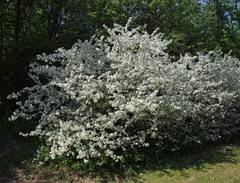
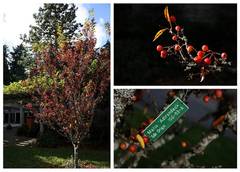
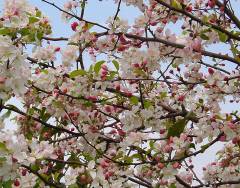
White to pink 5-petaled flowers 1–1.5 inches (2.5–4 cm) across open in flat-topped clusters at the tips of the flowering spurs from April through May across about 2 weeks. The flowers are lightly fragrant and are pollinated by honeybees and native bees; most cultivars are self-sterile and require a second compatible cultivar blooming at the same time within 50 feet (15 m) for cross-pollination. Pome fruit 2–4 inches (5–10 cm) across develops through summer and ripens from August through October.
Detailed Descriptions
Flower Description
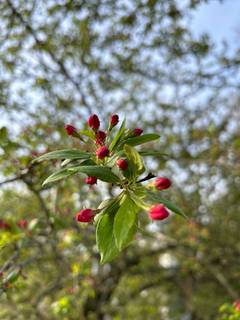
white to pink; 5-petaled, 1-1.5 inches (2.5-4 cm) across, in flat-topped clusters (corymbs) at the tips of the flowering spurs; lightly fragrantFoliage Description
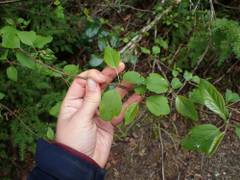
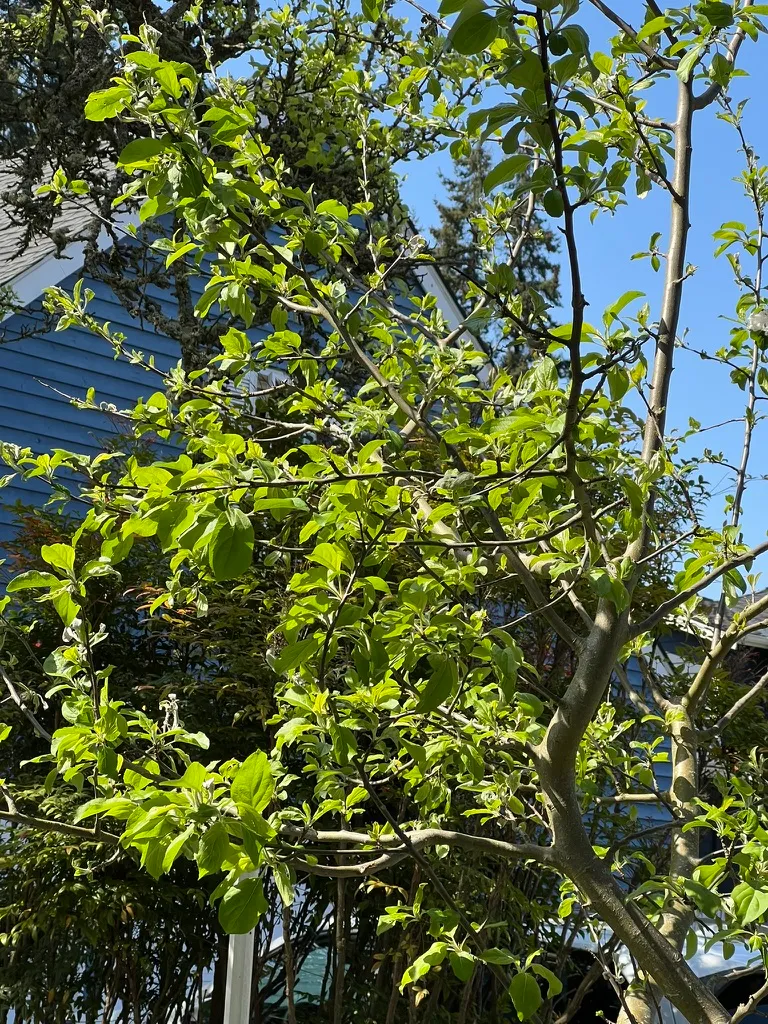
medium green; simple, ovate, finely serrated, 2-5 inches (5-13 cm) long, pubescent on the underside; turns yellow in fallGrowing Conditions
Sun Requirements
Requires 6-12 hours of direct sunlight daily
• Full Sun: 6+ hours of direct sunlight
• Partial Shade: 3-6 hours of direct sunlight
• Full Shade: Less than 3 hours of direct sunlight
Care & Maintenance
Care Guide
Site in full sun with 6–12 hours of direct sun per day in well-drained soil with a pH of 6.0–7.0. A second compatible pollinator cultivar blooming at the same time is planted within 50 feet (15 m) of the main tree because most M. domestica cultivars are self-sterile. Annual pruning in dormancy is required to maintain structure and fruiting spur distribution. Fruit thinning to one fruit per cluster in June supports larger fruit size and reduces biennial bearing. Apple scab, fire blight, cedar-apple rust, codling moth, and apple maggot all call for active seasonal management through dormant oil sprays, fungicide applications, pheromone traps, or the selection of disease-resistant cultivars including 'Liberty', 'Enterprise', 'Freedom', and 'GoldRush'. Chill hour requirement ranges from 500 to 1,000 hours below 45°F (7°C) depending on cultivar. Hardy in USDA zones 3–8.Pruning
Pruning is done in winter dormancy (January and February) while the tree is leafless. Young trees are trained to either an open-center (vase) form with 3–4 main scaffold branches or a central-leader form with tiered lateral branches, depending on the rootstock and the intended tree size. Annual pruning removes water sprouts (vigorous upright shoots), crossing branches, dead wood, and interior growth that shades the fruiting spurs. Thinning cuts open the canopy to air and light, which reduces fungal disease pressure. Fire blight infections call for cuts 12 inches (30 cm) below the visibly affected tissue, and tools should be disinfected between cuts to prevent spreading the bacterium.Pruning Schedule
Prune: January–February
winter
Container Growing
Suitable for container growing
Minimum container size: 15 gallons