Image 1 of 13
1 / 13
Plant Reference
Malus, Genus, fusca, Species,
- Genus & species
crabapple
Alaska south through British Columbia, Washington, and Oregon to California; moist forests, stream banks, wetland margins, and forest edges
Overview
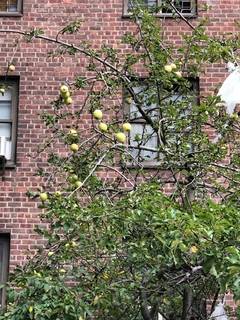
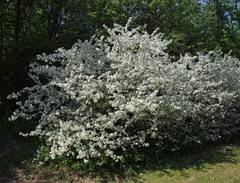
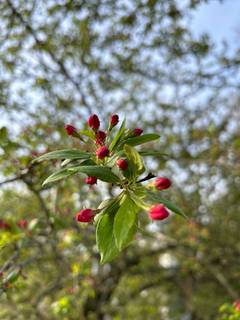
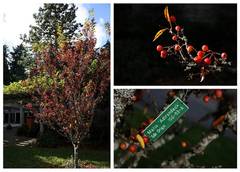
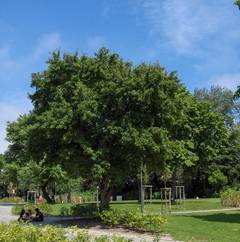
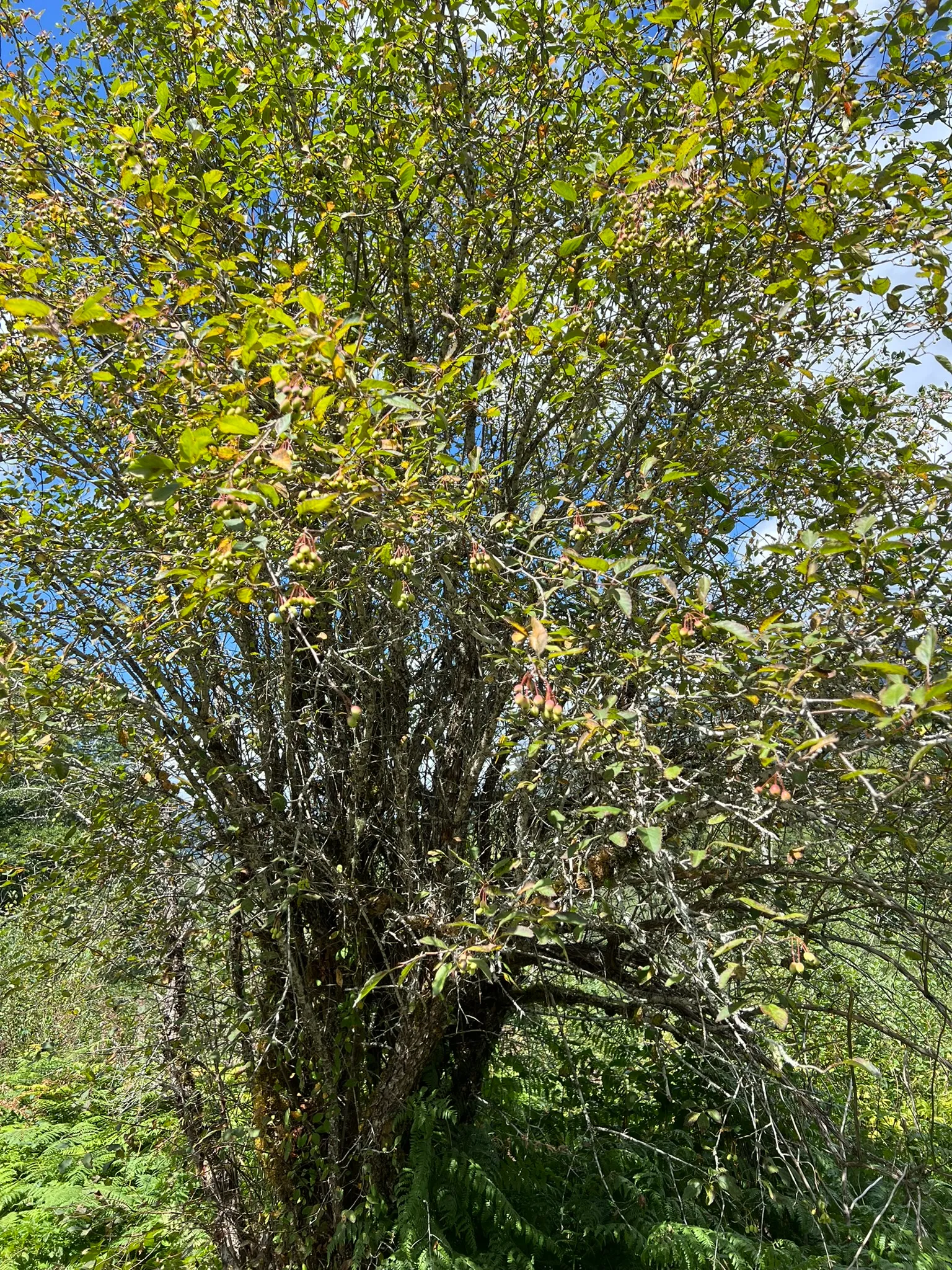
Malus fusca is Pacific crabapple (Oregon crabapple), a spreading deciduous small tree growing 10-35 feet (3-10 m) tall and 10-20 feet (3-6 m) wide. White to pinkish-white fragrant 5-petaled flowers in clusters of 5-12 in April-May (3 weeks), followed by small fruits 0.3-0.6 inch (8-15 mm) ripening yellow to red to purplish-red in August-October. Variable medium to dark green leaves often shallowly lobed or 3-lobed on vigorous shoots; branches with short stout thorns. Fall color orange to red and yellow. In Rosaceae. Fusca = dusky/dark brown. The only native apple species in the Pacific Northwest — distinguishing it from the many introduced ornamental crabapples. Native to Alaska south through BC, WA, OR, CA. Found in moist forests, stream banks, wetland margins, and forest edges. Tolerates wet sites that most other apples cannot. Important wildlife food for bears, deer, grouse, and waxwings. Indigenous peoples harvested the fruits — stored in water or oil for winter use. Susceptible to apple scab and fire blight (same as cultivated apples). Non-toxic. Zones 4-9. Part sun to full sun. Growth rate is moderate.
Native Range
Native to Alaska south through British Columbia, Washington, and Oregon to California. Found in moist forests, stream banks, wetland margins, and forest edges. The only native apple species in the Pacific Northwest.Suggested Uses
Grown as a native fruit tree in riparian buffer plantings, wetland edges, hedgerows, native woodlands, and wildlife gardens, spaced 10-20 feet (3-6 m). Only native PNW apple. Wildlife food. Tolerates wet sites. Non-toxic. Zones 4-9.How to Identify
Appearance
Size & Dimensions
Height10' - 35'
Width/Spread10' - 20'
Bloom Information
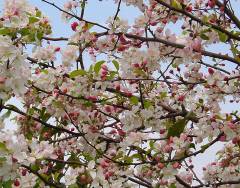
Spring (April-May). White to pinkish-white fragrant 5-petaled flowers 0.6-1 inch (15-25 mm) in clusters of 5-12. 3 weeks. Bee- and butterfly-visited. Small yellow to purplish-red fruits follow in August-October.
Detailed Descriptions
Flower Description
White to pinkish-white, fragrant, 5-petaled, 0.6-1 inch (15-25 mm), in clusters of 5-12 flowers — the classic Rosaceae apple-family flower cluster; April-May; followed by small fruits 0.3-0.6 inch (8-15 mm) ripening yellow to red to purplish-red in August-October — the only native Pacific Northwest appleFoliage Description
Medium to dark green; variable shape — ovate to lanceolate, serrated, often shallowly lobed or 3-lobed (especially on vigorous shoots — the variable lobed leaves are diagnostic); 1.5-4 inches (4-10 cm); branches with short stout thorns; turns orange to red and yellow in fallGrowing Conditions
Sun Requirements
Requires 4-10 hours of direct sunlight daily
• Full Sun: 6+ hours of direct sunlight
• Partial Shade: 3-6 hours of direct sunlight
• Full Shade: Less than 3 hours of direct sunlight
Care & Maintenance
Care Guide
Part sun to full sun (4-10 hours). Tolerates clay, loam, silt pH 5.0-7.5. Tolerates wet sites — riparian and wetland edges. Cold-hardy (zone 4). Susceptible to apple scab and fire blight. Only native PNW apple. Non-toxic. Zones 4-9.Pruning
Prune in late winter (February-March) before bud break. Remove crossing or damaged branches. The natural multi-stem spreading form is the typical goal for native plantings.Pruning Schedule
Prune: February–March
early spring