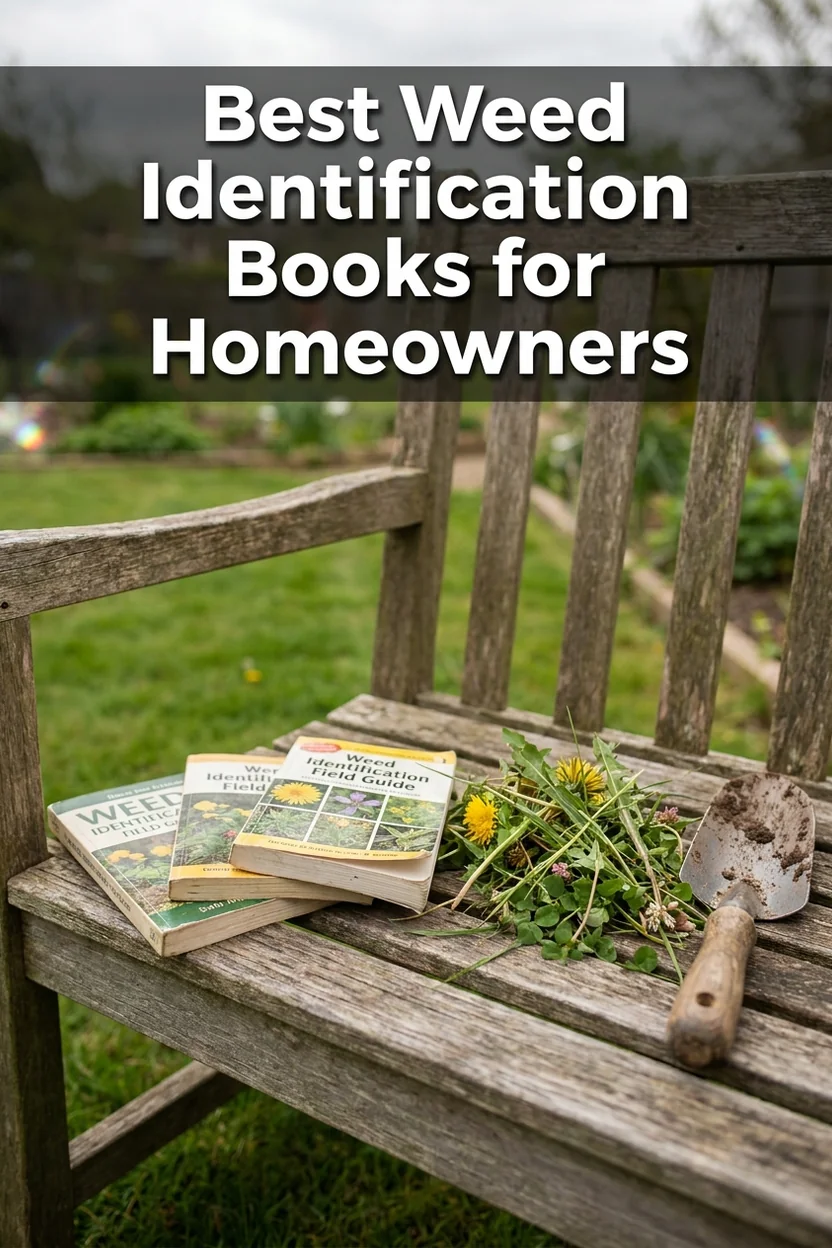
Best Weed Identification Books & Guides for Homeowners
Pets & Toxicity
Recorded toxicity for plants linked in this guide. An unknown status is not a safety assessment.
Toxic to pets: upright yellow woodsorrel, Ground ivyDetailsHide
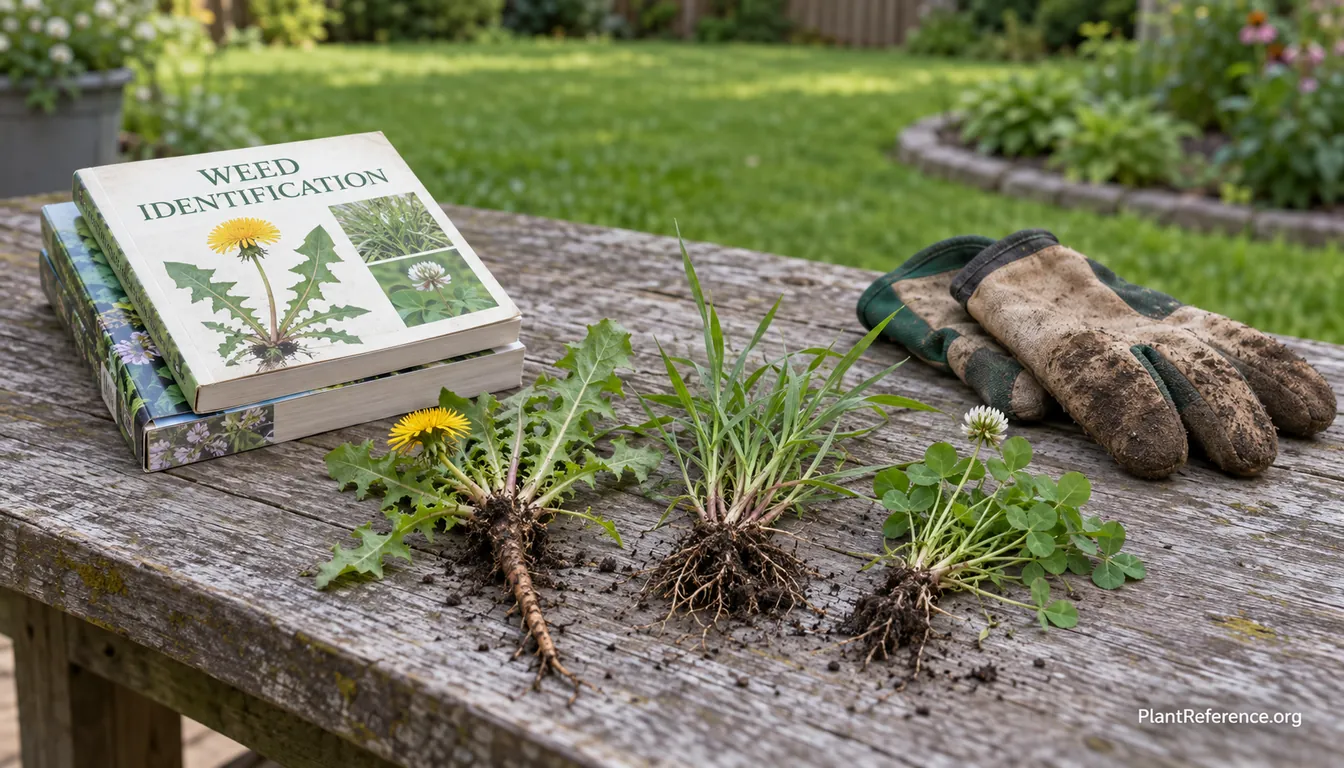
— Image © PlantReference.org 2026
The best weed identification book is the one that lets you name a weed while it is still small enough to pull, because identification drives every control decision you make. Whether a plant is an annual you can simply mulch out or a perennial like 🌿Cyperus esculentus (sy-PEER-us es-kew-LEN-tus) nutsedge that demands a completely different approach depends entirely on knowing what it is. A good book turns a mystery sprout into a named problem with a clear solution.
How to Choose a Weed Identification Book
A weed book is not the same as a wildflower guide. Wildflower guides organize plants by bloom and color, but weeds cause the most trouble long before they flower. The book that helps you most shows weeds at the seedling and rosette stages, when control is easiest and cheapest. Common Lawn Weeds Identification Guide
Four features separate a useful weed book from a frustrating one.
Seedling and rosette photos: The earliest growth stages are when you need to act, so images of young plants matter more than mature blooms.
Life-cycle labeling: Knowing whether a weed is annual, biennial, or perennial determines whether you mulch, pull, or dig the roots out.
Regional relevance: A guide tuned to your region covers the species and lookalikes you will actually fight in your own yard.
Multiple images per plant: Leaf, stem, root, and flower views beat a single photo every time when distinguishing similar weeds.
That last point is the one beginners underrate. Crabgrass, 🌿Digitaria sanguinalis, looks like half a dozen other grassy weeds as a seedling, and a single photo rarely settles it. You want a book that shows the ligule, the growth habit, and the seed head together. How to Identify Any Plant: A Beginner's Guide to Leaves, Flowers, and Stems
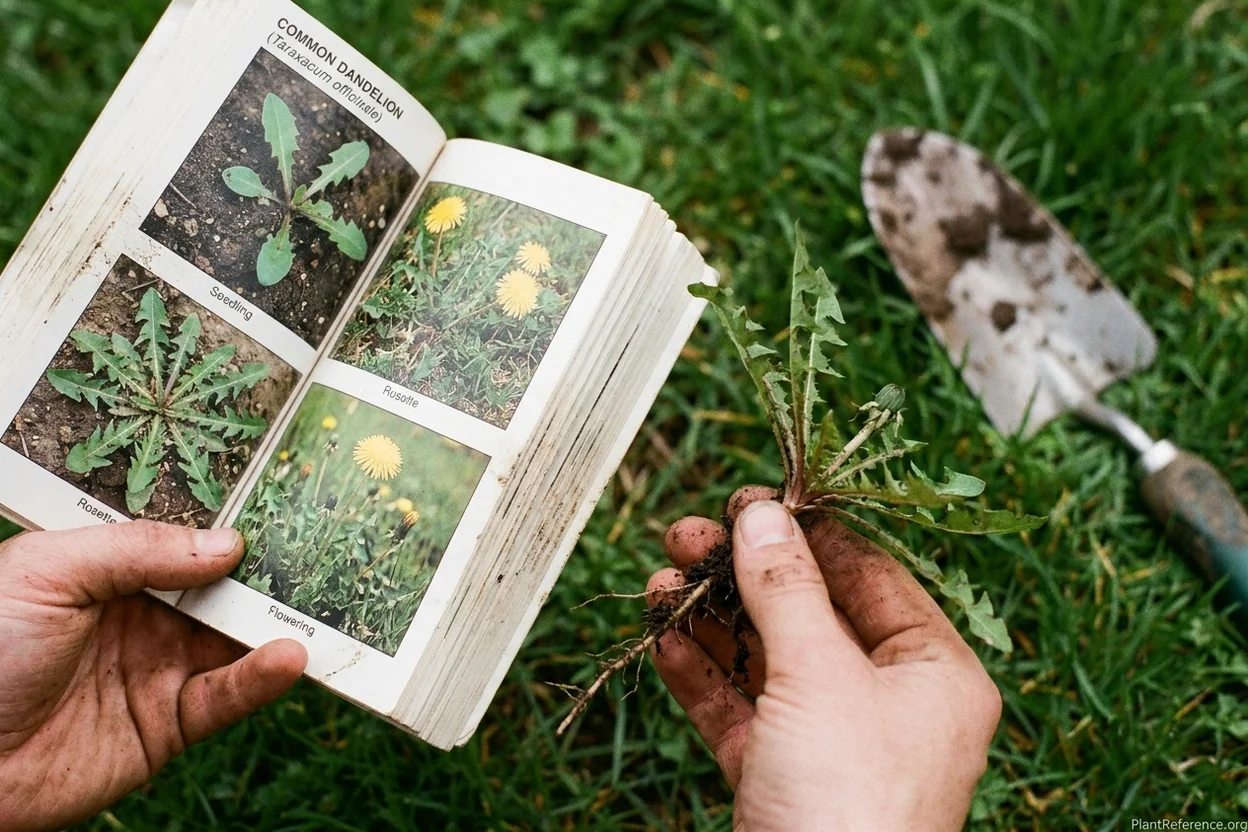
Best Weed Identification Books Compared
These are the weed references that consistently earn shelf space for homeowners, master gardeners, and turf professionals alike. The table sums them up, and the notes below explain who each one suits best.
Book | Best For | Coverage | Why It Stands Out |
|---|---|---|---|
Weeds of the Northeast | Northeast & Midwest yards | 500+ species | Seedling photos and a practical key |
Weeds of North America | Comprehensive national reference | 600+ species | The most complete single weed book |
Common Weeds of the United States (USDA) | Budget buyers | 220 species | Cheap, durable, clear line drawings |
Weeds of the South | Southeast homeowners | 450+ species | Regional species and warm-season lookalikes |
Newcomb's Wildflower Guide | Flowering broadleaf weeds | 1,375 species | Keys out weeds by flower structure |
Botany in a Day (Elpel) | Learning plant families | Family-level patterns | Teaches the system behind every weed |
Weeds of the Northeast by Uva, Neal, and DiTomaso is the book turf and nursery professionals reach for, and it serves the Midwest nearly as well. Its standout feature is photographs of weeds at the seedling stage alongside mature plants, plus a genuinely usable identification key. If you garden anywhere in the northern half of the country, this is the first book to buy. What Type of Grass Do I Have? Identify Your Lawn in 5 Steps
For the broadest coverage, Weeds of North America by Dickinson and Royer is the most comprehensive single volume available, documenting more than 600 species across the continent with multiple photos each. It is heavier and pricier, better as a home reference than a field carry, but nothing else matches its scope. Raised Bed Weeds: Prevention Strategies and Control Methods
Budget-minded homeowners should not overlook the USDA's Common Weeds of the United States, reprinted affordably by Dover. Its clear botanical line drawings and concise descriptions cover 220 of the most common weeds, and at its price it is an easy first reference for anyone just starting to take their lawn seriously.
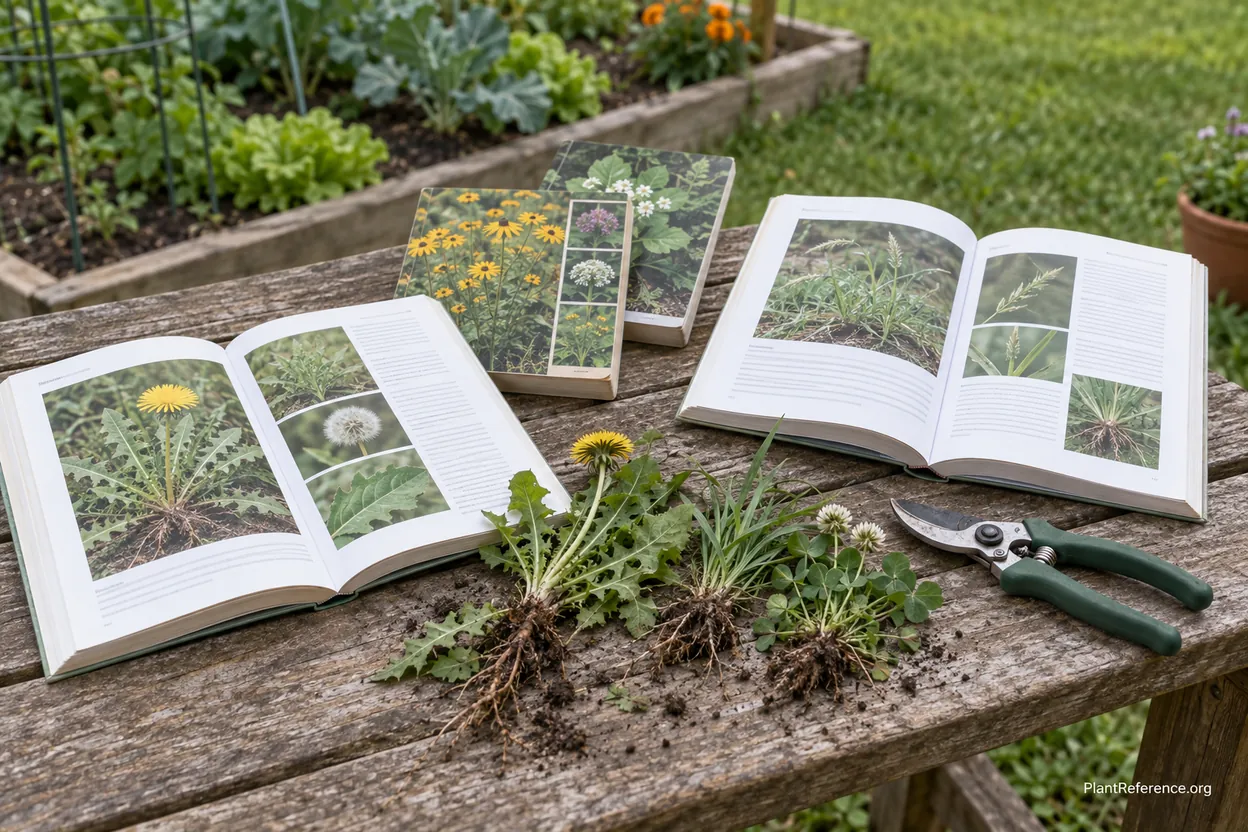
Regional Guides Beat National Ones for Weeds
Weeds are intensely regional. The crabgrass and nutsedge plaguing a Georgia lawn are a different battle from the bindweed and quackgrass in a Minnesota garden, and a one-size-fits-all national book inevitably thins out its coverage to fit everything between two covers.
This is why the regional "Weeds of..." series is so valuable. Weeds of the South by Bryson and DeFelice covers the warm-season species and lookalikes that northern books gloss over, while Weeds of the Northeast does the same for cooler climates. Buying the regional title for where you live means every entry is one you might actually encounter. Wildflower Identification by Color: Name Any Flower
The smartest setup pairs one comprehensive national reference for the occasional oddball with one regional guide for the weeds you fight every week. The combination costs less than a single season of trial-and-error herbicide.
Book Type | Strength | Weakness | Pair With |
|---|---|---|---|
National reference | Covers nearly everything | Thinner per-species detail | A regional guide |
Regional guide | Local species & lookalikes | Limited outside its area | A national reference |
Budget classic | Cheap and durable | Fewer species, drawings only | A photo-based guide |
Family-based | Teaches the whole system | No species shortcuts | Any weed guide |
Why Seedling Photos Matter Most
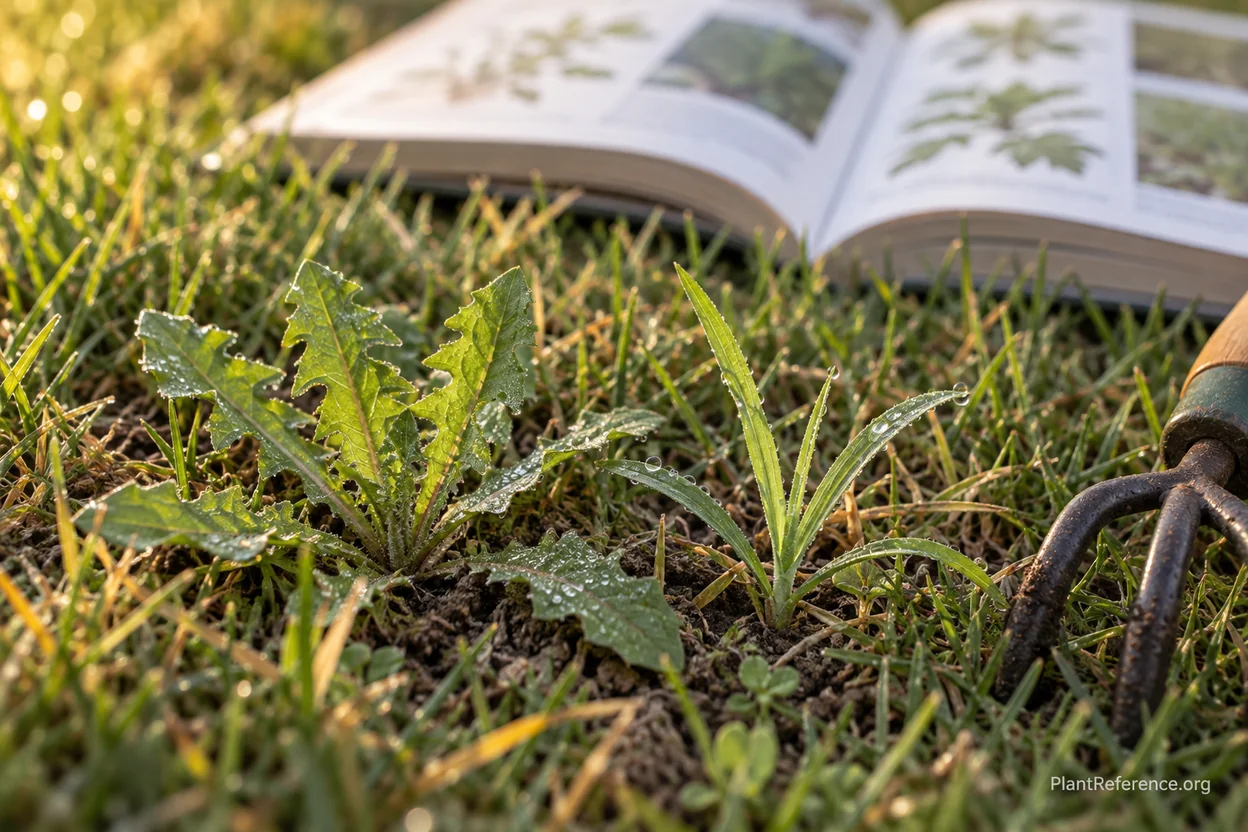
The difference between an easy weeding afternoon and a season-long fight is timing, and timing depends on identifying weeds young. A dandelion, 🌿Taraxacum officinale, pulls cleanly as a small rosette but anchors a deep taproot within weeks. Crabgrass yanks out by hand in June but drops thousands of seeds by August. Plant Identification App Accuracy: Why Apps Get It Wrong
Most weed problems are really identification problems that arrived too late. A book heavy on seedling and rosette photographs lets you catch weeds in the window where a quick pull or a thin layer of mulch ends the problem, instead of waiting until a flowering plant forces you toward stronger measures.
Learning plant families accelerates this enormously. Once you recognize that 🌿Oxalis stricta is a wood sorrel and not clover, or that creeping charlie, 🌿Glechoma hederacea, has the square stem of the mint family, you can place a weed even when the exact species is not pictured. This is exactly what Botany in a Day teaches, and it is the same philosophy behind PlantReference: apps identify weeds for you, while PlantReference teaches you to identify them yourself. Its flashcard system shows multiple images per species and uses spaced repetition to drill the family patterns a book assumes you know. Flower Identification Guide: Petals, Shape & Color Explained
Books vs Apps for Identifying Weeds
Identification apps are tempting for weeds because they are fast and free, but weeds are exactly where apps struggle most. Many troublesome weeds are grasses, sedges, and seedlings—the plant groups where image recognition is least reliable, since the apps lean heavily on flowers the weed has not grown yet. How to Identify Any Plant: A Beginner's Guide to Leaves, Flowers, and Stems
A good book also gives you something an app cannot: the life-cycle and control context printed right beside the photo. Knowing a plant is a creeping perennial that regrows from root fragments changes your whole strategy, and that information lives in books, not in a one-line app result.
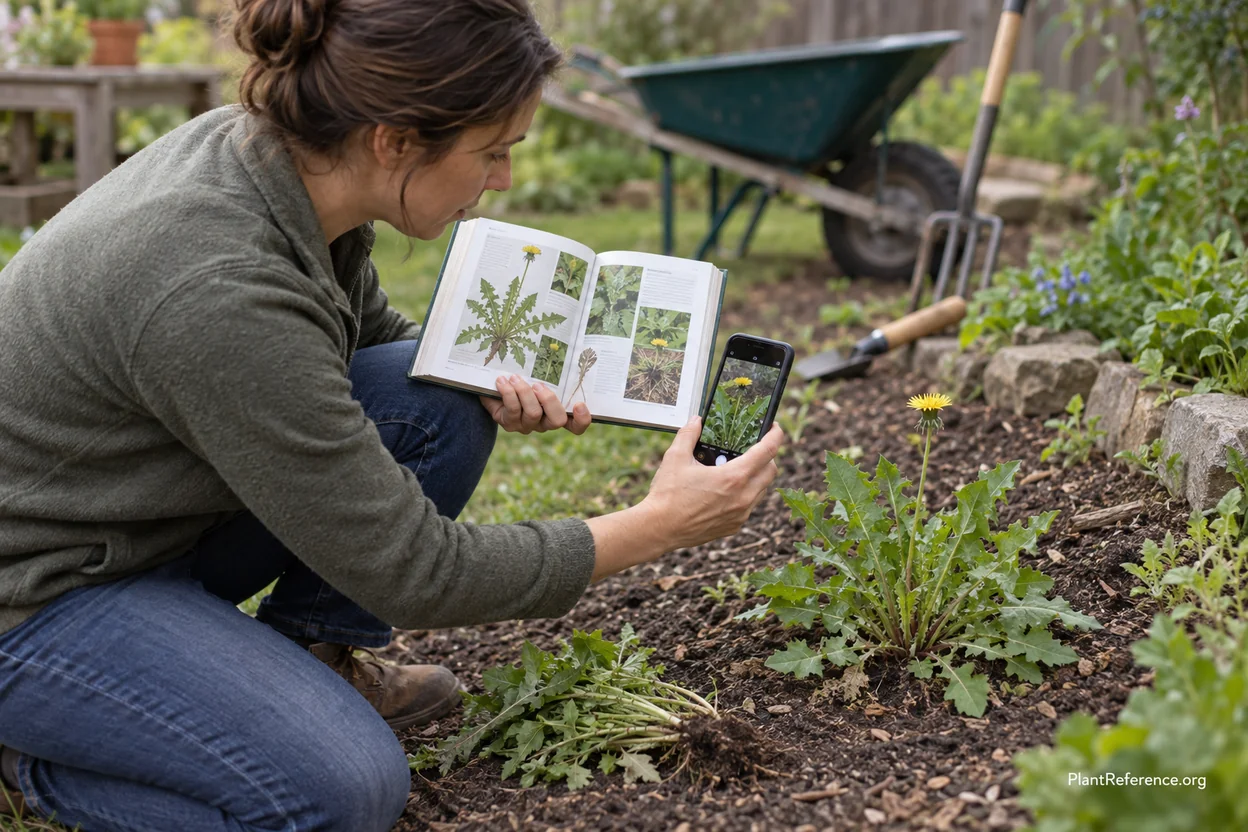
The most reliable approach blends both: snap a quick app photo to narrow the possibilities, then confirm against a regional book and a glance at the plant's growth habit. For weeds you battle year after year, that confirmation step is what finally lets you win.
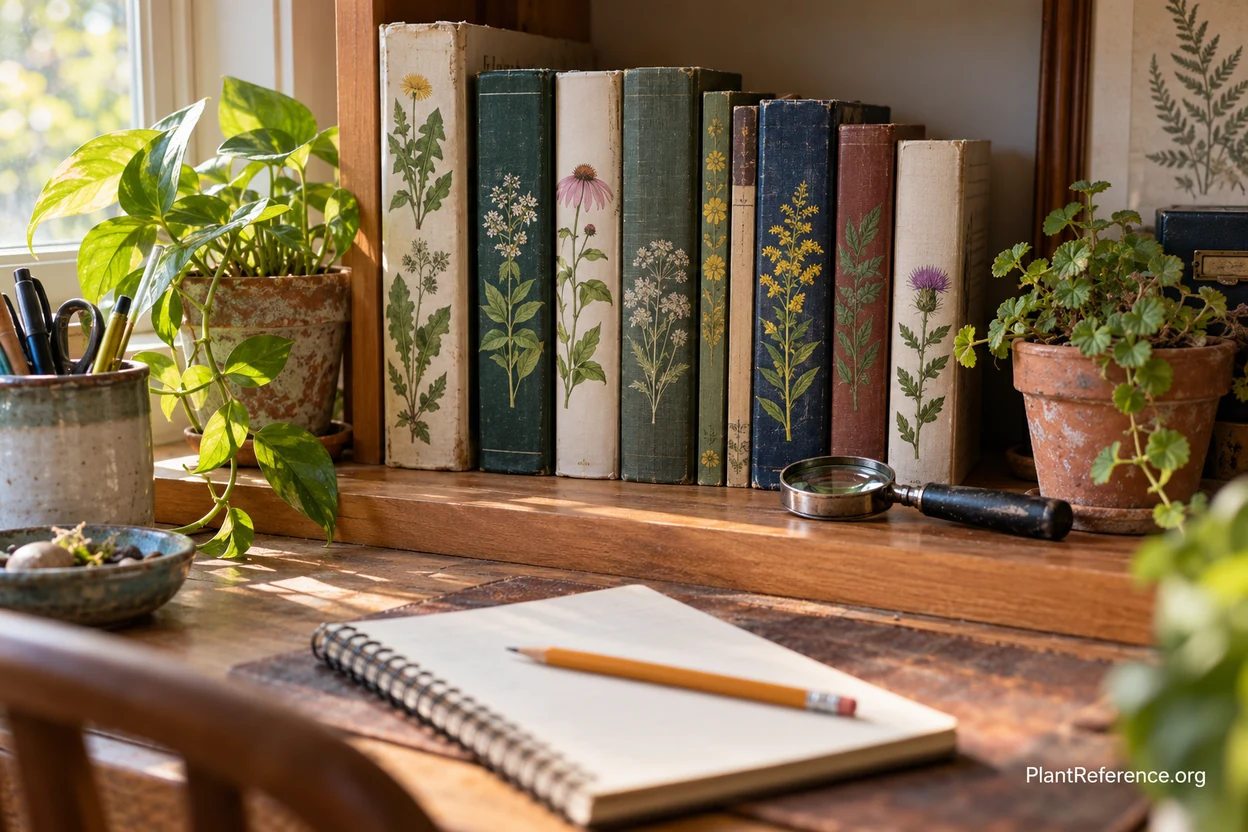
Start with the regional guide for where you live, add a national reference for the odd surprise, and lean on plant families to place anything the books do not picture. That combination turns weed identification from a guessing game into a quick, confident routine. Poisonous Plants to Avoid: A Visual Safety Guide
Frequently Asked Questions
Reading about plants and recognising them are different skills. These three build the second.
- Daily PlantIdentify the day’s mystery plant from a close-up photograph.
- Keyed OutWork a dichotomous key, lead by lead, to name a hidden specimen.
- Name That PlantName a specimen from botanical clues dealt hardest first.
Free to play, no account needed
Tagged with
Helen is an interior plant stylist in Los Angeles who works with restaurants, offices, and residential clients to select and maintain indoor plants. She studied design in college and got into plants when a client asked her to "green up" a mid-century modern home. Helen's expertise sits at the intersection of design and plant care—she thinks about light, scale, texture, and color, but she also knows which plants will actually survive in a given space. She's killed enough fiddle leaf figs in dark corners to know better. Helen maintains her own collection of over 80 houseplants in her apartment and writes about indoor plant selection, styling, and the practical side of keeping plants alive in interior environments.