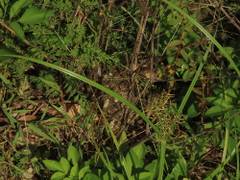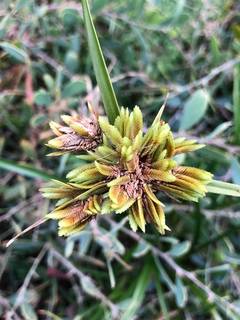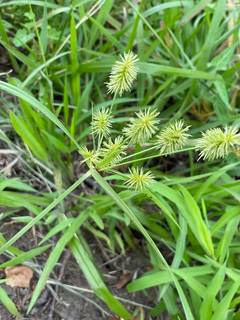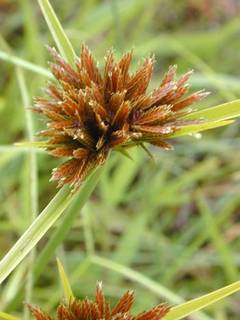
Cyperus, Genus, esculentus, Species,
- Genus & species
yellow nutsedge
Uncertain cosmopolitan native range (North America, southern Europe, Africa)
Overview
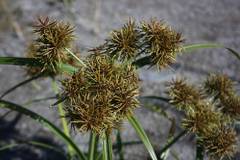
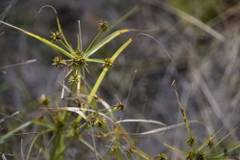
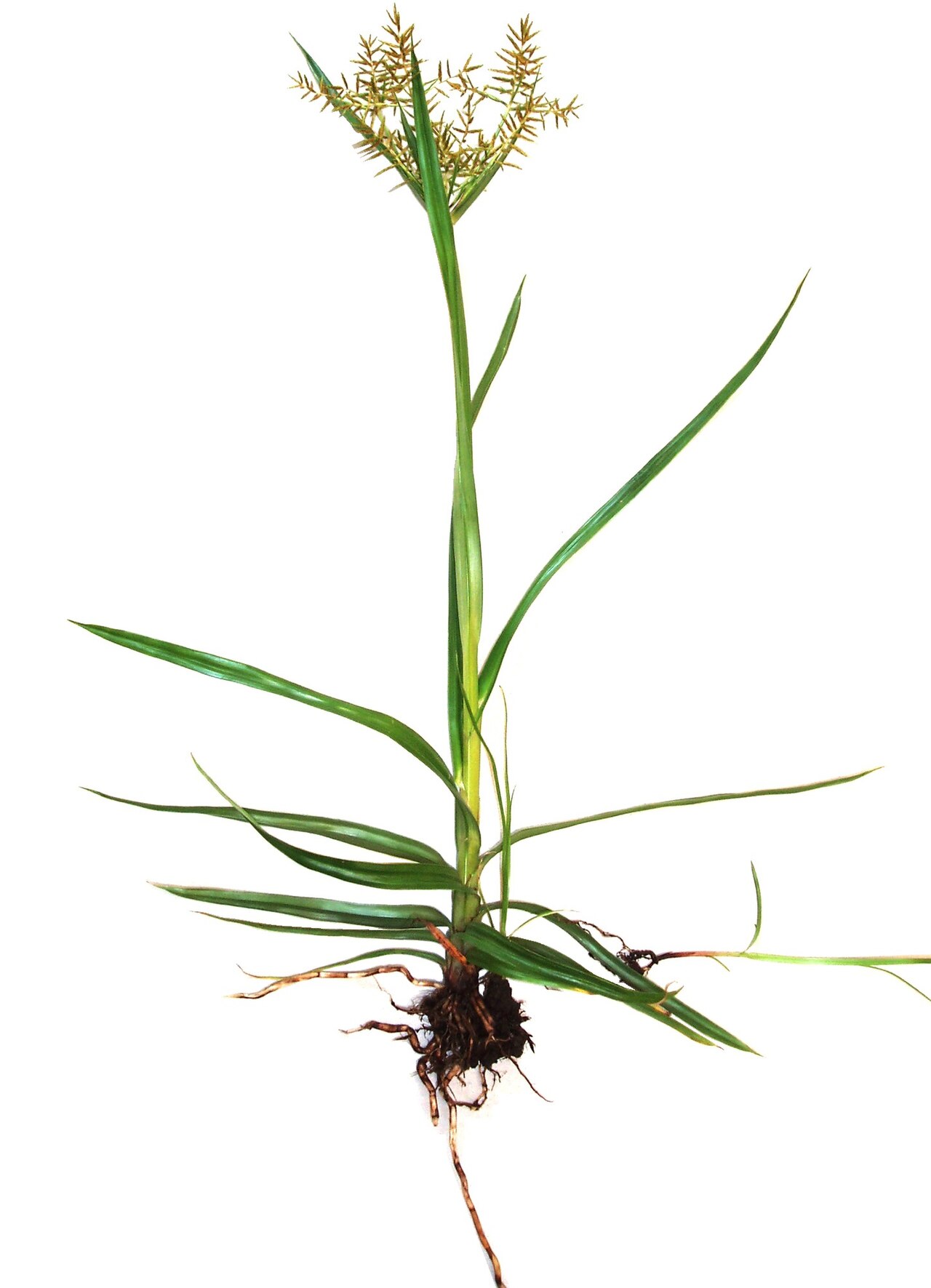
Cyperus esculentus is a rhizomatous perennial sedge in the family Cyperaceae reaching 8–30 inches (20–75 cm) tall and 6–18 inches (15–45 cm) wide. Stems (culms) are erect, triangular in cross-section (a key sedge character), smooth, and solid. Leaves are basal and cauline, grass-like, 0.15–0.35 inch (4–9 mm) wide, V-shaped in cross-section with a raised midrib, glossy, and lighter yellow-green than most surrounding grasses. The inflorescence is a terminal umbel-like cluster of golden-yellow to brown spikelets subtended by 3–6 leaf-like bracts of unequal length. The primary means of reproduction and spread is via underground tubers (nutlets), 0.3–0.6 inch (8–15 mm) in diameter, produced at the tips of slender rhizomes 2–14 inches (5–35 cm) long. A single plant produces 100–700 tubers per growing season. Tubers remain viable in soil for 3–10 years and survive freezing, drying, and passage through the digestive tracts of birds. The tuber-based persistence makes the species a high-priority management target in irrigated agriculture, turf, and nursery production worldwide, and the species is ranked in global lists of the world's top-10 worst weeds.
Native Range
Native range is uncertain due to an ancient cosmopolitan distribution; Cyperus esculentus is considered native to parts of North America, southern Europe, and Africa. The species is found in moist to wet soils in cultivated fields, irrigated cropland, turf, nurseries, ditches, and wet meadows from sea level to approximately 6,500 feet (2,000 m), and is present across all 50 U.S. states and most temperate and tropical regions worldwide.Suggested Uses
Used in weed identification training for teaching the sedge-grass-rush distinction ('sedges have edges, grasses have nodes, rushes are round'). Studied in weed biology as a model for tuber-based persistence. Tubers are edible and cultivated commercially in Spain as chufa for production of horchata de chufa (tiger nut milk). Tubers are consumed by waterfowl and wild turkeys.How to Identify
Appearance
Size & Dimensions
Height8" - 2'6"
Width/Spread6" - 1'6"
Bloom Information
Flowers from July through October. Spikelets mature over 3–4 weeks. Wind-pollinated. Seed viability is low in temperate climates, so reproduction is overwhelmingly by tubers. In the Pacific Northwest, tuber production begins in midsummer and peaks in September and October as day length shortens.
Detailed Descriptions
Flower Description
Yellow to golden-brown; umbellate spikelets at the stem tip subtended by 3–6 leaf-like bracts of unequal lengthFoliage Description
Light to yellow-green; glossy; grass-like; V-shaped in cross-section with a raised midribGrowing Conditions
Sun Requirements
Requires 6-12 hours of direct sunlight daily
• Full Sun: 6+ hours of direct sunlight
• Partial Shade: 3-6 hours of direct sunlight
• Full Shade: Less than 3 hours of direct sunlight