How to Get Rid of Nutsedge: Why Pulling Makes It Worse
Pets & Toxicity
Recorded toxicity for plants linked in this guide. An unknown status is not a safety assessment.
— Image © Plant Reference 2026
Nutsedge is the weed that punishes you for trying to remove it. Every homeowner's first instinct is to pull it out by hand — and every hand-pull activates dormant tubers underground that send up new shoots within days. I have watched clients go from 10 nutsedge plants to 50 in a single summer by pulling aggressively. Understanding why this happens is the key to finally getting rid of it.
Not a Grass: How to Identify Nutsedge
The first step is recognizing that nutsedge is not a grass. It belongs to the sedge family (Cyperus spp. species), which means broadleaf weed killers and grass-selective herbicides do not affect it. You need a sedge-specific herbicide.
The Triangular Stem Test
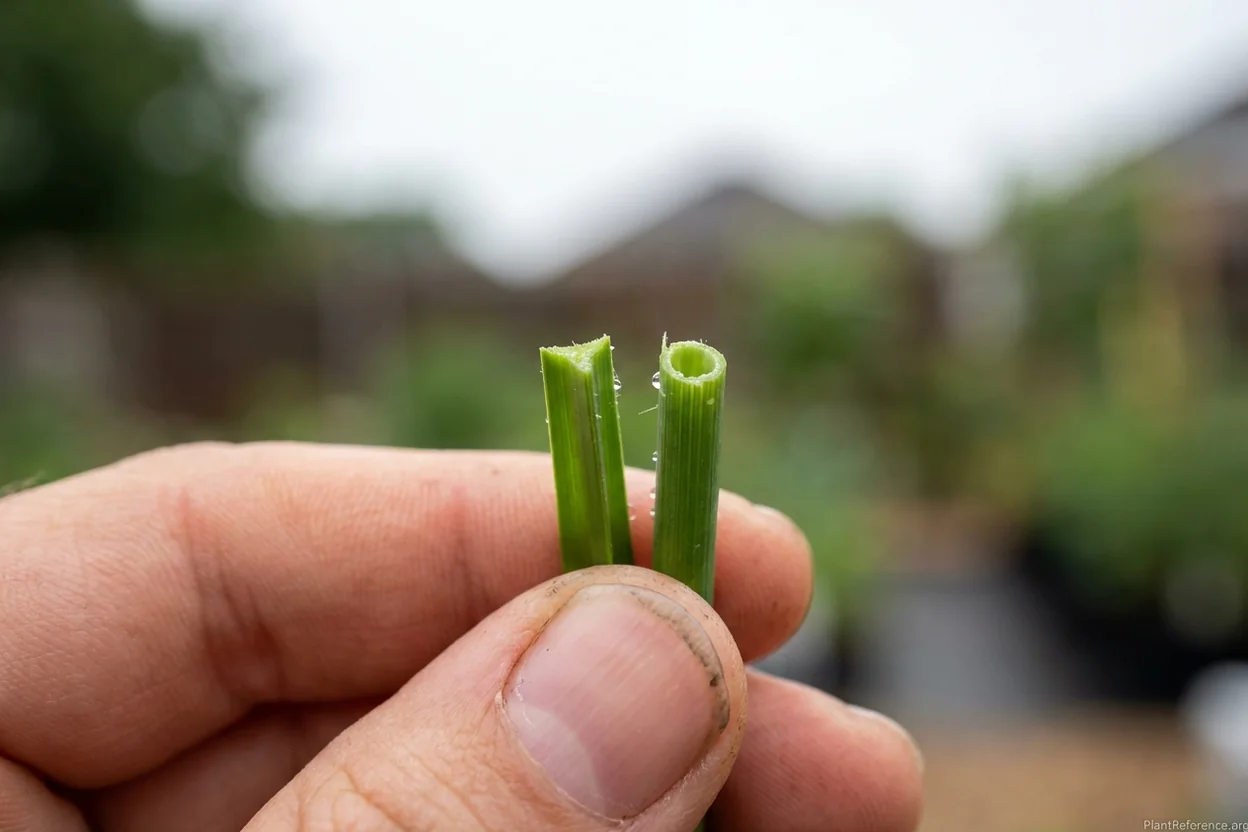
The fastest identification method is the stem cross-section test. Roll a nutsedge stem between your fingers — it feels triangular, with three distinct edges. Grass stems are round or flat. The old turf science mnemonic says it all: "Sedges have edges, rushes are round, grasses have nodes from the top to the ground."
Visual Clues
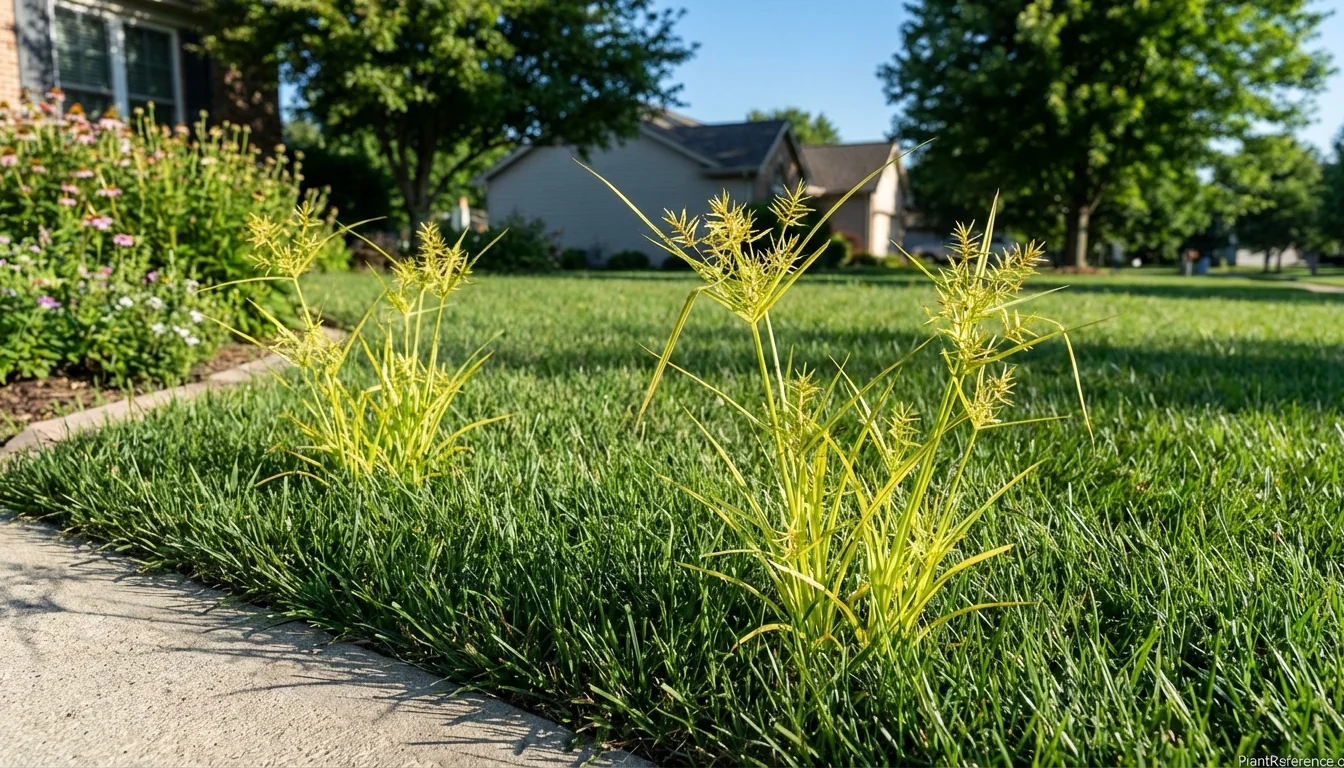
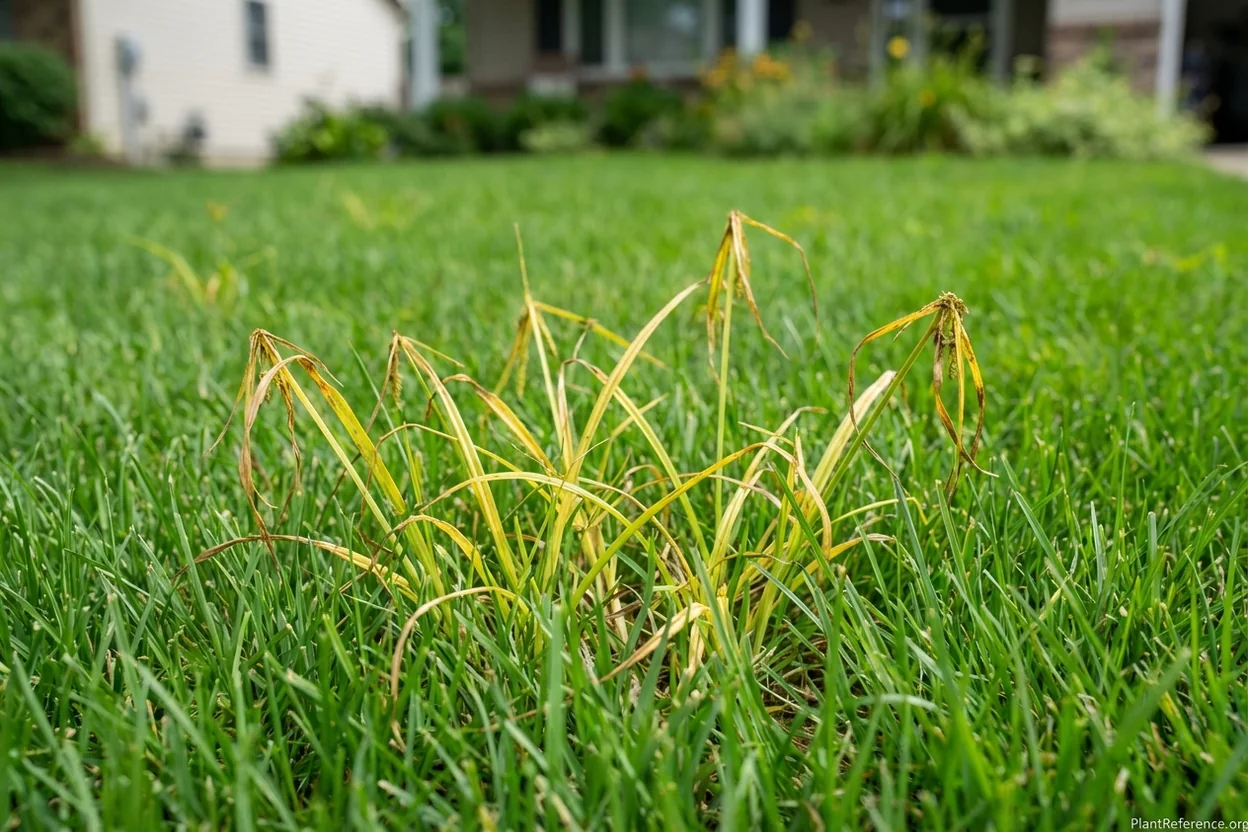
Nutsedge stands out in a mowed lawn because it grows faster than the surrounding turf. Within 2-3 days of mowing, nutsedge shoots are visibly taller than the grass around them. The leaves are glossy, waxy, and lighter yellow-green (yellow nutsedge) or darker green with a purplish tinge at the base (purple nutsedge). Leaves emerge in groups of three from a central point, arranged in a distinctive V-shaped pattern when viewed from above. What Type of Grass Do I Have? Identify Your Lawn in 5 Steps
Why Pulling Makes It Worse
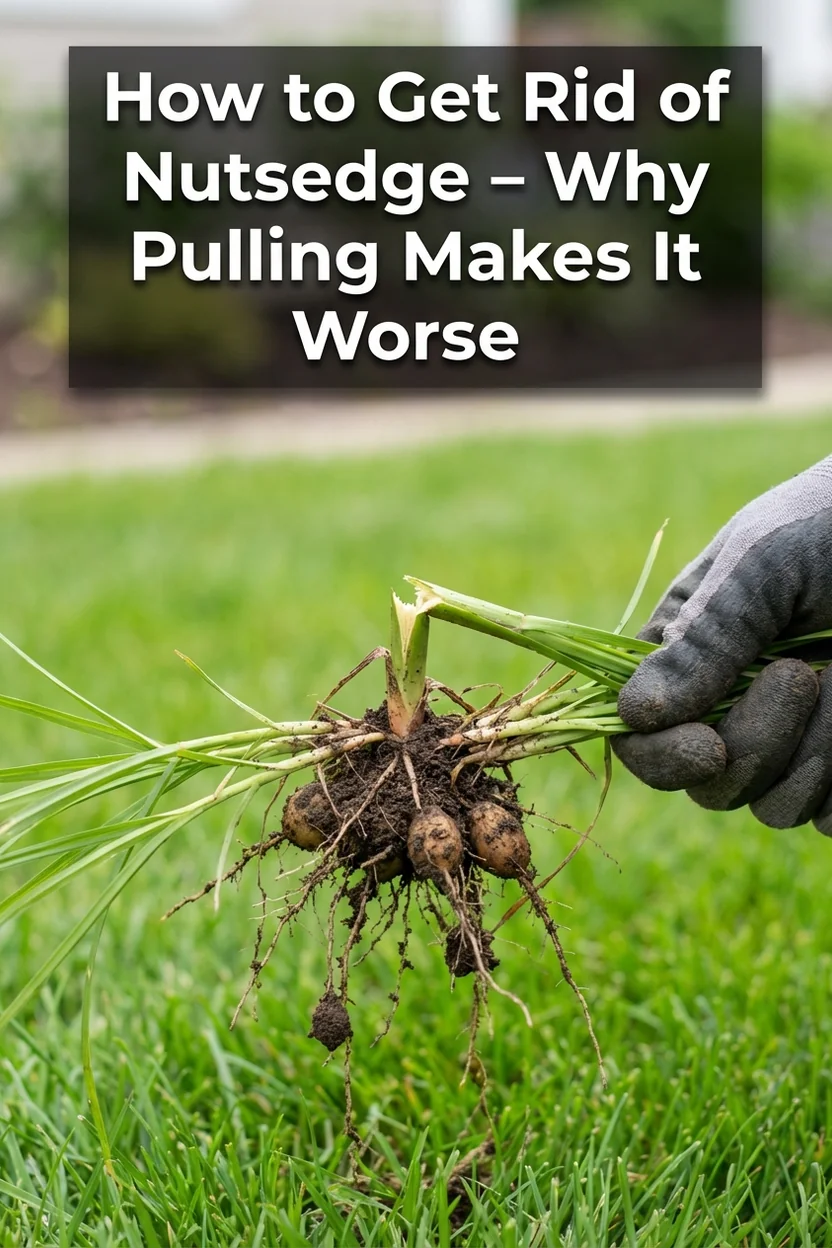
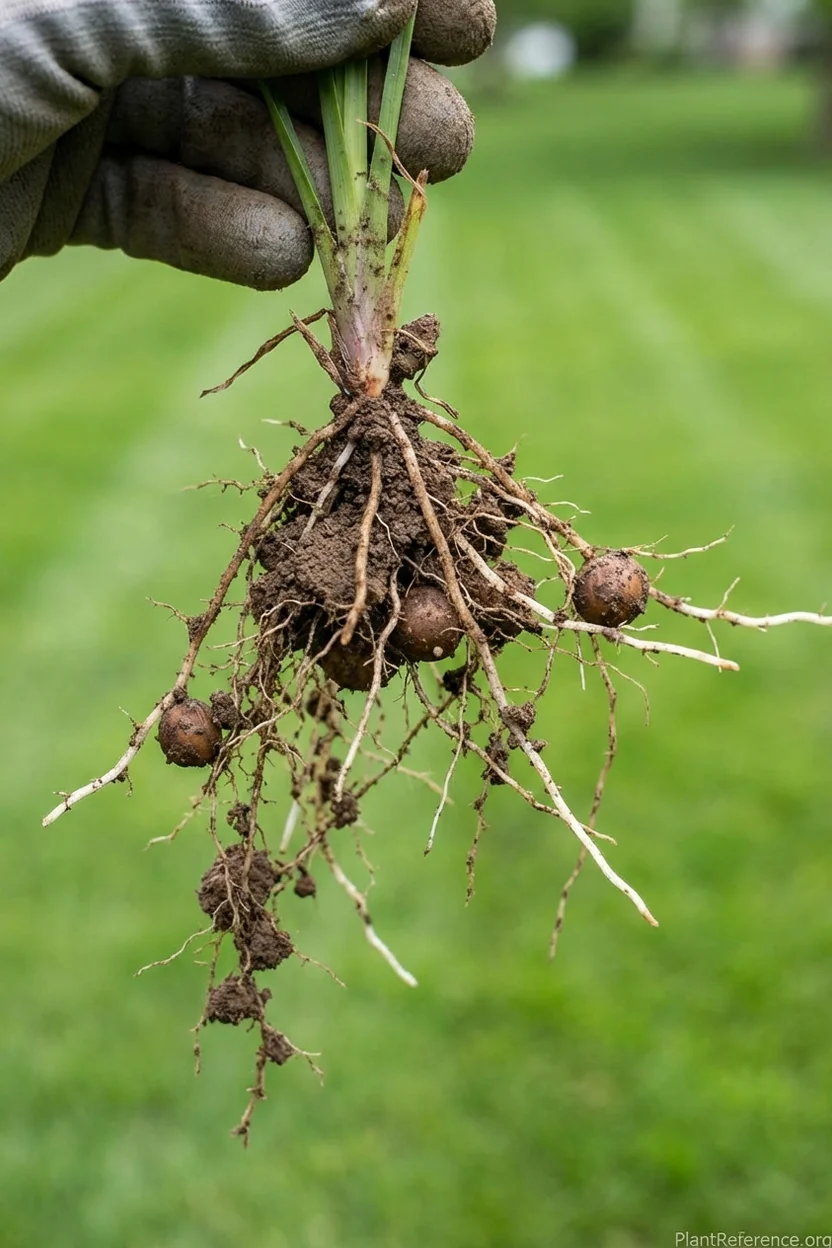
Nutsedge reproduces primarily through underground tubers called nutlets — small, dark brown, nut-shaped structures that form along rhizomes 6-14 inches (15-36 cm) below the soil surface. A single mature nutsedge plant can produce hundreds of tubers connected by a network of underground rhizomes. These tubers remain viable in the soil for up to 10 years, waiting for conditions to trigger sprouting.
When you pull a nutsedge plant from the surface, the stem breaks at soil level. The root system, rhizomes, and tubers remain intact underground. Worse, the disruption sends a hormonal signal to nearby dormant tubers that the aboveground plant has been removed, triggering them to sprout replacements. One pulled plant routinely produces 3-5 new shoots from activated tubers within 1-2 weeks. Brown Patches in Your Lawn: Causes, Diagnosis, and Treatment
This is why nutsedge infestations grow exponentially under hand-pulling programs. The homeowner is literally farming nutsedge by continuously activating dormant tuber banks.
The Only Exception
Hand removal works in one specific case: if a nutsedge plant is isolated (single plant, no colony) and you can extract the entire root system including all tubers with a trowel dug 8-10 inches (20-25 cm) deep. For established colonies with underground networks, this is impractical — herbicide is the only effective approach.
Herbicide Options That Actually Work
Nutsedge requires sedge-specific herbicides. Standard broadleaf weed killers (2,4-D, dicamba, triclopyr) do not affect sedges. Grass-selective herbicides also miss it because nutsedge is not a grass. You need one of two active ingredients.
Halosulfuron (SedgeHammer)
Halosulfuron is the most widely available nutsedge herbicide for homeowners. It is a post-emergent that kills actively growing nutsedge by inhibiting an enzyme (ALS) unique to the plant's metabolism. Apply as a foliar spray when nutsedge is actively growing and has at least 3-5 leaves.
Mix according to label directions and add a non-ionic surfactant (required — the waxy nutsedge leaves repel water-based sprays without it). Apply in the morning when dew has dried but before afternoon heat. Do not mow for 2 days before and after application — the leaves need to be tall enough to intercept the spray and the herbicide needs time to translocate to the tubers. Lawn Mowing Height Guide: The One-Third Rule and Seasonal Timing
Expect visible yellowing in 7-10 days and plant death in 2-3 weeks. A second application 6-8 weeks later catches any tubers that escaped the first treatment. Halosulfuron is safe on all common lawn grasses — 🌿Poa pratensis Kentucky bluegrass, 🌿Festuca arundinacea tall fescue, 🌿Cynodon dactylon bermudagrass, 🌿Zoysia japonica zoysiagrass, and 🌿Stenotaphrum secundatum St. Augustinegrass.
Sulfentrazone (Dismiss)
Sulfentrazone works through a different mechanism — it disrupts cell membranes, causing rapid tissue collapse. It provides faster visual results than halosulfuron (yellowing within 3-5 days) but is more expensive and primarily available as a professional-grade product. It also provides pre-emergent suppression of nutsedge for 4-6 weeks after application, which halosulfuron does not.
Product | Active Ingredient | Speed | Pre-Emergent Effect | Homeowner Availability |
|---|---|---|---|---|
SedgeHammer | Halosulfuron | 2-3 weeks to kill | No | Widely available online and retail |
Dismiss | Sulfentrazone | 1-2 weeks to kill | Yes, 4-6 weeks | Professional grade; available online |
Lawn Fertilization Schedule: When and What to Feed by Grass Type
Long-Term Prevention: Fix the Moisture Problem
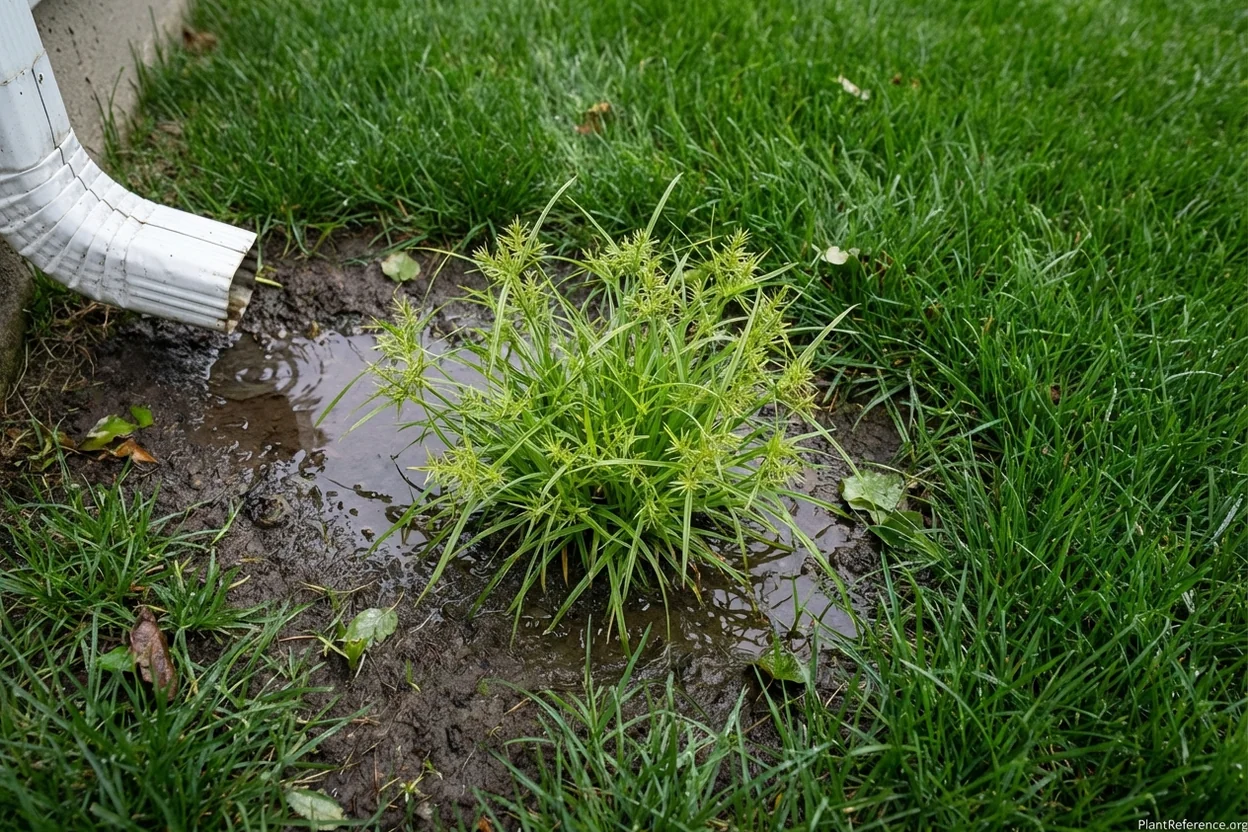
Herbicide eliminates existing nutsedge, but it returns if the conditions that favor it persist. Nutsedge is a moisture indicator plant — it thrives in wet, poorly drained soil where other grasses struggle. If nutsedge keeps appearing in the same spots year after year, those areas have a drainage or overwatering problem.
Reduce Irrigation
Nutsedge tolerates saturated conditions that stress turf grasses. If you are watering daily or keeping the soil surface consistently moist, you are creating ideal nutsedge habitat. Switch to deep, infrequent watering — 2-3 sessions per week that wet the soil 4-6 inches deep, then let the surface dry between sessions. This favors deep-rooted turf grasses while stressing the shallow-rooted nutsedge. How to Water Your Lawn the Right Way: Depth, Timing, and Drought
Improve Drainage
If nutsedge concentrates in low spots, along downspout discharge areas, or in sections that stay wet after rain, the underlying problem is drainage, not weeds. Solutions include regrading low areas, extending downspouts away from the lawn, installing French drains, or core aerating compacted soil that does not infiltrate water. When and How to Aerate Your Lawn: Timing, Method, and Results
Thicken the Turf
Dense, vigorous turf is the best long-term nutsedge suppression. A thick canopy of grass mowed at the correct height shades the soil surface and competes with nutsedge for light and nutrients. Annual fall overseeding (cool-season) and proper fertilization build the density that makes it difficult for nutsedge tubers to establish. How to Overseed Your Lawn: Timing, Seed Selection, and Technique
Yellow Nutsedge vs Purple Nutsedge
Two nutsedge species infest North American lawns, and knowing which one you have affects treatment expectations.
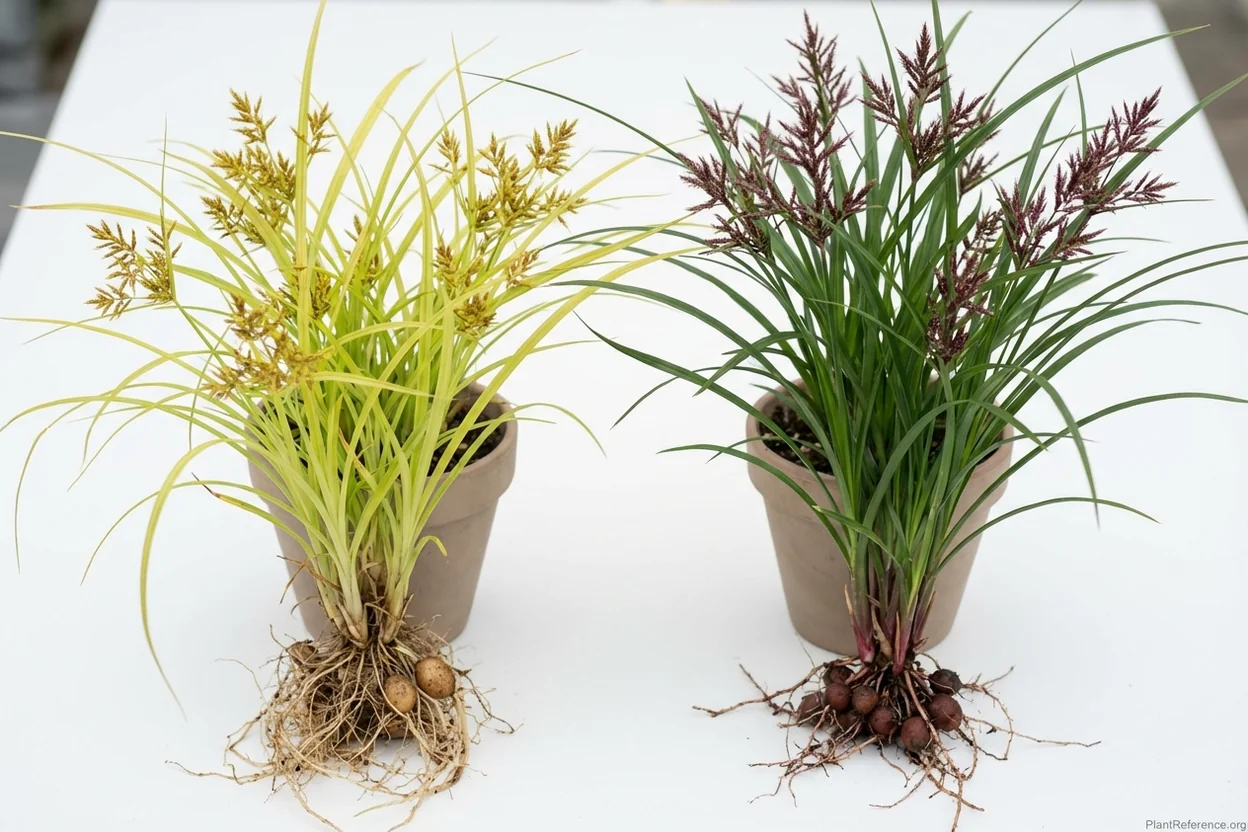
Cyperus esculentus Yellow nutsedge** is the more common species nationwide. Leaves are light yellow-green, smooth, and gradually taper to a point. Seed heads are yellowish-brown. Tubers are produced at the ends of rhizomes and each produces a single new plant. Yellow nutsedge is found from Canada through the Gulf Coast.
Cyperus rotundus Purple nutsedge** is more aggressive but limited to warmer climates (Zones 8-10). Leaves are darker green with a purplish tinge at the base. Seed heads are reddish-purple. Tubers form in chains along the rhizomes and can produce multiple new plants per tuber. Purple nutsedge is considered one of the world's worst weeds — in warm climates where it thrives, eradication is extremely difficult.
Both species respond to halosulfuron and sulfentrazone. Purple nutsedge is harder to control because of its chained tuber production — plan on 3-4 applications over a full season rather than the 2 that typically control yellow nutsedge. Lawn Care Schedule by Month: Your Complete Cool-Season Grass Calendar
Frequently Asked Questions
Reading about plants and recognising them are different skills. These three build the second.
- Daily PlantIdentify the day’s mystery plant from a close-up photograph.
- Keyed OutWork a dichotomous key, lead by lead, to name a hidden specimen.
- Name That PlantName a specimen from botanical clues dealt hardest first.
Free to play, no account needed
Tagged with
James is a lawn care professional in Dallas who runs a small residential maintenance company. He started mowing lawns as a teenager and worked his way up to running crews for a large landscaping firm before going out on his own. James specializes in warm-season turf grasses—Bermuda, St. Augustine, and Zoysia—and knows how to keep a lawn alive through Texas summers without wasting water. He's also experienced with the transition zone challenges that Dallas faces, where warm-season and cool-season grasses overlap. James takes a practical, science-informed approach to lawn care and pushes back on the idea that a good lawn requires heavy chemical inputs.