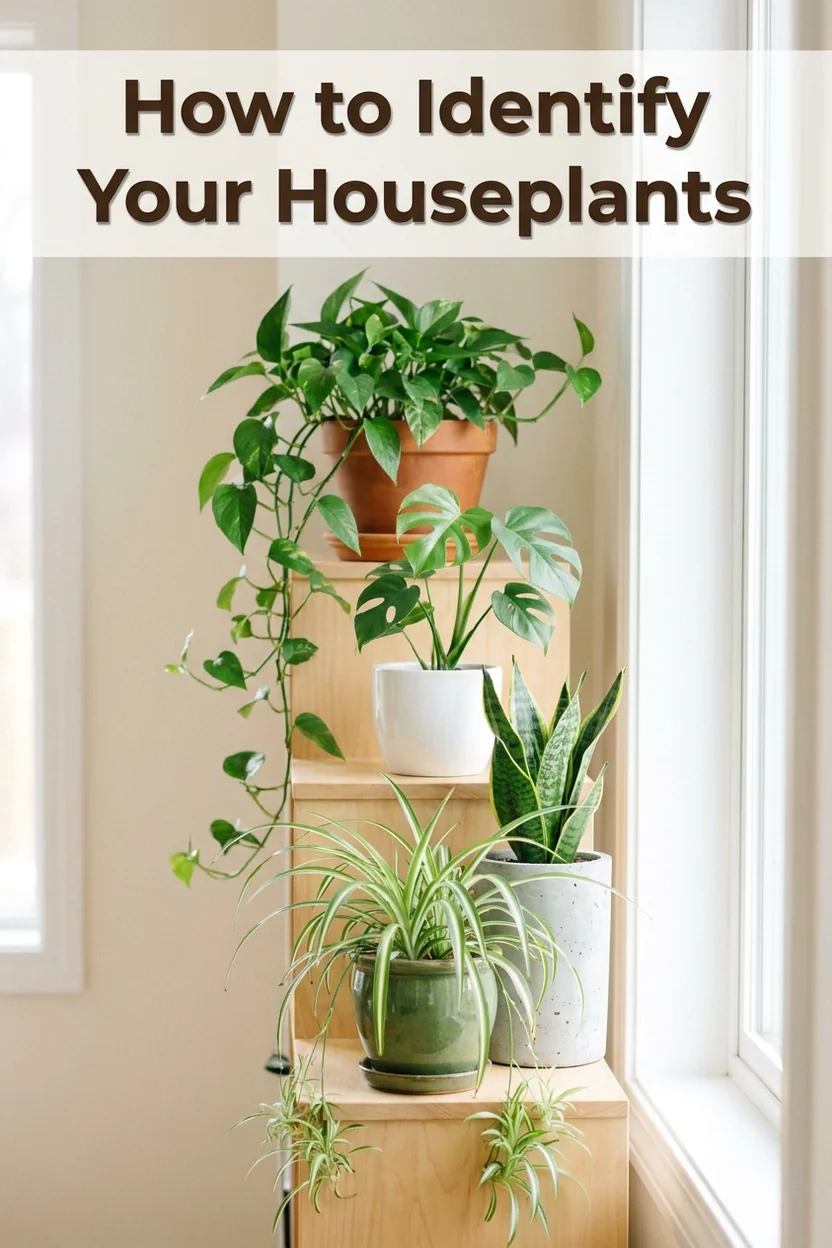
How to Identify Houseplants: A Visual Guide
Pets & Toxicity
Recorded toxicity for plants linked in this guide. An unknown status is not a safety assessment.
Epipremnum aureum — Toxicity Warning
Toxic to pets and humans. All parts contain insoluble calcium oxalate crystals that cause mouth pain, swelling, and drooling if ingested.View Epipremnum aureum plant profileMonstera deliciosa — Toxicity Warning
Toxic to pets and humans. All vegetative parts contain calcium oxalate crystals that cause mouth pain, swelling, and drooling if ingested. Unripe fruit also contains calcium oxalate and is toxic; only fully ripened fruit (after 12+ months) is edible.View Monstera deliciosa plant profilePhilodendron hederaceum — Toxicity Warning
Toxic to pets and humansView Philodendron hederaceum plant profileSpathiphyllum wallisii — Toxicity Warning
Toxic to pets and humansView Spathiphyllum wallisii plant profileAglaonema commutatum — Toxicity Warning
Toxic to pets and humansView Aglaonema commutatum plant profileKalanchoe blossfeldiana — Toxicity Warning
Toxic to pets and humansView Kalanchoe blossfeldiana plant profile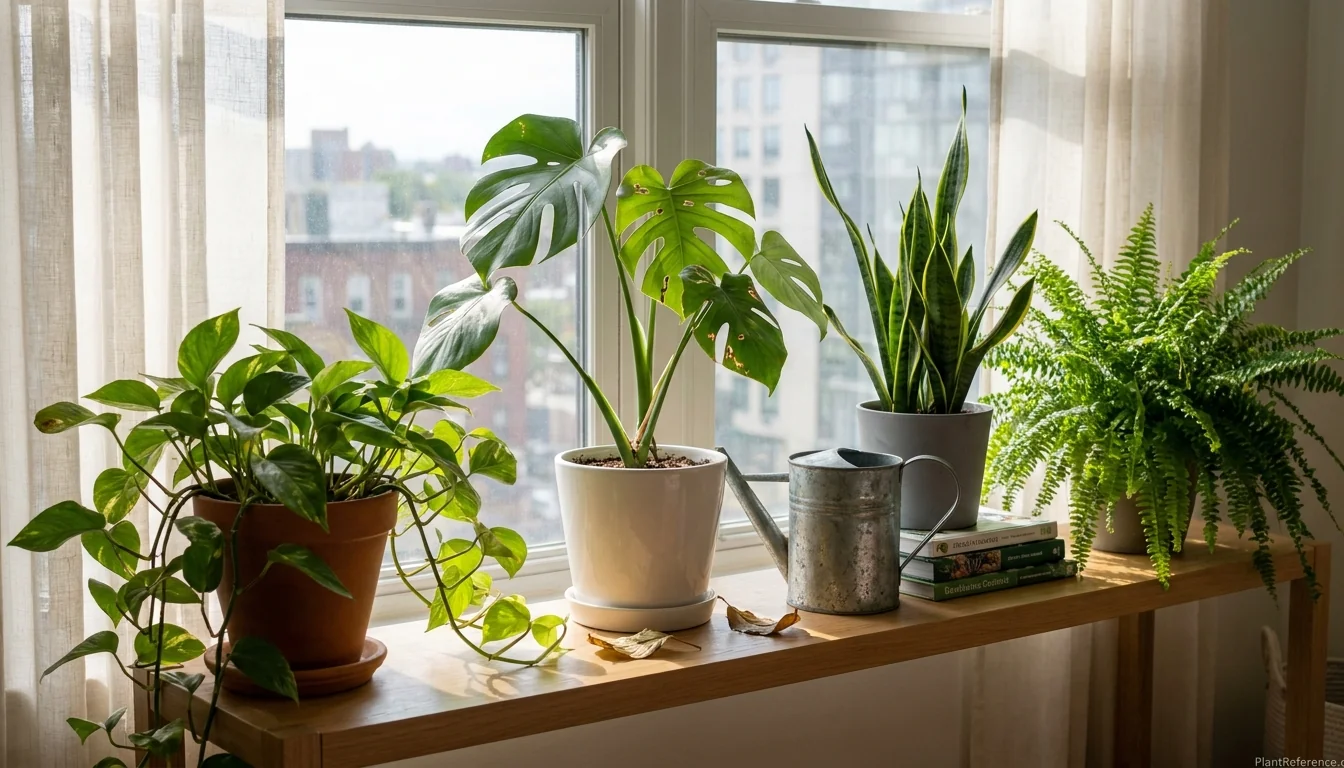
— Image © PlantReference.org 2026
If you've ever brought home a plant with no tag, or inherited a mystery green thing from a friend moving out, you already know the frustration. The good news? Learning how to identify houseplants is genuinely doable, even if you've never kept a plant alive before. Most of the plants sold as houseplants come from a handful of families, so once you learn a few patterns, you'll recognize the regulars on sight.
Start With Leaf Shape, Texture, and Growth Habit
Before you reach for an app, look at three things. They'll get you most of the way there, and they're the same features botanists use in the broader framework covered in How to Identify Any Plant: A Beginner's Guide to Leaves, Flowers, and Stems.
Leaf shape: Heart-shaped, strappy, round, split, or feathery? Shape alone often points you to a family.
Leaf texture: Thick and waxy, thin and soft, fuzzy, or leathery? Texture separates many lookalikes.
Growth habit: Does it trail, climb, stand upright in a rosette, or arch outward? Habit narrows the field fast.
Don't worry about getting the exact species on the first try. Getting to the right family or genus is a huge win, and it's usually enough to look up care. I promise this gets easier with every plant you meet.
The Aroid Family: Pothos, Monstera, and Philodendron
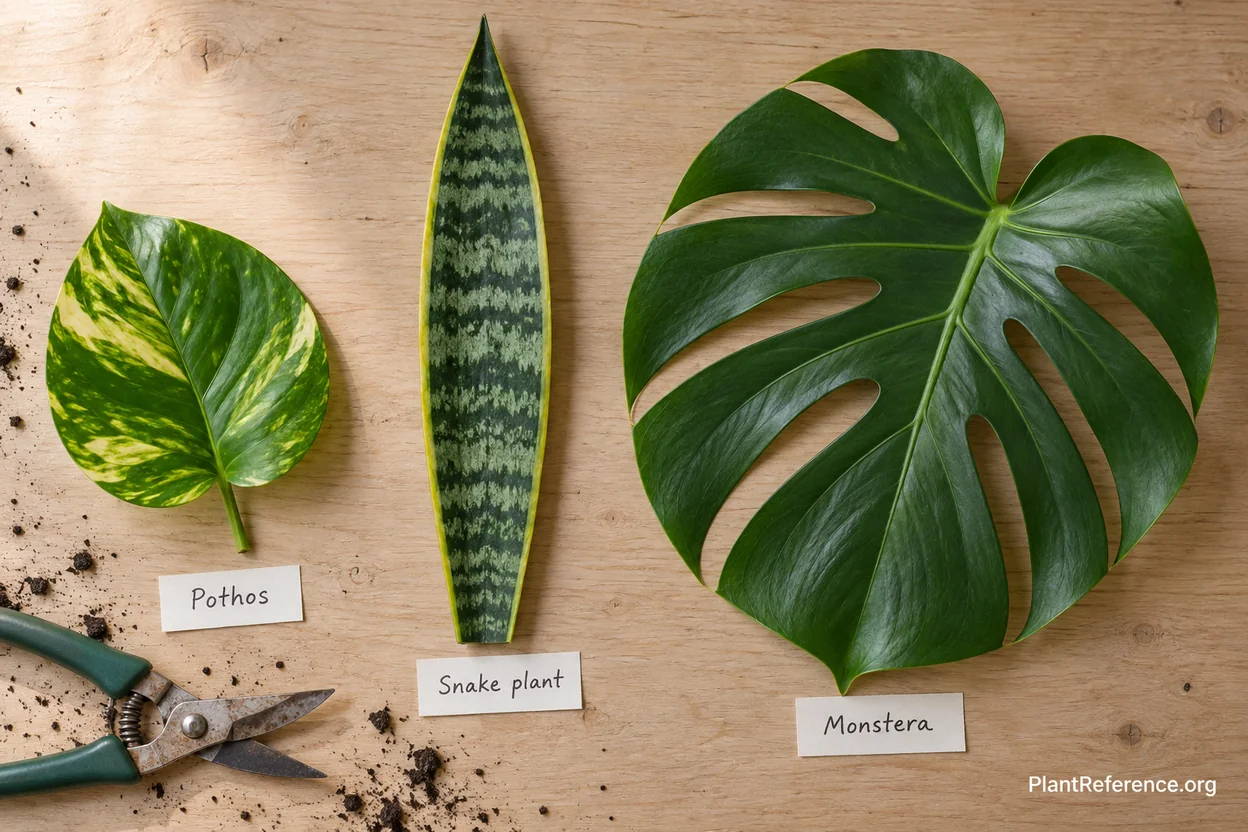
Here's the single most useful fact for any indoor gardener: the family Araceae, or aroids, dominates the houseplant world. Pothos 🌿Epipremnum aureum, monstera 🌿Monstera deliciosa, philodendrons 🌿Philodendron hederaceum, peace lilies 🌿Spathiphyllum wallisii, and Chinese evergreens 🌿Aglaonema commutatum are all aroids. Learn this one family and you've identified a huge share of every plant shop.
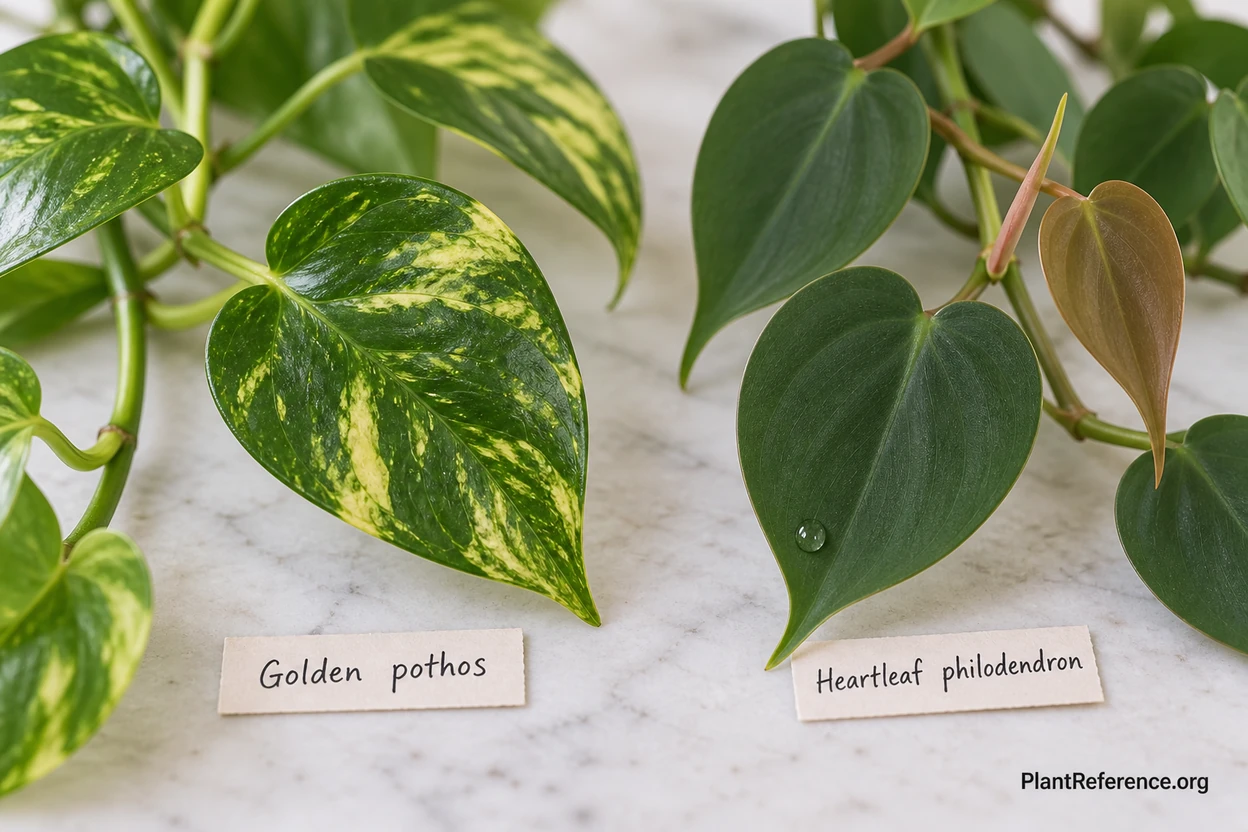
The trickiest pair is pothos 🌿Epipremnum aureum versus heartleaf philodendron 🌿Philodendron hederaceum, because both trail with heart-shaped leaves. Pothos 🌿Epipremnum aureum leaves are thicker, waxier, and often flecked with gold or cream variegation, with a slightly puckered surface. Philodendron 🌿Philodendron hederaceum leaves are thinner, softer, and matte, and new growth often emerges reddish or bronze. The botanical tell is the cataphyll—the small sheath protecting new leaves. Philodendron cataphylls stay attached and turn papery; pothos doesn't keep persistent cataphylls. For a deeper side-by-side on the other famous mix-up, Monstera vs Pothos: How to Tell the Difference (Easy Guide) is the one to read.
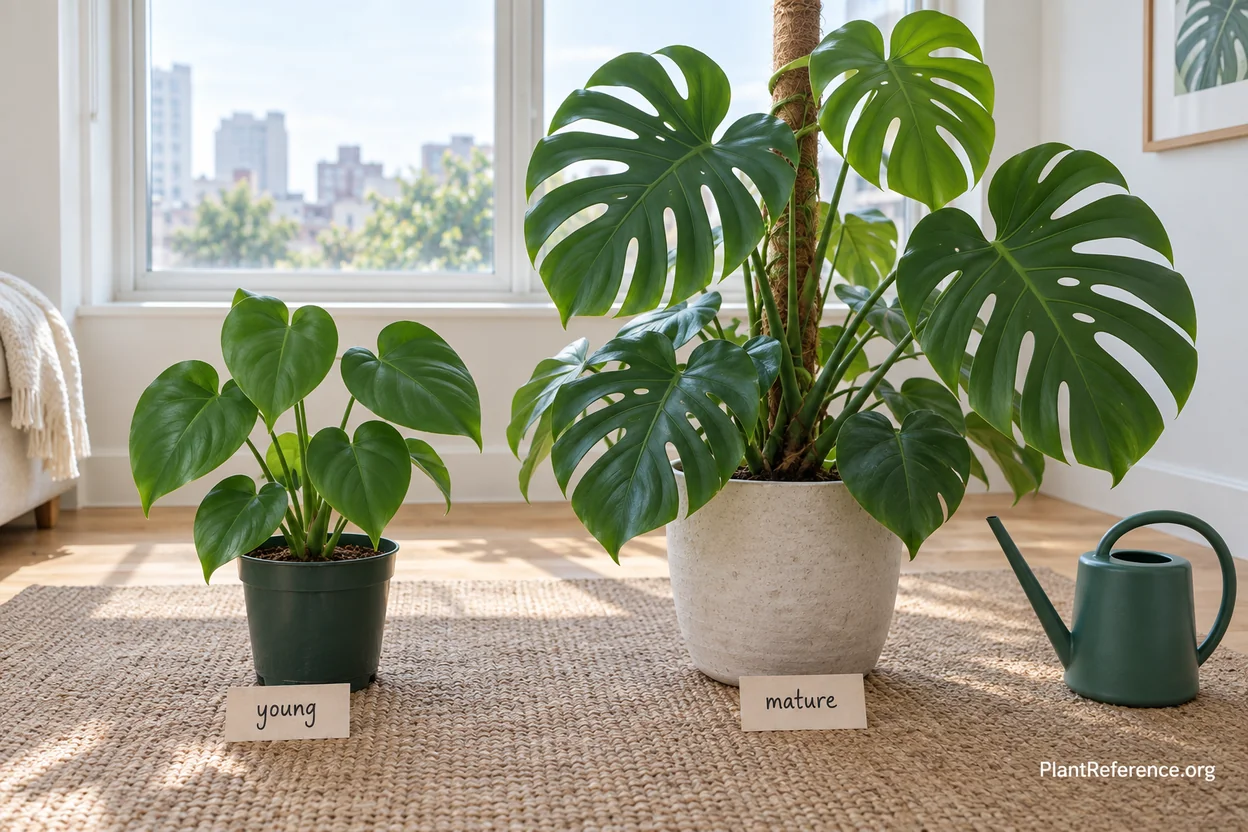
Monstera 🌿Monstera deliciosa is the easiest aroid once it matures, thanks to the dramatic holes and splits (called fenestrations) in its big leaves. Young monstera 🌿Monstera deliciosa plants are smooth-leaved, though, which fools a lot of new owners. Peace lily 🌿Spathiphyllum wallisii stands apart with glossy dark lance-shaped leaves and white hooded flowers, while Chinese evergreen 🌿Aglaonema commutatum shows patterned silver-and-green foliage in a bushy, upright clump.
Aroid | Leaf Look | Growth Habit | Quick Tell |
|---|---|---|---|
Pothos 🌿Epipremnum aureum | Thick, waxy, heart-shaped, gold/cream flecks | Trailing or climbing | Waxy leaves; no persistent cataphyll |
Heartleaf Philodendron 🌿Philodendron hederaceum | Thin, soft, matte heart shape; bronze new growth | Trailing or climbing | Papery cataphylls stay attached |
Monstera 🌿Monstera deliciosa | Large, glossy, with holes and splits when mature | Climbing | Fenestrations (holes/splits) |
Peace Lily 🌿Spathiphyllum wallisii | Glossy dark lance-shaped leaves | Upright clump | White hooded flower spathe |
Chinese Evergreen 🌿Aglaonema commutatum | Patterned silver-and-green | Bushy upright | Painterly variegation |
Snake Plants, Spider Plants, and Other Tough Ones
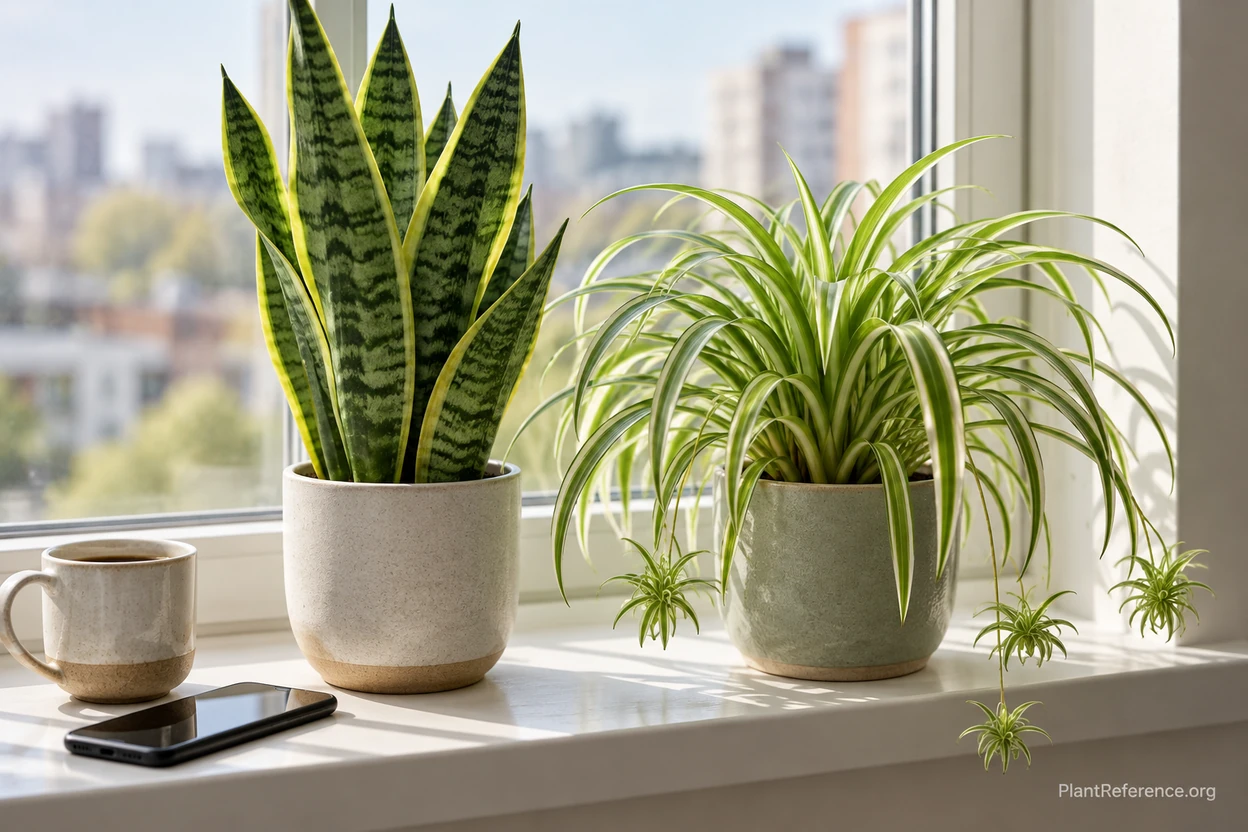
The next big group is the family Asparagaceae, home to many of the nearly indestructible plants beginners start with. Snake plant Dracaena trifasciata—which you may still see sold under its old name, Sansevieria—has thick, upright, sword-like leaves banded with gray-green, perfect for low light and forgetful waterers. Spider plant 🌿Chlorophytum comosum arches outward with thin strappy leaves and sends out baby plantlets on long stems. Cast iron plant 🌿Aspidistra elatior earns its name with broad, dark, leathery leaves that shrug off neglect.
These three are great confidence builders, and they're hard to kill, which is exactly why I recommend them to first-time plant parents. If your light is limited, lean into this group rather than fighting for a fussier plant.
Succulents and Ferns at a Glance
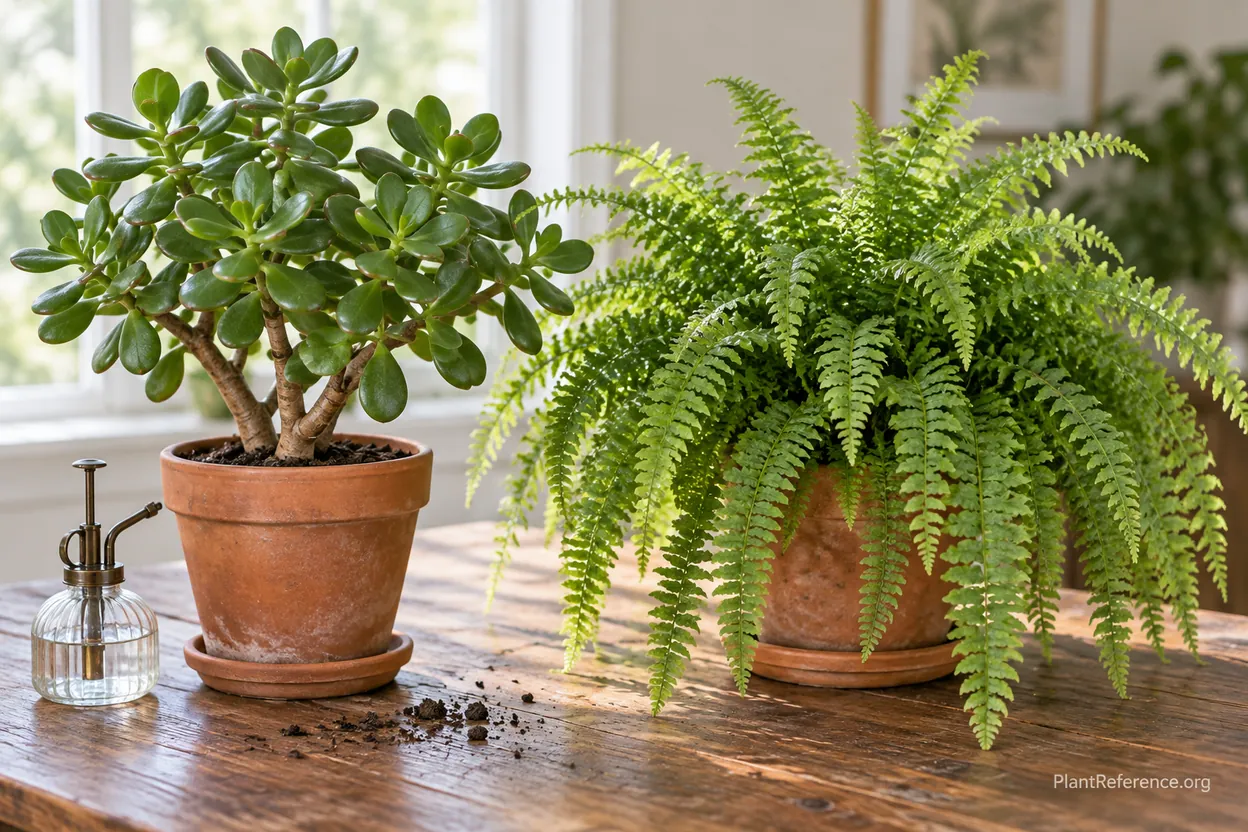
Two more groups round out most collections. Succulents in the family Crassulaceae store water in plump leaves—think jade plant 🌿Crassula ovata with its thick rounded leaves on woody stems, rosette-forming echeveria 🌿Echeveria elegans, trailing burro's tail Sedum morganianum, and flowering kalanchoe 🌿Kalanchoe blossfeldiana. If the leaves are thick, firm, and juicy-looking, you're almost certainly in succulent territory, and the care shifts toward bright light and infrequent watering.
Ferns go the opposite direction. Boston fern 🌿Nephrolepis exaltata has feathery, finely divided fronds; bird's nest fern 🌿Asplenium nidus forms a rosette of wavy, undivided strappy fronds; and maidenhair fern 🌿Adiantum spp. shows delicate fan-shaped leaflets on wiry black stems. Ferns reproduce by spores, so flip a frond over and you may see neat rows of brown dots called sori—a dead giveaway that you're holding a fern.
Quick ID Table: 12 Common Houseplants
When you're stuck, scan this table. Match leaf shape and growth habit first, then confirm with the quick tell.
Houseplant | Family | Key Identifier |
|---|---|---|
Pothos 🌿Epipremnum aureum | Araceae | Waxy heart leaves, gold flecks, trailing |
Heartleaf Philodendron 🌿Philodendron hederaceum | Araceae | Soft matte heart leaves, papery cataphylls |
Monstera 🌿Monstera deliciosa | Araceae | Holes and splits in mature leaves |
Peace Lily 🌿Spathiphyllum wallisii | Araceae | White hooded flower, dark glossy leaves |
Chinese Evergreen 🌿Aglaonema commutatum | Araceae | Silver-and-green patterned foliage |
Snake Plant Dracaena trifasciata | Asparagaceae | Stiff upright sword leaves, banded |
Spider Plant 🌿Chlorophytum comosum | Asparagaceae | Arching strappy leaves, baby plantlets |
Cast Iron Plant 🌿Aspidistra elatior | Asparagaceae | Broad leathery dark leaves |
Jade Plant 🌿Crassula ovata | Crassulaceae | Thick rounded leaves, woody stems |
Echeveria 🌿Echeveria elegans | Crassulaceae | Tight succulent rosette |
Boston Fern 🌿Nephrolepis exaltata | Polypodiaceae | Feathery divided fronds |
Fiddle Leaf Fig 🌿Ficus lyrata | Moraceae | Large violin-shaped leathery leaves |
That fiddle leaf fig 🌿Ficus lyrata at the bottom is a common non-aroid worth knowing, with its big violin-shaped leaves. If you've got one, Fiddle Leaf Fig Care: The Complete Guide (2025) and Fiddle Leaf Fig Light Requirements: The Ultimate Guide will keep it happy.
Common Houseplant ID Mistakes
A few traps catch almost everyone, so let's get ahead of them.
The biggest is judging a young plant by mature-plant photos. Monstera 🌿Monstera deliciosa babies have solid, unsplit leaves and look nothing like the holey showpieces online, so people misidentify them constantly. Always consider that your plant may just be young.
The second is leaning on variegation as a species marker. Variegation patterns vary wildly within a single species and even on one plant, so a marble-pattern pothos 🌿Epipremnum aureum and a plain golden one are still the same species. Don't let color fool you—if you want to choose by look, Best Pothos Varieties to Buy: Beginner to Collector Guide explains the range.
The third is trusting an app's first guess without checking. Apps are a starting point, not a verdict. They confuse pothos 🌿Epipremnum aureum and philodendron 🌿Philodendron hederaceum routinely because a single photo can't show texture or cataphylls. Cross-check the structural features yourself before you commit to a care routine—the same caution applies to outdoor plants, as you'll see in How to Identify Trees by Their Leaves: Shapes, Margins, and Venation Explained.
How to Get Better at Houseplant Identification
Houseplant identification is a pattern-recognition skill, which means it grows with practice—and you'll improve faster than you expect. The trick is seeing each plant across its full range: young and old, variegated and plain, thriving and stressed.
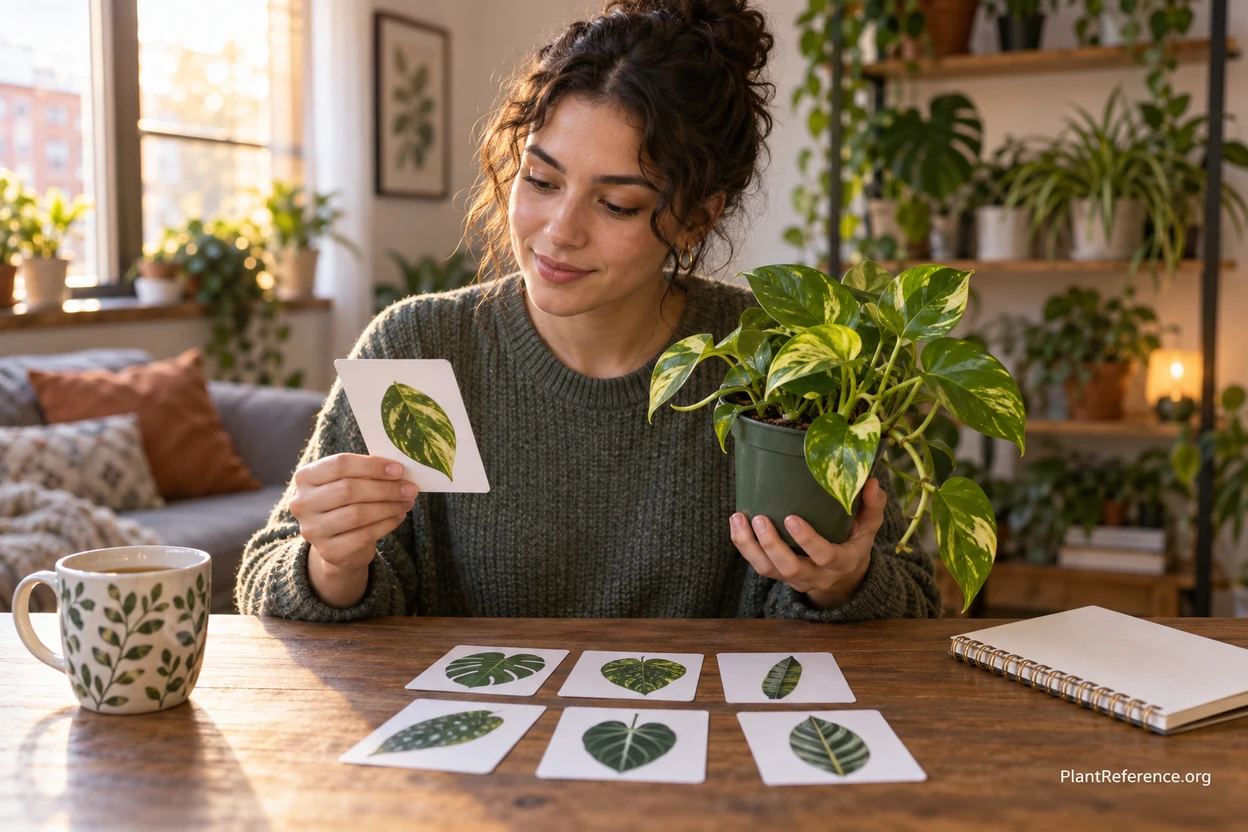
This is where apps fall short and a study system shines. Apps identify a plant for you in the moment, but they don't teach you to recognize it next time. Apps identify plants for you; PlantReference teaches you to identify plants yourself. Our plant database pairs identification-focused descriptions with multiple images per species, so you learn the plant rather than memorizing one lucky photo. Quiz yourself on common houseplants with our flashcard sets, which use spaced repetition to lock species into long-term memory.
Pair that practice with hands-on care, and the names start to stick. As you get to know your plants, dialing in their needs is the natural next step—Monstera Light Requirements: Finding the Perfect Spot and How to Water Pothos: The Foolproof Beginner Method are great places to start once you know what you've got. You've got this.
Frequently Asked Questions
Reading about plants and recognising them are different skills. These three build the second.
- Daily PlantIdentify the day’s mystery plant from a close-up photograph.
- Keyed OutWork a dichotomous key, lead by lead, to name a hidden specimen.
- Name That PlantName a specimen from botanical clues dealt hardest first.
Free to play, no account needed
Tagged with
Jessica transformed her small Brooklyn balcony into a thriving container garden after moving to New York City. What started as a pandemic hobby turned into a plant care consulting business serving urban apartment dwellers across the city. She specializes in small-space gardening, indoor plant troubleshooting, and helping clients keep houseplants alive in less-than-ideal conditions (dim light, dry heat, tiny spaces). Jessica completed a home gardening certificate program and shares her plant wins and failures on her modest Instagram following. Her partner, Maya, jokes that their apartment is now 40% plants, 60% living space. Jessica's passionate about making plant care accessible to renters who think they don't have room to garden.