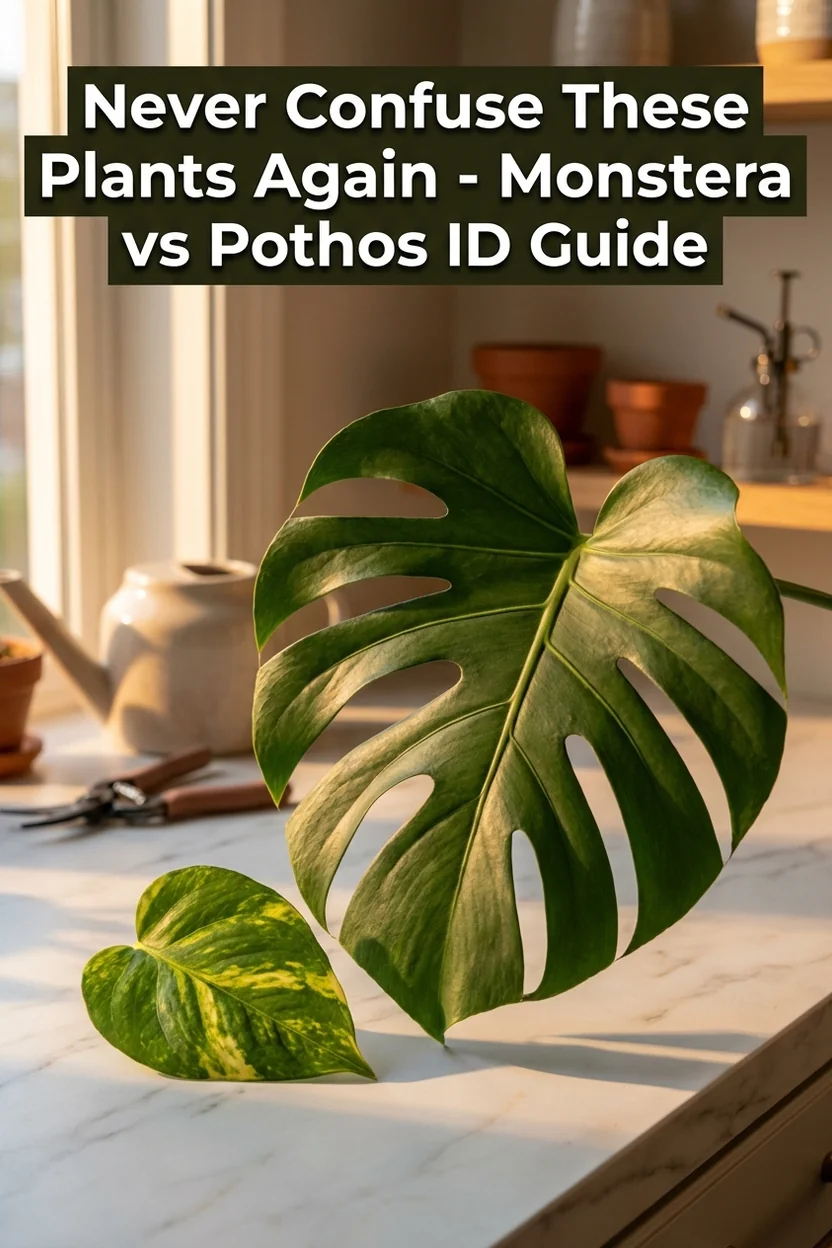
Monstera vs Pothos: How to Tell the Difference (Easy Guide)
Pets & Toxicity
Recorded toxicity for plants linked in this guide. An unknown status is not a safety assessment.
Toxic to pets: Swiss cheese plant, golden pothosDetailsHide
Monstera deliciosa — Toxicity Warning
Toxic to pets and humans. All vegetative parts contain calcium oxalate crystals that cause mouth pain, swelling, and drooling if ingested. Unripe fruit also contains calcium oxalate and is toxic; only fully ripened fruit (after 12+ months) is edible.View Monstera deliciosa plant profileEpipremnum aureum — Toxicity Warning
Toxic to pets and humans. All parts contain insoluble calcium oxalate crystals that cause mouth pain, swelling, and drooling if ingested.View Epipremnum aureum plant profile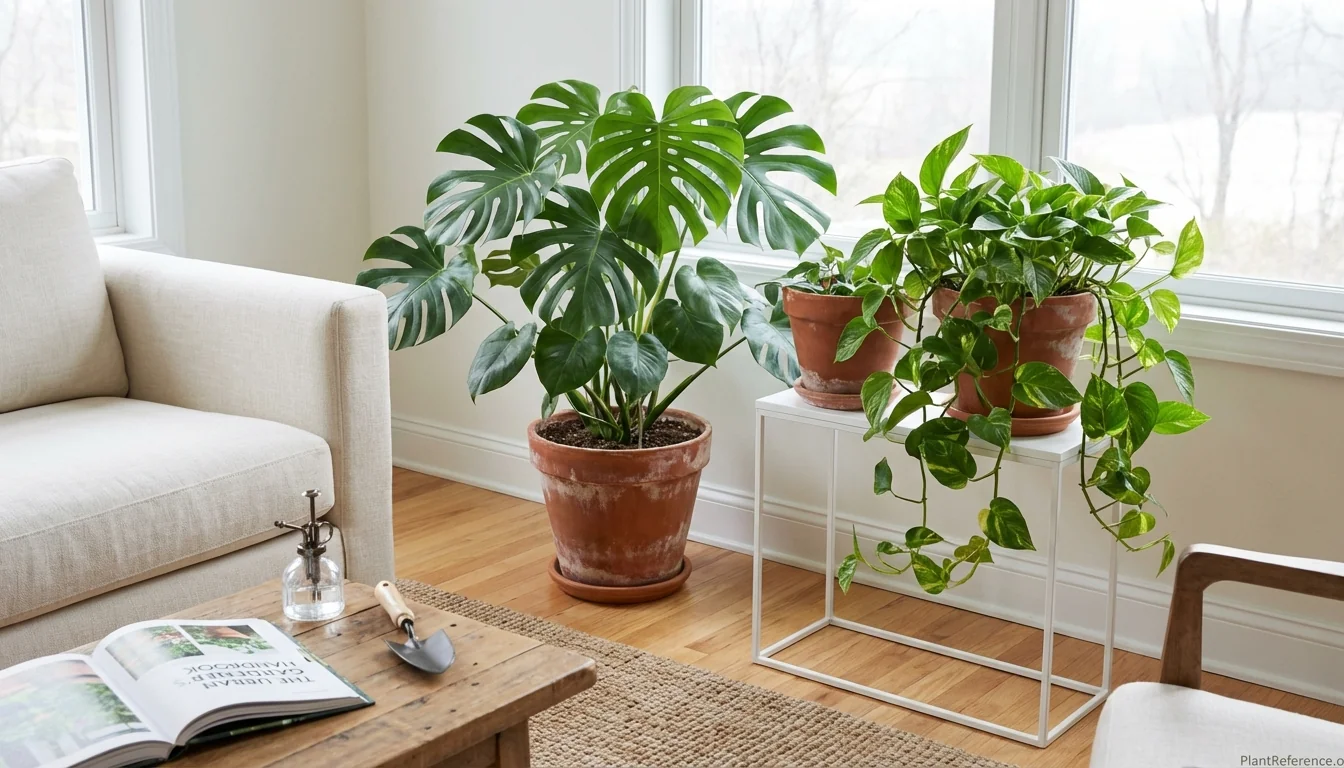
— Image © Plant Reference 2026
Staring at two plants at the nursery and can't tell if you're looking at a young monstera 🌿Monstera deliciosa (mon-STER-ah de-lis-ee-OH-sah) or a pothos 🌿Epipremnum aureum (ep-ih-PREM-num AW-ree-um)? You're definitely not alone—this is probably the most common plant identification question I get from beginners. Both plants have heart-shaped leaves when young, both are trendy Instagram favorites, and both are sold as "easy houseplants."
Key Differences at a Glance
The confusion between monstera vs pothos happens because young plants look surprisingly similar. But once you know what to look for, you'll never mix them up again. The most reliable way to tell them apart? Mature leaf development and overall growth pattern.
Here are the main differences that will help you identify each plant correctly:
Mature leaves: Monstera develops holes (fenestrations), pothos never does
Growth habit: Monstera grows upright and bushy, pothos trails or climbs with thin vines
Stem thickness: Monstera has thick, sturdy stems; pothos has thin, flexible vines
Plant structure: Monstera develops a central trunk, pothos remains vine-like
Leaf texture: Monstera leaves feel thicker and more substantial
Size potential: Monstera can reach 6-8 feet (2-2.5m) indoors, pothos typically stays 6-10 feet (2-3m) of trailing vine
The truth is, if you're looking at two small plants with similar heart-shaped leaves, the growth pattern over the first few months will be your best identifier.
Leaf Shape and Fenestrations: The Biggest Tell
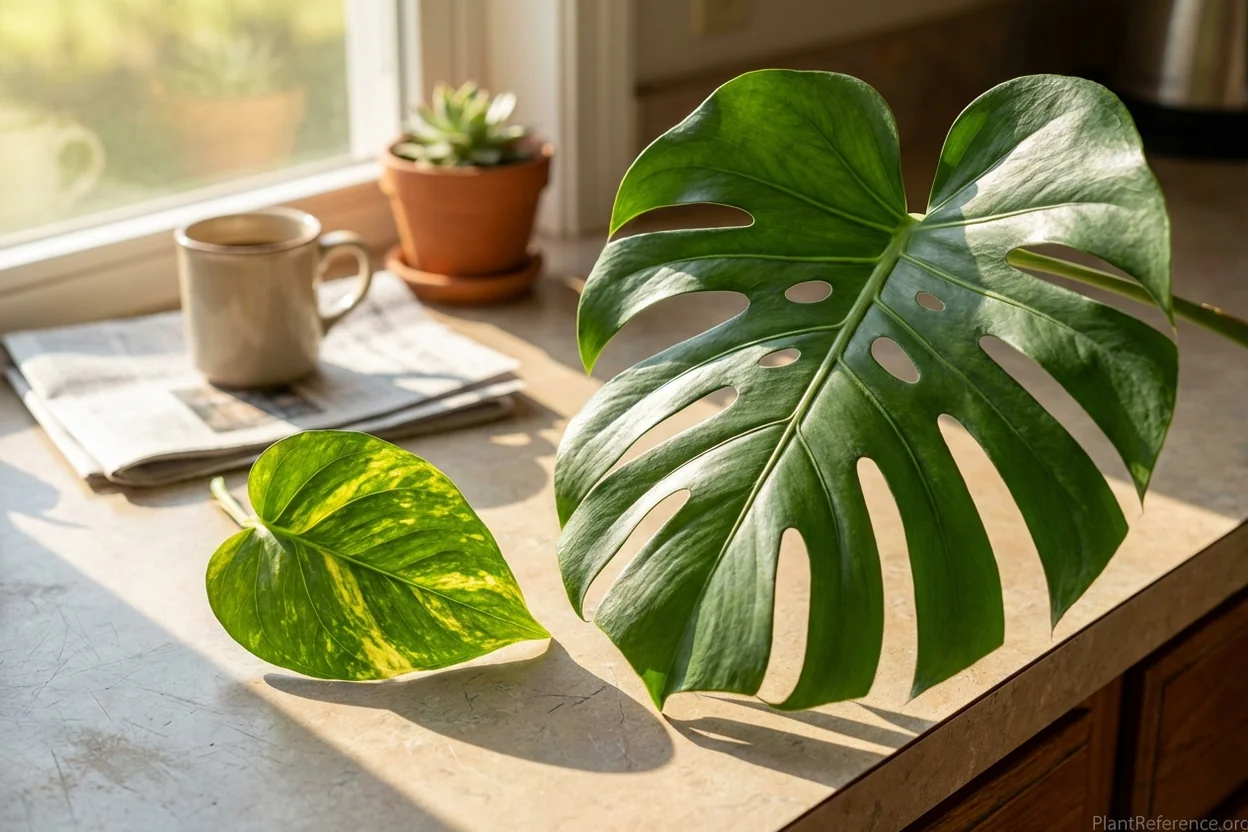
This is where the magic happens—and where you can definitively tell monstera vs pothos apart. Fenestrations are the natural holes and splits that develop in monstera leaves as the plant matures. Pothos will never, ever develop these holes, no matter how old or large the plant gets.
Young Plant Stage (First 1-2 Years)
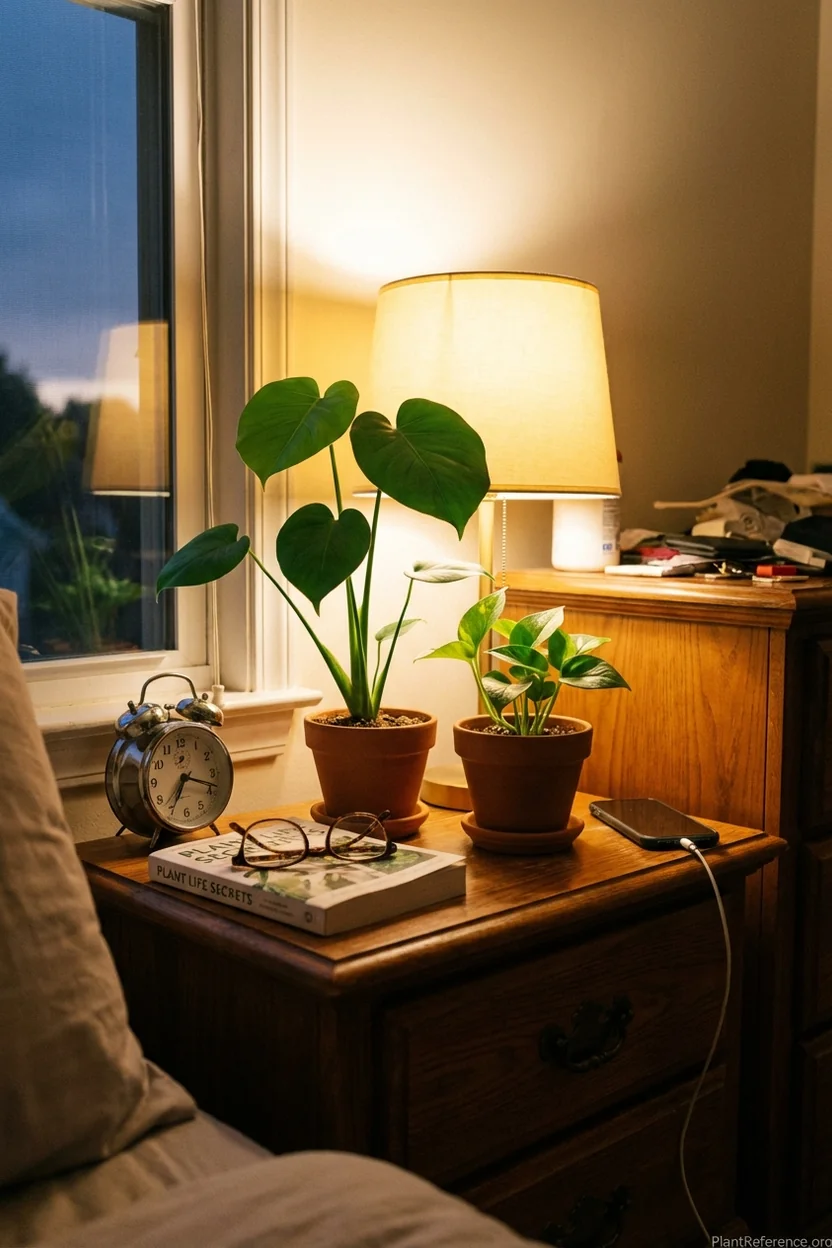
When both plants are young, their leaves look remarkably similar:
Both have solid, heart-shaped leaves
Similar bright to medium green coloring
Comparable leaf size (2-4 inches/5-10 cm)
No obvious distinguishing features
This is why so many people get confused at plant shops! Young monsteras don't show their characteristic fenestrations yet.
Mature Plant Differences (2+ Years)
As plants mature, the differences become dramatic:
Monstera mature leaves:
Develop natural holes (fenestrations) starting around year 2-3
May also develop deep splits extending from leaf edges toward center
Can reach 12-18 inches (30-45 cm) wide when fully mature
Become increasingly complex with more holes and splits over time
Maintain thick, leathery texture
Pothos mature leaves:
Stay solid heart-shaped throughout entire life
Never develop holes or splits
Top out around 4-6 inches (10-15 cm) in most indoor conditions
Maintain consistent shape from juvenile to mature
Generally thinner, more flexible texture
The fenestration development in monstera is directly related to light exposure and plant maturity. Better light conditions encourage more dramatic fenestrations, but the holes will appear even in moderate light once the plant reaches sufficient age.
Growth Patterns and Plant Structure
Once you understand how each plant grows, identification becomes much easier. The overall growth habit is actually more reliable than leaf shape for young plants.
Monstera Growth Pattern
Monsteras are hemiepiphytes in nature, meaning they start as ground plants but eventually climb trees. This natural behavior shows up indoors:
Grows upward with a central stem that thickens over time
Develops aerial roots to seek climbing support
Creates a bushier, more structured plant shape
Naturally wants to climb or grow vertically
Forms what looks like a "trunk" as it matures
Even young monsteras show this upward growth tendency. If you watch a monstera for a few months, you'll notice it's trying to grow up and out, not just trail.
Pothos Growth Pattern
Pothos are true vines with completely different growth habits:
Grows as a trailing or climbing vine with thin stems
Stems remain consistently thin throughout life
Natural tendency to trail downward or spread outward
Can be trained to climb, but maintains vine-like structure
Never develops a central trunk or woody stem
This growth difference appears within weeks of getting either plant. A young monstera will start reaching upward, while a pothos will begin trailing or spreading outward.
Stem Differences You Can Feel
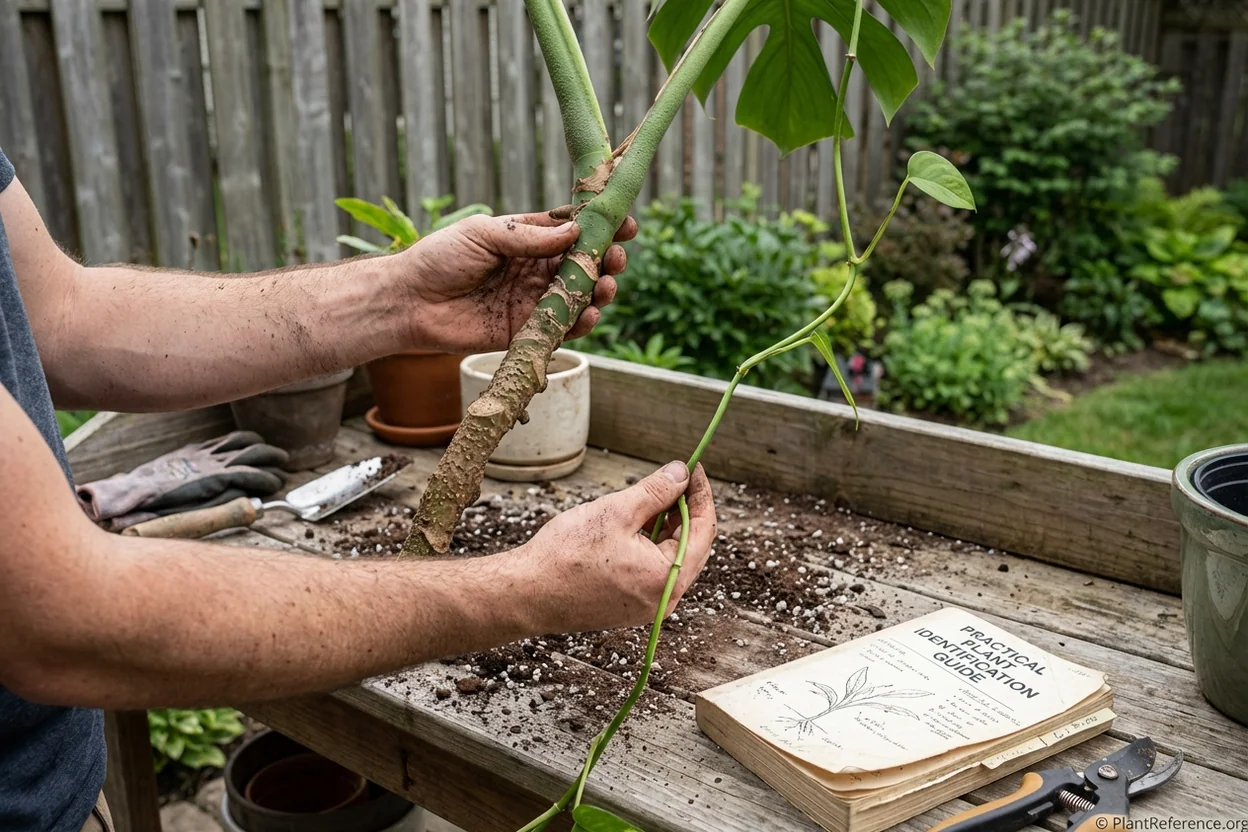
Here's a hands-on identification method: gently feel the stems. This works even with very young plants.
Monstera stems:
Feel thick and sturdy, even when young
Have a more substantial, almost succulent-like texture
Show visible nodes where leaves and aerial roots emerge
Become increasingly thick and woody with age
Feel solid and difficult to bend
Pothos stems:
Feel thin and flexible throughout life
Have a more traditional "vine" texture
Show smaller, less prominent nodes
Remain pliable and easy to bend even when mature
Never become woody or trunk-like
You can literally feel the difference between these plants. Monstera stems have substance and weight, while pothos stems feel more delicate and vine-like.
Size and Maturity Comparison
Understanding the mature size potential helps with long-term identification and planning.
Monstera Size Expectations
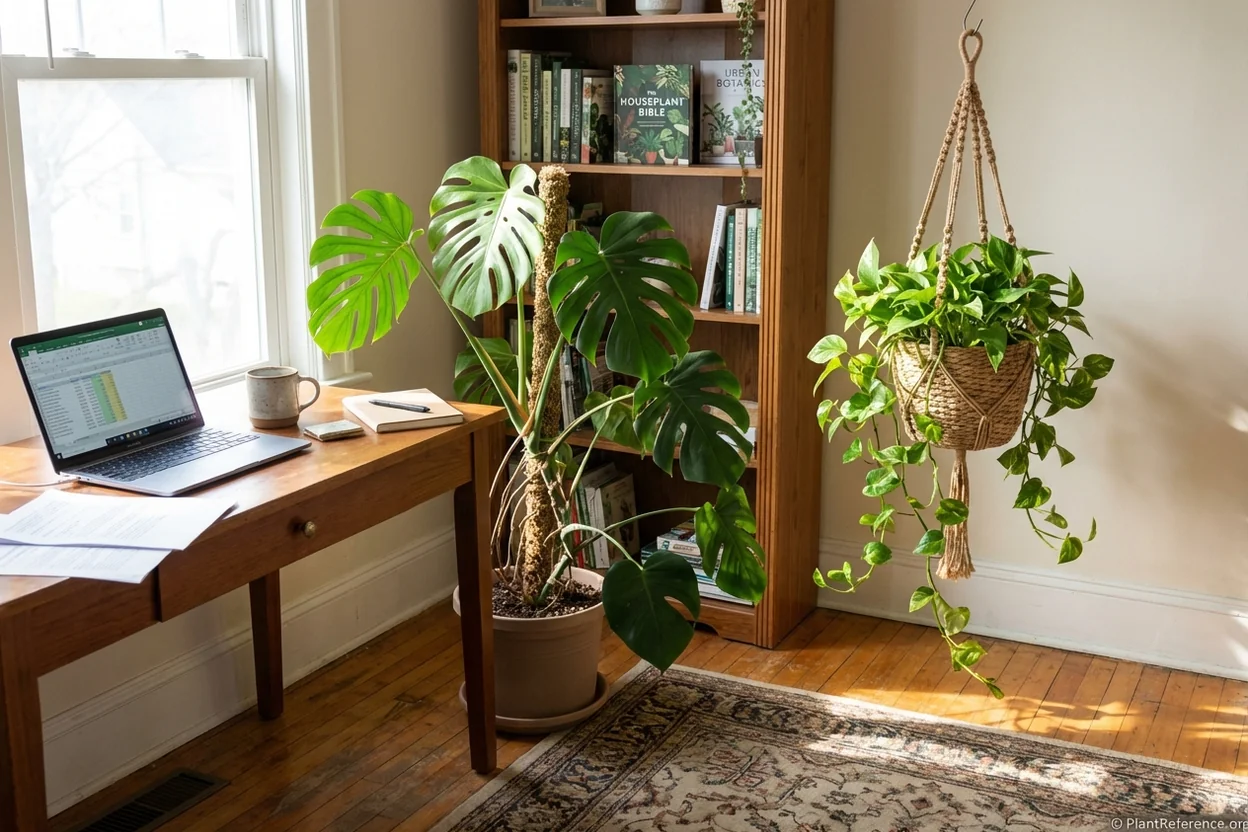
Indoor monsteras can become substantial plants:
Height: 6-8 feet (2-2.5m) with proper support
Leaf span: Individual leaves can reach 18+ inches (45+ cm)
Overall spread: 4-5 feet (1.2-1.5m) wide with climbing support
Growth rate: 1-2 new leaves per month in optimal conditions
Lifespan: 40+ years with proper care
Monsteras are statement plants that command attention and space. They're not suitable for small shelves or tight corners long-term.
Pothos Size Expectations
Pothos stay more manageable indoors:
Length: 6-10 feet (2-3m) of trailing vine
Leaf size: Typically 4-6 inches (10-15 cm) maximum
Overall spread: Can trail around entire room if desired
Growth rate: Very fast vine extension, moderate leaf production
Lifespan: 5-10+ years typical for indoor plants
Pothos are versatile plants perfect for shelves, hanging baskets, or training around rooms. They adapt to available space rather than demanding it.
Care Requirements: What Each Plant Needs
While both plants are considered "easy," their care requirements differ enough to help with identification—and to ensure you're providing proper care.
Monstera Care Needs
Monsteras have slightly more demanding requirements:
Light Requirements:
Bright indirect light preferred (200-500 foot-candles)
Can tolerate medium light but growth slows significantly
Direct sun causes leaf scorch and brown spots
Insufficient light prevents fenestration development
Watering Schedule:
Water when top 2 inches (5 cm) of soil dry
Typically every 7-10 days in growing season
Reduce to every 2-3 weeks in winter
Requires well-draining soil to prevent root rot
Support Needs:
Benefits greatly from moss pole or climbing support
Aerial roots need attachment points for best growth
Without support, tends to lean and become unbalanced
Support encourages larger leaves and better fenestrations
For detailed monstera care guidance, check out our Monstera Deliciosa Care: The Complete Guide (2025).
Pothos Care Needs
Pothos are more adaptable across conditions:
Light Requirements:
Thrives in low to bright indirect light
More tolerant of lower light than monstera
Variegated varieties need more light to maintain patterns
Can handle some direct morning sun
Watering Schedule:
Water when top inch (2.5 cm) of soil dry
Generally more drought tolerant than monstera
Can recover from occasional neglect
Less picky about water quality
Support Needs:
Optional—grows well trailing or climbing
Can be trained on poles but doesn't require them
Looks attractive in hanging baskets
Doesn't need support for health, only for aesthetics
Common Misidentification Scenarios
Let me walk you through the most common situations where people confuse these plants, and how to avoid the mix-ups.
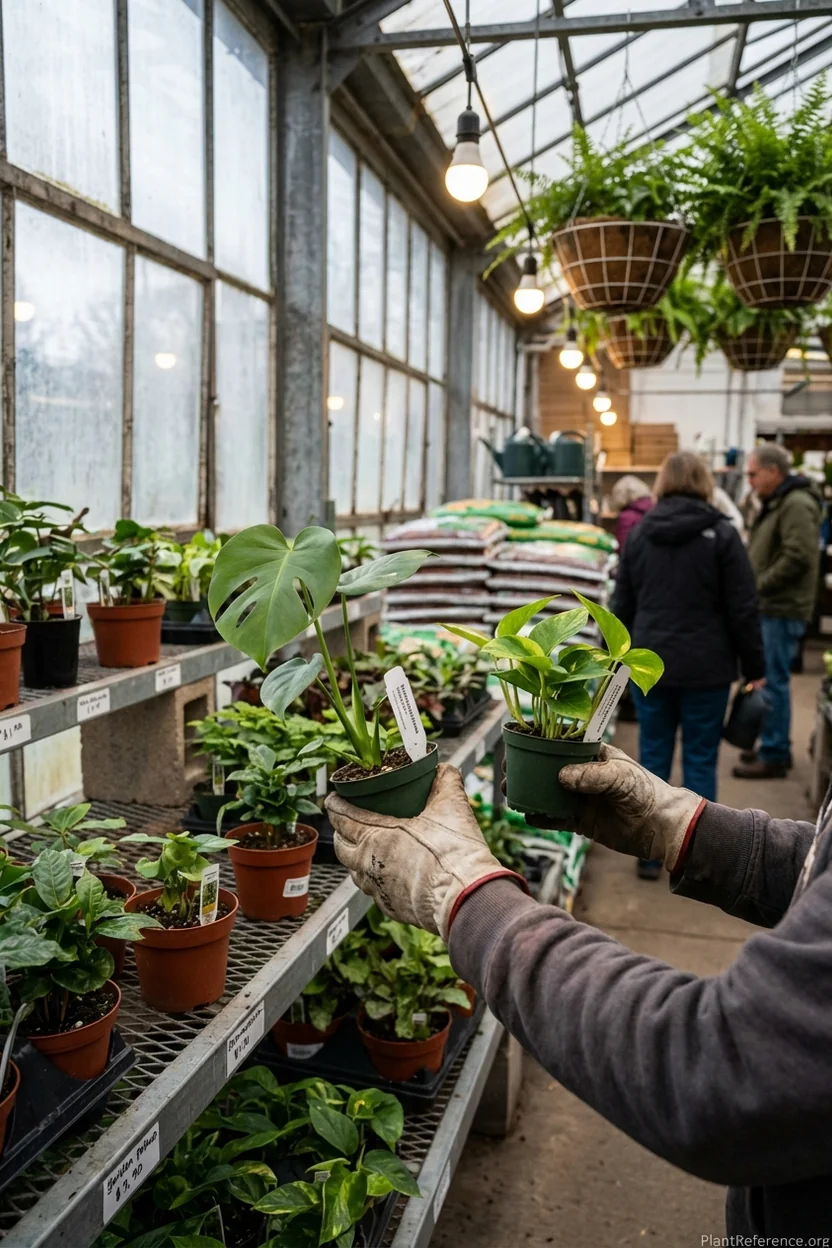
Scenario 1: Small Plants at the Nursery
The Problem: Both plants look nearly identical when young, and many nurseries don't have detailed plant tags.
The Solution:Look for these subtle early differences:
Monstera leaves tend to be slightly thicker and more substantial
Monstera plants often cost more ($15-30 vs $8-15 for pothos)
Check the botanical name:
Monstera deliciosa vs Epipremnum aureum - Look at the overall plant shape—young monsteras often show more upright growth
Scenario 2: "Variegated" Confusion
The Problem: Both plants have variegated varieties that can look similar at first glance.
The Solution:
Monstera variegation appears as white or cream sectors/patches
Pothos variegation typically shows as streaks, spots, or marbling
Golden pothos has yellow/chartreuse variegation
Monstera albo has stark white variegation with clear boundaries
Scenario 3: Large Trailing Plants
The Problem: Mature monsteras without support can trail similarly to pothos, causing confusion.
The Solution:
Look for fenestrations—only monstera will have holes/splits
Check stem thickness—monstera stems remain thick even when trailing
Examine leaf texture—monstera leaves feel thicker and more leathery
Notice leaf size—trailing monstera leaves are typically larger than pothos
For help with Monstera Aerial Roots: What to Do With Them and proper support, check our detailed guide.
Which Plant Is Right for You?
Now that you can tell them apart, which one should you choose? The answer depends on your space, experience level, and plant goals.
Choose Monstera If:
You want a dramatic statement plant
You have space for a large, upright plant
You're excited about fenestrations and dramatic leaves
You don't mind providing climbing support
You have bright indirect light available
You want a long-term plant investment
Monsteras are perfect for plant enthusiasts ready to commit to a substantial, impressive houseplant that will become a room focal point.
Choose Pothos If:
You want versatile placement options (trailing, climbing, shelf plant)
You prefer lower-maintenance care
You have lower light conditions
You want faster, more dramatic growth initially
You're new to houseplants
You want multiple plants from propagation
Pothos are ideal for beginners or anyone wanting a beautiful, adaptable plant that forgives occasional care lapses.
Why Not Both?
Honestly, there's no reason you can't have both! They complement each other beautifully:
Use monstera as a floor plant or climbing specimen
Use pothos for shelves, hanging baskets, or table plants
Both are pet-safe considerations—actually, both are toxic to pets, so keep them away from curious cats and dogs
For specific guidance on monstera growth and leaf development, see our article on Monstera Not Splitting: Why Your Leaves Won't Fenestrate.
The bottom line: once you know what to look for, distinguishing monstera vs pothos becomes second nature. Focus on the growth pattern and mature leaf development, and you'll never be confused again. Both plants will reward you with beautiful growth—they just express it in completely different ways.
Frequently Asked Questions
Reading about plants and recognising them are different skills. These three build the second.
- Daily PlantIdentify the day’s mystery plant from a close-up photograph.
- Keyed OutWork a dichotomous key, lead by lead, to name a hidden specimen.
- Name That PlantName a specimen from botanical clues dealt hardest first.
Free to play, no account needed
Jessica transformed her small Brooklyn balcony into a thriving container garden after moving to New York City. What started as a pandemic hobby turned into a plant care consulting business serving urban apartment dwellers across the city. She specializes in small-space gardening, indoor plant troubleshooting, and helping clients keep houseplants alive in less-than-ideal conditions (dim light, dry heat, tiny spaces). Jessica completed a home gardening certificate program and shares her plant wins and failures on her modest Instagram following. Her partner, Maya, jokes that their apartment is now 40% plants, 60% living space. Jessica's passionate about making plant care accessible to renters who think they don't have room to garden.