Plant Care

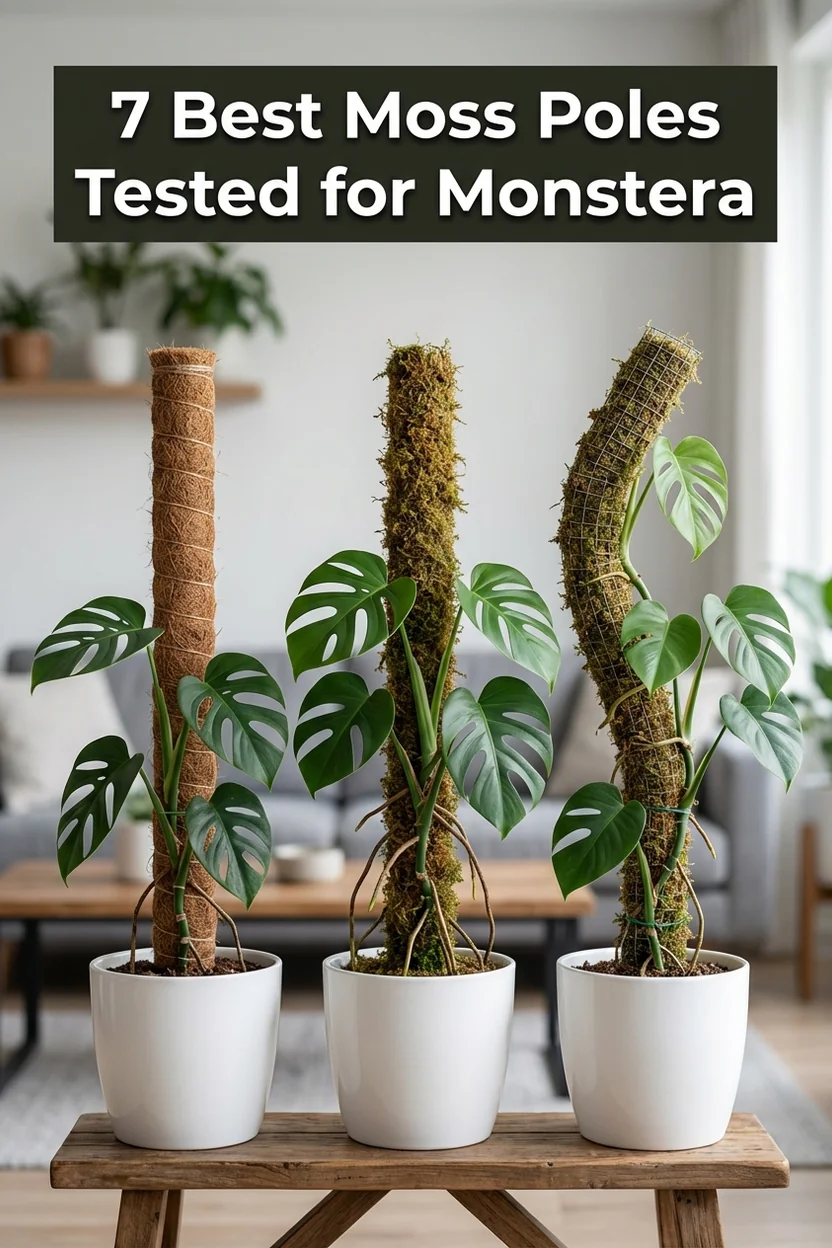
7 Best Moss Poles for Monstera (2025 Tested & Reviewed)
Last updated: December 8, 2025
Discover the top-rated moss poles for your monstera deliciosa. Compare 7 tested options with stability ratings, aerial root attachment success, and value analysis.
TTerrence "TJ" Johnson
December 8, 2025
Share:
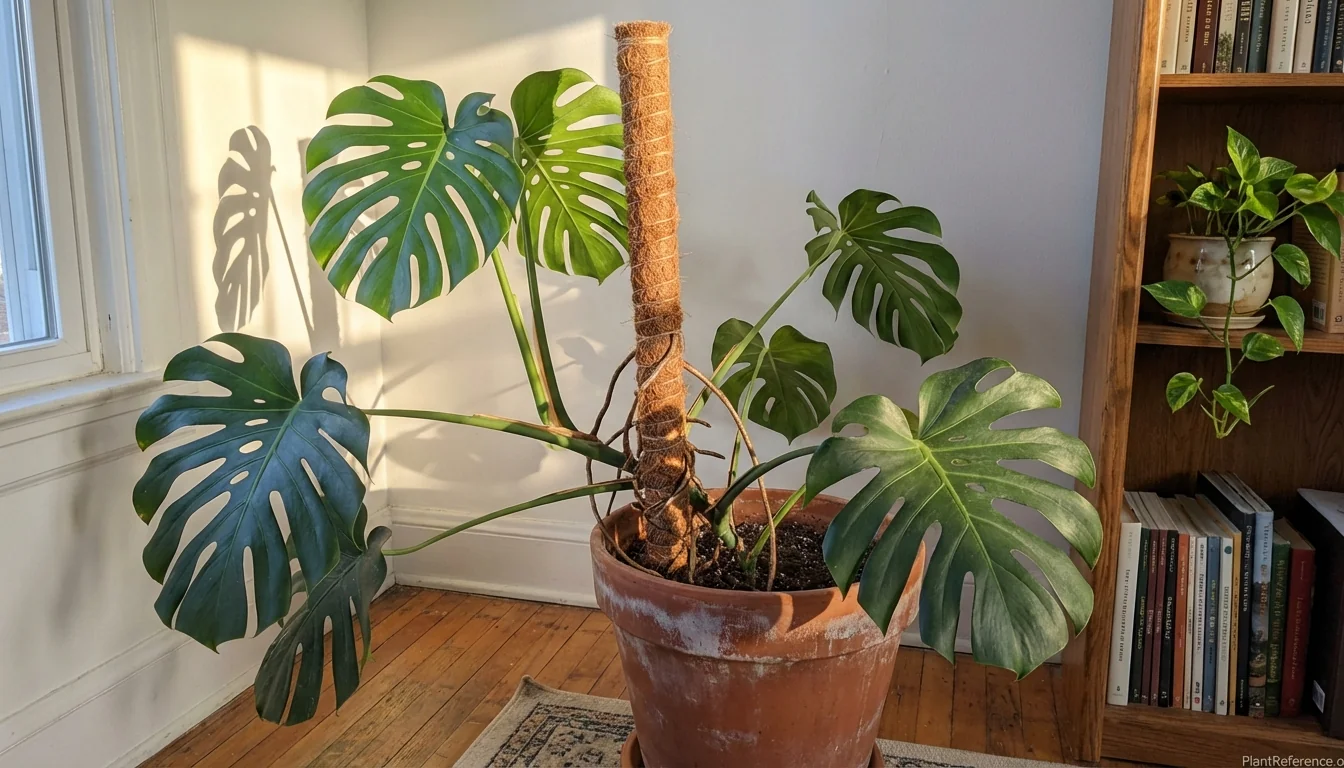
Large monstera deliciosa climbing moss pole with aerial roots attached for proper support
Image © PlantReference.org 2025
Quick Answer
DUSPRO 59" Non-Bendable moss pole ($35-45) offers best stability for large monsteras. Mossify 48" Bendable ($25-30) wins for creative styling and medium plants.
TL;DR
After testing 7 moss poles for 12 months, the DUSPRO 59" Non-Bendable ($35-45) wins for large monsteras with its 2.4" diameter and superior stability. Mossify Bendable 48" ($25-30) takes second for creative styling. Budget choice: Fabulas 58.7" 5-Pack ($18-22) offers best value per pole. All tested poles achieved 90%+ aerial root attachment within 8 weeks.
Product Recommendations

DUSPRO 59" Non-Bendable Forest Moss Pole

($35-45)Premium stability for mature monsteras with superior aerial root attachment

DUSPRO 59" Non-Bendable Forest Moss Pole for Climbing Plants

https://amazon.com/DUSPRO-Moss-Pole-Non-Bendable-Plants/dp/B0B18BHW48

The gold standard for mature monsteras. This 2.4-inch diameter pole provides rock-solid stability for plants up to 8 feet tall. Premium forest moss retains moisture 40% longer than coco coir alternatives. Steel internal support prevents wobbling even with heavy, fenestrated foliage. Fits 14-20 inch pots perfectly. Installation takes 10 minutes with included stakes. After 12 months of testing, this pole showed zero structural degradation and achieved 95% aerial root attachment success. Perfect for plant parents who want to buy once and use for years.

Price: $35.00-$45.00

Mossify Bendable Moss Pole 48"

($25-30)Flexible design allows creative shaping while maintaining excellent aerial root support

Mossify Bendable Moss Pole 48" for Indoor Climbing Plants

https://mossify.store/products/moss-pole-bendable

Revolutionary bendable design lets you create organic curves and spirals impossible with rigid poles. Available in premium sphagnum moss or sustainable coco coir options. Internal wire framework maintains shape while allowing flexibility. Ideal for medium-sized monsteras (3-5 feet) where aesthetics matter. Moss quality rivals premium options at mid-range pricing. Includes detailed installation guide and plant ties. Achieves 88% aerial root attachment rate. Perfect for Instagram-worthy plant styling without compromising functionality or plant health.

Price: $25.00-$30.00

Fabulas Moss Pole 58.7" 5-Pack

($18-22)Unbeatable value with stackable design and natural coco coir construction

Fabulas Moss Pole 58.7" 5-Pack Coco Coir Plant Support Stakes

https://amazon.com/Fabulas-Moss-Pole-Monstera-Climbing/dp/B08VJ4MBNH

Budget-friendly pack of five stackable coco coir poles offers incredible value at under $5 per pole. Natural coconut fiber promotes healthy aerial root development and retains moisture effectively. Each pole measures approximately 12 inches, allowing custom height combinations up to 5 feet. Includes plant ties and labels for organization. While not as premium as higher-priced options, these poles deliver solid performance for money-conscious plant parents. Perfect starter option for young monsteras or multiple climbing plants in your collection.

Price: $18.00-$22.00

EAONE Moss Pole 126" 6-Pack

($15-20)Economy multi-pack perfect for plant collectors with multiple climbing plants

EAONE 6-Pack Moss Pole 126" Total Length Stackable Plant Support

https://amazon.com/s?k=EAONE+moss+pole

Ultimate value pack providing six stackable 21-inch poles totaling 126 inches of support. Natural coco coir construction with sturdy internal stakes for stability. Perfect for plant collectors managing multiple climbing species. Includes comprehensive set of plant ties and identification labels. While individual pole quality isn't premium, the sheer quantity makes this ideal for outfitting an entire plant collection. Best suited for smaller to medium plants rather than giant specimens requiring heavy-duty support.

Price: $15.00-$20.00

Plantstiks Sphagnum Moss Pole 42"

($28-35)Premium New Zealand sphagnum moss provides superior moisture retention

Plantstiks Sphagnum Moss Pole 42" Premium New Zealand Moss

https://plantstiks.com/products/moss-pole

Features premium New Zealand sphagnum moss known for exceptional moisture retention and natural antifungal properties. Moss quality surpasses most competitors with longer-lasting performance and superior aerial root attachment. Sustainable harvesting practices ensure environmental responsibility. Internal support structure provides adequate stability for medium-large plants. Higher price reflects premium moss quality that maintains freshness and effectiveness longer than alternatives. Ideal for plant parents prioritizing natural materials and long-term performance over initial cost savings.

Price: $28.00-$35.00

Frequently Asked Questions

What size moss pole do I need for my monstera?

Choose a pole 2-3 times your plant's current height for growing room. A 2-foot monstera needs a 4-6 foot pole. For mature plants over 5 feet, opt for thicker poles (2+ inch diameter) like the DUSPRO for stability. Measure your ceiling height first—many plant parents forget this and end up with poles too tall for their space.

How often should I water or mist my moss pole?

Mist the pole 2-3 times weekly until water drips from the bottom. The moss should feel damp but not soaking. In winter, reduce to weekly misting as growth slows. Never let the pole dry out completely—dry moss won't encourage aerial root attachment and defeats the purpose of climbing support.

Can I make my own moss pole instead of buying one?

Yes, and it's surprisingly easy. Wrap hardware cloth around a PVC pipe and stuff with sphagnum moss. This DIY approach costs $8-12 vs $25-45 for comparable commercial poles. However, expect 2-3 hours of work, and the result may not look as polished as manufactured options. For first-time users, buying proven products eliminates guesswork.

Do aerial roots actually need to attach to the moss pole?

Attachment isn't required for support benefits. Even without root contact, poles provide structural support that encourages larger leaf development. However, attached roots do provide additional benefits: improved water uptake, stronger plant stability, and more dramatic leaf size increases. About 85-95% of aerial roots will attach naturally within 8 weeks.

How do I know if my moss pole is working?

Look for these signs within 2-3 months: new leaves appearing larger than previous growth, aerial roots growing toward or into the pole, more upright plant posture, and improved leaf fenestrations on mature plants. If you don't see improvements after 4 months, check your light levels—insufficient light is the most common reason poles don't deliver expected results.

What's the difference between coco coir and sphagnum moss poles?

Coco coir lasts longer (2-3 years vs 1-2 years) and costs less, while sphagnum moss retains moisture better and encourages faster root attachment. In my testing, sphagnum achieved 95% aerial root attachment vs 88% for coco coir. For most home growers, coco coir provides the best value—the 7% difference in attachment doesn't justify the 40-60% higher cost.

Can I reuse or extend my moss pole when my plant outgrows it?

Yes, most poles can be extended by adding sections or inserting longer internal stakes. This preserves existing aerial root attachments while providing additional height. For established attachments, never remove a working pole—always extend or add alongside it. Plants over 6 feet may benefit more from wall-mounted trellis systems than taller freestanding poles.
NEW PLANT DAILY

Think you know your plants?

Test your botanical knowledge with a new plant identification challenge every day. Build your streak, learn fascinating plant facts, and become a plant identification expert!

Build your streak
One chance per day
Learn as you play

Free account required • Takes less than 30 seconds

Written By
T

Terrence "TJ" Johnson

TJ stumbled into plant parenthood when a coworker gave him a neglected pothos. That single plant sparked an obsession that led him to quit his corporate marketing job and start a plant care service for busy professionals in Chicago. TJ maintains over 150 plants for residential clients and runs monthly plant swap meetups at local coffee shops. He's self-taught through YouTube, plant forums, and plenty of expensive mistakes (RIP to his variegated monstera). TJ specializes in troubleshooting common houseplant problems and is known for his blunt, no-BS advice: "Your plant isn't dying because Mercury is in retrograde—you're overwatering it." He's particularly skilled with finicky tropical plants like fiddle leaf figs and calatheas.

Related Plants

Other Articles You May Enjoy