Image 1 of 22
1 / 22
Plant Reference
Monstera, Genus, deliciosa, Species,
- Genus & species
Swiss cheese plant
Native to tropical rainforests of southern Mexico and Guatemala, where the species grows as an epiphytic climber in the humid understory of tropical forests; the species reaches 70 ft (21 m) in the wild by climbing tree trunks with thick fleshy aerial roots; in cultivation outside the tropical native range, the species is grown as a houseplant in temperate climates and as a landscape vine in USDA zones 10-11 only
Overview
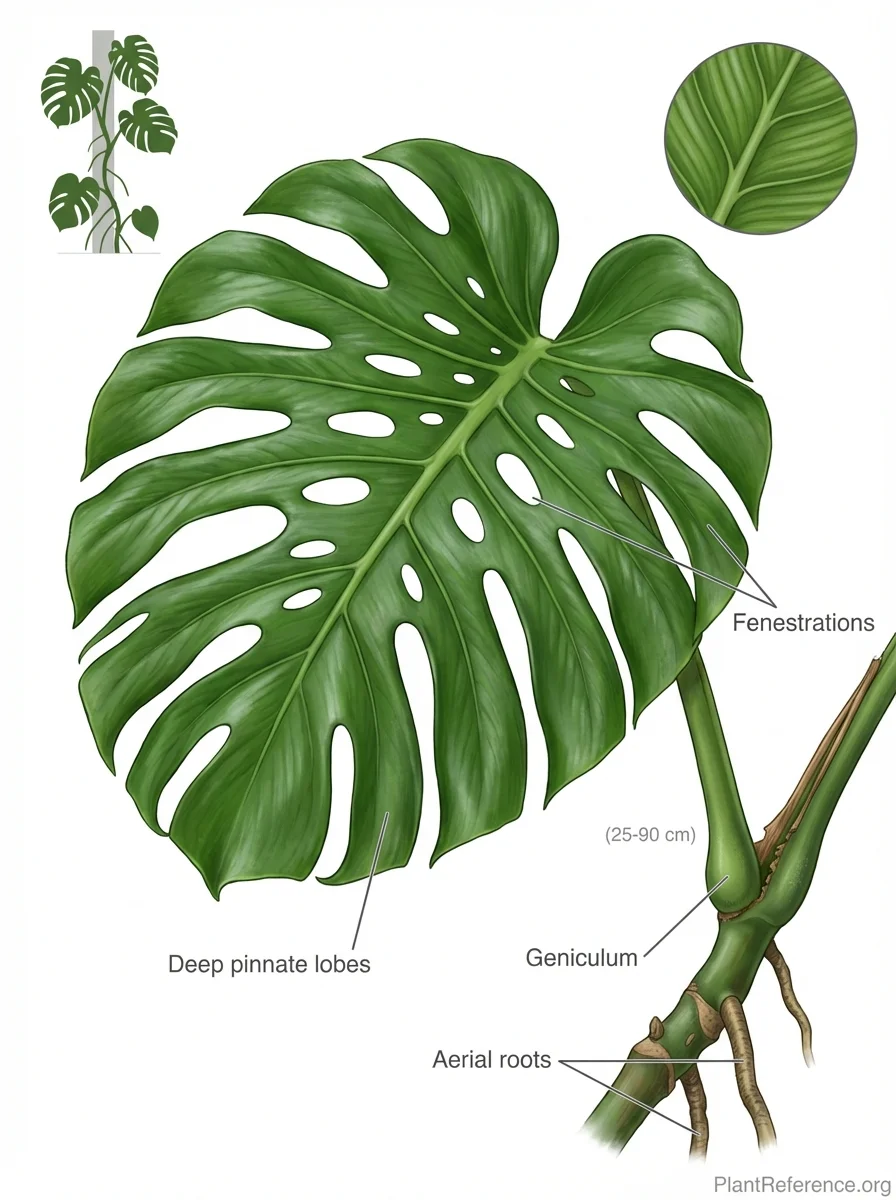
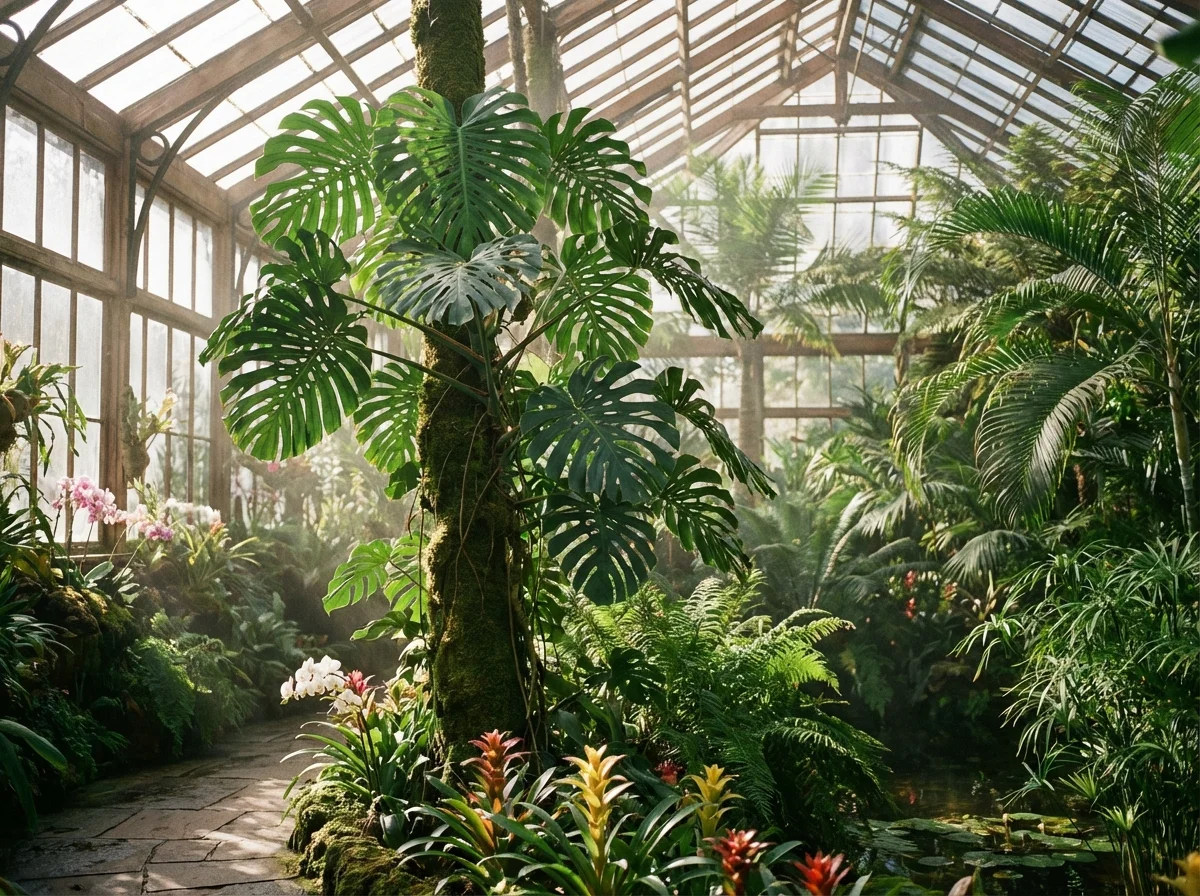
Monstera deliciosa is the Swiss cheese plant (split-leaf philodendron), an evergreen epiphytic climbing vine in the aroid family (Araceae) growing 72-120 inches (180-300 cm / 6-10 feet) indoors and up to 70 ft (21 m) in the wild. Glossy dark green leaves carry the characteristic identification pattern: juvenile leaves are heart-shaped and entire (no holes), and mature leaves develop fenestrations (holes) and deep pinnate splits, up to 36 inches (90 cm) across. Thick fleshy aerial roots attach to supports — a moss pole, trellis, or tree trunk. The fenestrations may function to allow wind passage and dappled light to lower leaves on tall stems. Rarely flowers indoors since flowering requires tropical conditions and 5+ years of maturity. The cream-colored spadix in a white spathe produces fruit that takes 12+ months to ripen — edible when ripe (pineapple-scented segments), with the unripe fruit containing calcium oxalate and toxic. All vegetative parts contain calcium oxalate crystals: toxic to pets and humans if ingested (mouth pain, swelling, drooling). Direct sun burns the leaves — bright indirect light is the practical target. Repot every 2-3 years. The large mature leaves require space — a single leaf can span 36 inches (90 cm). Zones 10-11 outdoors only; a houseplant elsewhere. Growth rate is moderate indoors, fast in tropical conditions.
Native Range
Monstera deliciosa is native to tropical rainforests of southern Mexico and Guatemala, where the species grows as an epiphytic climber in the humid understory of tropical forests.Suggested Uses
Grown as a houseplant in bright indirect light with a moss pole or trellis support. Containers of at least 5 gallons (19 L). Outdoors in zones 10-11 only. The large fenestrated leaves require space — a single mature leaf can span 36 inches across. All parts toxic to pets and humans. Tender — killed by frost. Not suited to direct-sun positions or to homes with curious pets that chew foliage.How to Identify
Appearance
Size & Dimensions
Height6' - 10'
Width/Spread3' - 8'
Bloom Information
Rarely flowers indoors. In tropical conditions, the plant produces a cream-colored spadix enclosed in a white spathe. The fruit takes 12+ months to ripen. Flowering requires maturity (5+ years) and tropical humidity, so most houseplant specimens never flower in cultivation.
Detailed Descriptions
Flower Description
Cream-colored spadix 8-12 inches (20-30 cm) enclosed in a white spathe — rare indoors; the fruit (if produced) ripens to edible pineapple-scented segments after 12+ monthsFoliage Description
Glossy dark green; juvenile leaves heart-shaped and entire; mature leaves develop fenestrations (holes) and deep pinnate splits, up to 36 inches (90 cm) acrossGrowing Conditions
Sun Requirements
Needs bright indirect light. Keep it out of direct sun, which can scorch the leaves.
• Bright indirect light: a bright spot near a window, with no direct sun on the leaves
Care & Maintenance
Care Guide
Bright indirect light — direct sun burns the leaves. Grows in well-drained chunky aroid mix (peat, perlite, bark) at pH 5.5-7.0. Water when the top 1-2 inches (2.5-5 cm) of soil is dry. Humidity 40-60%. Temperature range 65-85°F (18-29°C). Provide a moss pole or trellis for the climbing habit since unsupported plants stay in juvenile-leaf form longer than supported plants. Repot every 2-3 years as the root system fills the container. All parts contain calcium oxalate that is toxic to pets and humans if ingested. Zones 10-11 outdoors.Pruning
Remove yellowed or damaged leaves at the base with clean shears. Trim unwieldy aerial roots, leaving some intact for climbing support. Pinch growing tips to encourage branching. Gloves are advisable during pruning since the sap contains calcium oxalate crystals that cause skin irritation in some individuals.Pruning Schedule
Prune: March–June
early springlate springsummer
Container Growing
Suitable for container growing
Minimum container size: 5 gallons
Toxicity Warning
Toxic to pets and humans. All vegetative parts contain calcium oxalate crystals that cause mouth pain, swelling, and drooling if ingested. Unripe fruit also contains calcium oxalate and is toxic; only fully ripened fruit (after 12+ months) is edible.Botanical Flashcard