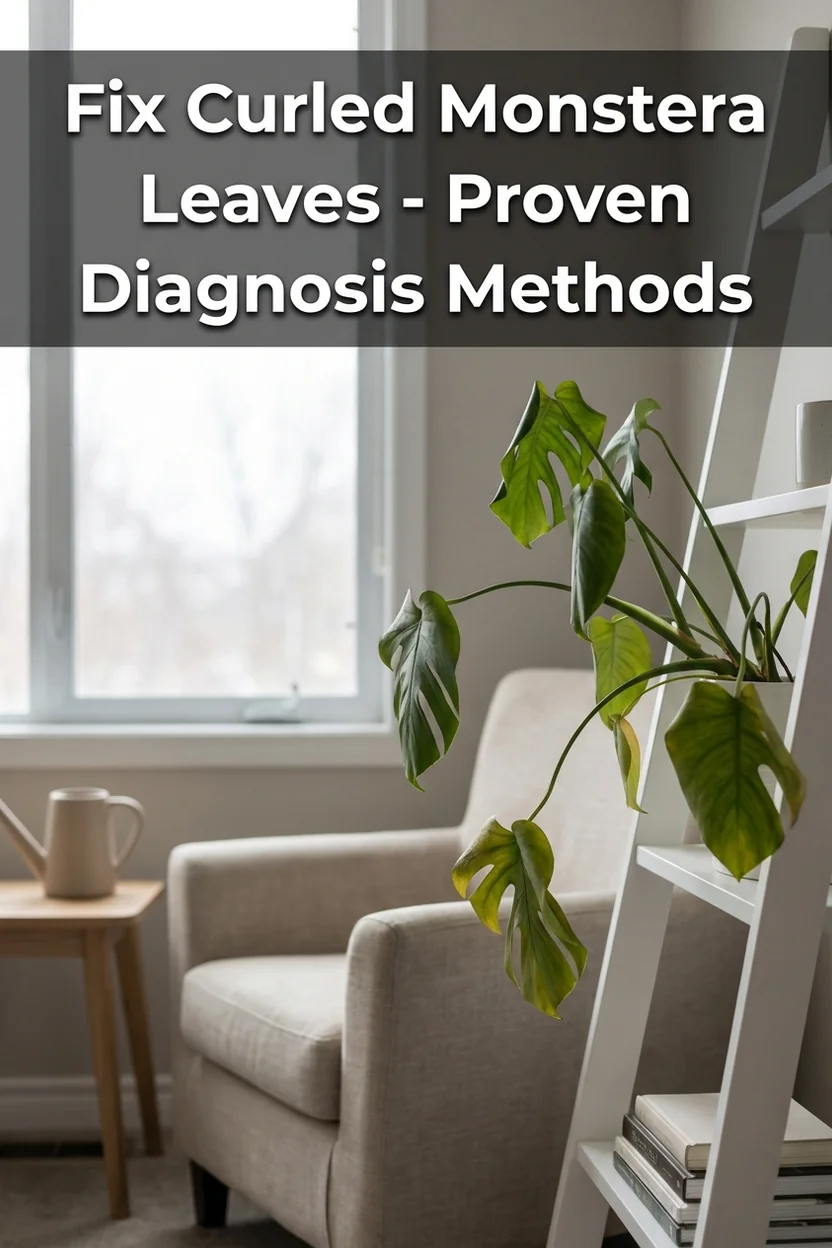
Monstera Leaves Curling: Diagnosis and Solutions
Pets & Toxicity
Recorded toxicity for plants linked in this guide. An unknown status is not a safety assessment.
Toxic to pets: Swiss cheese plantDetailsHide
Monstera deliciosa — Toxicity Warning
Toxic to pets and humans. All vegetative parts contain calcium oxalate crystals that cause mouth pain, swelling, and drooling if ingested. Unripe fruit also contains calcium oxalate and is toxic; only fully ripened fruit (after 12+ months) is edible.View Monstera deliciosa plant profile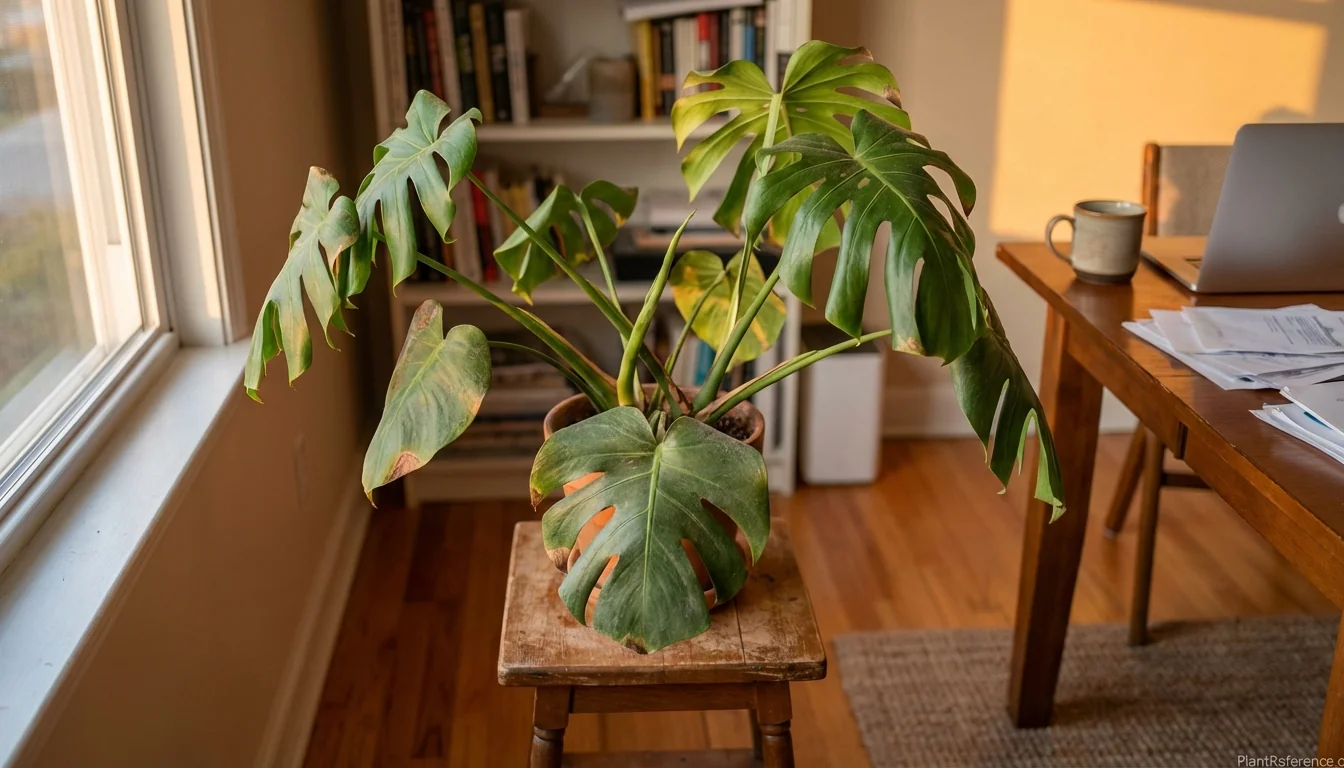
— Image © Plant Reference 2026
Your monstera's leaves are curling inward like tiny green scrolls, and you're wondering what the hell is going wrong. Here's the straight answer: monstera leaves curling signals environmental stress, most commonly from low humidity, inconsistent watering, or heat exposure. The good news? This is fixable once you identify the root cause.
Let's cut through the guesswork with a systematic diagnostic approach that actually works. I've rescued dozens of monsteras from the curling leaf crisis, and the pattern is always the same—one of five specific causes is behind the problem.
Why Monstera Leaves Curl
Leaf curling is your monstera 🌿Monstera deliciosa (mon-STER-ah de-lis-ee-OH-sah) conserving moisture and protecting itself from stress. When environmental conditions become unfavorable, the plant reduces surface area exposed to air by curling leaves inward. This is a survival mechanism, not a death sentence.
The curling pattern tells you exactly what's wrong:
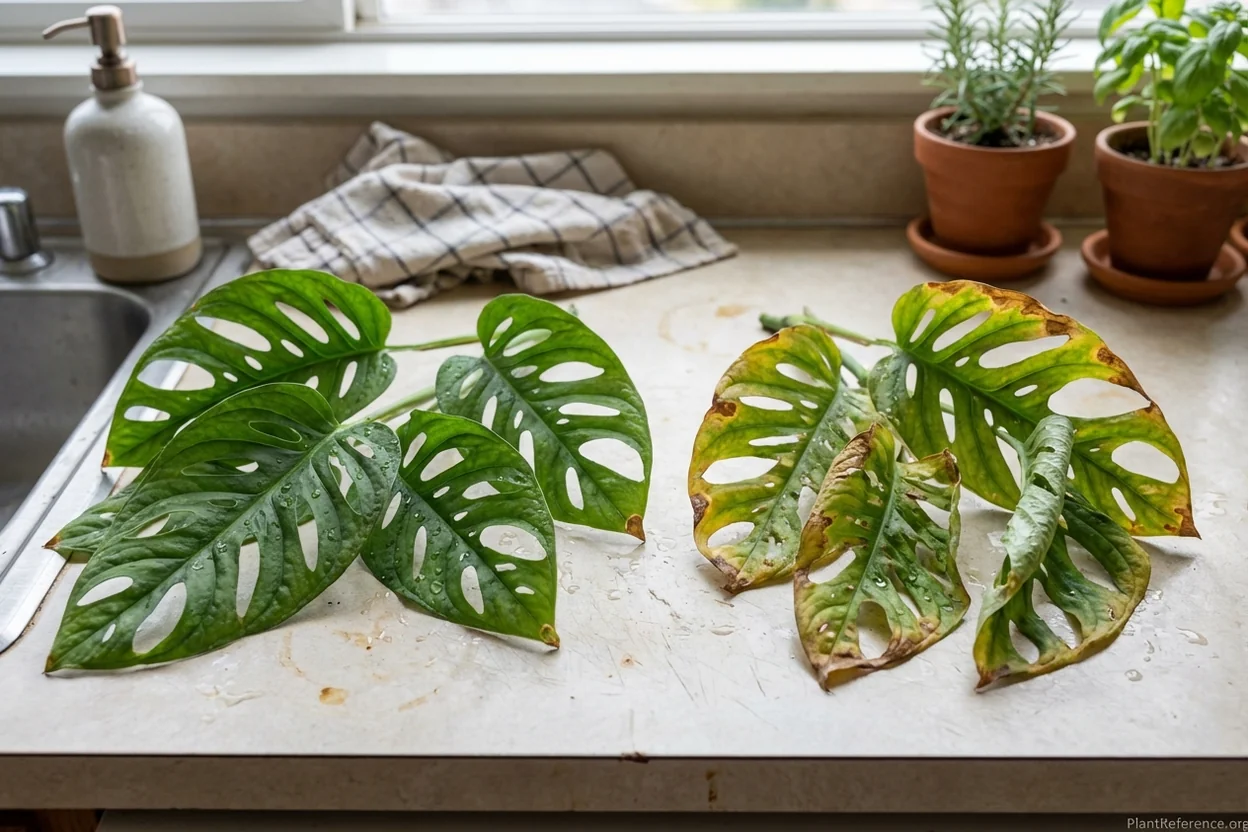
Inward curling with dry, crispy edges = low humidity or underwatering
Upward curling with yellowing = overwatering or root problems
Tight curling with webbing = pest infestation (spider mites)
Curling with brown spots = heat stress or sun damage
Gradual curling with slow growth = insufficient light
Understanding these patterns saves you from trying random solutions that waste time and potentially harm your plant further.
Quick Diagnostic Checklist
Before you start changing everything about your plant's environment, run through this systematic diagnostic process. Check these factors in order:
Environmental Assessment (5 minutes):
Humidity level: Use a hygrometer or check if leaves feel dry and papery
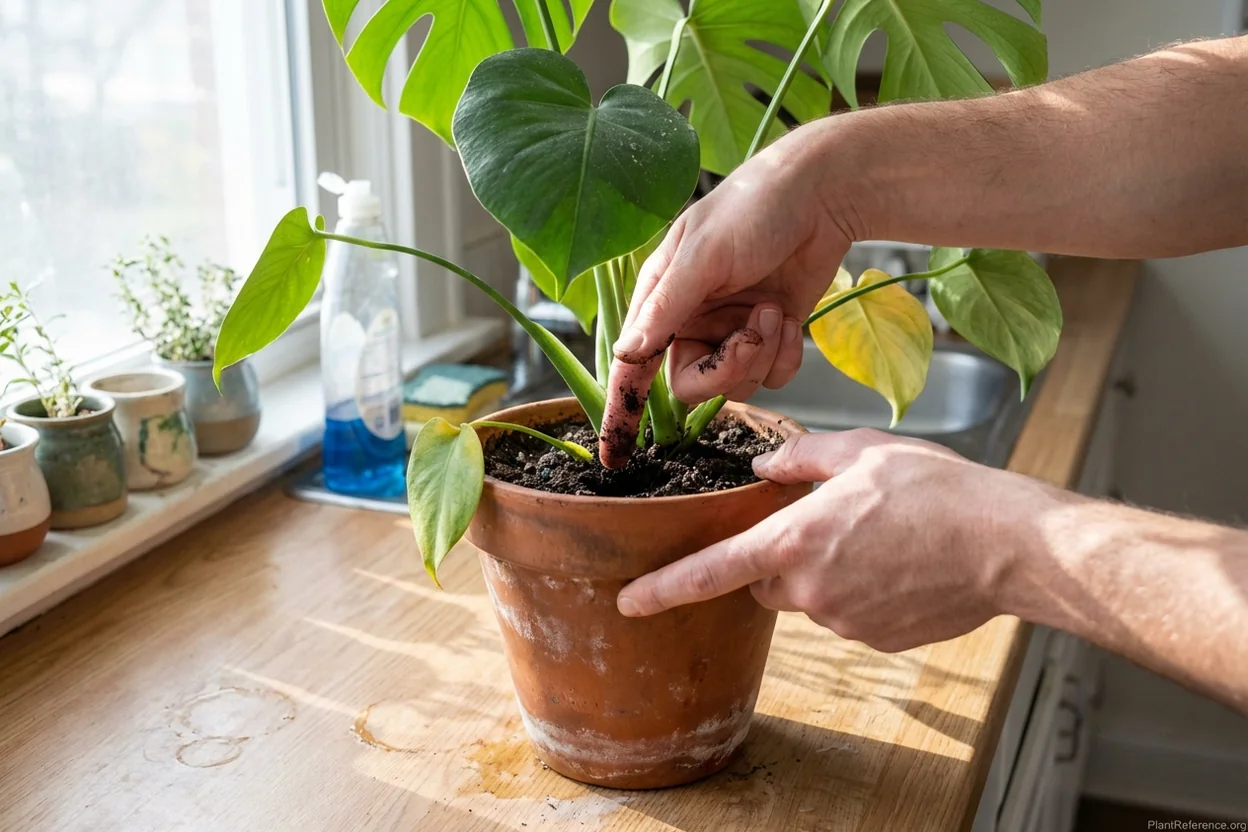
Soil moisture: Insert finger 2-3 inches (5-7.5 cm) deep into soil
Heat sources: Identify heating vents, radiators, or direct sunlight within 6 feet (2m)
Pest inspection: Examine leaf undersides with magnifying glass for webbing or tiny moving dots
Light exposure: Note if plant receives bright indirect light or sits in a dark corner
Physical Symptoms Check:
Leaf texture: Dry and crispy edges suggest humidity issues
Leaf color: Yellowing indicates watering problems or nutrient deficiency
Growth pattern: New leaves smaller than old ones points to insufficient light
Root condition: Gently lift plant to check for mushy, dark roots (root rot)
Most curling problems stem from just one or two of these factors, not multiple simultaneous issues. Focus on the most obvious symptom first.
Low Humidity: The #1 Cause
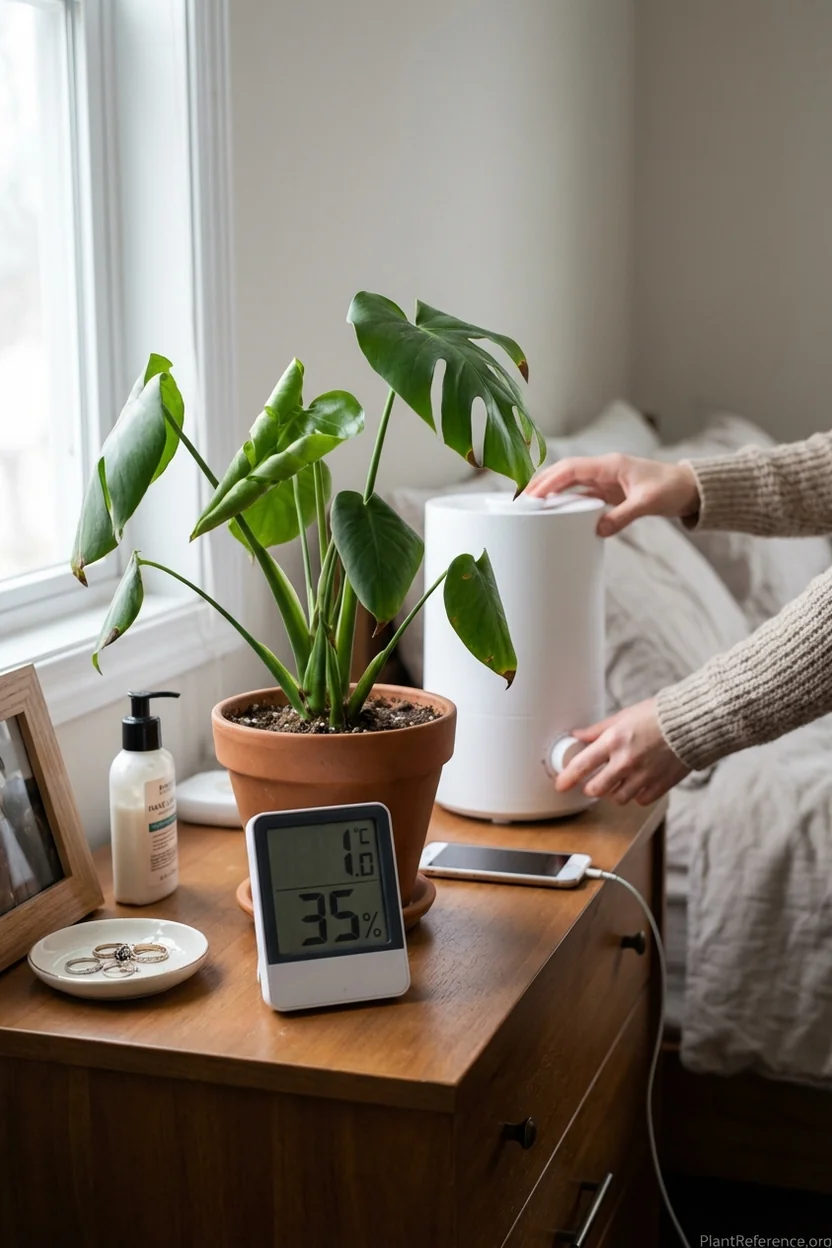
Let's be honest—your home's humidity probably sucks for tropical plants. Most homes maintain 20-40% humidity, while monsteras need 50-60% to thrive. Low humidity causes more leaf curling than all other factors combined.
How Low Humidity Causes Curling:
Monsteras originated in Central American rainforests where humidity stays consistently high. When air moisture drops below 40%, the plant's leaves lose water faster than roots can replace it. Curling reduces leaf surface area exposed to dry air, conserving precious moisture.
Signs Your Humidity is Too Low:
Leaves curl inward starting from edges
Leaf tips turn brown and crispy
New growth emerges smaller than previous leaves
Plant requires watering more frequently than every 7-10 days
Other tropical plants in your home also show stress
Humidity Solutions That Actually Work:
→ LEVOIT Classic 300S Smart Humidifier ($50-70) - App-controlled with auto humidity maintenance
Top-rated smart humidifier with app control (Alexa/Google compatible) maintains precise humidity levels automatically. Large 6-liter transparent tank runs up to 50 hours on single fill. Whisper-quiet operation under 28dB perfect for bedrooms. Auto mode adjusts output based on current humidity readings. Essential oils tray adds aromatherapy benefits. Good Housekeeping Seal winner with 3-year warranty provides reliable performance.
The fastest fix is placing a humidifier within 6 feet (2m) of your monstera. Set it to maintain 55% humidity, and you'll see leaf improvement within 7-14 days.
Budget Alternatives:
Group plants together to create a microclimate with 5-10% higher humidity
Place pebble trays filled with water under and around the plant
Mist leaves 2-3 times weekly (morning only, never evening)
Move plant to naturally humid rooms like bathrooms with windows
Pebble trays work, but they're maintenance-heavy and only raise humidity by 5-10%. A decent humidifier costs $30-50 and solves the problem permanently.
Underwatering vs Overwatering Signs
Here's where most plant parents screw up—assuming all leaf curling means the same thing. Underwatering and overwatering both cause curling, but the symptoms are distinctly different.
Underwatering Symptoms:
Leaves curl inward with dry, crispy edges that crumble when touched
Soil pulls away from pot edges when dry
Plant feels noticeably lighter when lifted
Lower leaves turn yellow and drop off first
New growth is small and pale green
Overwatering Symptoms:
Leaves curl upward or cup-shaped with soft, mushy texture
Soil stays wet for 2+ weeks between waterings
Fungus gnats hover around soil surface
Roots appear dark brown or black with foul smell
Yellowing starts with newer leaves, not older ones
The touch test is foolproof: underwatered leaves feel papery and brittle, while overwatered leaves feel soft and pliable.
Proper Watering Technique:
Check soil moisture by inserting your finger 2-3 inches (5-7.5 cm) into the soil. If it's dry at that depth, water thoroughly until water drains from the bottom holes. Empty saucers after 30 minutes to prevent root rot.
Watering Schedule Guidelines:
Spring/Summer (growing season): Every 7-10 days typically
Fall/Winter (dormant period): Every 2-3 weeks typically
Adjust based on humidity, temperature, and pot size
Never water on a fixed schedule—always check soil first
→ XLUX Soil Moisture Meter ($10-15) - Simple analog gauge prevents guesswork
Reliable analog moisture meter with 10-point color-coded scale eliminates watering guesswork. No batteries required—simple push-and-read design provides instant accurate readings. Durable construction withstands repeated use in multiple pots without degrading accuracy. Insert probe 6-8 inches deep for root zone measurements. Ideal for plant parents who struggle with watering schedules as it shows exactly when soil is dry enough to water safely.
Heat Stress and Light Problems
Monsteras hate temperature extremes and sudden changes. Heat stress manifests as tight leaf curling combined with brown, crispy edges that look burned.
Common Heat Stress Sources:
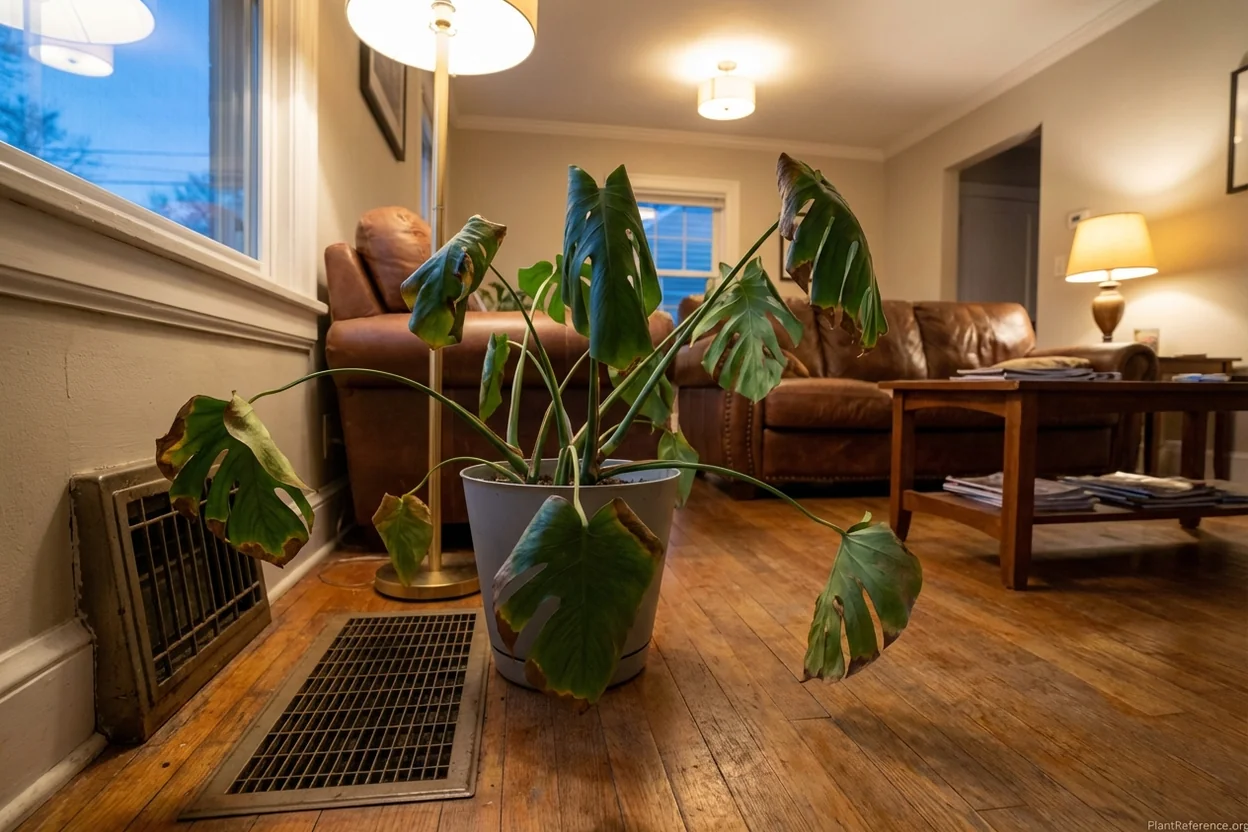
Heating vents blowing directly on plants (move 6+ feet away)
Radiators or baseboard heaters within 4 feet (1.2m) of plant
South-facing windows with direct afternoon sun
Heat-generating electronics like TVs, computers, or grow lights positioned too close
Rapid temperature swings from air conditioning or opening windows
Light-Related Curling:
Too little light causes gradual, subtle curling as the plant stretches toward available light sources. Leaves become pale green and smaller with each new growth. Too much direct light causes immediate, dramatic curling with brown scorched patches.
Optimal Light Conditions:
Place your monstera near an east or north-facing window where it receives bright indirect light for 6-8 hours daily. If you only have south or west windows, position the plant 6-8 feet (2-2.5m) away or use sheer curtains to diffuse harsh rays.
Pest Damage Detection
Spider mites are sneaky bastards that cause leaf curling before you notice anything else wrong. These microscopic pests suck plant juices, causing leaves to curl, yellow, and develop fine webbing.
Spider Mite Detection:
Hold white paper under affected leaves and tap gently—tiny red or black specks that move are mites
Look for fine webbing on leaf undersides and between stems
Leaves develop stippled, silvery appearance before curling
Problem escalates rapidly in dry, warm conditions (exactly when humidity is already low)
Other Pest-Related Curling:
Thrips: Cause silvery streaks and black specks on leaves before curling occurs
Aphids: Cluster on new growth, causing leaves to curl and become sticky
Scale insects: Brown or white bumps on stems and leaves that cause yellowing and curling
Treatment Protocol:
First, isolate the plant immediately to prevent spread to other houseplants. Rinse leaves with cool water to remove as many pests as possible.
→ Neem Oil Spray ($10-18) - Organic pest control that actually works
Concentrated neem oil extract provides organic pest control for spider mites, aphids, thrips, and scale insects. Mix 2 tablespoons per gallon of water for effective treatment spray. Safe for indoor use and won't harm beneficial insects when used as directed. Apply weekly for 3 treatments to break pest life cycles completely. Also provides fungicidal properties preventing secondary infections from pest damage. OMRI listed for organic gardening.
For severe infestations, you may need systemic insecticides, but neem oil handles most problems if applied consistently.
Step-by-Step Recovery Plan
Once you've identified the cause, follow this recovery protocol. Don't try to fix everything at once—plants need time to adjust to changes.
Week 1: Address Primary Issue
Set up humidifier if humidity below 45%
Adjust watering schedule based on soil test results
Move plant away from heat sources or direct sun
Begin pest treatment if evidence found
Week 2-3: Monitor and Adjust
Check soil moisture every 3-4 days but don't overwater
Maintain humidity between 50-60%
Remove any dead or severely damaged leaves
Continue pest treatment if applicable
Week 4-6: Recovery Assessment
New growth should show improvement first. Existing curled leaves may not flatten completely, but they should stop worsening. Focus on new leaf development as your success indicator.
What to Expect:
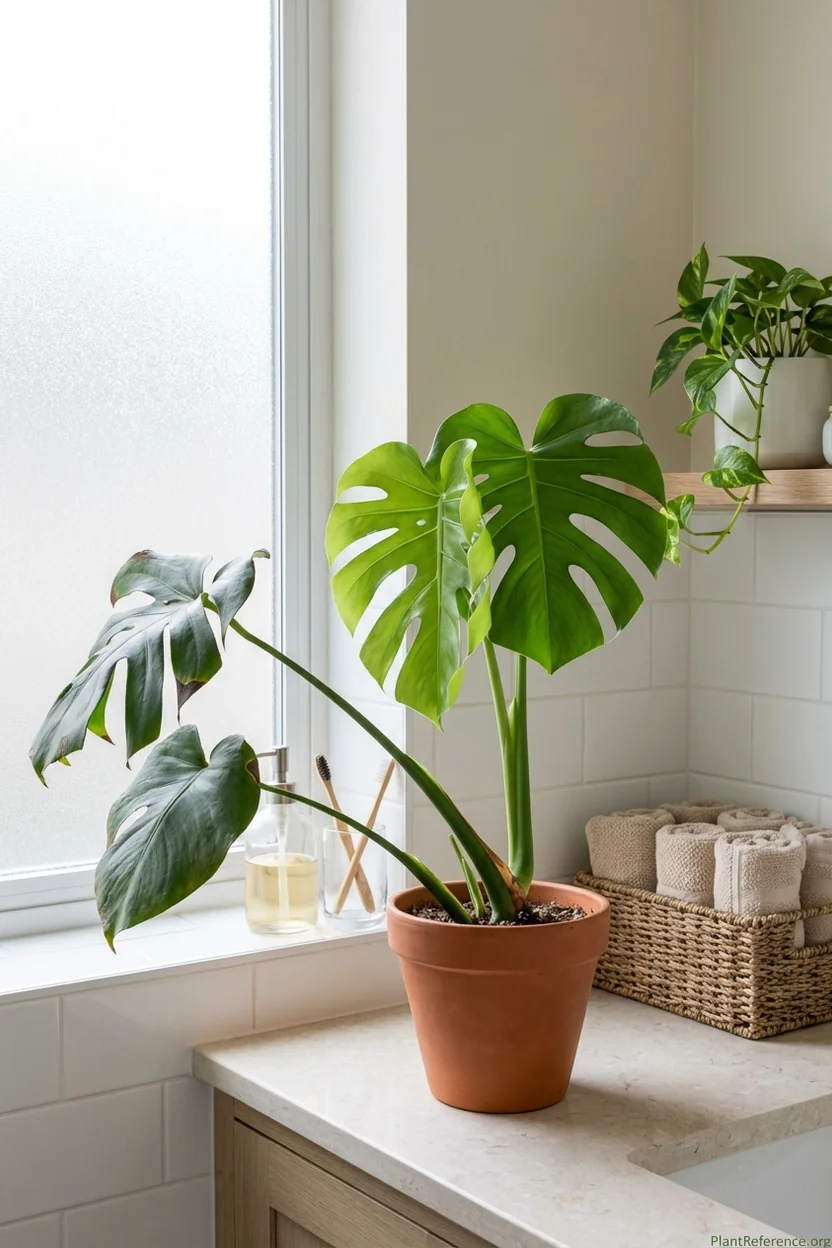
New leaves will emerge flat and healthy within 2-4 weeks
Existing curled leaves may improve slightly but often remain partially curled
Overall plant vigor increases with proper environmental conditions
Full recovery to optimal growth takes 2-3 months
Don't expect overnight miracles. Plants respond slowly to environmental changes, and patience is essential for complete recovery.
Prevention Strategies
The best cure is prevention. Once you've solved the curling problem, implement these strategies to prevent recurrence:
Environmental Monitoring:
Use a hygrometer to track humidity levels year-round
Check soil moisture consistently rather than watering on schedule
Inspect leaves weekly for early pest detection
Monitor seasonal changes that affect indoor growing conditions
Seasonal Adjustments:
Winter: Reduce watering frequency, increase humidity (heating systems dry air)
Spring: Resume regular feeding, increase watering as growth accelerates
Summer: Monitor for heat stress, provide extra humidity if needed
Fall: Begin reducing water and fertilizer as growth slows
For more comprehensive monstera care guidance, see our complete Monstera Deliciosa Care: The Complete Guide which covers all aspects of keeping these tropical beauties healthy year-round.
Key Prevention Tools:
→ Pure Enrichment MistAire Humidifier ($30-40) - Budget-friendly humidity solution
Affordable ultrasonic humidifier with 1.5-liter tank provides up to 16 hours continuous operation. 360-degree rotatable nozzle directs mist exactly where needed around your plants. High and low mist settings accommodate different room sizes and humidity needs. Automatic shut-off when empty prevents damage. Whisper-quiet operation won't disturb sleep or work. BPA-free construction ensures safe operation around food and family. Excellent value for plant parents on budget.
The most important prevention strategy is understanding that curling leaves are an early warning system. Address environmental issues as soon as you notice the first signs of stress, and your monstera will reward you with robust, healthy growth.
Remember: healthy monsteras in proper conditions rarely develop leaf curl problems. If your plant is curling repeatedly despite your best efforts, consider whether your home environment can consistently provide the humidity and stable conditions these tropical plants require. Sometimes the honest answer is that monsteras aren't the right plant for your specific living situation—and that's okay too.
Frequently Asked Questions
Reading about plants and recognising them are different skills. These three build the second.
- Daily PlantIdentify the day’s mystery plant from a close-up photograph.
- Keyed OutWork a dichotomous key, lead by lead, to name a hidden specimen.
- Name That PlantName a specimen from botanical clues dealt hardest first.
Free to play, no account needed
TJ stumbled into plant parenthood when a coworker gave him a neglected pothos. That single plant sparked an obsession that led him to quit his corporate marketing job and start a plant care service for busy professionals in Chicago. TJ maintains over 150 plants for residential clients and runs monthly plant swap meetups at local coffee shops. He's self-taught through YouTube, plant forums, and plenty of expensive mistakes (RIP to his variegated monstera). TJ specializes in troubleshooting common houseplant problems and is known for his blunt, no-BS advice: "Your plant isn't dying because Mercury is in retrograde—you're overwatering it." He's particularly skilled with finicky tropical plants like fiddle leaf figs and calatheas.