Fiddle Leaf Fig Leaning? Here's How to Fix It Fast
Pets & Toxicity
Recorded toxicity for plants linked in this guide. An unknown status is not a safety assessment.
Toxic to pets: fiddle leaf figDetailsHide
— Image © Plant Reference 2026
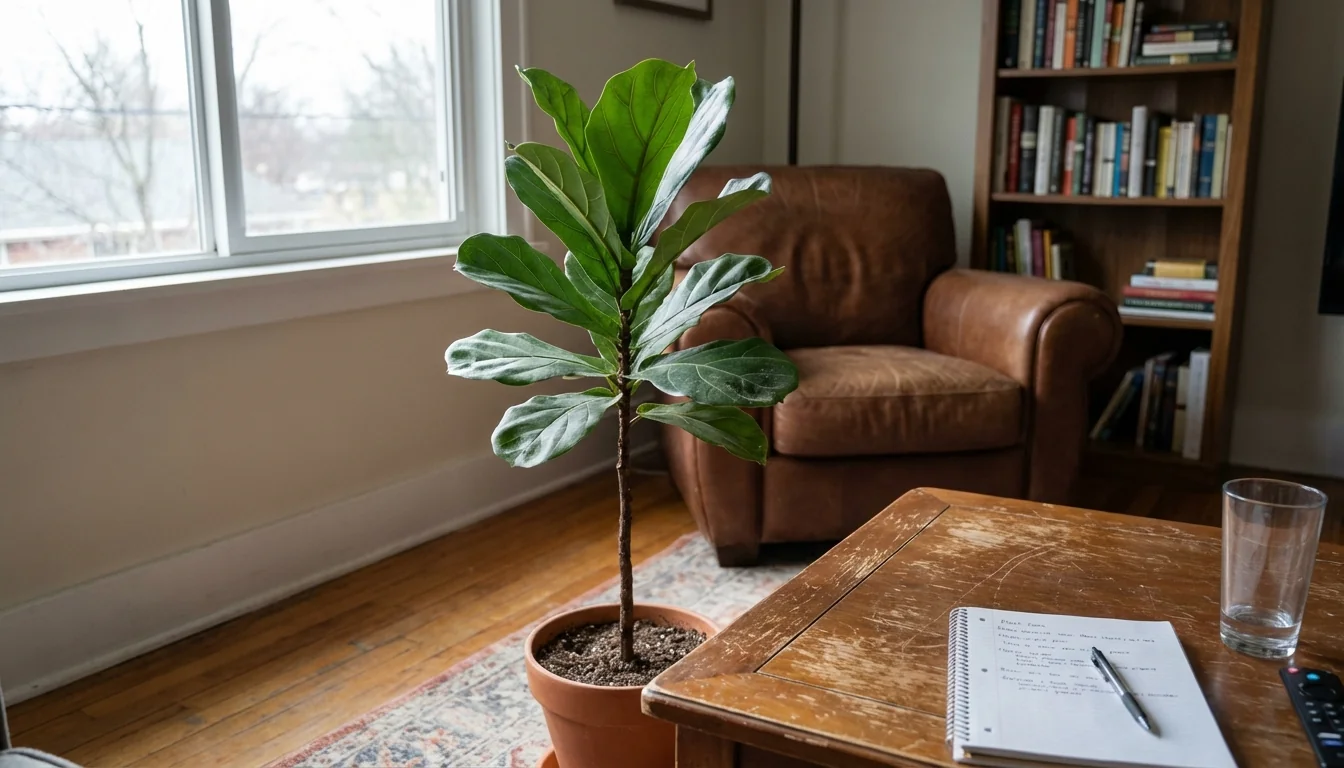
Let's be honest—your fiddle leaf fig 🌿Ficus lyrata (FYE-kus lye-RAY-tuh) is leaning because something's wrong with how you're caring for it. These plants don't naturally grow crooked unless they're compensating for poor conditions. Here's what's actually causing the problem and exactly how to fix it before your plant topples over.
Why Your Fiddle Leaf Fig Is Leaning (4 Main Causes)
Fiddle leaf figs lean for specific reasons, and you need to diagnose which one applies to your plant before you can fix it.
Cause 1: Insufficient Light (Most Common)
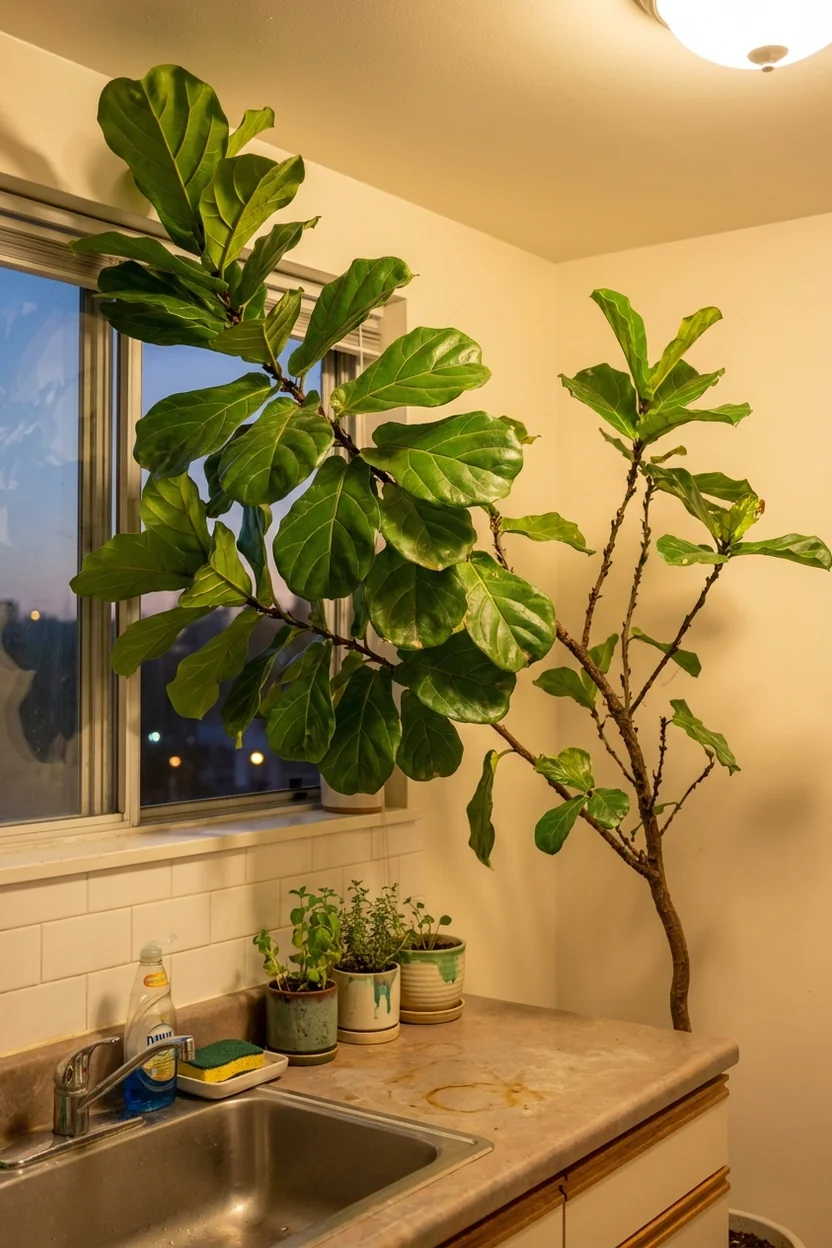
Your plant is literally reaching toward the nearest light source. The fiddle leaf fig's large leaves are designed for low-light forest floors in its native African habitat, but that doesn't mean it tolerates dim corners in your apartment. When light comes from only one direction, the plant grows toward it, creating an uneven, leaning appearance.
How to identify this: Check if your plant leans toward the window. Look at the foliage—is one side fuller than the other? That's phototropism in action, and it's the most common cause of leaning.
Cause 2: Weak Trunk from Poor Watering
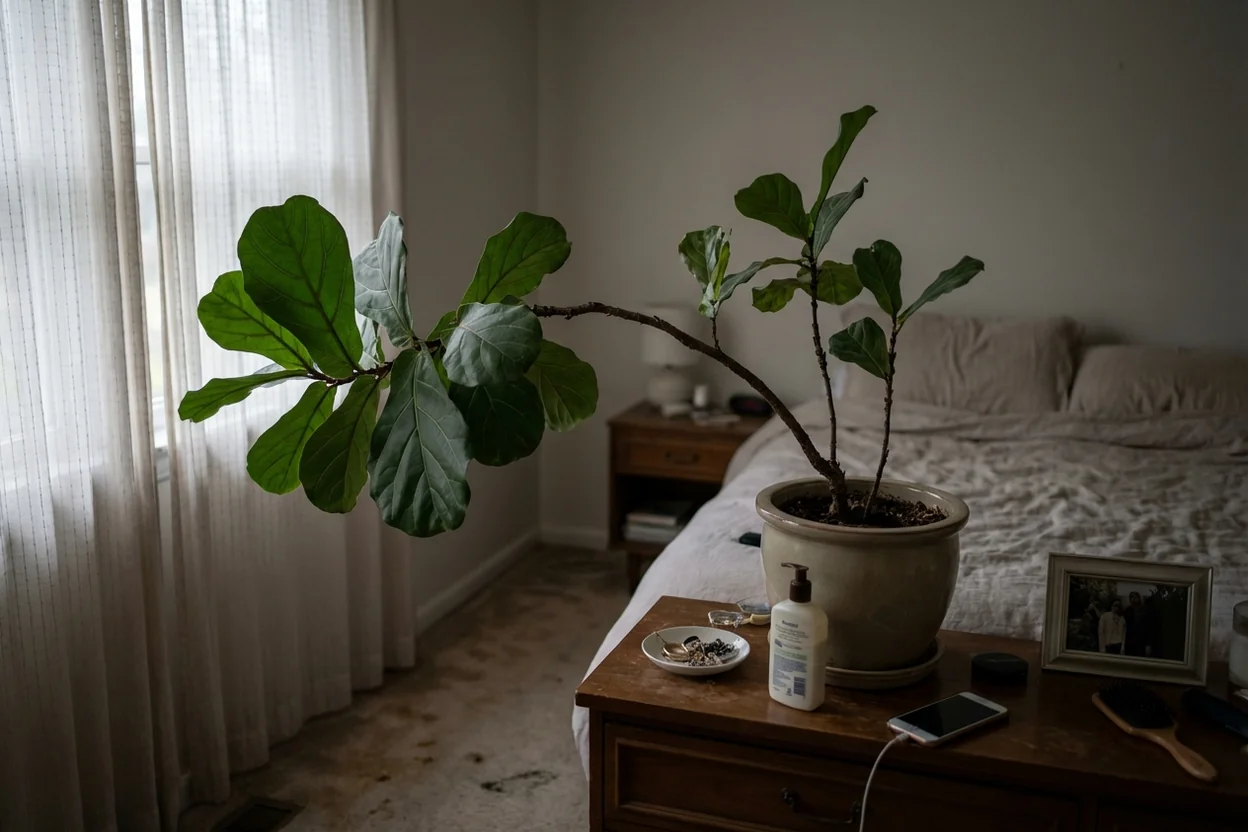
Overwatering weakens the root system, which means the trunk can't support the weight of the top-heavy foliage. Underwatering does the same thing—the plant doesn't have enough structural water in its cells to maintain rigidity. Either way, you end up with a floppy trunk that can't stand upright.
The transpiration process moves water from roots through xylem vessels to leaves, creating turgor pressure that keeps cells rigid. When you screw up the watering, you mess with this entire system.
How to identify this: Feel the trunk near the base. Does it feel soft or give when you press gently? Check the soil—is it constantly soggy or bone dry? Look at the leaves—are they drooping or yellowing along with the lean?
Cause 3: Nutrient Deficiency
Without adequate nutrition, your fiddle leaf fig can't build the cellular structure needed to support upright growth. Nitrogen fuels leaf and stem growth, while potassium strengthens cell walls. A plant that's starving will grow weak and leggy, unable to hold itself up.
How to identify this: The plant is leaning AND showing slow growth, smaller new leaves, or pale coloring. You haven't fertilized during the growing season (spring-summer), or you're using the wrong fertilizer ratio.
Cause 4: Never Rotating the Plant
This ties into the light issue, but it's worth calling out separately. If you never rotate your plant, one side gets all the light and grows fuller while the other side stays sparse. The weight distribution becomes uneven, causing the plant to lean toward the heavy side.
How to identify this: Your plant faces the same direction it did when you bought it. The side facing the window is dense with leaves; the back side is practically bare.
How to Fix a Leaning Fiddle Leaf Fig
Now that you know what's causing the problem, here's exactly what to do about it.
Step 1: Move to Brighter Light Immediately
This is non-negotiable. Your fiddle leaf fig needs bright indirect light for at least 6-8 hours daily. That means placing it directly in front of a window—east or west-facing is ideal. North-facing works if it's a large unobstructed window. South-facing requires sheer curtains to filter intense afternoon sun.
Don't gradually move it—just do it. The plant will adjust faster than you think. If you're worried about shock, do it on a cloudy day, but don't delay this step.
Light requirements: Minimum 5,000 lux (500 foot-candles), optimal 40,000+ lux for maximum growth. Anything less, and your plant will continue reaching.
For complete guidance on ideal placement, see Fiddle Leaf Fig Light Requirements: The Ultimate Guide.
Step 2: Start Rotating Weekly
Every single week, rotate your plant 90 degrees (a quarter turn). This ensures all sides get equal light exposure and the plant grows evenly. Set a recurring phone reminder if you need to—this habit alone will prevent most leaning problems.
Pro tip: Mark one side of the pot with a piece of tape or a sticker so you know which way to turn it next.
Step 3: Fix Your Watering Routine
Check the soil moisture before you water every single time. Stick your finger 2-3 inches (5-7 cm) deep into the soil. If it feels:
Dry: Water thoroughly until water drains from the bottom
Slightly moist: Wait another day or two
Wet or soggy: Do not water; check drainage holes aren't blocked
During the growing season (spring-summer), this typically means watering every 7-10 days. In winter, stretch it to 10-14 days or longer. The top 50-75% of soil should dry out between waterings.
If you've been overwatering and suspect root rot, you need to act fast. Check out Fiddle Leaf Fig Root Rot: How to Save Your Plant for emergency protocols.

Step 4: Fertilize During Growing Season
If you haven't been feeding your plant, start now—but only during spring and summer. Use a balanced liquid fertilizer with a 3:1:2 NPK ratio (nitrogen:phosphorus:potassium) every 2-4 weeks at half-strength, or monthly at full strength.
This gives your plant the nutrients it needs to build strong cell walls and support upright growth. Don't fertilize in fall or winter—the plant is dormant and won't use the nutrients effectively.
For detailed feeding schedules, check Fiddle Leaf Fig Care: The Complete Guide (2025).
Step 5: Strengthen the Trunk Through Movement
Here's a trick most people don't know: gentle movement strengthens plant stems. In nature, wind creates micro-damage that the plant repairs, building stronger tissue each time. You can mimic this indoors.
Gently wiggle the trunk back and forth for 1-2 minutes daily
Move your plant outside during warm months (60-85°F / 15-29°C) to experience natural breezes
Use a small fan on low speed aimed near (not directly at) the plant for 1-2 hours daily
This process is called thigmomorphogenesis—mechanical stimulation that promotes stronger stem growth. It takes 2-3 months to see significant improvement, but it works.
Step 6: Prune Top-Heavy Growth (If Necessary)
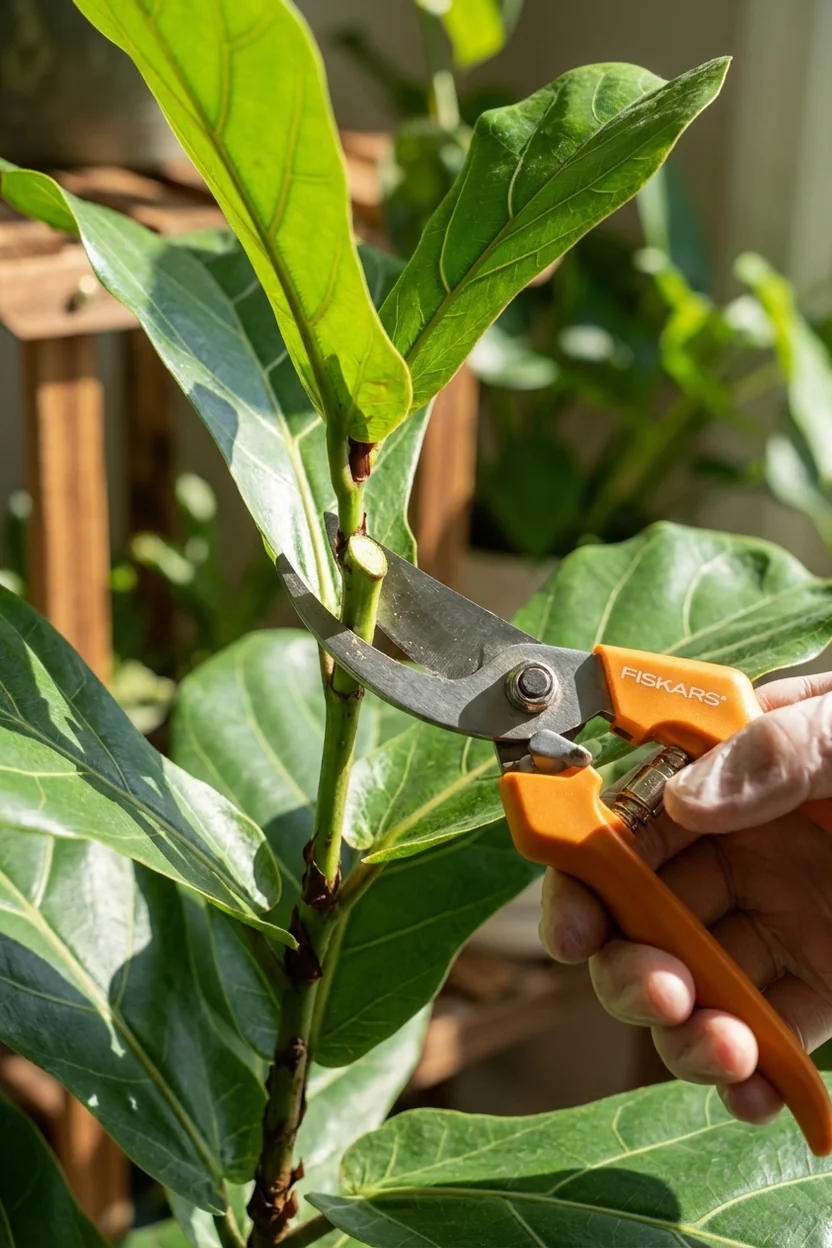
If your plant is so top-heavy that it can't support itself even with proper care, you may need to prune. Cut back some of the upper branches to reduce weight and encourage bushier, more balanced growth.
Use sterilized pruning shears and make cuts just above a leaf node at a 45-degree angle. The plant will branch out from below the cut, creating a fuller, more stable shape.
Want step-by-step pruning guidance? See Fiddle Leaf Fig Care: The Complete Guide (2025) for detailed pruning instructions.
When to Stake Your Fiddle Leaf Fig
Staking is a temporary solution, not a permanent fix. Use it only while you address the underlying problems—light, water, and rotation.
When Staking Makes Sense
Stake your fiddle leaf fig if:
The trunk is leaning so severely it might fall over
You just repotted and the plant needs temporary support while establishing roots
The top growth is extremely heavy and overwhelming the trunk
You're correcting the lean and need to hold the plant in position while it strengthens
How to Stake Properly
Use a bamboo stake or moss pole that reaches at least two-thirds the height of your plant. Insert it into the soil near the trunk, being careful not to damage major roots. Use soft plant ties (not wire or string) to attach the trunk to the stake loosely—you want support, not restriction.
Critical point: Keep checking and adjusting ties as the plant grows. Ties that are too tight will cut into the bark and damage the trunk.
Remove the stake after 3-6 months once the trunk has strengthened and can support itself. If your plant still needs staking after 6 months, you haven't fixed the underlying care issues.
Preventing Future Leaning Problems
Once you've fixed the lean, keep it from coming back.
Maintenance Checklist
Rotate plant 90 degrees every single week (set phone reminder)
Keep plant in bright indirect light minimum 6-8 hours daily
Water only when top 2-3 inches (5-7 cm) of soil is dry
Fertilize every 2-4 weeks during spring-summer only
Take plant outside during warm months for natural wind strengthening
Prune to maintain balanced shape and prevent top-heavy growth
Check for pests regularly (they weaken plant structure)
The Rotation Rule Is Non-Negotiable
I'm serious about this. Rotating is the single most important habit for preventing leaning. It takes 15 seconds once a week. Set a recurring reminder on your phone for the same day and time every week. Sunday morning with your coffee. Friday evening when you get home. Whatever works—just do it consistently.
Understanding Normal Leaf Drop
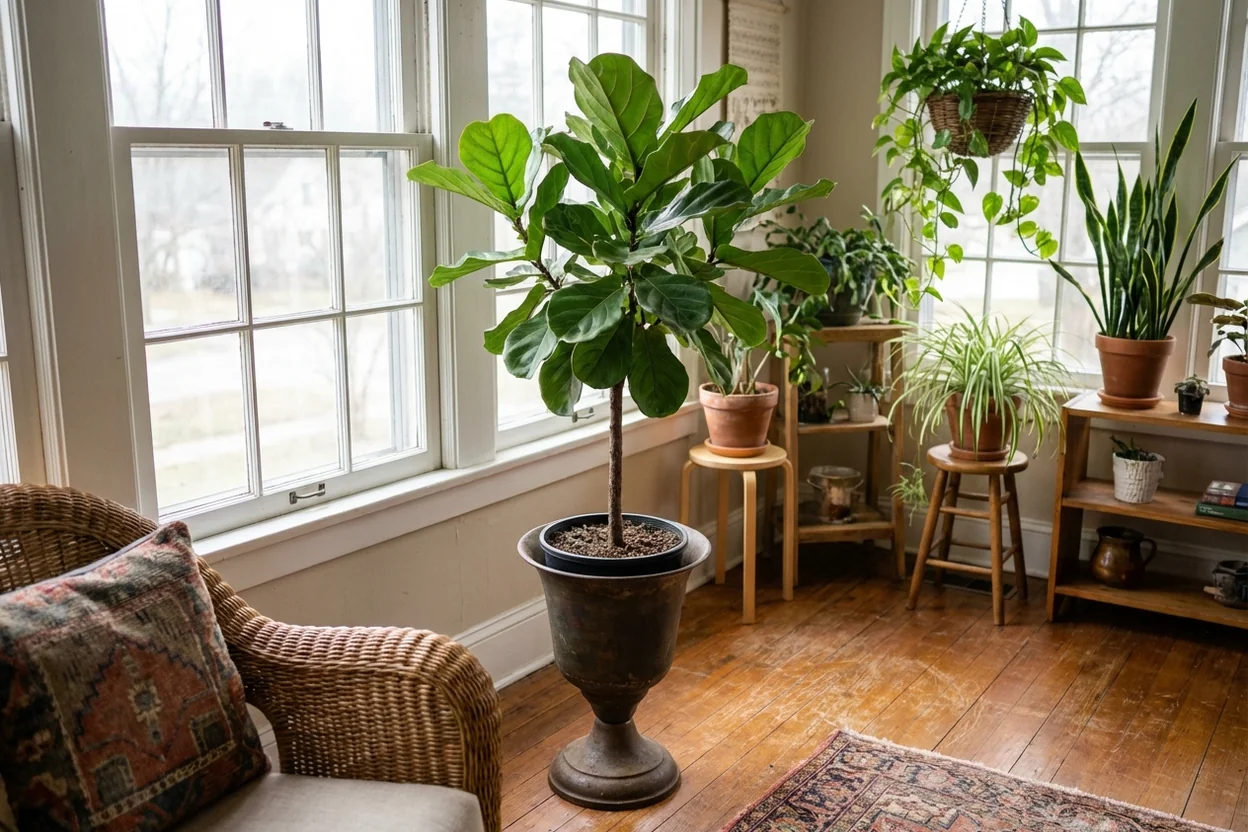
Here's what's normal: A healthy fiddle leaf fig will drop 1-2 lower leaves per year as it grows taller. This is natural senescence—the plant redirecting energy from old leaves to new growth.
What's NOT normal: Multiple leaves dropping at once, leaves dropping from the middle or top of the plant, or leaves dropping after you see yellowing, brown spots, or wilting.
If you're seeing abnormal leaf drop along with leaning, you've got multiple problems happening. Address the root cause (usually watering or light), and the symptoms will resolve. For comprehensive troubleshooting, see Fiddle Leaf Fig Leaves Dropping? Here's Why (+ Fixes).
Common Questions About Fixing Leaning
Can I just prop it up against a wall?
No. That's not fixing the problem—it's hiding it. Your plant is leaning because something is wrong with its care, and propping it against a wall doesn't address insufficient light, poor watering, or lack of rotation. Fix the cause, not the symptom.
How long until I see improvement?
If you fix the light and start rotating consistently, you should see the plant stop leaning worse within 2-3 weeks. Actual straightening and stronger growth takes 2-3 months. Plants don't move fast—that's just how it is.
Will my plant ever be perfectly straight again?
Probably not if the lean is severe and long-established. The trunk has developed that curve, and while you can prevent it from getting worse and encourage more upright new growth, the old curve will likely remain. That's fine—focus on future growth, not past mistakes.
Should I repot a leaning plant?
Only if it's also root-bound (roots emerging from drainage holes). Repotting adds stress, and a stressed plant won't recover from leaning as quickly. If it needs repotting anyway, do it in early spring and stake temporarily while it establishes. See How to Repot a Fiddle Leaf Fig (Step-by-Step) for proper technique.
Frequently Asked Questions
Reading about plants and recognising them are different skills. These three build the second.
- Daily PlantIdentify the day’s mystery plant from a close-up photograph.
- Keyed OutWork a dichotomous key, lead by lead, to name a hidden specimen.
- Name That PlantName a specimen from botanical clues dealt hardest first.
Free to play, no account needed
Tagged with
Amanda came to gardening through an unexpected route—after developing chronic pain from rheumatoid arthritis in her late 20s, she started researching adaptive gardening techniques that would allow her to continue growing plants without aggravating her condition. Now based in Minneapolis, she writes about accessible gardening, raised bed designs for people with mobility challenges, and ergonomic tools that reduce strain. Amanda completed a certificate in sustainable urban agriculture and volunteers with a nonprofit that builds accessible community gardens. She grows vegetables, herbs, and flowers in waist-high raised beds she designed herself. Her writing focuses on practical solutions that work for real people with real limitations—whether that's arthritis, limited mobility, or just a bad back.