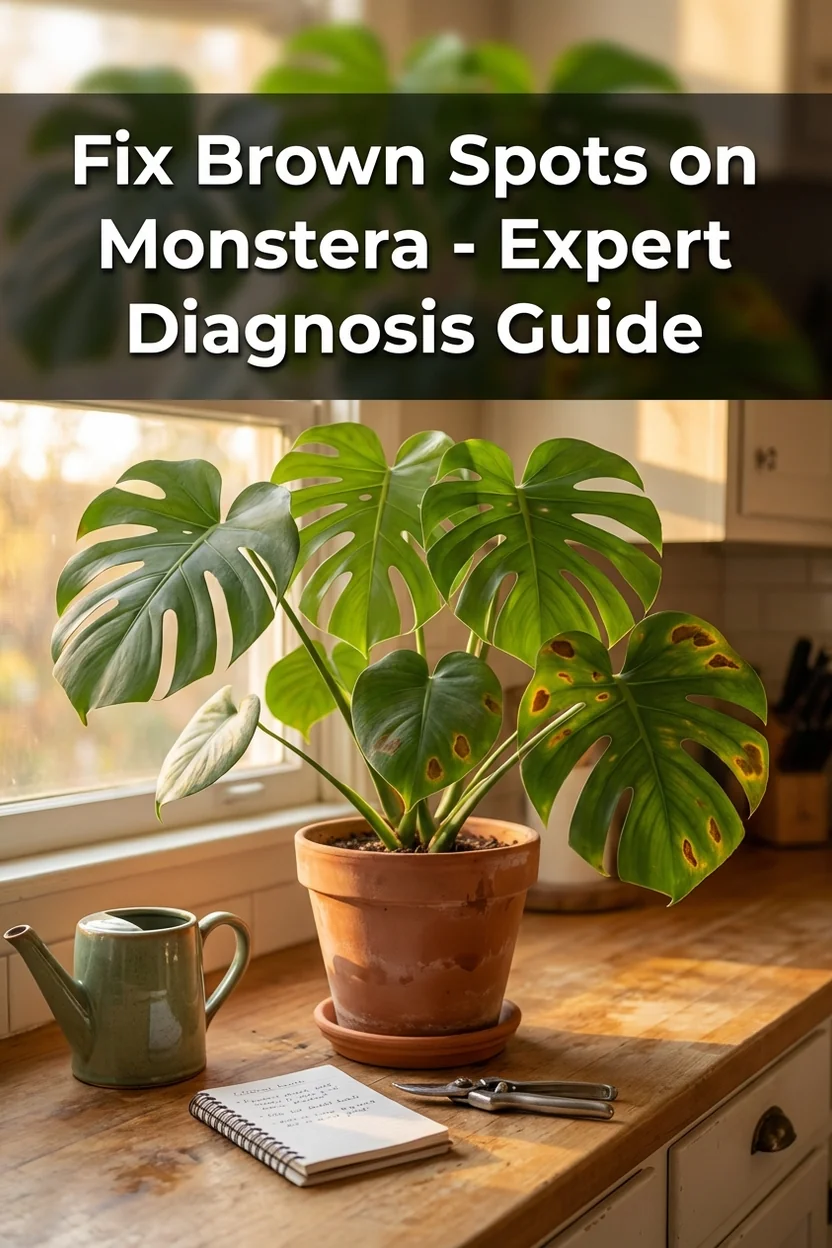
Brown Spots on Monstera Leaves: Complete Troubleshooting
Pets & Toxicity
Recorded toxicity for plants linked in this guide. An unknown status is not a safety assessment.
Toxic to pets: Swiss cheese plantDetailsHide
Monstera deliciosa — Toxicity Warning
Toxic to pets and humans. All vegetative parts contain calcium oxalate crystals that cause mouth pain, swelling, and drooling if ingested. Unripe fruit also contains calcium oxalate and is toxic; only fully ripened fruit (after 12+ months) is edible.View Monstera deliciosa plant profile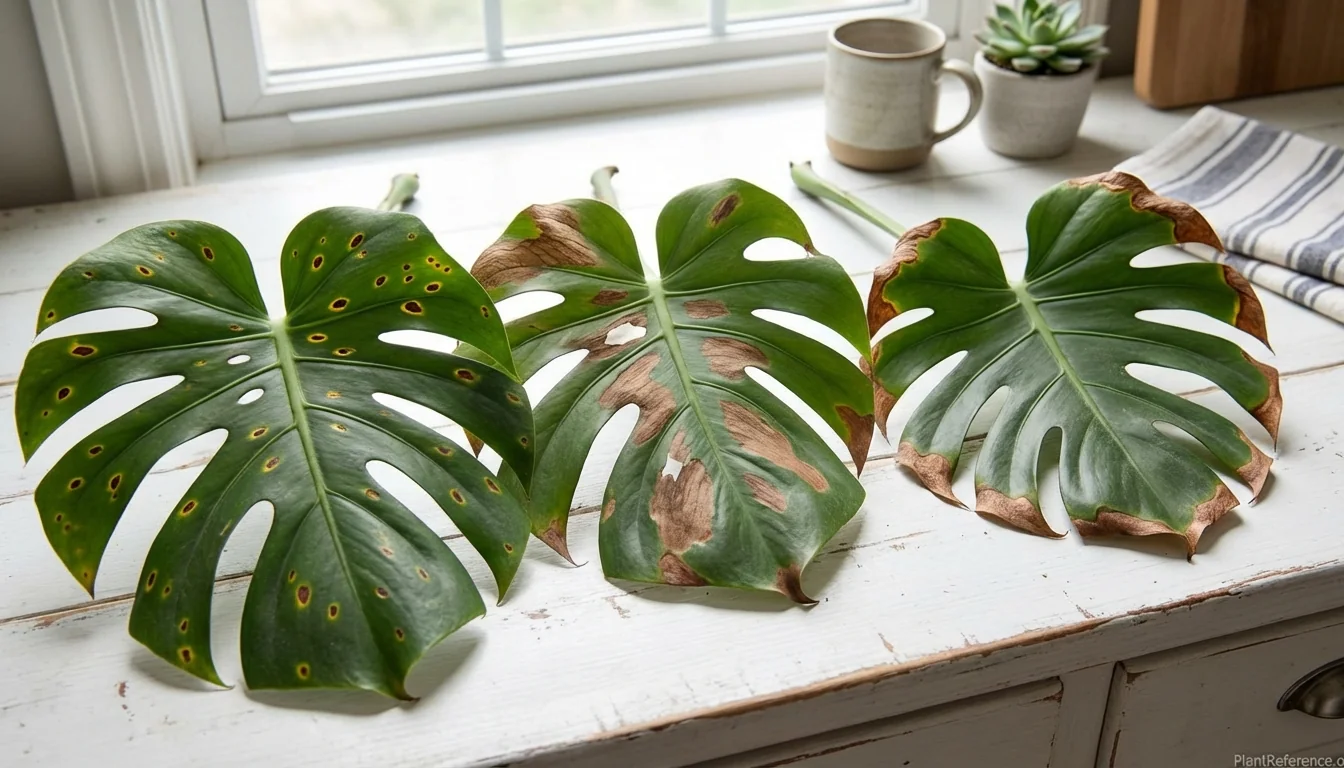
— Image © Plant Reference 2026
Let's be honest—brown spots on your monstera 🌿Monstera deliciosa (mon-STER-ah de-lis-ee-OH-sah) are never a good sign. I've diagnosed hundreds of spotted monsteras, and the pattern is only a starting point. The key is acting fast if those spots spread to healthy leaves.
Quick Brown Spot Diagnosis
The spot pattern gives clues, not proof. Check watering, roots, light changes, and pests alongside these possible causes. Cold, spray injury, excess fertilizer, and edema can also damage leaves:
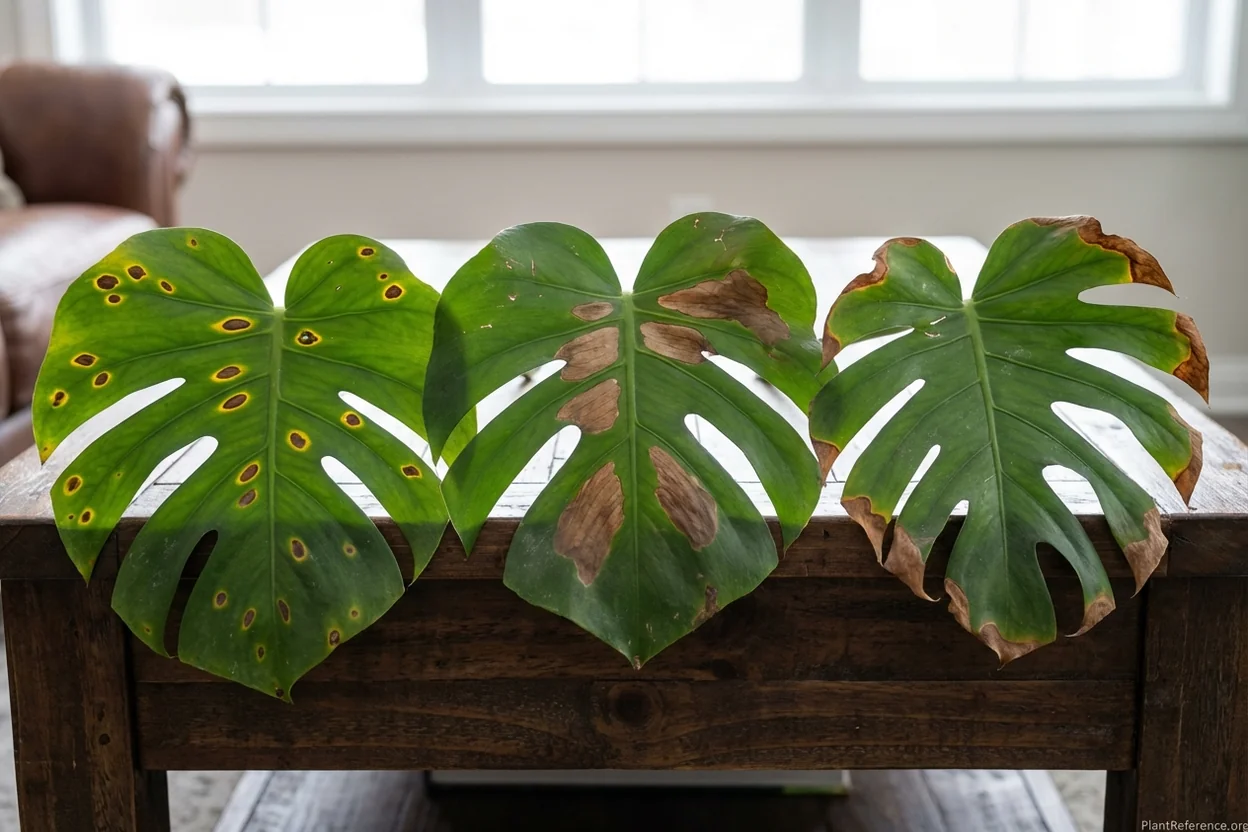
Small dark spots with bright yellow halos: Fungal or bacterial infection Large irregular brown patches: Direct sunlight damage Crispy brown edges: Low humidity or mineral buildup Tiny brown specks: Spider mite damage Mushy brown areas: Rot; check stems and roots Brown spots with white centers: Bacterial leaf spot Perfectly round brown spots: Physical damage or disease; shape alone cannot tell
Your diagnosis determines treatment—treating fungal infection like sunburn won't work.
7 Causes of Monstera Brown Spots
Let me walk you through each cause with the treatment that actually works.
1. Fungal Infection
What you see: Small to medium brown spots (0.25-0.75 inches/6-19mm) with bright yellow halos. Spots appear random across the leaf surface, not concentrated at edges.
What's happening: Prolonged leaf wetness favors many leaf-spot fungi. Spores spread through water splashing on leaves or contaminated soil.
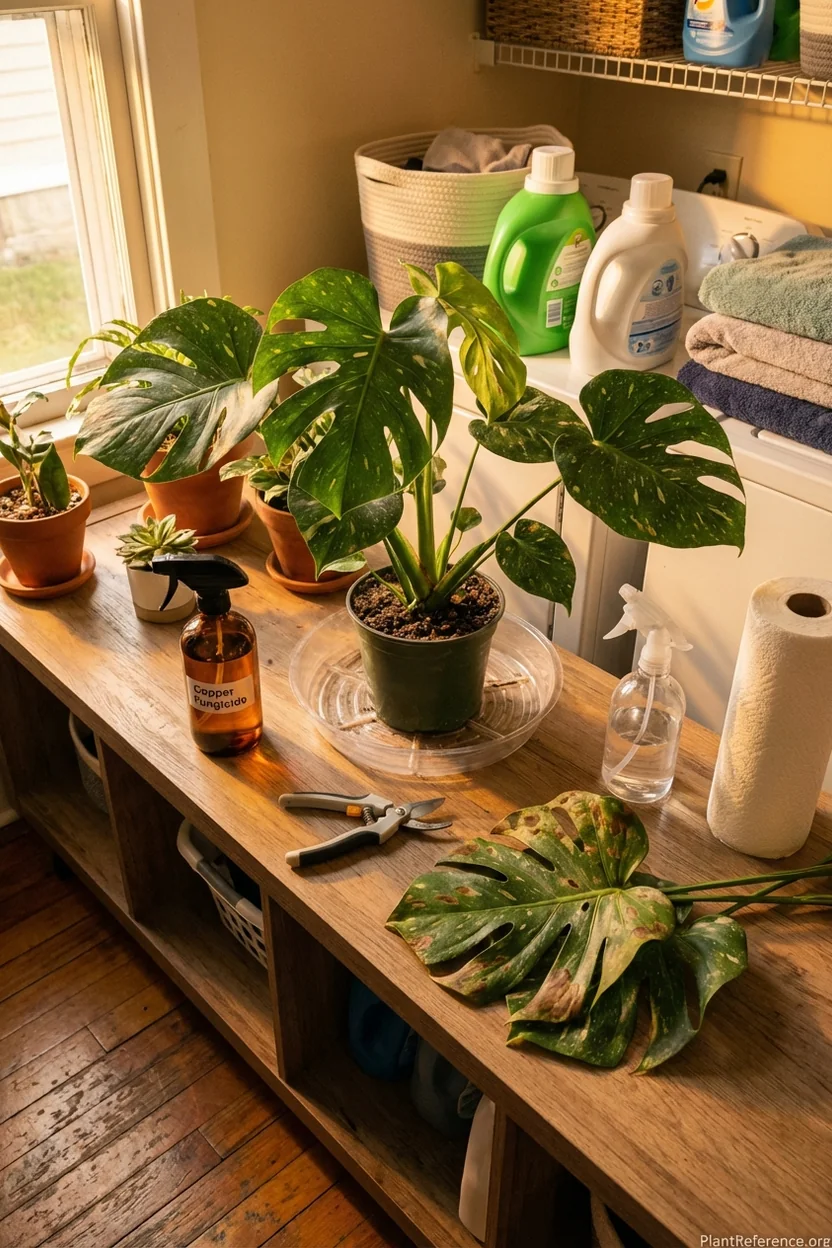
Fix it now: Remove infected leaves, not every blemished leaf. Use copper only for a labeled plant and disease; follow all label precautions, avoid skin/eye contact and breathing spray, and keep people and pets away as directed. Check soil drainage immediately.
Timeline: Monitor for new spots as conditions improve; there is no fixed recovery deadline.
2. Bacterial Leaf Spot
What you see: Brown spots with white or gray centers, often angular rather than round. Yellow halos may develop later.
What's happening: Bacteria enter through leaf wounds or stomata, especially in high humidity with poor air circulation.
Fix it now: Remove affected leaves immediately. Copper is not a cure for systemic bacterial disease; discard systemically infected plants. Increase air circulation with a fan running 4-6 hours daily.
Prevention: Avoid getting water on leaves. Clean pruning tools with rubbing alcohol between cuts.
3. Sunburn Damage
What you see: Large irregular brown patches, often appearing "bleached" or tan before turning brown. Usually on the side facing windows.
What's happening: Excessive sunlight creates more energy than the leaf can process, damaging cell structures. Monstera evolved in forest understory—sudden strong sun can kill leaf tissue.
Fix it now: Move your plant away from direct light immediately. Remove severely damaged leaves. Monstera needs bright indirect light, with gradual acclimation to any direct rays.
Recovery: Relocation prevents further sun damage only if the new light suits the plant. Watch for healthy new growth.
4. Low Humidity Damage
What you see: Brown, crispy edges starting at leaf tips and working inward. Edges feel papery and dry.
What's happening: Very dry indoor air can pull moisture from leaf edges faster than roots can replace it.
Fix it now:
Place a humidifier within 6 feet (1.8m) of your monstera; keep leaves dry and follow the unit's cleaning instructions
Group plants together to create a microclimate
Use a large pebble tray with the pot above the water
Monitor humidity with a digital hygrometer—aim for 50-60%
Timeline: Watch for fewer new brown edges after correcting low humidity; timing varies.
5. Mineral Buildup (Hard Water)
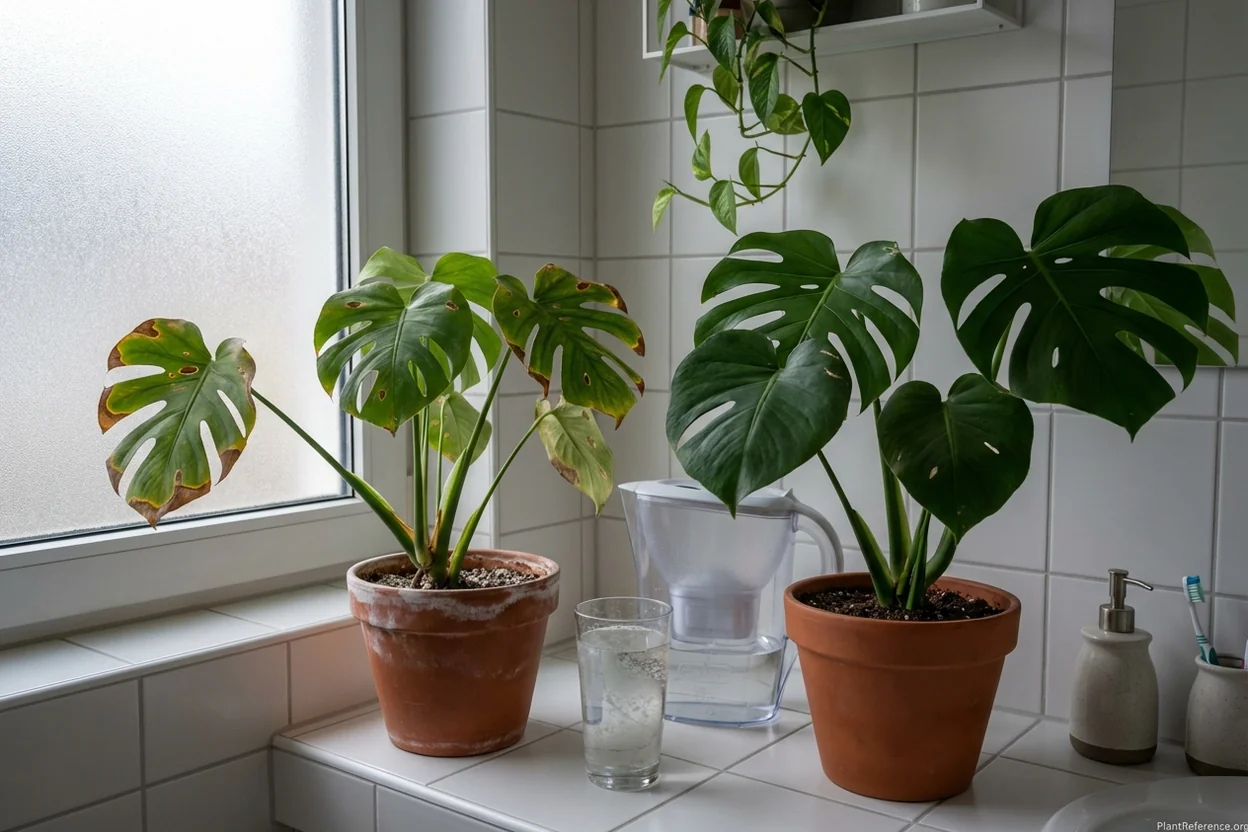
What you see: Brown spots often accompanied by white crusty deposits on soil surface or pot rim. Leaf edges turn brown first.
What's happening: Excess salts from water or fertilizer accumulate in potting mix and can damage roots and leaf edges.
Fix it now: Switch to distilled or other low-mineral water immediately. Flush soil thoroughly with new water to remove mineral buildup, letting it drain completely.
Long-term: Standing tap water may dissipate free chlorine, but does not remove chloramine or dissolved salts.
6. Spider Mite Damage
What you see: Tiny brown or yellow specks that may look like dust at first. Fine webbing visible on leaf undersides. Leaves eventually develop larger brown patches.
What's happening: Spider mites pierce leaf cells and suck contents, leaving dead tissue spots. They thrive in dry, warm conditions.
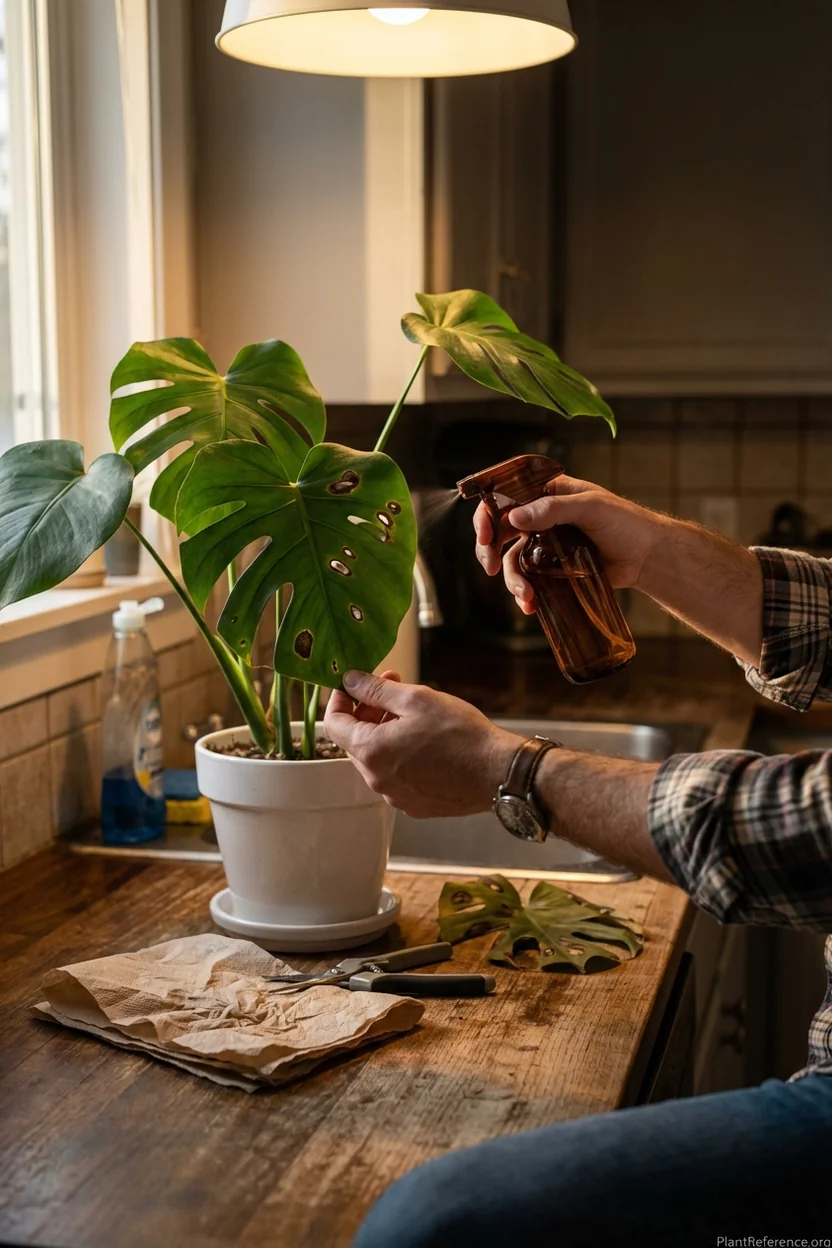
Fix it now: Rinse plant thoroughly in shower to dislodge mites. Apply neem oil or insecticidal soap only as labeled for your plant and treatment location; test a small area first and follow all safety precautions. Increase humidity immediately.
Check for mites: Hold white paper under leaves and tap gently. Examine moving specks with a hand lens to confirm mites.
7. Physical Damage
What you see: Irregular tears and brown patches from mechanical damage.
What's happening: Physical damage from pets, people, or other plants creates entry points for infection.
Fix it now: Remove damaged leaves only if severely damaged. Avoid misting leaves in bright light. Provide space between plants to prevent leaf rubbing.
Emergency Treatment Protocol
When you discover brown spots, follow this exact sequence:
Step 1 (Inspect first): Remove infected leaves; keep minor noninfectious damage. Wear gloves against irritating sap; keep cuttings away from children and pets.
Step 2 (Same day): Isolate your monstera if infection or pests are suspected; physical damage does not spread.
Step 3 (Within 24 hours):Apply appropriate treatment based on your diagnosis:
Infection: Remove infected tissue; use copper only where labeled
Sunburn: Relocate to bright indirect light
Humidity: Add humidifier or pebble tray
Minerals: Flush soil with low-mineral water; let it drain
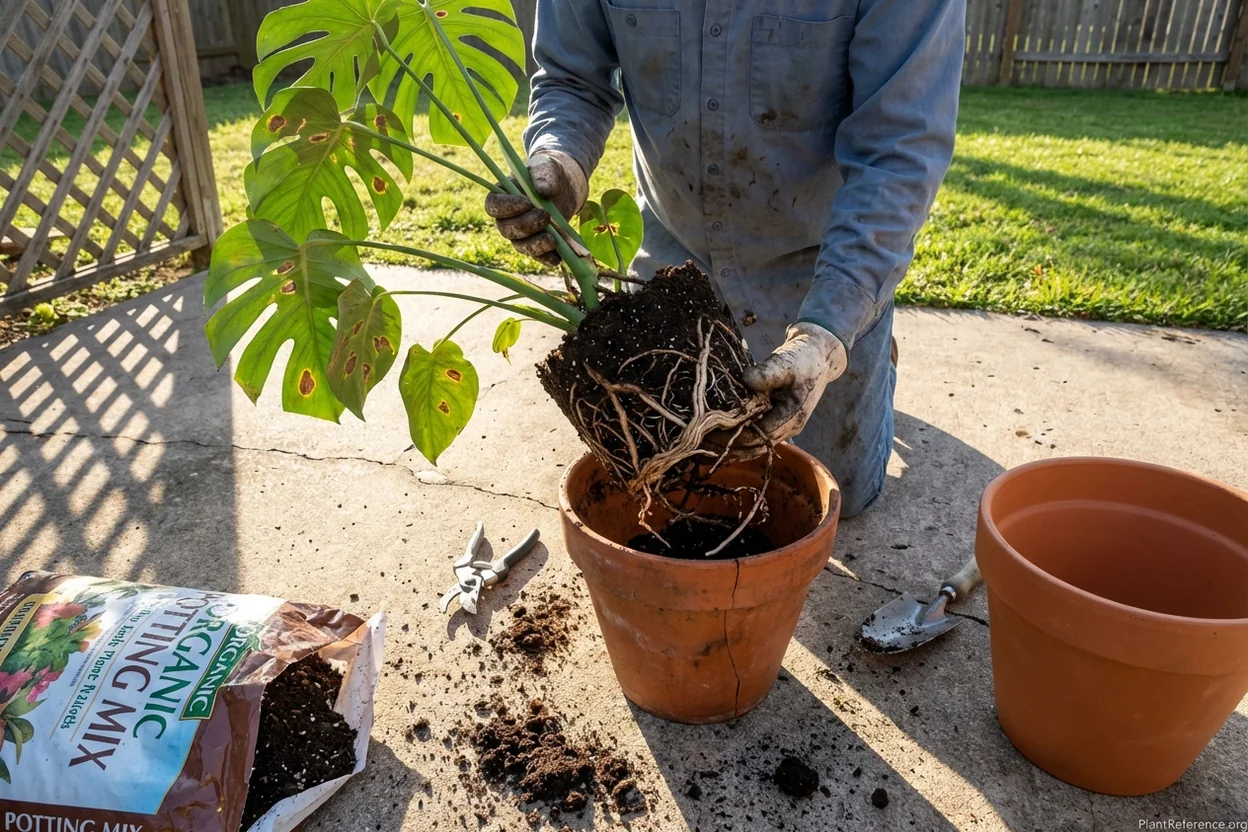
Step 4 (Day 2-3): Check soil drainage. If drainage is blocked or roots are rotting, repot in well-draining aroid mix.
Prevention Strategy
Stop brown spots before they start:
Perfect your watering: Water when top 2 inches (5cm) of soil is dry. Empty drainage saucers within 30 minutes.
Monitor humidity: Keep levels between 50-60% year-round. Winter heating drops humidity dramatically.
Air circulation: Run a small fan near your monstera for 4-6 hours daily, especially after watering.
Water quality: Use low-mineral water if salts are building up; a TDS reading alone does not measure hardness.
Leaf cleaning: Wipe leaves monthly with damp microfiber cloth to remove dust and potential fungal spores.
Quarantine new plants: Keep new additions separate for 2-3 weeks to catch problems before they spread.
For comprehensive monstera care including support structures and fertilization, see our Monstera Deliciosa Care: Complete Guide. If root issues are suspected, check our Monstera Root Rot: Emergency Rescue Guide.
When to Repot vs Treat
Repot immediately if:
Compacted mix or blocked drainage leaves roots waterlogged
Roots are mushy or rotting
Treat in current pot if:
Soil drains freely
Roots are white/cream colored and firm
No signs of root rot
Spots appeared after environmental stress
Emergency repot protocol: Remove infected leaves, trim soft rotted roots, repot in fresh aroid mix with extra perlite for drainage.
Recovery Timeline
Use these as check-in points, not growth deadlines—recovery depends on damage, season, light, and root health:
Week 1: Check whether new brown spots are slowing. Existing dead tissue will not turn green.
Week 2-3: Look for new healthy growth emerging from growing points.
Month 1: Check for healthy new leaves; cool or dim conditions slow growth.
Month 2-3: Check for continued healthy growth; full recovery can take longer.
Red flags: If spots keep spreading or stems soften, seek extension or plant-clinic help with the diagnosis. You may have multiple issues or missed the primary cause.
The most important thing to understand about monstera brown spots: they're preventable but not reversible. Focus your energy on creating perfect conditions for new growth rather than trying to heal damaged leaves.
For proper watering techniques to prevent brown spots, see our How to Water a Monstera: Complete Watering Guide. If humidity is the issue, check our Best Humidifiers for Monstera and Tropical Plants for equipment recommendations.
Frequently Asked Questions
Reading about plants and recognising them are different skills. These three build the second.
- Daily PlantIdentify the day’s mystery plant from a close-up photograph.
- Keyed OutWork a dichotomous key, lead by lead, to name a hidden specimen.
- Name That PlantName a specimen from botanical clues dealt hardest first.
Free to play, no account needed
TJ stumbled into plant parenthood when a coworker gave him a neglected pothos. That single plant sparked an obsession that led him to quit his corporate marketing job and start a plant care service for busy professionals in Chicago. TJ maintains over 150 plants for residential clients and runs monthly plant swap meetups at local coffee shops. He's self-taught through YouTube, plant forums, and plenty of expensive mistakes (RIP to his variegated monstera). TJ specializes in troubleshooting common houseplant problems and is known for his blunt, no-BS advice: "Your plant isn't dying because Mercury is in retrograde—you're overwatering it." He's particularly skilled with finicky tropical plants like fiddle leaf figs and calatheas.