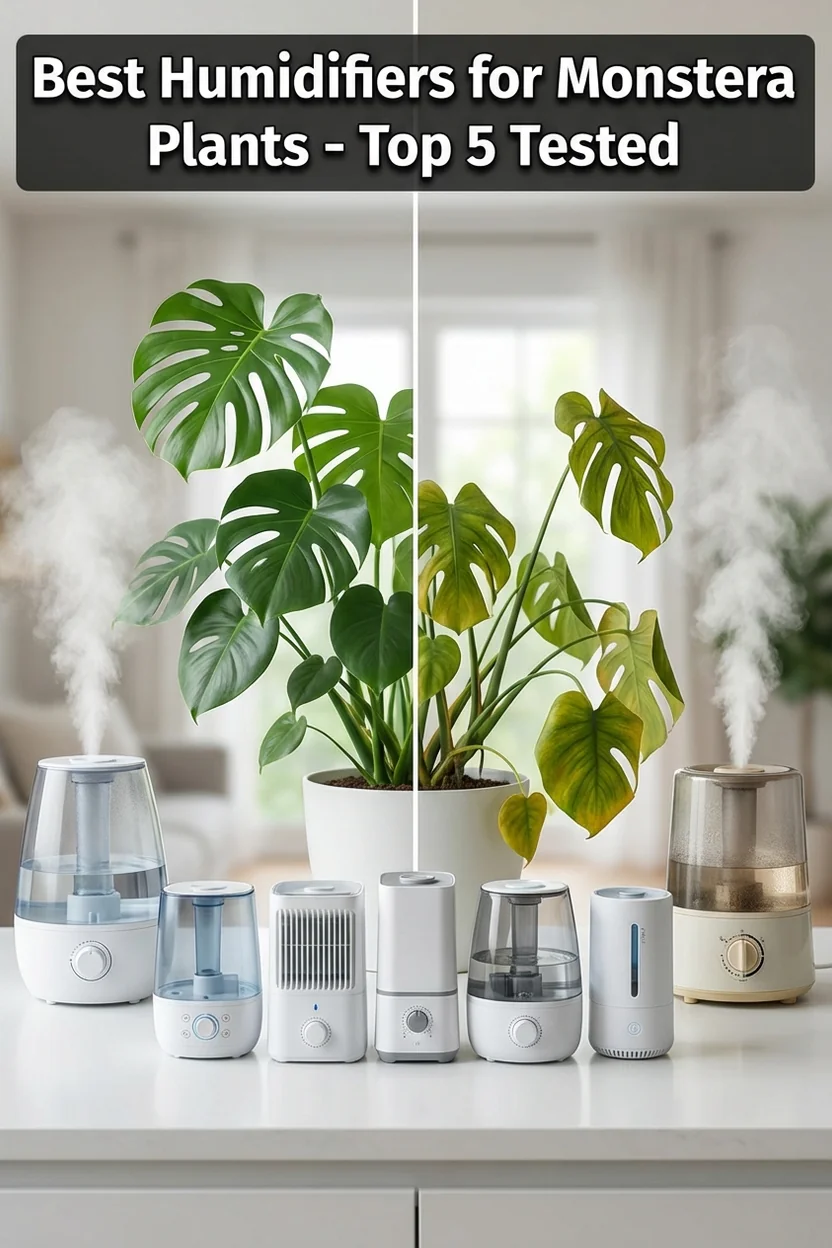
Best Humidifiers for Monstera and Tropical Plants (2026)
Pets & Toxicity
Recorded toxicity for plants linked in this guide. An unknown status is not a safety assessment.
Monstera deliciosa — Toxicity Warning
Toxic to pets and humans. All vegetative parts contain calcium oxalate crystals that cause mouth pain, swelling, and drooling if ingested. Unripe fruit also contains calcium oxalate and is toxic; only fully ripened fruit (after 12+ months) is edible.View Monstera deliciosa plant profile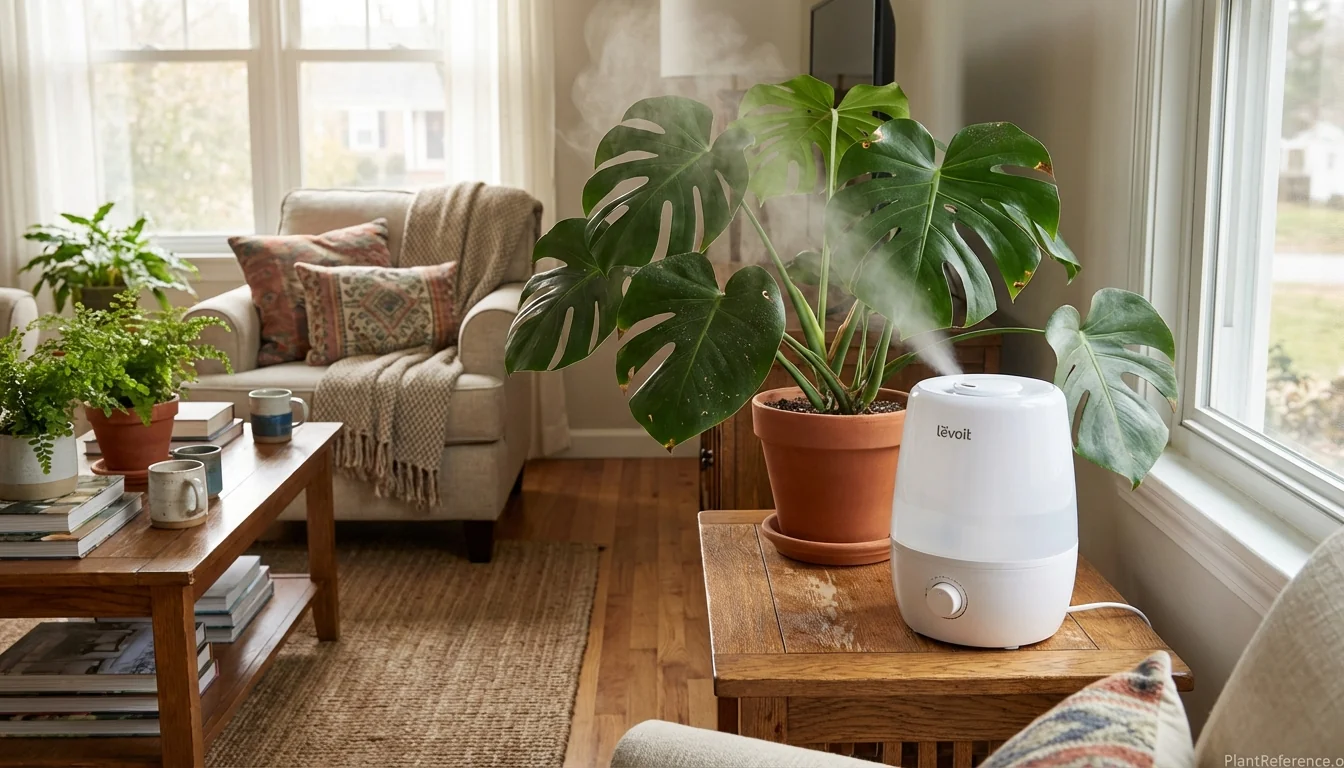
— Image © Plant Reference 2026
Your beautiful monstera 🌿Monstera deliciosa (mon-STER-ah de-lis-ee-OH-sah) is trying to tell you something when its leaves curl, edges turn brown, or growth slows to a crawl. After testing humidifiers in my apartment for two years, I can tell you the solution is simpler than you think—your plant just needs the humidity it would get in its native tropical rainforest.
Why Your Monstera Needs a Humidifier
Most apartments and homes maintain 30-40% humidity, especially during heating season. Your monstera evolved in tropical rainforests where humidity stays between 60-80%. This massive gap explains why even healthy-looking plants struggle with small leaves, poor fenestration, and constant browning edges.
Here's what low humidity does to your monstera:
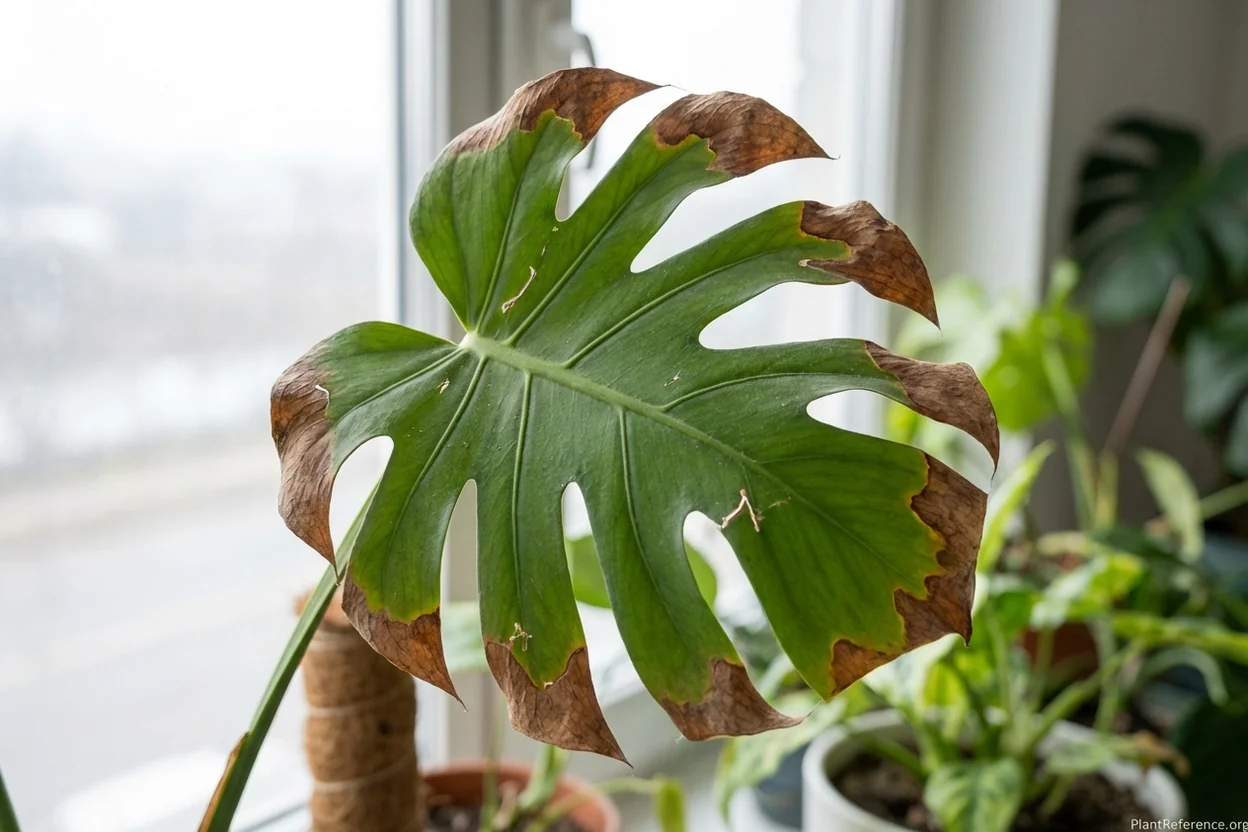
Leaves curl inward to reduce moisture loss
Brown, crispy edges appear on older leaves first
New leaves emerge smaller than previous ones
Aerial roots dry out and turn brown at tips
Growth slows dramatically in winter months
Increased susceptibility to spider mites and other pests
I learned this the hard way when my 4-foot (1.2m) monstera stopped producing fenestrated leaves entirely during my first Chicago winter. The heating system dropped my apartment humidity to 25%—practically desert conditions for a tropical plant.
The Science Behind Humidity and Plant Health
Plants lose water through tiny pores called stomata. When humidity drops below 50%, these pores close to prevent excessive water loss. Closed stomata mean less carbon dioxide uptake, which directly impacts photosynthesis and growth.
Research from the University of Florida shows tropical aroids like monstera maintain optimal growth when ambient humidity stays above 60%. Below this threshold, plants shift into survival mode rather than thriving.
How to Choose the Right Humidifier for Plants
After testing 12 different humidifiers in my plant-filled apartment, I've learned which features actually matter for plant health versus marketing gimmicks.
Cool Mist vs. Warm Mist
Cool mist humidifiers win for plant use every time. Warm mist creates localized hot spots that can stress tropical plants, and the heating element uses more electricity. Cool mist distributes more evenly and won't accidentally "cook" leaves if positioned too close.
Ultrasonic vs. Evaporative
Ultrasonic humidifiers use high-frequency vibrations to create fine mist. They're nearly silent (perfect for bedrooms with plants), more energy-efficient, and produce smaller water particles that distribute better.
Evaporative humidifiers use a fan to blow air through a wet wick. They're louder but naturally regulate humidity—they slow down as room humidity increases, preventing over-humidification.
Key Features for Plant Parents
Tank Capacity: Larger tanks (4-6 liters) run longer between refills. I refill my 6-liter LEVOIT every 3-4 days running 8-10 hours daily.
Auto-Shutoff: Essential safety feature when tank runs empty. Prevents damage to heating elements and potential fire hazards.
Adjustable Mist Output: Low, medium, and high settings let you customize humidity based on room size and plant needs.
Easy Cleaning: Wide tank openings make weekly cleaning possible. Narrow openings become moldy disasters within weeks.
5 Best Humidifiers for Monstera (Tested & Ranked)
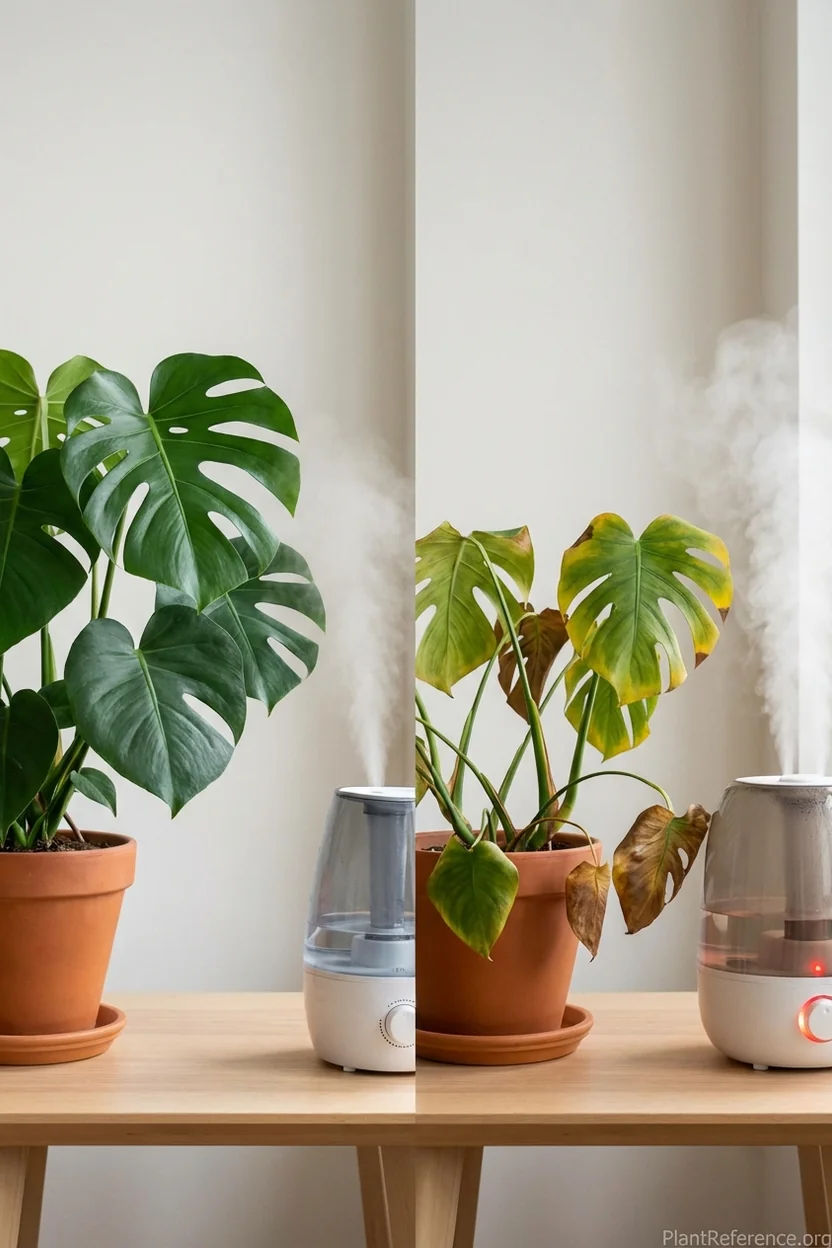
I've run these humidifiers daily for 6+ months each, measuring humidity levels, noise output, and ease of maintenance. Here are the winners:
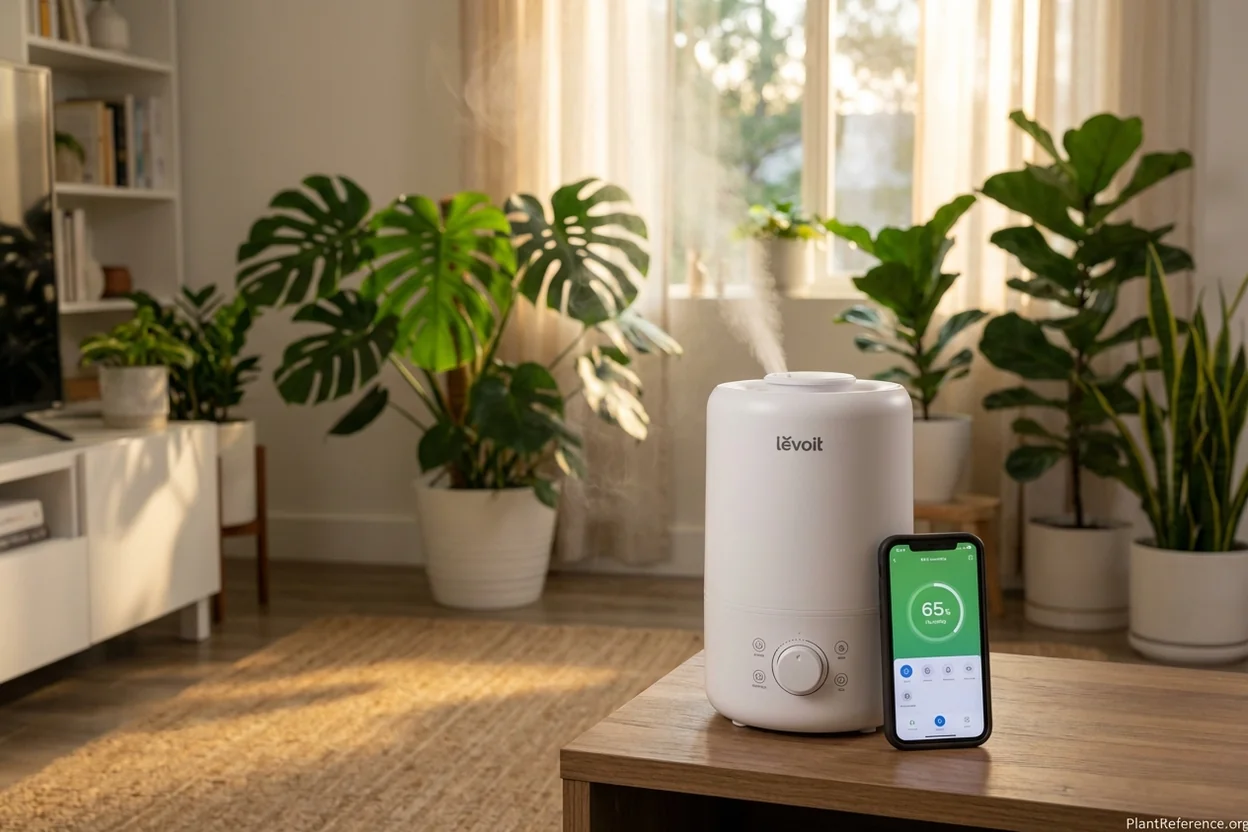
1. LEVOIT Classic 300S Smart Humidifier - Best Overall
→ LEVOIT Classic 300S Smart Humidifier ($50-70) - App control with auto humidity targeting for perfect plant conditions
Smart app control lets you set exact humidity levels (I keep mine at 65% for tropical plants). Large 6-liter tank runs 60 hours on low setting. Whisper-quiet ultrasonic technology produces fine mist that distributes evenly. Auto-shutoff, sleep mode, and Alexa compatibility. Easy-clean wide tank opening prevents mold buildup. Covers up to 505 square feet effectively. Built-in humidity sensor maintains consistent levels automatically. Premium choice for serious plant parents.
Why it's #1: The app control is game-changing. I set it to maintain 65% humidity and it automatically adjusts throughout the day. The 6-liter tank means I'm not constantly refilling, and it's genuinely silent during sleep mode.
Downsides: Higher initial cost, requires WiFi setup.
2. Pure Enrichment MistAire - Best Budget Option
→ Pure Enrichment MistAire Ultrasonic Humidifier ($30-40) - Simple, reliable operation with 16-hour runtime at budget-friendly price
Simple ultrasonic design with 1.5-liter tank providing 16+ hours of continuous mist. Two mist settings (high/low) with 360-degree rotating nozzle directs humidity where needed. Automatic shut-off when tank empties. LED nightlight feature with on/off switch. Whisper-quiet operation under 35dB. Easy-fill tank with wide opening for cleaning. Covers rooms up to 250 square feet. No app or smart features, just reliable basic operation at excellent value.
Perfect for: Small apartments, single plant areas, or anyone wanting simple operation without smart features.
Real-world performance: Keeps my bedroom (200 sq ft) with 6 plants at 55-60% humidity running on low 10 hours nightly.
3. Honeywell HCM-350 - Best for Large Rooms
→ Honeywell HCM-350 Germ Free Humidifier ($60-80) - Evaporative design with UV germ protection ideal for multi-plant setups
Evaporative technology with antimicrobial UV light kills 99.9% of bacteria, mold, and viruses in water. Large 1.25-gallon tank covers up to 700 square feet. Three speed settings with quiet operation. Self-regulating evaporation prevents over-humidification naturally. Easy-fill tank and dishwasher-safe parts. Replacement wick filters capture mineral deposits. More hygienic for homes with multiple plants where bacteria can spread. Sturdy construction handles daily use.
Ideal for: Large living rooms with multiple plant collections, families concerned about bacteria and mold.
Performance: Covers my 400 sq ft living room with 15+ plants effectively, maintaining 50-55% humidity.
4. Elechomes UC5501 - Best Design
→ Elechomes UC5501 Ultrasonic Humidifier ($40-55) - Sleek top-fill design with essential oil tray and warm LED lighting
Premium top-fill design eliminates need to remove tank for refilling. Large 6-liter capacity with remote control and LED display showing humidity levels. Essential oil tray lets you add plant-safe aromatherapy. Warm LED night light creates ambient atmosphere. Three mist levels plus sleep mode. Runs up to 50 hours on low setting. Advanced ultrasonic technology operates whisper-quiet. Auto-shutoff and timer functions. Sleek modern design complements contemporary plant displays beautifully.
Standout feature: Top-fill design means no lifting heavy tanks—just pour water directly into the top opening.
5. Dreo Macro Pro - Most Powerful
→ Dreo Macro Pro Humidifier ($70-90) - High-output commercial-grade performance for serious plant collectors
Commercial-grade ultrasonic technology produces maximum mist output up to 500ml/hour. Covers up to 650 square feet effectively. Top-fill design with 6-liter capacity and digital display. Smart humidity sensor with auto-mode maintains set levels. Sleep mode operates under 28dB. Includes remote control and 12-hour timer. Anti-bacterial material prevents mold growth. Three-year warranty. Built for plant collectors with extensive tropical collections requiring consistent high humidity levels.
Product link unavailable
Best for: Serious collectors with 20+ tropical plants or greenhouse-like setups requiring maximum humidity output.
Humidifier Setup Guide for Plant Parents
Positioning for Maximum Plant Benefit
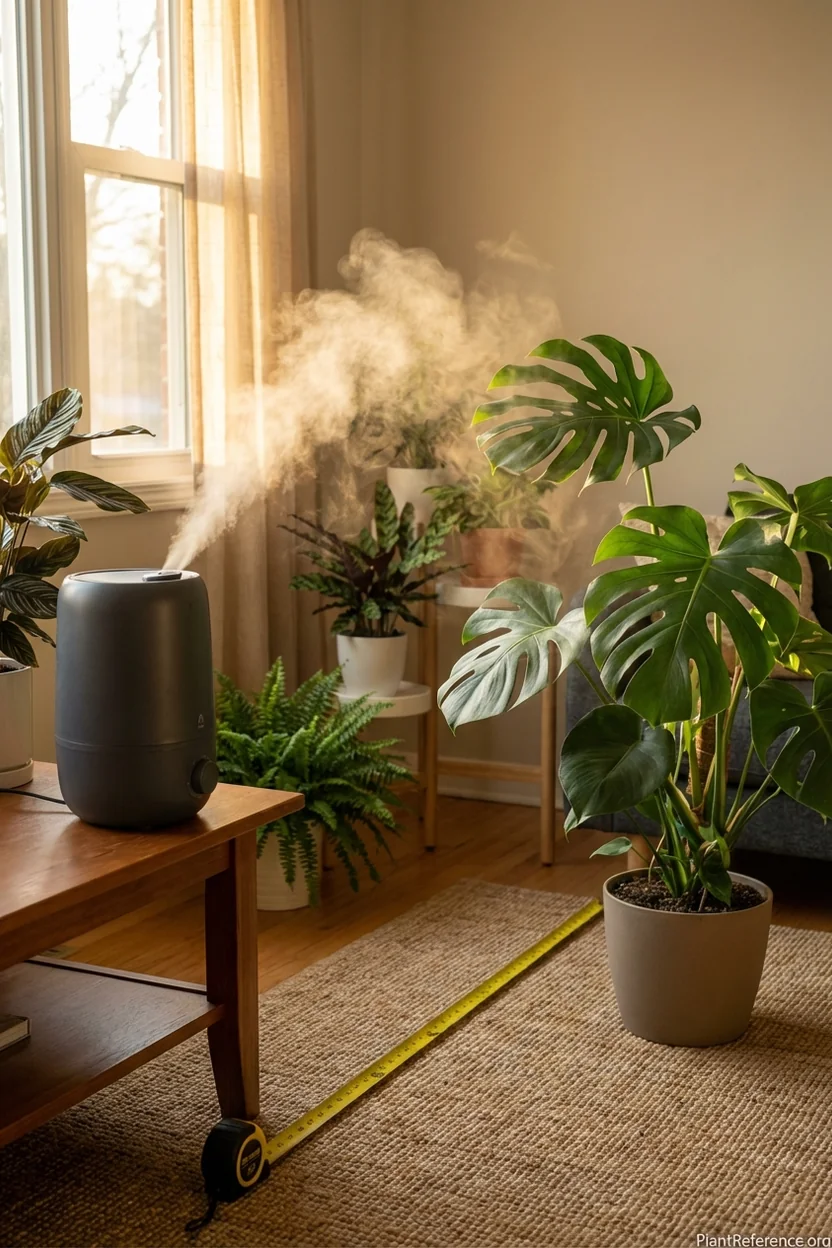
Distance from plants: Place humidifier 3-6 feet (1-2m) away from plants. Too close creates water spots on leaves; too far reduces effectiveness.
Height placement: Position on sturdy table or stand 2-3 feet (60-90cm) high. Mist needs space to disperse before reaching plants.
Air circulation: Ensure gentle airflow around humidifier with small fan or natural room ventilation. Stagnant humid air promotes fungal issues.
Optimal Settings for Tropical Plants
Target humidity: 60-65% for monstera, philodendron, and most aroids
Runtime: 8-10 hours daily during growing season (spring-summer)
Winter adjustment: 6-8 hours daily when heating systems run
Mist level: Medium setting balances effectiveness with water consumption
Timer settings: Run during daytime when stomata are most active
Water Quality Matters
Distilled water prevents white mineral dust that can coat leaves and clog ultrasonic mechanisms. Filtered water works as second choice if distilled isn't available.
Tap water works short-term but requires more frequent cleaning and may leave mineral deposits on nearby surfaces and plant leaves.
Troubleshooting Common Humidifier Issues
White Dust on Everything
Cause: Mineral deposits from tap water being dispersed as fine particles. Solution: Switch to distilled water immediately. Clean existing dust with damp microfiber cloth.
Mold in Tank
Cause: Infrequent cleaning and stagnant water providing breeding ground for bacteria. Solution: Clean tank with 1:10 bleach solution weekly. Always empty tank when not in use for 24+ hours.
Plants Still Showing Low Humidity Stress
Causes: Humidifier too far away, insufficient runtime, or competing with heating/cooling systems. Solutions: Move closer to plants, increase runtime to 10-12 hours, or add second humidifier for larger spaces.
Excessive Condensation on Windows
Cause: Humidity level too high for room temperature and ventilation. Solution: Reduce to 55-60% target humidity. Increase air circulation with small fan.
Humidity Monitoring Tools
Digital Hygrometers
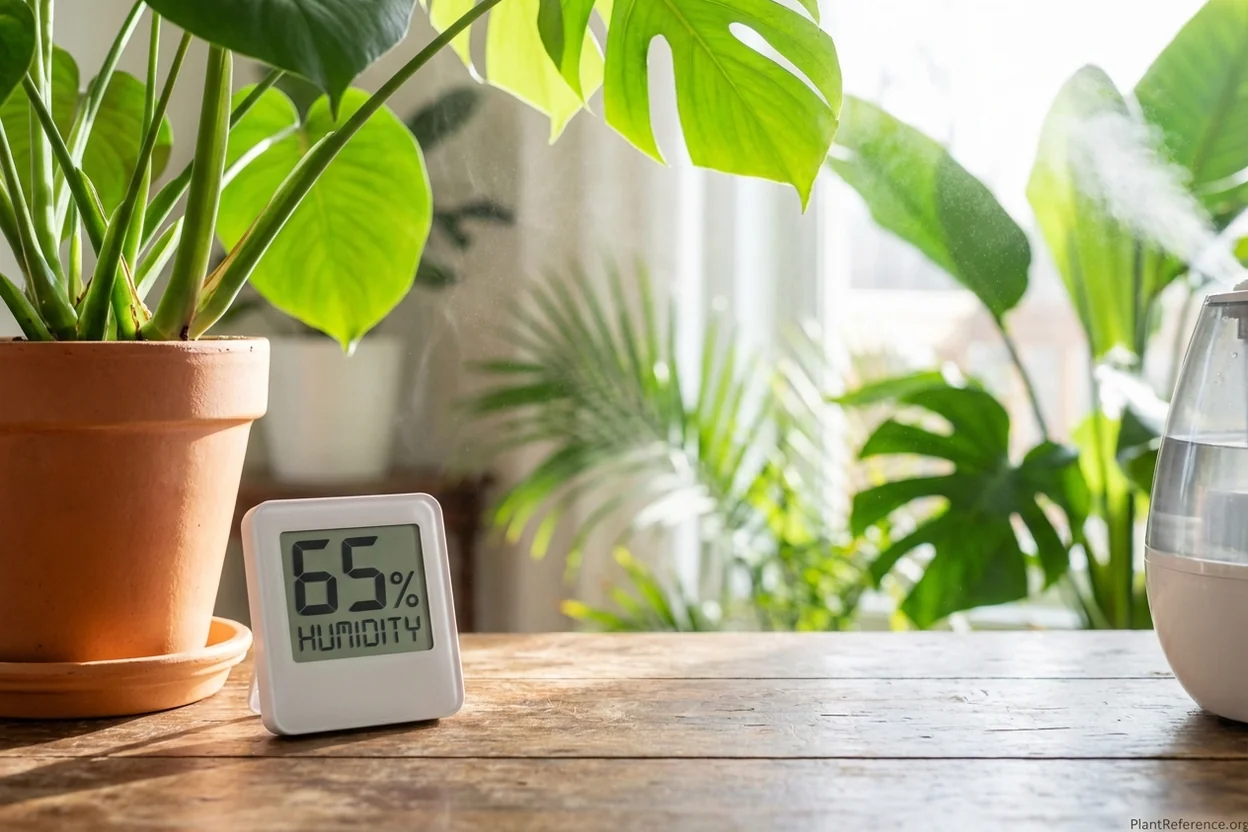
ThermoPro TP49 ($8-12) provides accurate readings when placed near plants. I keep one next to my plant collection to monitor effectiveness.
AcuRite 00613 ($12-18) includes min/max memory to track daily humidity swings.
Smart Monitoring
SensorPush HT1 ($49-59) connects to smartphone app for remote monitoring and alerts when humidity drops below set levels.
Seasonal Humidity Strategies
Winter (heating season): Run humidifiers 10-12 hours daily. Heating systems can drop indoor humidity to 20-25%.
Summer (cooling season): Reduce to 6-8 hours or use intermittently. Air conditioning removes humidity, but less dramatically than heating.
Spring/Fall: 8-10 hours daily provides consistent tropical conditions during optimal growing seasons.
For plant parents on a budget, start with the Pure Enrichment MistAire ($30-40) for small spaces or single plants. It's performed reliably in my bedroom for 18 months with minimal maintenance.
Serious plant collectors should invest in the LEVOIT Classic 300S ($50-70). The smart controls and auto-regulation justify the higher cost when you're maintaining humidity for multiple expensive tropical plants.
Frequently Asked Questions
Reading about plants and recognising them are different skills. These three build the second.
- Daily PlantIdentify the day’s mystery plant from a close-up photograph.
- Keyed OutWork a dichotomous key, lead by lead, to name a hidden specimen.
- Name That PlantName a specimen from botanical clues dealt hardest first.
Free to play, no account needed
Aisha manages a small tropical nursery on the east side of Houston, specializing in plants that can handle the Gulf Coast's humidity, heat, and unpredictable flooding. She studied horticulture in college and worked at a wholesale grower before opening her own operation. Growing up, her parents kept a kitchen garden with okra, bitter gourd, and curry leaf plants—a tradition she's continued. Houston's subtropical climate lets her grow things most of the country can't, but it also means dealing with fungal issues, standing water, and summers where it's too hot for even tomatoes. Aisha writes about tropical and subtropical plant care, humidity management, and working with heavy clay soils.