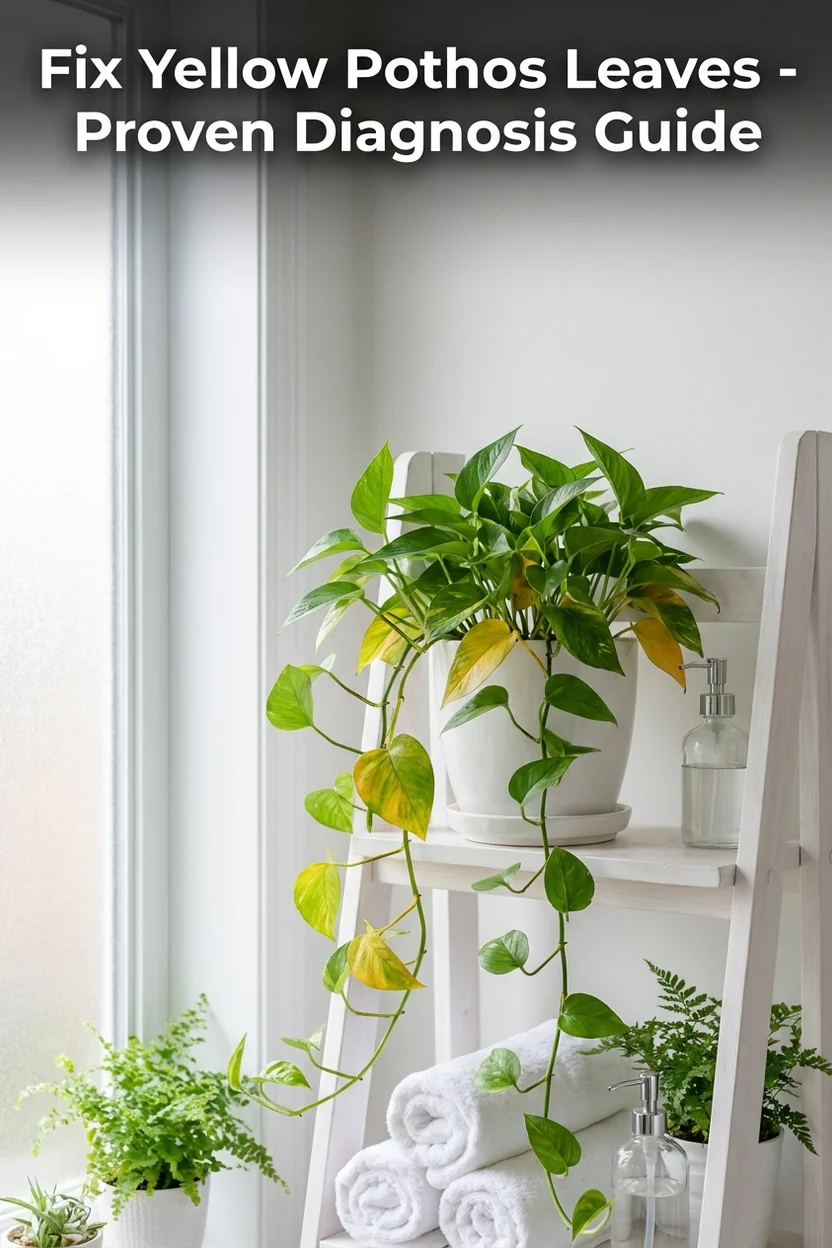
Pothos Leaves Turning Yellow: Simple Diagnosis and Fixes
Pets & Toxicity
Recorded toxicity for plants linked in this guide. An unknown status is not a safety assessment.
Epipremnum aureum — Toxicity Warning
Toxic to pets and humans. All parts contain insoluble calcium oxalate crystals that cause mouth pain, swelling, and drooling if ingested.View Epipremnum aureum plant profile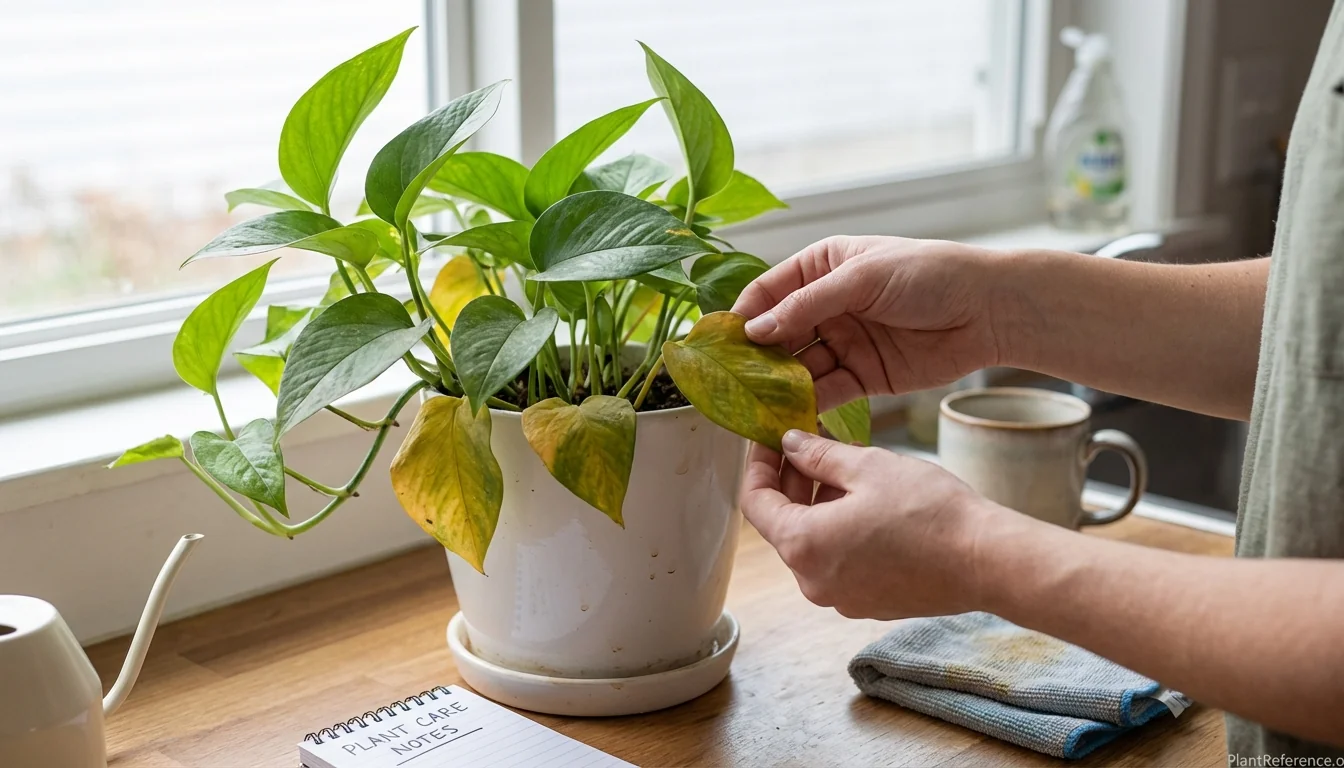
— Image © Plant Reference 2026
Let's be honest—seeing yellow leaves on your pothos 🌿Epipremnum aureum (ep-ih-PREM-num AW-ree-um) is panic-inducing, especially when you thought this was supposed to be the "unkillable" houseplant. Here's the reality: yellow pothos leaves are usually fixable, and often they're completely normal.
Is Yellow Normal? When to Worry vs When to Ignore
Not all yellow leaves are bad news. Your pothos naturally sheds older leaves as it grows—this is completely normal plant behavior. The key is where the yellowing happens and how fast it spreads.
Normal yellowing (don't panic):
1-2 older leaves at the bottom turning yellow over several weeks
Leaves feel papery and dry when they yellow
New growth at the tips looks healthy and green
Yellowing happens gradually, not suddenly
Plant is actively growing new leaves
Problem yellowing (take action):
Multiple leaves yellowing rapidly within days
Yellowing starts with newer, upper leaves
Leaves feel soft and mushy when yellow
No new growth appearing
Entire sections of vine turning yellow
If your situation matches the first list, you can relax. If it's the second list, keep reading—we need to fix this fast.
The #1 Cause: You're Overwatering Your Pothos
Here's what I see 90% of the time when people panic about yellow leaves: you're watering too much. Pothos hate wet feet, and overwatering kills more pothos than anything else.
When you overwater, the roots can't breathe. Without oxygen, they start dying and can't transport nutrients to the leaves. The plant responds by yellowing leaves, starting with the older ones that require the most energy to maintain.
Signs you're overwatering:
Soil feels wet or soggy days after watering
Pot feels heavy when you lift it
Water sits in the saucer for hours
Soil smells sour or musty
Yellow leaves feel soft and collapse easily
Stems near the soil line feel soft or dark
The fix is simple but requires patience: stop watering immediately. Let the soil dry out completely before watering again. This might take 2-3 weeks depending on your conditions.
Quick Diagnostic: Wet Soil vs Dry Soil Method
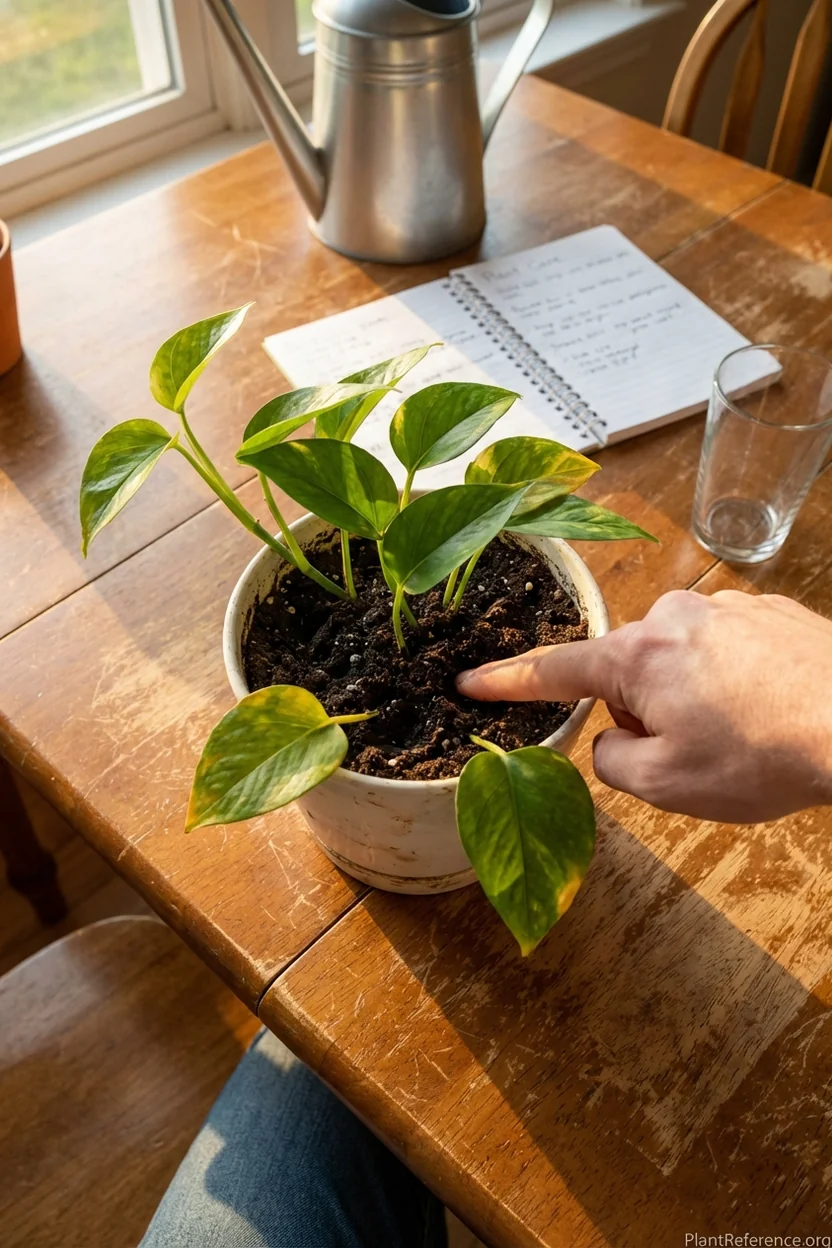
Skip the guesswork. Here's how to diagnose yellowing pothos leaves in 30 seconds:
Step 1: Stick your finger 2-3 inches (5-7.5 cm) into the soil Step 2: Feel the soil texture and moisture
If soil feels wet or damp: - Diagnosis: Overwatering - Action: Stop watering, remove yellow leaves, check for root rot - Timeline: Wait 2-3 weeks before next watering
If soil feels bone dry: - Diagnosis: Underwatering (less common) - Action: Water thoroughly, increase watering frequency - Timeline: Should see improvement within 3-5 days
If soil feels slightly moist: - Diagnosis: Likely natural leaf aging - Action: Remove yellow leaves, maintain current watering schedule - Timeline: Monitor for 1-2 weeks
Natural Leaf Aging (Totally Normal)
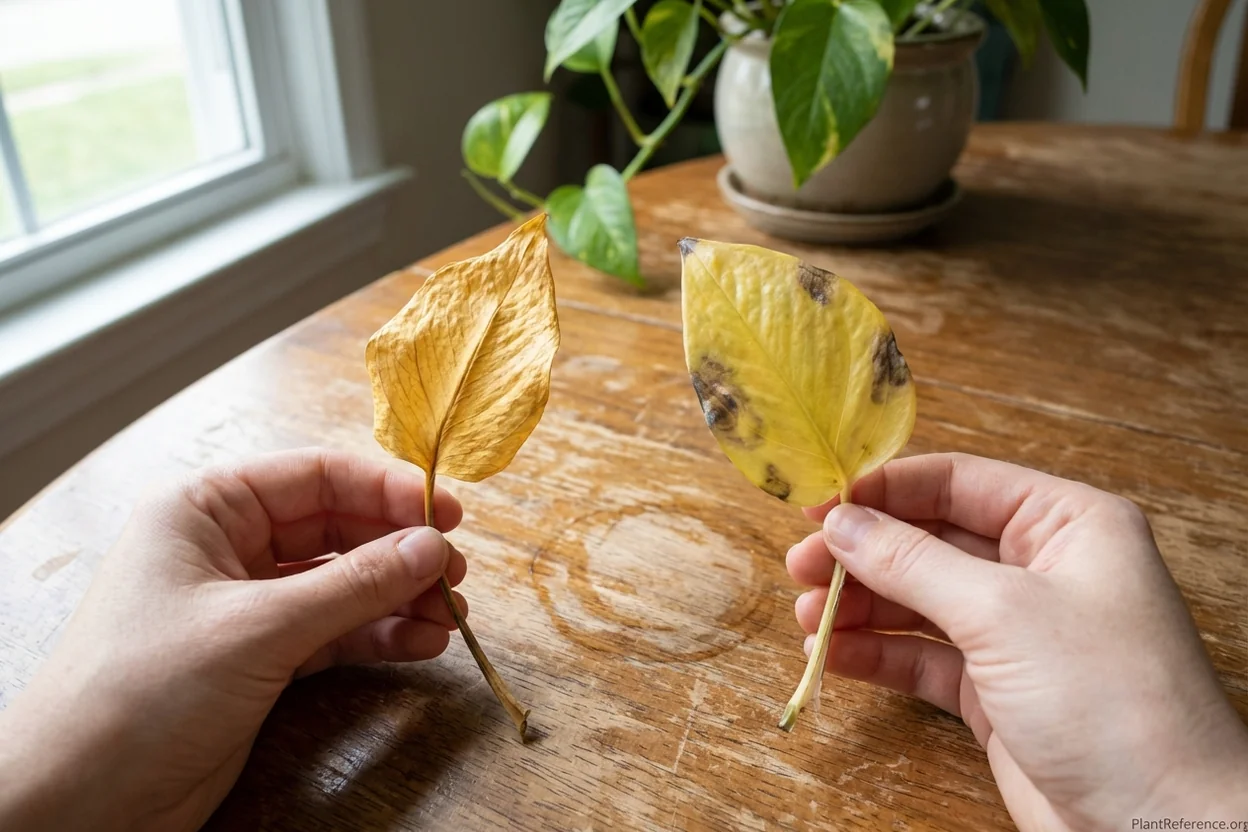
Every pothos will yellow and drop older leaves as it grows—this is plant biology 101. Your pothos 🌿Epipremnum aureum puts energy into new growth and naturally sheds older, less efficient leaves.
What normal aging looks like:
Always starts with the oldest leaves at the base
Happens gradually over 2-4 weeks per leaf
Leaves turn yellow, then brown, then drop naturally
Rate of 1-2 leaves per month is completely normal
New growth continues at the vine tips
This is actually a good sign—your plant is healthy enough to allocate resources efficiently. Don't try to "save" naturally aging leaves. Remove them once they're fully yellow to keep your plant looking tidy.
The key difference: natural aging happens slowly and predictably. Problem yellowing happens fast and affects multiple leaves simultaneously.
Root Rot Development and Emergency Response
If your soil is constantly wet and multiple leaves are yellowing rapidly, you might be dealing with root rot. This is serious but fixable if caught early.
Root rot warning signs:
Soil smells like rotten eggs or sewage
Stems feel soft and dark near the soil line
Yellow leaves appear mushy and collapse
New growth stops completely
Plant becomes unstable in its pot
Emergency root rot protocol:
Step 1: Remove plant from pot immediately Step 2: Rinse roots with lukewarm water Step 3: Cut away any black, mushy, or foul-smelling roots with clean scissors Step 4: Let plant air-dry for 2-3 hours Step 5: Repot in fresh, well-draining soil Step 6: Water lightly and place in bright, indirect light
If more than 50% of the roots are damaged, take cuttings from healthy vine sections as backup—How to Propagate Pothos: Water Method Step-by-Step explains the process in detail.
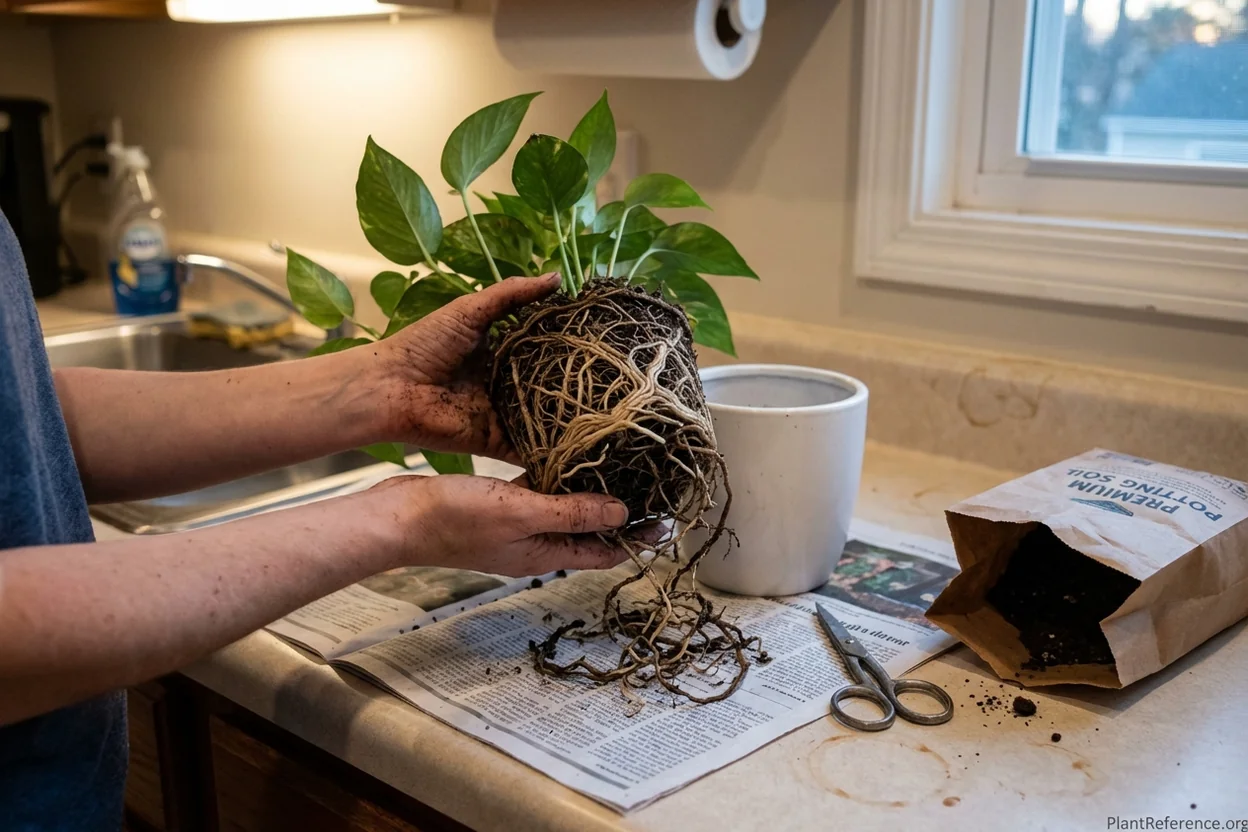
How to Remove Yellow Leaves Properly
Once a leaf turns completely yellow, it's not coming back green. Remove it properly to prevent disease and keep your plant looking healthy.
Proper removal technique:
For leaves on stems: Cut the leaf stem (petiole) close to the main vine using clean scissors or pruning shears For entire vine sections: Cut back to healthy growth, just above a node For natural aging: Gently tug yellow leaves—they often detach easily when ready
What NOT to do:
Don't tear or rip leaves off—this damages the vine
Don't leave yellow leaf stems attached—they can rot
Don't remove leaves that are only partially yellow—wait until fully changed
Don't remove more than 25% of foliage at once—plant needs energy
Clean your cutting tools with rubbing alcohol between cuts to prevent spreading any potential disease to healthy parts of the plant.
Prevention: The Right Watering Schedule
The best cure for yellow leaves is preventing them in the first place. Here's the watering schedule that actually works for pothos:
The simple rule: Water when the top 25-50% of soil feels dry to your finger test.
Seasonal adjustments:
Spring/Summer (growing season): Every 7-10 days typically
Fall/Winter (dormant period): Every 2-3 weeks typically
Hot, dry conditions: Check every 5-7 days
Cool, humid conditions: Check every 10-14 days
For more detailed guidance on developing a reliable watering routine, see How to Water Pothos: The Foolproof Beginner Method.
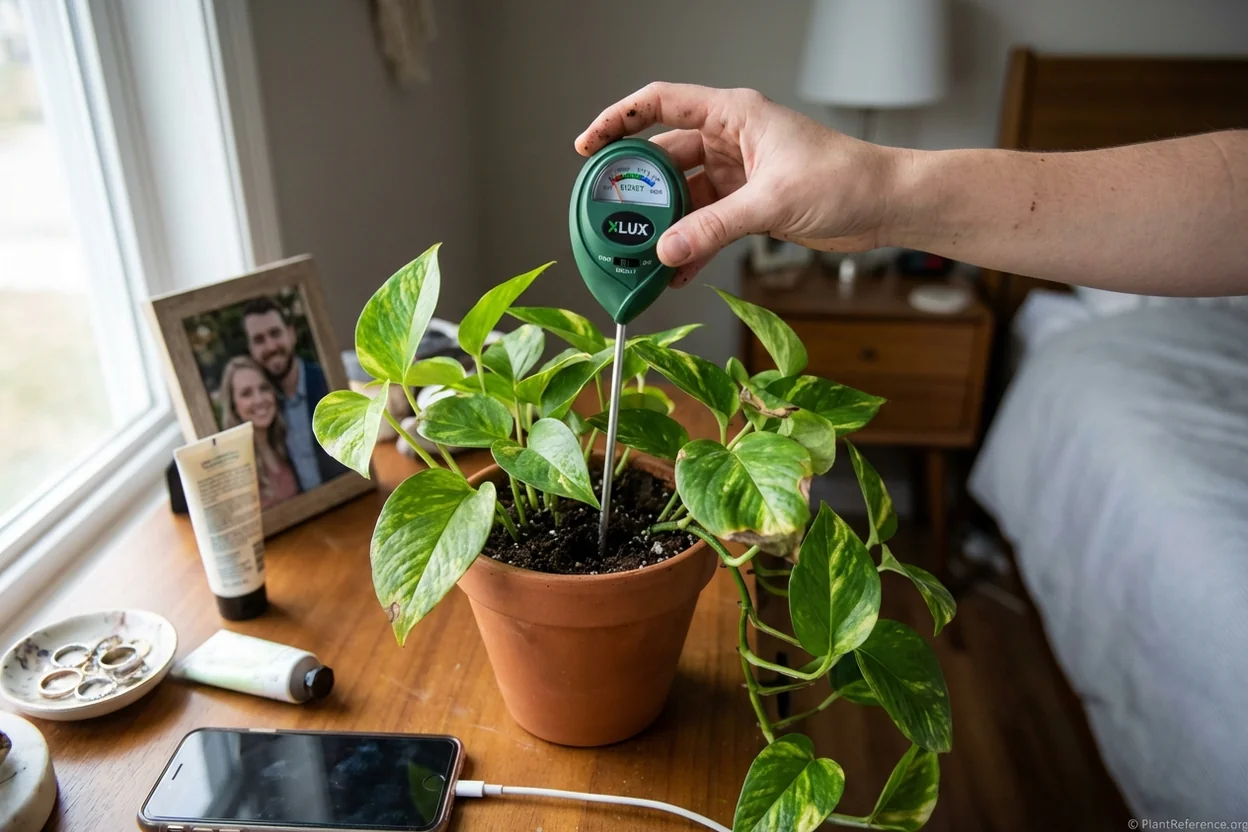
Pro tip: Invest in a moisture meter if you're struggling with the finger test. The XLUX Soil Moisture Meter gives instant readings and takes the guesswork out of watering decisions.
→ XLUX Soil Moisture Meter ($8-13) - Eliminates watering guesswork
Features 10-inch probe reaching deep into root zones for accurate moisture readings. No batteries required—simple push-and-read design provides instant feedback on dry, moist, or wet soil levels. Durable metal construction withstands repeated use in multiple plant pots. Ideal for pothos owners who struggle with watering timing, as it eliminates guesswork and prevents both overwatering and underwatering problems.
When Yellow Leaves Signal Other Problems
While overwatering causes 90% of yellow leaf cases, occasionally other issues are to blame. Here's what to check if your soil moisture is appropriate:
Low light stress: Variegated varieties like Marble Queen need brighter light than Golden Pothos. If new leaves are smaller and losing variegation while older leaves yellow, increase light exposure. Learn more in Pothos Light Requirements: Low Light to Bright Indirect.
Nutrient deficiency: If yellowing starts with older leaves but soil moisture is correct, your plant might need fertilizer. Feed monthly during spring and summer with diluted liquid fertilizer.
Temperature shock: Sudden temperature changes (near heating vents, air conditioners, or drafty windows) can cause rapid yellowing. Move your plant to a more stable location with temperatures between 65-85°F (18-30°C).
Pests: Rarely, spider mites or mealybugs can cause yellowing. Check leaf undersides for webbing or white cottony masses. See Pothos Pests: Mealybugs, Spider Mites, and Scale Treatment for identification and treatment.
Age of plant: Very mature pothos (5+ years) naturally shed more leaves as they put energy into new growth. This is normal plant behavior, not a problem to fix.
The key is systematic diagnosis: soil moisture first, then light, nutrients, temperature, and pests last.
Frequently Asked Questions
Three daily games
Can you name a plant on sight?
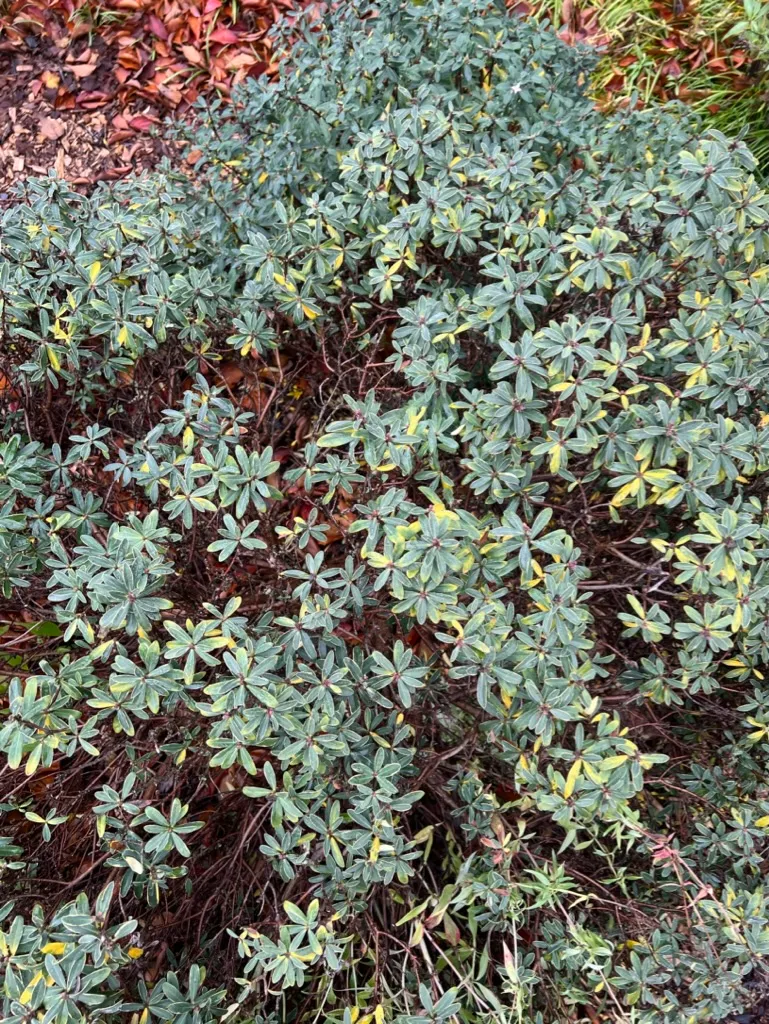
Monday’s specimenDaphne × transatlantica 'Summer Ice'Reading about plants and recognising them are different skills. These three build the second.
- Daily PlantIdentify the day’s mystery plant from a close-up photograph.
- Keyed OutWork a dichotomous key, lead by lead, to name a hidden specimen.
- Name That PlantName a specimen from botanical clues dealt hardest first.
Free to play, no account needed
TJ stumbled into plant parenthood when a coworker gave him a neglected pothos. That single plant sparked an obsession that led him to quit his corporate marketing job and start a plant care service for busy professionals in Chicago. TJ maintains over 150 plants for residential clients and runs monthly plant swap meetups at local coffee shops. He's self-taught through YouTube, plant forums, and plenty of expensive mistakes (RIP to his variegated monstera). TJ specializes in troubleshooting common houseplant problems and is known for his blunt, no-BS advice: "Your plant isn't dying because Mercury is in retrograde—you're overwatering it." He's particularly skilled with finicky tropical plants like fiddle leaf figs and calatheas.