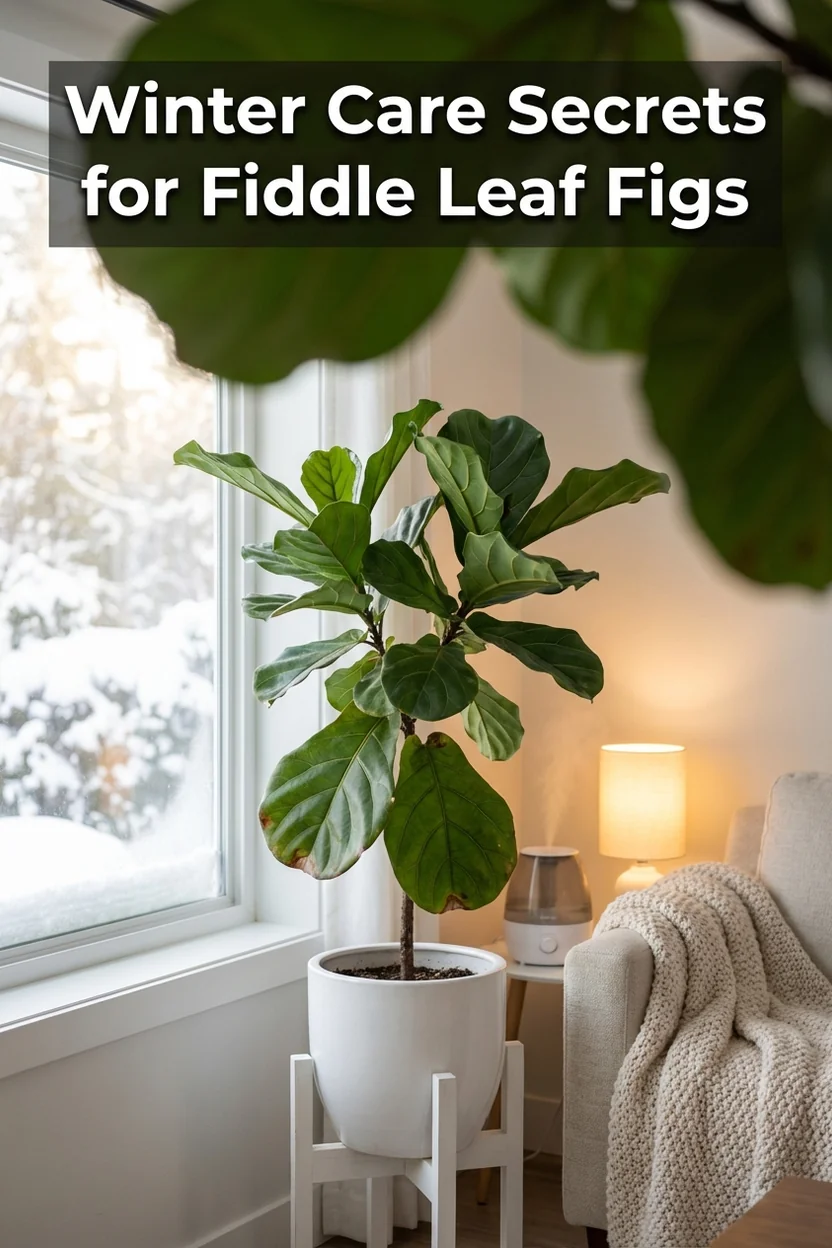
Fiddle Leaf Fig Winter Care (Keep Yours Thriving)
Pets & Toxicity
Recorded toxicity for plants linked in this guide. An unknown status is not a safety assessment.
Toxic to pets: fiddle leaf figDetailsHide
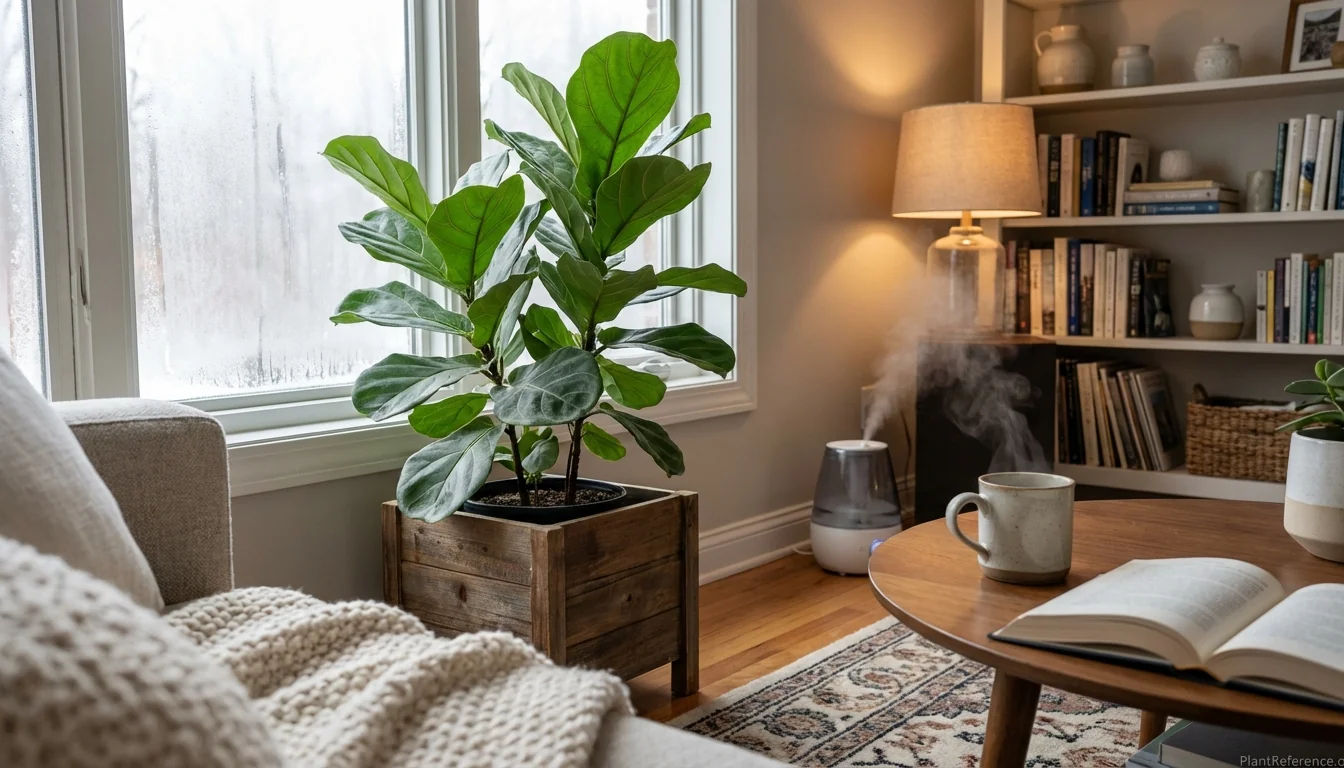
— Image © Plant Reference 2026
Don't worry—your fiddle leaf fig 🌿Ficus lyrata (FY-kus ly-RAY-tuh) can absolutely thrive through winter with the right adjustments. While many apartment dwellers panic when leaves start dropping in November, understanding fiddle leaf fig winter care helps you navigate the challenging months and emerge with a healthy plant come spring.
Winter presents unique challenges: shorter days, dry indoor air, fluctuating temperatures, and your plant's natural dormancy period. The good news? These aren't insurmountable obstacles—they're predictable changes you can prepare for.
Understanding Fiddle Leaf Fig Winter Dormancy
Your fiddle leaf fig naturally enters dormancy from October through February, significantly slowing its growth rate. This isn't a sign of poor health—it's an adaptive response to shorter daylight hours and cooler temperatures that mimics their native African habitat. To better understand this process, explore Fiddle Leaf Fig Dormancy: Understanding Seasonal Changes.
During dormancy, expect minimal new leaf development, slower water uptake, and reduced nutrient needs. Many owners mistakenly increase care during this period, leading to overwatering and root rot. Instead, embrace the slower pace and adjust your routine accordingly.
Normal winter behavior includes:
1-2 older leaves naturally yellowing and dropping monthly
Slower soil drying (extending time between waterings)
No new growth spurts or leaf development
Slightly duller leaf color compared to summer vibrancy
Increased sensitivity to environmental changes
Understanding dormancy prevents panic when your previously fast-growing plant seems stagnant. This natural cycle conserves energy for vigorous spring growth.
Temperature Control During Winter
Maintaining consistent temperatures becomes crucial during winter months when heating systems create fluctuations. Fiddle leaf fig winter care requires keeping temperatures between 65-70°F (18-21°C)—slightly cooler than summer's ideal 68-75°F (20-24°C).
Critical temperature guidelines:
Minimum temperature: 60°F (15°C)—brief exposure only
Optimal winter range: 65-70°F (18-21°C)
Maximum safe temperature: 75°F (24°C)
Avoid temperature swings exceeding 10°F in 24 hours
Common temperature mistakes to avoid:
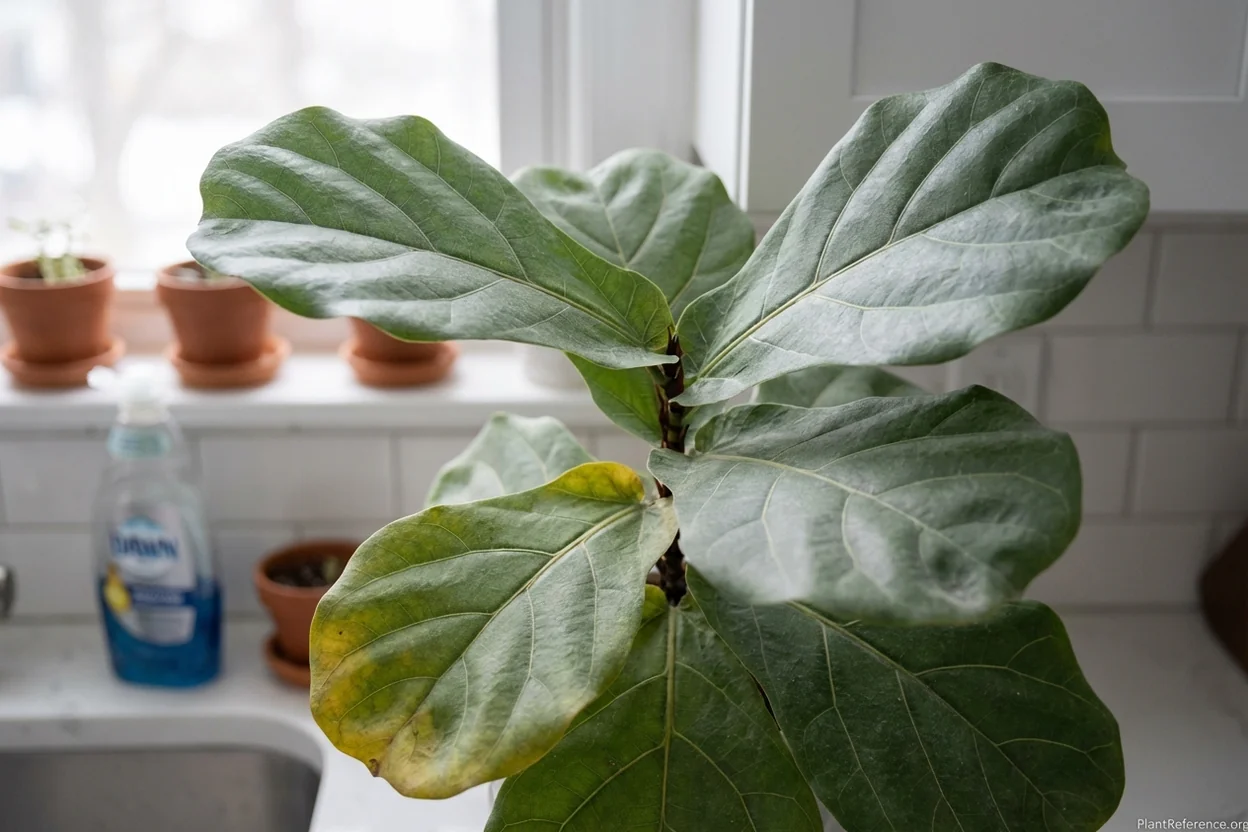
Placing plants near heating vents creates rapid temperature fluctuations and severely dry air. The hot air blast can reach 90-100°F (32-38°C), causing immediate leaf stress and brown edges within days.
Similarly, cold window placement during freezing weather exposes plants to temperatures 10-15°F (6-8°C) lower than room temperature. This causes leaf drop and potential cold damage to newer growth.
Instead, position your plant 3-4 feet from windows during extreme cold snaps and at least 6 feet from heating sources. Use a thermometer to monitor actual temperatures at plant level—they often differ significantly from your thermostat reading.
For apartments with poor heating control, consider space heaters with thermostats to maintain consistent temperatures around your plant area.
Light Requirements in Short Winter Days
Winter's reduced daylight hours—as few as 8-9 hours in northern regions—significantly impact your plant's health. Fiddle leaf fig winter care often requires supplemental lighting to prevent etiolation (stretching toward light) and maintain photosynthesis.
Your plant needs minimum 6 hours of bright light daily, even in winter. South-facing windows provide the most consistent winter light, while north-facing windows may require grow light supplementation by December.
Signs your plant needs more winter light:
New leaves emerging smaller than previous growth
Increased spacing between leaves on the stem
Leaning heavily toward the window
Overall loss of vibrant green coloring
Slower recovery from minor stresses
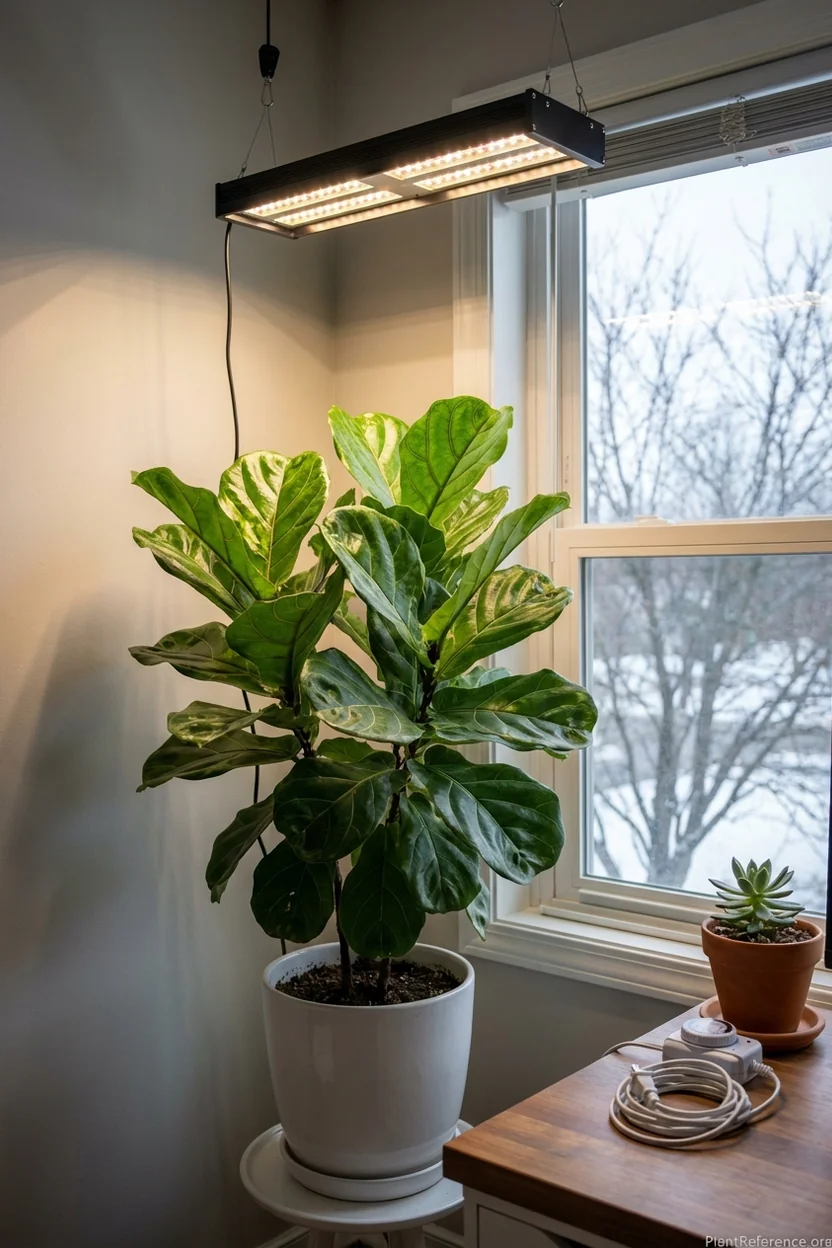
Consider grow lights when natural light drops below 6 hours daily. LED grow lights work exceptionally well for fiddle leaf figs, providing full-spectrum light without excessive heat. For comprehensive options, check out Best Grow Lights for Houseplants (Indoor Plant Lighting Guide).
Position grow lights 12-18 inches above the plant, running them 6-8 hours daily to supplement natural light—not replace it entirely. Timer controls ensure consistency without daily management.
Adjusting Your Watering Schedule
Fiddle leaf fig winter care requires dramatically different watering habits compared to summer. During dormancy, your plant uses 50-70% less water, making overwatering the leading cause of winter plant death.
Summer watering schedules—often every 7-10 days—extend to 14-21 days in winter. However, don't rely on calendars; always check soil moisture levels 2-3 inches deep before watering.
Winter watering guidelines:
Water only when top 2-3 inches feel completely dry
Allow soil to dry 75% through the pot before watering
Water thoroughly until drainage occurs, then empty excess
Use room temperature water to avoid shocking roots
Water mid-morning when temperatures are stable
Signs you're overwatering in winter:
Yellow leaves appearing faster than 1-2 per month, soil staying moist longer than 2 weeks, or musty odors from the soil indicate overwatering. Reduce frequency immediately and ensure proper drainage.
Cold water shock compounds winter stress. Fill watering containers the night before, allowing water to reach room temperature. This prevents root shock and improves nutrient absorption.
Monitor drainage carefully—winter's lower evaporation rates mean water sits longer in saucers, potentially causing root rot. Empty all standing water within 30 minutes of watering.
Humidity Management for Dry Indoor Air
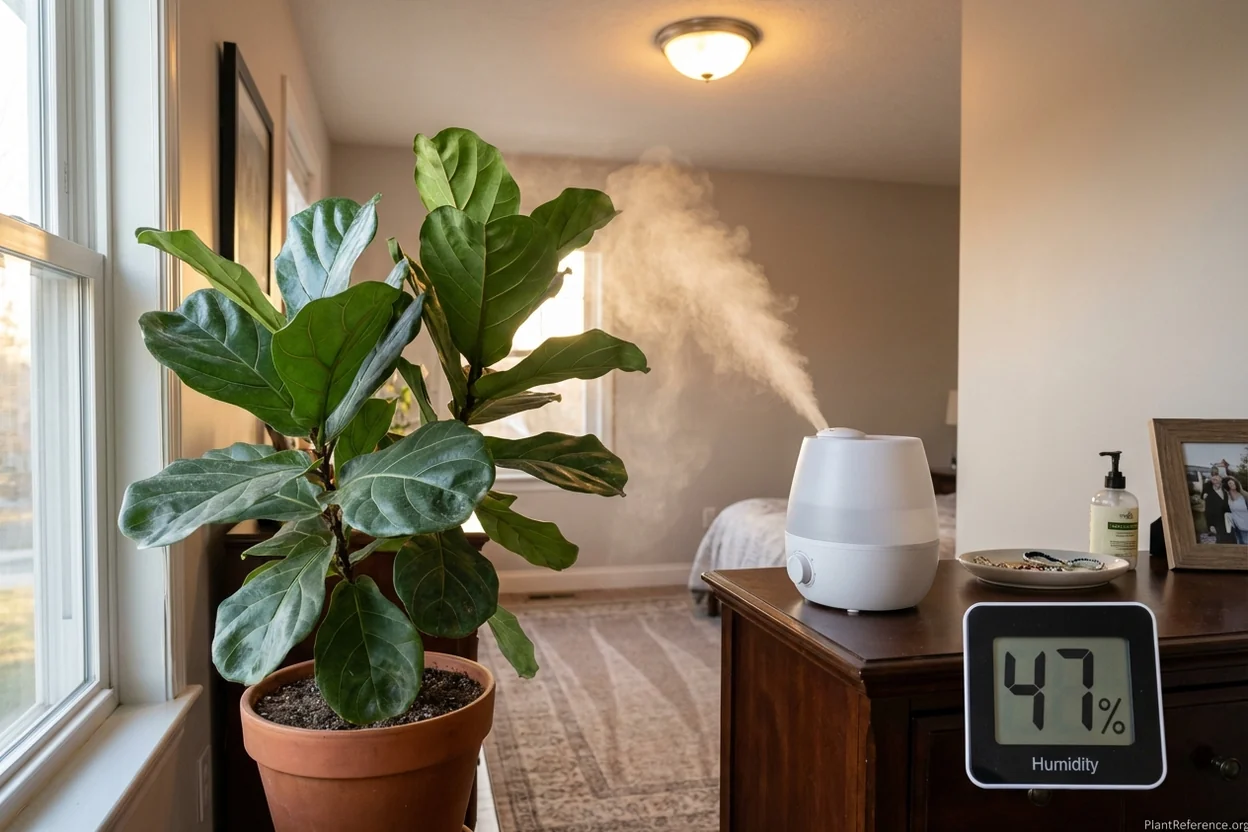
Indoor winter humidity often drops to 20-30%—well below your plant's preferred 40-50% range. Heating systems are notorious humidity thieves, creating desert-like conditions that cause brown leaf edges and overall stress.
Effective humidity boosting methods:
Use humidifiers maintaining 45-50% room humidity
Group plants together creating natural microclimates
Place pebble trays filled with water near (not under) plants
Run bathroom exhaust fans less frequently after showers
Consider whole-house humidifier installation for multiple plants
Humidity monitoring is essential. Digital hygrometers cost $10-15 and provide accurate readings. Maintain humidity consistently rather than dramatic daily fluctuations.
Avoid misting fiddle leaf fig leaves during winter. While tempting, misting in low-light, cool conditions promotes fungal growth and doesn't significantly raise humidity levels.
Instead, focus on ambient room humidity through mechanical humidifiers or natural methods. Ultrasonic humidifiers work quietly and efficiently, while evaporative models add gentle, consistent moisture.
Winter Fertilizing Guidelines
Stop fertilizing your fiddle leaf fig from October through February. This is perhaps the most important winter care adjustment, yet many owners continue summer feeding schedules, causing nutrient buildup and root damage.
During dormancy, your plant cannot process nutrients efficiently. Excess fertilizer accumulates in soil, altering pH levels and potentially burning roots. The characteristic signs include brown leaf edges, yellowing despite proper watering, and soil with white crusty buildup. Learn more about nutrient issues in Root Rot in Fiddle Leaf Fig: Prevention and Recovery.
Winter fertilizer rules:
Completely stop liquid fertilizer applications in October
Flush soil monthly with plain water to prevent salt buildup
Resume feeding in late February/early March when growth restarts
Use half-strength fertilizer for first spring application
Monitor new leaf development as signal to restart normal feeding
If you accidentally fertilized recently, flush the soil thoroughly with water until runoff runs clear. This removes excess nutrients and prevents accumulation damage.
Save your fertilizer money during winter months—your plant genuinely doesn't need it. Focus instead on proper light, humidity, and temperature management for optimal winter health.
Common Winter Problems and Solutions
Fiddle leaf fig winter care challenges are predictable and manageable when you know what to expect. Here are the most common winter issues and their solutions:
Excessive Leaf Drop
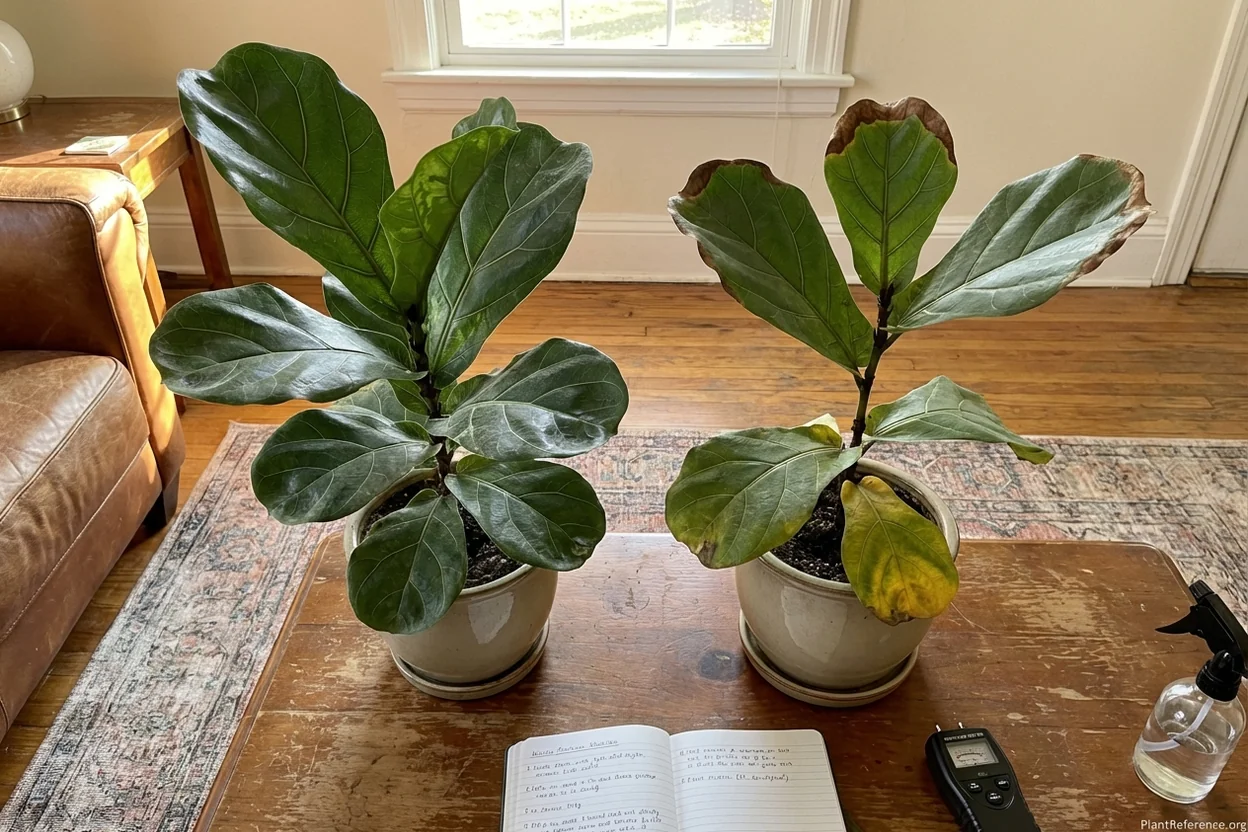
Normal winter leaf drop involves 1-2 older, lower leaves monthly. More than this indicates environmental stress, usually temperature fluctuations or overwatering. For detailed information, explore Fiddle Leaf Fig Leaves Dropping? Here's Why (+ Fixes).
Solution: Move plants away from heating vents and cold windows. Reduce watering frequency and monitor soil moisture carefully. Expect improvement within 2-3 weeks of consistent conditions.
Brown Leaf Edges
Crispy brown edges during winter almost always indicate low humidity (below 35%) or hot air exposure from heating systems. Additional guidance on leaf problems can be found in Fiddle Leaf Fig Brown Leaves: Causes and Solutions.
Solution: Increase room humidity to 45-50% using humidifiers. Move plants 6+ feet from direct heat sources. Trim brown edges with clean scissors, leaving small brown margin to prevent further damage.
Slow Recovery from Minor Issues
Winter's dormancy period means your plant recovers more slowly from any stress, including repotting, pest issues, or environmental changes. When managing multiple care changes, consult Plant Stress: Signs Your Houseplant Needs Help for best practices.
Solution: Be patient and maintain consistent conditions. Avoid making multiple adjustments simultaneously. Focus on stability rather than optimization during winter months.
Preparing Your Plant for Spring Growth
Late February signals the beginning of your plant's emergence from dormancy. Fiddle leaf fig winter care transitions gradually toward spring routines, avoiding shock from sudden changes.
Spring transition timeline:
Late February: Resume fertilizing at half-strength monthly
Early March: Gradually increase watering frequency as growth resumes
Mid-March: Consider repotting if roots are crowded
Late March: Return to full-strength fertilizer every 2 weeks
April: Resume normal summer care routines
Watch for new leaf development as your signal to increase care intensity. New growth typically appears as small, light green shoots at the top of the plant or along the main stem.
Don't rush this transition. Plants shocked by sudden care changes often drop leaves or develop stress symptoms. Gradual adjustments over 4-6 weeks allow natural adaptation to increasing daylight and warmer temperatures.
Consider this winter care period as setting the foundation for explosive spring growth. Plants that receive consistent, appropriate winter care emerge stronger and more resilient for the growing season ahead.
For detailed spring care adjustments and fertilizer guidelines, check out our comprehensive Fiddle Leaf Fig Care: The Complete Guide (2025) and 5 Best Fertilizers for Fiddle Leaf Fig (Tested). If you're dealing with specific winter problems, our Fiddle Leaf Fig Leaves Dropping? Here's Why (+ Fixes) guide provides detailed troubleshooting steps.
Remember: winter doesn't have to mean struggling plants. Consistent attention to temperature, light, humidity, and reduced watering keeps your fiddle leaf fig healthy through the challenging months, setting the stage for vibrant spring growth.
Frequently Asked Questions
Reading about plants and recognising them are different skills. These three build the second.
- Daily PlantIdentify the day’s mystery plant from a close-up photograph.
- Keyed OutWork a dichotomous key, lead by lead, to name a hidden specimen.
- Name That PlantName a specimen from botanical clues dealt hardest first.
Free to play, no account needed
Amanda came to gardening through an unexpected route—after developing chronic pain from rheumatoid arthritis in her late 20s, she started researching adaptive gardening techniques that would allow her to continue growing plants without aggravating her condition. Now based in Minneapolis, she writes about accessible gardening, raised bed designs for people with mobility challenges, and ergonomic tools that reduce strain. Amanda completed a certificate in sustainable urban agriculture and volunteers with a nonprofit that builds accessible community gardens. She grows vegetables, herbs, and flowers in waist-high raised beds she designed herself. Her writing focuses on practical solutions that work for real people with real limitations—whether that's arthritis, limited mobility, or just a bad back.