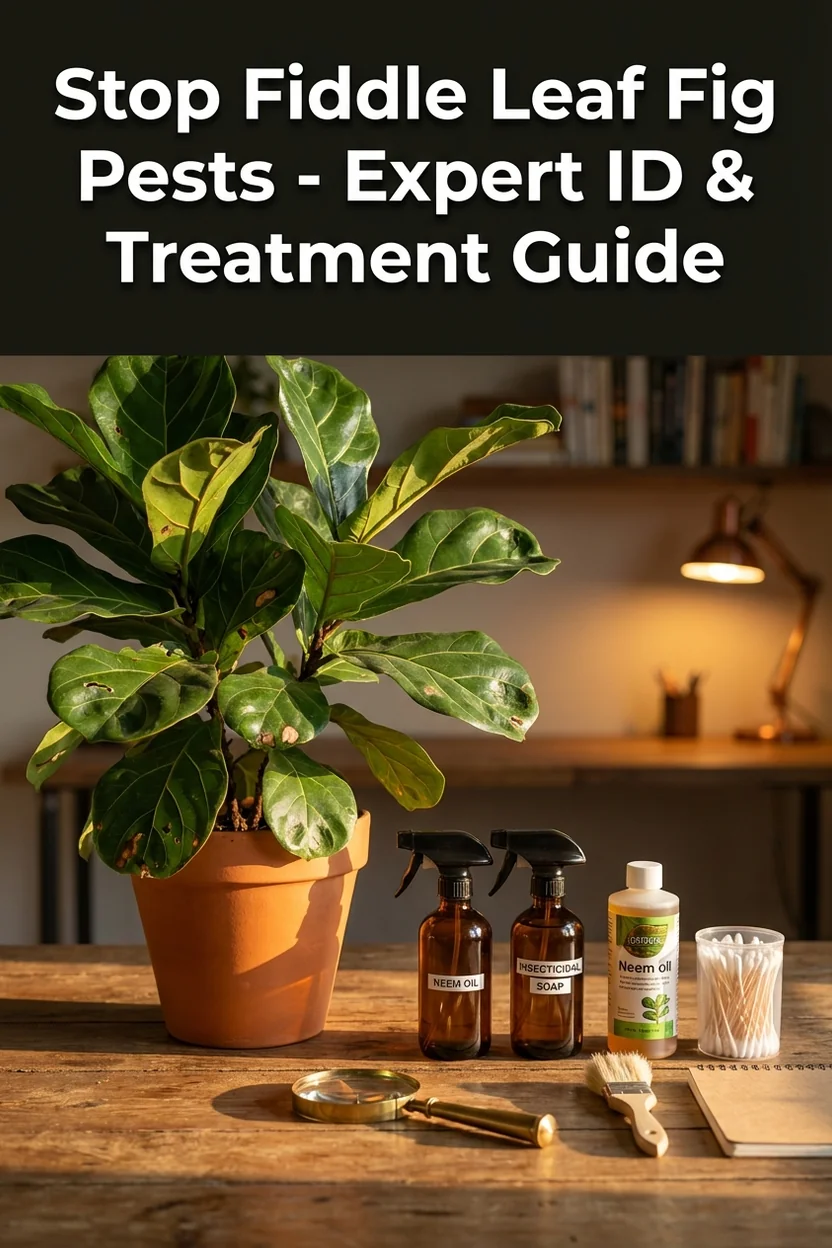
Fiddle Leaf Fig Pests: Identification & Treatment
Pets & Toxicity
Recorded toxicity for plants linked in this guide. An unknown status is not a safety assessment.
Toxic to pets: fiddle leaf figDetailsHide
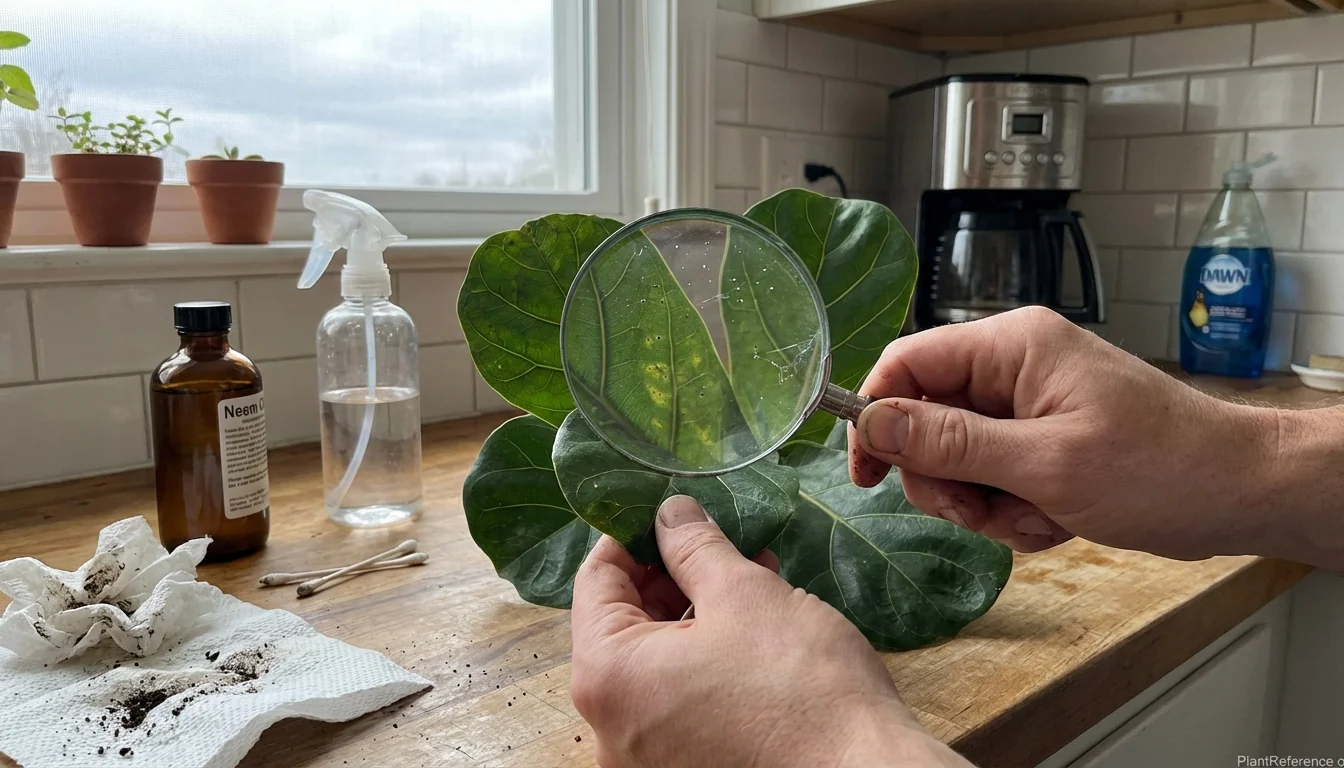
— Image © Plant Reference 2026
Let's cut to the chase—if you're seeing weird spots, sticky leaves, or tiny moving dots on your fiddle leaf fig 🌿Ficus lyrata (FY-kus ly-RAY-tuh), you've got pests. Don't panic, but don't wait either. Fiddle leaf fig bugs multiply fast, and what starts as a minor issue can destroy your plant in weeks if left untreated.
The good news? Most fiddle leaf fig pest problems are caused by the same four culprits, and once you know what you're dealing with, treatment is straightforward. I've helped hundreds of plant owners eliminate these pests using proven methods that actually work.
Common Fiddle Leaf Fig Pests (The Big Four)
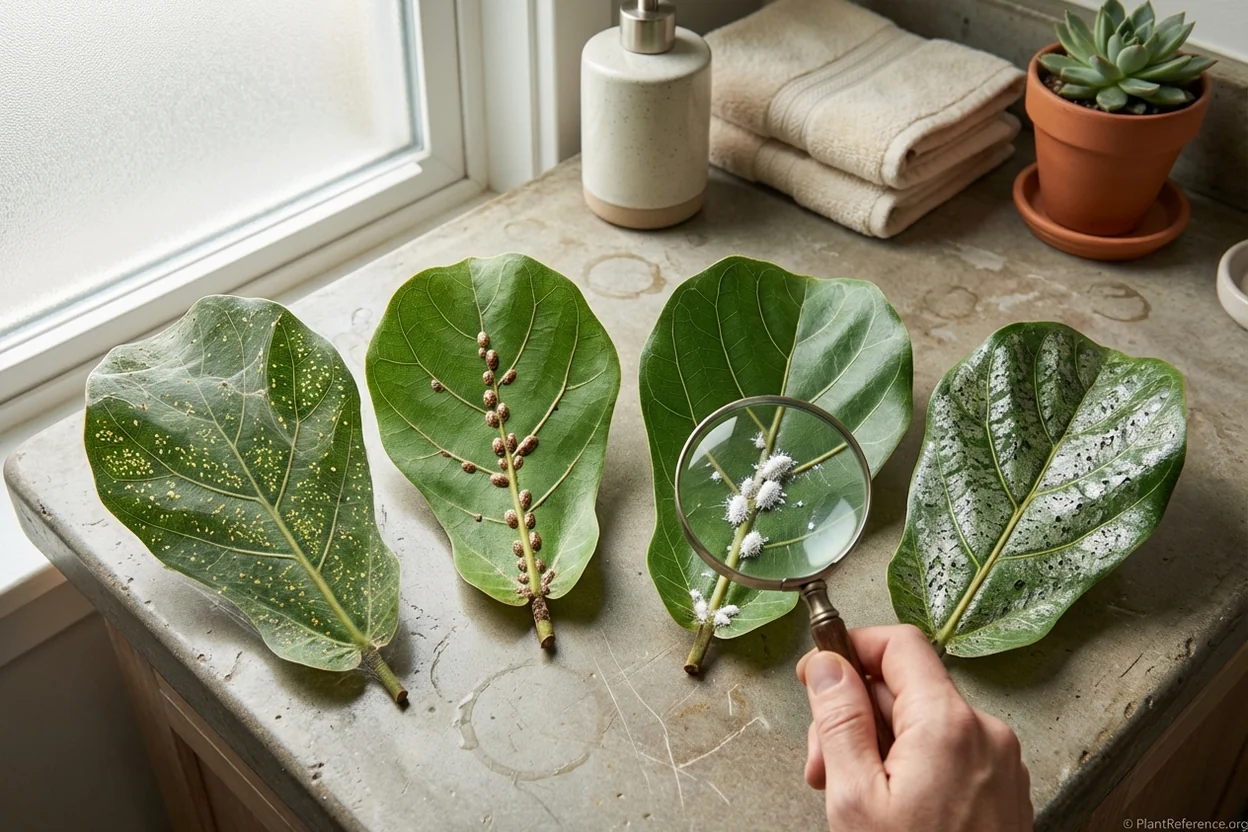
Here's what you're probably dealing with. These four pests account for 95% of all fiddle leaf fig infestations, and each leaves distinct calling cards that make identification simple once you know what to look for.
Spider mites are your most likely enemy—they love the warm, dry conditions of most homes and attack stressed plants first. You'll see fine webbing, tiny holes in leaves, and microscopic moving specks.
Scale insects create sticky honeydew that attracts ants and leaves your plant looking like someone spilled syrup on it. They attach to stems and leaf undersides like tiny brown or white bumps.
Mealybugs look exactly like someone dabbed cotton balls in the leaf joints and stem crevices. They're easy to spot but persistent once established.
Thrips are the sneakiest—nearly invisible but leave distinctive silvery speckled damage that looks like someone sandpapered your leaves.
Spider Mites: The Invisible Destroyers
Spider mites are fiddle leaf fig enemy number one. These microscopic pests thrive in warm, dry indoor conditions and attack stressed plants first. You probably won't see the mites themselves—they're smaller than the period at the end of this sentence—but their damage is unmistakable.
How to Identify Spider Mites:
Fine webbing on leaf undersides and between leaves
Tiny yellow or brown stippling on leaf surfaces (like pin pricks)
Leaves appear dusty or dull despite cleaning
Small moving specks visible with magnifying glass
Leaves eventually turn yellow and drop off
The webbing is your smoking gun. Hold a white piece of paper under the leaves and tap gently—if you see tiny moving dots fall onto the paper, you've got spider mites.
Why Spider Mites Love Fiddle Leaf Figs:
Spider mites attack plants that are already stressed from improper watering, low humidity, or insufficient light. They reproduce every 5-7 days in warm conditions, which explains how a small problem becomes a disaster so quickly. A single female can lay 100+ eggs in her lifetime.
Immediate Treatment:
First, isolate your plant immediately. Spider mites spread to nearby plants within days. Then blast them off with a strong shower spray—this removes 80% of the population instantly and destroys their webbing. Follow up with neem oil spray every 3 days for two weeks.
For severe infestations, I recommend the "shock treatment": spray the entire plant with rubbing alcohol (70% isopropyl), let it sit for 10 minutes, then rinse thoroughly. Repeat every 5 days until gone. This sounds harsh, but fiddle leaf figs handle alcohol better than they handle spider mite damage.
Scale Insects: The Sticky Sap Suckers
Scale insects are sneaky because they don't look like bugs at first glance. They appear as small brown, white, or tan bumps on stems and leaf undersides that you might mistake for natural plant features. But if you're finding sticky honeydew dripping from your plant or attracting ants, you've got scale.
How to Identify Scale Insects:
Small oval or round bumps on stems and leaf undersides
Sticky honeydew secretions on leaves and floor
Yellowing leaves that drop prematurely
Ants around the plant (attracted to honeydew)
Bumps can be scraped off with fingernail
Scale insects pierce the plant tissue and suck sap continuously, weakening your fiddle leaf fig and leaving behind sticky waste that encourages fungal growth.
Treatment Protocol:
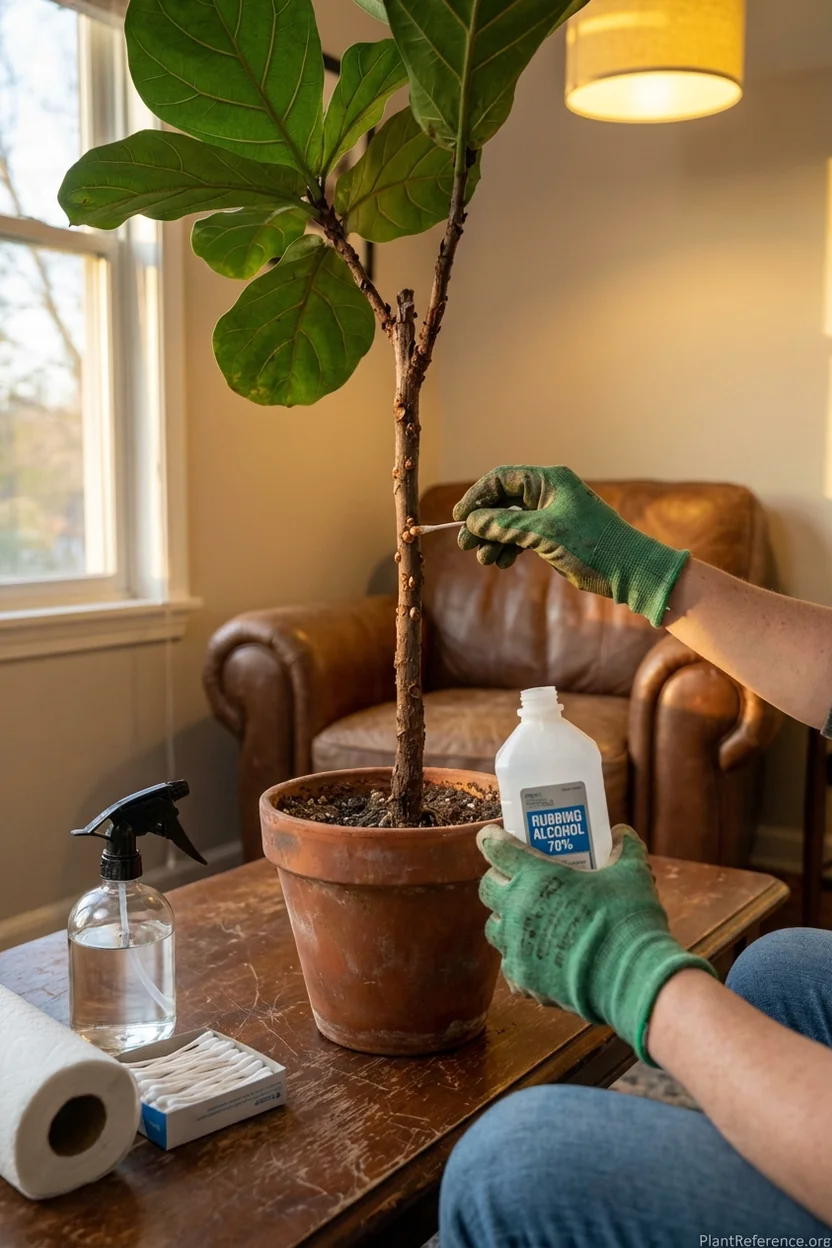
Scale insects have protective waxy shells that resist sprays, so mechanical removal works best. Dip a cotton swab in 70% rubbing alcohol and wipe each scale off individually. For heavy infestations on stems, use an old toothbrush dipped in alcohol.
Follow up with systemic insecticide for plants you can't inspect thoroughly—the active ingredient gets absorbed by the plant and kills scale when they feed. Neem oil works as a follow-up treatment but won't penetrate their protective coating on first contact.
Check weekly for 2 months after treatment. Scale insects can regenerate from tiny remnants left behind, so thoroughness beats speed.
Mealybugs: The White Cotton Invaders
Mealybugs are the easiest pest to identify—they look exactly like tiny cotton balls stuck in leaf joints, stem crevices, and root areas. Don't let their innocent appearance fool you; they're aggressive feeders that weaken plants quickly and spread to nearby plants through root systems.
How to Identify Mealybugs:
White, cotton-like clusters in leaf joints and stem crevices
Sticky honeydew on leaves and surrounding surfaces
Yellowing leaves starting from where bugs congregate
White waxy residue that rubs off on fingers
Root mealybugs appear as white cottony masses in soil
Mealybugs prefer warm, humid conditions and hide in plant crevices during the day. They're most active at night, so check with a flashlight if you suspect an infestation but can't find them during daytime inspections.
Why Mealybugs Are Persistent:
Female mealybugs lay up to 600 eggs in protective waxy sacs that resist most treatments. The eggs hatch over 2-3 weeks, which explains why treatments seem to work initially but bugs return. You need to break the reproduction cycle with repeated treatments.
Effective Treatment Strategy:
Start with the alcohol cotton swab method—dab each visible mealybug cluster with 70% isopropyl alcohol. They'll turn brown and die on contact. For root mealybugs, you'll need to unpot the plant, wash all soil from roots, and soak roots in alcohol solution for 10 minutes before repotting in fresh soil.
Follow up with systemic granular insecticide mixed into the soil—this kills newly hatched bugs before they establish colonies. Neem oil spray every 7 days helps prevent reinfestation but won't eliminate existing populations.
Thrips: The Microscopic Leaf Shredders
Thrips are the hardest pest to spot but leave distinctive damage that looks like someone took fine sandpaper to your leaves. These nearly invisible insects rasp leaf surfaces and suck out plant juices, leaving behind silvery speckled damage and black specks of waste.
How to Identify Thrips:
Silvery or bronze stippling on leaf surfaces
Tiny black specks (thrips waste) on leaf undersides
Leaves appear sandblasted or scratched
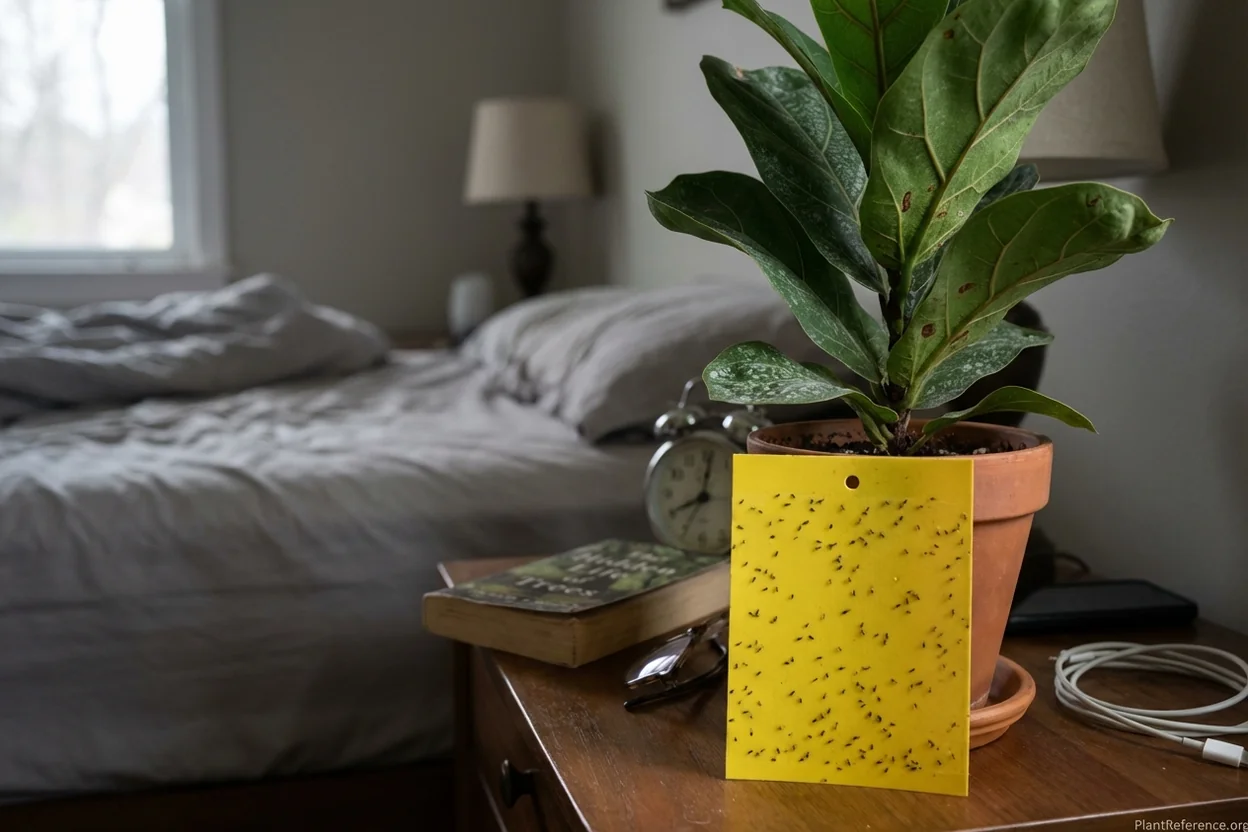
Yellow sticky traps catch tiny flying insects
Microscopic moving insects visible with magnifying glass
Thrips are attracted to bright lights and flowers, so they often arrive on new plants or through open windows during warm weather. They reproduce rapidly in warm, dry conditions.
Treatment Approach:
Thrips require a multi-pronged approach because they fly between plants and hide in soil during part of their life cycle. Start with yellow sticky traps placed around affected plants—these capture flying adults and help monitor population levels.
Predatory mites work excellently for thrips control if you can maintain proper humidity (50-60%). For chemical treatment, spinosad-based insecticides specifically target thrips without harming beneficial insects.
The soil treatment is crucial—thrips pupae develop in the top 2 inches (5 cm) of soil. Apply beneficial nematodes or diatomaceous earth to soil surface, or replace the top 3 inches (7.5 cm) with fresh soil.
Emergency Treatment Protocol
When you discover pests on your fiddle leaf fig, speed matters. Here's my proven emergency protocol that stops pest damage within 48 hours and prevents spread to other plants.
Hour 1: Isolation and Assessment
Move the infected plant away from all other plants immediately—at least 6 feet (1.8 m) separation. Don't wait to identify the pest type; isolation prevents spread to your entire collection.
Inspect the entire plant systematically: check leaf tops and undersides, stems, soil surface, and drainage holes. Take photos of damage for reference—this helps track treatment progress.
Hour 2-24: Initial Knockdown Treatment
Shower the plant with lukewarm water to remove loose pests
Spray entire plant with 70% isopropyl alcohol solution
Wipe all leaf surfaces with damp microfiber cloth
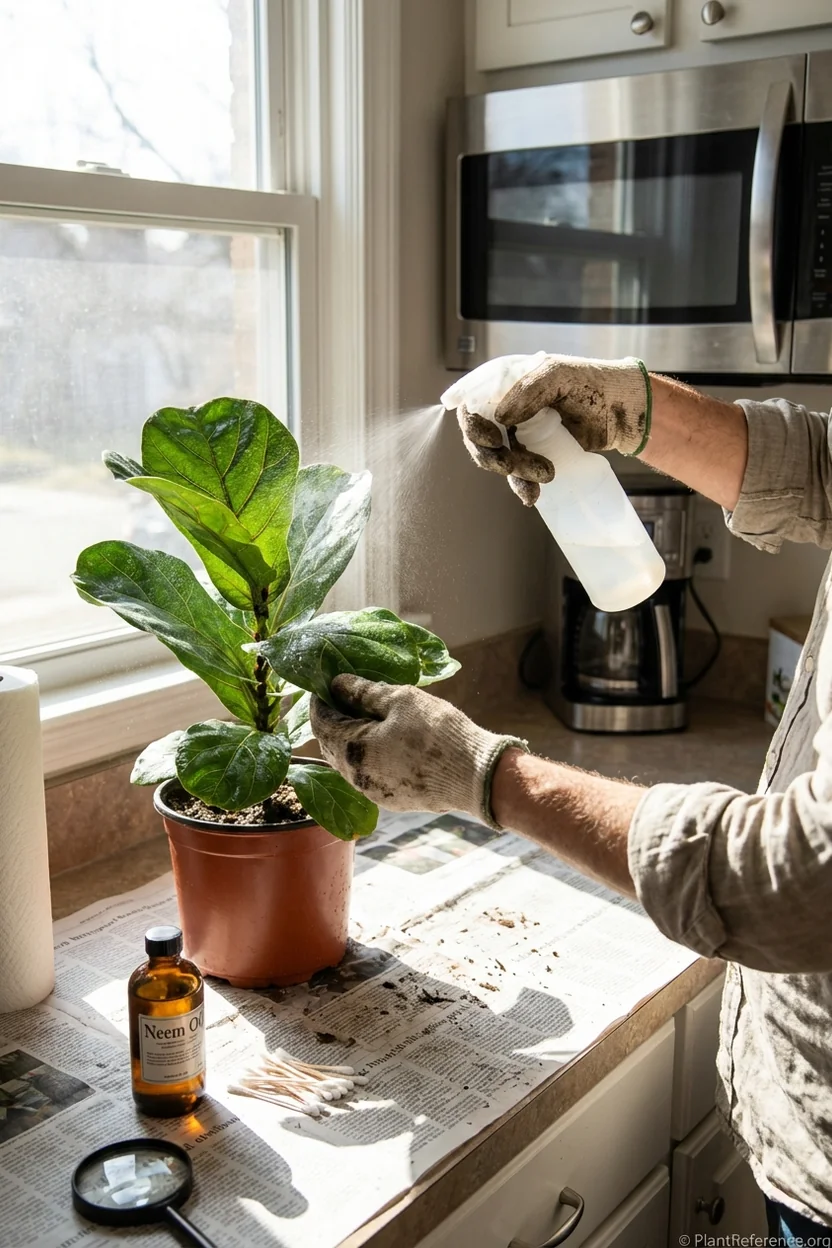
Apply neem oil to all plant surfaces including stems
Place yellow sticky traps around the plant
Days 2-7: Follow-up Treatments
Repeat neem oil application every 3 days. Check sticky traps daily and replace when full. Monitor for new pest activity and take progress photos.
Week 2-3: Prevention Mode
Continue weekly neem oil treatments even after pests appear gone. Most pest eggs hatch within 14 days, so you're targeting the next generation before they establish.
Organic vs. Chemical Treatment Options
You've got two paths for treating fiddle leaf fig pests: organic methods that take longer but are gentler on the plant, or chemical treatments that work faster but require more precautions.
Organic Treatment Arsenal:
Neem oil remains my top recommendation for most pest problems. It disrupts pest reproduction cycles, suffocates soft-bodied insects, and has systemic properties that provide ongoing protection. Mix 1 tablespoon per quart of water with a few drops of dish soap as an emulsifier.
Insecticidal soap works excellently for soft-bodied pests like mealybugs and aphids. You can make your own with 1 tablespoon of pure castile soap per quart of water, or buy commercial formulations that include additional beneficial ingredients.
Diatomaceous earth (food grade) works mechanically by damaging pest exoskeletons. Dust lightly on soil surface for thrips control, but avoid getting it on leaves where it can clog stomata.
Beneficial insects like ladybugs and predatory mites provide long-term control but require stable conditions to establish populations.
Chemical Treatment Options:
Systemic insecticides containing imidacloprid provide 8-12 weeks of protection with a single soil application. The plant absorbs the active ingredient and kills pests when they feed. Perfect for scale insects and root mealybugs.
Contact insecticides like pyrethrin knock down flying pests on contact but provide no residual protection. Use these for quick population reductions followed by systemic treatments.
Horticultural oils suffocate pests and their eggs. They work faster than neem oil but can burn leaves in hot conditions or if applied too heavily.
Treatment Timing Strategy:
Start with organic treatments unless you're dealing with a severe infestation that threatens the plant's survival. Organic methods preserve beneficial microorganisms in the soil and won't harm pets or family members.
Switch to chemical treatments if organic methods haven't shown results after 3 weeks, or if the infestation is spreading rapidly to other plants.
Prevention Strategies That Actually Work
Preventing fiddle leaf fig pests is 10 times easier than eliminating them once established. Focus on creating conditions that keep pests away rather than just reacting to infestations.
Quarantine New Plants:
Every new plant should spend 2-3 weeks isolated from your existing collection. This includes plants from friends, plant swaps, and even reputable nurseries. Pests can hide in soil or remain dormant until conditions improve.
During quarantine, inspect plants weekly with a magnifying glass and place yellow sticky traps nearby to catch any emerging flying pests.
Optimize Plant Health:
Healthy plants resist pest attacks better than stressed ones. Pests target plants weakened by proper watering, insufficient light, or nutrient deficiencies.
Water when top 2-3 inches (5-7.5 cm) of soil feel dry
Provide bright indirect light for 6-8 hours daily
Maintain 40-60% humidity levels
Fertilize monthly during spring and summer
Rotate plants weekly for even growth
Regular Inspection Routine:
Check your fiddle leaf fig weekly during routine watering. Look for early warning signs: sticky honeydew, unusual leaf spots, webbing, or tiny moving specks. Early detection makes treatment 90% more successful.
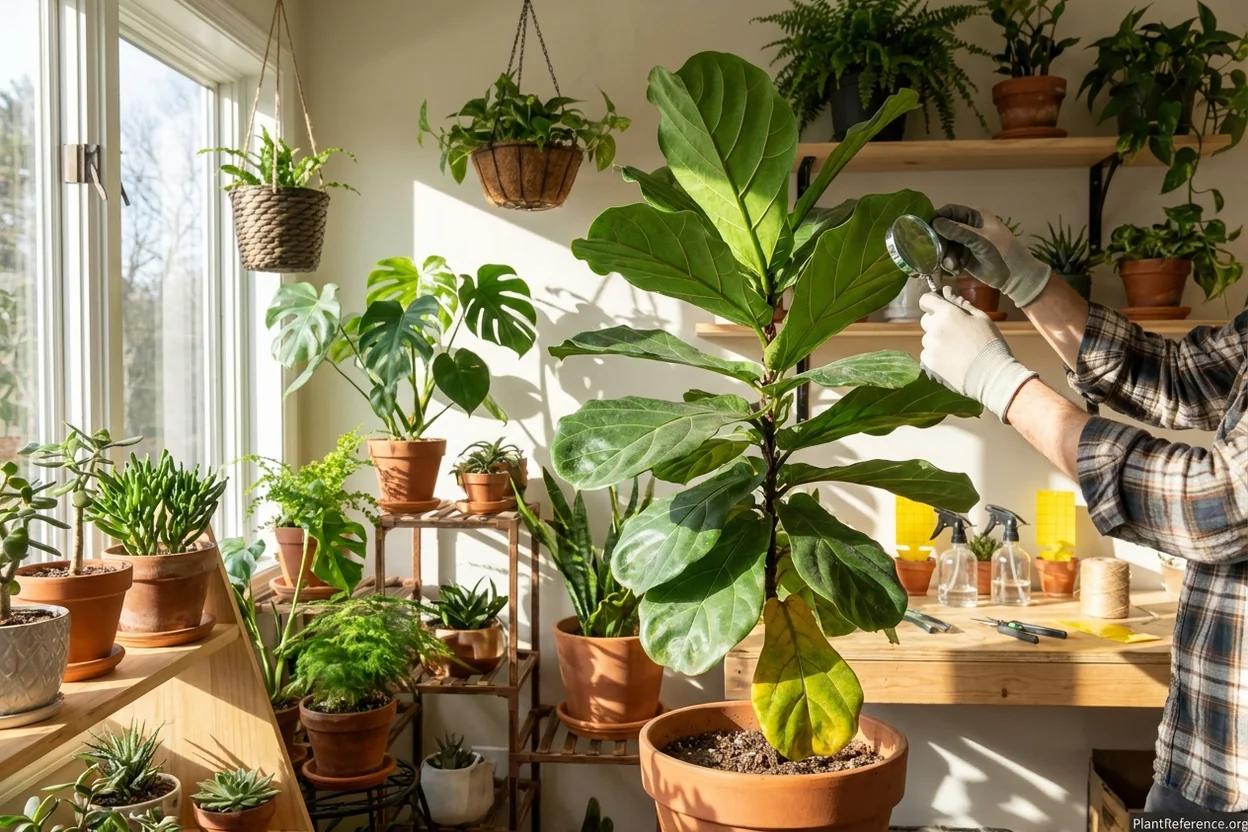
Use a magnifying glass to inspect leaf undersides and stem crevices where pests hide during daylight hours. Take photos of suspicious spots so you can monitor changes over time.
Environmental Controls:
Humidity management prevents spider mites, which thrive in dry conditions. Use a humidifier to maintain 40-60% humidity, or group plants together to create beneficial microclimates.
Air circulation prevents pest establishment and fungal problems that weaken plants. A small fan on low speed improves air movement without creating drafts that stress plants.
Soil hygiene matters more than most people realize. Replace the top 2 inches (5 cm) of soil annually to remove pest eggs and pupae. Avoid overwatering, which creates conditions favorable to fungus gnats and root rot.
Companion Planting:
Certain plants naturally repel common fiddle leaf fig pests. Marigolds release compounds that deter thrips and spider mites. Basil repels flies and mosquitoes. Lavender discourages most flying insects.
Position these plants near your fiddle leaf fig for natural pest deterrence, but maintain proper spacing so they don't compete for light requirements or nutrients.
The bottom line: fiddle leaf fig bugs are manageable when you catch them early and treat them systematically. Don't let fear of pests stop you from enjoying these dramatic plants. With proper identification, prompt treatment, and consistent prevention, you can keep your fiddle leaf fig healthy and pest-free for years.
Remember to check your plant weekly, isolate any pest problems immediately, and don't hesitate to use effective treatments when needed. Your fiddle leaf fig will thank you with years of healthy, dramatic growth.
Frequently Asked Questions
Reading about plants and recognising them are different skills. These three build the second.
- Daily PlantIdentify the day’s mystery plant from a close-up photograph.
- Keyed OutWork a dichotomous key, lead by lead, to name a hidden specimen.
- Name That PlantName a specimen from botanical clues dealt hardest first.
Free to play, no account needed
TJ stumbled into plant parenthood when a coworker gave him a neglected pothos. That single plant sparked an obsession that led him to quit his corporate marketing job and start a plant care service for busy professionals in Chicago. TJ maintains over 150 plants for residential clients and runs monthly plant swap meetups at local coffee shops. He's self-taught through YouTube, plant forums, and plenty of expensive mistakes (RIP to his variegated monstera). TJ specializes in troubleshooting common houseplant problems and is known for his blunt, no-BS advice: "Your plant isn't dying because Mercury is in retrograde—you're overwatering it." He's particularly skilled with finicky tropical plants like fiddle leaf figs and calatheas.