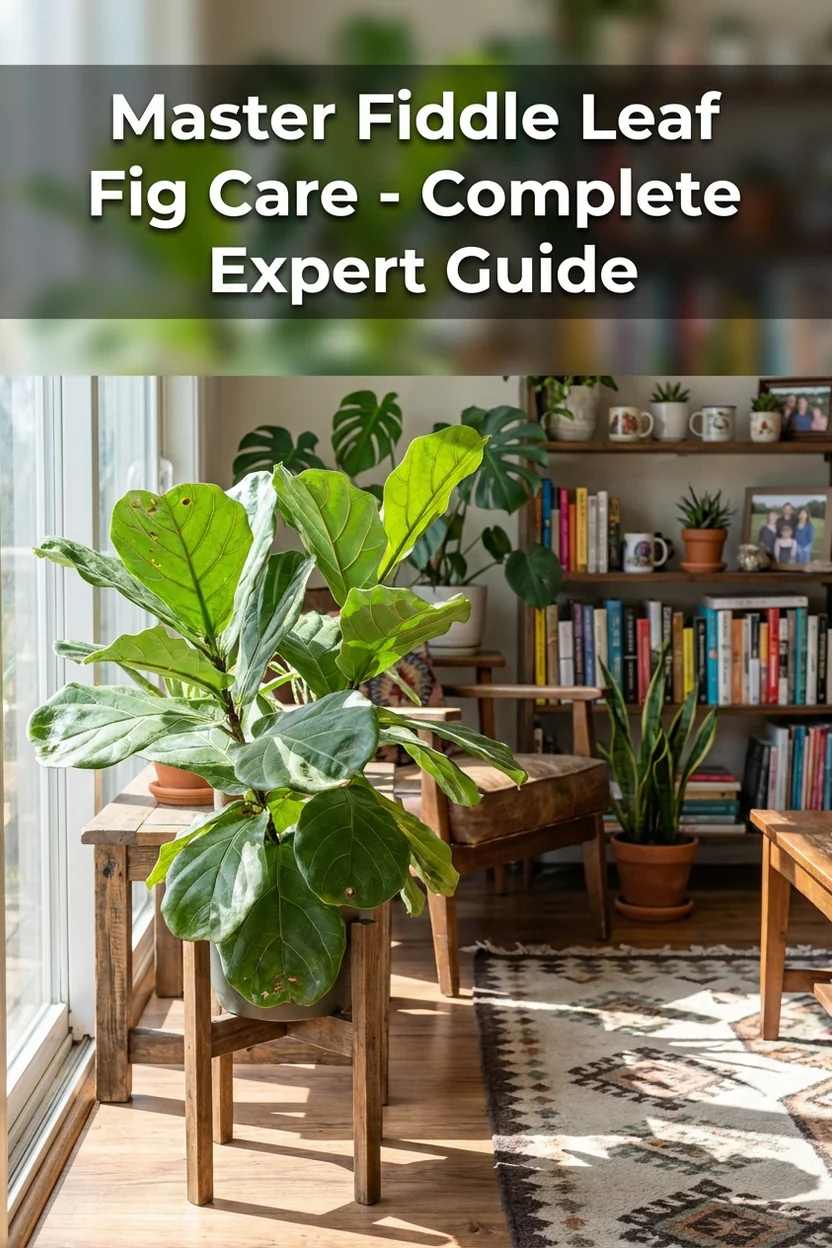
Fiddle Leaf Fig Care: The Complete Guide (2026)
Pets & Toxicity
Recorded toxicity for plants linked in this guide. An unknown status is not a safety assessment.
Toxic to pets: fiddle leaf figDetailsHide
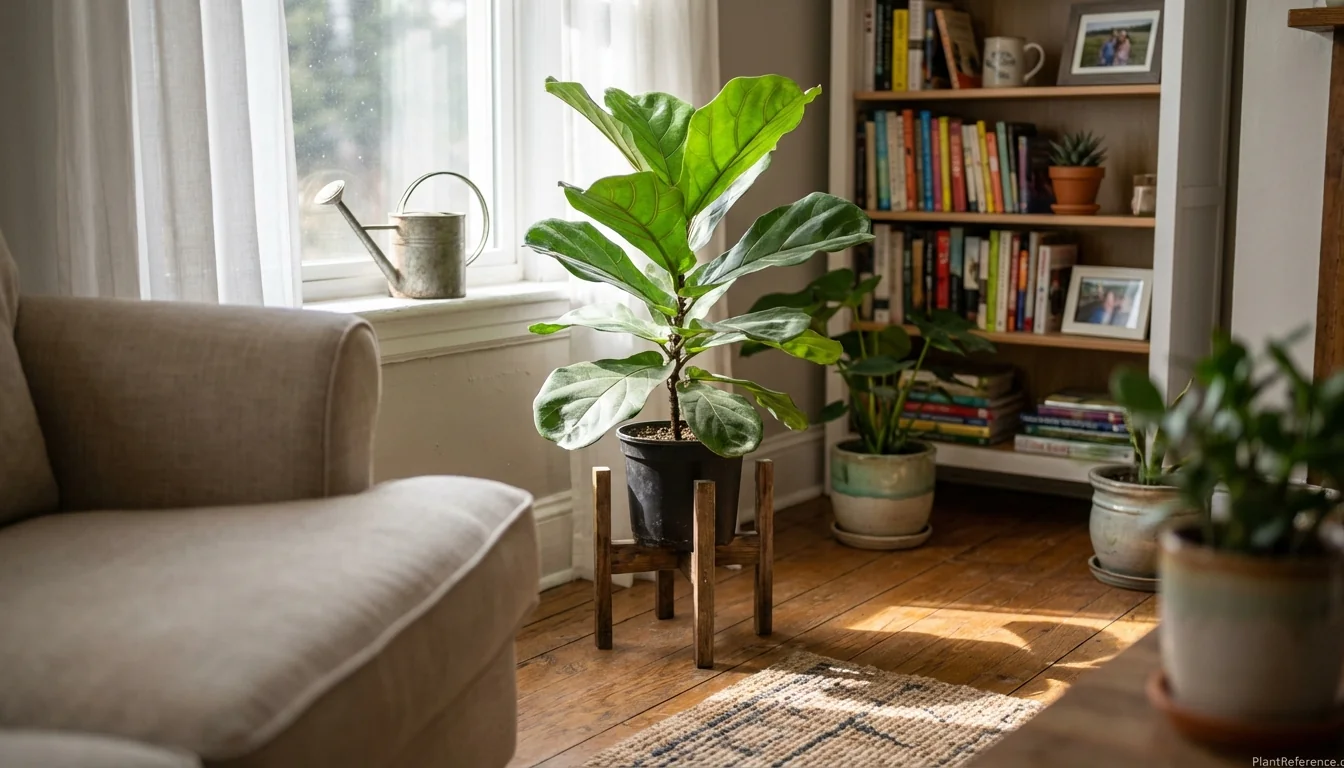
— Image © Plant Reference 2026
The fiddle leaf fig has earned its reputation as both the most coveted and most challenging houseplant—and there's solid science behind both claims. Understanding how this plant functions at the cellular level transforms frustrating guesswork into confident, systematic care that produces consistently healthy growth.
Understanding Fiddle Leaf Fig Biology
The fiddle leaf fig 🌿Ficus lyrata (FYE-kus lye-RAY-tuh) originates from the lowland tropical rainforests of Western and Central Africa, where it grows as an understory tree beneath the forest canopy. This native habitat reveals everything you need to know about successful indoor care: warm temperatures, high humidity, bright but filtered light, and fast-draining soil that never stays waterlogged.
The plant belongs to the Moraceae family, which includes figs, mulberries, and breadfruit. What makes fiddle leaf figs particularly fascinating are the specialized cells called lithocysts scattered throughout their leaves. These cells contain cystolith deposits—essentially calcium carbonate crystals—that protrude from interior leaf layers to the surface, enhancing photosynthesis efficiency by improving light absorption and diffusion across the leaf surface.
This biological adaptation explains why adequate light is absolutely critical for fiddle leaf fig health. Without sufficient light, these photosynthetic enhancements can't function properly, leading to weak growth, pale leaves, and increased susceptibility to problems. Indoor plants typically reach 2-10 feet (60-300 cm) tall, though they can grow to 25-100 feet (8-30 m) in their native habitat. With proper care, your fiddle leaf fig can live 25-50+ years.
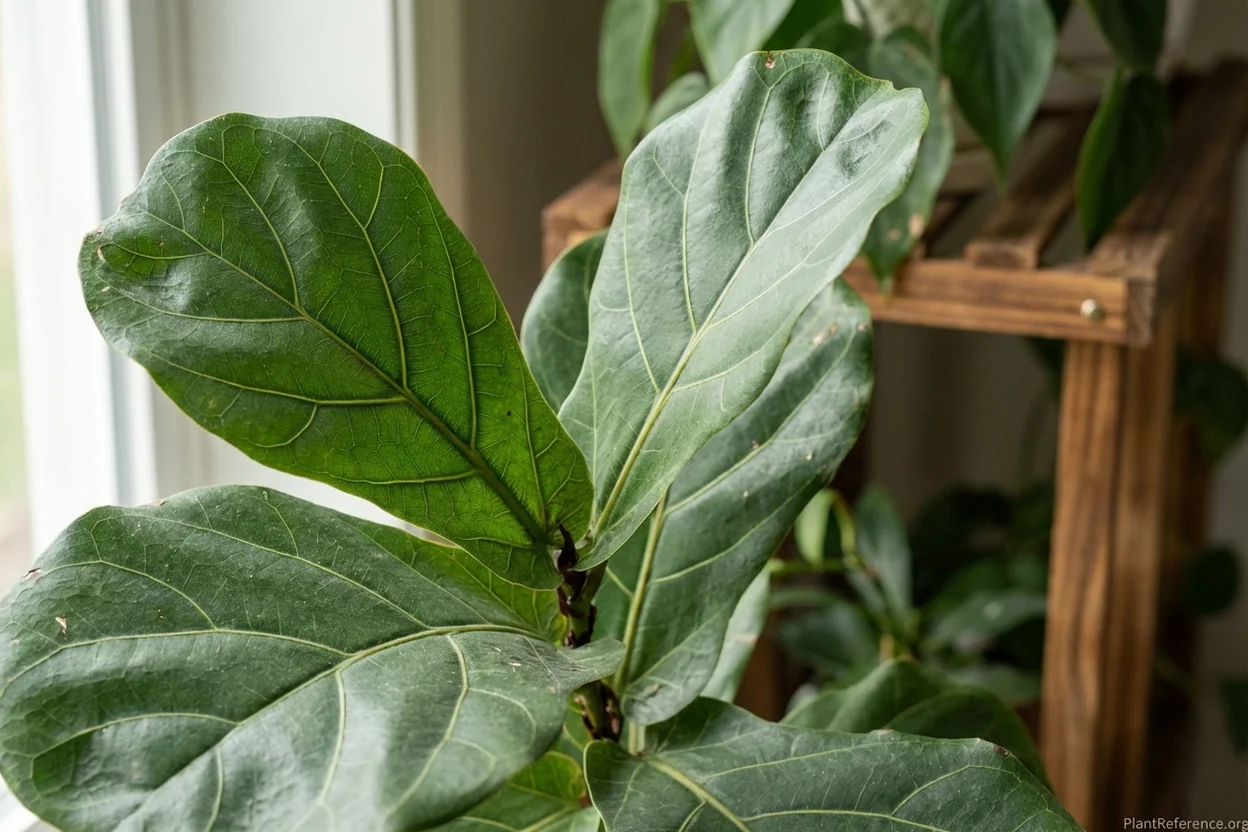
Understanding transpiration—the process by which plants lose water through their leaves—is equally important. Approximately 97-99% of water absorbed by fiddle leaf fig roots is lost through transpiration via stomata, the microscopic pores on leaf surfaces. Guard cells control stomatal opening and closing to regulate carbon dioxide uptake for photosynthesis while managing water loss.
This continuous water movement through the plant, driven by the cohesion-tension theory, delivers nutrients from roots to leaves while cooling the plant. When you see brown, crispy leaf edges, you're witnessing what happens when transpiration exceeds water uptake—the plant literally cannot replace water fast enough, causing cell damage at the leaf margins where water pressure is lowest.
Light Requirements for Optimal Growth
Light is the single most critical factor determining fiddle leaf fig success. These plants require bright indirect light for 6-8 hours daily, with an optimal range of 40,000+ lux (4,000+ foot-candles) for maximum growth. The minimum acceptable light level is approximately 5,000 lux (500 foot-candles), though growth will be slow and weak at this threshold.
Position your fiddle leaf fig within 2-3 feet (60-90 cm) of an east-facing window for gentle morning sun, or near a south or west-facing window filtered through sheer curtains. Direct afternoon sun causes photodamage—when chloroplasts receive more light energy than they can process, reactive oxygen species form and damage cell membranes, resulting in the brown, crispy edges you want to avoid.
East-facing windows: Ideal for most homes, providing bright morning light without harsh afternoon sun
South-facing windows: Excellent with sheer curtains to filter intense midday and afternoon light
West-facing windows: Good with curtain filtering, though afternoon heat can be challenging
North-facing windows: Usually insufficient light unless very large or unobstructed
If natural light is limited, supplement with full-spectrum grow lights. The Mars Hydro TS1000 or Spider Farmer SE3000 LED lights provide appropriate PPFD (photosynthetic photon flux density) levels for healthy growth. For more detailed guidance on using artificial lighting, see Fiddle Leaf Fig Light Requirements: Complete Guide.
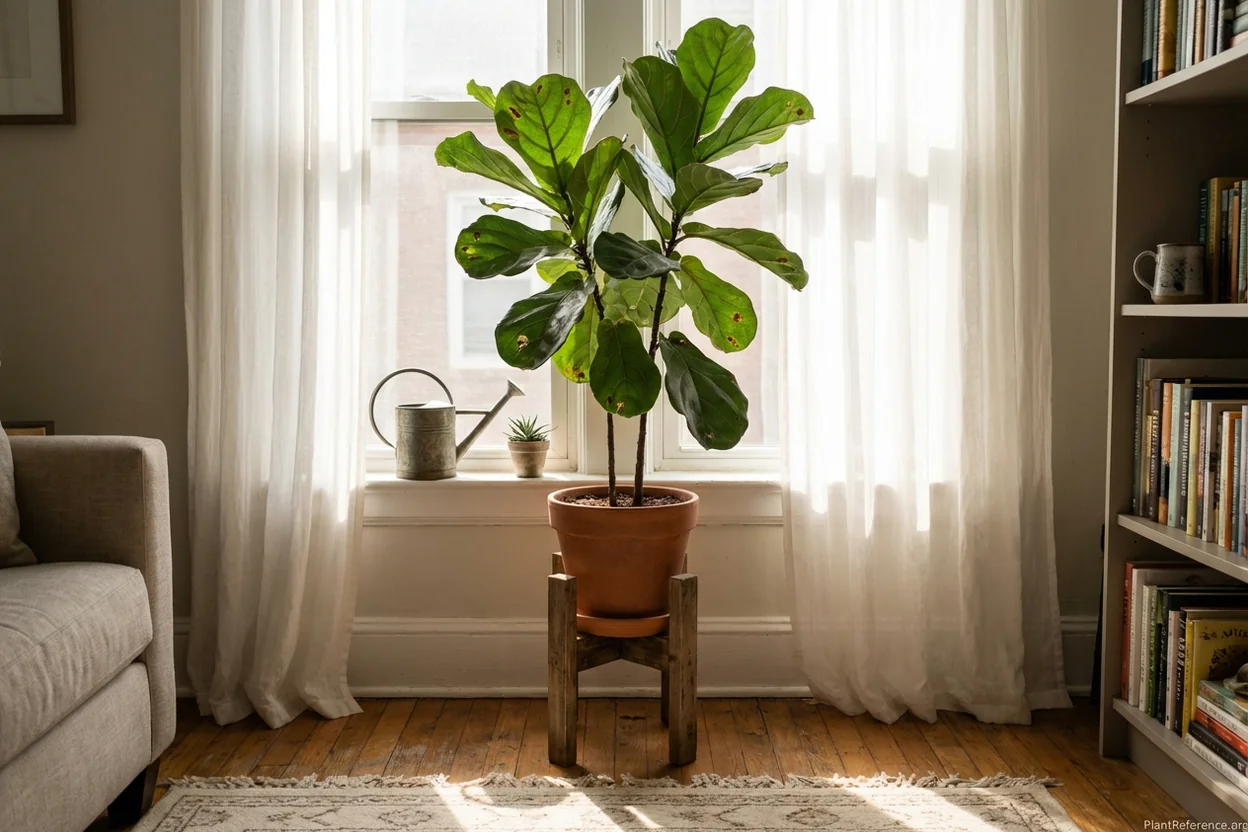
Rotate your plant one-quarter turn weekly to ensure even growth on all sides. Without rotation, the plant will lean dramatically toward its light source as auxins (plant hormones) accumulate on the shaded side, causing cells to elongate and the plant to bend. Regular rotation distributes auxin evenly, promoting balanced, upright growth.
Watering Your Fiddle Leaf Fig Correctly
Overwatering causes more fiddle leaf fig deaths than all other problems combined, primarily because these plants evolved in fast-draining forest soils that never remain saturated. The key to proper watering is understanding what's happening at the root level.
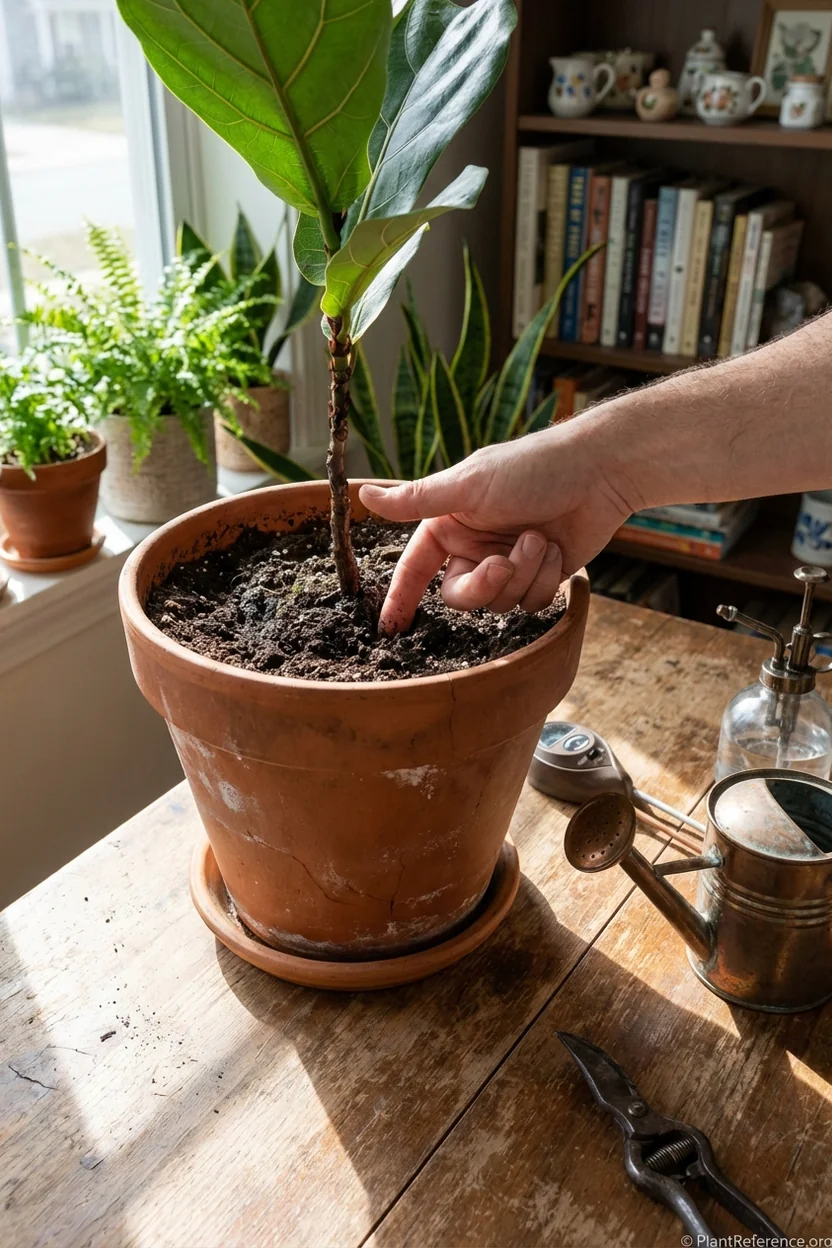
Water when the top 2-3 inches (5-8 cm) of soil feel dry to the touch—approximately when the soil is 50-75% dry throughout the pot. Insert your finger into the soil; if it feels cool or damp, wait. If it feels dry and warm, it's time to water. This typically translates to once every 7-10 days during active growth, though frequency depends entirely on your specific conditions.
When you water, do it thoroughly. Add water until it flows freely from drainage holes, then empty the saucer completely. This accomplishes two crucial things: it ensures water reaches all roots, and it flushes accumulated salts from the soil that can damage roots over time.
The science behind proper watering involves osmosis—water naturally moves from areas of high concentration (wet soil) to areas of low concentration (root cells) through semi-permeable cell membranes. Roots absorb water along with dissolved minerals, which travel through xylem vessels (specialized plant "plumbing" made of cellulose and lignin) to leaves with minimal resistance. When soil stays constantly wet, oxygen cannot reach roots, anaerobic conditions develop, and root cells die—the beginning of root rot.
Check soil moisture before watering using your finger or a moisture meter
Water thoroughly until water flows from drainage holes
Empty saucers and cache pots immediately after watering
Adjust frequency based on seasons—less in winter, more in summer
Never water on a fixed schedule; always check soil first
For more detailed diagnostic guidance, see How to Water a Fiddle Leaf Fig (Never Kill Yours Again). If you're struggling with yellowing leaves, check out Why Is My Fiddle Leaf Fig Turning Yellow? for specific troubleshooting steps.
Humidity and Temperature Needs
Fiddle leaf figs prefer humidity levels of 40-60%, which supports healthy transpiration and prevents the brown, crispy leaf edges that signal inadequate moisture in the air. In their native habitat, these plants experience consistently high humidity year-round. Indoor environments, especially during winter heating, typically hover around 20-30% humidity—well below optimal levels.
The relationship between humidity and plant health involves vapor pressure deficit (VPD)—the difference between the amount of moisture in the air and the amount of moisture the air can hold when saturated. When VPD is high (low humidity), the gradient between leaf interior moisture and ambient air moisture increases, accelerating transpiration beyond the plant's ability to replace water, causing cellular damage at leaf margins.
Methods to increase humidity:
Use a humidifier placed near (not directly on) the plant
Group multiple plants together to create a microclimate through collective transpiration
Place the pot on a pebble tray filled with water (ensure pot bottom doesn't touch water)
Mist leaves 2-3 times weekly, though this provides only temporary relief
Avoid placing plants near heating vents or air conditioning units that create dry air currents
Temperature stability matters as much as the specific temperature range. Maintain temperatures between 65-75°F (18-24°C) for optimal growth, with a tolerance range of 60-85°F (15-29°C). Avoid cold drafts from windows, doors, or air conditioning, and keep plants away from heating vents that create temperature fluctuations. Sudden temperature changes cause stress that manifests as leaf drop—the plant's emergency response to conserve resources.
Soil and Potting Requirements
The fast-draining nature of fiddle leaf fig native habitat soil cannot be overstated. These plants grow in forest soils rich with organic matter that drains quickly after tropical rains, never remaining waterlogged. Root function depends entirely on this drainage—roots absorb water via osmosis along with dissolved minerals, which travel through xylem to leaves. When soil stays saturated, oxygen cannot reach roots, and cellular respiration stops.
Use a soil mix with these characteristics:
pH range: 6.0-7.0 (slightly acidic to neutral)
Texture: Loose and chunky, not dense or clay-like
Drainage: Water should flow through quickly, not pool on surface
Components: Combination of peat moss or coir, perlite, pine bark, and sand
Pre-mixed options like Perfect Plants Fiddle Leaf Fig Soil or rePotme Fig and Ficus Imperial Mix provide appropriate drainage and aeration. Alternatively, create your own mix using 60% quality potting soil, 20% perlite, 15% pine bark, and 5% horticultural sand. For comprehensive soil recommendations, see Best Soil for Fiddle Leaf Fig: Complete Guide.
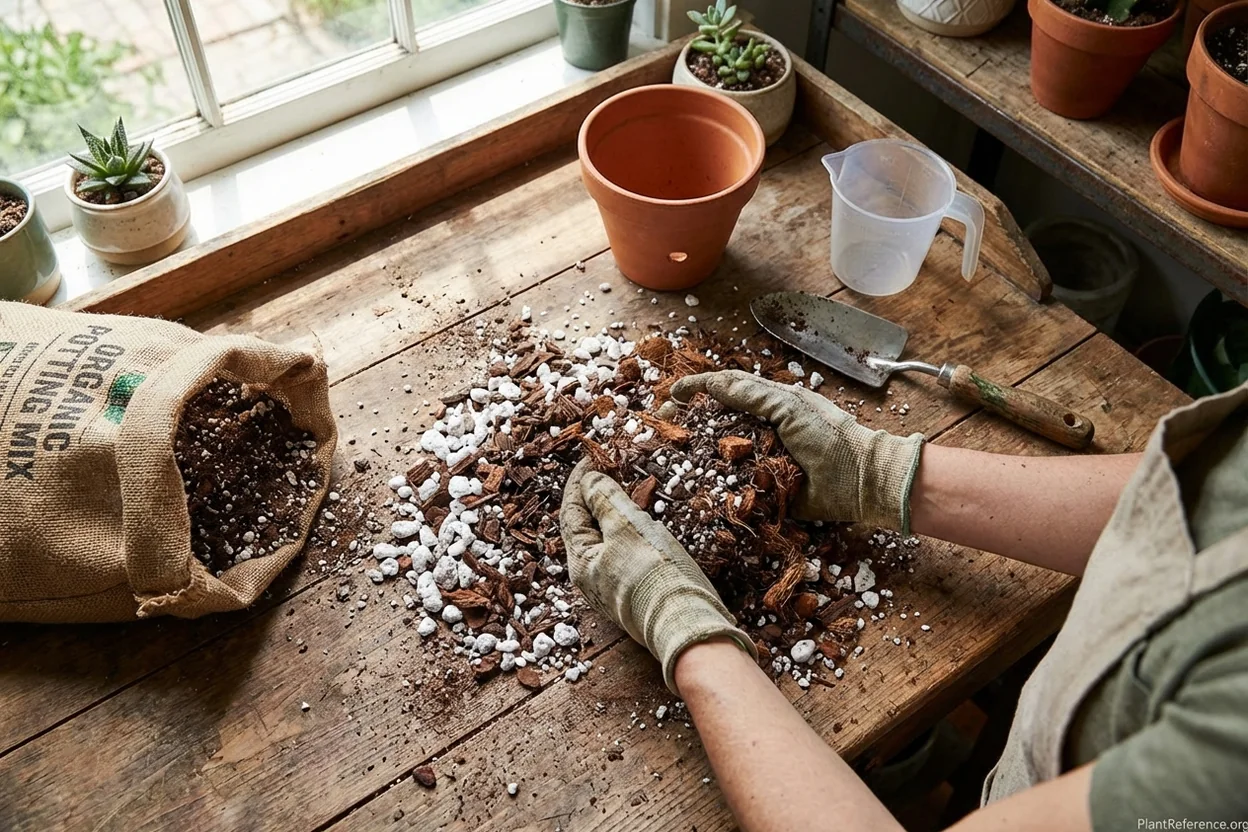
Pot selection matters almost as much as soil composition. Use pots with drainage holes—non-negotiable for preventing root rot. Terracotta pots offer excellent drainage and allow soil to breathe through porous walls, though they require more frequent watering. Ceramic or plastic pots with adequate drainage holes work well if you're vigilant about not overwatering. Pot size should be 2-3 inches (5-8 cm) larger in diameter than the root ball.
Fertilization Schedule and Nutrition
During the active growing season (spring and summer), fiddle leaf figs benefit from monthly fertilization to support their impressive leaf production. Each new leaf requires significant resources—nitrogen for chlorophyll and proteins, phosphorus for energy transfer and root development, and potassium for water regulation and disease resistance.
The ideal NPK ratio for fiddle leaf figs is 3:1:2 (nitrogen:phosphorus:potassium), which promotes lush foliage growth without encouraging weak, leggy stems. Nitrogen, available in three forms (nitrate, ammonium, and urea), fuels photosynthesis and leaf development. The 3:1:2 ratio provides adequate nitrogen while keeping phosphorus low—ornamental foliage plants don't need high phosphorus levels required for flowering or fruiting.
Apply liquid fertilizer at half strength every two weeks, or full strength monthly during March through September. Stop fertilizing entirely from October through February when the plant enters dormancy and nutrient uptake slows dramatically. Fertilizing during dormancy causes salt buildup in soil, which can burn roots when spring growth resumes.
Liquid fertilizers: Fast-acting, easy to control concentration, ideal for consistent feeding
Slow-release pellets: Convenient, releases nutrients over 6 months, less risk of over-fertilization
Water-soluble granules: Economical, requires mixing, provides immediate nutrition
Recommended products include Fiddle Leaf Fig Plant Food (3-1-2 NPK) for targeted nutrition, or Botanicare CNS17 Grow for professional-grade complete nutrition. For product comparisons, see Best Fertilizer for Fiddle Leaf Fig: Top 7 Tested.
Pruning and Shaping Techniques
Strategic pruning serves three purposes: controlling height, encouraging branching, and removing damaged growth. Understanding apical dominance—the phenomenon where the terminal bud at the stem tip suppresses lateral bud growth—explains how pruning works. When you remove the apical bud by cutting the main stem, auxin suppression is eliminated and dormant lateral buds activate, producing branches.
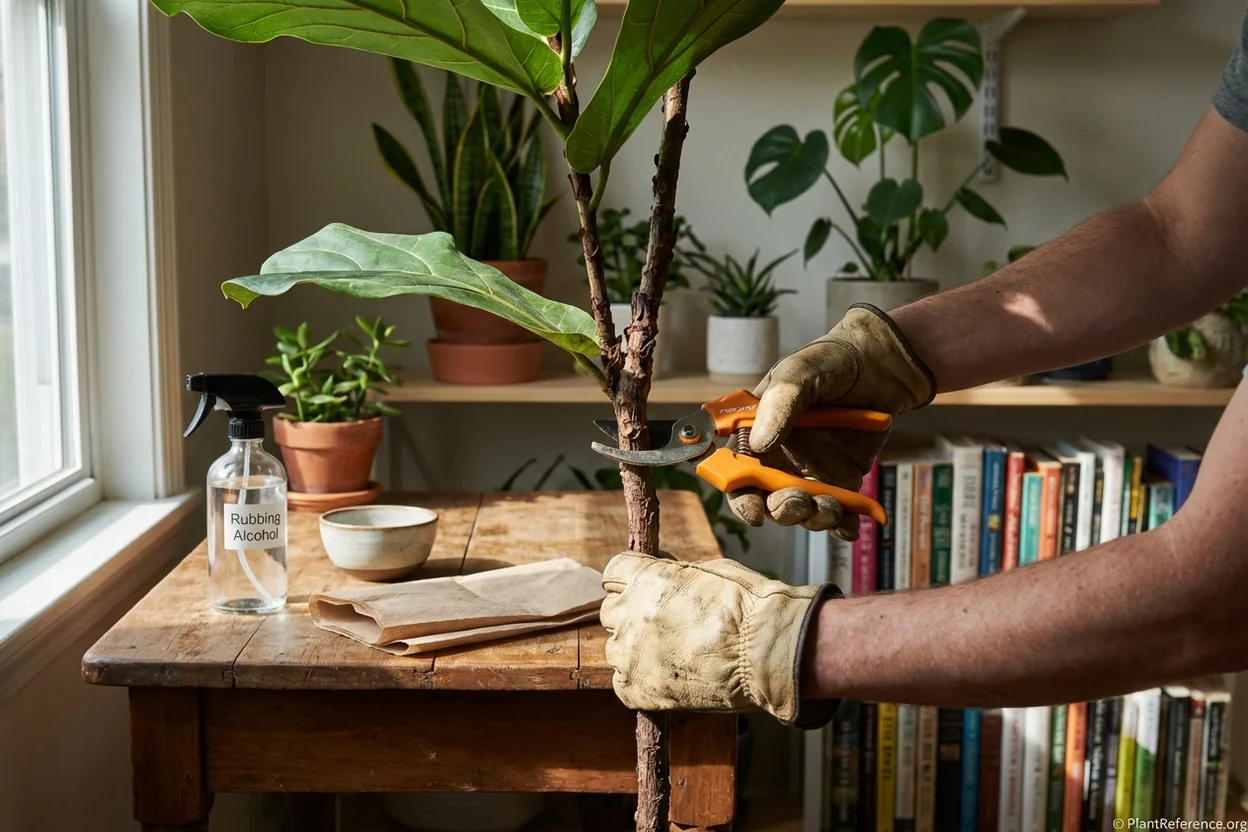
To encourage branching, cut the main stem just above a leaf node at a 45-degree angle using sterilized pruning shears (Fiskars Micro-Tip or Felco F-2 work excellently). Make cuts during active growth (spring or early summer) when the plant can quickly generate new growth. Within 4-8 weeks, you'll see new branches emerging from nodes below the cut.
Sterilize pruning tools with rubbing alcohol before and after cuts to prevent disease transmission
Remove yellowing or damaged leaves at the base of the leaf stem, not mid-leaf
Wear gloves when pruning—the milky latex sap contains ficin and ficusin, which can irritate skin
Cut at 45-degree angles to prevent water pooling on cut surfaces
Make cuts just above leaf nodes to promote branching at that location
For detailed pruning techniques, including notching methods to force specific branching patterns, see How to Prune a Fiddle Leaf Fig for Bushy Growth. If you're interested in propagating your pruned cuttings, check out How to Propagate Fiddle Leaf Fig: Water vs. Soil Method.
Common Problems and Solutions
Despite best efforts, problems occur. The key is early diagnosis and systematic troubleshooting based on observable symptoms.
Yellow leaves indicate one of three primary issues: overwatering (most common), insufficient light, or nutrient deficiency. Check soil moisture first—if soil is soggy or remains wet for more than a week after watering, you're overwatering. Reduce frequency and ensure adequate drainage. If soil is appropriately dry between waterings, assess light levels and increase if needed. Nutrient deficiency typically causes overall yellowing with brown edges; apply balanced fertilizer during growing season. See Why Is My Fiddle Leaf Fig Turning Yellow? for detailed diagnosis.
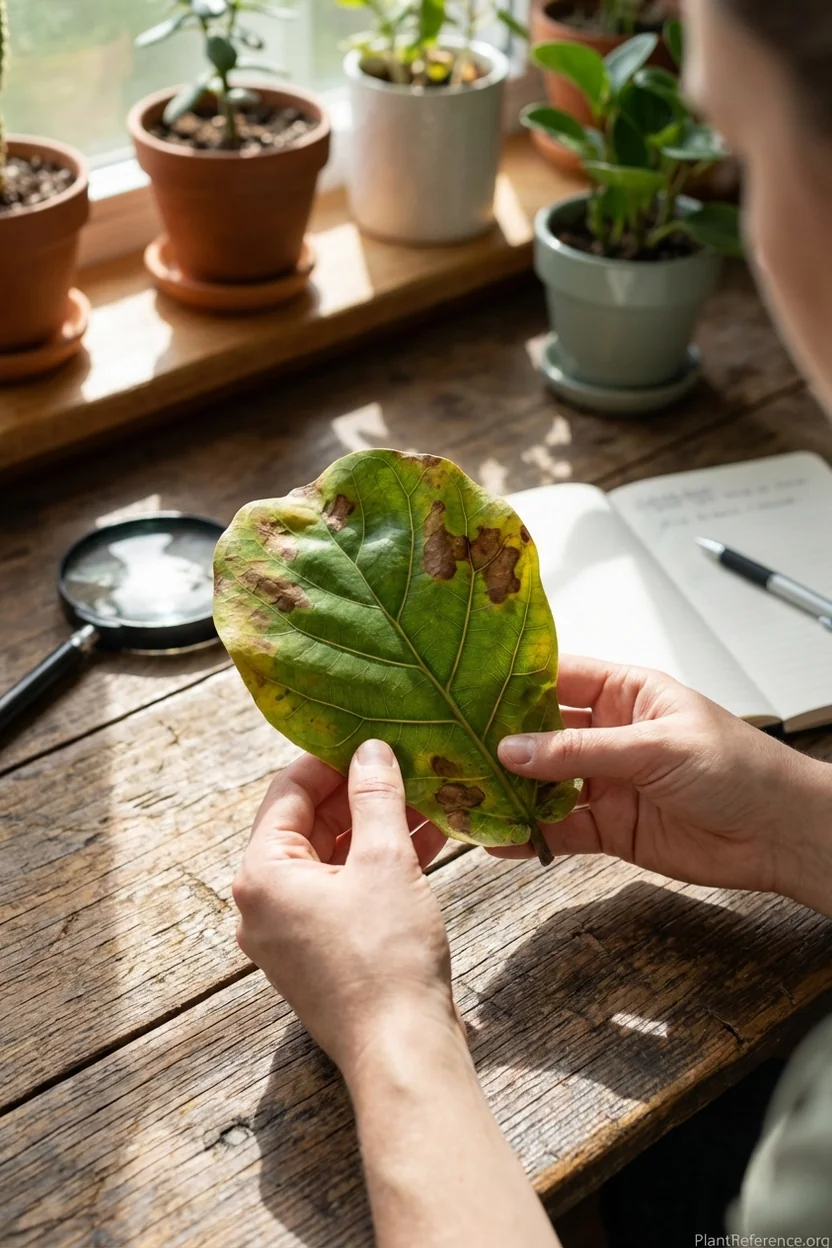
Brown spots require location-based diagnosis. Dark brown or black spots in leaf centers signal root rot or bacterial infection from excess moisture. Light brown crispy spots at leaf edges indicate underwatering or low humidity. Small red-brown spots on new leaves suggest edema from inconsistent watering. For comprehensive brown spot diagnosis, see Fiddle Leaf Fig Brown Spots: Causes & Fixes.
Leaf drop happens when plants experience stress—sudden temperature changes, dramatic light changes, overwatering causing root rot, or underwatering. Some lower leaf drop is normal (1-2 leaves per year), but rapid loss of multiple leaves signals a problem. Address the underlying cause rather than the symptom. For detailed troubleshooting, consult Why Is My Fiddle Leaf Fig Dropping Leaves?.
Root rot: Remove plant from pot, trim brown mushy roots, repot in fresh well-draining soil
Pests (spider mites, scale, mealybugs): Isolate plant, spray with neem oil or insecticidal soap every 2 weeks
Sunburn: Move away from direct sun, remove damaged leaves, acclimate gradually to brighter locations
Slow growth: Increase light, fertilize during growing season, check if root-bound and repot
Drooping leaves: Water thoroughly, ensure adequate light, allow acclimation period after moving
Seasonal Care Adjustments
Fiddle leaf figs respond to seasonal light and temperature changes even indoors. Understanding these natural rhythms prevents frustration and unnecessary intervention.
Spring (March-May): Active growth resumes. Increase watering frequency as soil dries faster. Begin monthly fertilization. This is ideal for repotting if needed. New leaves emerge rapidly—2-4 leaves every 4-6 weeks during peak growth.
Summer (June-August): Maximum growth period. Maintain consistent watering and fertilization. Monitor for pests that thrive in warm conditions. Ensure adequate humidity as air conditioning can create dry air. Plants may need water every 5-7 days.
Fall (September-November): Growth slows. Gradually reduce watering frequency. Stop fertilization by late September. Move plants away from cold window drafts as nights cool. Expect minimal to no new growth.
Winter (December-February): Dormancy period. Reduce watering significantly—soil may need water only every 14-21 days. No fertilization. Maintain temperatures above 60°F (15°C). Provide maximum available light as day length shortens. Some leaf drop is normal during this period.
For detailed seasonal guidance, see Fiddle Leaf Fig Seasonal Care Guide.
Repotting Guidelines
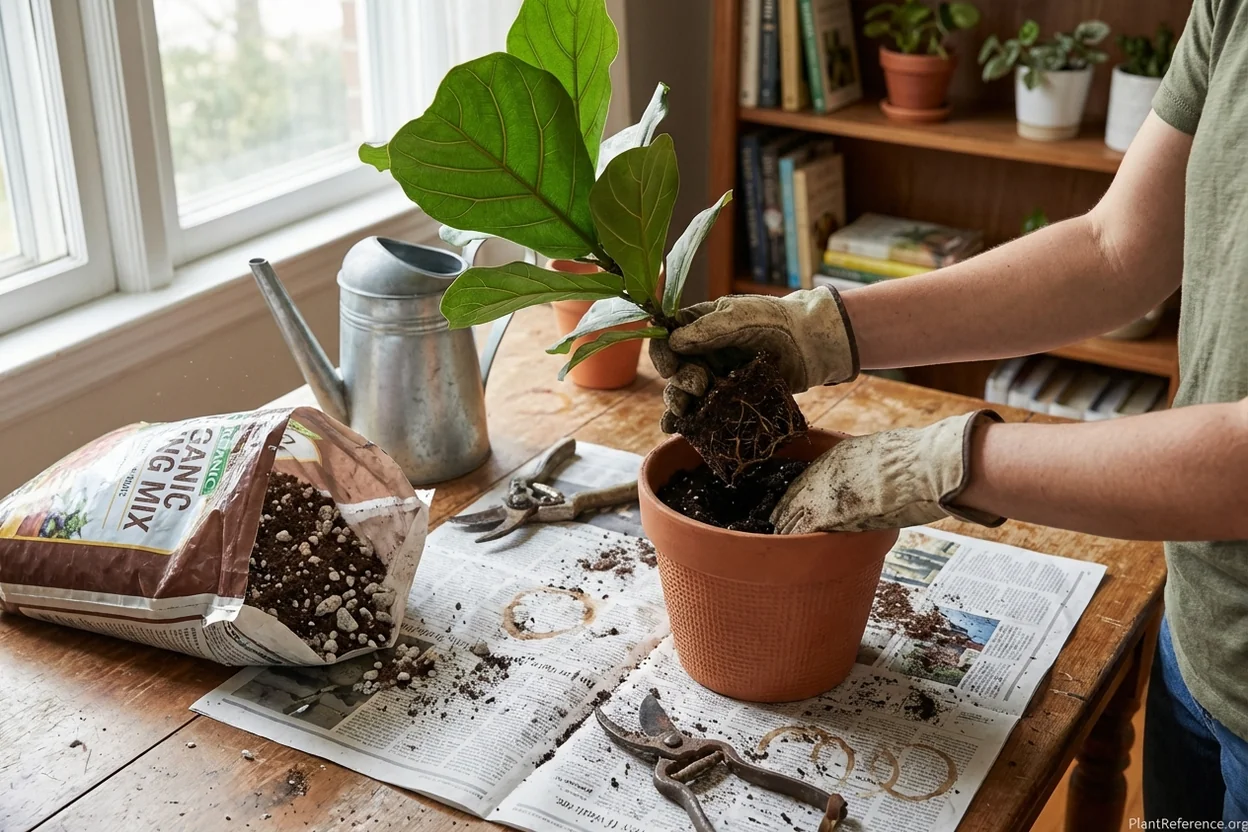
Repot fiddle leaf figs every 2-3 years, or when roots emerge from drainage holes and circle the pot's interior surface (root-bound). The best time is early spring (March-April) when active growth begins and the plant can quickly establish in fresh soil.
Choose a pot 2-3 inches (5-8 cm) larger in diameter than the current pot. Avoid oversizing—excess soil around roots stays wet longer, increasing root rot risk. The new pot must have drainage holes.
Repotting process:
Water thoroughly 2-3 days before repotting to reduce transplant shock
Gently remove plant from pot, loosening root ball if necessary
Inspect roots and trim any brown, mushy, or dead sections with sterilized shears
Place fresh soil in new pot (2-3 inches deep)
Position plant at same depth as previous pot—never bury stem deeper
Fill around root ball with fresh soil, gently firming to eliminate air pockets
Water thoroughly and place in bright indirect light
Expect 1-2 weeks of adjustment before new growth resumes
For step-by-step visual guidance, see How to Repot a Fiddle Leaf Fig Without Shock.
Long-Term Success Strategies
Consistent care produces better results than sporadic intensive efforts. Create a simple weekly routine: check soil moisture, rotate plant one-quarter turn, wipe dust from leaves with damp cloth, and inspect for pest or disease signs. This 10-minute weekly investment prevents most problems before they become serious.
Keep a plant journal documenting watering dates, fertilization schedule, new growth, and any problems observed. Over time, patterns emerge that help you understand your plant's specific needs in your home's unique conditions. What works for someone in humid Florida differs dramatically from what works in dry Arizona.
Acclimate plants gradually to any changes—new locations, increased light, outdoor summer vacation. Sudden changes trigger stress responses including leaf drop. When moving plants, adjust light levels incrementally over 2-3 weeks rather than making abrupt changes.
Finally, remember that some leaf loss is normal. Lower leaves naturally yellow and drop as the plant ages, with 1-2 leaves per year being completely normal. Don't panic at single leaves; intervene when you see patterns or rapid changes.
Frequently Asked Questions
Reading about plants and recognising them are different skills. These three build the second.
- Daily PlantIdentify the day’s mystery plant from a close-up photograph.
- Keyed OutWork a dichotomous key, lead by lead, to name a hidden specimen.
- Name That PlantName a specimen from botanical clues dealt hardest first.
Free to play, no account needed
Sarah earned her doctorate in plant biology and spent time working in botanical garden education before transitioning to freelance writing and consulting. Now based in Portland, Oregon, she teaches plant identification workshops at local community centers and maintains a modest collection of over 60 houseplants in her small apartment. Sarah specializes in helping beginners understand plant science without the jargon—her approach focuses on practical observation over theory. She's killed her fair share of fiddle leaf figs and finally cracked the code on keeping them alive.