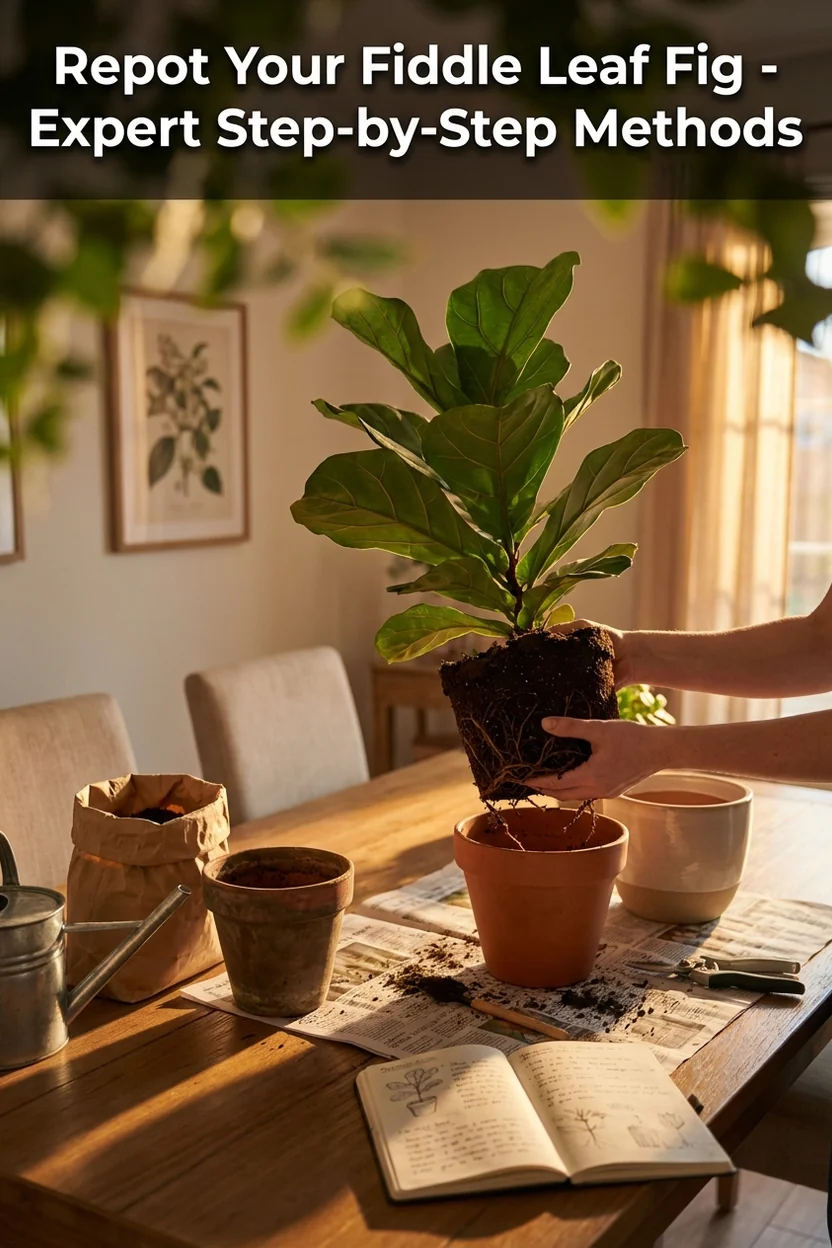
How to Repot a Fiddle Leaf Fig (Step-by-Step Guide)
Pets & Toxicity
Recorded toxicity for plants linked in this guide. An unknown status is not a safety assessment.
Toxic to pets: fiddle leaf figDetailsHide
— Image © Plant Reference 2026
Wondering if it's time to repot your fiddle leaf fig? Most fiddle leaf figs need repotting every 2-3 years when their root systems outgrow their containers—and doing it correctly can mean the difference between a thriving plant and one struggling with root rot. This guide covers the exact timing, materials, and step-by-step process to repot your fiddle leaf fig successfully, based on how these plants grow in their native African rainforest habitat.
When to Repot Your Fiddle Leaf Fig
The fiddle leaf fig 🌿Ficus lyrata (FYE-kus lye-RAY-tuh) grows 1-2 feet (30-60 cm) per year indoors when conditions are right, which means its root system expands continuously during the growing season. In their natural lowland tropical rainforest environment, these plants develop extensive root networks to anchor their tall growth and absorb water efficiently through osmosis.
The best time to repot is early spring (March through May) when the plant enters its active growth phase. During this period, the fiddle leaf fig produces new leaves every 4-6 weeks and can quickly establish roots in fresh soil. Spring repotting gives your plant the entire growing season to recover and adapt to its new container.
Avoid repotting during fall and winter when the plant enters dormancy—root growth slows significantly from October through February, and the plant lacks the energy reserves to handle the stress of transplanting. Repotting during dormancy increases the risk of transplant shock and root rot because roots cannot efficiently absorb water from the fresh soil.
Signs Your Plant Needs Repotting
Don't rely solely on a calendar to determine repotting timing. Instead, watch for these clear physical indicators:
Roots emerging from drainage holes: White or tan roots growing out of the bottom signal the root ball has filled the pot
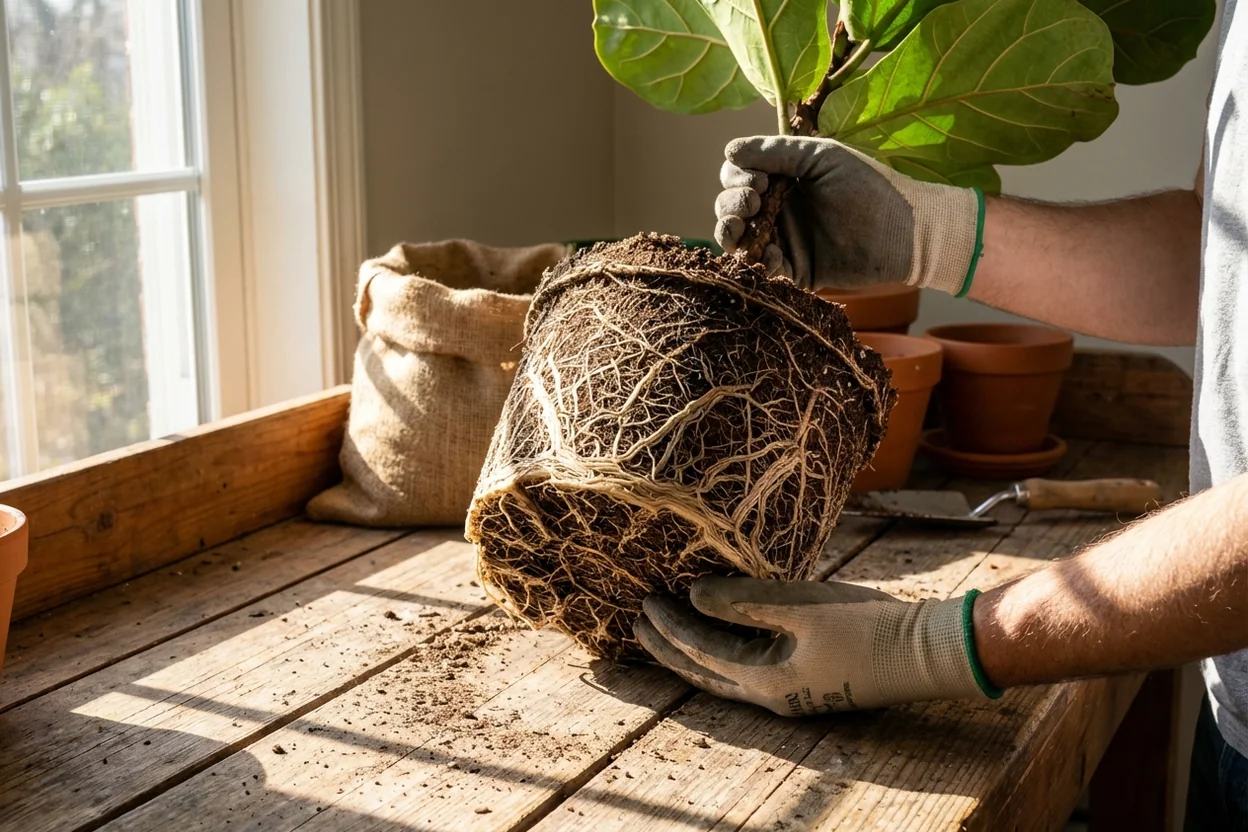
Circling roots visible at soil surface: Roots wrapping around the top of the soil indicate the plant is root-bound
Water draining too quickly: Soil dries within 1-2 days after watering because roots have displaced most of the soil
Slowed growth during spring/summer: Fewer than 1-2 new leaves per month during peak growing season suggests root constriction
Top-heavy plant tipping easily: The root ball cannot anchor a tall plant in a small pot
Soil pulling away from pot edges: Creates channels where water runs straight through without being absorbed
The most reliable diagnostic method is to gently tip the pot and slide out the root ball. Healthy fiddle leaf figs display white to light tan fibrous roots. If roots form a dense mat circling the exterior of the root ball with minimal soil visible, repotting is necessary. This root-bound condition restricts the plant's ability to absorb water and nutrients, as the cohesion-tension mechanism that pulls water upward through xylem vessels becomes less efficient when roots are compressed.
For more guidance on diagnosing plant health, see Fiddle Leaf Fig Care: The Complete Guide (2025) and Why is My Fiddle Leaf Fig Not Growing? 9 Reasons.
Choosing the Right Pot Size and Type
Selecting the correct pot size is critical for preventing both root constriction and overwatering. The standard rule: choose a pot 2 inches (5 cm) larger in diameter than the current container. For example, if your fiddle leaf fig currently lives in a 10-inch (25 cm) pot, move it to a 12-inch (30 cm) pot.
Never jump to a dramatically larger pot. When soil volume far exceeds root mass, the unused soil stays waterlogged for extended periods. This creates anaerobic conditions where beneficial aerobic bacteria die off and harmful anaerobic bacteria thrive, leading to root rot. Remember that in fast-draining soil, saturated conditions displace oxygen needed by roots, causing cellular damage within 24-48 hours.
Pot Material Considerations
Terracotta/unglazed ceramic: Porous material allows air exchange and wicks moisture from soil, reducing overwatering risk—ideal for beginners prone to overwatering
Glazed ceramic: Non-porous surface retains moisture longer; choose if you tend to underwater or live in dry climates
Plastic: Lightweight and affordable but retains the most moisture; requires more careful watering management
Fabric grow bags: Excellent drainage and air pruning of roots prevents circling, but requires more frequent watering
Regardless of material, the pot must have drainage holes—this is non-negotiable. Even 30 minutes of standing water can initiate root rot in fiddle leaf figs adapted to fast-draining rainforest soil.
For additional guidance on pot selection, refer to 7 Best Pots for Fiddle Leaf Fig (2025 Reviews).
Selecting the Best Soil Mix
Fiddle leaf figs require well-draining, slightly acidic soil with a pH of 6.0 or higher. In their native habitat, these plants grow in loamy soil with organic matter that drains quickly after rain while retaining some moisture. The goal is to replicate this balance.
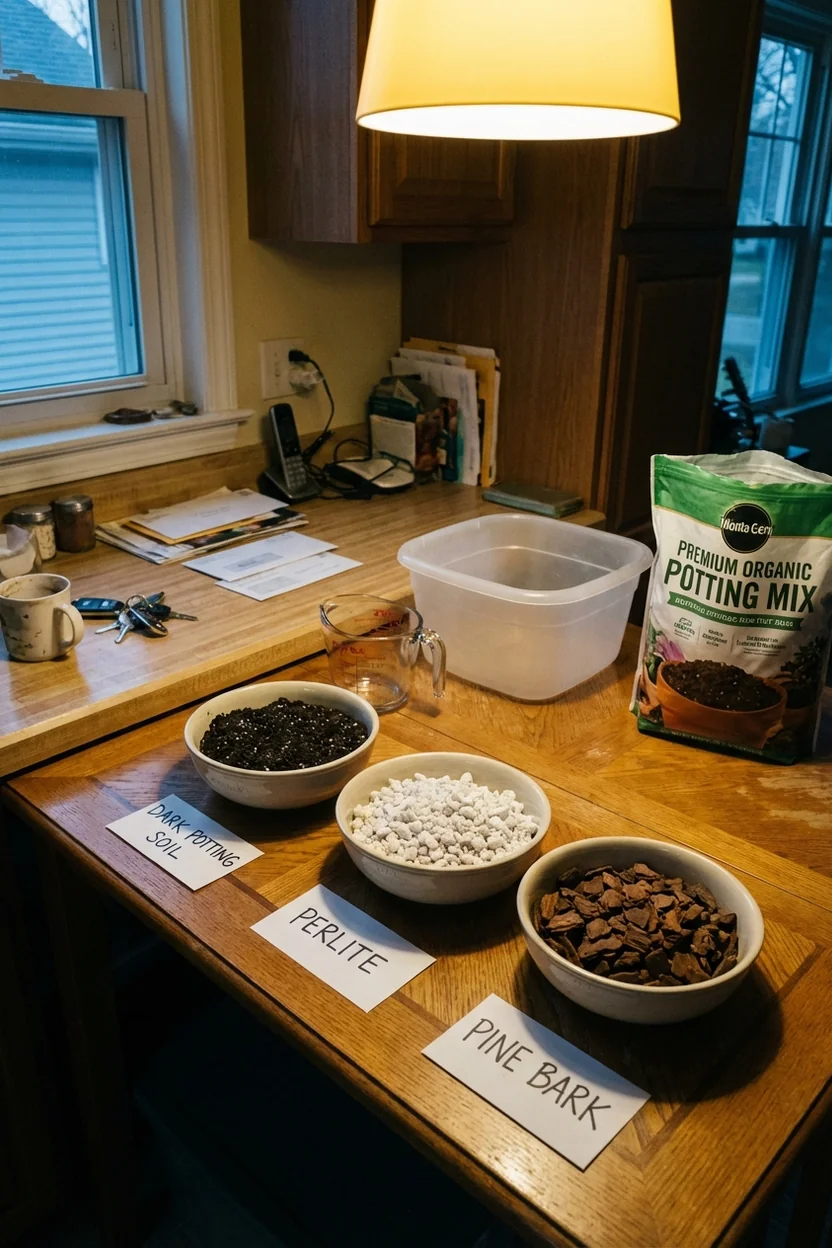
The ideal soil mix contains three key components:
Organic matter (40-50%): Provides nutrients and moisture retention; use peat moss, coconut coir, or compost
Drainage material (30-40%): Prevents compaction and improves aeration; use perlite, pumice, or coarse sand
Bark or wood chips (10-20%): Creates air pockets and prevents soil compaction over time; use pine bark or orchid bark
Avoid standard potting soil alone—it retains too much moisture and becomes compacted within months. The soil must dry 50-75% between waterings for optimal root health, which requires excellent drainage and aeration.
You can purchase pre-mixed fiddle leaf fig soil or create your own by combining 50% potting soil, 30% perlite, and 20% pine bark. For detailed soil recommendations, see Best Soil for Fiddle Leaf Fig (Tested & Compared).
Gathering Your Supplies
Before beginning, assemble all materials to make the repotting process efficient and reduce stress on your plant:
New pot (2 inches/5 cm larger diameter with drainage holes)
Fresh fiddle leaf fig potting mix (enough to fill new pot 2/3 full)
Pruning shears or sharp scissors (sterilized with rubbing alcohol)
Newspaper or tarp to protect work surface
Watering can or hose with lukewarm water
Gloves (optional but recommended—fiddle leaf fig sap contains irritating latex)
Moisture meter (helpful for monitoring water needs post-repot)
Sterilizing your pruning tools prevents transmitting fungal or bacterial infections to freshly cut roots. Simply wipe blades with 70% isopropyl alcohol and allow to air dry before use.
Step-by-Step Repotting Process
Follow this methodical process to minimize transplant shock and ensure your fiddle leaf fig adapts quickly to its new container.
Step 1: Water Your Plant 24 Hours Before Repotting
Hydrated roots are more flexible and less likely to break during handling. Water thoroughly until it drains from the bottom, then allow the plant to sit overnight. The goal is moist (not soggy) soil that holds together when you remove the root ball.
Step 2: Prepare Your Workspace
Lay down newspaper or a tarp in a well-lit area. Set out your new pot, fresh soil, tools, and water. Good preparation makes the process faster, which reduces stress on the plant.
Step 3: Remove the Plant from Its Current Pot
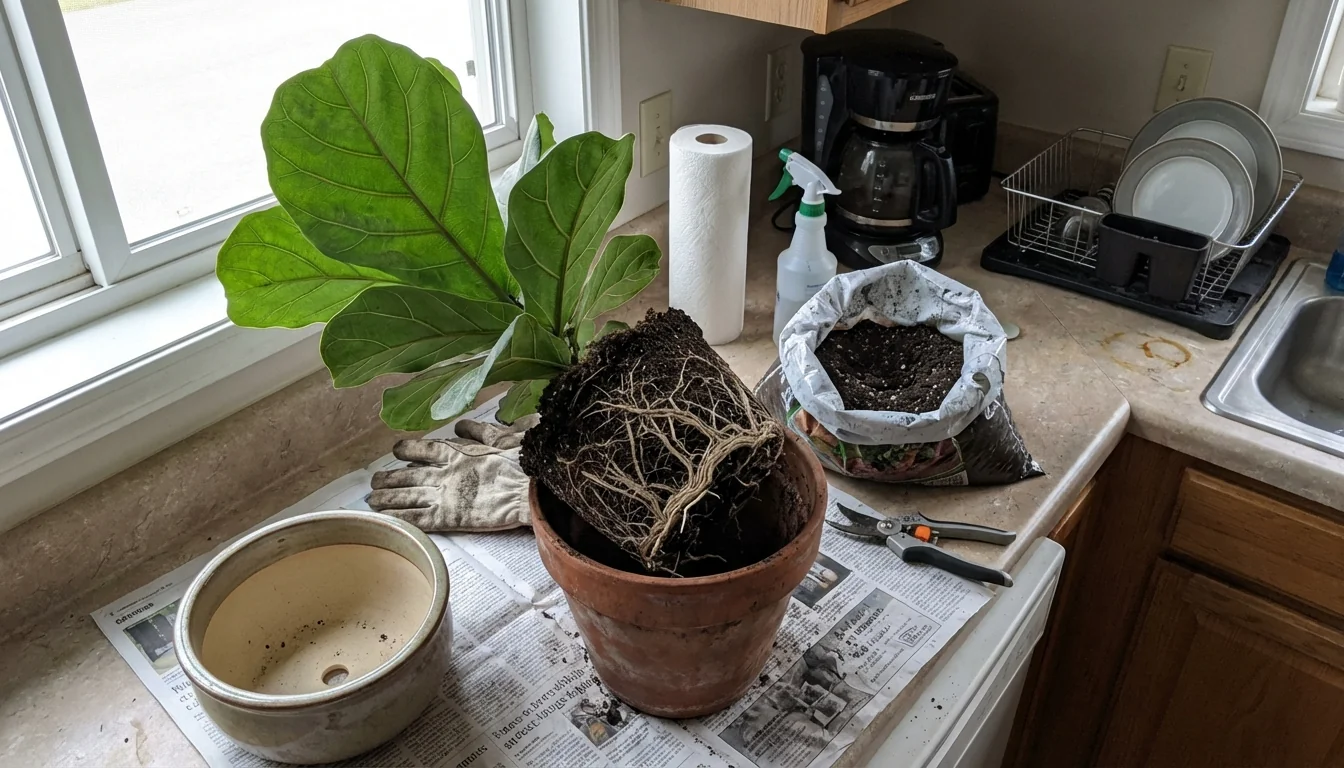
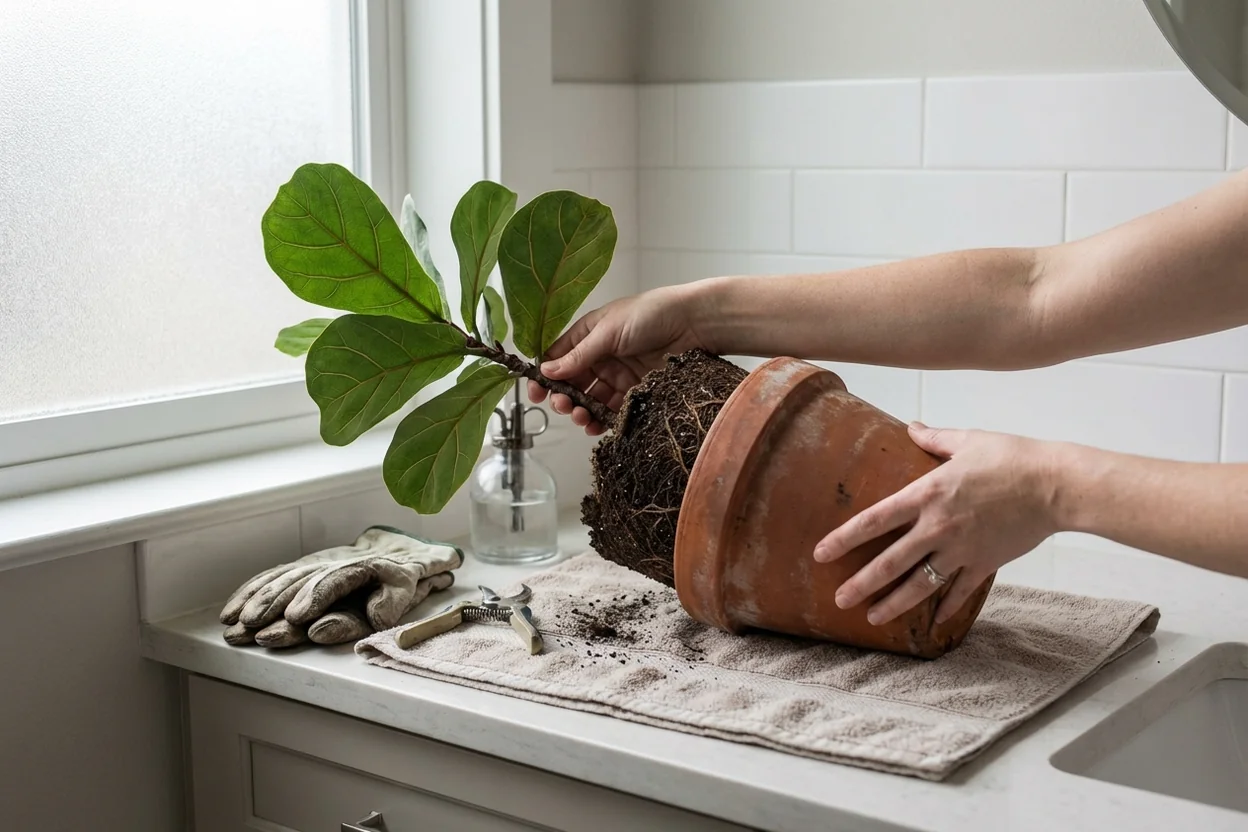
Gently tip the pot on its side and carefully slide the plant out. If roots have grown through drainage holes, you may need to cut them or break the pot (for ceramic). For plastic pots, gently squeeze the sides to loosen the root ball.
Do not pull the plant by its trunk—this can damage the stem and root connection. Instead, support the base of the trunk with one hand while tipping and sliding the pot away with the other hand.
Step 4: Inspect and Prune the Roots
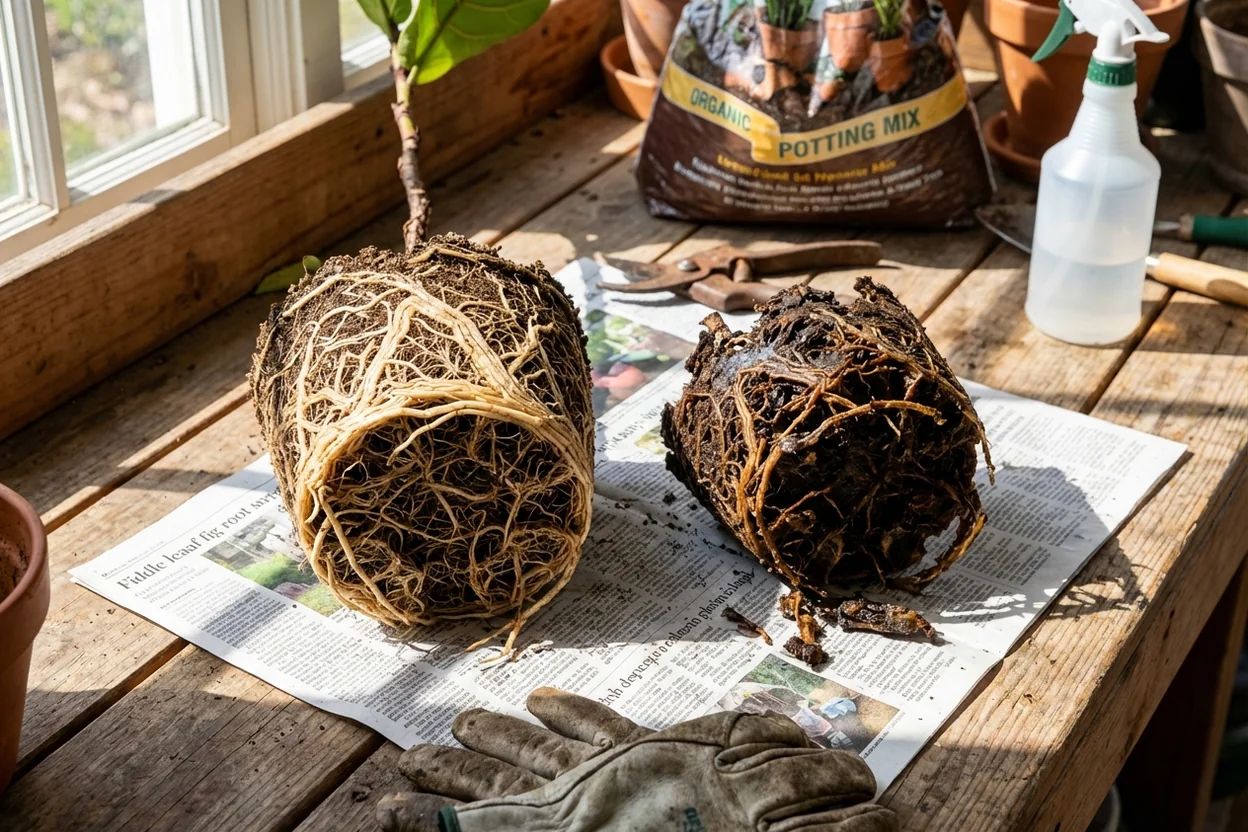
Once the root ball is exposed, examine the roots carefully. Healthy roots appear white to light tan and feel firm. Look for:
Circling roots: Gently tease apart with your fingers to encourage outward growth
Damaged or brown roots: Prune away any mushy, black, or foul-smelling roots with sterilized shears—these indicate rot
Dense root mat: Make 3-4 vertical cuts (1 inch/2.5 cm deep) along the sides of the root ball to stimulate new root growth
This root inspection is critical. Root rot often begins at the bottom of the pot where drainage is poorest, and removing affected roots prevents the infection from spreading to healthy tissue. For more information on root health, see Fiddle Leaf Fig Root Rot: How to Save Your Plant.
Step 5: Add Soil to the New Pot
Place a 2-3 inch (5-7.5 cm) layer of fresh potting mix in the bottom of the new pot. This creates a foundation for the root ball and ensures proper drainage.
Do not add rocks or gravel to the bottom—this outdated practice actually impedes drainage by creating a perched water table. The entire pot should contain the same well-draining soil mix from top to bottom.
Step 6: Position the Plant
Set the root ball on top of the soil layer. The top of the root ball should sit 1-2 inches (2.5-5 cm) below the pot rim. This space prevents soil from washing over the edge during watering.
Adjust the soil layer beneath if needed to achieve the correct height. The plant should sit at the same depth as it was in the previous pot—burying the trunk deeper can cause stem rot.
Step 7: Fill in with Fresh Soil
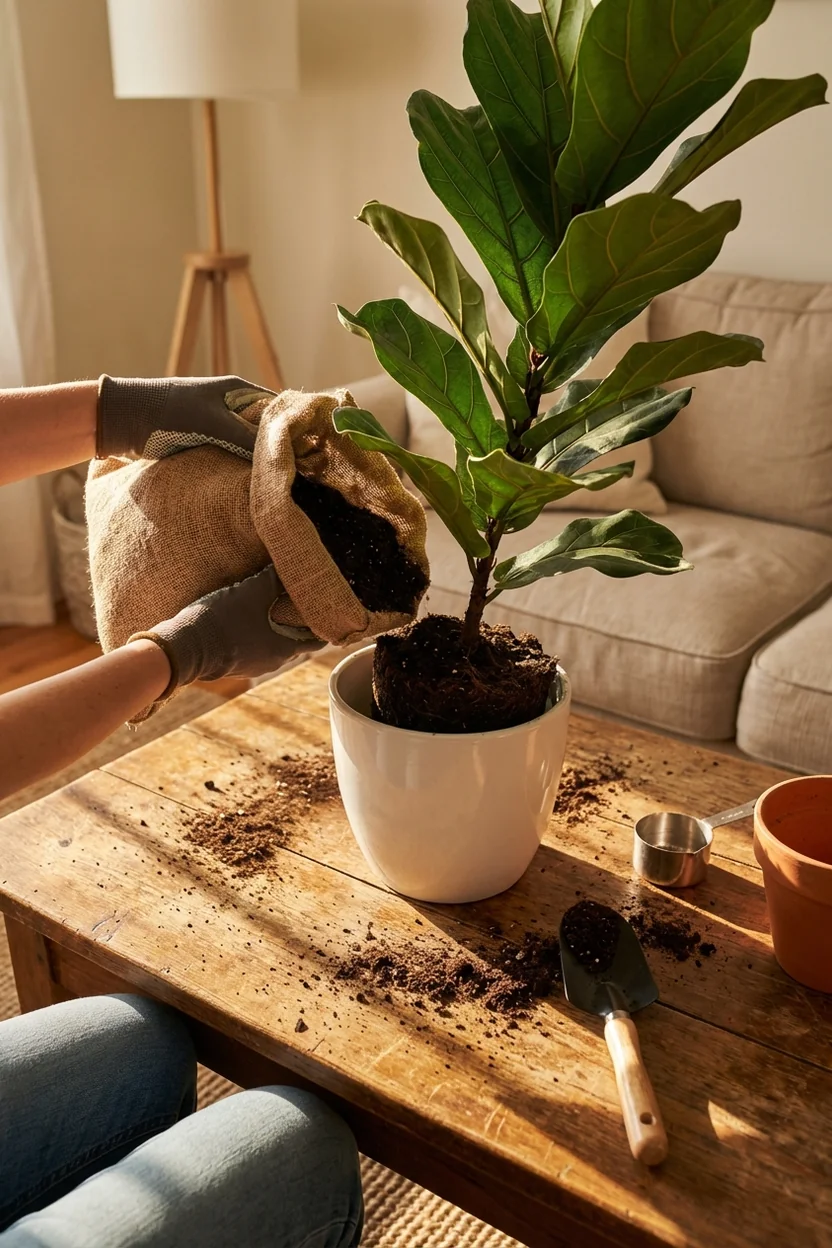
Add fresh potting mix around the sides of the root ball, filling gaps evenly. Use your fingers or a small trowel to work soil gently into air pockets, but avoid compacting the soil too firmly. Fiddle leaf fig roots need air circulation, and overly dense soil restricts oxygen availability.
Fill to within 1-2 inches (2.5-5 cm) of the pot rim, leaving adequate space for water to pool before draining through.
Step 8: Water Thoroughly
Water the plant immediately after repotting until water flows freely from drainage holes. This accomplishes three goals:
Settles soil and eliminates large air pockets
Initiates contact between roots and new soil particles
Hydrates the plant after the stress of repotting
After the initial watering, allow excess water to drain completely. Empty any water that collects in the saucer—never let the pot sit in standing water.
Post-Repotting Care
Your fiddle leaf fig needs special attention for the first 4-6 weeks as it establishes roots in the new soil.
Watering After Repotting
For the first two weeks, monitor soil moisture closely. Fresh potting mix retains moisture differently than old compacted soil, so your previous watering schedule may not apply. Use the finger test: stick your finger 2-3 inches (5-7.5 cm) into the soil and water when it feels dry at that depth.
Generally, newly repotted plants need less frequent watering initially because they have more soil volume relative to root mass. Wait until the top 50-75% of soil dries before watering thoroughly. For detailed watering guidance, see How to Water a Fiddle Leaf Fig (Never Kill Yours Again).
Light and Location
Keep your plant in bright indirect light but avoid moving it immediately after repotting. Maintain the same location for at least 2-3 weeks to minimize additional stress. If you must move the plant, do so gradually over several weeks, moving it a few feet closer to the target location every few days.
Fiddle leaf figs require 5,000-40,000 lux (500-4,000 foot-candles) for healthy growth. Insufficient light after repotting slows root establishment and increases susceptibility to overwatering. For complete lighting requirements, refer to Fiddle Leaf Fig Light Requirements: The Ultimate Guide.
Fertilizing
Do not fertilize for 4-6 weeks after repotting. Fresh potting mix contains nutrients, and newly transplanted roots cannot efficiently absorb fertilizer. Applying fertilizer too soon can cause root burn—chemical compounds in fertilizer increase the osmotic concentration of soil water, which actually pulls moisture out of root cells rather than allowing water to flow in.
After 4-6 weeks, resume your normal fertilization schedule with a balanced 3:1:2 NPR ratio fertilizer during the growing season (spring through summer).
Expect Some Leaf Drop
Mild transplant shock is normal—your fiddle leaf fig may drop 2-4 lower leaves within the first two weeks. This occurs because the plant temporarily cannot support its full leaf mass while establishing new roots. As long as new growth appears within 4-6 weeks, the plant is recovering successfully.
Excessive leaf drop (more than 5-6 leaves) or leaves falling from upper portions of the plant indicates a problem—usually overwatering in the oversized pot or root damage during repotting. For troubleshooting leaf drop, see Fiddle Leaf Fig Leaves Dropping? Here's Why (+ Fixes).
Common Repotting Mistakes to Avoid
Even experienced gardeners make these errors that compromise fiddle leaf fig health:
Mistake #1: Choosing Too Large a Pot
Moving from a 10-inch (25 cm) pot to a 16-inch (40 cm) pot might seem like it saves you from repotting again soon, but it creates a high-risk environment for root rot. Stick to the 2-inch (5 cm) increase rule—you can always repot again in 2-3 years.
Mistake #2: Using Standard Potting Soil
General-purpose potting soil is formulated for annual flowers and vegetables that tolerate more moisture. Fiddle leaf figs, adapted to fast-draining rainforest soils, develop root rot quickly in soil that stays wet for more than 2-3 days. Always amend with perlite or purchase specialty fiddle leaf fig soil.
Mistake #3: Repotting During Dormancy
Fall and winter repotting extends recovery time from 4-6 weeks to potentially 3-4 months. Roots grow slowly during dormancy, which means the plant sits in unused soil that stays wet—increasing root rot risk. Wait until spring even if the plant appears root-bound.
Mistake #4: Burying the Trunk Too Deep
Planting deeper than the original soil line puts bark tissue in constant contact with moisture, leading to stem rot. The transition zone between roots and trunk is not designed to stay wet, and fungal infections can quickly kill the plant when this area remains buried.
Mistake #5: Skipping the Root Inspection
Transferring a plant with existing root rot to fresh soil simply spreads the infection. Always examine roots and remove any brown, mushy, or foul-smelling sections before repotting. This takes only 2-3 minutes and can save your plant's life.
Mistake #6: Overwatering Immediately After Repotting
The initial thorough watering settles soil and hydrates the plant, but subsequent waterings should be conservative. New soil holds more water than compacted old soil, so your plant needs less frequent watering initially. Monitor soil moisture with your finger or a moisture meter rather than following a rigid schedule.
Repotting your fiddle leaf fig correctly sets the foundation for years of healthy growth. By choosing the right timing, pot size, and soil mix—and by handling roots carefully during the process—you give your plant the resources it needs to develop a robust root system that can support vigorous foliage production. The temporary stress of repotting pays dividends in improved growth rate, better leaf color, and increased resistance to pests and diseases as your fiddle leaf fig matures into a stunning focal point in your home.
Frequently Asked Questions
Reading about plants and recognising them are different skills. These three build the second.
- Daily PlantIdentify the day’s mystery plant from a close-up photograph.
- Keyed OutWork a dichotomous key, lead by lead, to name a hidden specimen.
- Name That PlantName a specimen from botanical clues dealt hardest first.
Free to play, no account needed
Sarah earned her doctorate in plant biology and spent time working in botanical garden education before transitioning to freelance writing and consulting. Now based in Portland, Oregon, she teaches plant identification workshops at local community centers and maintains a modest collection of over 60 houseplants in her small apartment. Sarah specializes in helping beginners understand plant science without the jargon—her approach focuses on practical observation over theory. She's killed her fair share of fiddle leaf figs and finally cracked the code on keeping them alive.