Plant Care

Pothos Care: The Complete Beginner's Guide (2025)
Last updated: October 30, 2025
Learn foolproof pothos care with this beginner-friendly guide covering watering, light, propagation, and common problems. Perfect for plant newbies!
JJessica Chen
October 30, 2025
Share:
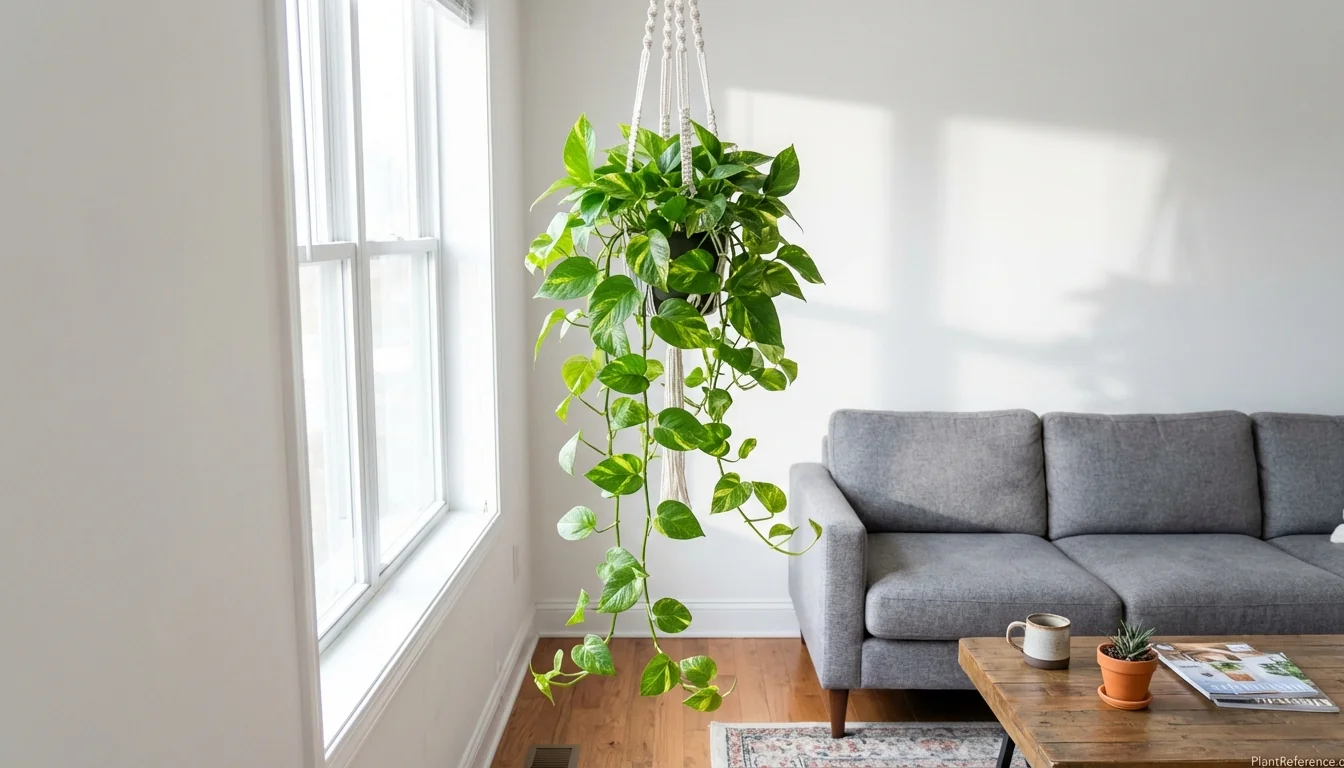
Healthy golden pothos plant in macrame hanging planter demonstrating proper pothos care in bright indirect light

Image © PlantReference.org 2026
Quick Answer
Water pothos when top 25-50% of soil feels dry, every 1-2 weeks typically. Provide bright indirect light and watch it thrive almost anywhere in your home.
TL;DR
Golden pothos is the perfect beginner houseplant, thriving in low light and forgiving infrequent watering. Water when the top 25-50% of soil feels dry, provide bright indirect light, and enjoy watching your plant trail gracefully from hanging baskets or climb moss poles. These nearly indestructible plants propagate easily in water and adapt to most home conditions.
Frequently Asked Questions

How often should I water my pothos?

Water your pothos when the top 25-50% of soil feels dry to the touch, typically every 1-2 weeks for most home conditions. Insert your finger 1-2 inches into the soil—if it feels dry, it's time to water. Factors like pot size, season, humidity, and temperature affect frequency, so soil testing is more reliable than rigid schedules. During winter, plants need water less frequently, while summer growth may require weekly watering.

Why are my pothos leaves turning yellow?

Yellow pothos leaves usually indicate overwatering, natural aging, or root problems. If soil stays wet between waterings, reduce frequency and ensure pots have drainage holes. It's normal for older bottom leaves to yellow and drop occasionally—this isn't cause for concern. However, multiple yellowing leaves throughout the plant suggests watering issues or root rot requiring immediate attention.

Can pothos grow in low light?

Yes, pothos tolerates low light conditions better than most houseplants, surviving under fluorescent office lighting or in corners receiving only indirect light. However, growth slows significantly and variegated varieties may lose their golden coloring, reverting to solid green. For best growth and color retention, provide bright indirect light near east or north-facing windows.

Is pothos toxic to cats and dogs?

Pothos is toxic to cats, dogs, and humans due to insoluble calcium oxalate crystals. Ingestion causes oral irritation, excessive drooling, difficulty swallowing, and vomiting. Keep plants out of reach of curious pets and children. While rarely life-threatening, contact your veterinarian immediately if pets consume any part of the plant. Consider pet-safe alternatives if you have animals that chew plants.

How do I make my pothos fuller and bushier?

Prune longer vines by cutting just above nodes (leaf joints) to encourage branching and fuller growth. Coil longer vines back into the pot and pin them to soil surface with bobby pins—nodes touching soil will root and create new growth points. Adequate light and monthly fertilizing during growing season also promote bushier development. Avoid letting vines get too long before trimming, as this creates leggy, sparse appearance.
NEW PLANT DAILY

Think you know your plants?

Test your botanical knowledge with a new plant identification challenge every day. Build your streak, learn fascinating plant facts, and become a plant identification expert!

Build your streak
One chance per day
Learn as you play

Free account required • Takes less than 30 seconds

Written By
J

Jessica Chen

Jessica transformed her small Brooklyn balcony into a thriving container garden after moving to New York City. What started as a pandemic hobby turned into a plant care consulting business serving urban apartment dwellers across the city. She specializes in small-space gardening, indoor plant troubleshooting, and helping clients keep houseplants alive in less-than-ideal conditions (dim light, dry heat, tiny spaces). Jessica completed a home gardening certificate program and shares her plant wins and failures on her modest Instagram following. Her partner, Maya, jokes that their apartment is now 40% plants, 60% living space. Jessica's passionate about making plant care accessible to renters who think they don't have room to garden.
Related Plants

Other Articles You May Enjoy