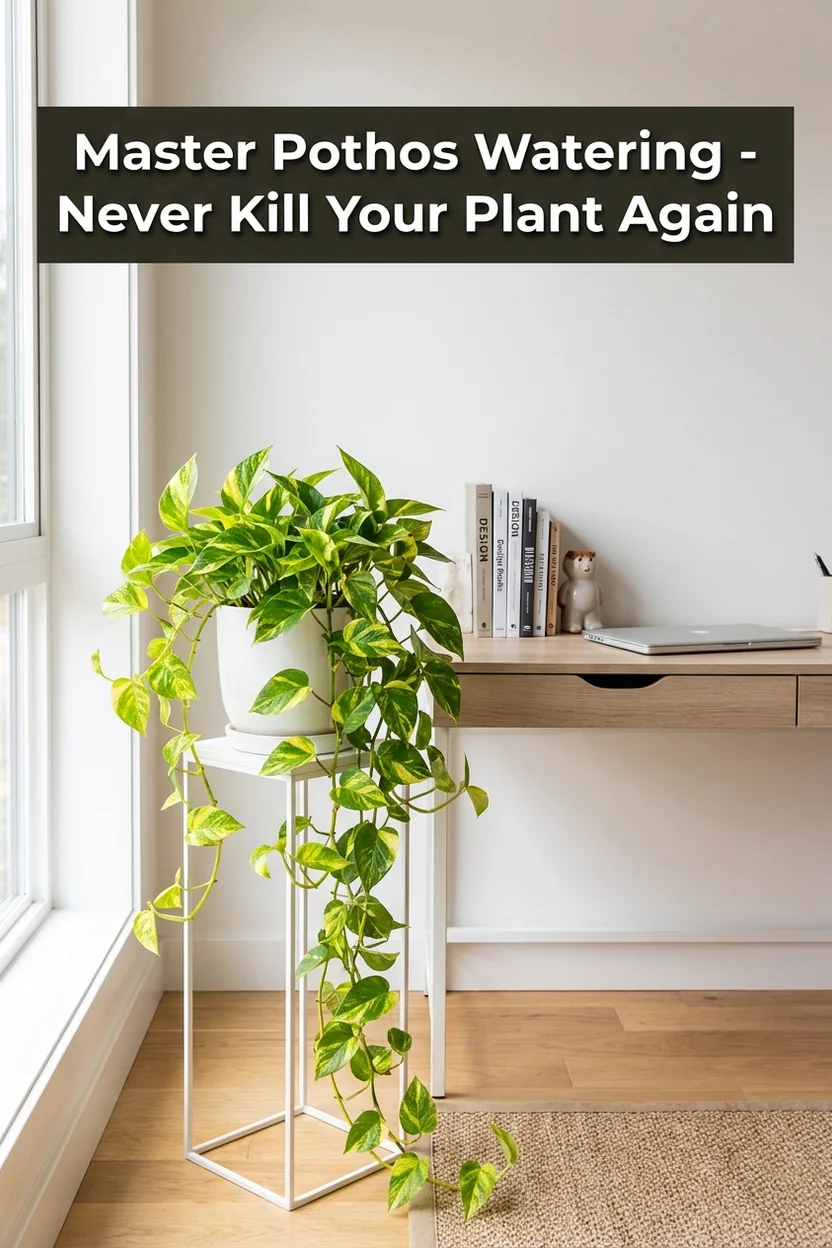
How to Water Pothos: The Foolproof Beginner Method
Pets & Toxicity
Recorded toxicity for plants linked in this guide. An unknown status is not a safety assessment.
Toxic to pets: golden pothosDetailsHide
Epipremnum aureum — Toxicity Warning
Toxic to pets and humans. All parts contain insoluble calcium oxalate crystals that cause mouth pain, swelling, and drooling if ingested.View Epipremnum aureum plant profile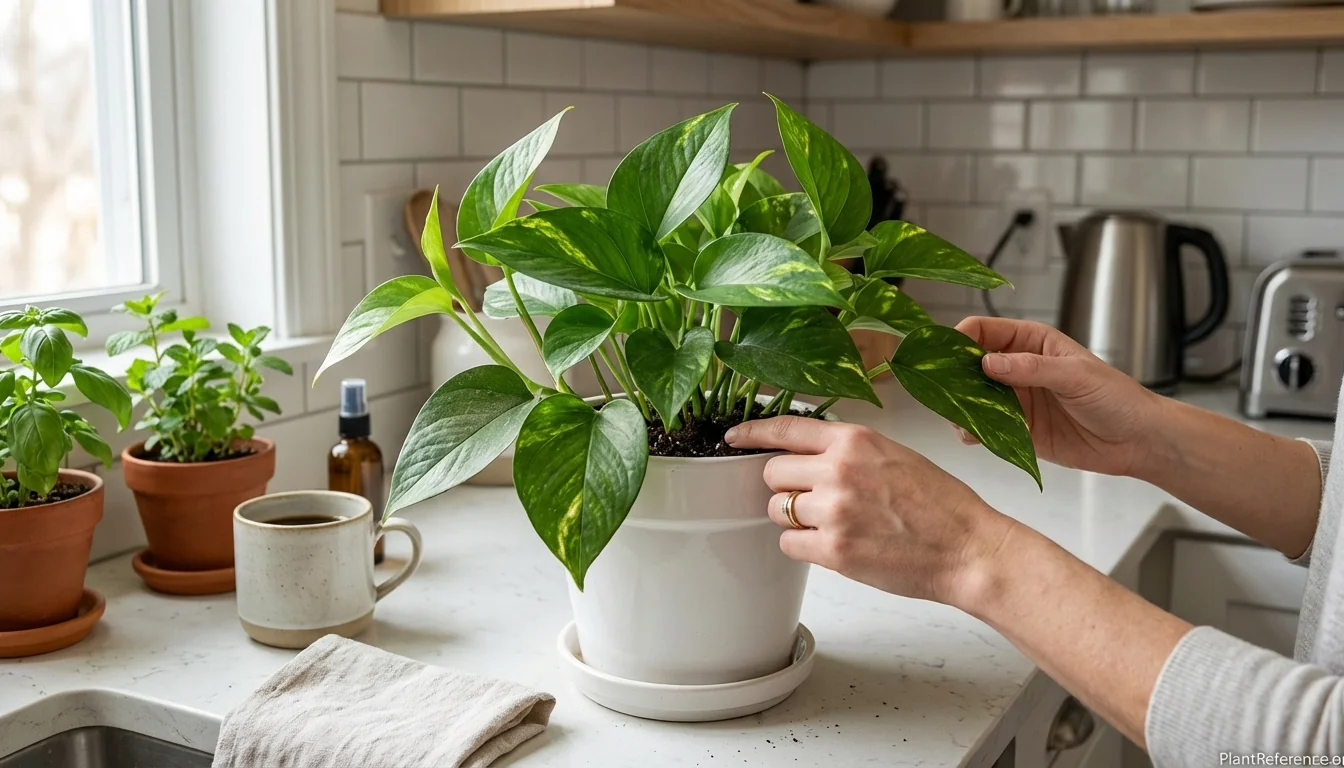
— Image © Plant Reference 2026
If you've ever killed a plant by loving it too much with water, pothos might just be your redemption story. The golden pothos 🌿Epipremnum aureum (ep-ih-PREM-num AW-ree-um) is famous for being easy to grow, and that's largely because it's incredibly forgiving with watering. That doesn't mean leaving it dry for weeks is a safe watering plan.
The Finger Test: Your Best Friend for Pothos Watering
Forget complicated moisture meters and watering schedules—your finger is the most reliable tool for knowing when to water your pothos. Here's how to do the finger test that's saved countless plants in my care:
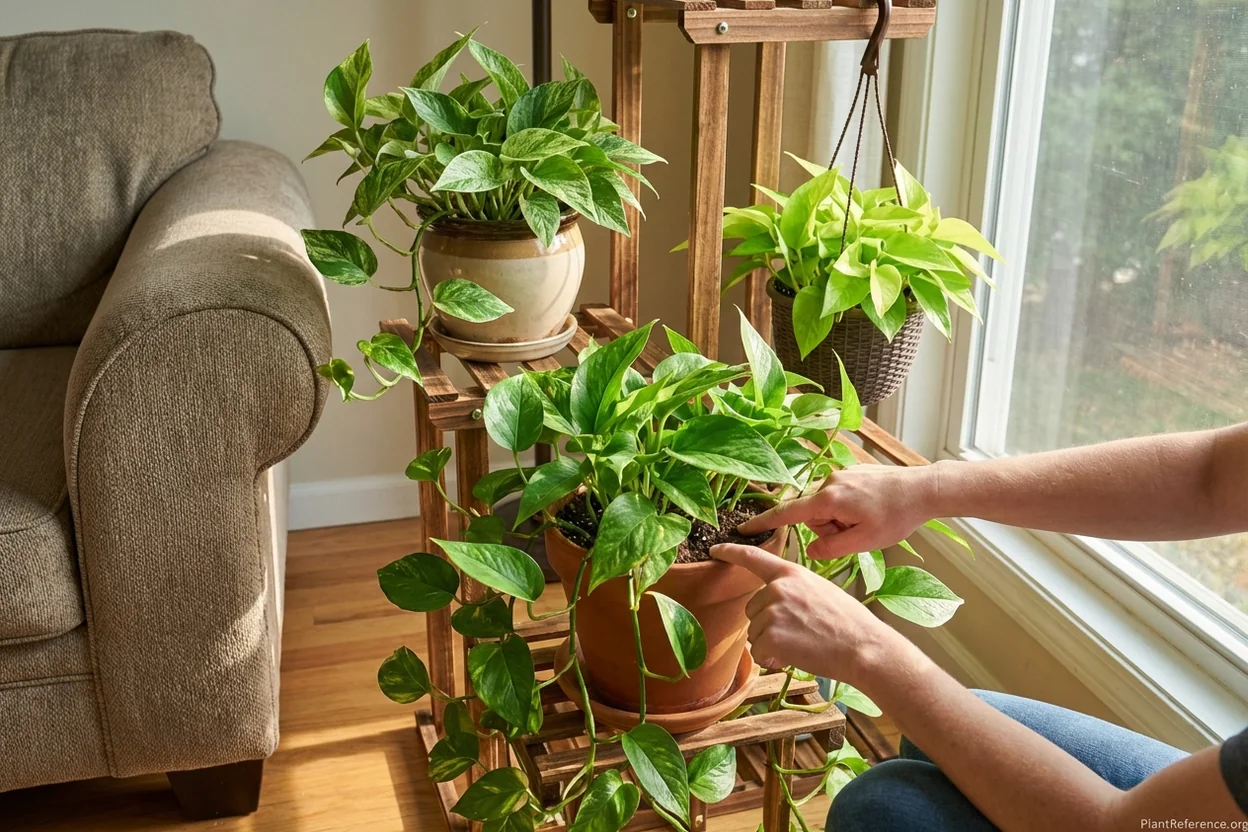
Stick your index finger straight down into the soil, about 1-2 inches deep (2.5-5 cm). If the soil feels moist or damp, wait a few more days. If it feels dry and pulls away from your finger easily, it's time to water. For larger pots over 8 inches (20 cm), you might need to go deeper—up to 3 inches (7.5 cm).
I love this method because it accounts for factors beyond my control: humidity levels, pot size, soil type, and seasonal changes. My apartment gets different light throughout the year, and the finger test adapts automatically. In winter, I might wait 14 days between waterings. In summer, it could be every 7-8 days.
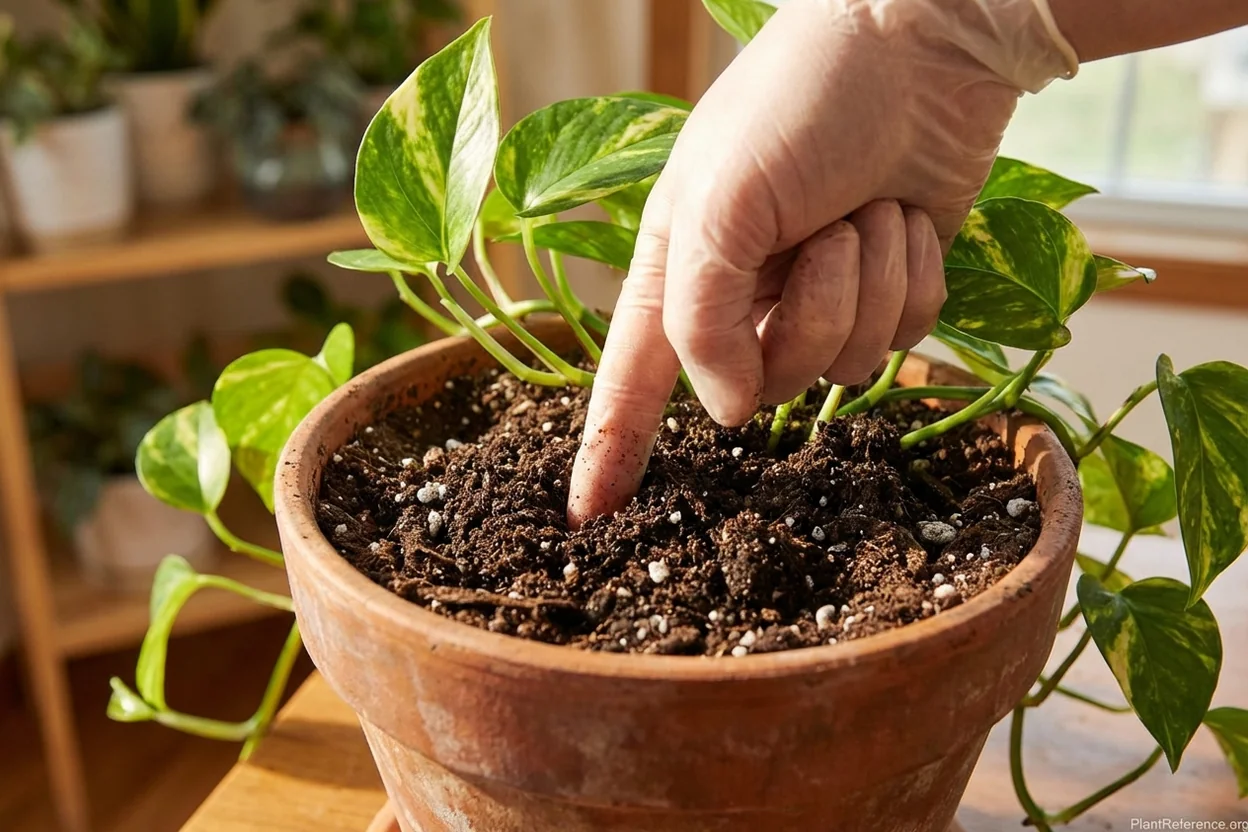
Letting the surface dry works well for pothos. Let the upper 1-2 inches dry, then check the pot’s weight too; a deep pot can still be wet below the surface. Avoid letting the whole root ball become bone dry.
Don't worry if you're not sure at first—pothos gives you clues to check alongside soil moisture, which we'll cover next.
How Often to Water Pothos (Seasonal Schedule)
Here's what I've learned from growing pothos for over five years: there's no magic number of days between waterings. Instead, I follow seasonal patterns that match how these plants actually grow.
Spring and Summer (Growing Season): Every 7-10 days typically. This is when your pothos puts out new leaves and extends its vines. Higher temperatures and longer daylight hours mean faster water uptake. I check mine every 5-6 days during peak summer.
Fall and Winter (Slower Growth): Every 10-14 days or longer. Growth often slows as available light decreases. Heating can dry the pot faster, though, so check the soil rather than assuming every plant needs less water.
Factors that speed up watering frequency:
Smaller pots (4-6 inches) dry out faster than large ones
Terra cotta pots dry faster than plastic or glazed ceramic
Higher temperatures (above 75°F/24°C)
Bright light locations
Lower humidity (below 40%)
Well-draining soil with lots of perlite
Factors that slow down watering frequency:
Large pots (8+ inches) hold moisture longer
Plastic or glazed ceramic pots retain water
Cooler temperatures (below 70°F/21°C)
Lower light locations
Higher humidity (above 60%)
Dense, peat-heavy soil mixes
I keep a simple note in my phone tracking when I water each plant. After a few months, you'll see your personal pattern emerge. My north-facing window pothos needs water every 12-14 days in winter, while the one hanging near my east window needs it every 8-9 days.
Signs Your Pothos Needs Water vs. Overwatering
This is where pothos becomes your best teacher. The signs help, but check the soil too—thirst and damaged roots can both cause drooping.
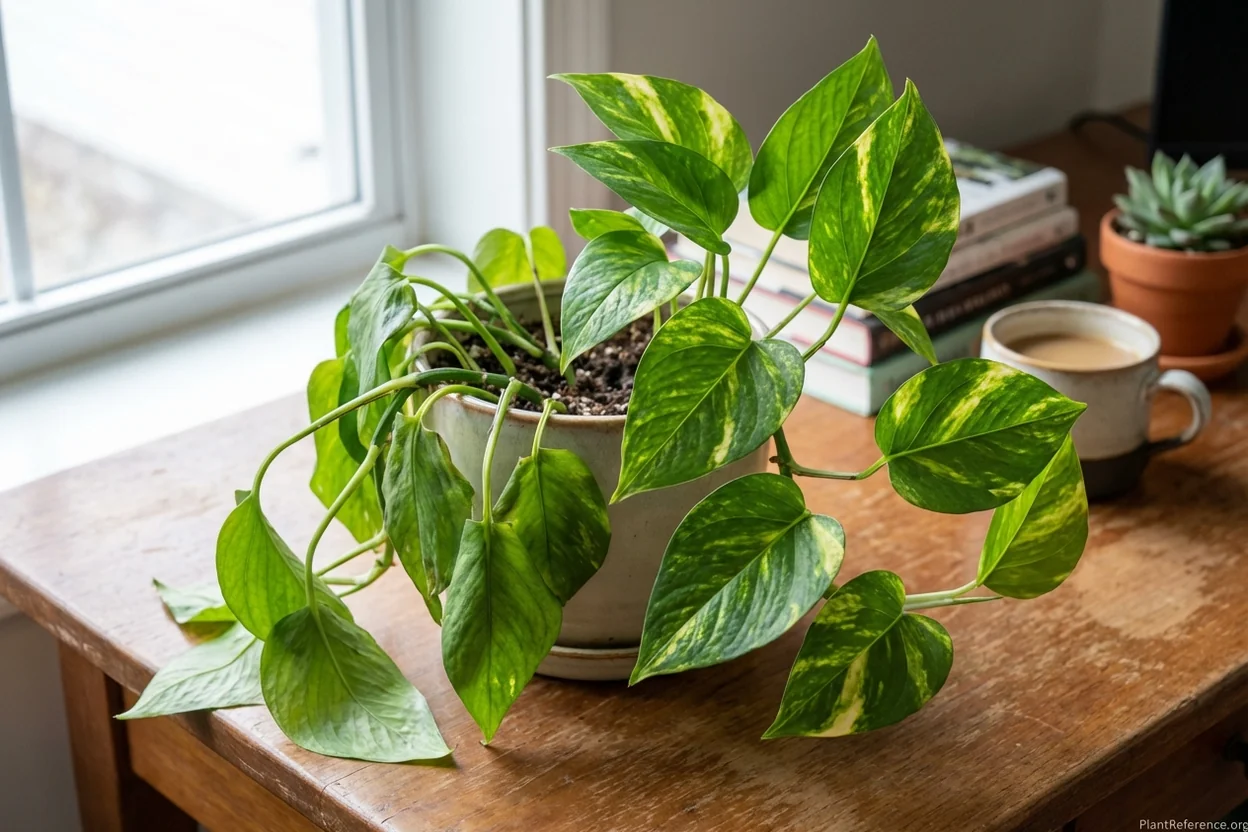
Clues to check for dry soil:
Dramatic leaf drooping: This is the big one. When pothos gets thirsty, the entire plant goes limp. Leaves that normally stick out at angles suddenly hang straight down like they're melting. Don't panic, but check the soil before adding water: wet roots can cause wilting too. Don't deliberately wait for severe wilting.
Soil pulling away from pot edges: Dry soil shrinks and creates gaps around the pot perimeter. You'll see a clear space between soil and pot wall.
Lightweight pot: A dry pot feels noticeably lighter when you lift it. After a few waterings, you'll develop a feel for "empty" versus "full" pot weight.
Leaves feel less plump: Well-hydrated pothos leaves feel firm and slightly thick. Thirsty leaves feel thinner and less substantial.
Clues to check for overwatering:
Yellow leaves that fall off easily: Overwatering can cause yellowing and leaf drop, but so can other stresses. Older pothos leaves also yellow naturally; inspect the soil and roots before deciding on the cause.
Musty or sour smell from soil: Healthy soil smells earthy. Overwatered soil develops anaerobic bacteria that smell awful.
Black or mushy roots: If you suspect overwatering, check the roots. Healthy roots are white or tan and firm. Rotten roots are black, brown, or mushy.
Leaves with brown or black soft spots: Soft, dark patches warrant a closer look, but neither these nor crispy brown tips identify one cause. Watering problems, fertilizer salts, cold and disease can produce overlapping symptoms.
The key check is soil moisture. A dry, wilted pothos may recover after watering, but recovery time depends on damage. A wilted plant in wet soil needs its roots checked, not another drink.
I learned this the hard way with my first marble queen pothos. I thought the yellowing leaves meant it needed more water, so I kept watering. It wasn't until I smelled that terrible soil odor that I realized I'd been overwatering for weeks. Learn more about this in our guide on Pothos Leaves Turning Yellow: Simple Diagnosis and Fixes.
Water Quality Matters: Tap Water vs. Filtered
Most houseplant guides skip this topic, but I've seen water quality cause mysterious problems that frustrated plant parents for months. Let me share what actually matters and what's just plant parent anxiety.
Tap water works fine for most pothos. I've grown dozens of plants with straight tap water, and they've thrived. However, there are some situations where water quality becomes important:
When to consider filtered water:
Your tap water is heavily chlorinated: A smell alone does not establish that water is harming your pothos. Most drinking water is suitable; check watering, roots and fertilizer buildup before blaming disinfectant.
You have very hard water: White deposits can suggest minerals, but they are not a water test. Salts can accumulate in potting mix; flush a well-drained pot with suitable water if buildup develops.
Brown leaf tips persist despite proper watering: If you're nailing the watering schedule but still getting crispy brown tips, water quality might be the culprit.
Simple water quality solutions:
Let tap water sit overnight: Standing can reduce free chlorine, but not chloramine or dissolved mineral salts. It is not a general water-purification method.
Use a basic water filter: A basic Brita pitcher reduces chlorine taste and odor, but retains fluoride. Do not assume it removes hardness or softener salts; check the specific filter’s certified claims.
Rainwater collection: If you want to go natural, rainwater is fantastic for plants. I keep a bucket outside and use it when available.
What you don't need to worry about: pH testing, distilled water or expensive filtration systems for most pothos. Use room-temperature water.
I switched to filtered water after noticing persistent brown tips on several plants, and the difference was obvious within a few weeks. New growth came in without the browning, and my plants looked healthier overall.
Watering Techniques That Actually Work
How you water matters almost as much as when you water. I've made every watering mistake possible, so let me save you the trial and error.
The thorough soak method (my favorite):
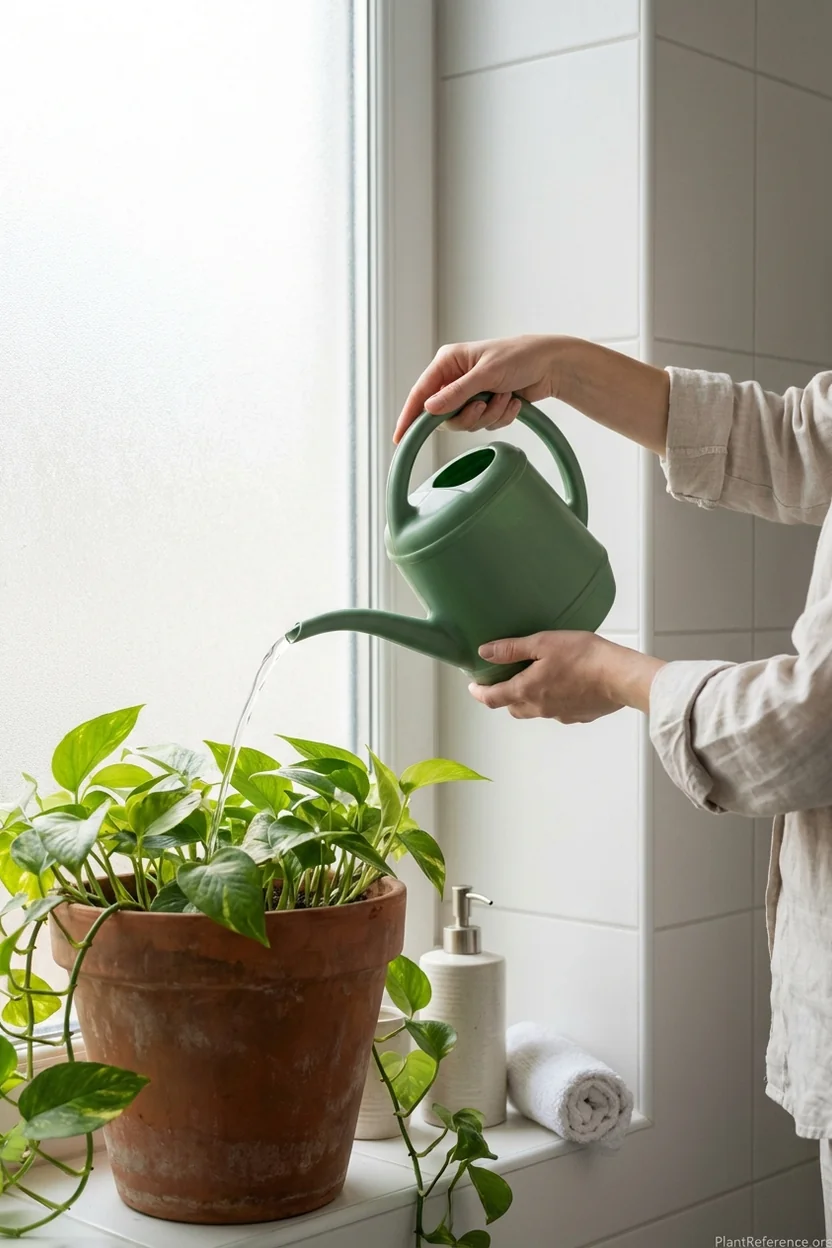
Take your pothos to the sink or use a watering can with a narrow spout. Water slowly around the entire soil surface, not just one spot. Keep adding water until it runs freely from the drainage holes. This might take 2-3 rounds of watering as dry soil initially repels water.
Let excess water drain completely—never let plants sit in standing water. I learned this lesson when I killed three plants by leaving them in decorative cache pots filled with water.
Bottom watering technique:
Place the pot (with drainage holes) in a tray of water and let it soak up moisture from the bottom. This works great for plants that have gotten extremely dry, as it prevents water from running straight through without moistening the soil.
I use this method when I've neglected a plant for too long and the soil has become hydrophobic (water-repelling). Check after about 30 minutes and remove it once the mix has absorbed water, then let it drain; very dry mixes may take longer.
Watering accessories that help:
→ A narrow-spout watering can - Spout control helps direct water
A narrow spout helps direct water onto the potting mix. Choose a comfortable size, and still check whether the plant needs watering.
Product link unavailable
→ An optional soil moisture meter - Adds a second moisture check
A moisture meter can supplement the finger test, but readings are not reliable in every mix. Follow its instructions and check several spots without forcing the probe through roots. You do not need to buy one to care for pothos.
Product link unavailable
What doesn't work:
Ice cubes: Use room-temperature water instead, so you can moisten the root ball evenly and let excess drain away.
Misting instead of proper watering: Pothos needs deep watering at the roots, not surface misting. Misting can actually encourage fungal problems.
Watering on a strict schedule: Plants don't follow calendars. Environmental conditions change daily, so watering needs change too.
The goal is deep, infrequent watering that mimics natural rainfall patterns. Think of it as giving your plant a good drink rather than frequent sips.
Seasonal Watering Adjustments
Understanding seasonal changes transformed my plant care from reactive to proactive. Instead of wondering why my plants seemed "off," I started anticipating their changing needs.
Spring awakening (March-May):
In a home relying on Northern Hemisphere daylight, this is often when pothos starts growing faster again. You'll notice new leaves unfurling and vines extending. Gradually increase watering frequency as daylight hours extend and temperatures rise.
Watch for the first signs of new growth—that's your cue to start checking soil moisture more frequently. I typically move from winter's 14-day cycle to every 10-12 days in early spring.
Summer peak growing (June-August):
Your pothos will be thirstiest during peak growing season. Longer days, higher temperatures, and active growth mean faster water uptake. This is when that every 7-10 day schedule becomes most relevant.
Air conditioning can create drier indoor conditions, speeding up soil drying. Conversely, if you don't use AC and your home gets quite humid, you might water less frequently than expected.
Fall transition (September-November):
As daylight decreases, growth often slows. Extend time between waterings if the pot is staying moist longer. This transition period catches many plant parents off guard—suddenly the schedule that worked all summer starts causing overwatering problems.
I mark the autumn equinox in my calendar as a reminder to reassess all my plant watering schedules. The difference in water needs from September to November can be dramatic.
Winter slowdown (December-February):
This is the trickiest season for new plant parents. Growth may slow in lower light, while heating systems can speed moisture loss. Trust the finger test over your instincts.
Many of my pothos go 14-21 days between waterings in deep winter. A slowdown can be normal in lower light, but don't assume wilting or yellowing is simply a winter rest.
Seasonal troubleshooting tips:
Fall overwatering: If leaves start yellowing, check the soil and roots. Reduce frequency if the mix is staying wet; the month alone does not diagnose the problem.
Winter dry air problems: Low humidity can contribute to brown tips, but so can watering problems and salts. Check the mix, roots and growing conditions before changing care.
Spring impatience: Don't rush into heavy watering in early spring. Increase frequency when the pot dries faster, whether or not new growth is visible yet.
Understanding these patterns helps you stay ahead of problems rather than reacting to them. For more details on seasonal plant care adjustments, check out our comprehensive Pothos Care: The Complete Beginner's Guide (2025).
Troubleshooting Common Watering Mistakes
Let me walk you through the most common watering mistakes I see (and have made myself) with pothos, plus how to fix them quickly.
Mistake #1: Watering little and often
The problem: Giving small amounts of water daily can wet only the surface and leave deeper roots dry. Check that the whole root ball is moistened when you water.
The fix: Switch to deep, infrequent watering. Water until it drains from the bottom, then wait until soil dries properly before watering again.
Mistake #2: Ignoring drainage
The problem: Beautiful cache pots without drainage, or leaving plants sitting in water-filled saucers. This raises the risk of root rot.
The fix: Use a pot with drainage holes, or a draining nursery pot inside a decorative pot. Empty both saucers and outer pots after watering.
→ Pots with drainage holes and saucers - Helps excess water escape
Drainage holes let excess water escape, and saucers catch it—but you still need to empty them. Choose pot size for the root ball rather than a fixed diameter for every pothos.
Product link unavailable
Mistake #3: Panic watering yellowing leaves
The problem: Seeing yellow leaves and immediately adding more water, which usually makes overwatering worse.
The fix: Check soil moisture first. If soil is wet and you have yellow leaves, stop watering and check for root rot. Yellow leaves from overwatering need less water, not more.
Mistake #4: Watering from habit, not need
The problem: Watering every Sunday because that's "plant day," regardless of whether plants actually need water.
The fix: Check each plant individually. My five pothos plants have completely different watering needs based on their location, pot size, and season.
Mistake #5: Using soft water from water softener systems
The problem: Sodium-based water softeners replace hardness minerals with sodium, which builds up in soil over time and can damage plants.
The fix: If you have a water softener, use an unsoftened supply, rainwater or distilled water. A basic pitcher filter is not a reliable fix for softener salts.
Emergency fixes for common situations:
Severely underwatered plant: If your pothos is limp and the soil is dry, water thoroughly; recovery time varies. If dry soil repels water, rewet it slowly or use bottom watering, then drain. Skip household dish detergent—plain water avoids unnecessary formulation and dose risks.
Suspected overwatering: If the soil is still wet, stop watering. Check roots by carefully removing from pot. Trim any black, mushy roots with clean scissors. Repot in fresh, well-draining soil. For detailed recovery steps, see Pothos Root Rot: Emergency Rescue in 5 Steps.
Plant that won't drink: Sometimes very dry soil becomes water-repellent. Break up the surface gently with a fork, add water slowly, or try the bottom-watering method.
The key to avoiding these mistakes is developing a relationship with your plants. After a few months, you'll instinctively know when something feels "off" with their watering needs.
Remember, pothos is incredibly forgiving. I've made every mistake on this list multiple times, and my plants have survived and thrived. The learning curve is part of the fun, and these plants are patient teachers.
Key takeaways for foolproof pothos watering:
Use the finger test (1-2 inches deep) instead of strict schedules
Water thoroughly until it drains, then wait until soil dries appropriately
If leaves droop, check soil moisture before adding water
Adjust frequency seasonally—often less in winter, more in summer, depending on conditions
Focus on soil moisture, not calendar days
If soil is still moist, wait and check again; do not delay watering a dry, wilted plant
Master these basics, and you can avoid many common pothos watering mistakes. These plants want to live and thrive—they're just waiting for you to find your rhythm together. Keep pothos out of reach of children and pets: its calcium oxalate crystals can irritate the mouth if chewed, and its sap can irritate skin.
Frequently Asked Questions
Reading about plants and recognising them are different skills. These three build the second.
- Daily PlantIdentify the day’s mystery plant from a close-up photograph.
- Keyed OutWork a dichotomous key, lead by lead, to name a hidden specimen.
- Name That PlantName a specimen from botanical clues dealt hardest first.
Free to play, no account needed
Jessica transformed her small Brooklyn balcony into a thriving container garden after moving to New York City. What started as a pandemic hobby turned into a plant care consulting business serving urban apartment dwellers across the city. She specializes in small-space gardening, indoor plant troubleshooting, and helping clients keep houseplants alive in less-than-ideal conditions (dim light, dry heat, tiny spaces). Jessica completed a home gardening certificate program and shares her plant wins and failures on her modest Instagram following. Her partner, Maya, jokes that their apartment is now 40% plants, 60% living space. Jessica's passionate about making plant care accessible to renters who think they don't have room to garden.