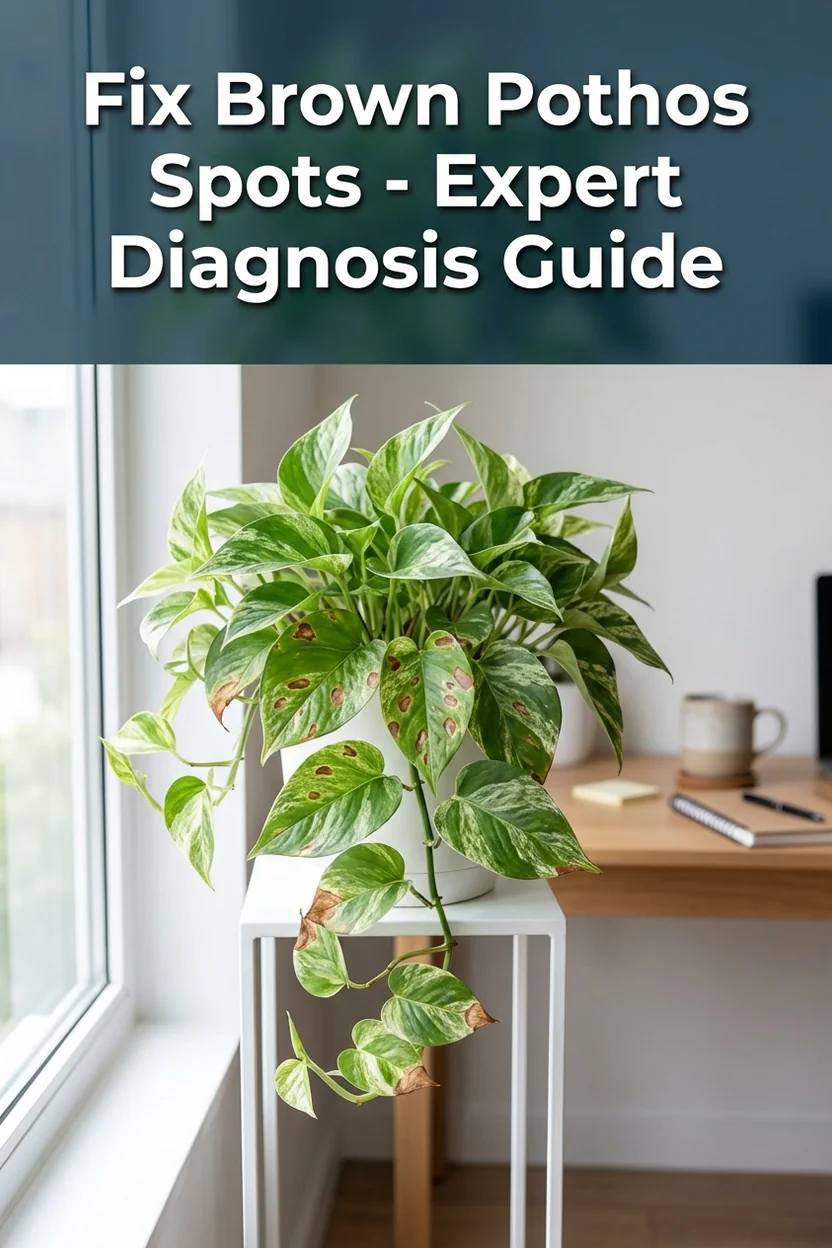
Pothos Brown Spots and Tips: What They Mean and How to Fix
Pets & Toxicity
Recorded toxicity for plants linked in this guide. An unknown status is not a safety assessment.
Toxic to pets: golden pothosDetailsHide
Epipremnum aureum — Toxicity Warning
Toxic to pets and humans. All parts contain insoluble calcium oxalate crystals that cause mouth pain, swelling, and drooling if ingested.View Epipremnum aureum plant profile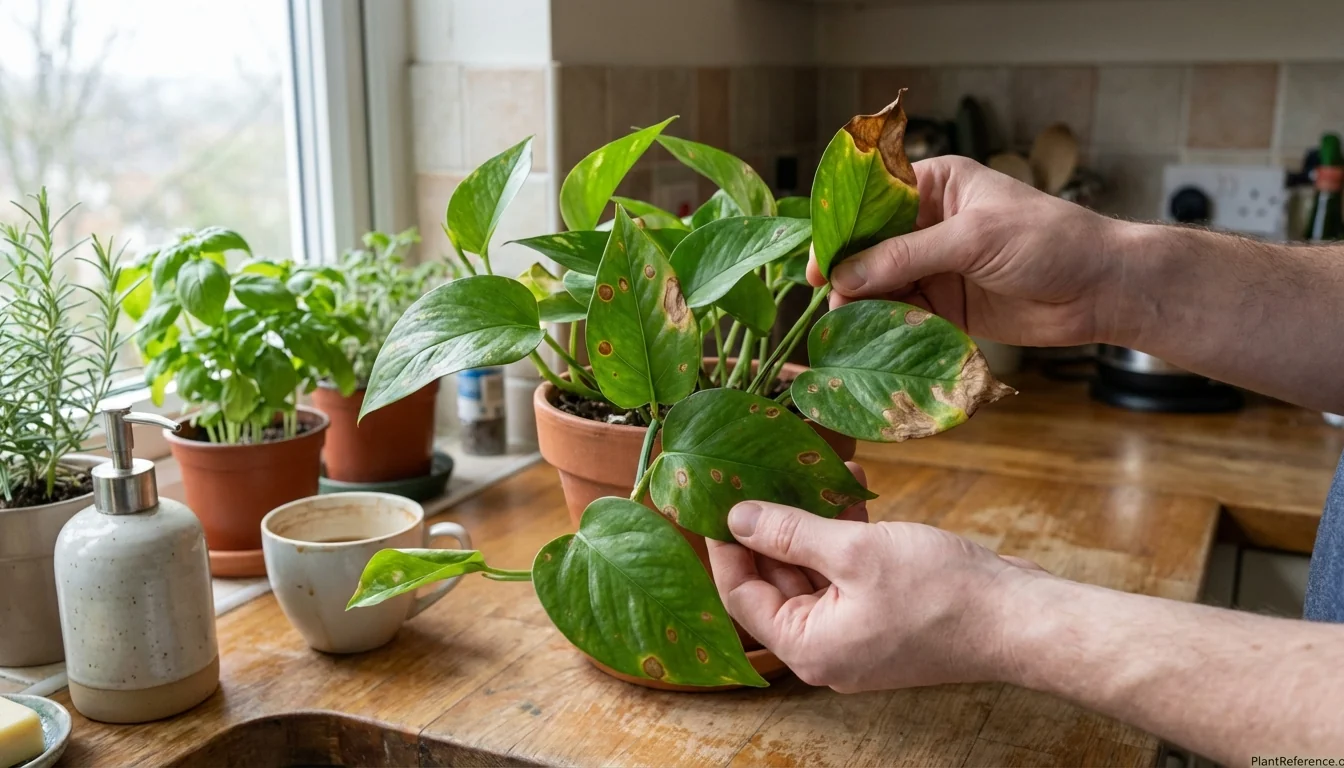
— Image © Plant Reference 2026
Let's be honest—brown spots and crispy tips on your pothos 🌿Epipremnum aureum (ep-ih-PREM-num AW-ree-um) aren't normal, and they're your plant's way of screaming for help. I've diagnosed hundreds of these cases, and 90% of the time it comes down to three issues: overwatering, bad water quality, or light problems.
Quick Diagnosis: What Your Pothos Is Telling You
Your pothos leaves are basically a diagnostic chart. Here's how to read them:
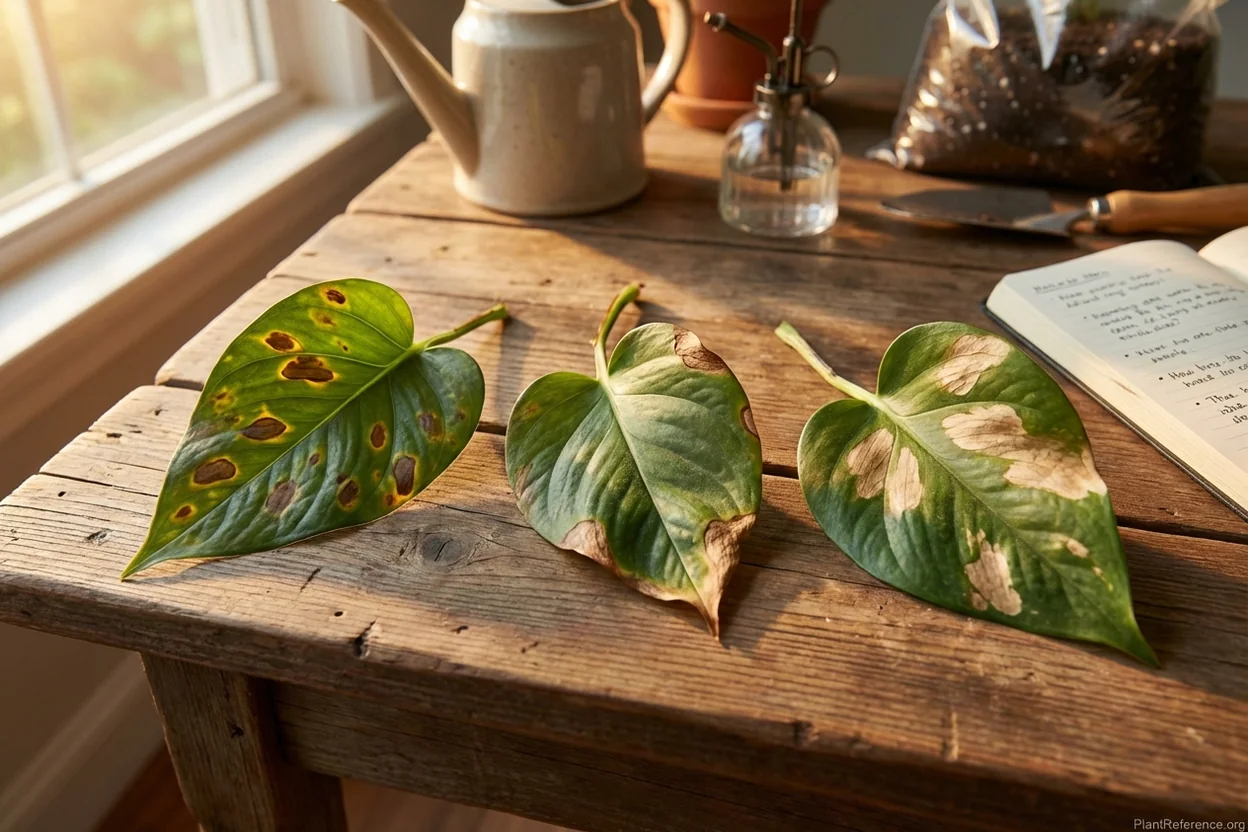
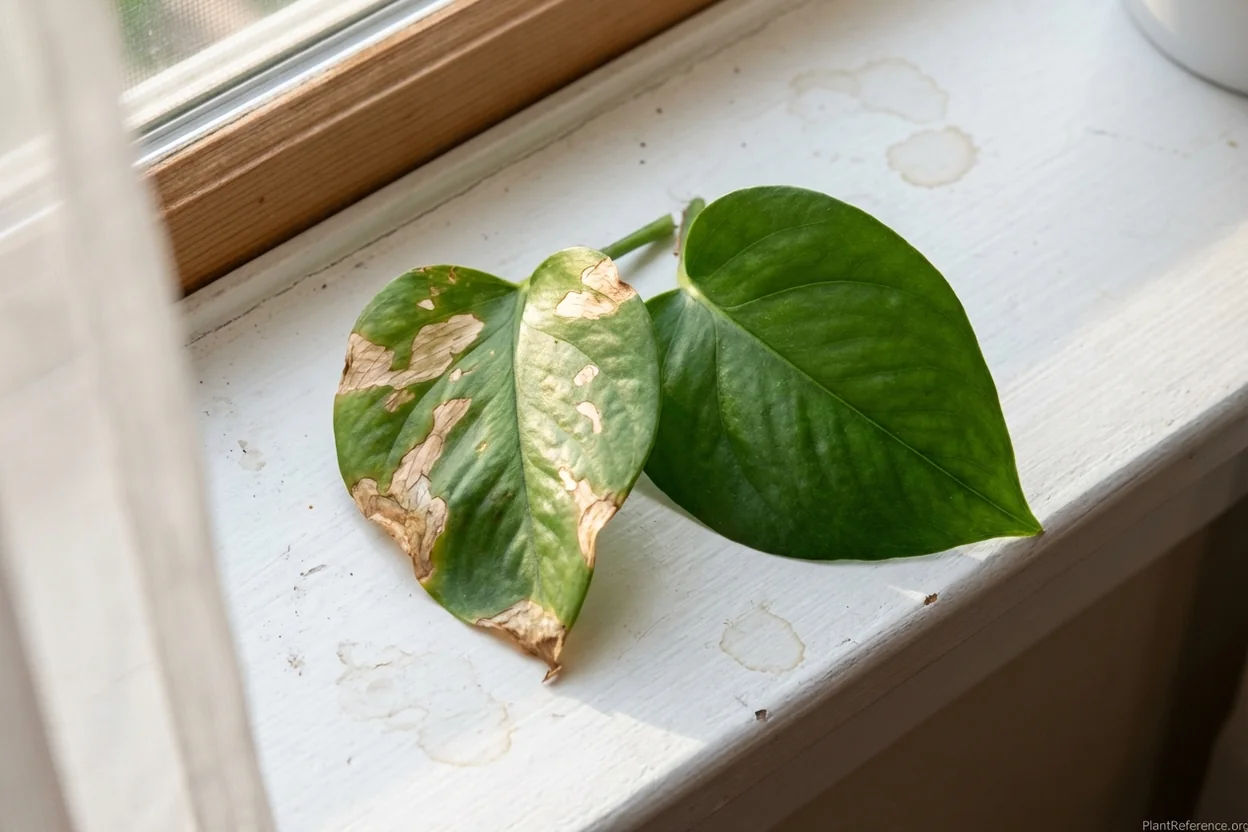
Dark brown/black spots with yellow halos: Classic overwatering and root rot beginning. The spots feel soft and mushy when you press them. This is urgent—you've got maybe a week before serious root damage.
Brown crispy tips and edges: Water quality issues, usually fluoride or chlorine from tap water. The brown areas feel dry and crunch when touched. Not immediately fatal but will spread if ignored.
Light brown patches in center of leaves: Direct sun damage. These spots appear suddenly after moving your plant to a sunny spot. The tissue literally got cooked.
Tiny brown speckles across multiple leaves: Spider mites or thrips feeding damage. Look closer—you'll see tiny insects or webbing if pests are the issue.
The key is acting fast once you identify the cause. Pothos are tough, but brown spots spread quickly when left untreated.
Overwatering: The Most Common Culprit
Here's what I see 70% of the time: you're killing your pothos with kindness. Those dark brown spots with yellow edges? That's your plant drowning.
How overwatering creates brown spots: When soil stays soggy, root tips die from lack of oxygen. Dead roots can't transport nutrients, so leaves develop brown spots as cells literally starve and die. The yellow halo around brown spots is the plant redirecting nutrients away from dying tissue.
The soil test: Stick your finger 2 inches (5 cm) into the soil. If it's wet or even damp, stop watering immediately. Overwatered pothos soil feels like a wrung-out sponge—moist and heavy.
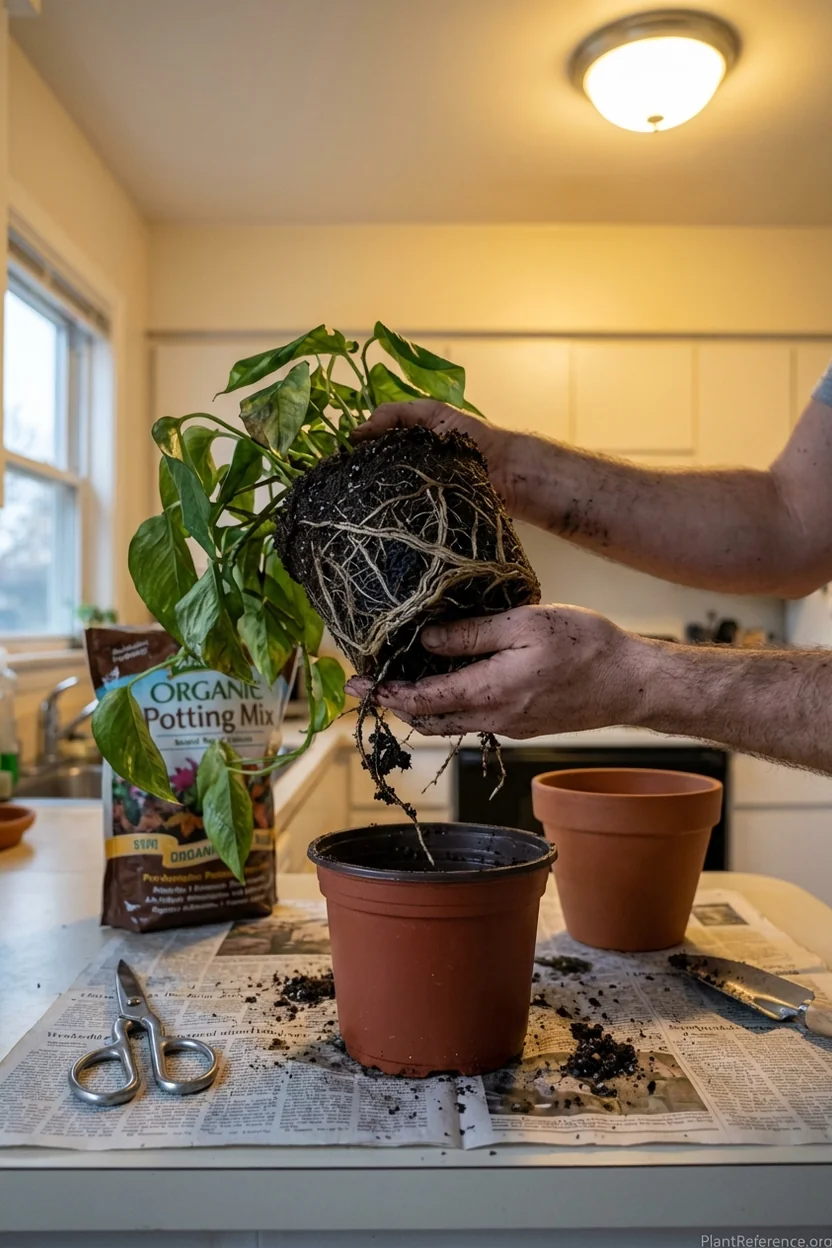
Root inspection: Gently remove the plant from its pot. Healthy pothos roots are white or light tan. If you see black, mushy, foul-smelling roots, you've got root rot progressing.
Emergency Overwatering Protocol
Time is critical here. Root rot spreads fast in warm, wet conditions.
Stop all watering immediately until soil dries completely
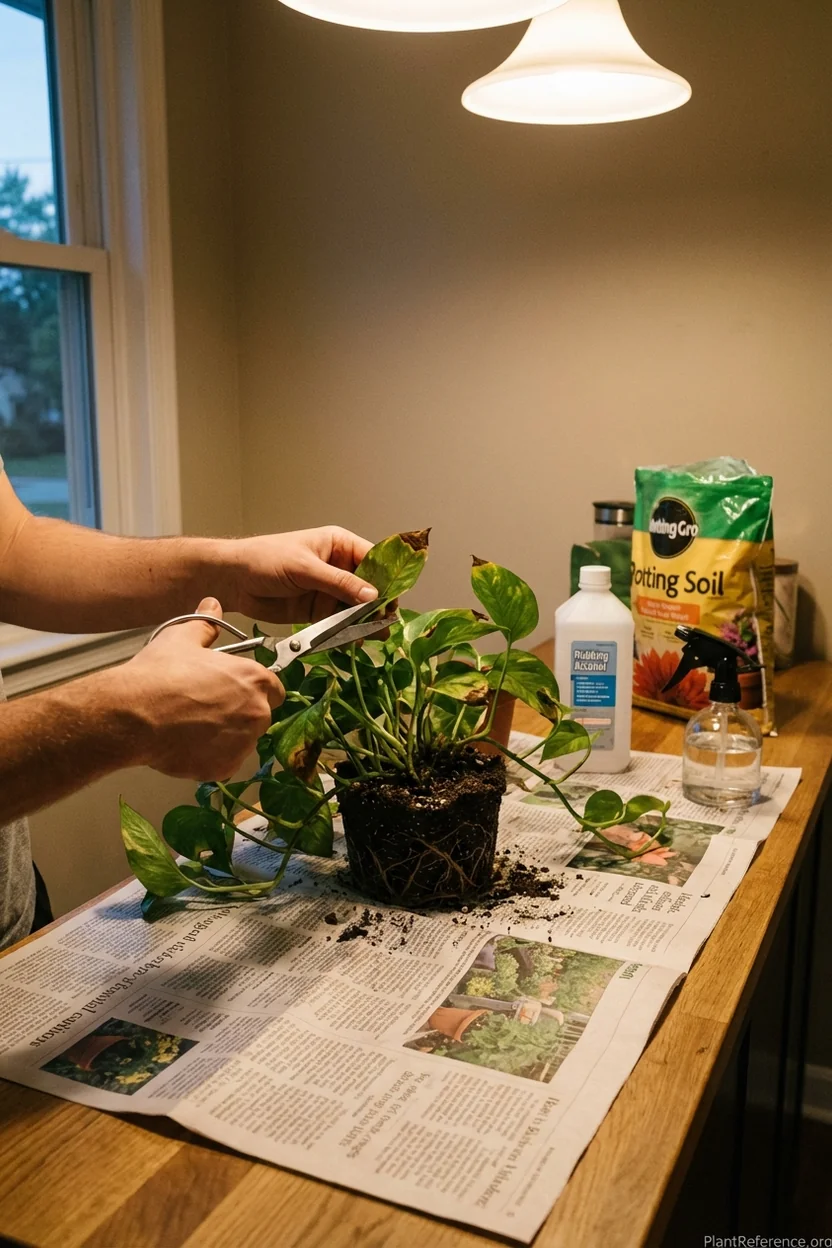
Remove plant from pot and inspect roots thoroughly
Cut away all black, mushy roots with clean scissors
Repot in fresh, well-draining potting mix
Move to bright indirect light to help recovery
I recommend How to Water Pothos: The Foolproof Beginner Method for preventing this in the future. Most people water on schedule instead of checking what the plant actually needs.
Water Quality Problems: Tap Water Toxins
Brown tips and edges that feel crispy? Your tap water is poisoning your pothos. This took me years to figure out, but it's incredibly common in areas with treated municipal water.
Fluoride toxicity: Most tap water contains 0.7-1.2 ppm fluoride for dental health. Pothos leaves accumulate fluoride in tip tissues, causing brown, crispy edges that spread inward. The damage appears slowly over weeks.
Chlorine damage: Fresh chlorinated water burns root tips and leaf edges. Unlike fluoride, chlorine damage happens quickly—within 24-48 hours of watering.
Salt buildup: Hard water leaves mineral deposits in soil. Over time, salt levels become toxic, causing brown leaf margins and stunted growth.
Water Quality Solutions
The fix is simple but requires consistency.
Switch to filtered, distilled, or rainwater immediately
Let tap water sit 24-48 hours to off-gas chlorine before using
Flush soil monthly with distilled water to remove salt buildup
Install a basic water filter for long-term plant care
Never use water from water softener systems (high sodium)
→ Brita Standard Water Filter Pitcher ($25-35) - Removes chlorine and reduces fluoride for healthier watering
Large 10-cup capacity reduces chlorine taste and odor from tap water. Standard filter lasts 2 months or 40 gallons. Easy-fill lid fits most refrigerator dispensers. Electronic indicator reminds when to replace filter. Significantly improves water quality for sensitive plants like pothos while being affordable for daily use.
Product link unavailable
Sunburn and Light Damage
Pothos are forest floor plants—they're not built for direct sunlight. I see this mistake constantly when people move their plants outside or place them in south-facing windows.
How sunburn develops: Direct sun hits pothos leaves with 2,000+ foot-candles of light. Their thin leaves overheat quickly, causing cell death in patches. The damage appears as light brown, papery spots that feel crispy and translucent.
Speed of damage: Sunburn happens fast. A few hours of direct afternoon sun can cause permanent brown patches on leaves.
Location assessment: If your pothos gets direct sunbeams hitting the leaves at any point during the day, it's getting too much light. Even morning direct sun can burn variegated varieties like Marble Queen.
Light Positioning Strategy
The goal is bright indirect light—plenty of illumination without direct sun rays.
Place 3-6 feet (1-2 meters) from south/west-facing windows
Use sheer curtains to diffuse direct sunlight
East-facing windows work well with morning protection
North-facing windows are usually perfect year-round
Move gradually when changing light conditions
Check out Pothos Light Requirements: Low Light to Bright Indirect for complete light guidance.
Low Humidity and Air Quality Issues
Brown leaf tips can also indicate your air is too dry or contaminated. This is especially common in winter with forced-air heating or homes with poor air circulation.
Humidity damage patterns: Low humidity causes brown, crispy tips that progress inward along leaf edges. Unlike water quality damage, humidity problems affect new growth first.
Air circulation problems: Stagnant air around plants allows moisture loss and prevents gas exchange. Poor circulation also increases pest problems and slows recovery from other issues.
HVAC system damage: Heating and cooling vents blast dry, moving air directly on plants. The constant airflow causes rapid moisture loss and brown, crispy leaf edges.
Humidity Solutions
Target 40-60% relative humidity for optimal pothos health.
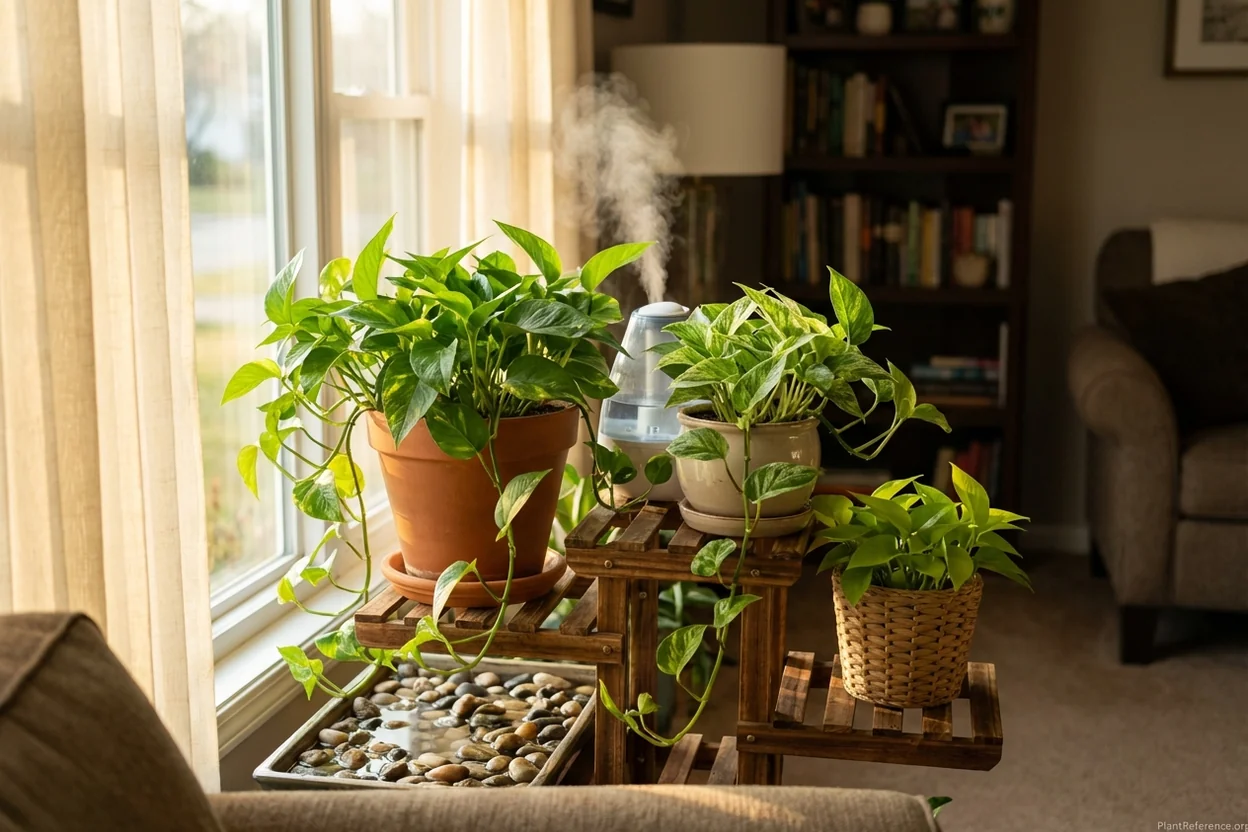
Group plants together to create humid microclimates
Use pebble trays filled with water under pots
Place away from heating/cooling vents and fans
Run a humidifier during dry winter months
Mist leaves 2-3 times weekly with filtered water
→ LEVOIT Humidifier for Plants 6L ($60-80) - Maintains consistent humidity levels for healthier pothos growth
Large 6-liter tank runs up to 50 hours covering rooms up to 753 square feet. Warm and cool mist options with adjustable output levels. Essential oil tray adds aromatherapy benefits. Remote control and timer functions for convenience. Automatic shut-off when empty prevents damage. Ideal for maintaining consistent humidity around multiple houseplants during dry seasons.
Pest Damage and Disease
Pests rarely attack healthy pothos, but stressed plants become targets. Brown spots from pest damage look different from other causes—they're usually tiny pinpricks or stippling patterns.
Spider mites: Create tiny yellow and brown speckles across leaves. Look for fine webbing on undersides of leaves and where stems meet the main vine.
Mealybugs: Cause brown spots where they feed, plus white cottony masses in leaf joints and on stems. The brown spots have irregular shapes and appear randomly across leaves.
Scale insects: Create small brown bumps on stems and undersides of leaves. Feeding damage appears as yellow then brown spots around each scale.
Bacterial leaf spot: Rare but serious. Creates dark brown to black spots with yellow halos that spread rapidly. Usually enters through wounds or overwatering damage.
Pest Treatment Protocol
Act fast—pests multiply quickly in warm indoor conditions.
Isolate affected plant immediately to prevent spread
Wipe all leaves with rubbing alcohol on cotton swabs
Apply neem oil spray every 7-10 days until problem resolves
Increase air circulation around plants
Check other plants weekly for signs of infestation
→ Bonide Neem Oil Ready-to-Use 32oz ($12-16) - Organic treatment for pest control and disease prevention
Ready-to-use organic neem oil controls spider mites, mealybugs, scale, and other common houseplant pests. OMRI listed for organic gardening. Also provides disease prevention against bacterial and fungal issues. Easy spray application requires no mixing. Safe for indoor use when applied as directed. Works as both treatment and preventative measure.
For comprehensive pest identification and treatment, see Pothos Pests: Mealybugs, Spider Mites, and Scale Treatment.
Fertilizer Burn: Too Much of a Good Thing
Overfertilizing causes brown leaf tips and edges that look similar to water quality damage. The difference is timing—fertilizer burn appears 1-2 weeks after feeding.
How fertilizer burn develops: Excess salts from fertilizer accumulate in leaf tips and edges. High salt concentration draws moisture out of plant cells, causing brown, crispy damage.
Common mistakes: Using full-strength fertilizer, feeding too frequently, or fertilizing dry soil creates salt buildup. Many houseplant fertilizers are too strong for pothos when used as directed.
Recovery time: Fertilizer burn takes weeks to months to fully resolve. Damaged leaves won't recover, but new growth should emerge healthy.
Fertilizer Burn Treatment
Flush the soil and adjust your feeding schedule.
Water deeply with plain water to flush excess salts from soil
Skip fertilizing for 4-6 weeks to let plant recover
Resume feeding at half the recommended strength
Feed only during active growing season (spring/summer)
Always water before fertilizing to prevent root burn
Emergency Treatment Steps
When you discover brown spots, speed matters. Here's my systematic approach for any type of damage:
Step 1: Stop the damage source(5 minutes)
Move plant away from direct sun immediately
Stop watering if soil is moist
Switch to filtered water for next watering
Increase humidity around plant
Step 2: Assess and remove damaged tissue(10 minutes)
Cut off severely damaged leaves at the stem
Trim brown tips back to healthy green tissue
Sterilize scissors between cuts with rubbing alcohol
Remove any fallen leaves from soil surface
Step 3: Address root health(15 minutes)
Check soil moisture by inserting finger 2 inches deep
If overwatered, consider repotting in fresh soil
Inspect roots for black, mushy sections if problems persist
Ensure pot has adequate drainage holes
Step 4: Create optimal recovery conditions(5 minutes)
Place in bright, indirect light
Maintain 65-75°F (18-24°C) temperatures
Provide consistent humidity without overwatering
Monitor daily for first week to catch new problems
Prevention Strategies That Actually Work
The best cure is prevention. After fixing hundreds of brown spot problems, these strategies prevent 90% of future issues:
Water management: Check soil moisture weekly by inserting your finger 2 inches (5 cm) deep. Water only when top 25-50% feels dry. Use filtered water or let tap water sit 24-48 hours before watering.
Light positioning: Keep pothos 3-6 feet (1-2 meters) from bright windows. Use sheer curtains to diffuse direct sunlight. East-facing windows provide ideal gentle morning light.
Environmental stability: Maintain 40-60% humidity and 65-75°F (18-24°C) temperatures. Avoid placing near heating/cooling vents, drafty areas, or temperature extremes.
Proper feeding: Fertilize monthly during spring and summer only, using half-strength dilution. Skip winter feeding when growth slows. Always water before fertilizing.
→ XLUX Soil Moisture Meter ($8-13) - Takes the guesswork out of watering to prevent overwatering damage
Instant moisture readings from dry to wet zones eliminate watering guesswork. 7-inch probe reaches deep into pot to measure root zone moisture accurately. No batteries required—simple push-and-read operation. Durable construction withstands repeated use in multiple pots. Essential tool for preventing both overwatering and underwatering damage that causes brown spots and yellowing leaves.
Regular monitoring: Inspect leaves weekly during watering. Look for early signs like slight yellowing, minor tip browning, or changes in leaf texture. Catching problems early makes treatment much easier.
The key is consistency. Pothos are incredibly forgiving, but they need stable conditions to stay healthy. Brown spots are usually your first warning that something in their environment needs adjustment.
Most importantly, don't panic when you see brown spots. I've saved pothos that looked completely hopeless with the right treatment. Focus on identifying the cause, stopping further damage, and creating better conditions moving forward. Your pothos will thank you with months of healthy, vibrant growth.
Frequently Asked Questions
Reading about plants and recognising them are different skills. These three build the second.
- Daily PlantIdentify the day’s mystery plant from a close-up photograph.
- Keyed OutWork a dichotomous key, lead by lead, to name a hidden specimen.
- Name That PlantName a specimen from botanical clues dealt hardest first.
Free to play, no account needed
TJ stumbled into plant parenthood when a coworker gave him a neglected pothos. That single plant sparked an obsession that led him to quit his corporate marketing job and start a plant care service for busy professionals in Chicago. TJ maintains over 150 plants for residential clients and runs monthly plant swap meetups at local coffee shops. He's self-taught through YouTube, plant forums, and plenty of expensive mistakes (RIP to his variegated monstera). TJ specializes in troubleshooting common houseplant problems and is known for his blunt, no-BS advice: "Your plant isn't dying because Mercury is in retrograde—you're overwatering it." He's particularly skilled with finicky tropical plants like fiddle leaf figs and calatheas.