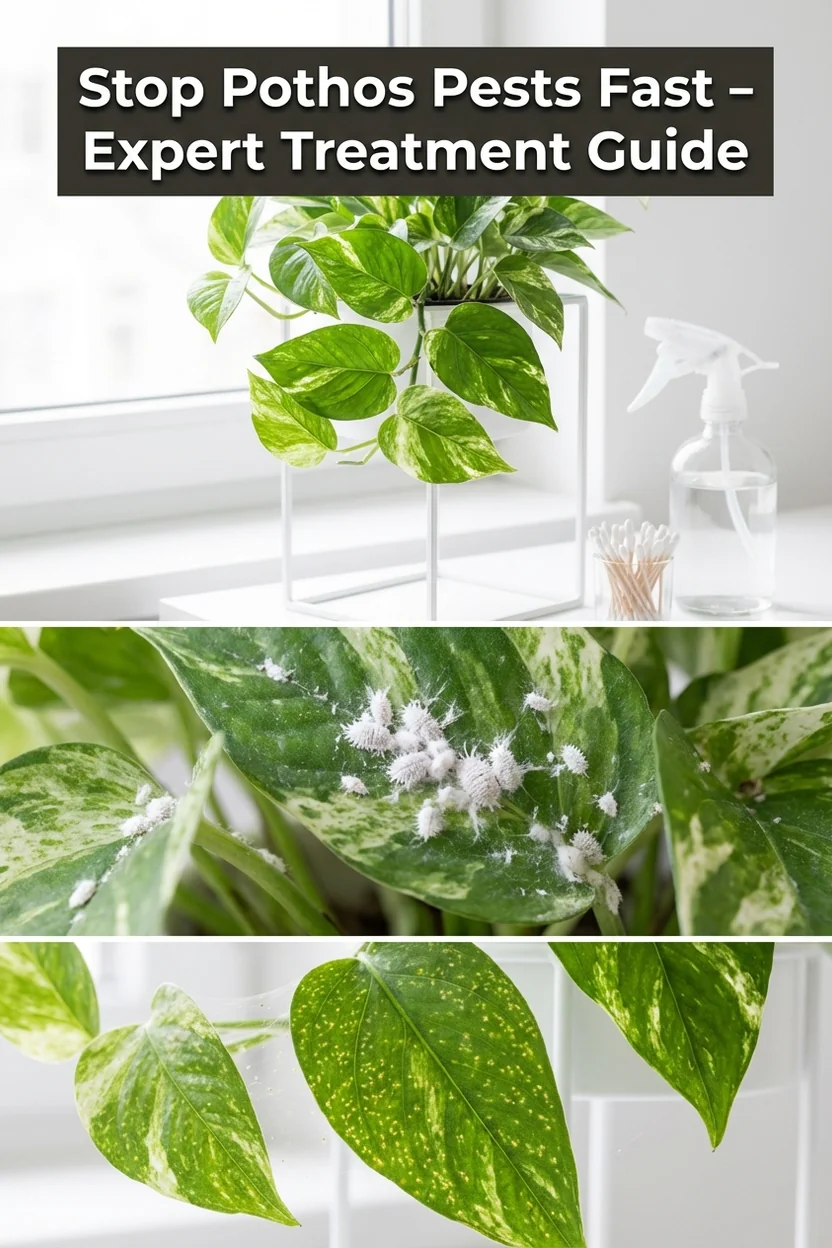
Pothos Pests: Mealybugs, Spider Mites, and Scale Treatment
Pets & Toxicity
Recorded toxicity for plants linked in this guide. An unknown status is not a safety assessment.
Toxic to pets: golden pothosDetailsHide
Epipremnum aureum — Toxicity Warning
Toxic to pets and humans. All parts contain insoluble calcium oxalate crystals that cause mouth pain, swelling, and drooling if ingested.View Epipremnum aureum plant profile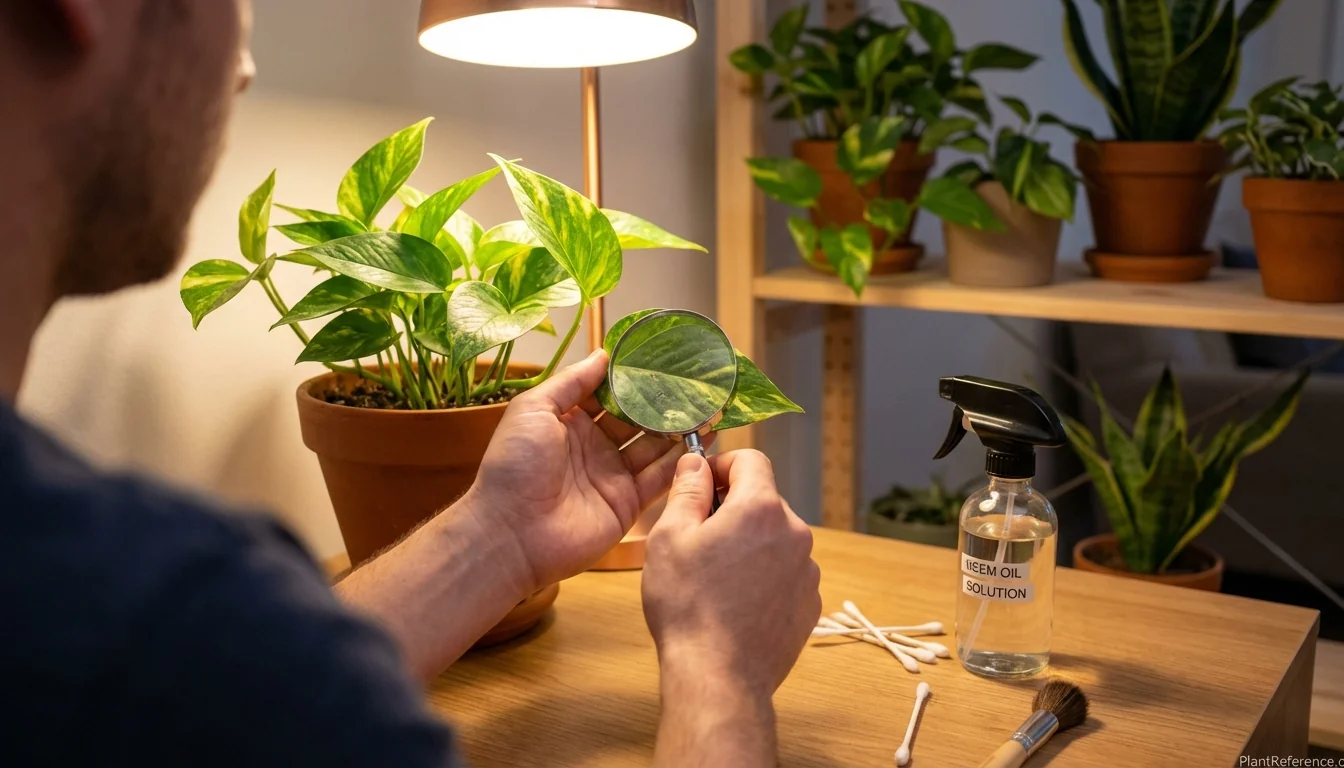
— Image © Plant Reference 2026
Here's the truth about pothos pests: they're incredibly rare on healthy plants, but when they show up, you need to act fast. Most pothos can go years without a single pest problem, but stress, overwatering, or introducing infected plants can change that quickly.
Why Pothos Rarely Get Pests (But When They Do...)
Pothos 🌿Epipremnum aureum (ep-ih-PREM-num AW-ree-um) are naturally pest-resistant compared to most houseplants. Their waxy leaves and resilient nature make them unappealing to many common invaders. However, stressed plants become vulnerable targets.
The most common pest scenarios happen when:
New plants arrive already infected from nurseries or stores
Overwatering weakens plant immunity and creates humid conditions pests love
Plants are placed too close together, allowing pests to spread
Indoor humidity drops below 30%, stressing plants and attracting spider mites
Plants don't receive regular leaf cleaning, allowing pest populations to establish
The good news? Catching infestations early makes treatment straightforward and effective.
Mealybugs: White Cotton Clusters
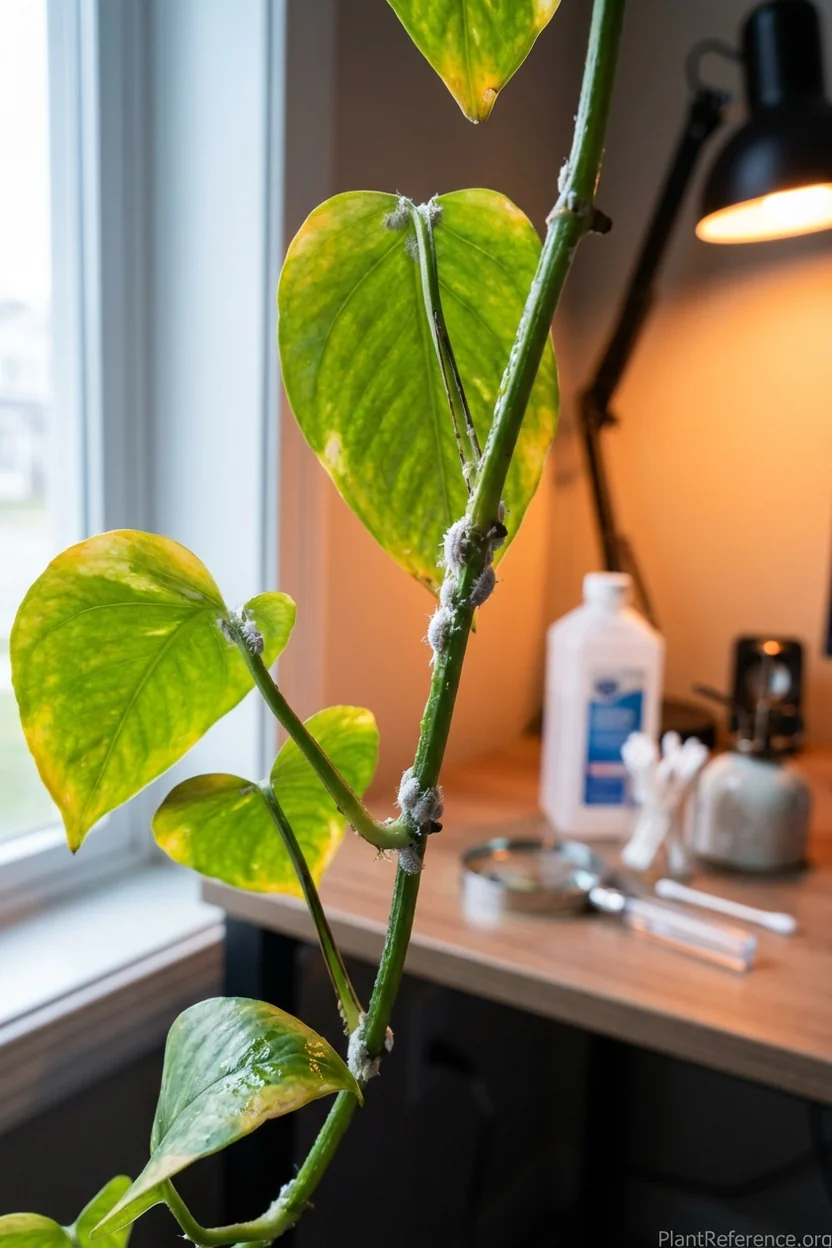
Mealybugs are the most common pothos pest, appearing as small white cottony masses in leaf joints, stems, and soil surface. They're actually tiny insects covered in waxy white fluff that protects them while they feed on plant sap.
Identification signs:
White, cotton-like clusters in leaf crevices and stem joints
Sticky honeydew residue on leaves (clear, sugary secretion)
Yellowing or wilting leaves where bugs are feeding
Slow-moving white specks when disturbed
Sweet, sticky substance on nearby surfaces
Where to look: Check where leaves meet stems (nodes), under leaves, and around the soil line. Mealybugs love hiding in these protected spots.
Immediate action: Isolate the plant immediately—mealybugs spread quickly to nearby plants. Don't wait to see if it gets worse.
For more comprehensive plant care guidance, see our Pothos Care: The Complete Beginner's Guide (2025) for prevention strategies that keep plants healthy and pest-resistant.
Spider Mites: Fine Webbing and Stippled Leaves
Spider mites are tiny arachnids that create fine webbing on leaves and stems. They're particularly attracted to dry, warm conditions and stressed plants. At 1/50 inch (0.5 mm) long, they're barely visible without magnification.
Identification signs:
Fine, silky webbing on leaf undersides and between stems
Tiny moving specks on webs (use magnifying glass)
Stippled or speckled appearance on leaf surfaces (tiny yellow or white dots)
Leaves becoming dull, bronze, or yellowish
Premature leaf drop in severe infestations
Environmental trigger: Spider mites thrive when humidity drops below 40% and temperatures exceed 80°F (27°C). Winter heating systems create perfect conditions.
Detection tip: Hold white paper under leaves and gently tap stems. Mites will fall onto paper as moving specks.
If your plant is also showing yellowing leaves, check our Pothos Leaves Turning Yellow: Simple Diagnosis and Fixes to distinguish between pest damage and other common causes.
Scale Insects: Brown Bumps on Stems
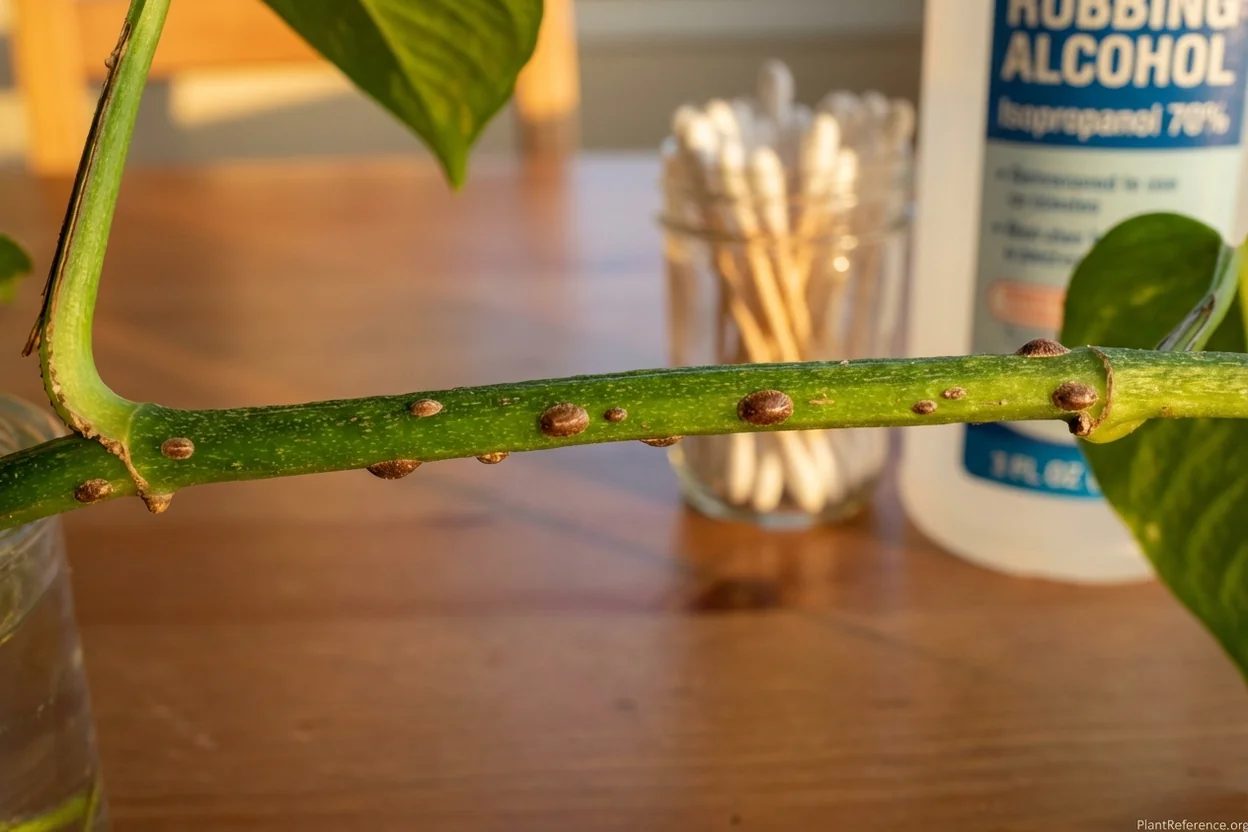
Scale insects appear as small, brown, oval bumps attached to stems and leaf undersides. They're actually insects that create hard, protective shells while feeding on plant juices underneath.
Identification signs:
Small brown or tan bumps firmly attached to stems (1/8 inch or 3 mm diameter)
Bumps don't move when gently pushed (they're stuck on)
Yellowing leaves near scale locations
Sticky honeydew deposits on leaves
Gradual plant weakening and slower growth
Two types: Hard scales (brown, helmet-like) and soft scales (more flexible, waxy). Both respond to similar treatments.
Location patterns: Scale insects prefer stems and leaf undersides where they're protected from disturbance.
Immediate Response: Isolation and Assessment
Step 1: Isolate immediately. Move the infected plant at least 6 feet (1.8 m) from other plants. Pests spread rapidly through close contact.
Step 2: Assess the damage. Count affected areas and photograph them for tracking treatment progress. Light infestations (under 10 bugs) are easier to treat than heavy infestations.
Step 3: Check nearby plants. Inspect all plants within 3 feet (90 cm) of the infected one. Look carefully—early-stage infestations are easy to miss.
Step 4: Gather supplies:
70% rubbing alcohol
Cotton swabs or cotton balls
Spray bottle for neem oil
Magnifying glass for detailed inspection
Paper towels for cleanup
Don't delay treatment hoping the problem resolves itself. Pest populations double every few days under favorable conditions.
Treatment Methods That Actually Work
Rubbing Alcohol Treatment (Most Effective)
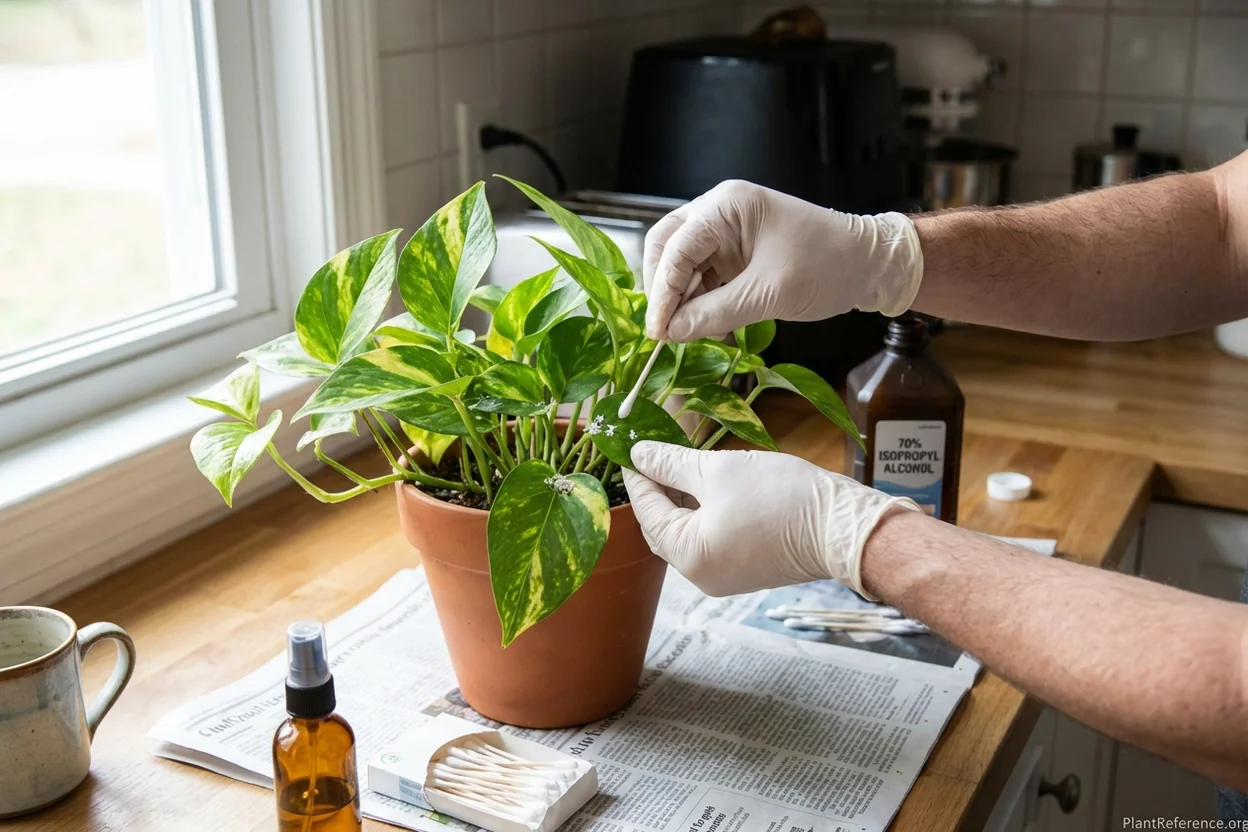
For mealybugs and scale: Dip cotton swab in 70% rubbing alcohol and dab directly onto each pest. Alcohol dissolves their protective coating and kills them on contact.
Application technique:
Press swab firmly against bug for 3-5 seconds
Use fresh swab section for each pest to avoid spreading
Treat every visible bug, including tiny ones
Repeat every 3-4 days for 2-3 weeks
Success rate: 95% effective when applied consistently.
Neem Oil Spray (Preventative and Treatment)
For spider mites and overall prevention: Mix neem oil according to package directions (typically 1-2 tablespoons per quart of water) and spray all plant surfaces.
Application schedule:
Spray every 7-10 days during active infestation
Apply in evening to prevent leaf burn
Cover all leaf surfaces, including undersides
Continue for 4-6 weeks after last pest sighting
Why it works: Neem oil suffocates soft-bodied insects and disrupts their feeding patterns.
→ Bonide Neem Oil Ready-to-Use ($12-16) - Organic pest control for mealybugs and spider mites
Ready-to-use organic insecticide and miticide containing 70% neem oil. Controls spider mites, mealybugs, scale insects, and aphids on contact. OMRI-listed for organic gardening. Safe for beneficial insects when used as directed. 32-ounce trigger spray bottle provides convenient application without mixing. Effective systemic action prevents pest reproduction cycles. Apply every 7-10 days during infestations, continue 2 weeks after pest elimination.
Systemic Approach for Severe Infestations
If individual treatment isn't working after 3-4 applications, the infestation may be too advanced for spot treatments.
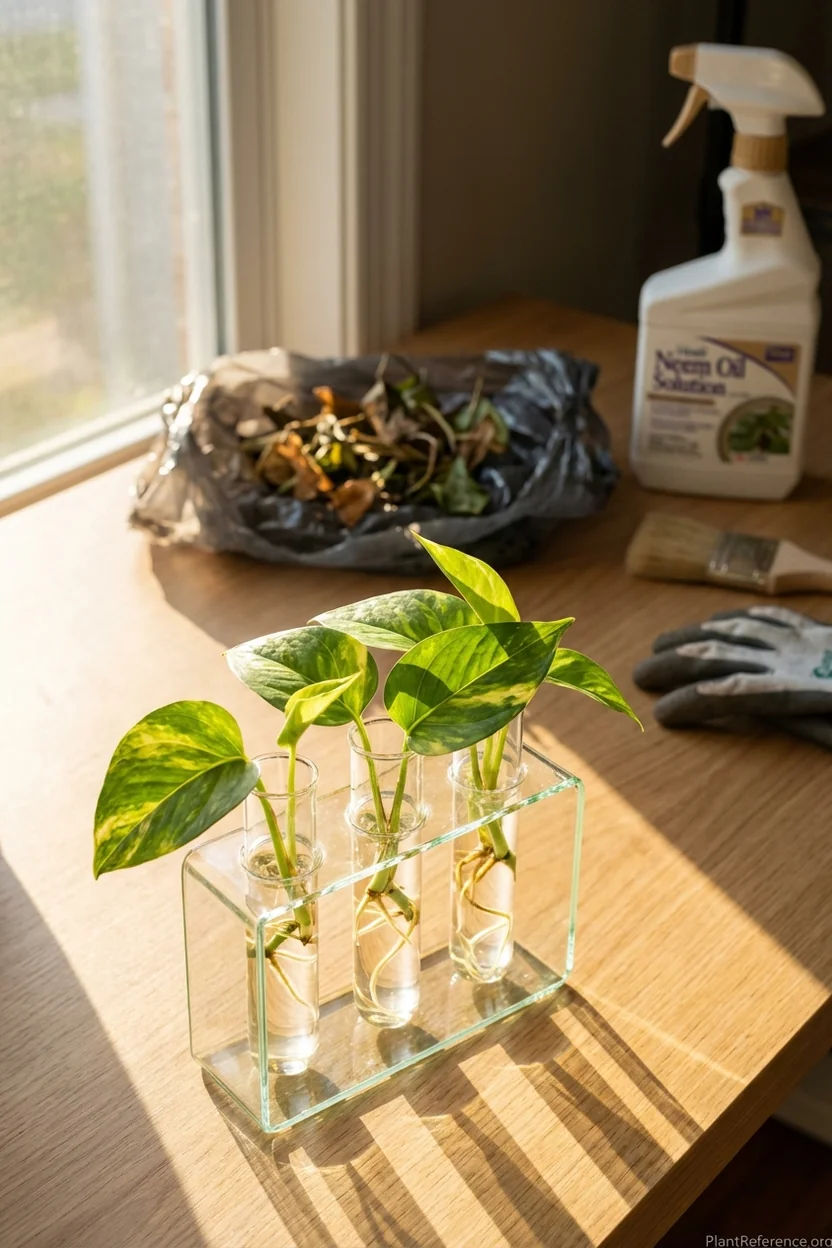
Option 1: Water propagation rescue. Cut healthy stem sections above infested areas and propagate in clean water. Discard infected plant and pot.
Option 2: Systemic insecticide (last resort). Use only when other methods fail and the plant has sentimental value.
For step-by-step propagation instructions, see our Pothos Propagation: Water Method Step-by-Step (With Photos) guide.
Prevention Strategies for Long-Term Health
Monthly inspection routine:
Check leaf undersides with magnifying glass
Look for webbing, cotton clusters, or brown bumps
Examine stem joints where pests typically hide
Document any suspicious spots with photos
Environmental prevention:
Maintain humidity between 40-60% to deter spider mites
Provide adequate spacing between plants (12+ inches or 30+ cm)
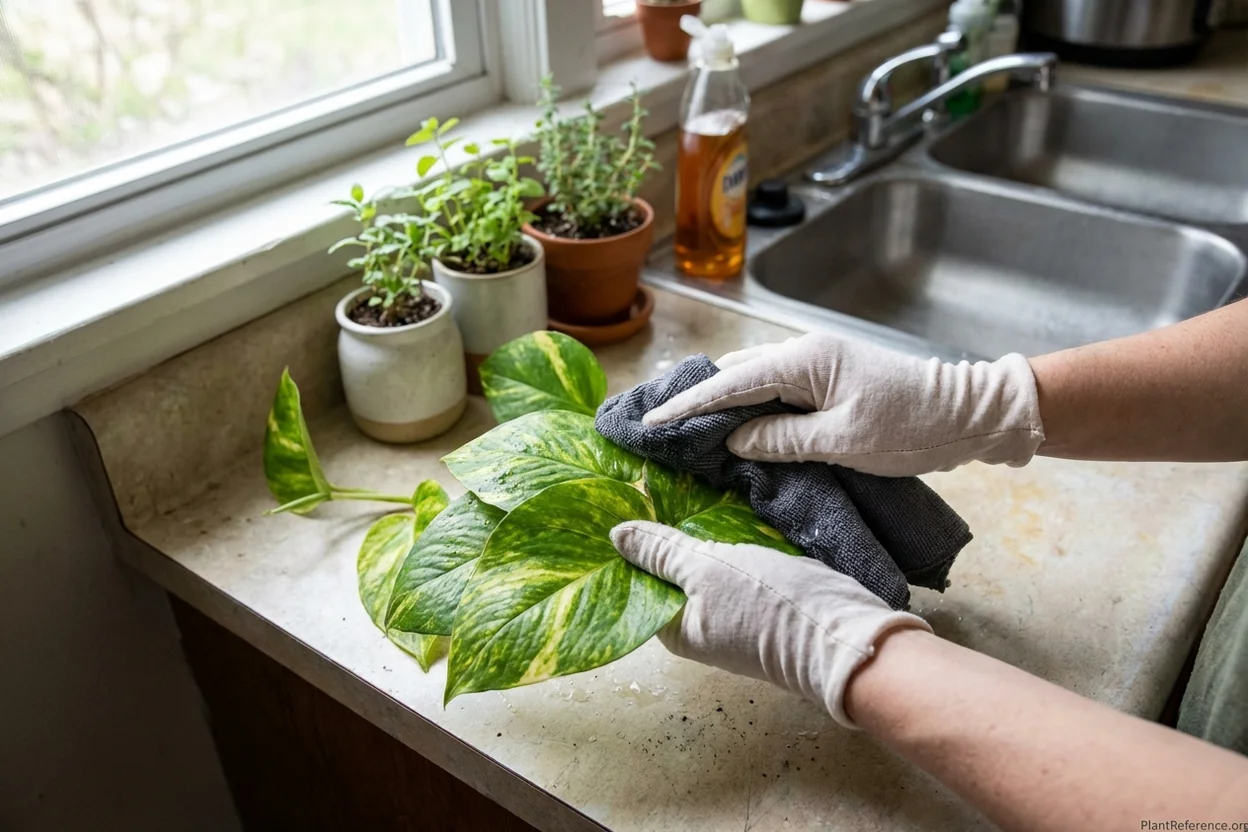
Clean leaves monthly with damp cloth to remove dust and eggs
Quarantine new plants for 2-3 weeks before introducing to collection
Plant health maintenance:
Avoid overwatering, which weakens plant immunity
Ensure proper drainage to prevent stressed, vulnerable plants
Feed monthly during growing season to maintain plant vigor
Rotate plants weekly to ensure even light exposure
For comprehensive watering guidance that prevents plant stress, check our How to Water Pothos: The Foolproof Beginner Method.
→ XLUX Soil Moisture Meter ($8-13) - Prevent overwatering that leads to pest problems
No-battery moisture meter provides instant soil readings with color-coded display showing dry, moist, and wet zones. Single 8-inch probe minimizes root damage while reaching deep into soil for accurate moisture assessment. Prevents overwatering that weakens plant immunity and creates conditions favoring pest development. Simple push-and-read operation makes consistent watering schedules easy to maintain. Essential tool for preventing water-stress that makes pothos vulnerable to infestations.
Early intervention saves plants: Catching pest problems in the first week makes treatment 90% more effective than waiting until infestations are established.
Recovery timeline: Most plants show improvement within 1-2 weeks of consistent treatment. Full recovery takes 4-6 weeks, with new healthy growth appearing after pest elimination.
Remember: healthy pothos plants rarely develop pest problems. Focus on proper watering, adequate light, and regular maintenance to keep your plants naturally pest-resistant.
If you notice other concerning symptoms like drooping or leaf curling, our Pothos Leaves Drooping: Quick Diagnostic Guide can help distinguish between pest damage and other common issues.
Frequently Asked Questions
Reading about plants and recognising them are different skills. These three build the second.
- Daily PlantIdentify the day’s mystery plant from a close-up photograph.
- Keyed OutWork a dichotomous key, lead by lead, to name a hidden specimen.
- Name That PlantName a specimen from botanical clues dealt hardest first.
Free to play, no account needed
TJ stumbled into plant parenthood when a coworker gave him a neglected pothos. That single plant sparked an obsession that led him to quit his corporate marketing job and start a plant care service for busy professionals in Chicago. TJ maintains over 150 plants for residential clients and runs monthly plant swap meetups at local coffee shops. He's self-taught through YouTube, plant forums, and plenty of expensive mistakes (RIP to his variegated monstera). TJ specializes in troubleshooting common houseplant problems and is known for his blunt, no-BS advice: "Your plant isn't dying because Mercury is in retrograde—you're overwatering it." He's particularly skilled with finicky tropical plants like fiddle leaf figs and calatheas.