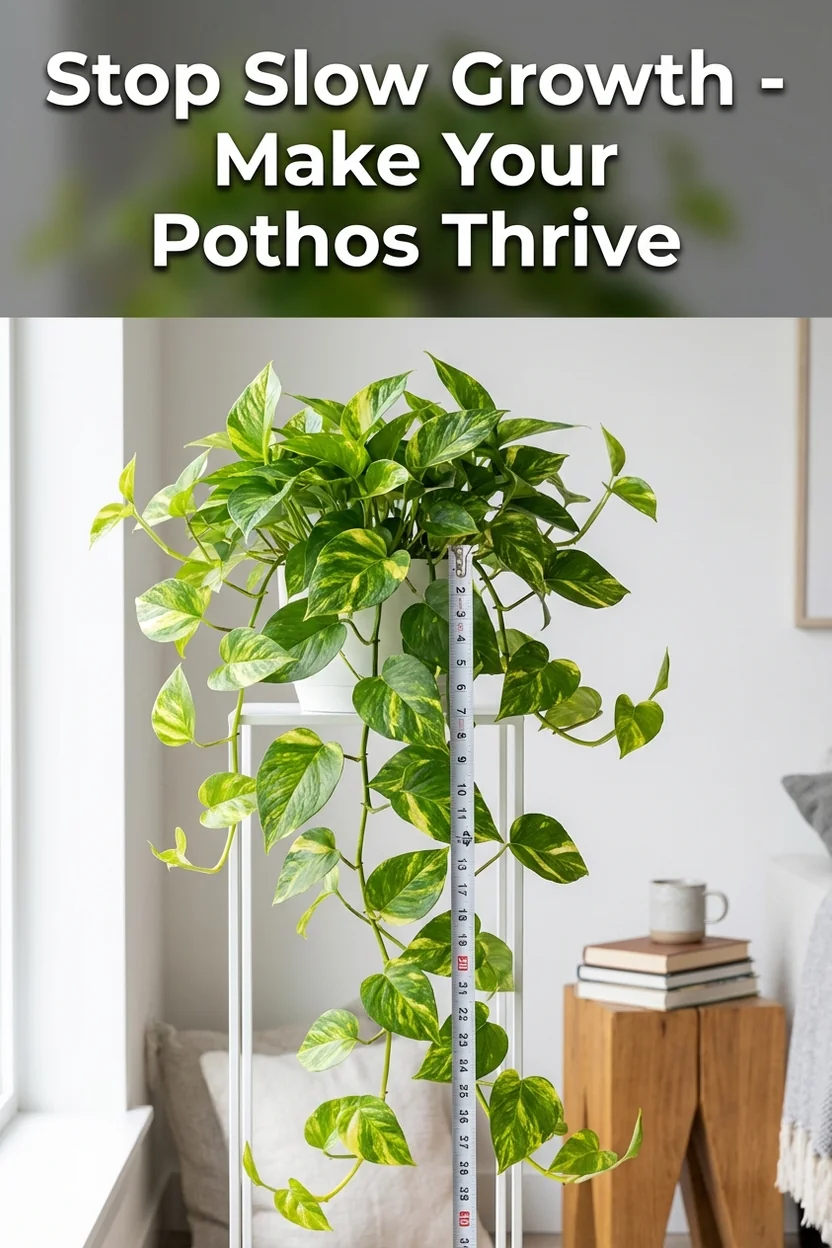
Pothos Not Growing: How to Encourage Faster Vine Growth
Pets & Toxicity
Recorded toxicity for plants linked in this guide. An unknown status is not a safety assessment.
Toxic to pets: golden pothosDetailsHide
Epipremnum aureum — Toxicity Warning
Toxic to pets and humans. All parts contain insoluble calcium oxalate crystals that cause mouth pain, swelling, and drooling if ingested.View Epipremnum aureum plant profile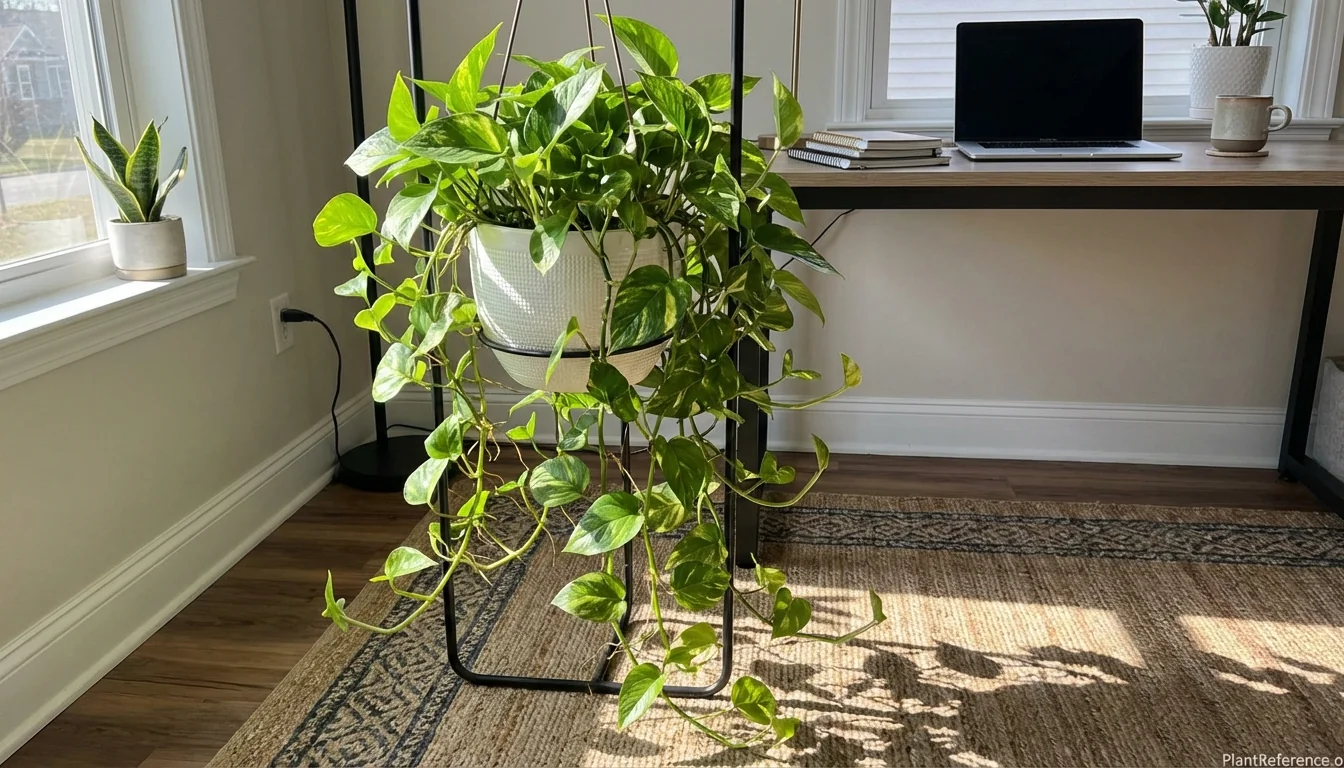
— Image © Plant Reference 2026
Is your pothos 🌿Epipremnum aureum (ep-ih-PREM-num AW-ree-um) just sitting there doing nothing? I get it—there's nothing more frustrating than buying a plant expecting those gorgeous trailing vines, only to watch it stay exactly the same size for months. The good news? A pothos not growing is often something you can troubleshoot.
Why Your Pothos Isn't Growing: The 6 Main Causes
After helping hundreds of frustrated plant parents revive their slow-growing pothos, I've found the same six culprits come up again and again. The beauty of pothos is that once you identify which issue is holding your plant back, the solutions are straightforward.
The most common growth stoppers:
Insufficient light
Insufficient nutrients during active growth
Rootbound in too-small pot
Seasonal slowdown in lower light and cooler conditions
Pests such as mealybugs or scale
Watering or root problems, including root rot
Here's what I tell everyone: pothos are forgiving, but they're not mind readers. They need the basics to thrive, and "low maintenance" doesn't mean "no maintenance." Once you nail down light, food, and space, you'll be amazed how quickly your plant responds.
Light: The #1 Growth Limiter for Pothos
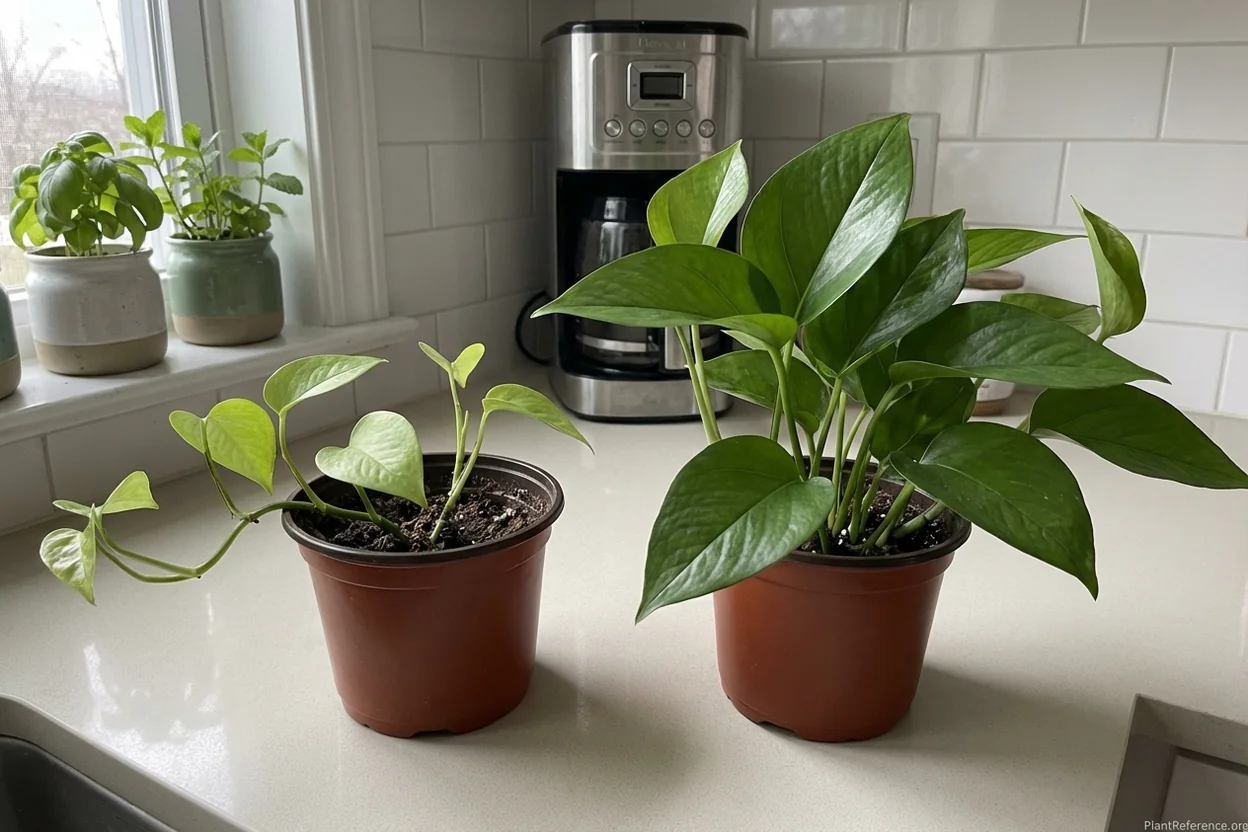
Let me be honest—most people seriously underestimate how much light their pothos actually wants. Yes, they tolerate low light better than almost any houseplant, but "tolerate" and "thrive" are completely different things. Light is often limiting indoors, but it is not the cause of every stalled plant.
In my apartment's north-facing bathroom, my marble queen pothos survives just fine, but it barely grows. Move that same plant to my east-facing living room window? New leaves appear every 2-3 weeks during growing season.
Possible signs your pothos needs more light:
New leaves are smaller than existing ones
Long gaps (6+ inches) between new leaves on vines
Variegated varieties losing their patterns
Vines growing toward the nearest light source
No new growth for 2+ months during spring/summer
The sweet spot: Bright indirect light near an east or west-facing window; filter harsh direct sun and move plants gradually. I keep mine about 3-4 feet (90-120 cm) from my windows—close enough to read a book comfortably during the day.
Don't have bright windows? No problem. I've had great success with LED grow lights positioned 12-18 inches (30-45 cm) above the plant, running 12-14 hours daily. Follow your fixture’s distance guidance; output and heat vary. Watch new growth rather than a 3-4-week deadline.
For anyone dealing with truly dark spaces, consider this: would you rather have a surviving but stagnant plant, or move it somewhere it can actually grow? I learned this lesson the hard way with three different pothos over the years.
Fertilizer: The Missing Ingredient for Fast Growth
This is where I see the biggest "aha!" moments with my plant parent friends. You can give your pothos perfect light and water, but without nutrients, it's like expecting someone to run a marathon on an empty stomach.
Pothos are modest feeders during active growth, often spring through fall indoors. In nature, they climb massive trees, constantly putting out new growth and aerial roots. That takes energy. Nutrients help when they are lacking; fertilizer is not a cure for poor light or damaged roots.
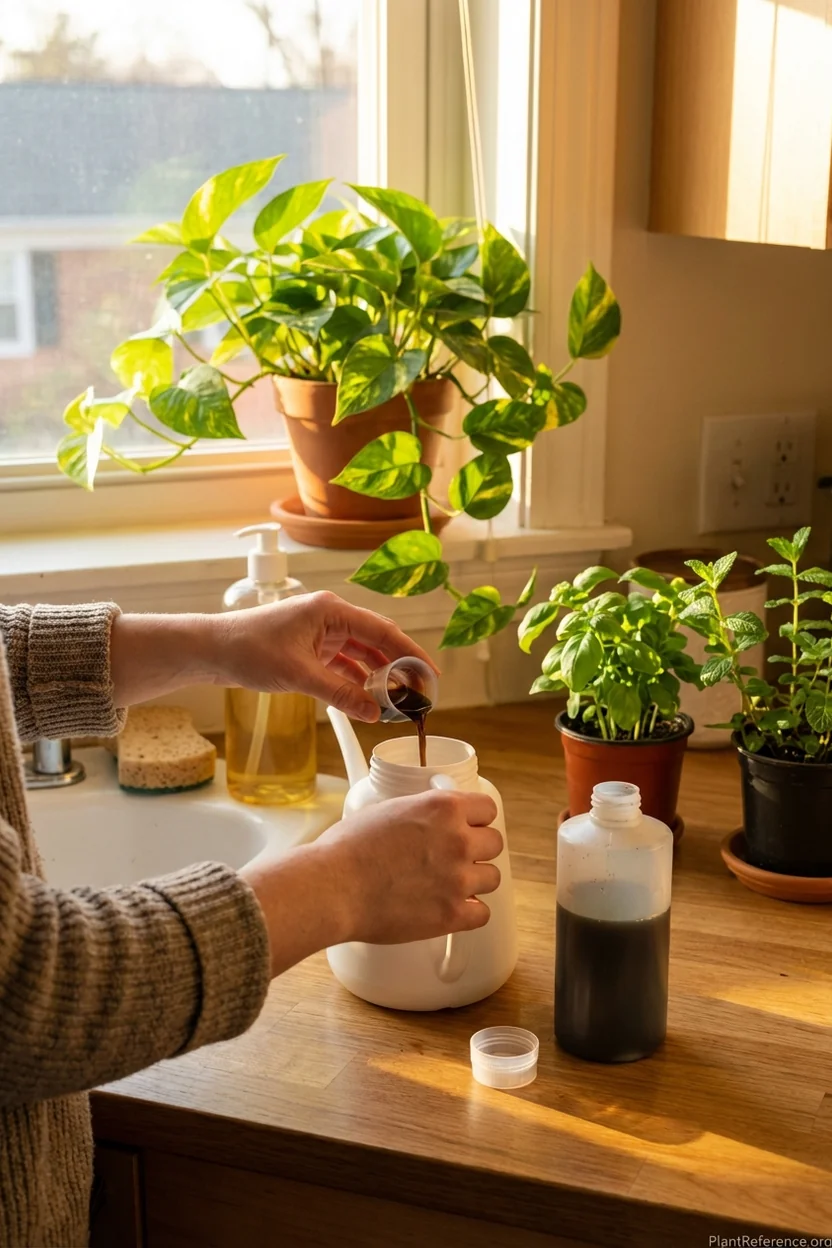
My fertilizing schedule: - Growing season (March-October): Every 4 weeks with balanced liquid fertilizer if actively growing; account for feed already in the mix - Winter (November-February): No fertilizer if growth has stopped - Dilution: Follow the label for your formulation; half-strength feeding can suit modest growth
I prefer liquid fertilizers like Best Fertilizer for Pothos: Growth Boosting Comparison|Miracle-Gro Indoor Plant Food because you can adjust the strength easily. Slow-release pellets work too, but liquid gives you more control.
Pro tip from my experience: Start fertilizing when healthy new growth resumes, not simply because it is March. Longer days often help, but light and root health matter too.
Rootbound Problems: When Your Pot Becomes a Prison
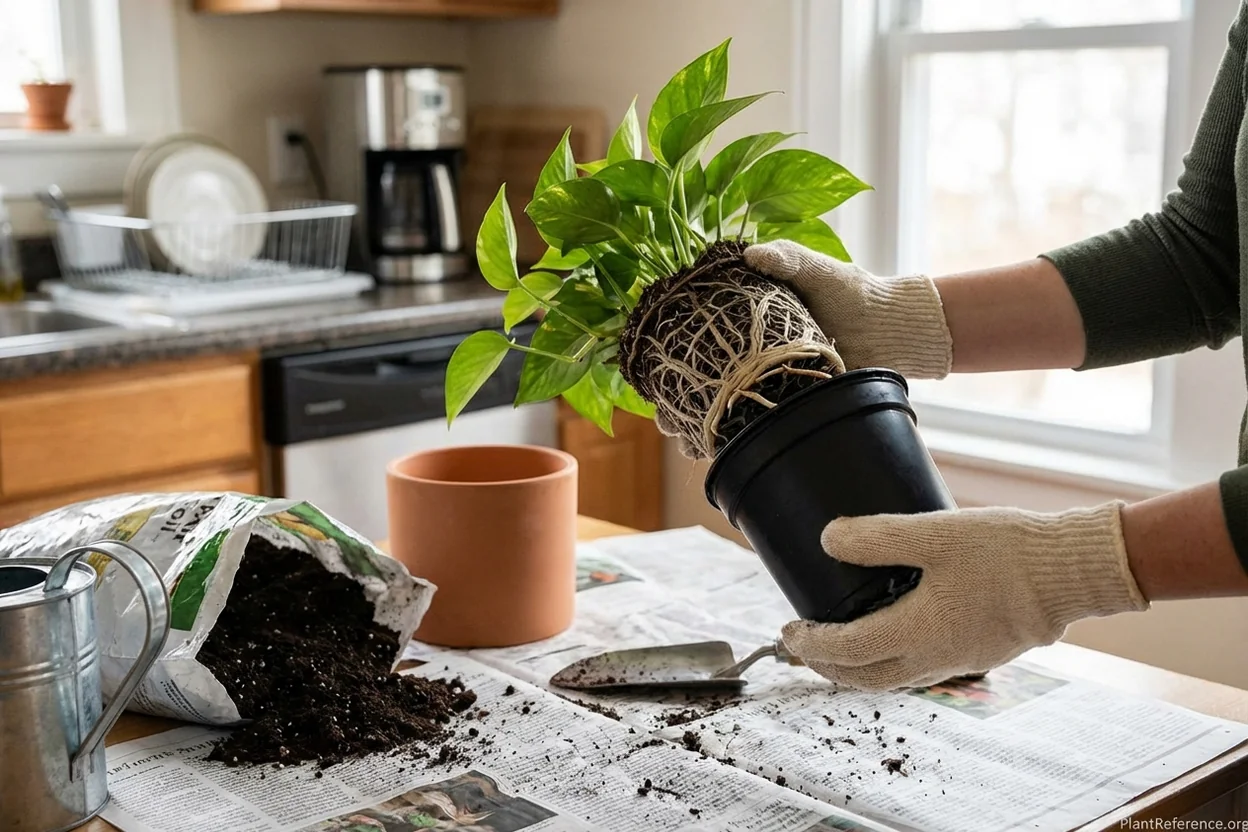
Here's something that took me way too long to learn: that "cozy" pot your pothos has been in for two years? It might actually be stunting growth.
I used to think, "If it's not falling over, the pot's fine." Wrong. A severely rootbound pothos may struggle to access nutrients and hold enough water, with little room for new roots to support those long vines we want.
Check if your pothos is rootbound:
Roots growing out of drainage holes
Water runs straight through pot without absorbing—also check for dried-out, water-repellent mix
Plant dries out much faster than it used to
Roots visible circling inside the pot when you peek
No new growth despite good light and fertilizer
The fix: Repotting Pothos: When and How (Beginner-Friendly)|Repot in a container 1-2 inches (2.5-5 cm) larger in diameter. Not bigger—pothos actually like being slightly snug, just not imprisoned.
I repot my pothos every 18-24 months, usually in early spring right before their growth spurt begins. The timing makes all the difference for recovery.
Seasonal Growth Patterns: What's Normal vs Concerning
One mistake I made early on was panicking when my pothos slowed down in November. Turns out, this is completely normal. Understanding seasonal patterns helps you know when to take action versus when to be patient. These months describe a Northern Hemisphere home; warm conditions and enough light can support winter growth.
Normal seasonal behavior: - Spring (March-May): Rapid new growth, larger leaves, active vine extension - Summer (June-August): Often the peak growing season; the interval between leaves varies - Fall (September-November): Growth slows as days shorten, normal and expected - Winter (December-February): Growth may slow or pause as light and temperature decrease
When to be concerned:
No growth during peak season (May-August) despite good care
New leaves getting progressively smaller
Vines dying back or leaves dropping excessively
Plant looking worse instead of just paused
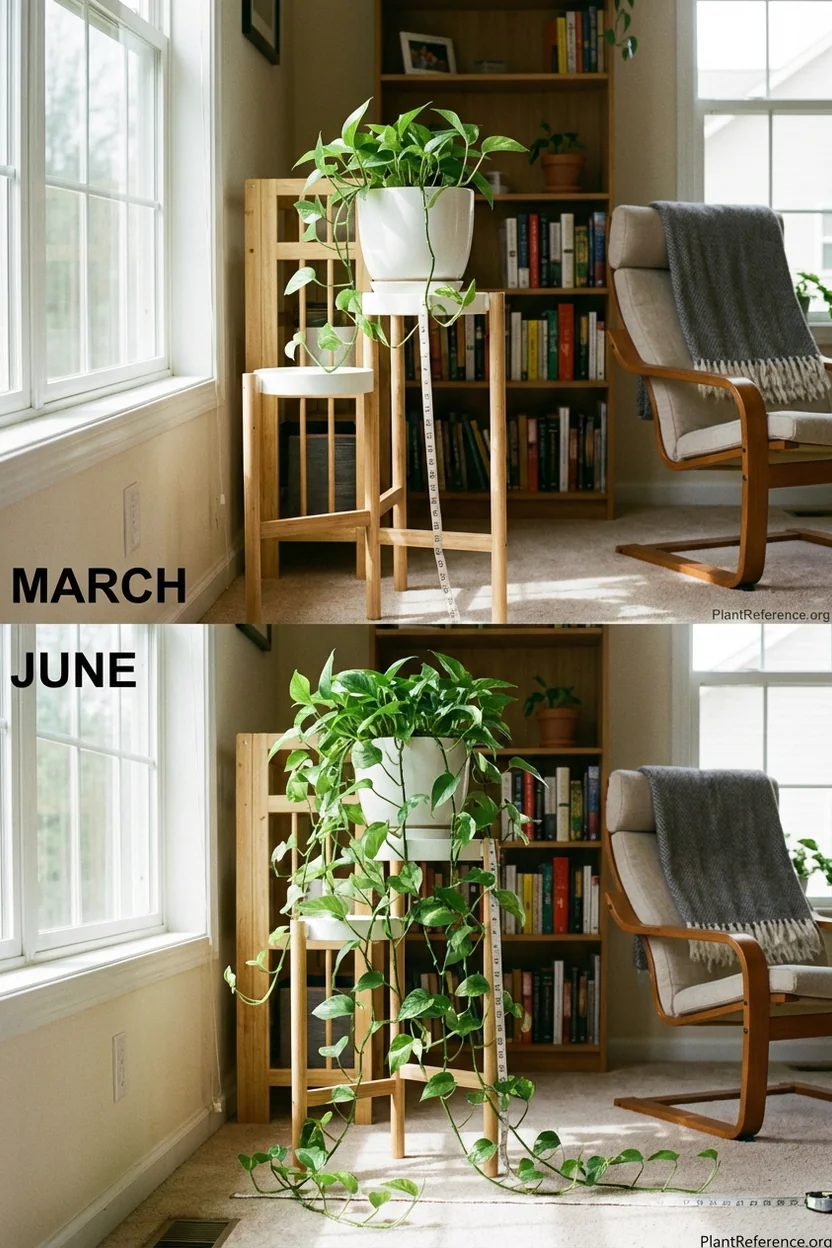
I track my plants' growth with photos every month during growing season. It helps me distinguish between "winter nap" and "actually struggling."
Pruning for Bushier, Fuller Growth
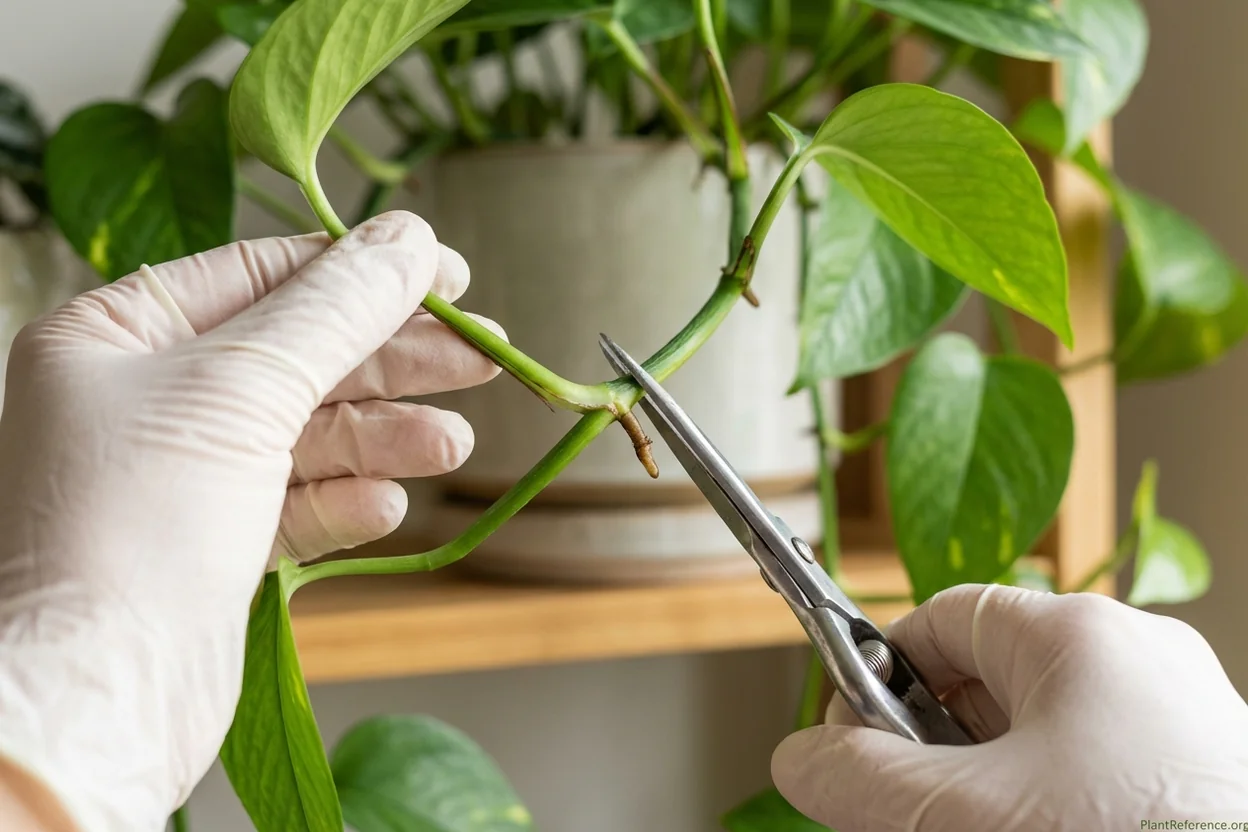
This blew my mind when I first learned it: cutting your pothos can encourage branching. I know, it sounds backwards, but pruning can stimulate new growth from dormant nodes along the vine.
How pruning encourages growth: Each node (those little bumps where aerial roots emerge) is a potential branching point. When you cut above a node, the plant sends energy to activate that dormant growth point. Instead of one long, sparse vine, you may get shorter, fuller growth; branching varies.
Cut just above a node with clean, disinfected scissors
A cut can activate a lateral bud; 2-3 new shoots are not guaranteed
Propagate cuttings with a node in water, keeping leaves above it
Best time: early spring right before growing season
If maintaining variegation, selectively prune persistently all-green shoots
I prune my pothos every spring, cutting back the longest vines by about one-third. Within 6-8 weeks, I have noticeably fuller, bushier plants.
Bonus: Those cuttings root easily in water. I've probably gifted 50+ pothos babies to friends over the years using pruned sections. Wear gloves to avoid irritating sap, and keep plants and cuttings away from children and pets: calcium oxalate crystals can irritate skin and cause pain and swelling if chewed.
Creating the Perfect Growth Environment
Once you understand what your pothos needs, setting up the ideal growth environment becomes straightforward. I've fine-tuned this system over five years of growing pothos in three different apartments.
My proven growth setup: - Location: 3-4 feet (90-120 cm) from east or west window - Humidity: 40-60% is a useful target (I group plants together or use a pebble tray); trays have little room-wide effect, so measure humidity - Temperature: Consistent 65-85°F (18-30°C), away from heating vents - Water quality: Room-temperature tap water is usually suitable; sitting 24 hours does not remove chloramine. If treatment is needed, use a filter rated for the contaminant - Air circulation: Gentle fan nearby prevents stagnant air
The growth-boosting extras: Consider adding a moss pole or trellis if you want your pothos to climb rather than trail. Climbing pothos actually produce larger leaves—in nature, they're trying to reach the forest canopy.
Best Pots for Pothos: Drainage and Style Comparison|Self-watering planters can maintain consistent moisture levels, which supports steady growth when the mix stays aerated rather than saturated. I use them for my office pothos that I can't check daily.
Tracking progress: Take monthly photos during growing season. New leaf size, vine length, and overall fullness are better growth indicators than just counting leaves.
Most importantly, be patient but persistent. A pothos that's been stagnant for months won't transform overnight, but with consistent adjustments, watch for new growth during the active growing season; there is no fixed 4-6-week deadline.
The truth is, most "difficult" pothos just need someone to pay attention to their basic needs. Light, food, space, and a little pruning go a long way. Your slow-growing pothos has probably been trying to tell you what it needs—now you know how to listen.
Frequently Asked Questions
Reading about plants and recognising them are different skills. These three build the second.
- Daily PlantIdentify the day’s mystery plant from a close-up photograph.
- Keyed OutWork a dichotomous key, lead by lead, to name a hidden specimen.
- Name That PlantName a specimen from botanical clues dealt hardest first.
Free to play, no account needed
Jessica transformed her small Brooklyn balcony into a thriving container garden after moving to New York City. What started as a pandemic hobby turned into a plant care consulting business serving urban apartment dwellers across the city. She specializes in small-space gardening, indoor plant troubleshooting, and helping clients keep houseplants alive in less-than-ideal conditions (dim light, dry heat, tiny spaces). Jessica completed a home gardening certificate program and shares her plant wins and failures on her modest Instagram following. Her partner, Maya, jokes that their apartment is now 40% plants, 60% living space. Jessica's passionate about making plant care accessible to renters who think they don't have room to garden.