Image 1 of 17
1 / 17
Plant Reference
Epipremnum, Genus, aureum, Species,
- Genus & species
golden pothos
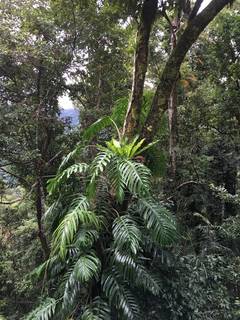
Native to Mo'orea in the Society Islands of French Polynesia, where the species grows as an epiphytic or ground-dwelling vine in humid forest; it is naturalised and invasive in tropical regions outside the native range (including the Solomon Islands, Florida, Hawaii, parts of Australia and the Caribbean) and should not be released outdoors in frost-free climates; in temperate climates the species is grown only as a houseplant since the tropical origin makes it killed by frost at any temperature below 50°F (10°C)
Overview
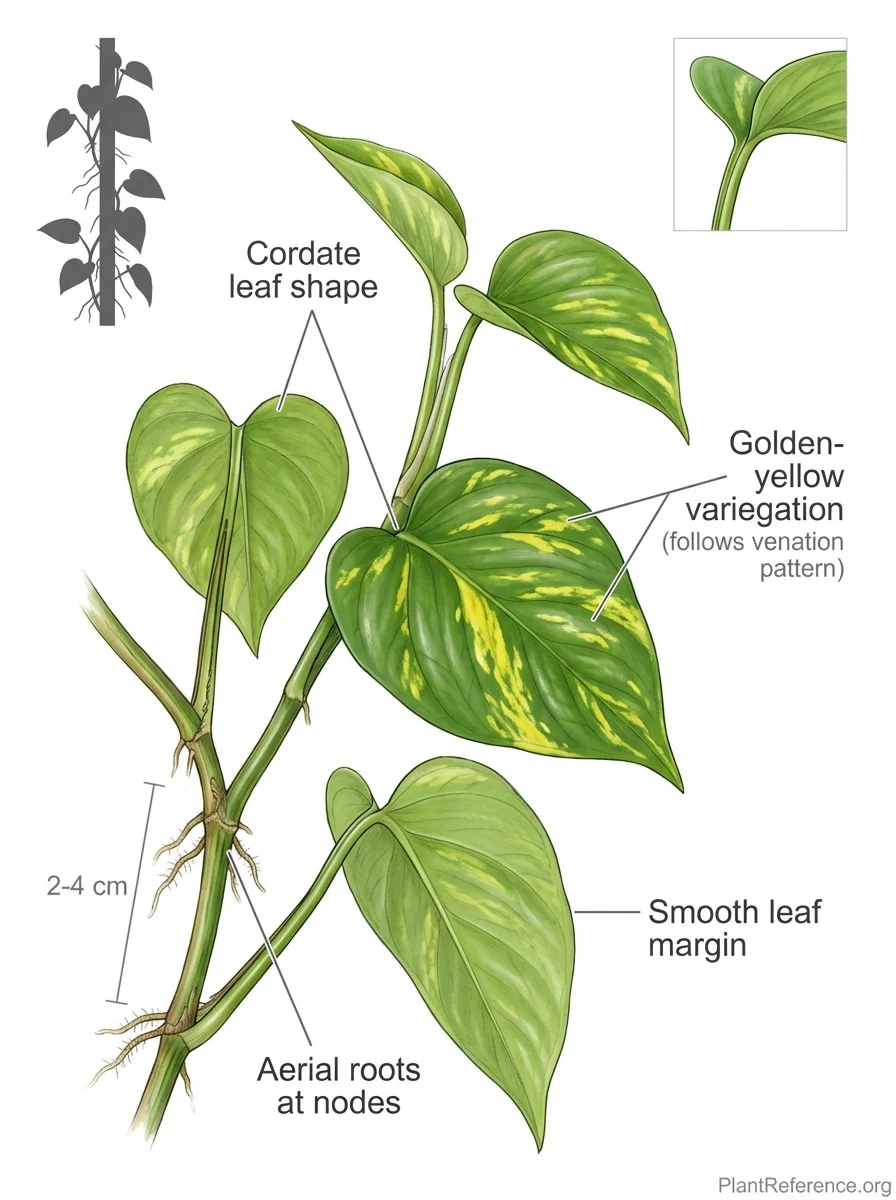
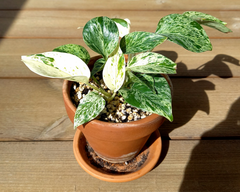
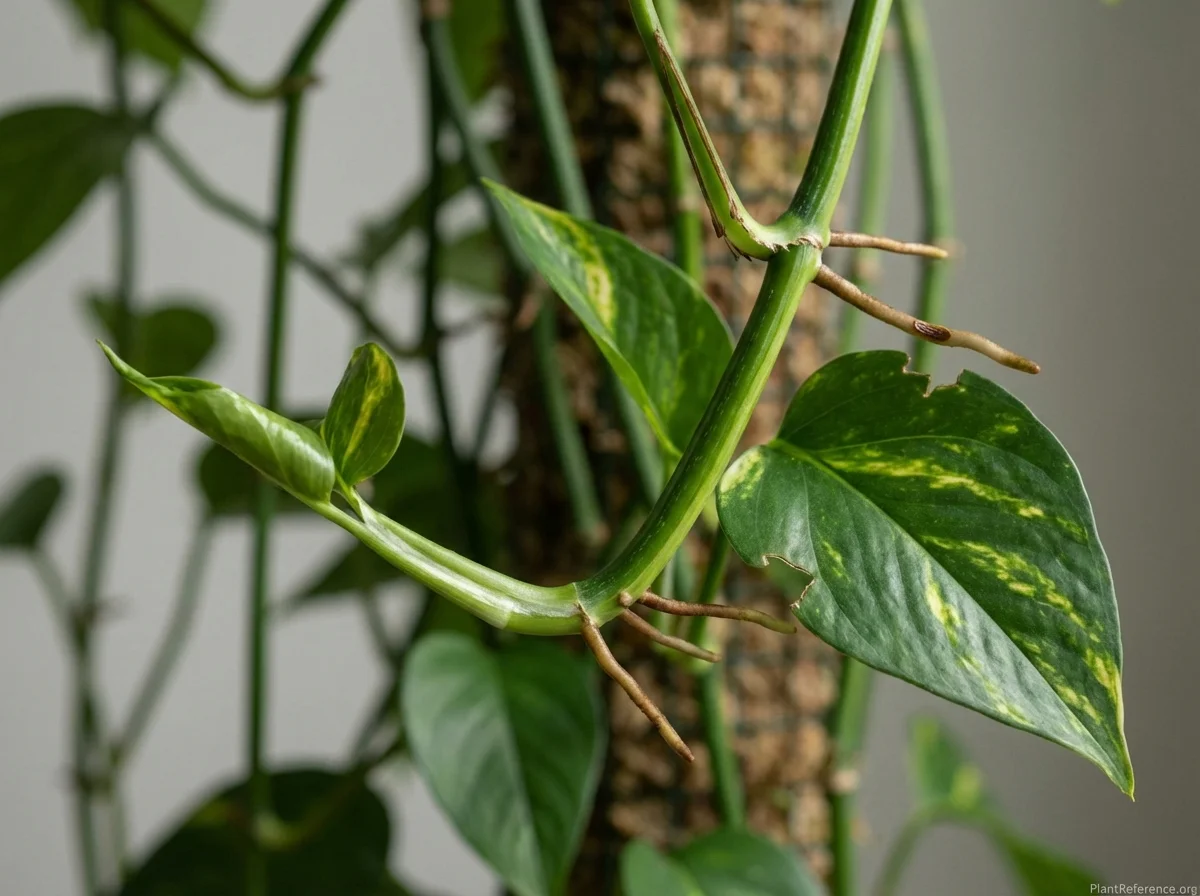
Epipremnum aureum is golden pothos (devil's ivy), an evergreen trailing or climbing vine in the aroid family (Araceae) growing 72-120 inches (180-300 cm / 6-10 feet) indoors and up to 40 ft (12 m) in the wild. Glossy green heart-shaped to oval leaves are 4-6 inches (10-15 cm) on young plants, up to 12 inches (30 cm) on climbing mature specimens, with irregular golden-yellow variegation along veins and margins. Aerial roots at each node allow climbing on supports. The variegation fades in low light and intensifies in bright indirect light. The species ranks among the more shade-tolerant houseplants in cultivation, though the variegation diminishes in deep shade. Direct sun burns the leaves. Sometimes confused with Philodendron hederaceum (heartleaf philodendron) — separated by the more prominent golden variegation and the waxy leaf texture. Propagates readily from stem cuttings in water. Invasive in tropical regions (Florida, Hawaii) — should not be released outdoors in frost-free climates since the species forms dense canopy-smothering colonies in disturbed tropical forest. All parts contain insoluble calcium oxalate crystals: toxic to pets and humans if ingested (mouth pain, swelling, drooling). Zones 10-11 outdoors only; a houseplant elsewhere. Growth rate is moderate indoors, fast in tropical conditions.
Native Range
Epipremnum aureum is native to Mo'orea in the Society Islands of French Polynesia, where it climbs trees as an epiphytic or ground-dwelling vine in humid forest; it has become naturalised and invasive across many tropical regions, including the Solomon Islands, Florida, Hawaii, parts of Australia and the Caribbean.Suggested Uses
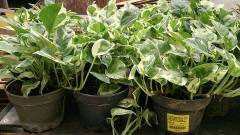
Grown as a houseplant in hanging baskets (for the trailing habit) or on moss poles (for the climbing habit). Tolerates low-light positions where many houseplants struggle. Containers of at least 1 gallon (4 L). Outdoors only in zones 10-11. All parts toxic to pets and humans. Invasive in frost-free tropical regions — should not be released outdoors in those climates. Not suited to homes with curious pets that chew foliage.How to Identify
Appearance
Size & Dimensions
Height6' - 10'
Width/Spread3' - 6'
Bloom Information
Rarely flowers in cultivation. In tropical conditions, the plant produces a small greenish-white spathe that is visually understated and not the reason the species is grown. The species is cultivated for foliage rather than flowers.
Detailed Descriptions
Flower Description
Rarely flowers indoors; greenish-white spathe if produced — small and visually understated, so the species is grown for foliage rather than flowersFoliage Description
Glossy green with irregular golden-yellow variegation along veins and margins; heart-shaped to oval, 4-6 inches (10-15 cm) on young plants, up to 12 inches (30 cm) on climbing mature specimens; leathery textureGrowing Conditions
Sun Requirements
Requires 2-6 hours of direct sunlight daily
• Full Sun: 6+ hours of direct sunlight
• Partial Shade: 3-6 hours of direct sunlight
• Full Shade: Less than 3 hours of direct sunlight
Care & Maintenance
Care Guide
Bright indirect light supports the variegation pattern — the plant tolerates low light but the variegation fades in deep shade. Direct sun burns the leaves. Water when the top 1-2 inches (2.5-5 cm) of soil is dry. Grows in well-drained potting mix at pH 6.0-7.0. Temperature range 65-85°F (18-29°C). Provide a moss pole for the climbing habit or a hanging basket for the trailing habit. All parts contain calcium oxalate that is toxic to pets and humans. Zones 10-11 outdoors. Invasive in tropical regions outside the native range — do not release outdoors in frost-free climates.Pruning
Trim trailing vines above a node to control length and encourage branching from the cut stem. Remove yellowed or damaged leaves at the base. Pinch growing tips for bushier growth. Cuttings root readily in water or soil. Gloves are advisable during pruning since the sap contains calcium oxalate crystals that cause skin irritation in some individuals.Pruning Schedule
springsummer
Container Growing
Suitable for container growing
Minimum container size: 1 gallons
Toxicity Warning
Toxic to pets and humans. All parts contain insoluble calcium oxalate crystals that cause mouth pain, swelling, and drooling if ingested.Botanical Flashcard