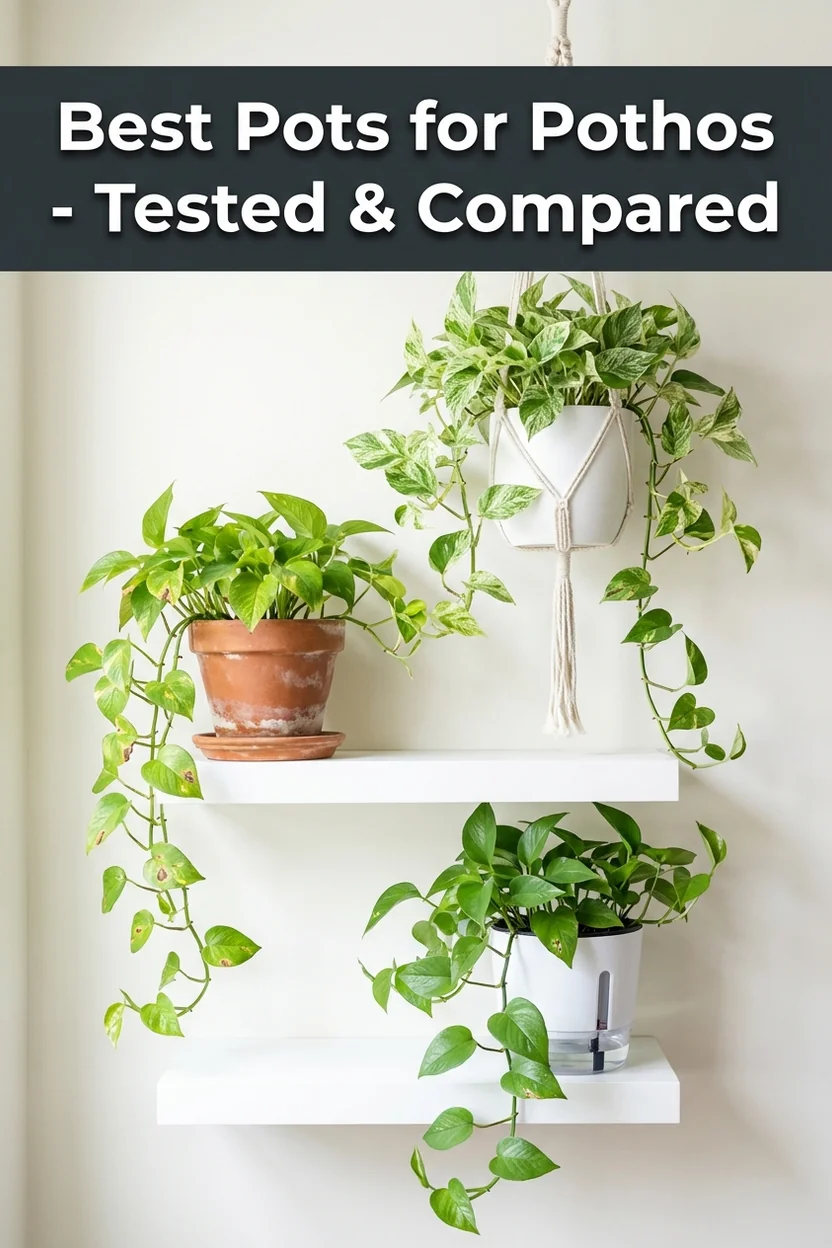
Best Pots for Pothos: Drainage and Style Comparison (2026)
Pets & Toxicity
Recorded toxicity for plants linked in this guide. An unknown status is not a safety assessment.
Epipremnum aureum — Toxicity Warning
Toxic to pets and humans. All parts contain insoluble calcium oxalate crystals that cause mouth pain, swelling, and drooling if ingested.View Epipremnum aureum plant profile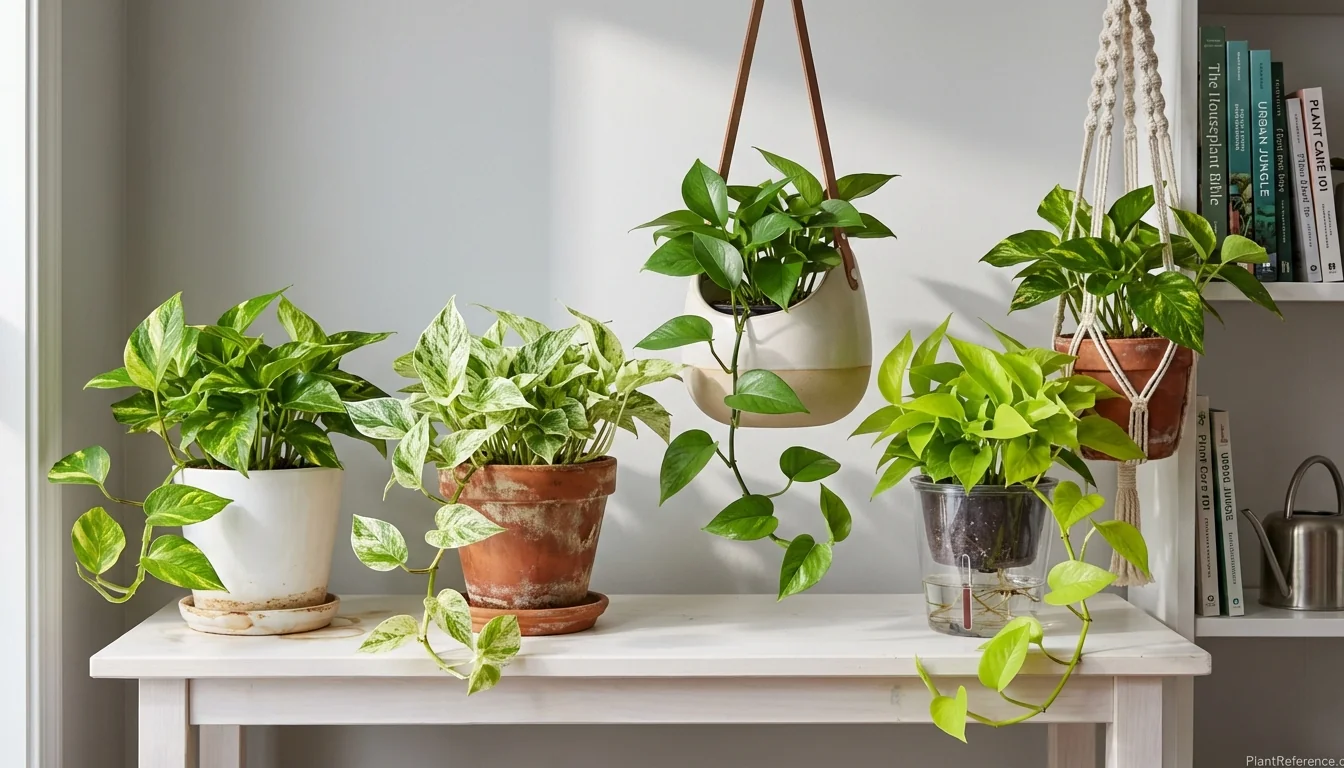
— Image © Plant Reference 2026
Choosing the wrong pot is the fastest way to kill an otherwise unkillable pothos 🌿Epipremnum aureum (ep-ih-PREM-num AW-ree-um). I learned this the hard way when my first golden pothos died a slow, soggy death in a decorative pot without drainage holes. Since then, I've tested dozens of pots with my ever-growing pothos collection, and the right container truly makes the difference between thriving vines and yellow leaves.
Why the Right Pot Matters for Pothos Success
Your pothos might be nearly impossible to kill, but the wrong pot will test that reputation. These tropical vines need the goldilocks zone of moisture—not too wet, not too dry—and your pot choice directly impacts that balance.
The three biggest pot-related problems I see are root rot from poor drainage, stunted growth from being rootbound too long, and watering stress from containers that dry too quickly or slowly. Getting the pot right eliminates these issues before they start.
After testing various containers with my 15+ pothos plants over two years, I've identified the key features that separate thriving plants from struggling ones. The winners combine proper drainage, appropriate sizing, and materials that match your watering style.
Essential Features Every Pothos Pot Needs
Drainage Holes Are Non-Negotiable
This is the hill I'll die on: every pothos pot needs drainage holes. I don't care how beautiful that ceramic planter looks or how perfectly it matches your décor. Without drainage, your pothos will eventually develop root rot.
I've tried the "layer of rocks at the bottom" hack and watched plants die anyway. The problem isn't just standing water—it's that soil stays saturated too long without proper drainage. Even drought-tolerant pothos can't handle constantly wet roots.
Size Matters: The 2-4 Inch Rule
When repotting pothos, choose a pot 2-4 inches larger in diameter than the current one. Going too big actually harms the plant because excess soil stays wet longer, increasing root rot risk.
I measure across the top of the current pot, then add 2 inches for young plants or 3-4 inches for mature, root-bound specimens. This gives roots room to grow without creating a soggy soil situation.
Weight Considerations for Hanging Display
If you're planning to hang your pothos, factor in the weight of pot plus soil plus water. A large ceramic hanging planter can weigh 15+ pounds when watered, requiring sturdy ceiling hooks and chains.
I learned this lesson when my "lightweight" ceramic hanger crashed down because I underestimated the total weight. Now I weigh containers dry, then calculate full weight before hanging anything above 10 pounds.
Small hanging pots (6-8 inches): 8-12 pounds when watered
Medium hanging pots (10-12 inches): 15-20 pounds when watered
Large hanging pots (14+ inches): 25-30 pounds when watered
Self-watering hanging pots: Add 2-3 pounds for water reservoir
Best Overall Pothos Pots: Top 7 Tested Options
After two years of testing with different pothos varieties, these seven pots consistently produced healthy, thriving plants across various care scenarios.
→ BUYMAX Ceramic Pots with Drainage 4-Pack ($18-25) - Best value with proper drainage
Set of four 5-inch ceramic pots with drainage holes and matching saucers prevents root rot while maintaining clean surfaces. Modern matte white finish complements any décor. Each pot includes a perfectly-fitted saucer to catch excess water without creating standing water problems. Thick ceramic construction provides stability for trailing pothos without tipping. Ideal sizing for repotting from 3-4 inch nursery pots or dividing larger plants.
→ Mkono Ceramic Hanging Planter Set 8"+6" ($28-35) - Best hanging option with style
Two-size set with 8-inch and 6-inch geometric ceramic planters featuring drainage holes and removable rubber plugs. Includes strong polyester rope hangers rated for heavy loads. Modern angular design adds architectural interest to any space. Drainage holes with plug system prevents dripping while maintaining root health. Perfect for displaying trailing pothos at different heights to create cascading effect.
→ Gardenix Self-Watering Pots 3-Pack ($20-28) - Best for busy plant parents
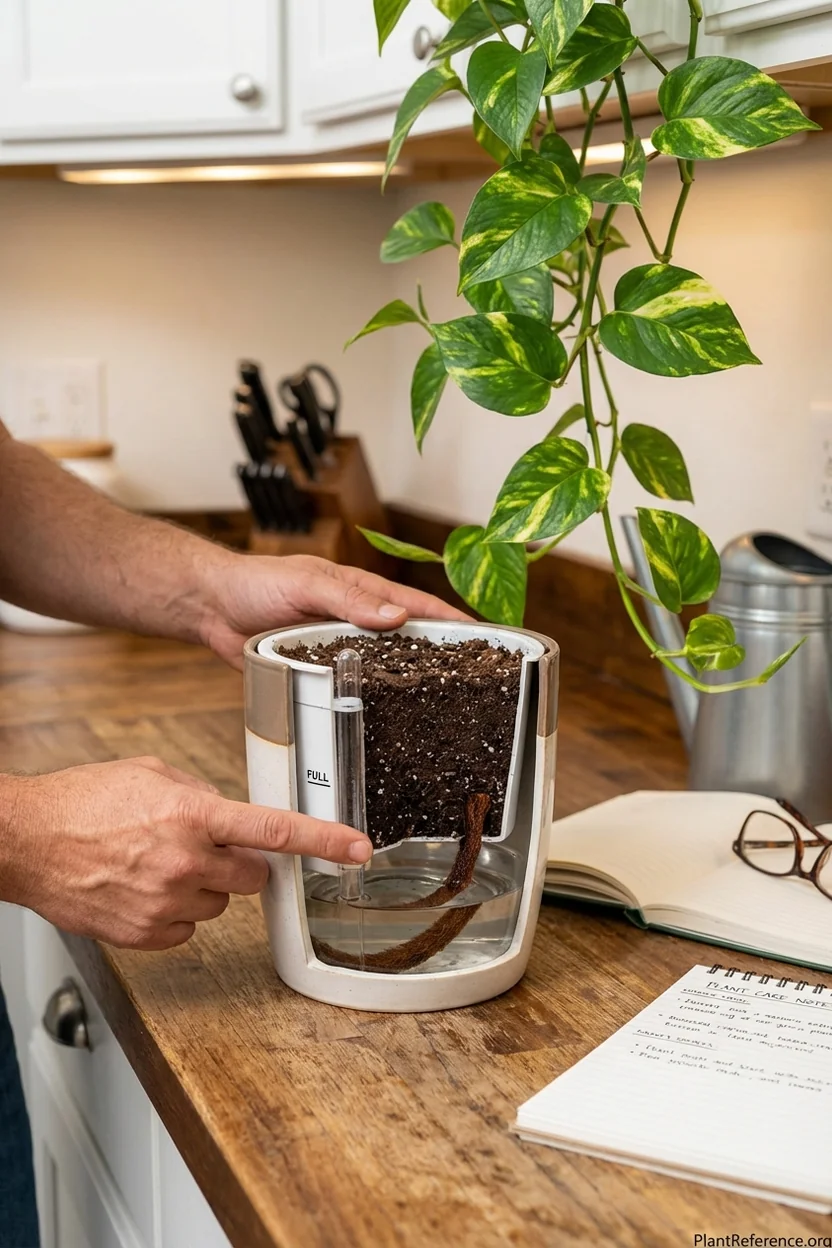
Revolutionary water level indicator with pot-in-pot design maintains consistent moisture without overwatering risks. Clear gauge shows exactly when to refill, lasting 10+ days between waterings. Includes coconut coir wicks for consistent water uptake. Perfect for travelers, busy schedules, or anyone who forgets to water regularly. Three different colors complement various décor styles.
→ Classic Terracotta Pots with Saucers ($8-15) - Best for chronic overwaterers
Traditional unglazed terracotta provides superior drainage and breathability, making overwatering nearly impossible. Porous clay walls allow excess moisture to evaporate while maintaining healthy soil conditions. Natural orange-brown color develops beautiful patina over time with mineral deposits. Matching saucers protect surfaces while providing proper drainage. Six-pack provides excellent value for multiple plants or repotting.
→ Mkono Macrame Plant Hanger with Pot ($15-22) - Best bohemian hanging style
Hand-woven cotton rope creates stunning bohemian display perfect for trailing pothos varieties. Four-leg design distributes weight evenly, supporting pots up to 12 pounds safely. Natural wood ring adds rustic charm while providing stability. 35-inch length creates dramatic cascading effect as pothos vines grow. Durable construction withstands daily watering and heavy plant growth.
→ Modern Plastic Planters with Saucers ($12-18) - Best budget lightweight option
Lightweight yet durable plastic construction ideal for hanging applications or frequent moving. Multiple drainage holes ensure excellent water flow while textured saucers prevent sliding. Available in white, gray, and black to match any décor style. UV-resistant material prevents fading or cracking from sun exposure. Perfect for renters who move frequently or those wanting to rearrange plant displays regularly.
Product link unavailable
→ La Jolíe Muse Large Hanging Planter ($25-35) - Best for mature trailing display
Oversized 10-inch diameter accommodates mature pothos with extensive root systems. Double-wall construction with built-in water reservoir prevents dripping while maintaining drainage. Comes with adjustable hanging chain and ceiling hook hardware. Weather-resistant finish suitable for covered outdoor areas. Large size allows multiple cuttings or mature plant division.
Product link unavailable
Material Comparison: Ceramic vs Plastic vs Terracotta
Ceramic: The Goldilocks Choice
Ceramic pots strike the perfect balance for most pothos owners. They're heavy enough to prevent tipping as vines grow long, retain moisture better than terracotta but drain better than plastic, and come in countless decorative styles.
I use ceramic for about 60% of my pothos collection because they provide consistent moisture levels without the extremes. The glazed surface resists staining and cleans easily, making them ideal for indoor display.
Pros: Stable weight, attractive options, moderate drainage, easy cleaning Cons: More expensive, can break if dropped, heavier for hanging
Plastic: Lightweight and Practical
Don't dismiss plastic pots as cheap—modern versions offer excellent functionality for pothos care. They're perfect for hanging applications, frequent moves, or budget-conscious plant parents.
I particularly love plastic for propagation stations and starter plants. They're light enough for multiple hangers without structural concerns, and replacement is affordable if you want to change colors or sizes.
Pros: Lightweight, affordable, unbreakable, many colors Cons: Can look cheap, less stable, may retain heat in sun
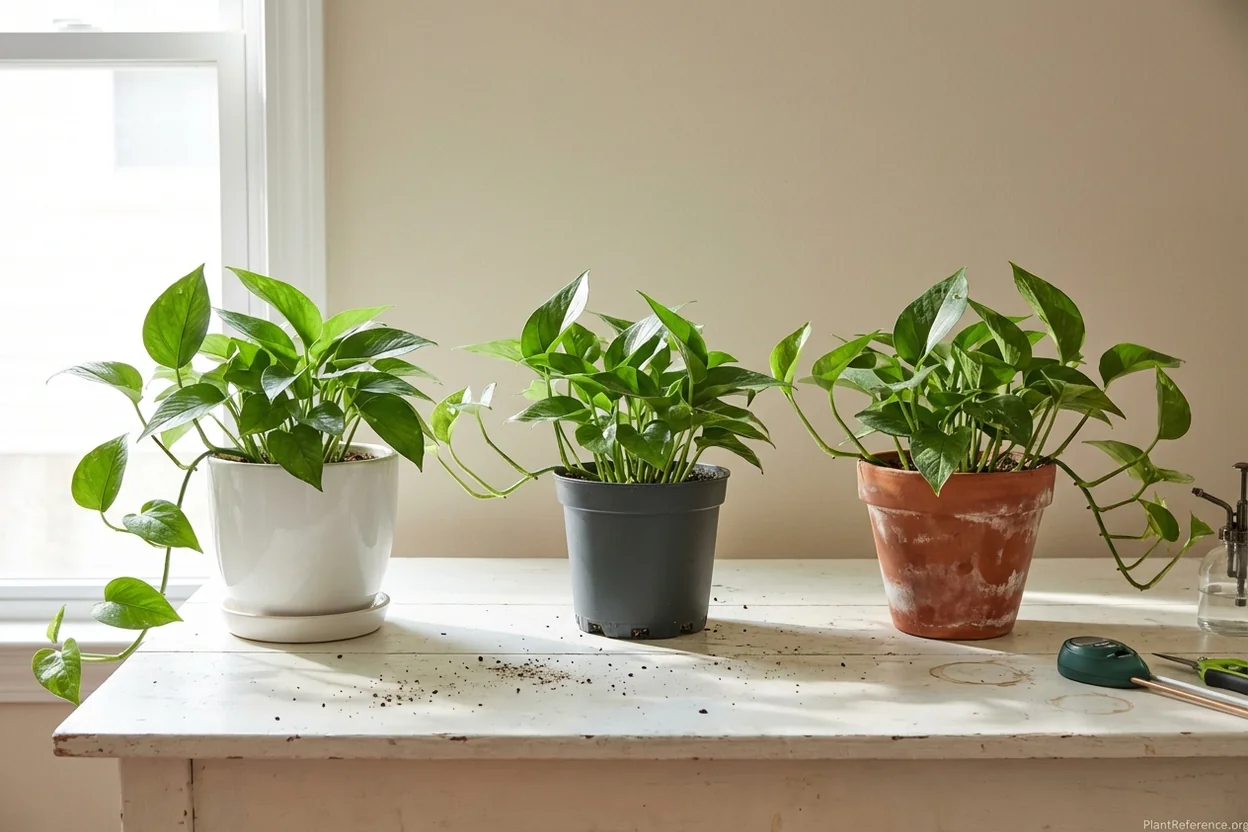
Terracotta: The Forgiving Option
If you're a chronic overwaterer, terracotta pots might save your pothos life. The porous clay allows excess moisture to evaporate through the walls, making it nearly impossible to keep soil too wet.
I recommend terracotta for beginners who killed their first pothos from overwatering. The visual cue of darkened clay when wet helps you understand soil moisture levels better.
Pros: Excellent drainage, prevents overwatering, develops character over time Cons: Dries quickly in low humidity, can crack in freezing weather, limited style options
Hanging vs Standard Pots for Different Display Goals
When to Choose Hanging Pots
Hanging pots showcase pothos' natural trailing habit beautifully, but they're not right for every situation. I hang pothos when I want dramatic cascading vines, need to save floor space, or want to keep plants away from pets.
Consider your lifestyle before committing to hanging planters. They're harder to water (drips!), more difficult to check for problems, and require proper ceiling support. I use hanging pots for mature, established plants that need less frequent attention.
Best for: Mature plants with 2+ foot vines, space-saving displays, pet-safe placement
Consider: Watering mess, weight limits, accessibility for care
Avoid: Young plants, frequently moved displays, weak ceiling mounting
Standard Pots for Flexibility
Standard pots with saucers offer maximum flexibility for pothos care. You can easily move them for cleaning, watering is mess-free, and checking soil moisture takes seconds.
I keep about 70% of my pothos collection in standard pots because they're simply more practical for regular care. As plants mature and develop impressive trailing habits, I sometimes transition my favorites to hanging displays.
Self-Watering Pots: When They Work (And When They Don't)
The Technology Behind Self-Watering
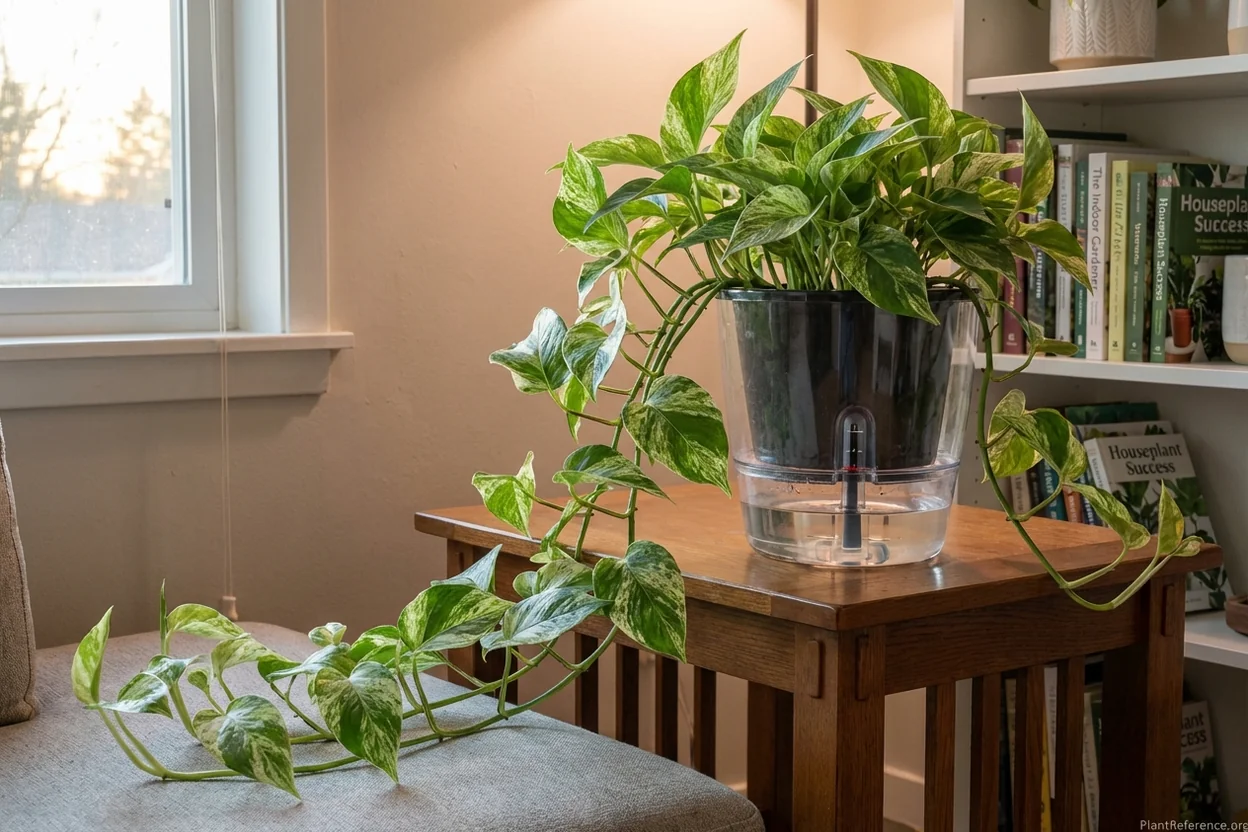
Self-watering pots use a reservoir system with wicks to provide consistent moisture without human intervention. A water gauge shows when to refill, typically every 7-14 days depending on plant size and season.
I've tested several brands with my pothos collection and found them genuinely helpful for busy schedules or travel. The key is understanding they're not set-and-forget solutions—you still need to monitor plant health and adjust for seasons.
When Self-Watering Works Best
Self-watering pots excel for established pothos plants with predictable water needs. I use them for my golden and jade pothos that have consistent growth patterns and stable root systems.
They're particularly valuable during winter when I travel more frequently or summer when heat increases water consumption. The reservoir system maintains that consistent moisture level pothos prefer without daily attention.
When to Avoid Self-Watering Pots
Skip self-watering systems for newly propagated pothos or recently repotted plants. Young root systems can't handle consistent moisture levels and need the wet-dry cycle of traditional watering to develop properly.
I also avoid them for variegated varieties that need precise moisture control to maintain their patterns. Pothos Losing Variegation: How to Keep Marble Queen White explains why consistent moisture can actually reduce variegation in some varieties.
Size Selection Guide for Young to Mature Plants
Sizing for Different Growth Stages
New Propagations (2-4 inch pots): Fresh cuttings with developing roots need small containers that dry quickly. I use 2-3 inch pots for water-propagated cuttings transitioning to soil.
Young Plants (4-6 inch pots): Nursery plants and established propagations thrive in 4-6 inch containers. This size provides room for root development without excess soil that stays wet.
Mature Plants (6-10 inch pots): Established pothos with 12+ inch vines need 6-10 inch pots depending on root density. I check roots annually and repot when they circle the bottom.
Large Specimens (10+ inch pots): Mature plants with extensive vining require large containers or consideration for division. These sizes work best as statement pieces or hanging displays.
The Repotting Timeline
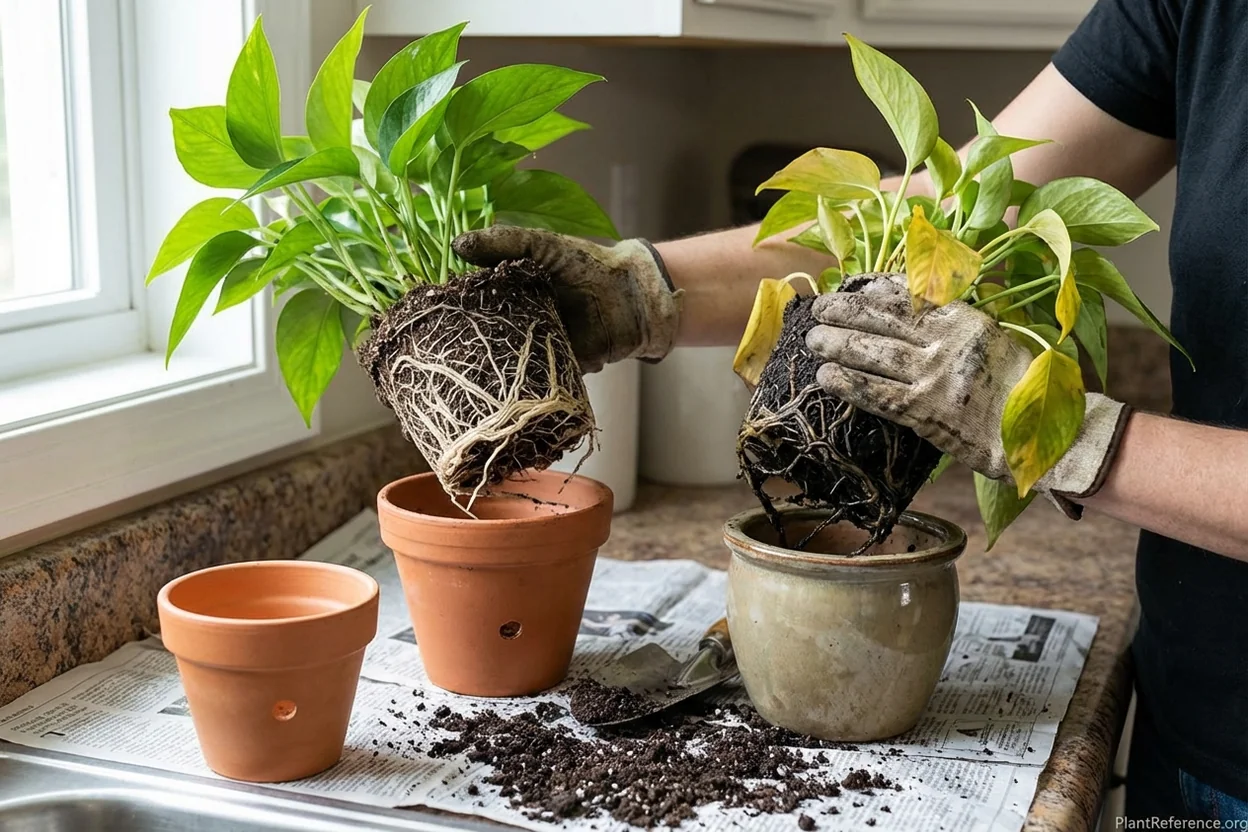
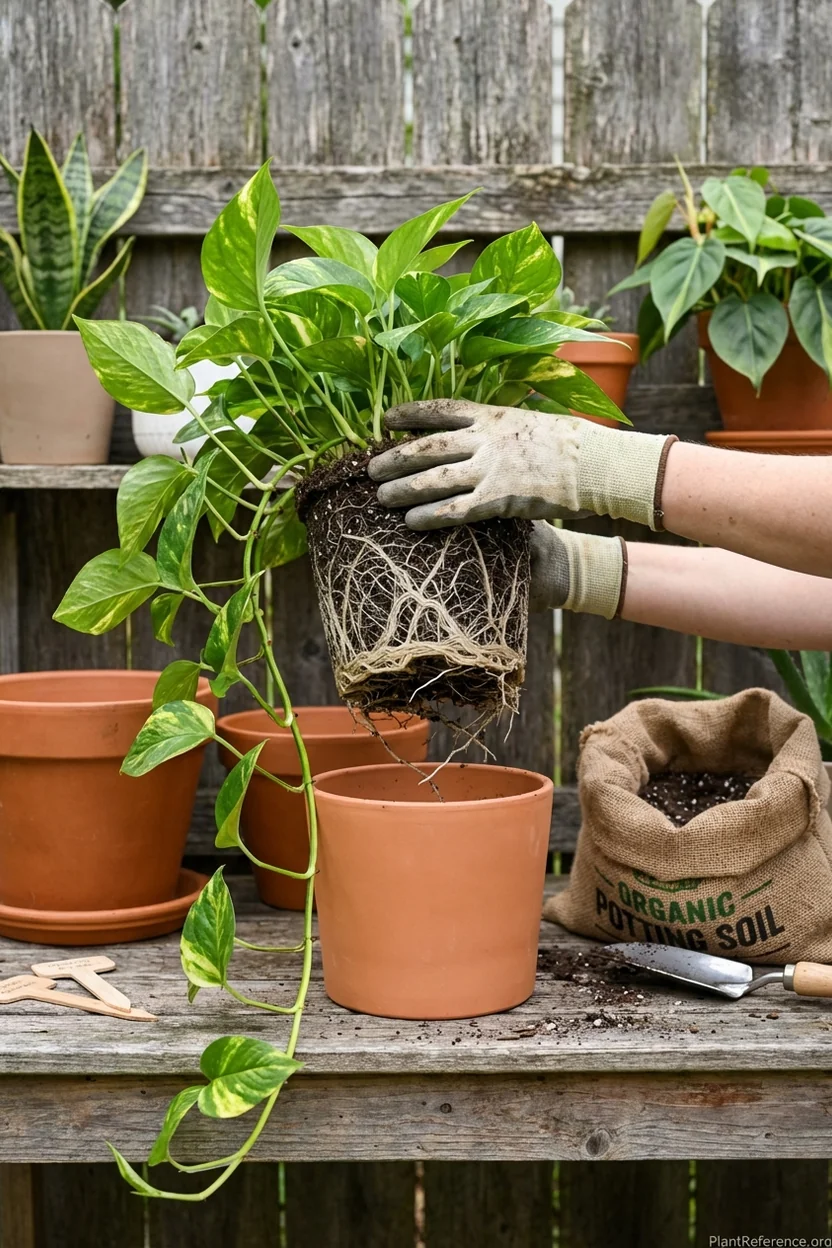
Most pothos need repotting every 12-18 months, but growth rate varies by variety and conditions. I check annually by gently lifting plants to inspect root development at the drainage holes.
Signs it's time to size up include roots growing from drainage holes, water running straight through without absorbing, or significantly slowed growth despite proper care conditions.
Drainage Solutions and Saucer Selection
Why Saucers Matter More Than You Think
The right saucer protects your furniture while preventing the standing water that causes root rot. I learned this balance through trial and error—too small and water overflows, too large and it looks awkward.
Choose saucers 1-2 inches larger than your pot diameter. This catches normal drainage without creating a swimming pool situation. I empty saucers 30 minutes after watering to prevent water reabsorption.
DIY Drainage Improvements
If you fall in love with a decorative pot without drainage holes, you can convert it into a cachepot system. Place a slightly smaller nursery pot with holes inside the decorative container, elevated on pot feet or stones.
This approach lets you enjoy beautiful containers while maintaining proper drainage. I use this method for expensive ceramic pieces I don't want to drill, though it requires more careful watering to prevent overflow.
Emergency Drainage Solutions
For pots with inadequate drainage, you can improve the situation temporarily while planning a proper replacement. Add a layer of horticultural charcoal at the bottom to filter standing water and reduce odor-causing bacteria.
However, this is a temporary fix at best. I've never seen long-term success with "drainage layer" methods in pots without holes. Pothos Root Rot: Emergency Rescue in 5 Steps covers what happens when drainage fails completely.
Frequently Asked Questions
Reading about plants and recognising them are different skills. These three build the second.
- Daily PlantIdentify the day’s mystery plant from a close-up photograph.
- Keyed OutWork a dichotomous key, lead by lead, to name a hidden specimen.
- Name That PlantName a specimen from botanical clues dealt hardest first.
Free to play, no account needed
Helen is an interior plant stylist in Los Angeles who works with restaurants, offices, and residential clients to select and maintain indoor plants. She studied design in college and got into plants when a client asked her to "green up" a mid-century modern home. Helen's expertise sits at the intersection of design and plant care—she thinks about light, scale, texture, and color, but she also knows which plants will actually survive in a given space. She's killed enough fiddle leaf figs in dark corners to know better. Helen maintains her own collection of over 80 houseplants in her apartment and writes about indoor plant selection, styling, and the practical side of keeping plants alive in interior environments.