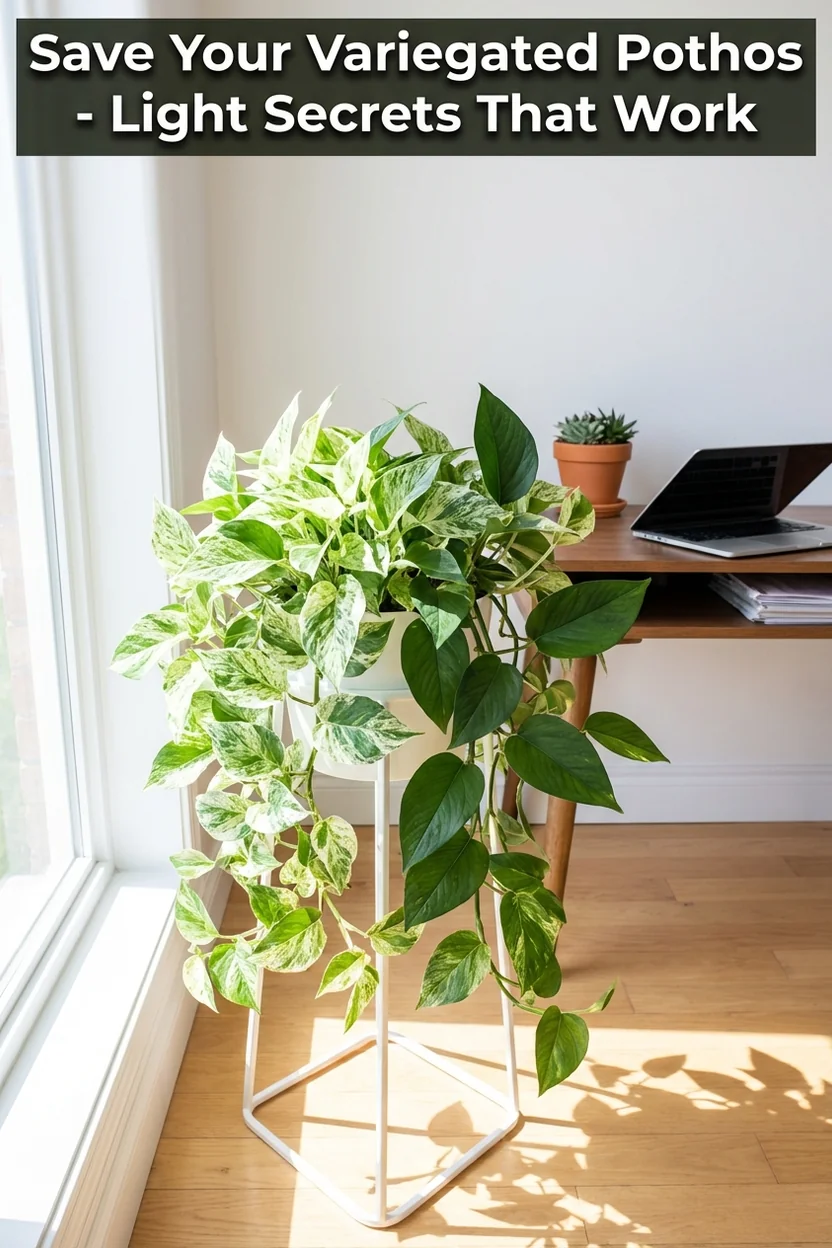
Pothos Losing Variegation: How to Keep Marble Queen White
Pets & Toxicity
Recorded toxicity for plants linked in this guide. An unknown status is not a safety assessment.
Epipremnum aureum — Toxicity Warning
Toxic to pets and humans. All parts contain insoluble calcium oxalate crystals that cause mouth pain, swelling, and drooling if ingested.View Epipremnum aureum plant profile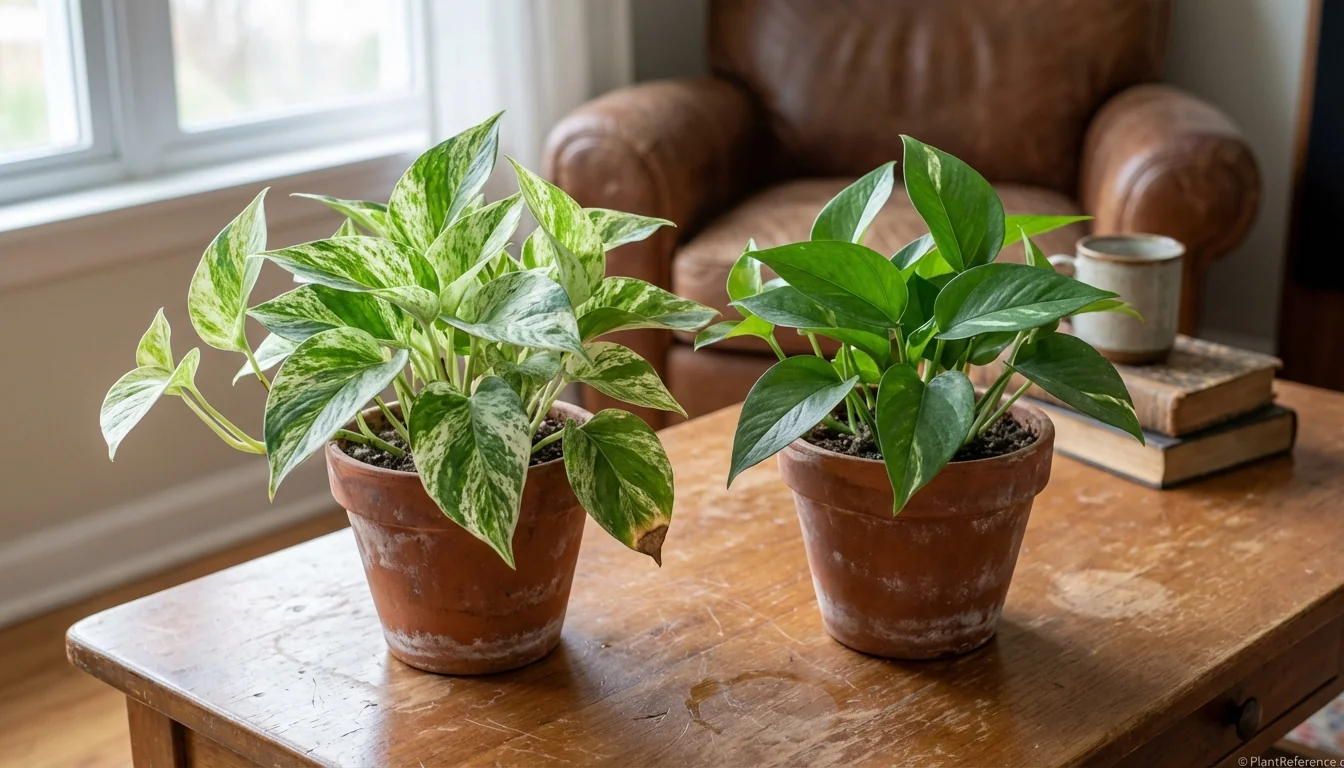
— Image © Plant Reference 2026
Watching your gorgeous Marble Queen pothos 🌿Epipremnum aureum (ep-ih-PREM-num AW-ree-um) slowly turn solid green is heartbreaking—I've been there. The good news? Pothos losing variegation is completely preventable and often reversible when you understand what's really happening and act quickly.
Why Pothos Lose Their Variegation
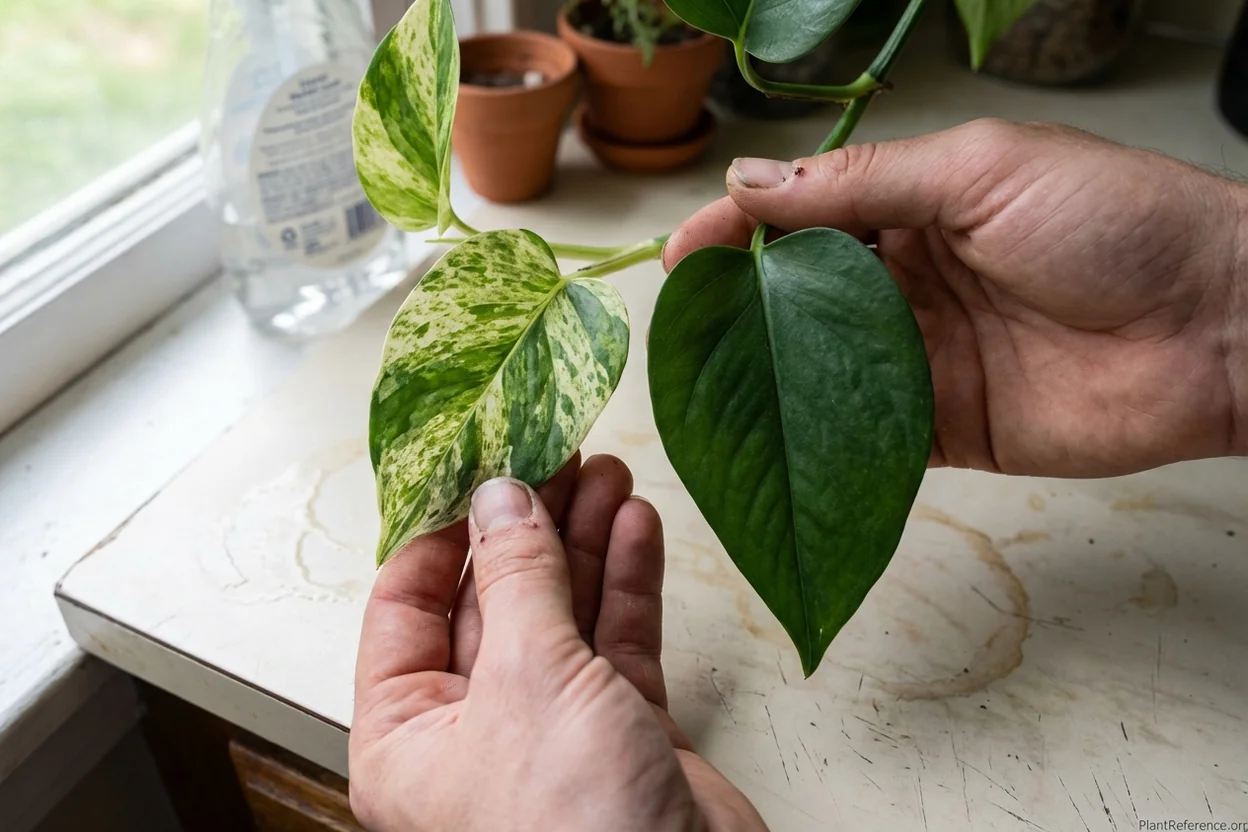
Your pothos isn't being dramatic—it's fighting for survival. Variegated leaves contain less chlorophyll than solid green ones because those beautiful white and cream sections can't photosynthesize. When light levels drop, your plant makes a smart but frustrating decision: produce more chlorophyll to capture every available photon.
This process happens gradually, which is why you might not notice until half your plant looks completely different. New growth emerges progressively greener, and existing variegated leaves may develop larger green sections. Your plant is essentially choosing survival over beauty.
The science behind variegation involves genetic mutations that prevent chlorophyll production in certain cells. These mutations are unstable—environmental stress (especially low light) triggers the plant to override the mutation and produce normal, green leaves. Think of it as your plant's emergency mode.
Different varieties have different stability levels. Golden pothos rarely loses its yellow markings, while Marble Queen and N'Joy can revert quickly in inadequate light. Snow Queen, with its heavy white variegation, is particularly prone to reversion because it has even less chlorophyll to work with.
How Much Light Variegated Pothos Actually Need
Here's where most plant parents go wrong: variegated pothos need significantly more light than their solid green cousins. While Golden pothos tolerates low light beautifully, Marble Queen becomes a different plant entirely in the same conditions.
Optimal light levels for maintaining variegation:
Bright indirect light: 400-800 foot-candles (200-400 fc keeps a pothos healthy, but variegated cultivars need the upper end to hold their white and cream)
East-facing windows: Perfect morning sun, bright rest of day
North windows: Consistent bright light without harsh rays
South/west windows: 3-5 feet back from glass to avoid burning
Fluorescent office lighting: Often sufficient if close enough
You don't need expensive equipment to gauge light levels. Hold your hand 12 inches above the plant during the brightest part of the day. If you see a clearly defined shadow, your light is probably adequate for variegation. A faint or no shadow indicates insufficient light for maintaining those white patterns.
Distance from windows matters more than you think. Light intensity drops dramatically as you move away from the source. A plant that's thriving 2 feet from an east window might lose variegation at 4 feet from the same window.
Seasonal adjustments are crucial. Winter light can be 50% dimmer than summer, even from the same window. If your pothos maintains variegation in summer but reverts in winter, you'll need to move it closer to the window or add supplemental lighting during darker months.
Emergency Action Plan for Saving Variegation
Act fast—the longer your pothos produces solid green growth, the harder it becomes to reverse. Here's your step-by-step rescue plan:
Step 1: Move to Better Light Immediately Don't wait to find the "perfect" spot. Move your plant to the brightest indirect light available today. Even a temporary improvement can stop further reversion while you arrange better long-term placement.
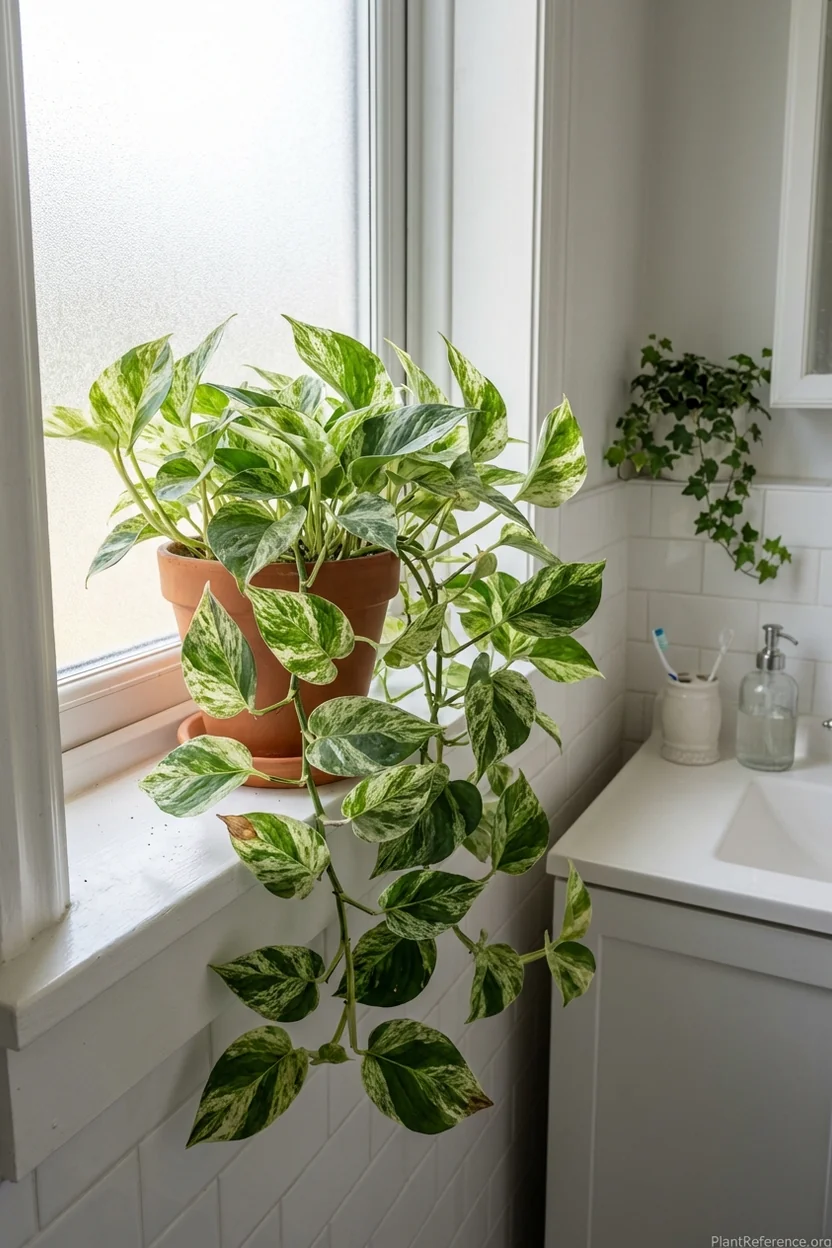
Step 2: Assess the Damage Examine your plant carefully. Identify stems that are completely solid green versus those with mixed variegated and green leaves. Take photos if needed—it's easier to track progress with visual records.
Step 3: Strategic Pruning (covered in detail below) Remove all completely solid green stems first. These won't regain variegation and will continue producing green growth, weakening the variegated portions.
Step 4: Be Patient with Recovery New growth in proper light should show improved variegation within 2-4 weeks. Don't expect dramatic changes overnight—plant recovery takes time. Existing solid green leaves won't change back, but new growth should emerge with better patterns.
Pothos Care: The Complete Beginner's Guide (2025) provides comprehensive care information that supports healthy variegation development.
Pruning Techniques to Stop Reversion
Pruning is your most powerful tool for maintaining variegation, but it requires confidence. Many plant parents hesitate to cut their plants, but strategic pruning actually encourages the growth you want.
Identify What to Cut:
Completely solid green vines: Remove entire stems back to main plant
Mostly green stems: Cut back to last strongly variegated leaf
Individual solid leaves: Remove at stem junction, don't leave stubs
Weak variegated growth: Light pruning encourages stronger new shoots
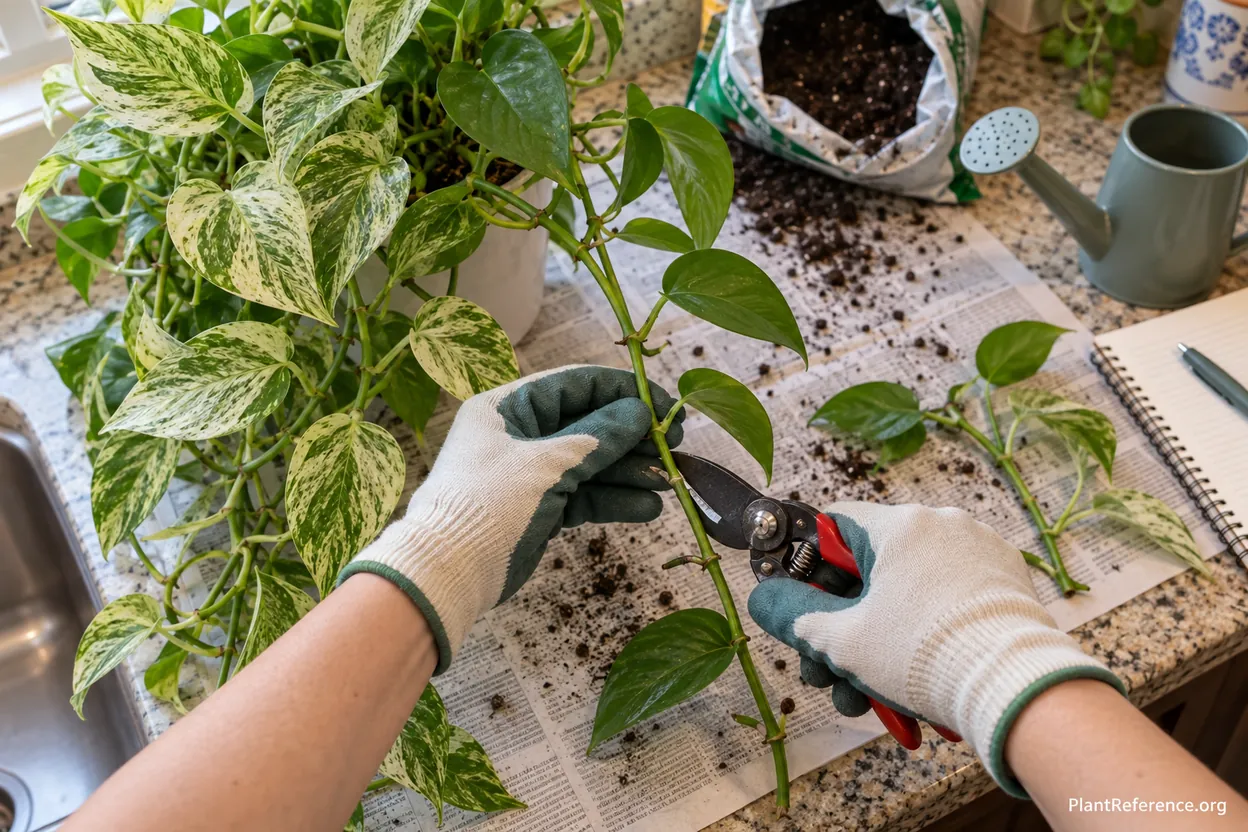
Proper cutting technique prevents disease. Use clean, sharp scissors or pruning shears. Cut just above a node (the bump where leaves emerge) at a 45-degree angle. This encourages new growth from that point.
Don't feel guilty about aggressive pruning. Pothos grow incredibly fast, and removing 30-50% of solid green growth often results in a fuller, more variegated plant within 2 months. I've cut entire stems back to 6-inch stubs and watched beautiful variegated vines emerge.
Save your cuttings for propagation—even solid green pothos cuttings can produce variegated growth when rooted in bright light. Pothos Propagation: Water Method Step-by-Step (With Photos) walks you through the process.
Best Lighting Solutions for Apartment Dwellers
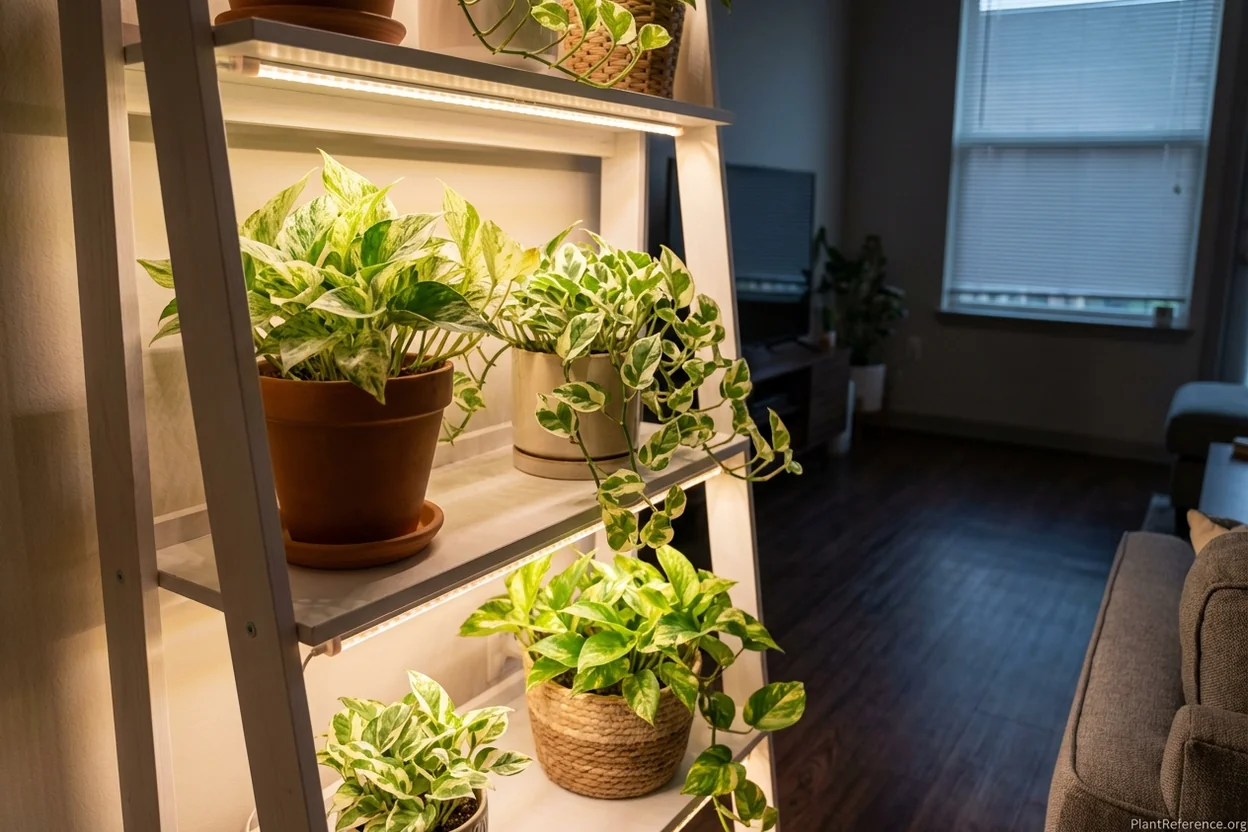
Don't have ideal windows? You're not stuck with solid green pothos. Modern grow lights make maintaining variegation possible in any space, and they're more affordable and effective than ever.
LED grow light recommendations for pothos:
→ Barrina LED Grow Light Strip 4-Pack ($35-45) - Affordable full spectrum solution
Four 4-foot LED strips provide excellent coverage for multiple plants. Full spectrum light supports healthy variegation maintenance. Easy installation with included hardware and linking cables. Energy efficient at just 20 watts per strip. Perfect for plant shelves or under-cabinet mounting. Produces bright, even light similar to natural daylight.
Creative apartment solutions: - Mirror placement: Position mirrors opposite windows to double available light - Light-colored walls: White or cream walls reflect more light than dark colors - Rotate plants weekly: Ensure all sides receive adequate light exposure - Group variegated plants: Create a "bright spot" with supplemental lighting for all your high-light plants
Grow light placement tips: Position lights 12-18 inches above plants and run for 12-14 hours daily. Timer controls prevent forgetting—consistency matters more than intensity for maintaining variegation.
Preventing Future Variegation Loss
Prevention is easier than recovery. Once you understand what triggers reversion, maintaining beautiful variegation becomes routine.
Monitor light seasonally. Take photos of your plants monthly—gradual variegation loss is easier to spot in side-by-side comparisons. If you notice new growth becoming greener, adjust light immediately rather than waiting for obvious changes.
Fertilizing affects variegation. Over-fertilizing encourages rapid green growth at the expense of variegated patterns. Feed variegated pothos monthly during growing season with half-strength fertilizer rather than weekly applications recommended for solid green varieties.
→ Miracle-Gro Indoor Plant Food 8oz ($6-8) - Perfect for variegated plants
Gentle 1-1-1 NPK formula perfect for variegated pothos that need lighter feeding. Easy pump application prevents over-fertilizing that can trigger reversion to green growth. Use half-strength monthly during growing season for optimal variegation maintenance. Promotes healthy growth while maintaining variegation patterns. Convenient pump delivers consistent dosing. Safe for all houseplants and won't burn delicate variegated foliage.
Stress triggers reversion. Sudden temperature changes, overwatering, or transplant shock can cause plants to prioritize survival over variegation. How to Water Pothos: The Foolproof Beginner Method helps maintain consistent care that supports stable variegation.
Choose stable varieties. If you're frustrated with constant reversion, Golden pothos and Jade varieties maintain their patterns more reliably than heavily variegated types like Snow Queen or Marble Queen.
Documentation helps. Keep a simple plant journal noting light changes, fertilizing dates, and pruning activities. Patterns become obvious when you can reference what worked (or didn't) in previous seasons.
Recovery success stories: I've rescued dozens of nearly solid-green Marble Queens by combining better light placement with aggressive pruning. Most show improved variegation within 4-6 weeks, and full recovery typically takes 3-4 months of consistent care.
Don't give up on a reverted plant—with proper light and patience, even severely reverted pothos can produce stunning variegated growth again. The white sections in your plant's genes haven't disappeared; they just need the right conditions to express themselves.
Remember, variegation maintenance is about consistency, not perfection. A few solid green leaves aren't a crisis, but ignoring declining variegation for months makes recovery much harder. Stay observant, act quickly when you notice changes, and enjoy watching your beautiful patterns return.
Frequently Asked Questions
Reading about plants and recognising them are different skills. These three build the second.
- Daily PlantIdentify the day’s mystery plant from a close-up photograph.
- Keyed OutWork a dichotomous key, lead by lead, to name a hidden specimen.
- Name That PlantName a specimen from botanical clues dealt hardest first.
Free to play, no account needed
Jessica transformed her small Brooklyn balcony into a thriving container garden after moving to New York City. What started as a pandemic hobby turned into a plant care consulting business serving urban apartment dwellers across the city. She specializes in small-space gardening, indoor plant troubleshooting, and helping clients keep houseplants alive in less-than-ideal conditions (dim light, dry heat, tiny spaces). Jessica completed a home gardening certificate program and shares her plant wins and failures on her modest Instagram following. Her partner, Maya, jokes that their apartment is now 40% plants, 60% living space. Jessica's passionate about making plant care accessible to renters who think they don't have room to garden.