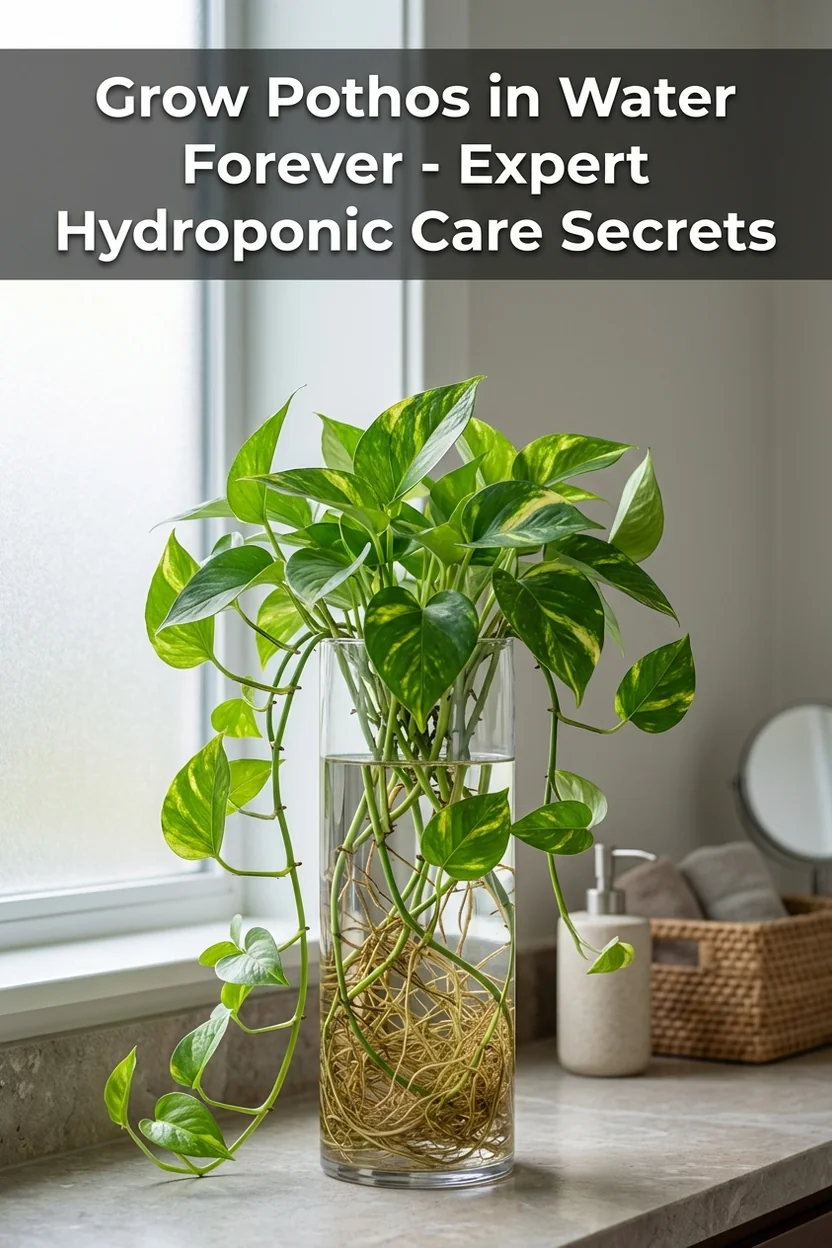
Can Pothos Grow in Water Permanently? Long-Term Hydroponics Guide
Pets & Toxicity
Recorded toxicity for plants linked in this guide. An unknown status is not a safety assessment.
Toxic to pets: golden pothosDetailsHide
Epipremnum aureum — Toxicity Warning
Toxic to pets and humans. All parts contain insoluble calcium oxalate crystals that cause mouth pain, swelling, and drooling if ingested.View Epipremnum aureum plant profile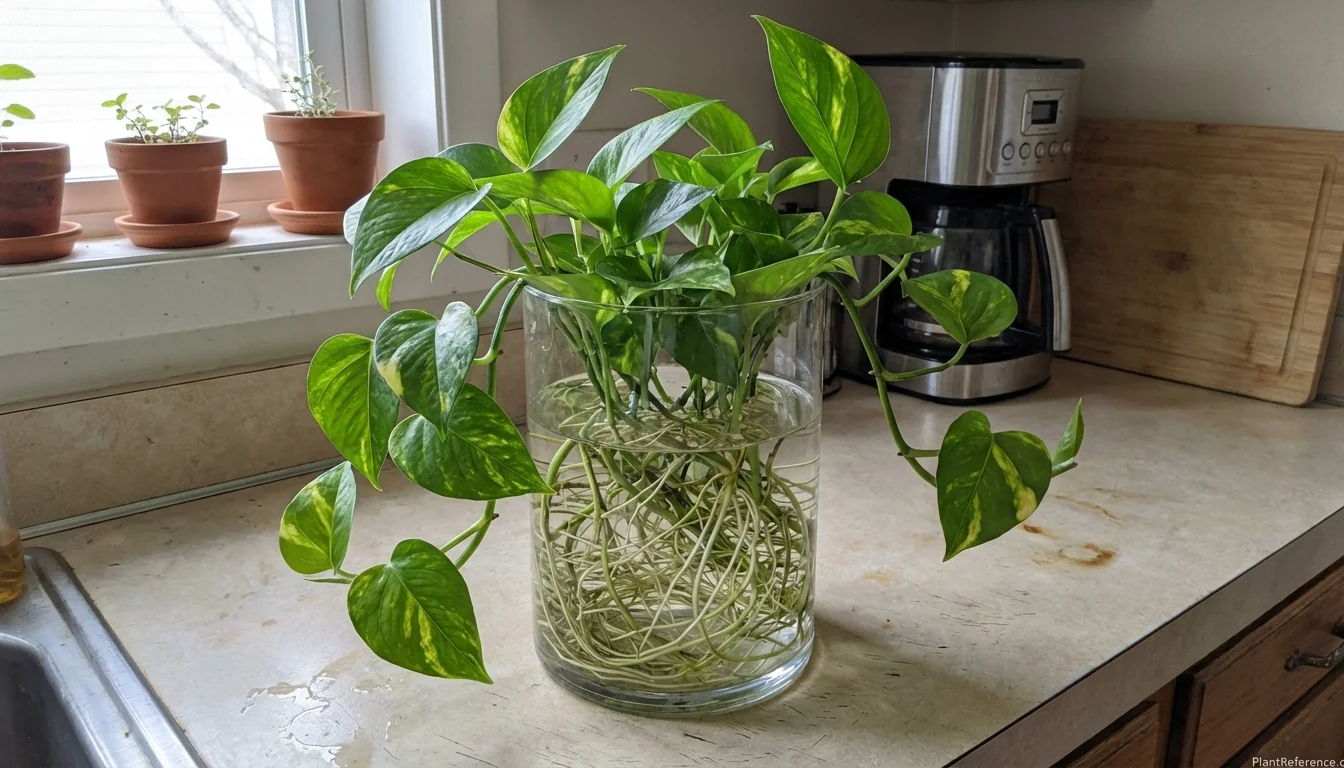
— Image © Plant Reference 2026
You've probably started a pothos cutting in water and watched those amazing white roots develop—but can pothos in water actually live there permanently? The short answer is absolutely yes, and you're about to discover why this might be the perfect low-maintenance growing method for your lifestyle.
Can Pothos Live in Water Forever?
The golden pothos 🌿Epipremnum aureum (ep-ih-PREM-num AW-ree-um) is one of nature's most adaptable houseplants, and growing in water permanently is not only possible—it's often easier than soil care. I've had pothos cuttings living happily in water for over three years, producing new growth continuously.
Here's what makes permanent water growing successful:
Pothos naturally develop aerial roots that adapt perfectly to aquatic environments
Water provides consistent moisture without the risk of overwatering or underwatering
You can monitor root health easily through clear containers
No soil means no fungus gnats, root rot from poor drainage, or repotting stress
Growth continues year-round with proper light and nutrition
The key difference is understanding that water-grown pothos develop a completely different root system than their soil-grown counterparts. Once established in water (usually 4-6 weeks), they're perfectly adapted to hydroponic life.
Many people worry about transitioning water-propagated cuttings to soil, but here's the secret: you don't have to. Water-grown pothos are actually more resilient to neglect than soil-grown ones because they can't experience the two most common houseplant killers—overwatering and underwatering.
How Water-Grown Pothos Roots Differ from Soil Roots
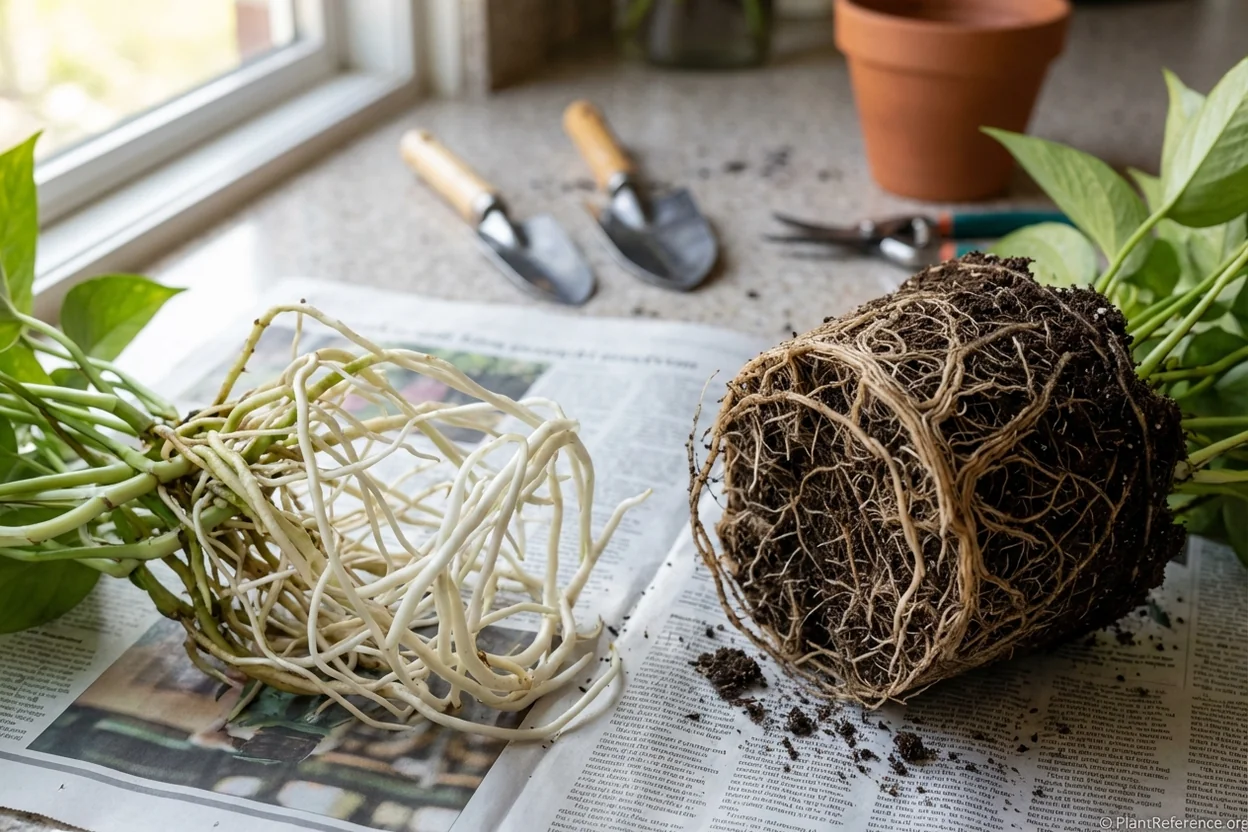
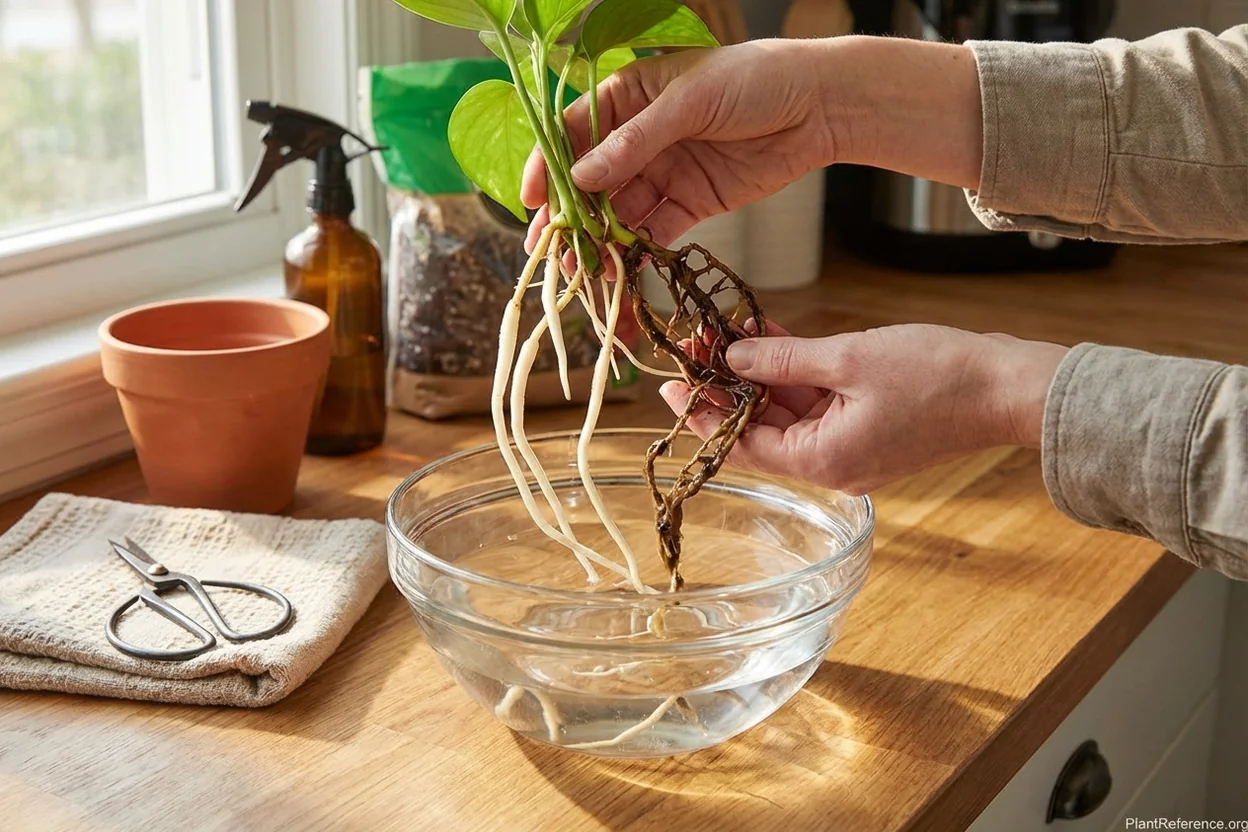
Understanding root adaptation is crucial for long-term success with hydroponic pothos. When you first place a cutting in water, it develops what I call "water roots"—thick, white, succulent-like roots specifically designed for aquatic life.
These hydroponic roots differ from soil roots in three important ways:
Structure: Water roots are noticeably thicker (often 2-3 times the diameter) and pure white. They lack the fine root hairs that soil roots use to extract moisture from soil particles. Instead, they're designed for direct nutrient absorption from liquid.
Function: Soil roots must search for nutrients and water in varying concentrations throughout the growing medium. Water roots adapt to absorbing everything they need from a consistent liquid environment. This makes them incredibly efficient but specialized.
Appearance: Healthy water roots should be bright white to cream-colored, firm to the touch, and continue growing throughout the year. Brown, mushy, or black roots indicate problems that need immediate attention.
The adaptation process takes approximately 3-4 weeks for new cuttings. During this time, you might notice the original roots (if any) dying back while new water-adapted roots emerge from the nodes. This is completely normal and not a cause for concern.
Essential Care for Permanent Water Growing
Caring for pothos in water permanently requires a simple routine that's actually more forgiving than traditional soil care. Here's your weekly maintenance schedule that takes less than 10 minutes:
Change water completely every 5-7 days to prevent bacterial buildup
Rinse roots gently under lukewarm tap water during water changes
Check water level daily and top off with fresh water as needed
Rotate container weekly for even light exposure and growth
Remove any yellowing or dead leaves immediately
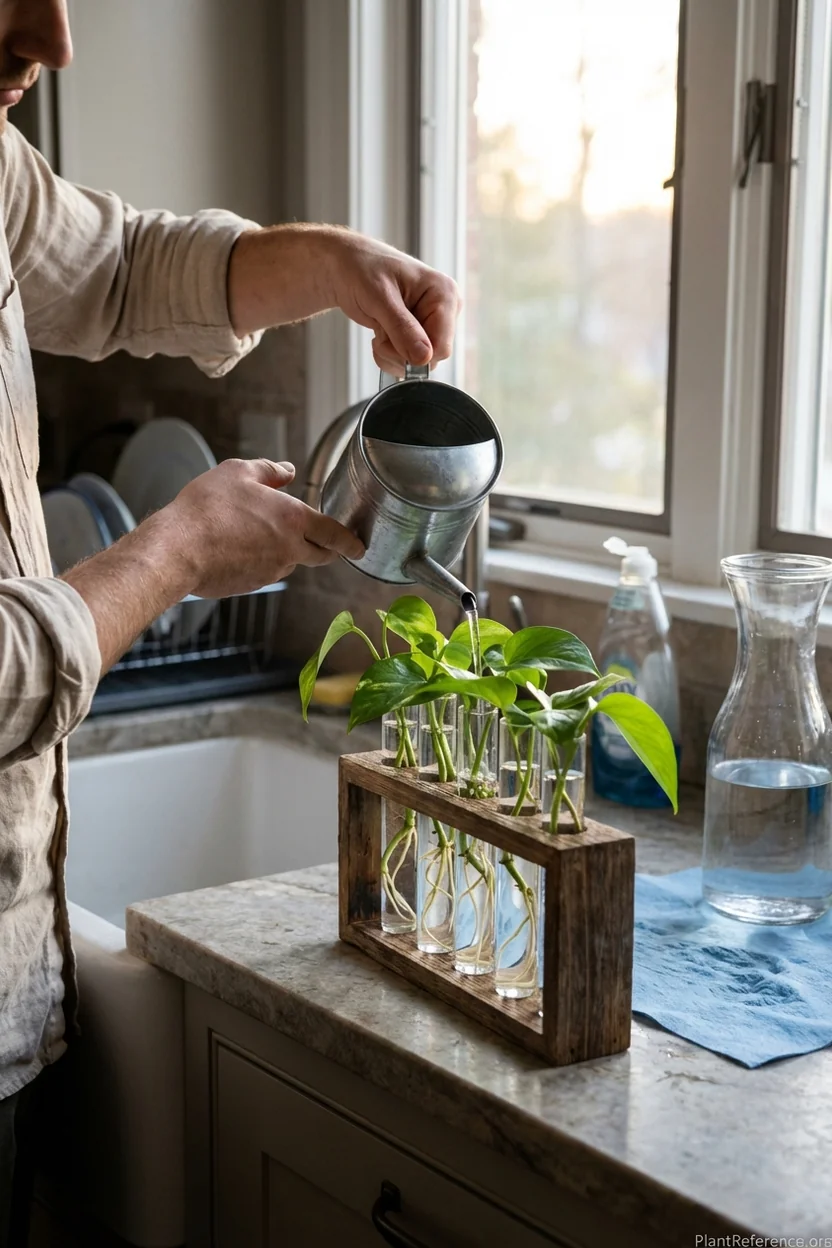
Water changing technique: Empty the container completely, rinse it with warm soapy water if algae is present, rinse the roots gently to remove any debris, and refill with fresh room-temperature water. Never use ice-cold water as it can shock the roots.
Water level maintenance: Keep water level consistent, covering at least 75% of the root system. As water evaporates (especially in winter when humidity is low), the roots can become exposed and stressed. I usually mark the optimal water level on my containers with a small piece of tape.
The beauty of water growing is immediate feedback. If something's wrong, you'll see it right away—cloudy water indicates bacterial problems, brown roots mean you need to change water more frequently, and algae growth tells you there's too much direct sunlight hitting the water.
Choosing the Right Containers and Setup
Container selection makes a huge difference in both plant health and aesthetic appeal. After trying dozens of different vessels over the years, I've learned what works best for long-term hydroponic pothos growing.
Size requirements: Choose containers at least 6-8 inches (15-20 cm) deep to accommodate mature root systems. Width isn't as critical, but 3-4 inches (8-10 cm) diameter provides stability. Narrow-necked vases can trap roots and make water changes difficult.
Material considerations: Glass is ideal because you can monitor root health and water clarity easily. Ceramic works but doesn't allow root monitoring. Avoid metal containers as they can leach minerals harmful to plants. Clear plastic is acceptable but may develop algae more quickly.
Stability factors: Tall, narrow containers tip over easily, especially with vigorous vine growth. Choose wide-based vessels or add decorative stones to the bottom for stability. I learned this lesson after finding my beautiful tall vase shattered on the floor one morning.
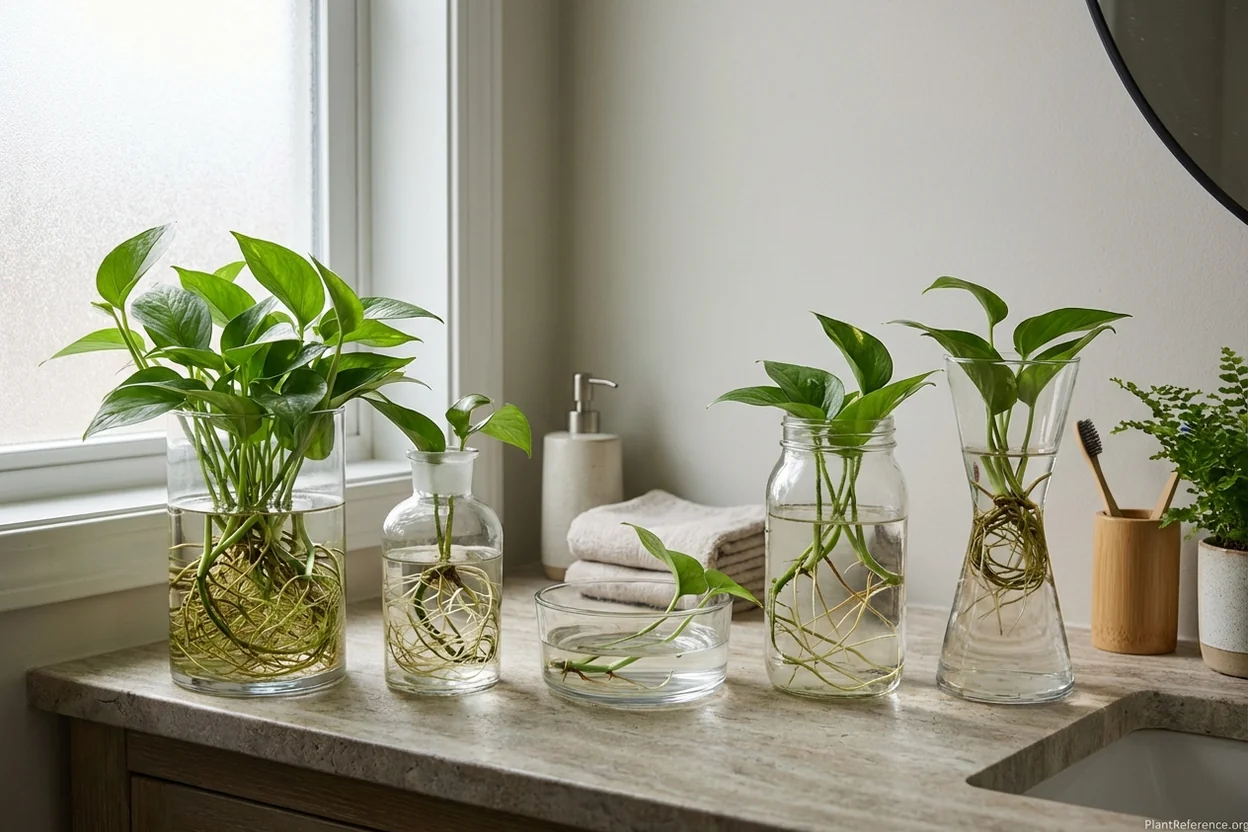
For multiple cuttings or a fuller look, I recommend propagation stations with multiple tubes or openings. These allow you to create impressive displays while making water maintenance easier. The Best Propagation Stations for Pothos and Other Vining Plants guide covers specific product recommendations.
Light placement strategy: Position containers in bright, indirect light but avoid direct sun hitting the water. Direct sunlight promotes algae growth, turning your beautiful clear water green within days. East-facing windows work perfectly for most homes.
Fertilizing Pothos in Water Long-Term
This is where many people make mistakes with long-term hydroponic growing. Water provides moisture but zero nutrition—unlike soil, which contains some natural nutrients. Your pothos will eventually starve without supplemental feeding.
Fertilizer type: Use liquid fertilizers only. Granular or slow-release fertilizers don't dissolve properly in water and can cause root burn. I prefer balanced liquid houseplant fertilizers with equal N-P-K ratios like 10-10-10 or 20-20-20.
Dilution strength: This is critical—use 1/4 the recommended strength on the fertilizer label. Water-grown roots are incredibly efficient at nutrient uptake. Full-strength fertilizer will burn roots and kill your plant quickly. If the package says 1 teaspoon per quart, use 1/4 teaspoon instead.
Feeding schedule: Fertilize every 3-4 weeks during spring and summer (March through September), and every 6-8 weeks in winter when growth slows. I mark my calendar because it's easy to forget, and unfertilized pothos gradually produce smaller, paler leaves.
→ Miracle-Gro Indoor Plant Food ($6-8) - Perfect liquid fertilizer for hydroponic pothos
Easiest liquid fertilizer for water-grown pothos with 1-1-1 NPK ratio perfect for hydroponic growing. Simple pump application requires no measuring—just dilute to 1/4 strength. Prevents nutrient deficiencies that cause small, pale leaves in long-term water setups. Suitable for all pothos varieties and other hydroponic houseplants. Costs just pennies per feeding.
Product link unavailable
Signs of over-fertilization: Brown root tips, algae blooms, yellowing leaves, or stunted growth indicate too much fertilizer. Immediately change to fresh water and reduce fertilizer strength by half. It's always better to under-fertilize than over-fertilize water-grown plants.
Common Problems and Solutions
Even though pothos in water are generally trouble-free, you might encounter a few issues. Here are the problems I see most often and exactly how to fix them:
Algae growth in water: Green, slimy buildup in water or on roots happens when containers receive too much direct light. Move to brighter indirect light, scrub containers clean with diluted bleach solution, and rinse roots thoroughly. Add a few drops of hydrogen peroxide to fresh water to prevent recurrence.
Roots turning brown or musty: Usually indicates infrequent water changes allowing bacterial buildup. Change water immediately, trim away any brown or black roots with clean scissors, rinse remaining healthy roots, and increase change frequency to every 4-5 days until recovered.
Leaves yellowing rapidly: Most commonly caused by over-fertilization, poor water quality, or temperature shock from cold water. Switch to distilled or filtered water, reduce fertilizer to 1/8 strength, and use room-temperature water only. If you've been using tap water, chlorine buildup might be the culprit.
Slow or stopped growth: Typically indicates need for fertilization, insufficient light, or natural winter dormancy. During growing season (spring/summer), ensure monthly feeding and bright indirect light. In winter, reduced growth is normal—don't increase fertilizer.
Container becomes too small: As roots expand, they may outgrow containers. Transfer to larger vessels during regular water changes. Choose containers 2-3 inches (5-8 cm) larger in diameter. Avoid going too large as excessive water volume dilutes fertilizer effectiveness.
The Pothos Root Rot: Emergency Rescue in 5 Steps article provides detailed recovery instructions for severely damaged root systems, though hydroponic pothos rarely develop serious root problems with proper care.
Water Quality and Plant Health
Water quality dramatically affects long-term success with hydroponic pothos. After years of experimenting, I've learned which water sources produce the healthiest plants and which cause slow decline.
Tap water considerations: Most municipal tap water contains chlorine, chloramines, and fluoride that can accumulate in plant tissues over time. While pothos tolerate these chemicals initially, long-term exposure causes brown leaf tips, stunted growth, and root sensitivity.
Water treatment options: Let tap water sit uncovered for 24 hours to allow chlorine to evaporate before using. For faster treatment, boil water and cool to room temperature. Chloramines don't evaporate, so consider filtered water if your municipality uses chloramines (check your water quality report).
Best water choices: Distilled water provides the purest base for hydroponic growing but lacks beneficial minerals. Spring water offers a good balance of purity and natural minerals. Rain water collected safely is excellent but may be impractical. Reverse osmosis water works well but requires mineral supplementation through fertilizer.
pH and hardness: Pothos prefer slightly acidic to neutral water (pH 6.0-7.0). Most tap and bottled water falls within this range naturally. Extremely hard water (high calcium/magnesium) can cause white mineral deposits on leaves but doesn't harm plant health significantly.
Test new water sources by growing cuttings for 4-6 weeks and comparing growth
Change water types gradually over several changes to avoid shocking established plants
Keep detailed notes on which water produces the best leaf color and growth rate
Watch for brown tips as early warning of water quality problems
Decorative Display Ideas for Hydroponic Pothos
One of the biggest advantages of growing pothos in water is creating stunning displays that showcase both the plant and its root system. Here are my favorite approaches that work in different rooms and design styles.
Kitchen displays: Propagation stations on windowsills create living herb garden vibes. Use matching mason jars or vintage glass bottles for farmhouse appeal. Wall-mounted test tube arrays save counter space while providing conversation pieces.
Living room statements: Large floor vases (18-24 inches tall) with mature pothos create dramatic focal points. Choose vessels that complement your color scheme—amber glass for warm tones, clear for minimalist, colored glass for eclectic styles.
Bathroom oasis: Humidity-loving pothos thrive in bathrooms. Float small cuttings in decorative bowls, use wall-mounted vessels near mirrors, or create spa-like displays with multiple containers at varying heights.
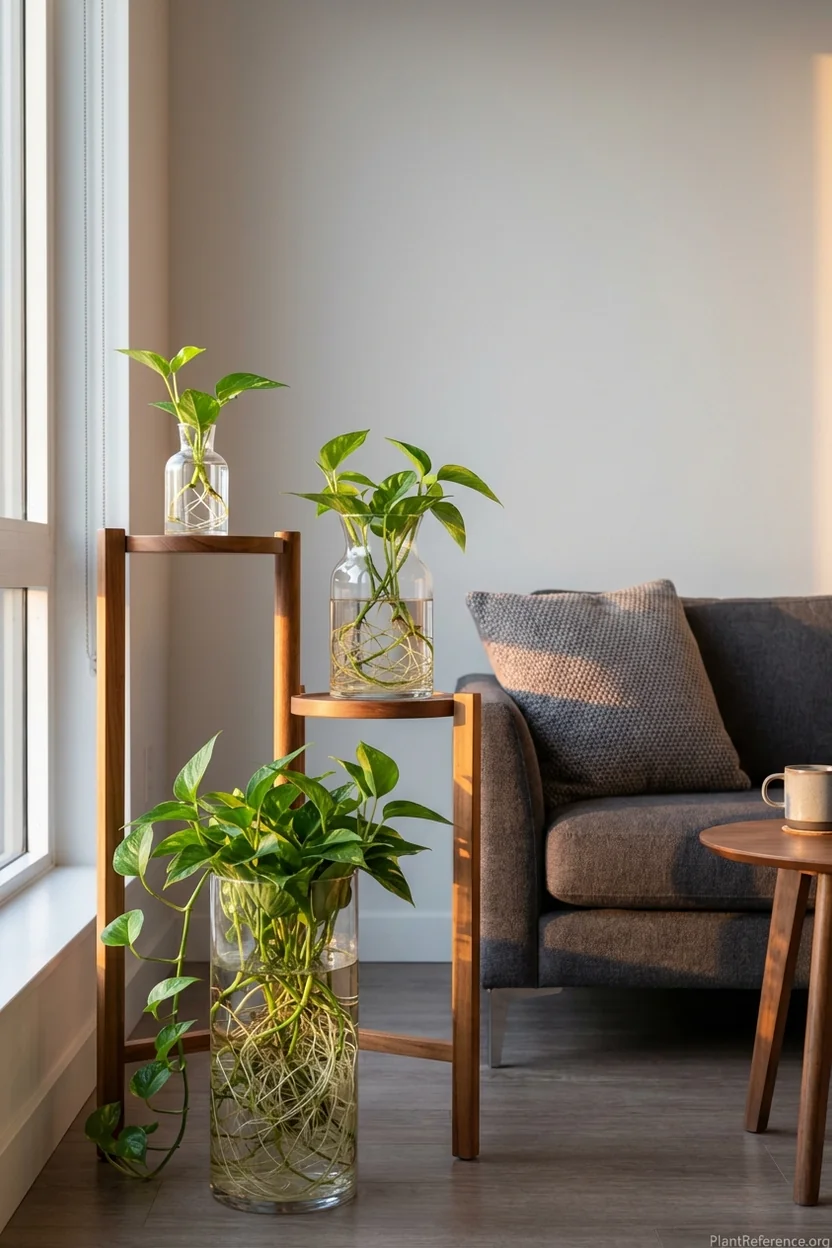
Office inspiration: Desktop propagation stations boost mood and productivity. Choose stable, spill-proof containers that won't tip during busy workdays. Single-cutting displays in small vases work perfectly on shelves or desk corners.
Seasonal rotations: Change container styles seasonally—clear glass for spring/summer to showcase root growth, colored glass for fall/winter to complement seasonal decor. This keeps displays fresh and interesting year-round.
The 7 Best Hanging Planters for Pothos guide includes water-compatible hanging options, though you'll need to secure water containers properly to prevent spills.
For gift-giving, water-grown pothos in attractive containers make thoughtful presents that continue growing in the recipient's home. Include simple care cards explaining the weekly water change routine.
Remember that lighting affects your display success significantly. The Pothos Light Requirements: Low Light to Bright Indirect article helps you position displays for both plant health and visual impact.
Frequently Asked Questions
Reading about plants and recognising them are different skills. These three build the second.
- Daily PlantIdentify the day’s mystery plant from a close-up photograph.
- Keyed OutWork a dichotomous key, lead by lead, to name a hidden specimen.
- Name That PlantName a specimen from botanical clues dealt hardest first.
Free to play, no account needed
Jessica transformed her small Brooklyn balcony into a thriving container garden after moving to New York City. What started as a pandemic hobby turned into a plant care consulting business serving urban apartment dwellers across the city. She specializes in small-space gardening, indoor plant troubleshooting, and helping clients keep houseplants alive in less-than-ideal conditions (dim light, dry heat, tiny spaces). Jessica completed a home gardening certificate program and shares her plant wins and failures on her modest Instagram following. Her partner, Maya, jokes that their apartment is now 40% plants, 60% living space. Jessica's passionate about making plant care accessible to renters who think they don't have room to garden.