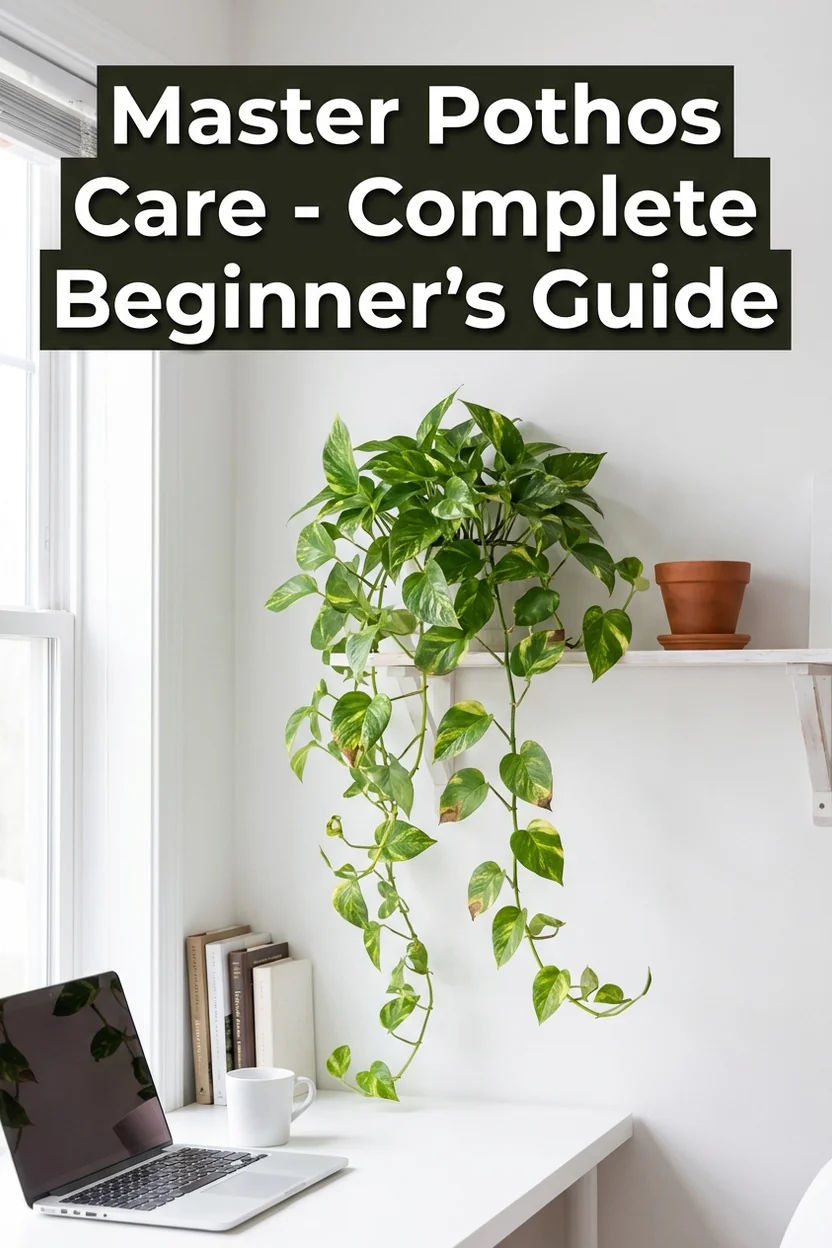
Pothos Care: The Complete Beginner's Guide (2026)
Pets & Toxicity
Recorded toxicity for plants linked in this guide. An unknown status is not a safety assessment.
Epipremnum aureum — Toxicity Warning
Toxic to pets and humans. All parts contain insoluble calcium oxalate crystals that cause mouth pain, swelling, and drooling if ingested.View Epipremnum aureum plant profile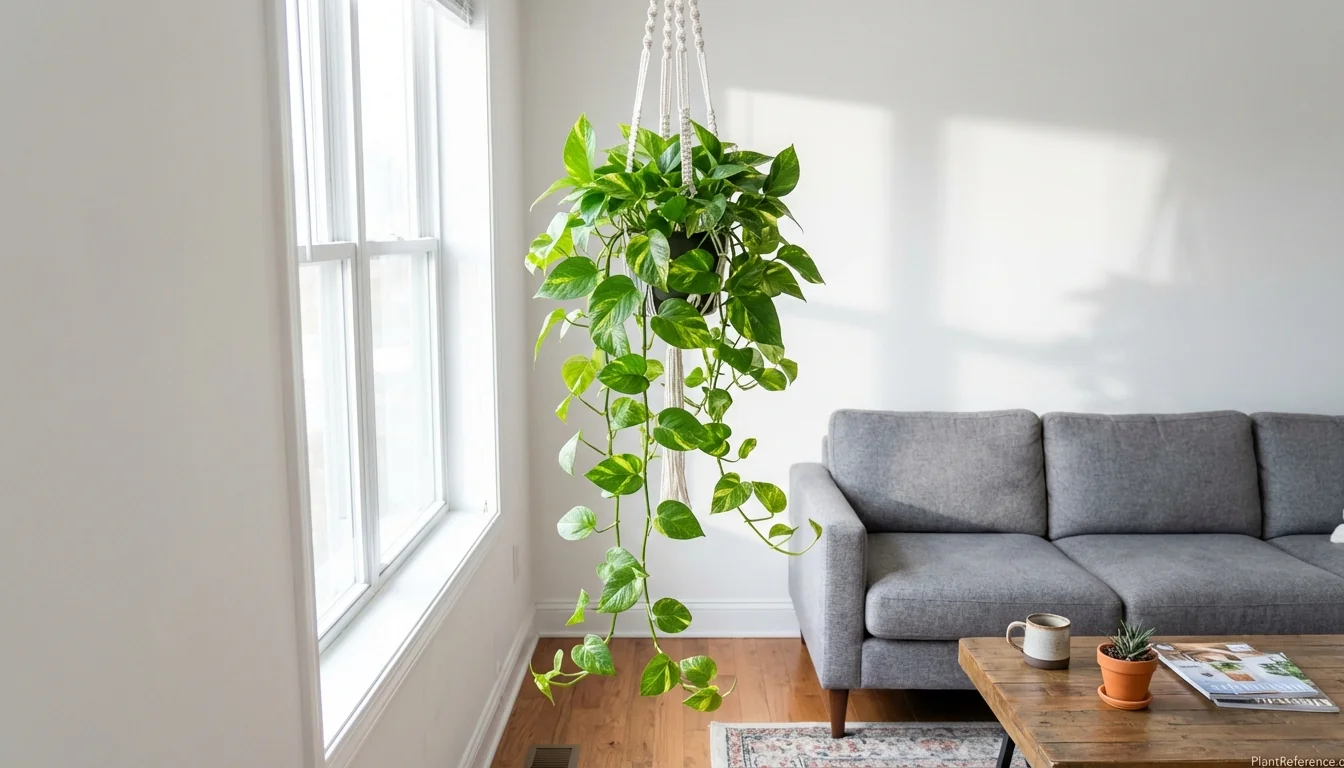
— Image © Plant Reference 2026
Looking for a houseplant that's virtually impossible to kill? The golden pothos 🌿Epipremnum aureum (ep-ih-PREM-num AW-ree-um) might just be your perfect plant match. This trailing beauty forgives missed waterings, thrives in low light, and rewards even the most inexperienced plant parent with lush, cascading growth that transforms any space.
Why Pothos is Perfect for Beginners
I started my plant journey with a small golden pothos cutting from a friend, and five years later, that same plant has given me dozens of new plants through propagation. Here's why pothos makes the ideal first houseplant for nervous beginners.
Extreme tolerance for neglect: Pothos can survive weeks without water and bounces back from both underwatering and overwatering better than most houseplants. The leaves droop dramatically when thirsty—giving you an unmistakable "feed me" signal that prevents guesswork.
Thrives in low light conditions: Unlike many houseplants that demand bright windows, pothos grows happily under office fluorescent lights or in corners that only receive indirect light. While it prefers brighter conditions, it won't die in that dimmer spot you want to fill with greenery.
Incredibly fast growth: Within weeks of bringing your pothos home, you'll see new leaves unfurling and vines extending. This rapid visual feedback keeps beginners motivated and engaged with their plant care journey.
Easy propagation for gifts: Simply cut a vine section with a few nodes, plop it in water, and watch roots develop within 1-2 weeks. You'll have new plants to share with friends or expand your own collection without spending additional money.
Understanding Your Golden Pothos Plant
The golden pothos belongs to the Araceae family and goes by several common names including Devil's ivy, money plant, and Ceylon creeper. Native to Mo'orea Island in French Polynesia, this climbing vine uses aerial roots to scramble up trees in the wild, reaching impressive heights of 66 feet with leaves that can grow up to 39 inches long.
Don't worry—your indoor pothos won't take over your house. Indoors, leaves typically stay a manageable 4-8 inches, and the plant grows as long trailing vines perfect for hanging baskets or trained up moss poles for a jungle-like effect.
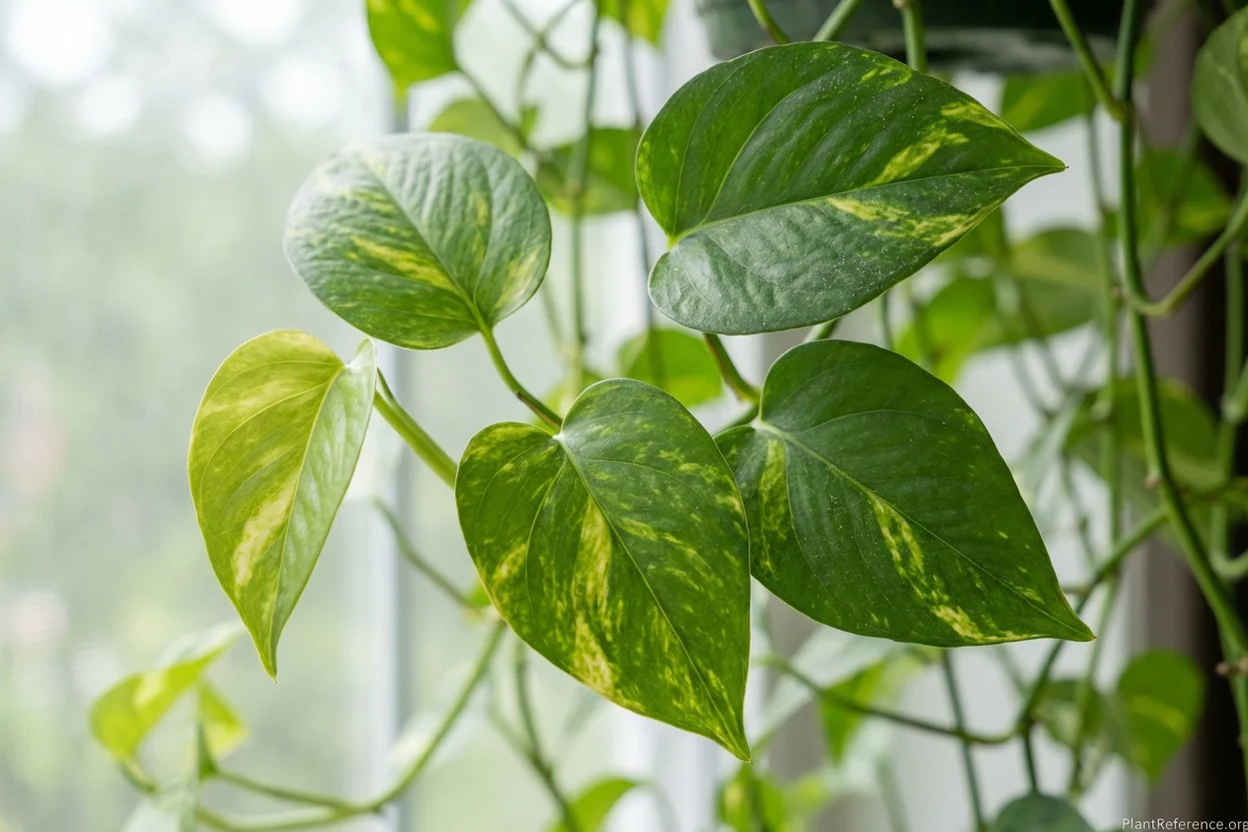
Understanding the variegation: Those beautiful golden-yellow patches on the leaves aren't just for show—they're actually areas with less chlorophyll. This means heavily variegated sections have reduced photosynthetic ability, which is why variegated pothos varieties grow slightly slower than solid green ones and need brighter light to maintain their patterns.
Aerial root function: Those little brown nubs you see along the vines aren't signs of problems—they're aerial roots that help the plant climb and absorb moisture from the air. In nature, these roots attach to tree bark, but in your home, they can grip moss poles or simply dangle decoratively.
Toxicity warning: Keep pothos away from curious pets and small children. The plant contains insoluble calcium oxalate crystals that cause mouth irritation, excessive drooling, and difficulty swallowing if ingested. While rarely serious, contact your veterinarian immediately if pets consume any part of the plant.
Essential Pothos Care Requirements
Here's what your pothos needs to thrive, along with why these nearly indestructible plants are so forgiving when conditions aren't perfect.
Temperature tolerance: Pothos prefers temperatures between 65-85°F (18-30°C), but tolerates a much wider range. I've successfully grown pothos in offices with aggressive air conditioning and apartments without heating, as long as temperatures stay above 50°F (10°C). The plant may slow growth in cooler conditions but won't die.
Humidity preferences: While pothos grows faster in 40-60% humidity, it adapts well to typical home humidity levels around 30-40%. If you notice brown leaf tips, try grouping plants together or placing a pebble tray filled with water nearby to increase local humidity.
Air circulation: Good air movement prevents fungal problems and strengthens stems, but pothos tolerates still air better than most plants. A ceiling fan or open window occasionally provides sufficient circulation.
For optimal pothos care, focus on getting the basics right rather than obsessing over perfect conditions. These adaptable plants reward consistency over perfection.
Watering Your Pothos the Right Way
Watering represents the make-or-break skill for new plant parents, but pothos makes this surprisingly foolproof. Here's my tried-and-tested approach that prevents both overwatering and underwatering.
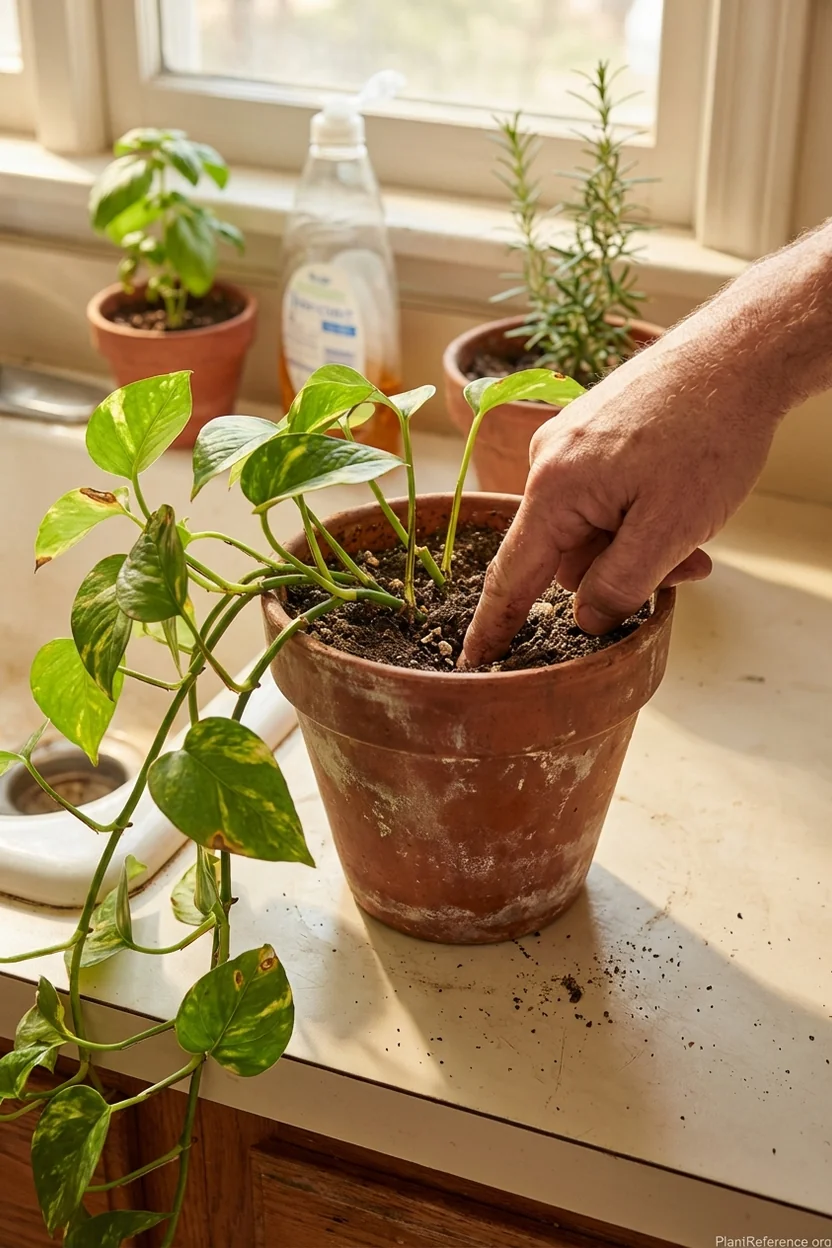
The finger test method: Insert your finger 1-2 inches into the soil. If the top 25-50% feels dry, it's time to water. For most homes, this translates to watering every 1-2 weeks, though frequency varies with pot size, season, and humidity levels.
How to water properly: Water slowly and thoroughly until you see drainage flowing from the pot's bottom holes. This ensures the entire root system receives moisture and flushes away salt buildup from fertilizers. Always empty drainage saucers after 30 minutes to prevent roots from sitting in standing water.
Signs your pothos needs water: The plant communicates clearly when thirsty. Leaves droop dramatically, lose their perky appearance, and may curl slightly inward. Don't panic—this is normal signaling, not permanent damage. After watering, leaves typically perk up within 2-4 hours.
Overwatering symptoms: Yellow leaves (especially starting from the bottom), musty soil smell, and soft, blackened stems indicate too much water. Pothos recovers from mild overwatering by adjusting your schedule, but severe cases may require repotting with fresh, dry soil.
Underwatering recovery: Severely underwatered pothos may drop leaves and show crispy brown edges, but recovery is usually quick and complete. Water thoroughly and maintain consistent moisture going forward.
Water quality considerations: Pothos tolerates tap water in most areas, but if your water is heavily chlorinated or fluorinated, consider using filtered water or letting tap water sit overnight before watering to allow chemicals to dissipate.
For detailed troubleshooting when watering goes wrong, check out our Pothos Leaves Turning Yellow: Simple Diagnosis and Fixes guide.
Check soil moisture weekly by inserting finger 1-2 inches deep
Water thoroughly until drainage flows from bottom holes
Empty drainage saucers within 30 minutes after watering
Adjust frequency seasonally—less in winter, more during summer growth
Watch for drooping leaves as the plant's way of asking for water
Light Requirements Made Simple
One of pothos's greatest strengths is incredible light adaptability. While it has preferences, it survives and even thrives in conditions that would kill more finicky houseplants.
Optimal lighting: Bright indirect light produces the fastest growth and most vibrant variegation. Place your pothos near an east or north-facing window, or 3-6 feet from a south or west window where it receives plenty of ambient light without direct sun rays hitting the leaves.
Low light tolerance: Pothos survives in surprisingly dim conditions—under fluorescent office lights, in interior rooms with no windows, or corners that only receive reflected light. Growth slows significantly, and variegated varieties may lose their yellow markings and revert to solid green, but the plant continues living.
Direct sun problems: Avoid placing pothos in direct sunlight, especially intense afternoon sun from south or west windows. Direct rays cause leaf scorch, appearing as brown patches or crispy edges that won't heal. Morning sun from east windows is usually gentle enough to avoid burning.
Artificial light solutions: LED grow lights work excellently for pothos in darker spaces. Position lights 12-24 inches above the plant and run them 12-14 hours daily. Even basic LED bulbs in desk lamps provide enough supplemental light for healthy growth.
Variegation and light: The golden yellow patches in pothos leaves require adequate light to maintain their color. In dim conditions, new growth emerges solid green as the plant maximizes chlorophyll production for photosynthesis. This reversion isn't harmful—it's actually the plant being smart about survival.
Seasonal adjustments: During shorter winter days, consider moving your pothos closer to windows or supplementing with artificial light. Summer's longer days and stronger light may require moving plants further from windows to prevent burning.
Learn more about optimizing light conditions in our comprehensive Pothos Light Requirements: Low Light to Bright Indirect guide.
Best Soil and Fertilizer for Pothos
Pothos isn't picky about soil, but the right growing medium prevents root rot and supports healthy growth. Here's what works best for long-term plant health.
Ideal soil mixture: Use a well-draining potting mix that retains some moisture but never stays soggy. A high-quality indoor potting soil mixed with perlite in a 2:1 ratio creates ideal drainage. Avoid garden soil or heavy mixes that compact over time.
Commercial soil options: Most standard indoor potting mixes work well for pothos. Look for mixes containing peat moss, vermiculite, or coconut coir for moisture retention, plus perlite or bark for drainage. Miracle-Gro Indoor Potting Mix and Espoma Organic Potting Mix both provide excellent results.
DIY soil recipe: Mix 2 parts quality potting soil, 1 part perlite, and 1 part orchid bark for a chunky, fast-draining blend that still holds moisture. This mixture prevents compaction and allows roots to breathe.
Fertilizing made simple: During active growing season (spring through early fall), feed your pothos monthly with a balanced houseplant fertilizer diluted to half strength. A 20-20-20 or similar N-P-K ratio provides appropriate nutrients without overwhelming the plant.
Winter fertilizing: Reduce or eliminate fertilizing from late fall through winter when growth naturally slows. Over-fertilizing dormant plants can cause root burn and salt buildup in soil.
Signs of nutrient deficiency: Slow growth, small new leaves, and pale coloring may indicate need for fertilization. However, don't assume poor growth is always a feeding problem—check light, water, and pot size first.
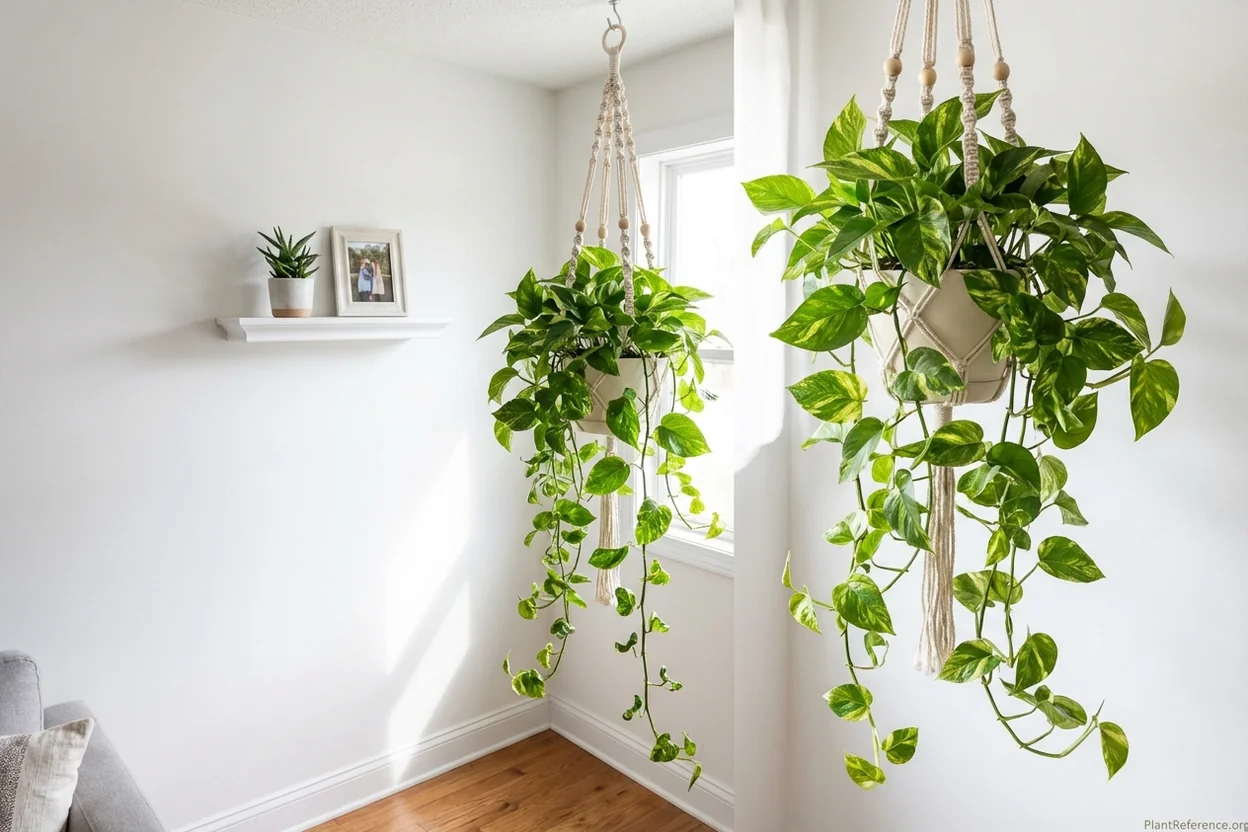
Hanging vs Climbing: Display Options
Pothos adapts to different display styles, each creating a unique aesthetic and offering different care considerations. Understanding these options helps you choose the best setup for your space and lifestyle.
Hanging displays: Trailing pothos from hanging planters, wall-mounted brackets, or high shelves showcases the plant's natural cascading habit. Vines can reach 6-10 feet indoors, creating dramatic living curtains or space dividers. Hanging displays work especially well in small apartments where floor space is limited.
Benefits of hanging: Keeps plants away from pets and small children, maximizes use of vertical space, and creates visual interest at eye level or above. Watering requires more planning since you need to lift or lower the pot to check soil moisture and ensure proper drainage.
Climbing displays: Training pothos up moss poles, trellises, or bamboo stakes mimics the plant's natural climbing behavior and can produce larger leaves over time. As vines climb higher, leaves may gradually increase in size—though indoor conditions rarely produce the dramatic fenestrations seen in wild specimens.
Moss pole benefits: Climbing pothos develops stronger stems and may show improved variegation as the plant receives better light distribution. The aerial roots can actually grip and derive some moisture from moss poles, creating a more natural growing environment.
Tabletop trailing: Placing pothos on tables, dressers, or plant stands allows vines to trail downward while keeping the main plant at a convenient height for care. This option offers easy access for watering and maintenance while still providing attractive trailing foliage.
Care considerations by display: Hanging plants dry out faster due to increased air circulation and often warmer temperatures near ceilings. Climbing plants may need more frequent misting to keep moss poles moist. Tabletop displays usually require the least adjustment to your normal care routine.
→ Mkono Macrame Plant Hanger with Wood Beads ($9-14) - Stylish cotton rope hanger with decorative accents
Hand-woven cotton rope construction with natural wood bead accents creates bohemian charm while supporting pots up to 12 pounds. Four-leg design distributes weight evenly for stability. Includes adjustable cord for customizing hanging height. Compatible with 6-12 inch diameter pots. Easy installation with ceiling hook or wall bracket. Adds textural interest while showcasing trailing pothos beautifully. Durable construction withstands daily watering routines.
Easy Pothos Propagation in Water
Propagating pothos ranks among the easiest plant propagation methods, perfect for beginners who want to expand their collection or share plants with friends. The success rate approaches 100% when following basic guidelines.
When to propagate: Spring and summer offer ideal conditions for quick root development, but pothos propagates successfully year-round indoors. Take cuttings when pruning overgrown vines or when you want to create new plants.
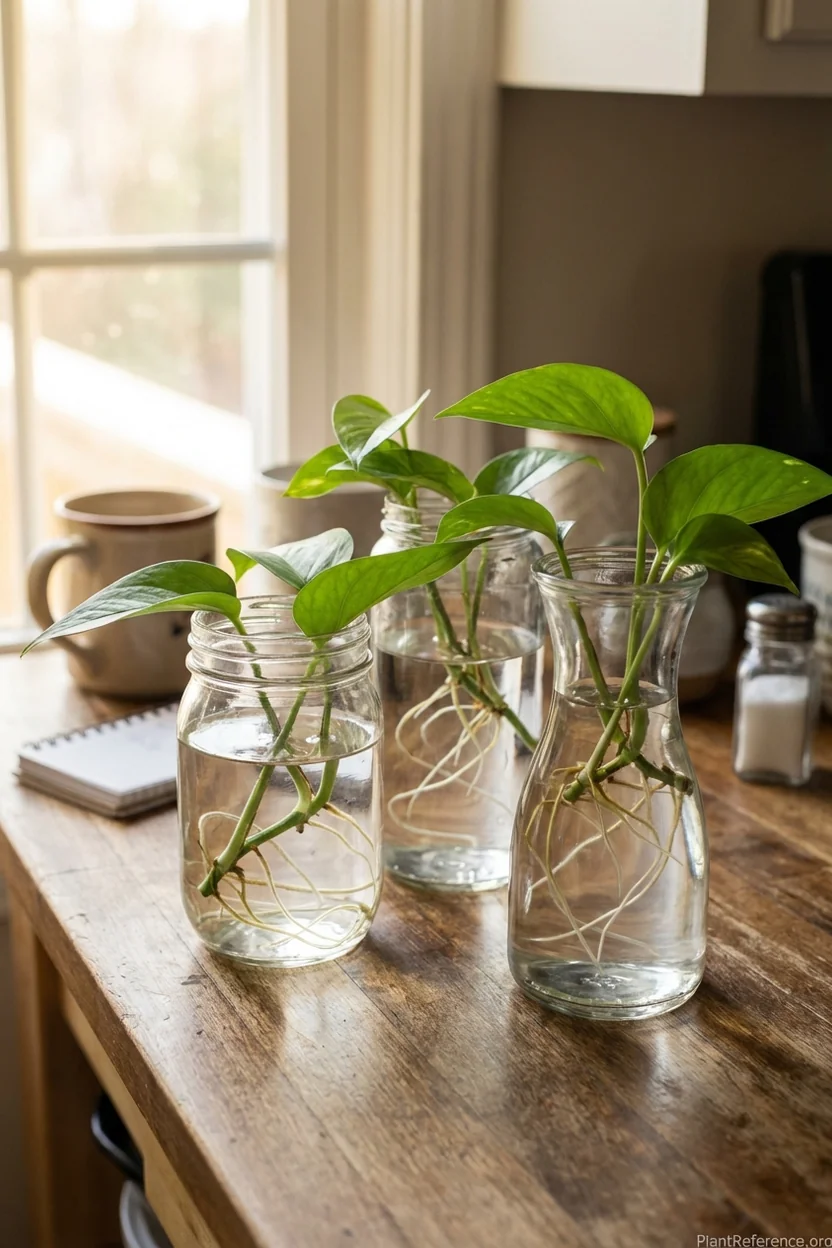
Selecting cutting material: Choose healthy vine sections 4-6 inches long containing at least 2-3 nodes (those small brown bumps where roots emerge). Each cutting should have 2-4 healthy leaves. Avoid yellowing, damaged, or pest-affected sections.
The water method step-by-step: Using clean scissors or pruning shears, cut just below a node at a 45-degree angle. Remove leaves from the bottom 1-2 inches of stem to prevent underwater decay. Place cuttings in a clean glass container filled with room-temperature water, ensuring nodes stay submerged while leaves remain above water.
Root development timeline: Small white roots typically appear within 5-10 days, growing rapidly to 1-2 inches within 2-3 weeks. Once roots reach 2-3 inches long, cuttings are ready for potting in soil or can remain in water permanently.
Water propagation care: Change water every 3-5 days to prevent bacteria buildup and maintain oxygen levels. Use filtered or distilled water if your tap water is heavily chlorinated. Place containers in bright indirect light for fastest root development.
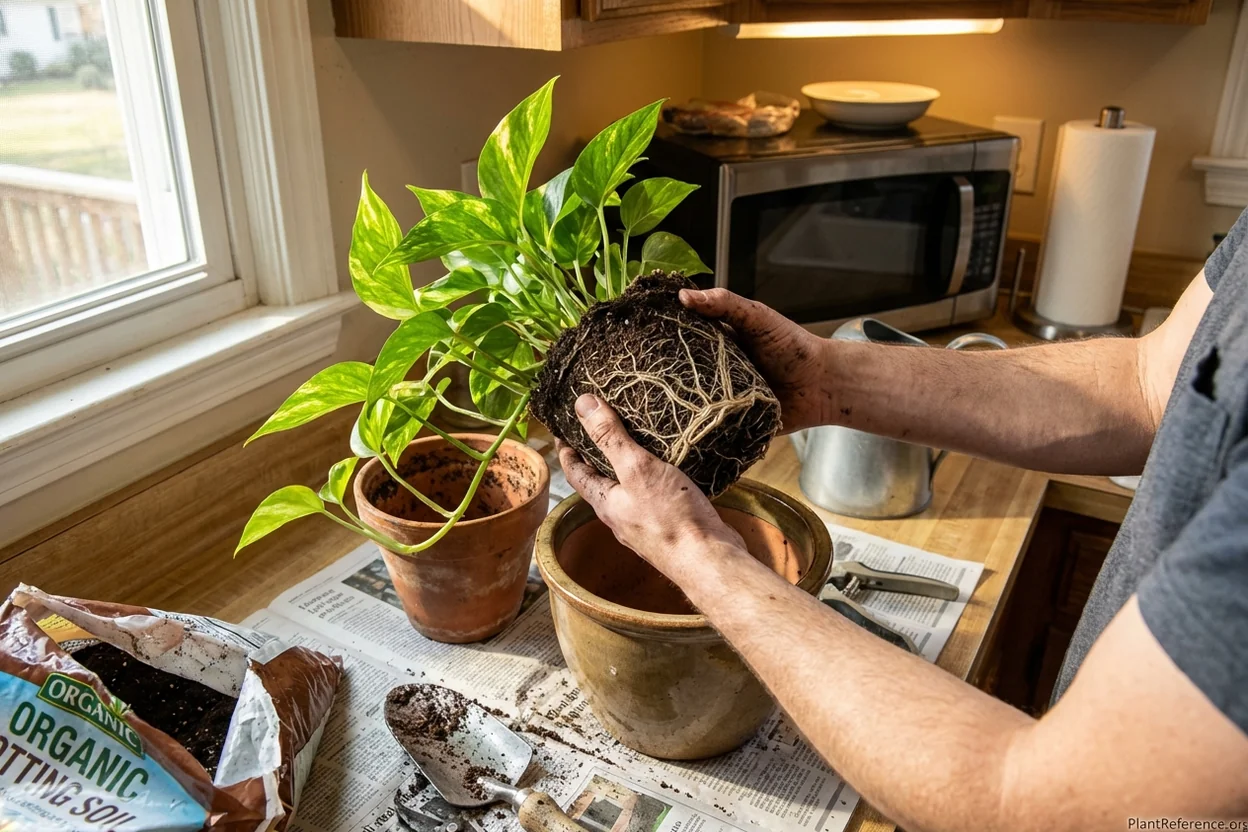
Transitioning to soil: Plant water-propagated cuttings in moist potting soil, burying roots completely while keeping the original stem at soil level. Water lightly but consistently for the first 2-3 weeks as roots adapt to soil conditions. Some leaf drop is normal during transition.
Permanent water growing: Pothos can live indefinitely in water with proper care. Add liquid fertilizer monthly at quarter strength, change water weekly, and provide adequate light. Water-grown plants develop different root structures and may struggle if later transplanted to soil.
For detailed propagation instructions with troubleshooting tips, see our Pothos Propagation: Water Method Step-by-Step (With Photos) guide.
Common Problems and Quick Fixes
While pothos tolerates neglect better than most houseplants, a few issues can arise. Understanding these problems and their solutions prevents minor issues from becoming major setbacks.
Yellow leaves - most common issue: Lower leaves naturally yellow and drop as plants age, especially older leaves that no longer receive adequate light. However, multiple yellow leaves throughout the plant usually indicates overwatering. Check soil moisture and adjust watering frequency. For complete diagnosis help, reference our Pothos Leaves Turning Yellow: Simple Diagnosis and Fixes article.
Brown leaf tips and edges: Typically caused by low humidity, fluoride in tap water, or inconsistent watering. Increase humidity with pebble trays, switch to filtered water, and maintain more consistent soil moisture. Trim brown areas with clean scissors for cosmetic improvement.
Drooping leaves: Usually indicates thirst—water thoroughly and leaves should perk up within hours. If soil is wet and leaves still droop, check for root rot caused by overwatering. Our Pothos Leaves Drooping: Quick Diagnostic Guide provides detailed troubleshooting steps.
Loss of variegation: Golden pothos reverting to solid green indicates insufficient light. Move to a brighter location and trim any solid green vines to encourage variegated growth. Some reversion is normal in lower light conditions.
Slow or no growth: During winter, slow growth is completely normal. Year-round slow growth suggests insufficient light, depleted soil nutrients, or severely rootbound conditions. Assess light levels first, then consider repotting or fertilizing.
Pest problems: Pothos rarely attracts pests, but occasionally spider mites, mealybugs, or scale can appear. Wipe leaves monthly with damp cloth for prevention. Treat infestations with insecticidal soap or neem oil applications.
Root rot - serious but treatable: Mushy, black, foul-smelling roots indicate rot from overwatering. Remove plant from soil, trim all affected roots with sterile scissors, and repot in fresh, well-draining soil. Water sparingly until new growth appears.
Yellow leaves: Usually overwatering or natural aging—adjust watering schedule
Brown tips: Increase humidity, use filtered water, maintain consistent moisture
Drooping: Water if soil is dry, check for root rot if soil is wet
Lost variegation: Move to brighter light, prune solid green growth
Slow growth: Normal in winter, otherwise check light and nutrients
Pests: Rare but treat with neem oil or insecticidal soap if found
Seasonal Care Adjustments
Understanding how pothos responds to seasonal changes helps you provide appropriate care year-round, though these adaptable plants rarely require dramatic adjustments.
Spring care (March-May): Resume monthly fertilizing as day length increases and growth accelerates. This is the ideal time for repotting if needed, as plants recover quickly during active growth. Increase watering frequency gradually as plants begin using more water.
Summer care (June-August): Peak growing season requires the most attention to watering and fertilizing. Check soil moisture more frequently as warmer temperatures increase water usage. Provide adequate humidity during hot, dry periods. Move plants away from air conditioning vents that create cold drafts.
Fall transition (September-November): Gradually reduce fertilizing as growth slows. Begin decreasing watering frequency as plants enter dormancy. This is an excellent time for propagation before winter slows root development.
Winter care (December-February): Pothos enters natural dormancy with minimal growth. Water less frequently but don't allow soil to become bone dry. Discontinue fertilizing until spring. Move plants closer to windows to compensate for shorter days and weaker sunlight. Protect from cold windows and heating vents.
Holiday considerations: During winter travel, pothos tolerates neglect well. Water thoroughly before leaving and group plants together to increase humidity. For trips longer than 2 weeks, consider self-watering spikes or asking someone to check on plants.
Growth expectations: Expect 2-4 new leaves monthly during spring and summer, slowing to minimal growth in winter. Vine extensions of 6-12 inches monthly are normal during peak season.
Pothos care truly is that straightforward. With basic attention to watering, adequate light, and occasional feeding, your golden pothos will reward you with years of lush, trailing growth that transforms any space into a green oasis. Start with these fundamentals, and you'll soon understand why pothos has earned its reputation as the perfect beginner houseplant.
Remember, the best approach to pothos care is consistency over perfection. These forgiving plants adapt to your lifestyle and space, making them ideal companions for both new and experienced plant parents. For specific problems or advanced techniques, explore our comprehensive library of pothos care guides linked throughout this article.
Frequently Asked Questions
Reading about plants and recognising them are different skills. These three build the second.
- Daily PlantIdentify the day’s mystery plant from a close-up photograph.
- Keyed OutWork a dichotomous key, lead by lead, to name a hidden specimen.
- Name That PlantName a specimen from botanical clues dealt hardest first.
Free to play, no account needed
Jessica transformed her small Brooklyn balcony into a thriving container garden after moving to New York City. What started as a pandemic hobby turned into a plant care consulting business serving urban apartment dwellers across the city. She specializes in small-space gardening, indoor plant troubleshooting, and helping clients keep houseplants alive in less-than-ideal conditions (dim light, dry heat, tiny spaces). Jessica completed a home gardening certificate program and shares her plant wins and failures on her modest Instagram following. Her partner, Maya, jokes that their apartment is now 40% plants, 60% living space. Jessica's passionate about making plant care accessible to renters who think they don't have room to garden.