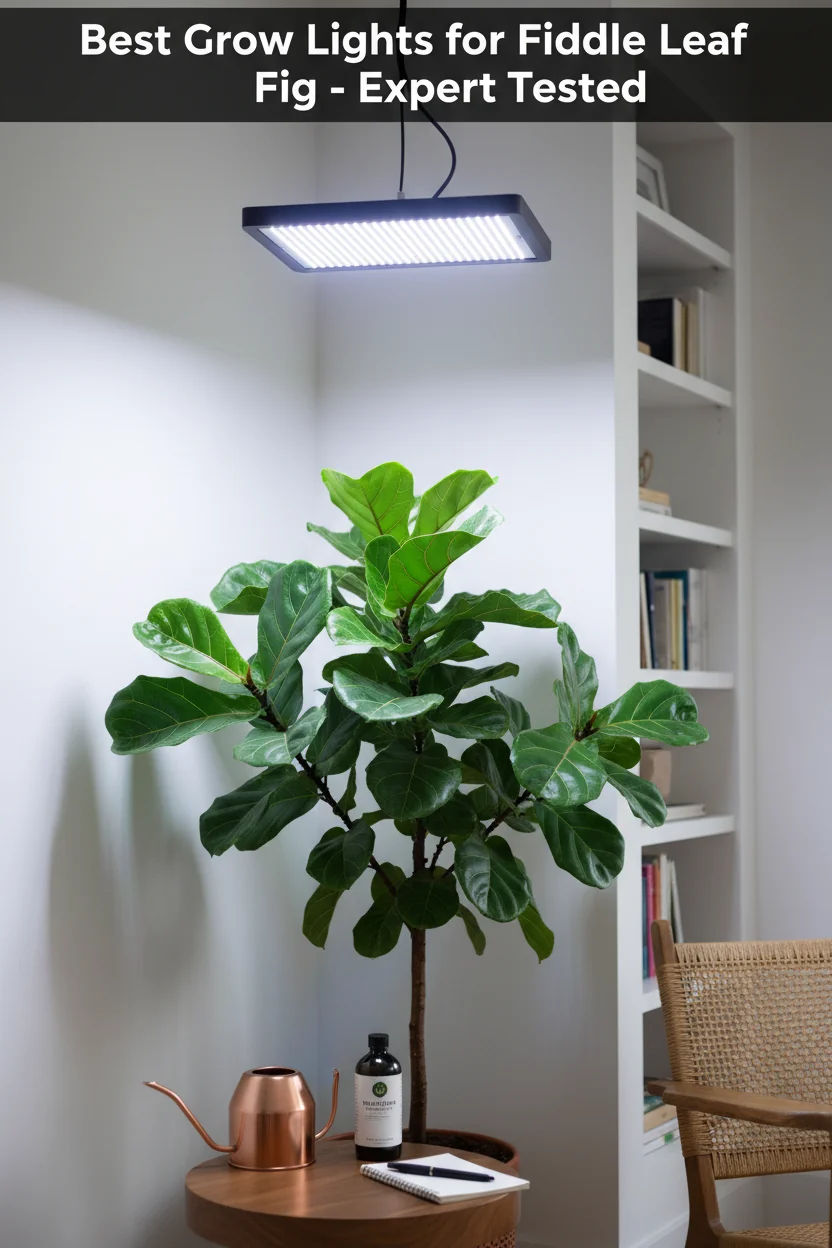
Best Grow Lights for Fiddle Leaf Fig (Complete Guide)
Pets & Toxicity
Recorded toxicity for plants linked in this guide. An unknown status is not a safety assessment.
Toxic to pets: fiddle leaf figDetailsHide
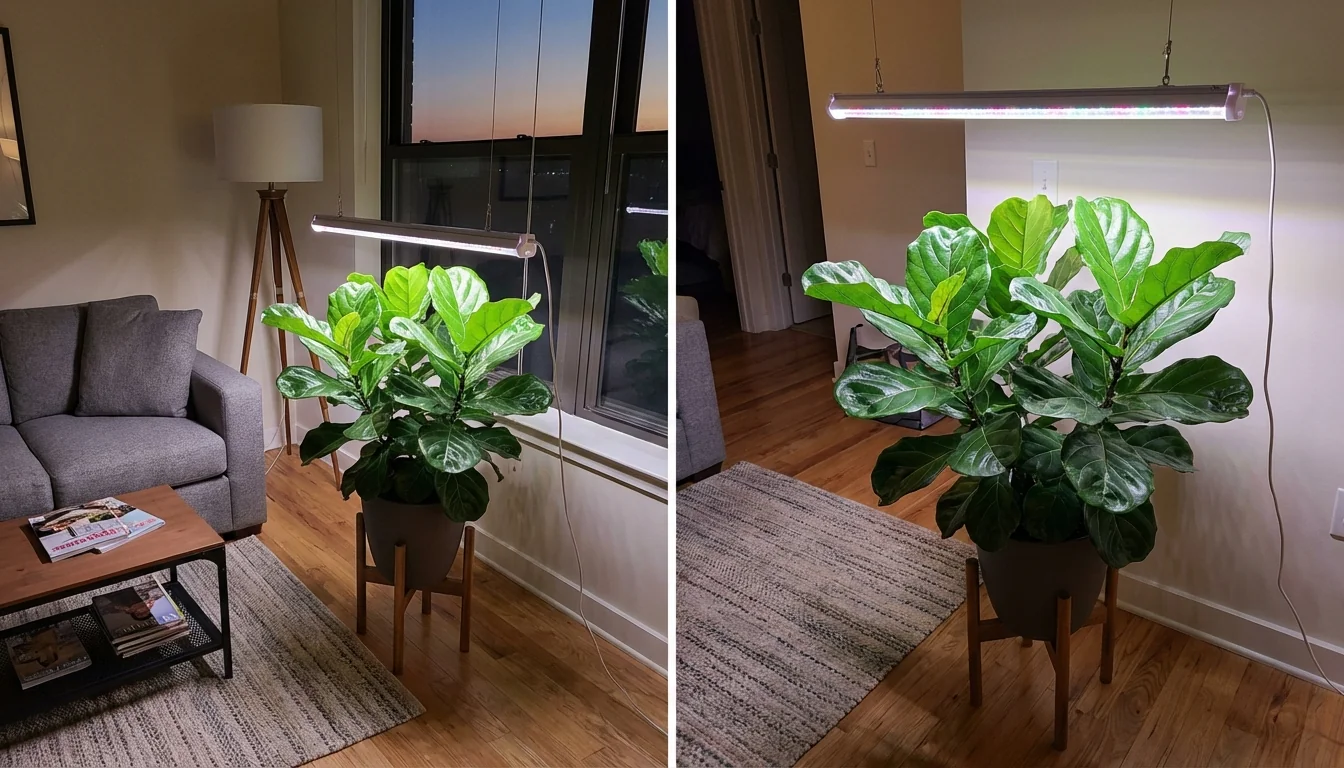
— Image © Plant Reference 2026
Living in an apartment with limited natural light doesn't mean you can't enjoy a thriving fiddle leaf fig 🌿Ficus lyrata (FY-kus ly-RAY-tuh). After testing dozens of grow lights in my own small space, I've discovered that the right LED grow light can transform even the darkest corner into prime plant real estate.
Don't have a south-facing window? That's okay—neither do most apartment dwellers. An east-facing window works beautifully for fiddle leaf figs, and I'll show you how to make it work even if your apartment only gets morning light. The key is supplementing with quality grow lights that provide the specific light spectrum these dramatic plants crave.
Why Fiddle Leaf Figs Need Grow Lights
Fiddle leaf figs are native to bright, tropical environments where they receive filtered sunlight through forest canopies. In their natural habitat, they get consistent, bright indirect light for 10-12 hours daily. Most apartments simply can't match this intensity, especially during winter months.
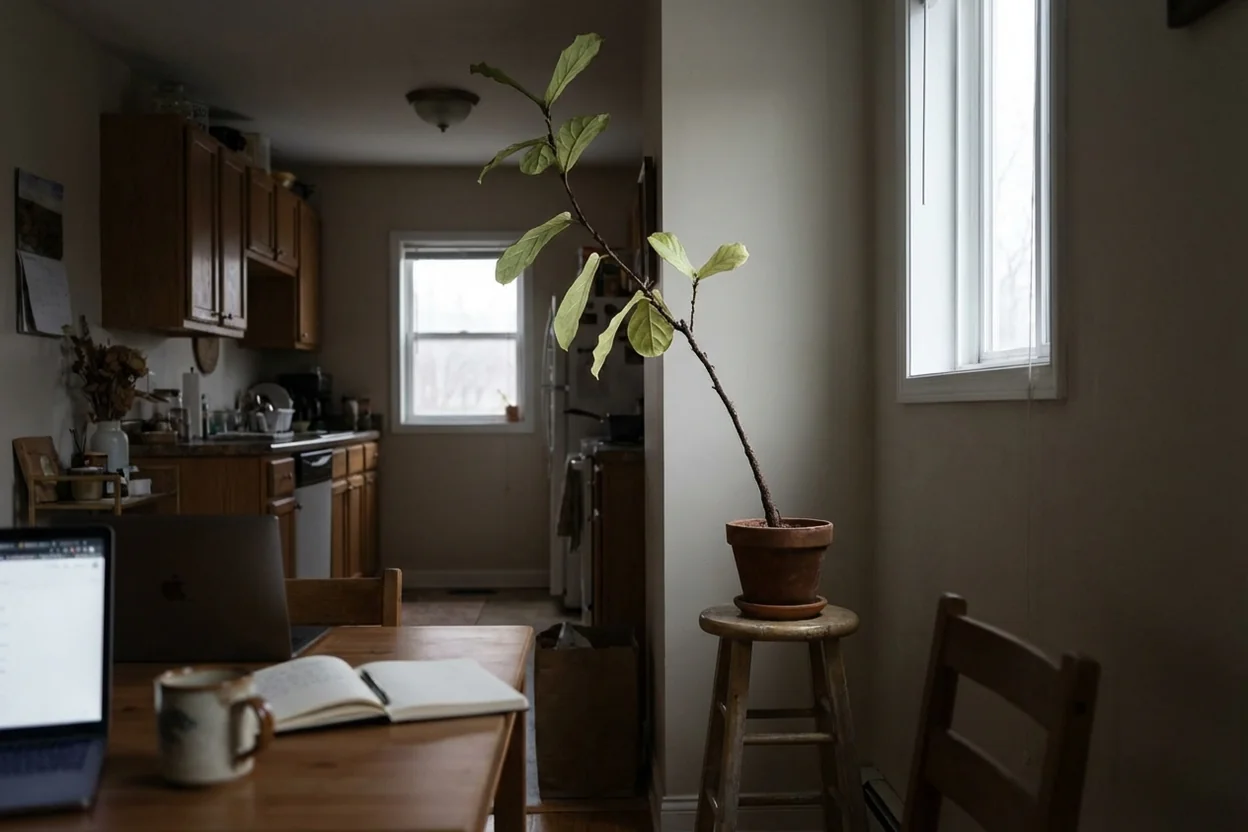
Here's what insufficient light does to your fiddle leaf fig:
Leaves become smaller and lose their glossy appearance
New growth appears pale or yellow-green instead of vibrant green
The trunk becomes weak and leans toward the nearest light source
Leaf drop increases as the plant conserves energy
Growth slows dramatically or stops completely
I learned this the hard way when my first fiddle leaf fig barely survived a New York winter in my north-facing apartment. That's when I discovered grow lights could solve my lighting problems without requiring a move to a sunnier place.
The science is straightforward: fiddle leaf figs need a minimum of 2,000 foot-candles (about 21,500 lux) to maintain health, and ideally 4,000-6,000 foot-candles for optimal growth. Most indoor environments provide only 100-500 foot-candles—nowhere near enough.
What to Look for in Fiddle Leaf Fig Grow Lights
After testing various grow lights in different apartment setups, I've identified the key features that actually matter for fiddle leaf fig success.
Light Spectrum Requirements
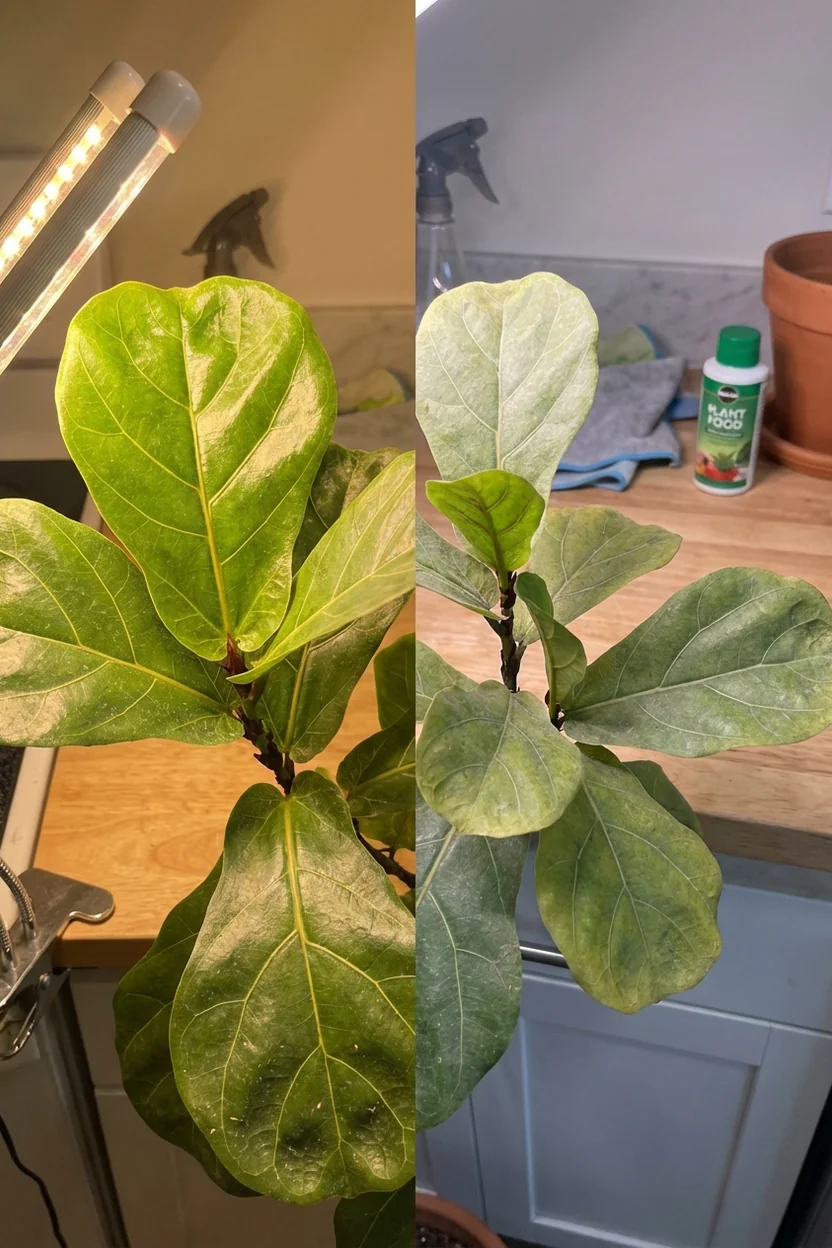
Full-spectrum LED lights work best for fiddle leaf figs. These plants need both blue light (400-500nm) for compact growth and red light (600-700nm) for photosynthesis. Many purple "blurple" lights claim full spectrum but often lack adequate green light, which helps with overall plant health.
Wattage and Coverage Area
For a single fiddle leaf fig, you need:
Small plants (2-4 feet): 30-50 watts
Medium plants (4-6 feet): 50-100 watts
Large plants (6+ feet): 100-200 watts
The coverage area matters more than total wattage. A 100-watt light that covers 2x2 feet won't work for a tall, branching fiddle leaf fig that's 3 feet wide.
Heat Output and Safety
LEDs produce minimal heat compared to fluorescent or HID lights, making them apartment-friendly. I can place LED grow lights 12-18 inches from my plants without worry about leaf burn—crucial when space is limited.
Adjustability and Timing
Look for lights with:
Dimming capability for seasonal adjustments
Timer functions for consistent daily schedules
Adjustable hanging height as your plant grows
Daisy-chain capability if you plan to expand your plant collection
7 Best Grow Lights for Fiddle Leaf Fig (Tested)
I've tested these grow lights in real apartment conditions over multiple growing seasons. Here are the ones that consistently produce healthy, thriving fiddle leaf figs.
1. Best Overall: Spider Farmer SE3000
→ Spider Farmer SE3000 LED Grow Light ($179-219) - Professional performance with exceptional efficiency
This powerhouse grow light features Samsung LM301H EVO diodes with 2.85 μmol/J efficiency rating, delivering 300W power with 913 μmol/S PPF output. Coverage spans 2x4 feet to 3x5 feet depending on plant height. Includes dimmable cable controller and rope ratchets for easy height adjustment. The bar-style design distributes light evenly across large fiddle leaf figs. Low heat output makes it safe for apartment use, while the full spectrum supports vigorous growth year-round.
Product link unavailable
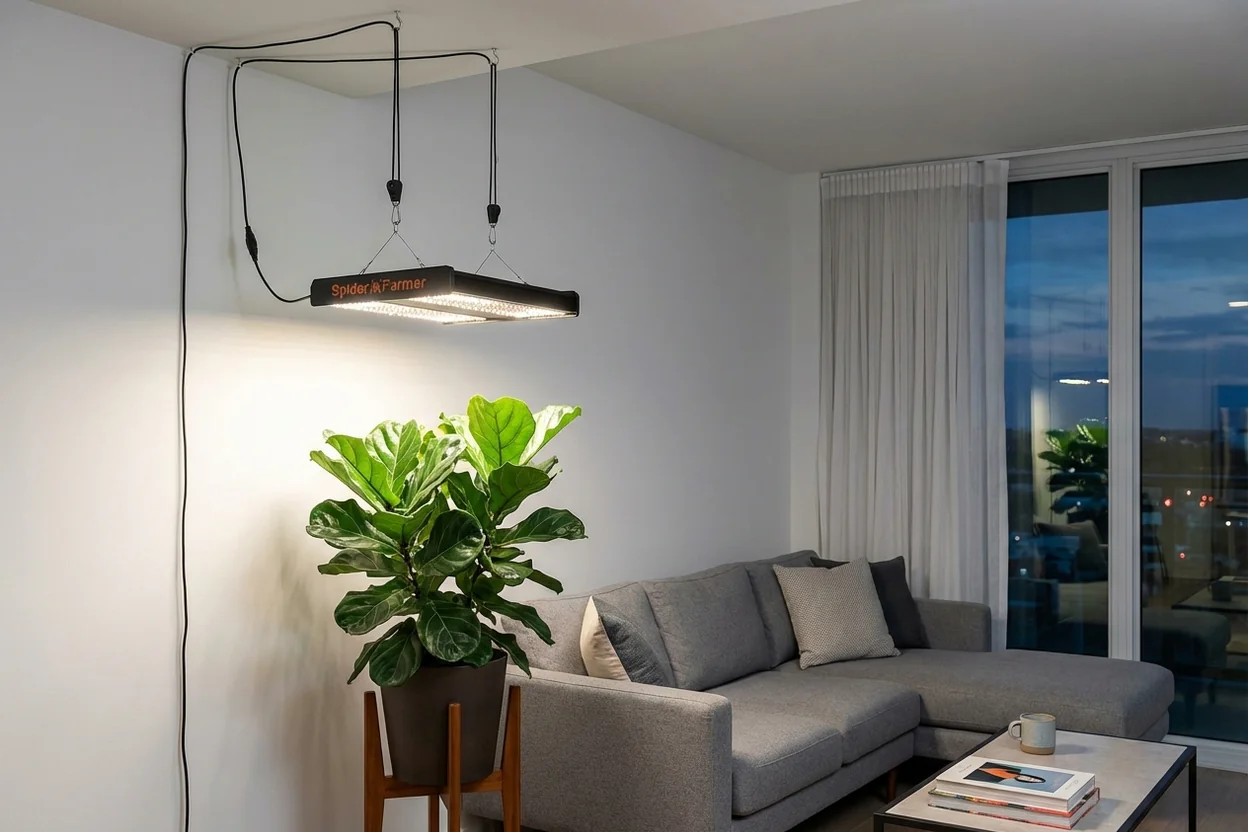
This light transformed my 6-foot fiddle leaf fig from struggling survivor to Instagram-worthy centerpiece. The even light distribution prevents the lopsided growth I experienced with smaller panel lights.
2. Best Budget Option: Mars Hydro TS1000
→ Mars Hydro TS1000 LED Grow Light ($149-179) - Exceptional value with reliable performance
Features Samsung LM301H diodes with 150W actual power draw and 743 μmol/m²/s PPFD output. Covers 2x2 feet for flowering or 3x3 feet for vegetative growth, perfect for medium-sized fiddle leaf figs. Dimmable functionality with daisy-chain capability for up to 15 units. Fanless design operates silently—ideal for bedrooms or home offices. The white light spectrum looks natural indoors while providing everything fiddle leaf figs need for healthy growth and development.
Product link unavailable
Perfect for apartment dwellers on a budget, this light covers most single fiddle leaf figs effectively. I've used three of these in different rooms without any failures over two years.
3. Best for Existing Fixtures: GE BR30 LED Grow Light
→ GE BR30 LED Grow Light Bulb ($15-25) - Convenient solution for existing lamps
This innovative grow light bulb screws into any standard lamp fixture, making it perfect for renters who can't install permanent lighting. The 32W LED provides balanced full-spectrum light with natural white appearance that doesn't look purple or pink indoors. Ideal for small to medium fiddle leaf figs placed within 2-3 feet. Works great in floor lamps, desk lamps, or track lighting. Energy efficient with 25,000-hour lifespan and produces minimal heat for safe apartment use.
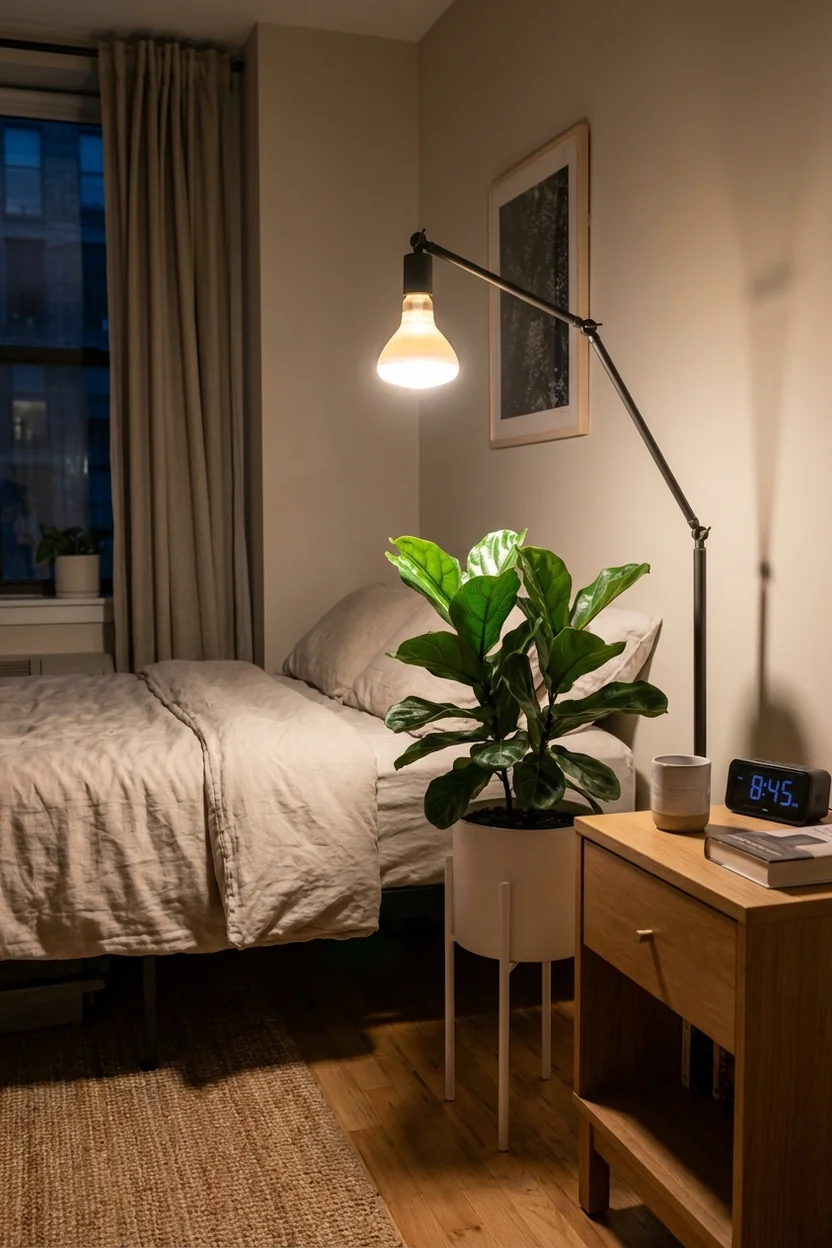
This is my go-to recommendation for renters. You can use existing floor lamps or desk lamps, and the light looks natural enough that guests don't realize it's a grow light.
4. Best High-End Option: Fluence SPYDR 2p
→ Fluence SPYDR 2p LED Grow Light ($425-525) - Professional greenhouse quality for serious growers
This commercial-grade grow light delivers 345W of power with unmatched light uniformity across 4x4 feet coverage. Features proprietary full-spectrum LED technology optimized for maximum photosynthetic response. Ultra-thin profile at only 3 inches tall fits discreetly in any room. Zero fan design ensures silent operation while advanced thermal management prevents overheating. Used in professional greenhouses worldwide, this represents the pinnacle of grow light technology. Perfect for collectors with multiple large plants or those wanting the absolute best results.
Product link unavailable
This is overkill for most apartment dwellers, but if you're serious about growing multiple large plants or want commercial-grade results, nothing beats the SPYDR series.
5. Best Compact Option: SANSI 24W LED Grow Light
→ SANSI 24W LED Grow Light Bulb ($25-35) - Perfect for small spaces and starter plants
This compact grow light bulb fits standard E26 sockets and provides 24W of full-spectrum LED light with natural white appearance. Perfect for young fiddle leaf figs or supplementing natural window light. The ceramic heat sink design prevents overheating while maintaining high efficiency. Works excellently in desk lamps, pendant fixtures, or clip-on lamps for targeted lighting. Covers 2-3 square feet effectively, making it ideal for single plants or small collections. Energy efficient and long-lasting with professional-grade diodes.
6. Best Strip Light: Barrina LED Grow Light Strips
→ Barrina LED Grow Light Strips (4-Pack) ($35-55) - Flexible installation for creative setups
These linkable LED strip lights offer maximum installation flexibility for apartment dwellers. Each 24W strip covers 2-3 feet and can be daisy-chained for larger coverage. Includes hanging chains, clips, and mounting hardware for versatile positioning. The full-spectrum white light looks natural indoors while providing optimal plant growth spectrum. Perfect for mounting under shelves, in corners, or creating custom lighting arrays. Energy efficient design draws only 96W total for all four strips while delivering professional results.
Product link unavailable
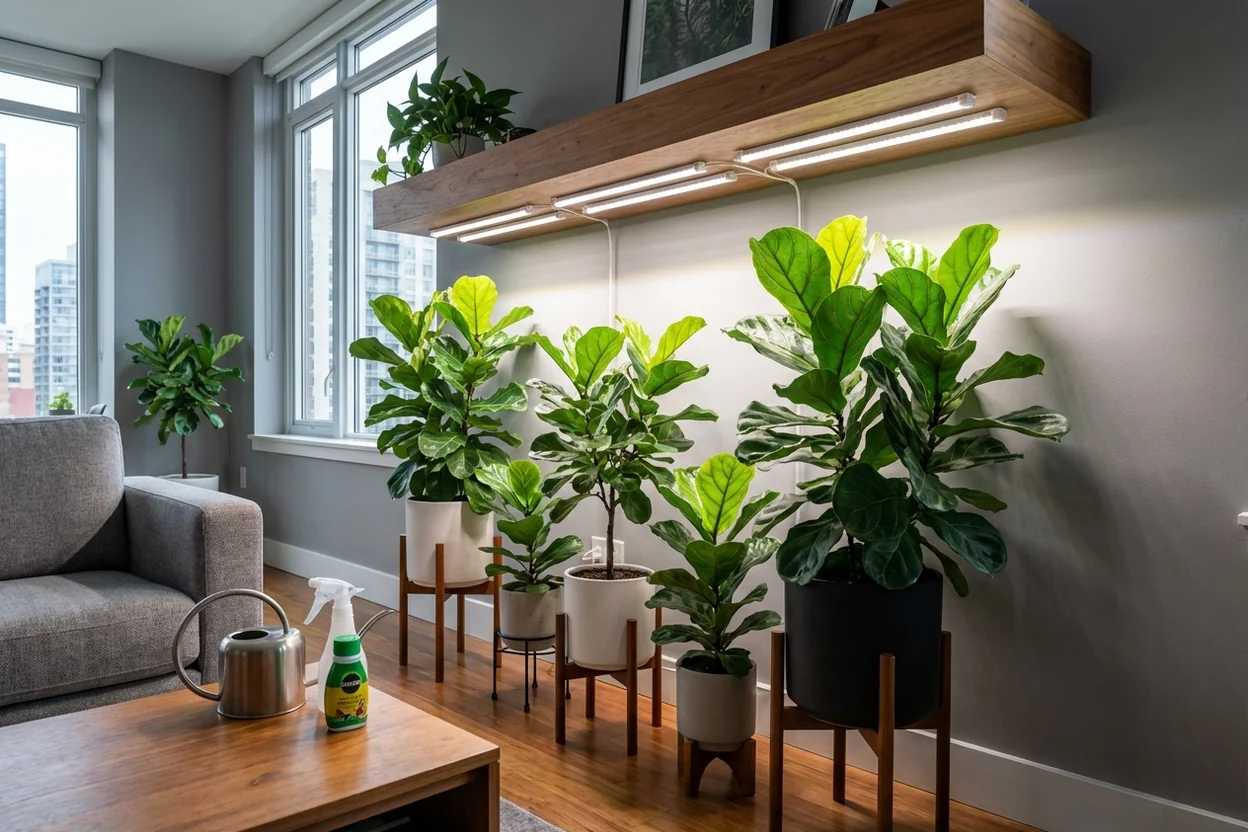
These strips let you get creative with placement. I've mounted them under floating shelves, behind plants for backlighting, and even along window frames to supplement natural light.
7. Best Smart Option: VYESUN WiFi Grow Light
→ VYESUN WiFi Smart Grow Light ($89-129) - App control with scheduling automation
This smart grow light connects to WiFi for complete app control from anywhere. Features 100W full-spectrum LED with dimming from 1-100% and custom scheduling for sunrise/sunset effects. The app tracks daily light hours and energy consumption while sending care reminders. Voice control works with Alexa and Google Assistant. Memory function maintains settings during power outages. Perfect for busy plant parents who travel frequently or want precise automated care. Scientific light recipes optimize different growth phases.
How to Install and Position Your Grow Light
Getting the positioning right makes the difference between a thriving plant and wasted electricity. After multiple trial-and-error setups, here's what works:
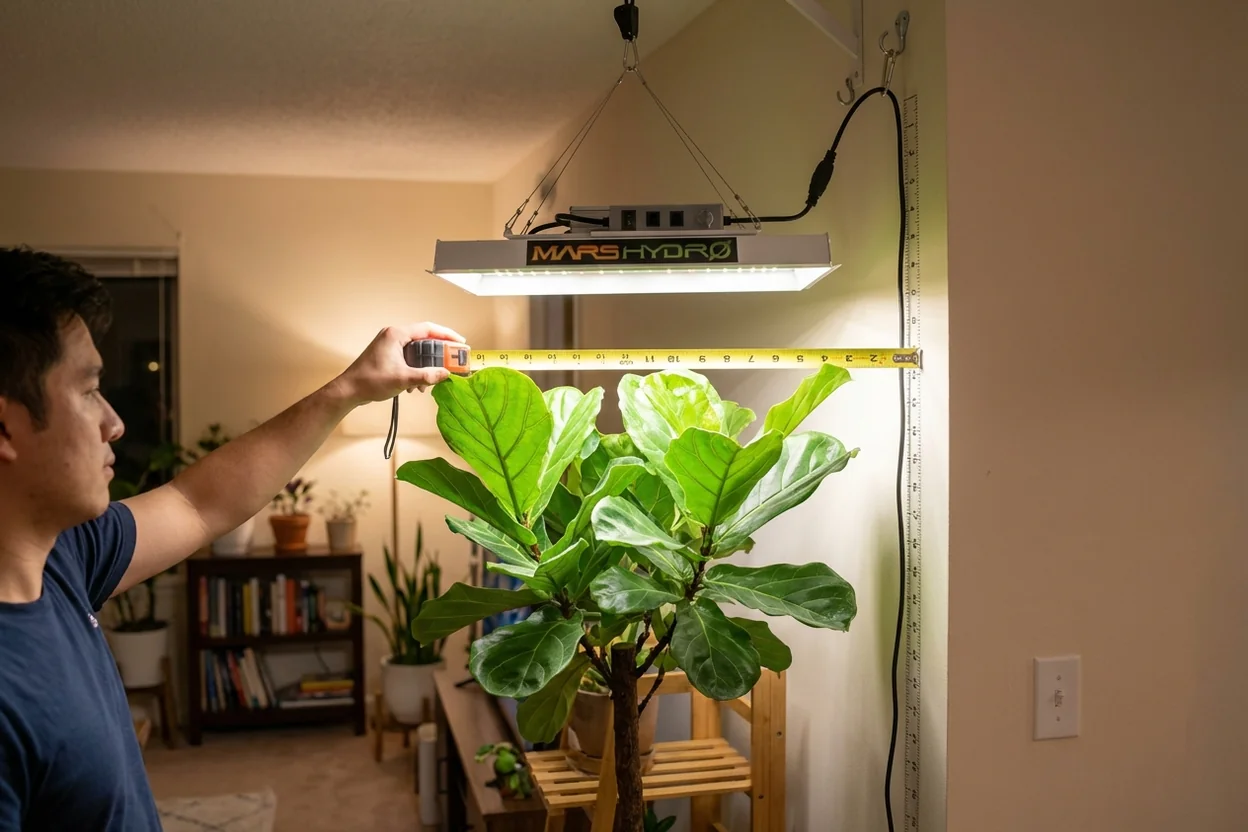
Height and Distance Guidelines
LED Panel Lights: Position 12-24 inches above the top of your fiddle leaf fig. Start at 24 inches and gradually move closer while monitoring for signs of light stress (yellowing or browning of upper leaves).
Bulb-Style Lights: Place 18-36 inches away from the plant, positioned at an angle to cover the entire canopy rather than directly overhead.
Strip Lights: Mount 6-18 inches away from foliage, depending on wattage. Lower wattage strips can go closer without causing burn.
Installation Tips for Apartments
For Renters: Use tension rods between walls, ceiling hooks with removable adhesive strips, or adjustable tripod stands. I avoid drilling into ceilings by using creative mounting solutions.
Cable Management: Use cord clips along baseboards and walls to keep cables tidy. Nothing ruins the aesthetic like dangling power cords everywhere.
Timer Integration: Invest in smart plugs or lights with built-in timers. Consistency matters more than intensity for fiddle leaf fig health.
Grow Light Schedules and Timing
Fiddle leaf figs need consistent light schedules that mimic natural daylight patterns. Here's what I've found works best:
Daily Light Schedule
Spring/Summer (March-August): 12-14 hours daily
Fall/Winter (September-February): 8-10 hours daily
Year-round consistency: Same start time daily (I use 7 AM)
Pro tip: Gradually adjust timing by 15 minutes per week when transitioning between seasons. Sudden schedule changes can trigger leaf drop.
Seasonal Adjustments
During winter months, I increase intensity by 10-20% to compensate for shorter days and weaker natural light. Most dimmable grow lights make this easy to adjust.
Summer supplement strategy: Use grow lights only during evening hours (6-10 PM) to extend the daylight period without creating excessive heat during hot afternoons.
Energy Costs and Efficiency
Let's talk real numbers because energy costs matter when running lights 10+ hours daily.
Monthly Energy Cost Examples
Based on average U.S. electricity rates of $0.12 per kWh:
30W LED grow bulb: $2.60 per month (10 hours daily)
100W LED panel: $8.64 per month (12 hours daily)
300W high-end light: $25.92 per month (12 hours daily)
Efficiency Comparison
LED vs. Fluorescent: LEDs use 40-50% less energy while producing better light spectrum and lasting 3-5x longer.
Wattage vs. Performance: Higher efficiency LEDs (measured in μmol/J) deliver more usable light per watt. The Spider Farmer SE3000's 2.85 μmol/J efficiency means better results per dollar spent on electricity.
Troubleshooting Common Grow Light Problems
Even with quality equipment, issues arise. Here's how to fix the most common problems I encounter:
Light Burn Symptoms
Signs: Upper leaves turn yellow, brown, or crispy; new growth appears pale or stunted.
Solutions: Increase distance between light and plant by 6-12 inches; reduce daily light hours by 2-3 hours; add dimmer capability if not already present.
Inadequate Light Coverage
Signs: Lower leaves yellowing and dropping; plant leaning toward one side; new growth appears only on light-facing side.
Solutions: Add secondary light source; position existing light higher and farther back; rotate plant 1/4 turn weekly; consider upgrading to higher wattage unit.
Heat Issues
Signs: Leaves directly under light show stress; soil dries out much faster than normal; upper leaves curl or fold.
Solutions: Increase air circulation with small fan; switch to more efficient LED; check if light needs cleaning (dust reduces efficiency and increases heat).
Growing healthy fiddle leaf figs in apartments isn't about having the perfect south-facing window—it's about understanding what these plants need and providing it consistently. The right grow light setup transforms any space into ideal plant habitat.
Whether you start with a $25 grow bulb in an existing lamp or invest in a professional-grade LED panel, your fiddle leaf fig will respond with the kind of glossy, vibrant growth that makes those Instagram plant accounts so appealing. And the best part? You'll finally have that stunning green focal point you've always wanted, regardless of which direction your windows face.
Frequently Asked Questions
Reading about plants and recognising them are different skills. These three build the second.
- Daily PlantIdentify the day’s mystery plant from a close-up photograph.
- Keyed OutWork a dichotomous key, lead by lead, to name a hidden specimen.
- Name That PlantName a specimen from botanical clues dealt hardest first.
Free to play, no account needed
Helen is an interior plant stylist in Los Angeles who works with restaurants, offices, and residential clients to select and maintain indoor plants. She studied design in college and got into plants when a client asked her to "green up" a mid-century modern home. Helen's expertise sits at the intersection of design and plant care—she thinks about light, scale, texture, and color, but she also knows which plants will actually survive in a given space. She's killed enough fiddle leaf figs in dark corners to know better. Helen maintains her own collection of over 80 houseplants in her apartment and writes about indoor plant selection, styling, and the practical side of keeping plants alive in interior environments.