Fiddle Leaf Fig Light Requirements: The Ultimate Guide
Pets & Toxicity
Recorded toxicity for plants linked in this guide. An unknown status is not a safety assessment.
Toxic to pets: fiddle leaf figDetailsHide
— Image © Plant Reference 2026
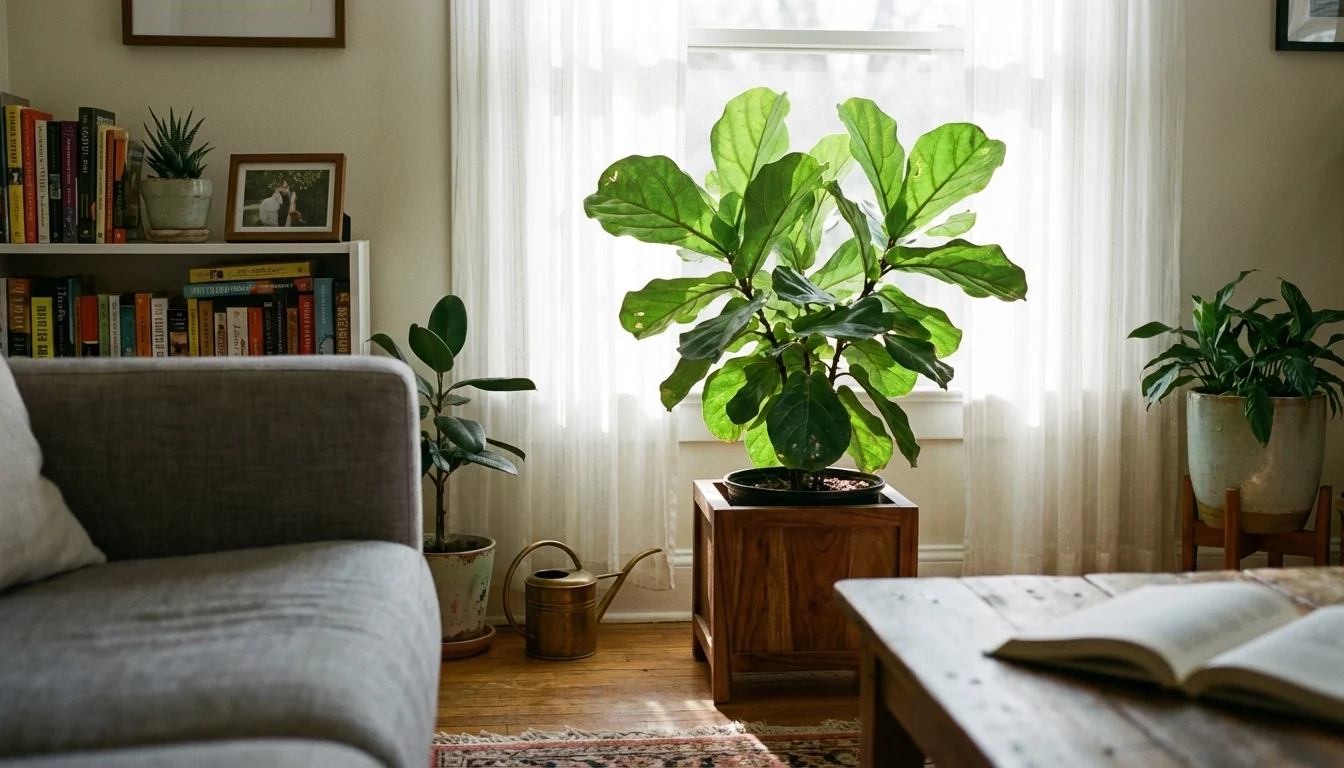
Lighting determines whether your fiddle leaf fig thrives or barely survives. These native rainforest understory plants evolved beneath the canopy of taller trees, receiving bright but filtered light throughout the day. Understanding and replicating these conditions in your home is the single most critical factor for success with fiddle leaf fig care.
Understanding Fiddle Leaf Fig Light Needs
The fiddle leaf fig 🌿Ficus lyrata (FY-kus ly-RAY-tuh) originates from the lowland tropical rainforests of western Africa. In their natural habitat, these plants grow as understory trees, receiving dappled sunlight filtered through the dense canopy above. This evolutionary background explains their specific light requirements—they need substantial brightness without harsh direct exposure.
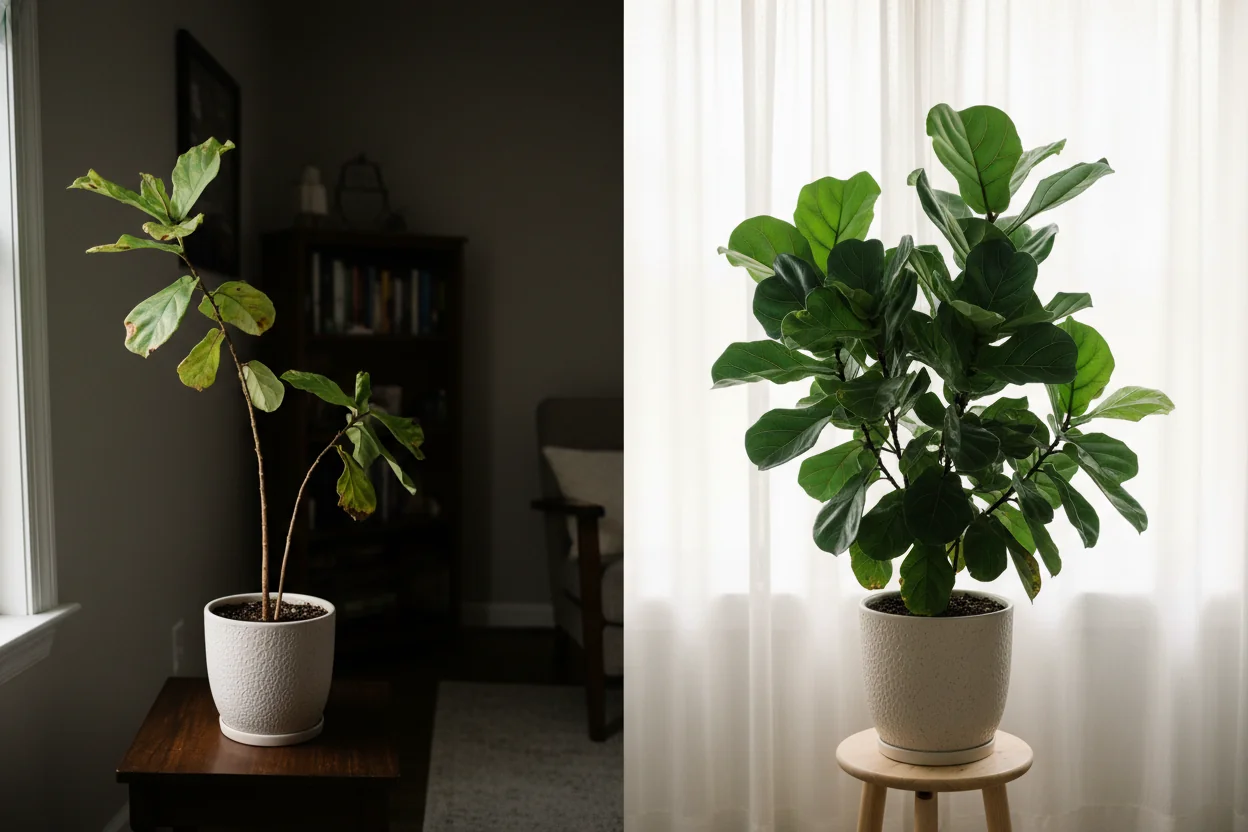
Your fiddle leaf fig requires 6-8 hours of bright, indirect light daily to maintain healthy growth and produce its signature large, violin-shaped leaves. Indirect light means the sun's rays are filtered or diffused before reaching the plant—either by sheer curtains, distance from the window, or reflection off walls.
The intensity and duration of light directly impact photosynthesis rates, which control growth speed, leaf size, and overall plant health. Insufficient light forces your plant into survival mode, resulting in stunted growth and eventual decline. For comprehensive care beyond lighting, check out Fiddle Leaf Fig Care: The Complete Guide (2025).
Why light matters more than water
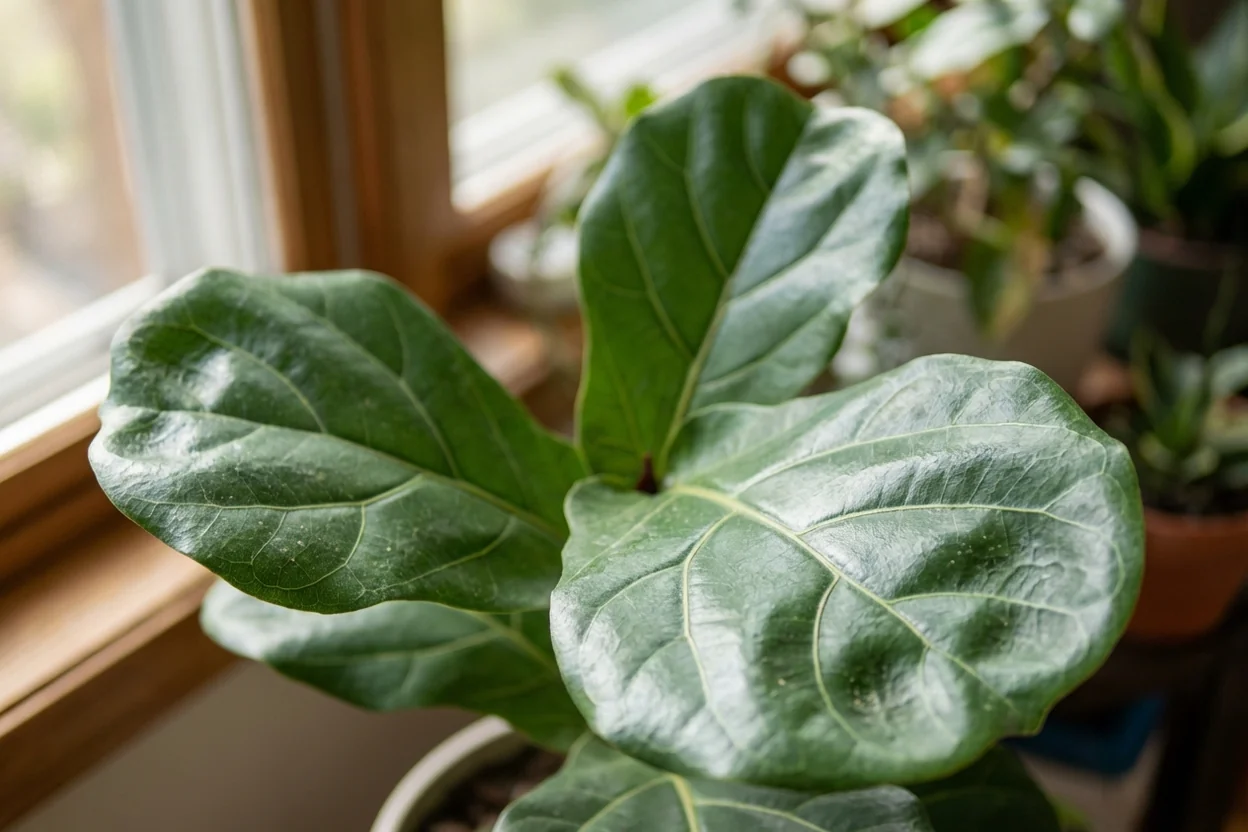
Most fiddle leaf fig deaths are blamed on watering mistakes, but inadequate light is often the underlying culprit. When light levels drop, photosynthesis slows, which means the plant requires less water. Owners who continue their regular watering schedule end up overwatering a plant that can't process the moisture—leading to root rot.
Proper lighting enables efficient photosynthesis, allowing your plant to utilize water and nutrients effectively. This creates a healthy cycle where the plant actually uses the resources you provide rather than sitting in waterlogged soil.
Best Window Directions for Fiddle Leaf Figs
Window direction dramatically affects the quantity and quality of light your fiddle leaf fig receives. Each compass direction provides distinct lighting characteristics throughout the day and seasons.
South-facing windows (best option)
South-facing windows provide the most consistent, bright light throughout the day in the northern hemisphere. These windows receive steady illumination from sunrise to sunset, making them ideal for light-hungry plants like fiddle leaf figs.
Position your plant 2-3 feet (60-90 cm) from a south-facing window for optimal results. This distance provides bright indirect light without harsh midday sun exposure. During summer months, sheer curtains help diffuse intense afternoon rays.
East-facing windows (excellent choice)
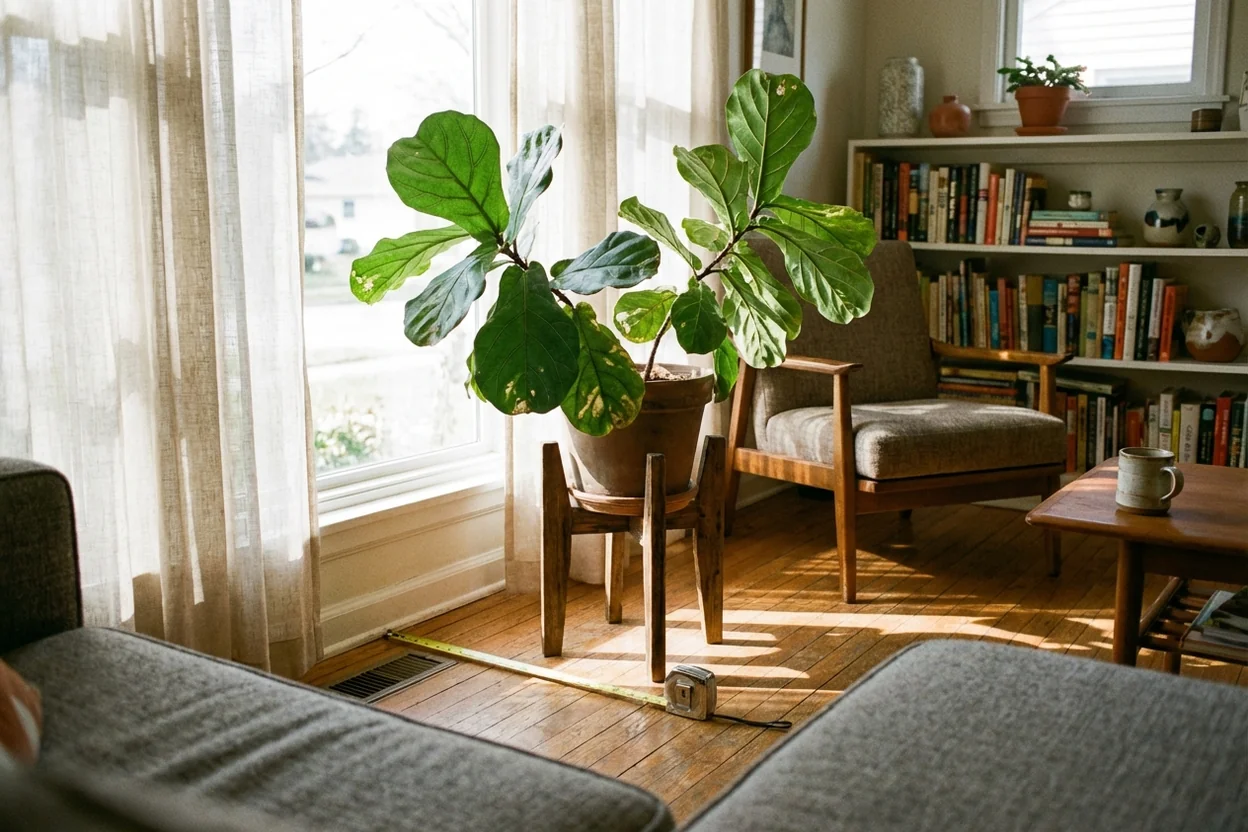
East-facing windows deliver gentle morning sun followed by bright indirect light for the remainder of the day. Morning sun is cooler and less intense than afternoon sun, making it safer for fiddle leaf fig foliage.
Plants can be positioned 1-2 feet (30-60 cm) from east-facing windows without risk of sunburn. The morning sun exposure encourages compact, robust growth while the afternoon indirect light maintains photosynthesis without stress.
West-facing windows (use with caution)
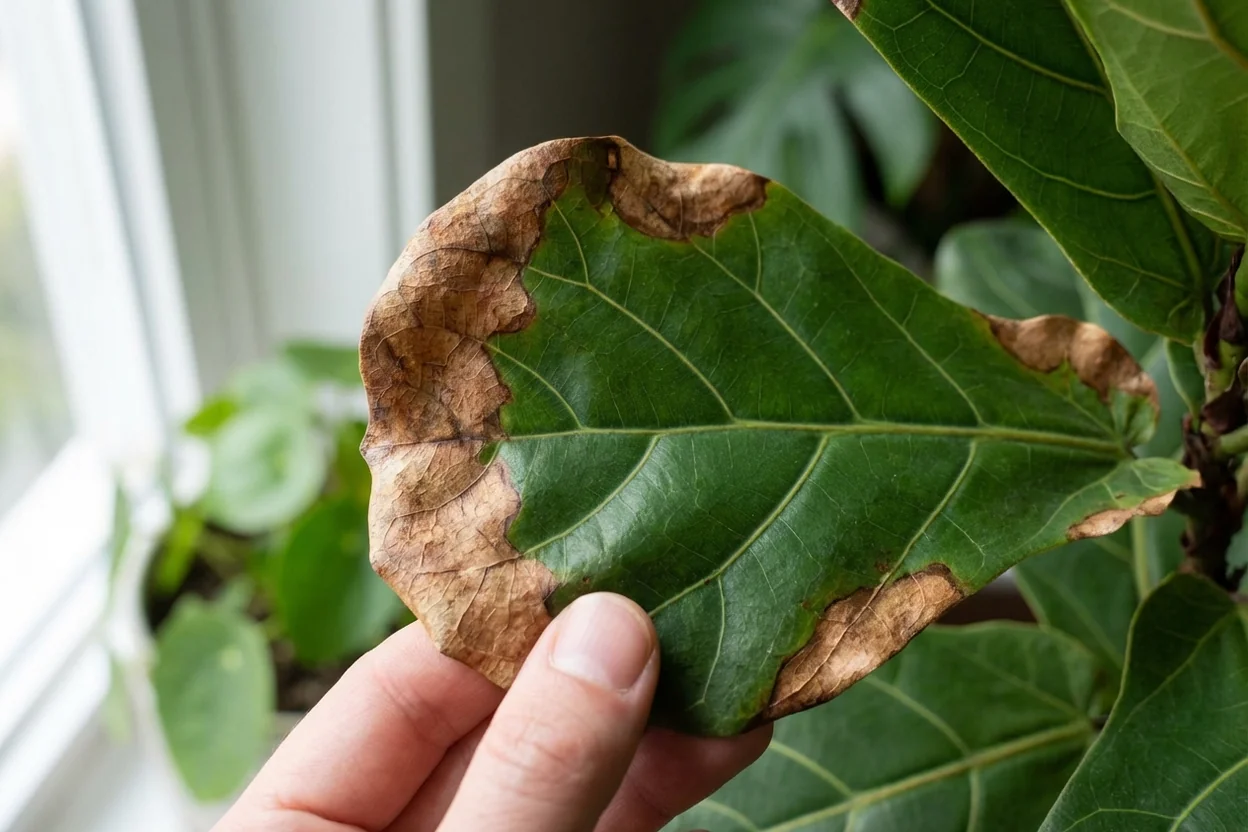
West-facing windows receive intense afternoon and evening sun, which can be too harsh for fiddle leaf figs. The concentrated heat and direct rays during the hottest part of the day frequently cause leaf damage.
If west-facing windows are your only option, position plants 3-4 feet (90-120 cm) away or install sheer curtains to filter the intense afternoon sun. Monitor leaves closely for brown, crispy edges indicating sun damage.
North-facing windows (inadequate without supplementation)
North-facing windows provide the least light in northern hemisphere locations. While the light remains consistent throughout the day, the intensity is typically insufficient for fiddle leaf figs to thrive.
Plants near north-facing windows develop the classic symptoms of insufficient light—leggy stems, small leaves, and slow growth. If north-facing windows are your only natural light source, invest in quality grow lights to supplement. See Fiddle Leaf Fig Not Growing? 9 Reasons for more troubleshooting guidance.
How Far From the Window Should Your Fiddle Leaf Fig Be?
Distance from the window exponentially affects light intensity. Light levels decrease dramatically with each foot of distance—dropping by approximately 50% with every 1-2 feet (30-60 cm) away from the glass.
The 1-3 foot rule (30-90 cm)
Most fiddle leaf figs thrive when positioned 1-3 feet (30-90 cm) from the window. This sweet spot provides adequate brightness while protecting leaves from direct sun exposure and temperature fluctuations near the glass.
Adjust within this range based on your window direction: - South-facing: 2-3 feet (60-90 cm) - East-facing: 1-2 feet (30-60 cm) - West-facing: 3-4 feet (90-120 cm) - North-facing: Directly in front, supplemented with grow lights
Obstacles that block light
Sheer curtains, exterior trees, nearby buildings, and even dirty windows dramatically reduce light penetration. Clean your windows every 2-3 months to maximize light transmission—accumulated grime can block up to 40% of available light.
Remove any items on windowsills that cast shadows on your plant. Even decorative objects can create shaded areas that contribute to uneven growth patterns.
Signs Your Fiddle Leaf Fig Isn't Getting Enough Light
Insufficient light creates a cascade of problems that compound over time. Recognizing these symptoms early allows you to adjust placement before permanent damage occurs.
Leggy, elongated stems
When light intensity drops, your fiddle leaf fig stretches toward the nearest light source—a phenomenon called etiolation. The stem elongates rapidly between leaves, creating an awkward, spindly appearance with excessive spacing between growth nodes.
These leggy stems lack the structural integrity of properly grown branches and often require pruning to restore attractive form.
Smaller new leaves
New leaves emerging significantly smaller than older foliage signal inadequate light for proper development. Healthy fiddle leaf figs produce leaves of consistent or increasing size as the plant matures.
Diminishing leaf size indicates the plant is conserving energy, unable to support full-sized foliage production with available light levels.
Leaf drop (especially lower leaves)
Plants in insufficient light shed their lowest, oldest leaves to redirect resources toward new growth near the light source. If you're experiencing unexplained leaf drop, evaluate your lighting conditions before blaming watering practices. For detailed troubleshooting, see Fiddle Leaf Fig Leaves Dropping? Here's Why (+ Fixes).
Yellow leaves
While yellowing can indicate various issues, leaves that turn yellow while remaining soft and attached often signal light deficiency. The plant is essentially digesting its own leaves to reclaim nutrients for more vital growth. For comprehensive troubleshooting, check out Fiddle Leaf Fig Yellow Leaves: Complete Troubleshooting.
Slow or no growth
Fiddle leaf figs in adequate light produce 1-2 new leaves per growing season (spring through summer). If your plant remains stagnant for months despite proper care in other areas, insufficient light is likely the culprit.
Signs of Too Much Direct Sunlight
While fiddle leaf figs need bright light, too much direct sun exposure causes immediate and lasting damage to their sensitive foliage.
Brown, crispy leaf edges
The most common sunburn symptom appears as dry, brown, paper-like edges along the leaf margins. These crispy borders feel brittle to the touch and cannot be reversed—the damaged tissue is permanently dead.
Move your plant farther from windows or install sheer curtains to prevent additional damage.
Bleached or faded coloring
Intense sun exposure breaks down chlorophyll faster than the plant can replace it, resulting in pale, washed-out foliage. Leaves may develop yellowish or light green patches where direct sun hits most intensely.
Sunburn patches in leaf centers
Severe direct sun creates tan or brown patches in the middle of leaves—distinct from edge browning. These irregular spots have clearly defined borders and often appear on leaves receiving the most direct exposure.
Sunburned leaves cannot recover. While they'll remain on the plant, prune them if the damage is extensive or aesthetically displeasing.
Seasonal Light Adjustments
Light intensity varies dramatically throughout the year as the sun's angle changes. Your fiddle leaf fig's placement needs seasonal adjustment to maintain consistent conditions.
Summer considerations
During summer months, the sun sits higher in the sky and shines more directly through windows. South-facing windows receive particularly intense midday sun that can overwhelm your plant.
Install lightweight sheer curtains during May through September to diffuse harsh rays. Alternatively, move plants 6-12 inches (15-30 cm) farther from windows during peak summer months.
Winter challenges
Winter brings shorter days, lower sun angles, and often cloudier conditions—drastically reducing available light. This is when most fiddle leaf figs struggle, even near windows.
Move plants 6-12 inches (15-30 cm) closer to windows from November through February. Remove any sheer curtains that aren't necessary for privacy to maximize light penetration. This is also when grow lights become particularly valuable.
Using Grow Lights for Fiddle Leaf Figs
Quality grow lights transform challenging spaces into viable locations for fiddle leaf figs. Modern LED technology provides full-spectrum light that supports healthy photosynthesis without generating excessive heat or driving up electricity costs.
When you need grow lights
Consider supplemental lighting if your home lacks bright windows, you're experiencing persistent low-light symptoms despite optimal window placement, you want to grow fiddle leaf figs in darker rooms, or winter months bring noticeable decline in plant health.
Grow lights are tools, not replacements for proper placement. They work best as supplementation to existing natural light rather than as the sole light source.
Types of grow lights
LED grow bulbs screw into standard lamps and fixtures, making them the most accessible option for beginners. They're energy-efficient, produce minimal heat, and fit seamlessly into home decor. Position 12-18 inches (30-45 cm) above foliage.
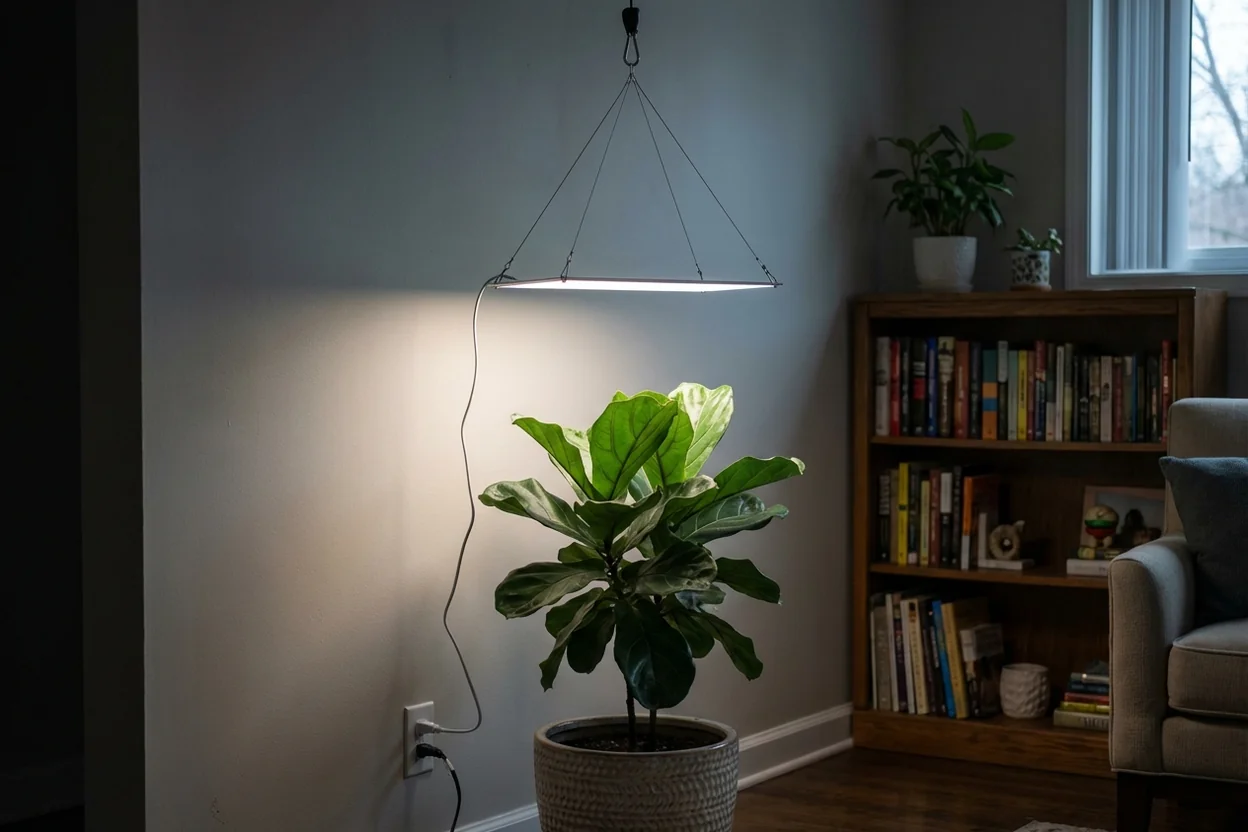
LED grow light panels provide more intensive coverage for larger plants or multiple specimens. These dedicated fixtures mount above plants and offer adjustable height and intensity settings. Position 18-24 inches (45-60 cm) above the plant canopy.
Full-spectrum LED strips install under shelves or behind furniture to provide supplemental backlighting. These work well for brightening darker corners where plants receive some natural light but need a boost.
Grow light positioning and timing
Position grow lights 12-24 inches (30-60 cm) above the top of your fiddle leaf fig, adjusting based on light intensity and plant response. Too close causes light burn similar to sun damage; too far provides insufficient intensity.
Run grow lights for 12-16 hours daily during winter months when natural light is limited. Reduce to 8-12 hours during spring and summer when supplementing existing window light. Use automatic timers to maintain consistent schedules—plants benefit from predictable light patterns.
Measuring Light Levels
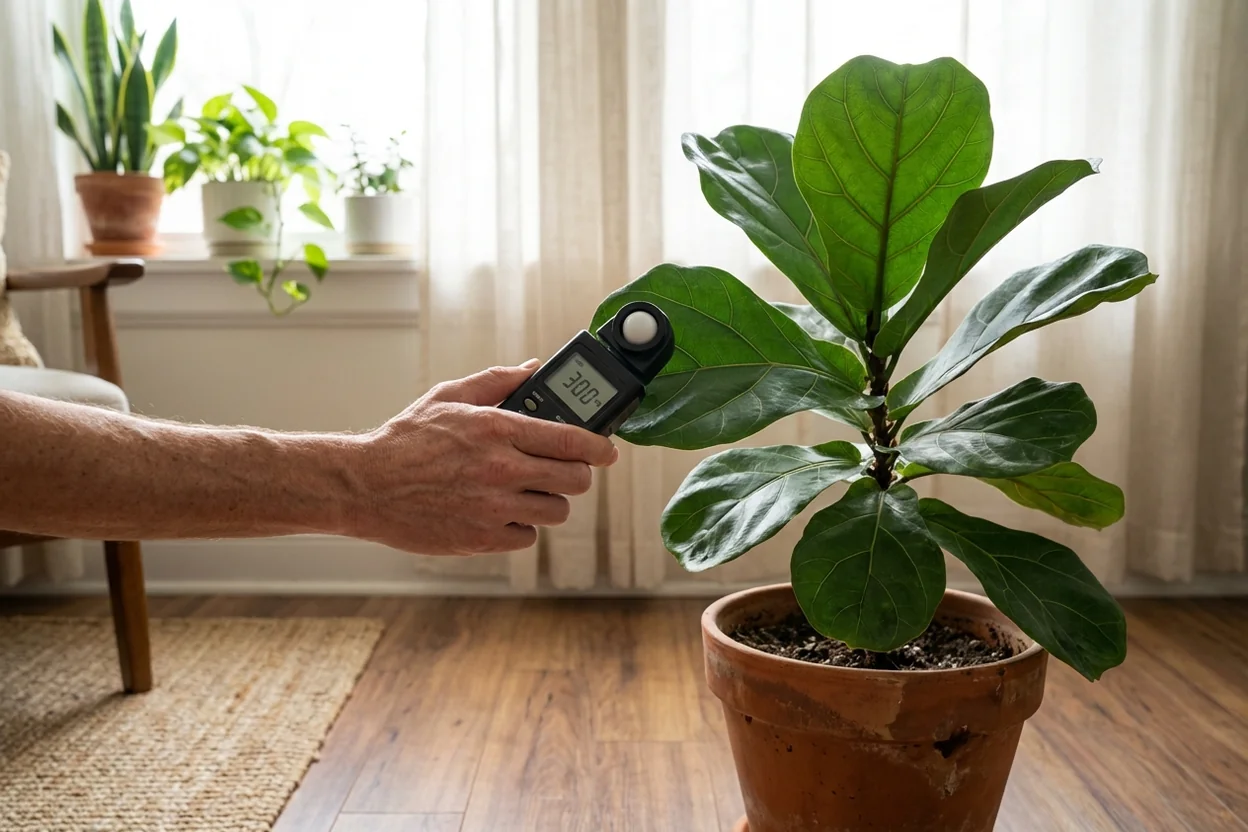
Accurate light measurement removes guesswork from plant placement. Light meters quantify the brightness your plant receives, allowing you to make informed positioning decisions.
Understanding foot-candles and lux
Light intensity is measured in foot-candles (fc) in the US or lux internationally. One foot-candle equals approximately 10.76 lux. Most plant care resources reference foot-candles, while light meter apps typically display lux.
Fiddle leaf figs thrive in 200-400 foot-candles (2,150-4,300 lux) of bright indirect light. Below 100 foot-candles, growth slows dramatically. Above 800 foot-candles of direct sun, leaf damage becomes likely.
Using smartphone apps
Several free apps turn your smartphone into a basic light meter. While not as accurate as dedicated meters, they provide helpful relative measurements for comparing locations.
Popular options include Photone (iOS and Android), Light Spectrum Pro (Android), and Korona (iOS). Take readings at plant leaf height during midday for the most relevant data.
Dedicated light meters
Professional light meters provide more accurate readings than smartphone apps. They're particularly valuable if you're serious about optimizing growing conditions or troubleshooting persistent problems.
Rotating Your Plant for Even Growth
Fiddle leaf figs exhibit strong phototropism—growth toward the light source. Without rotation, one side receives significantly more light than the other, creating lopsided development.
The 90-degree weekly rotation
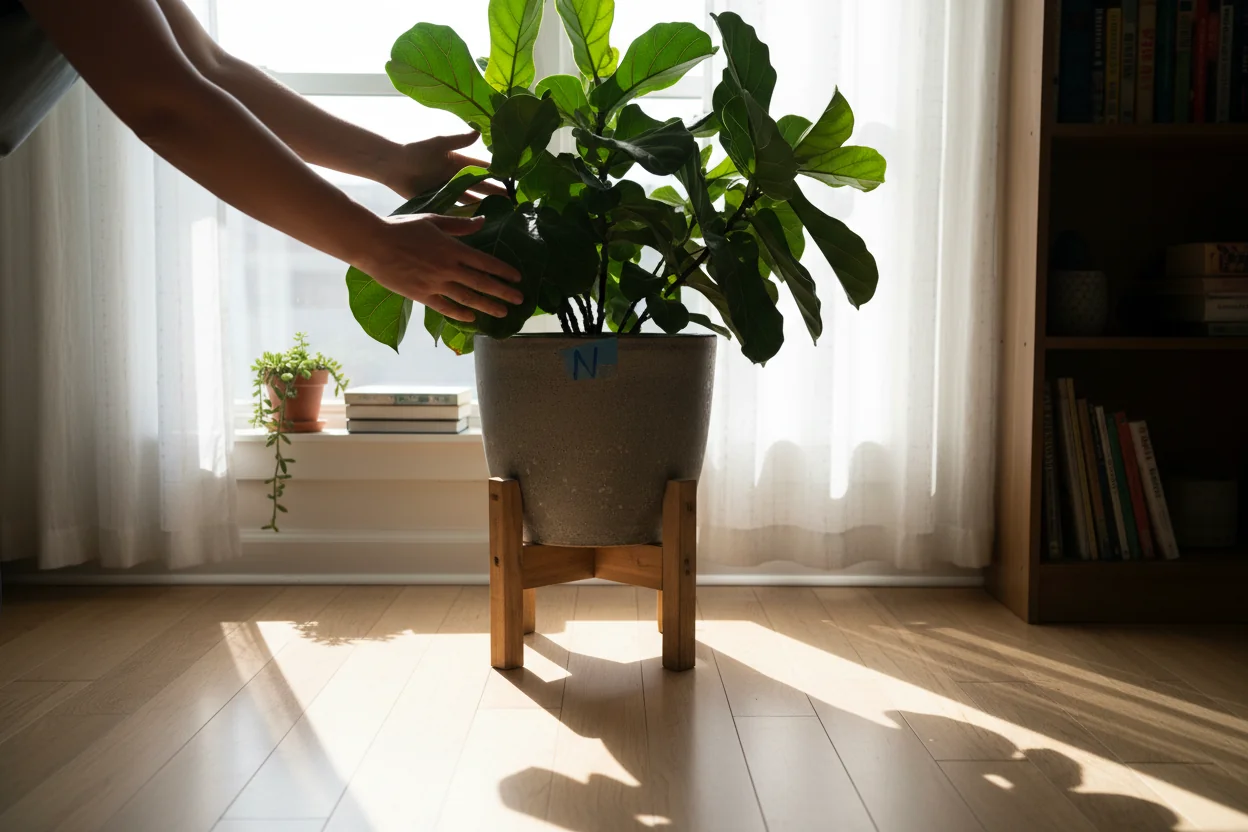
Rotate your fiddle leaf fig 90 degrees (one-quarter turn) weekly to expose all sides to equal light over time. This simple habit prevents the leaning, one-sided growth that plagues so many specimens.
Mark your pot with a small piece of tape or sticker to track which side faces the window each week. Set a phone reminder every Sunday evening to maintain consistency.
When not to rotate
Don't rotate newly repotted plants for 4-6 weeks—let them establish roots without the stress of adjusting to changing light angles. Similarly, avoid rotating plants showing signs of stress from other issues until they stabilize.
Light Requirements for Different Growth Stages
Your fiddle leaf fig's light needs intensify as it matures. Larger plants with more foliage require proportionally more light energy to support their mass.
Young plants and propagations
Newly propagated fiddle leaf figs or young plants under 2 feet (60 cm) tall can tolerate slightly lower light levels than mature specimens—around 150-200 foot-candles minimum. Their smaller leaf surface area requires less energy to maintain.
Position young plants in the same bright indirect light recommended for adults, but they'll show fewer symptoms if placement isn't quite perfect. For detailed propagation instructions, see Fiddle Leaf Fig Propagation: 3 Easy Methods (With Photos).
Mature plants (4+ feet tall)
Established fiddle leaf figs over 4 feet (1.2 m) tall need consistent, high-quality light to support their extensive canopy. These specimens show low-light symptoms faster than younger plants—leaf drop, slow growth, and declining vigor appear within weeks of inadequate conditions.
Mature plants benefit most from grow light supplementation during winter months. Their size and leaf density mean interior portions of the canopy receive less light than outer leaves, making consistent overhead illumination valuable.
Bushy vs. tree-form plants
Bush-form fiddle leaf figs with multiple stems require slightly more light than single-trunk specimens because their denser canopy creates more shaded areas. Ensure adequate brightness penetrates throughout the entire plant structure.
Tree-form plants with cleared lower trunks concentrate foliage at the top, making them slightly more tolerant of less-than-ideal window placement since all leaves can access similar light levels.
Frequently Asked Questions
Reading about plants and recognising them are different skills. These three build the second.
- Daily PlantIdentify the day’s mystery plant from a close-up photograph.
- Keyed OutWork a dichotomous key, lead by lead, to name a hidden specimen.
- Name That PlantName a specimen from botanical clues dealt hardest first.
Free to play, no account needed
Amanda came to gardening through an unexpected route—after developing chronic pain from rheumatoid arthritis in her late 20s, she started researching adaptive gardening techniques that would allow her to continue growing plants without aggravating her condition. Now based in Minneapolis, she writes about accessible gardening, raised bed designs for people with mobility challenges, and ergonomic tools that reduce strain. Amanda completed a certificate in sustainable urban agriculture and volunteers with a nonprofit that builds accessible community gardens. She grows vegetables, herbs, and flowers in waist-high raised beds she designed herself. Her writing focuses on practical solutions that work for real people with real limitations—whether that's arthritis, limited mobility, or just a bad back.