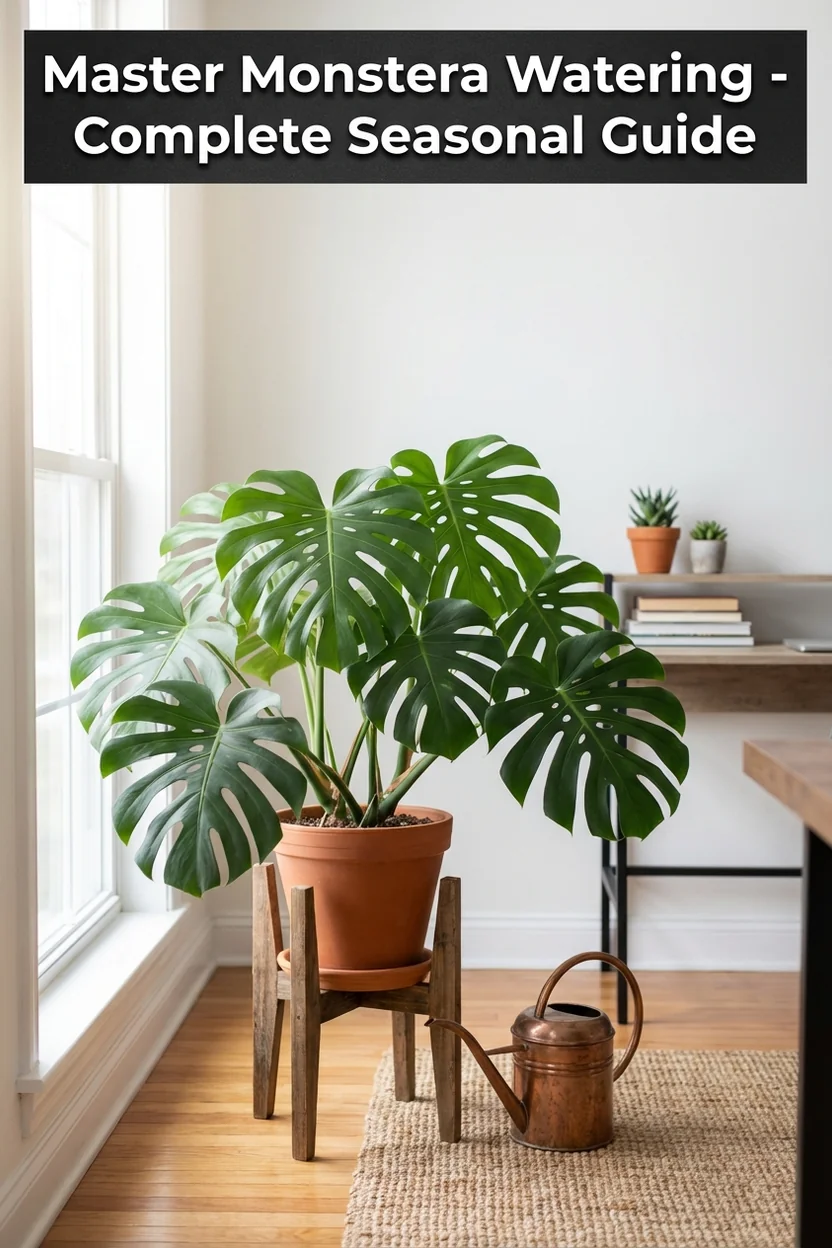
How to Water a Monstera: Complete Watering Guide
Pets & Toxicity
Recorded toxicity for plants linked in this guide. An unknown status is not a safety assessment.
Toxic to pets: fiddle leaf fig, Swiss cheese plantDetailsHide
Monstera deliciosa — Toxicity Warning
Toxic to pets and humans. All vegetative parts contain calcium oxalate crystals that cause mouth pain, swelling, and drooling if ingested. Unripe fruit also contains calcium oxalate and is toxic; only fully ripened fruit (after 12+ months) is edible.View Monstera deliciosa plant profile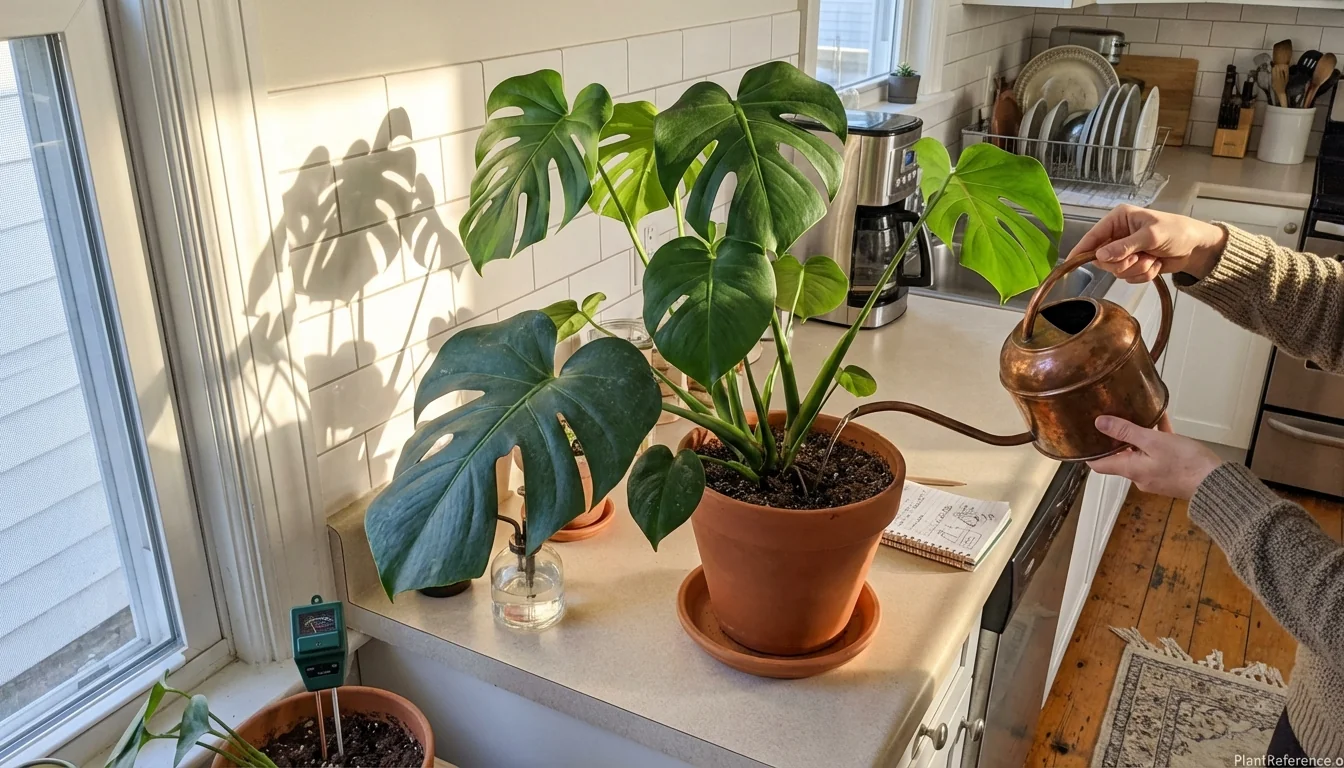
— Image © Plant Reference 2026
Wondering how often to water your monstera? The answer isn't as simple as "once a week"—your monstera's watering needs change with seasons, pot size, humidity, and light levels. Getting the watering schedule right is the difference between a thriving plant with gorgeous fenestrated leaves and one struggling with yellow leaves or root rot.
How Often to Water Your Monstera
The golden rule for watering your monstera 🌿Monstera deliciosa (mon-STER-ah de-lis-ee-OH-sah) is water when the top 1-2 inches (3-5 cm) of soil feels dry to the touch. This typically translates to:
Growing Season (Spring-Summer):
Every 7-10 days for most indoor conditions
Every 5-7 days in very bright, warm locations
Every 10-14 days in lower light or cooler rooms
Dormant Season (Fall-Winter):
Every 2-3 weeks for most indoor conditions
Every 3-4 weeks in cool, low-light conditions
Monthly for plants near heating vents or in dry air
The key is checking soil moisture rather than following a rigid schedule. Your monstera's needs vary based on several factors:
Factors Affecting Watering Frequency:
Pot size: Larger pots hold moisture longer; smaller pots dry faster
Soil type: Well-draining mixes dry quicker than heavy potting soil
Light levels: Brighter light increases water consumption through transpiration
Temperature: Warmer conditions accelerate soil drying
Humidity: Lower humidity increases plant water needs
Season: Active growth periods require more frequent watering
Plant size: Larger plants with more leaves use water faster
I learned this the hard way when I first got my monstera—I stuck to a weekly schedule and nearly killed it with root rot during winter when it needed water every three weeks, not seven days.
Signs Your Monstera Needs Water
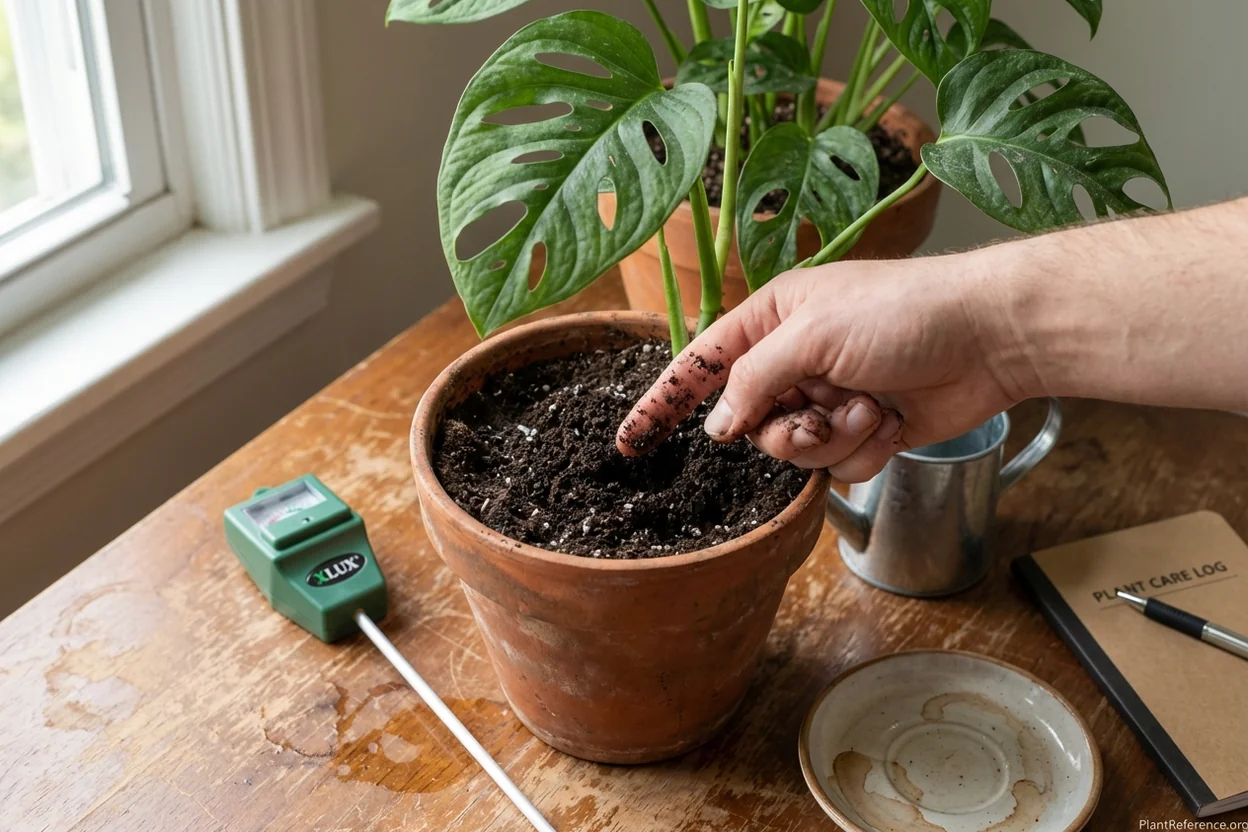
Learning to read your monstera's signals is more reliable than any schedule. Here's what to watch for:
Visual Signs It's Time to Water:
Top 1-2 inches (3-5 cm) of soil feels dry when you stick your finger down
Potting mix pulls away from pot edges slightly
Leaves begin to droop subtly (not dramatically—that's underwatering damage)
Older bottom leaves start looking slightly less perky
Soil feels light when you lift the pot (compared to after watering)
Moisture meter reads 2-3 on a 10-point scale
Early Warning Signs (Act Soon):
Newest leaves appear slightly less glossy than usual
Leaf edges feel less firm to touch
Aerial roots look slightly shriveled at tips
Growth slows noticeably during active season
Never Wait for These Emergency Signs:
Leaves curling inward (plant is already stressed)
Dramatic drooping throughout the plant
Lower leaves yellowing rapidly
Soil shrinking significantly from pot walls
Pot feels very light compared to normal weight
The best approach? Check your monstera every 3-4 days by inserting your finger into the soil. You'll quickly learn what "ready for watering" feels like for your specific plant and conditions.
For more guidance on interpreting leaf changes, check out our complete Monstera Deliciosa Care: Complete Guide (2025) and Monstera Leaves Turning Yellow: Causes and Fixes.
Proper Watering Technique
How you water matters as much as when you water. Follow this step-by-step process:
Step 1: Pre-Water Check
Remove decorative cache pot if using one
Check that drainage holes aren't blocked
Empty any standing water from saucer
Prepare lukewarm water (room temperature or slightly warm)
Step 2: Deep Watering Method
Water slowly and evenly across soil surface
Continue until water runs freely from drainage holes
Wait 2-3 minutes, then water again if soil absorbed quickly
Stop when water flows consistently from bottom
Step 3: Post-Watering Care
Let excess water drain for 15-30 minutes
Empty saucer completely—never let plant sit in standing water
Replace in decorative pot if using one
Note the date for future reference
Volume Guidelines:
-
Small plants (under 2 feet/60 cm): 1-2 cups water typically sufficient
-
Medium plants (2-4 feet/60-120 cm): 2-4 cups depending on pot size
-
Large plants (4+ feet/120+ cm): 4-8 cups or more until drainage occurs
The amount varies significantly based on pot size and soil type. Focus on watering until drainage occurs rather than measuring specific volumes.
Bottom-Up Watering Method (Alternative): Some plant parents prefer bottom watering for monsteras:
Place pot in tray filled with 1-2 inches (3-5 cm) of water
Let plant soak for 30-60 minutes until top soil feels moist
Remove from water tray and let excess drain
Empty tray completely
Bottom watering works well for preventing fungal issues and ensures even soil saturation, though it takes longer than top watering.
Water Quality and Temperature
Your monstera cares about water quality more than you might think. Here's what to use:
Best Water Choices:
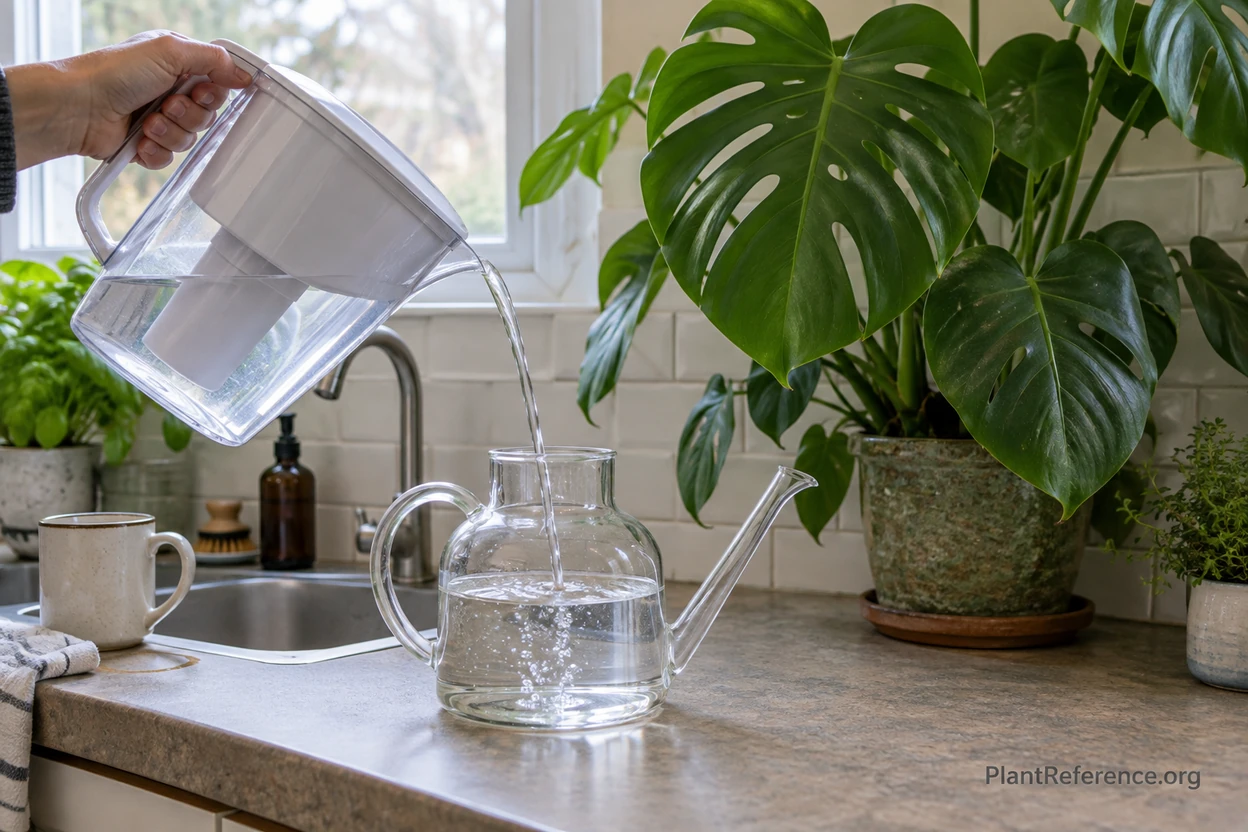
Filtered water: Removes chlorine, fluoride, and heavy minerals
Distilled water: Pure but lacks beneficial minerals (okay occasionally)
Rainwater: Ideal if collected safely and stored properly
Tap water left out 24+ hours: Allows chlorine to evaporate naturally
Water to Avoid:
Fresh tap water: Chlorine and fluoride can damage roots over time
Softened water: High sodium content harms tropical plants
Very hard water: Mineral buildup affects soil pH and nutrient uptake
Cold water: Can shock tropical plant roots
Temperature Matters: Use lukewarm water (65-75°F/18-24°C) to avoid shocking the root system. Cold water can slow nutrient uptake and stress tropical plants adapted to warm soil temperatures.
If your tap water is heavily chlorinated or fluorinated, invest in a simple water filter. Your monstera will show improved growth and fewer brown leaf tips with better water quality.
Seasonal Watering Adjustments
Your monstera's water needs change dramatically with seasons. Here's how to adjust:
Spring (March-May): Increasing Water Needs
Transition from winter schedule gradually
Watch for new growth—increase watering frequency as leaves emerge
Begin weekly soil checks instead of bi-weekly
Resume monthly fertilizing which increases water uptake
Summer (June-August): Peak Water Usage
Most frequent watering period of the year
Check soil every 3-4 days in hot weather
Increase humidity to reduce water stress
Monitor for faster soil drying near air conditioning vents
Fall (September-November): Gradual Reduction
Slowly decrease watering frequency as temperatures drop
Stop fertilizing by October to prepare for dormancy
Reduce from weekly to bi-weekly checks
Watch for slower soil drying as light levels decrease
Winter (December-February): Minimal Watering
Least frequent watering of the year
Check soil every 10-14 days but expect less frequent watering
Be especially careful not to overwater—root rot risk is highest
Plants near heating systems may need slightly more frequent water
Monthly Watering Calendar:
Month | Check Frequency | Typical Watering | Notes |
|---|---|---|---|
January | Every 14 days | Every 3-4 weeks | Lowest water needs |
February | Every 14 days | Every 2-3 weeks | Begin watching for growth signs |
March | Every 10 days | Every 2 weeks | Gradually increase as growth resumes |
April | Every 7 days | Every 10-14 days | Active growth begins |
May | Every 5-7 days | Every 7-10 days | Full growing season starts |
June | Every 3-4 days | Every 5-8 days | Peak water usage begins |
July | Every 3-4 days | Every 5-7 days | Hottest, highest usage period |
August | Every 3-4 days | Every 7-10 days | Maintain summer schedule |
September | Every 7 days | Every 10-14 days | Begin gradual reduction |
October | Every 10 days | Every 2-3 weeks | Growth slowing |
November | Every 14 days | Every 3 weeks | Entering dormancy |
December | Every 14 days | Every 3-4 weeks | Full winter schedule |
Remember, these are guidelines—always let soil moisture be your primary indicator.
Humidity vs Watering
Many new monstera owners confuse humidity needs with watering needs. Understanding the difference prevents overwatering:
Humidity Requirements:
-
Ideal range: 60-70% relative humidity
-
Minimum tolerated: 40-50%
-
Signs of low humidity: Brown leaf tips, curling edges, slow growth
How to Increase Humidity (NOT More Watering):
Humidifier: Most effective method, maintains consistent 60-70%
Pebble tray: Fill saucer with pebbles and water, place pot on top
Plant grouping: Cluster plants together to create microclimate
Room placement: Avoid heating vents, place in naturally humid areas like bathrooms
What NOT to Do:
Don't mist leaves daily: Can promote fungal issues and doesn't significantly increase humidity
Don't water more frequently: Soil moisture and air humidity are separate needs
Don't use wet towels around plants: Creates stagnant moisture, not healthy humidity
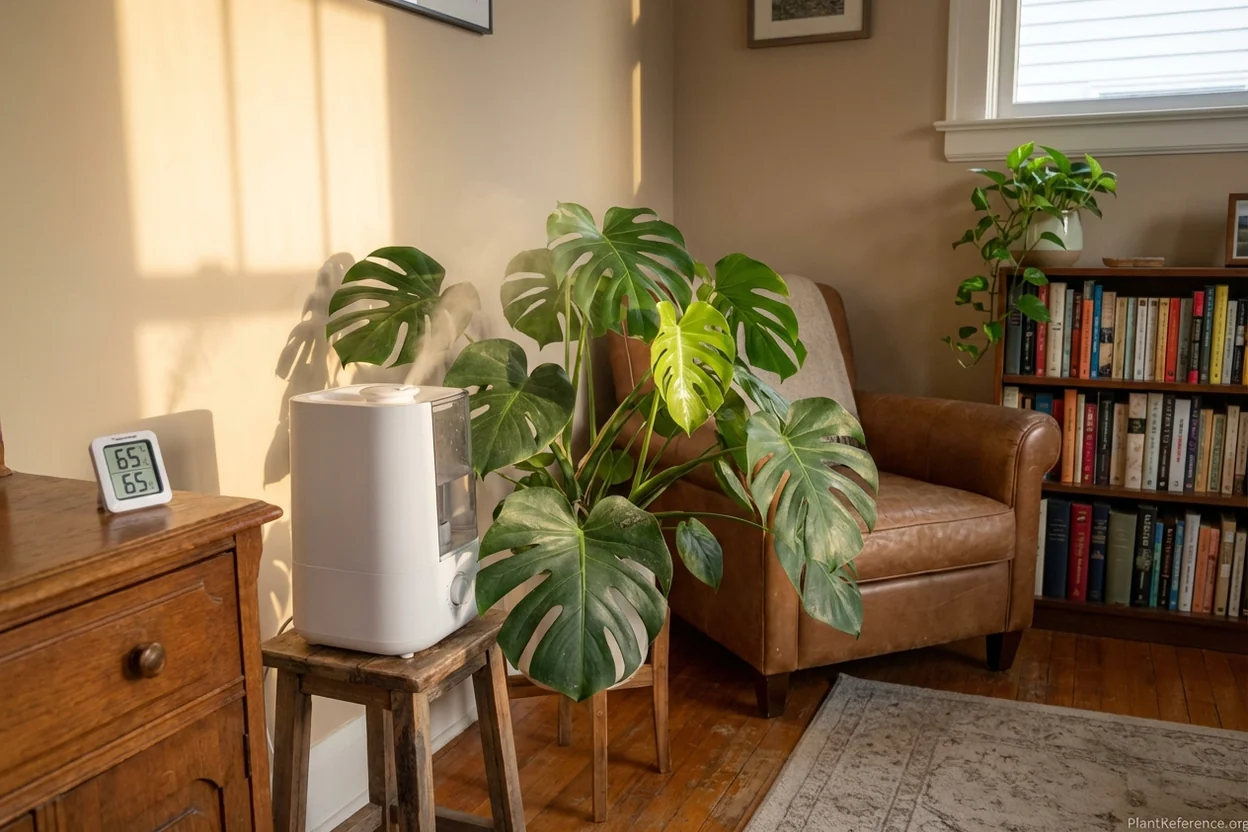
If you're struggling with low humidity in your home, investing in a quality humidifier makes a bigger difference than adjusting your watering schedule. Check out our Best Humidifiers for Monstera and Tropical Plants for tested recommendations.
Common Watering Mistakes
Avoid these mistakes I've seen (and made) countless times:
Mistake #1: Watering on a Fixed Schedule
-
Wrong approach: "I water every Sunday"
-
Right approach: "I check soil moisture every few days and water when top 2 inches are dry"
-
Why it fails: Plants' needs change with seasons, weather, growth phases
Mistake #2: Not Watering Thoroughly
-
Wrong approach: Giving small amounts of water frequently
-
Right approach: Deep watering until drainage occurs, then waiting for soil to partially dry
-
Why it fails: Shallow watering encourages shallow root growth and doesn't reach bottom roots
Mistake #3: Leaving Water in Saucers
-
Wrong approach: Letting plants sit in standing water "for extra moisture"
-
Right approach: Empty saucers completely 30 minutes after watering
-
Why it fails: Standing water causes root rot, especially in cooler months
Mistake #4: Using Cold Water
-
Wrong approach: Watering straight from cold tap
-
Right approach: Use room temperature or slightly warm water
-
Why it fails: Cold water shocks tropical plant roots, reducing nutrient uptake
Mistake #5: Confusing Humidity with Soil Moisture
-
Wrong approach: Watering more frequently when humidity is low
-
Right approach: Address humidity separately with humidifier or pebble tray
-
Why it fails: Creates overwatered soil while humidity problem persists
Mistake #6: Not Adjusting for Seasons
-
Wrong approach: Same watering frequency year-round
-
Right approach: Reduce frequency significantly in winter months
-
Why it fails: Winter overwatering is the #1 cause of monstera death
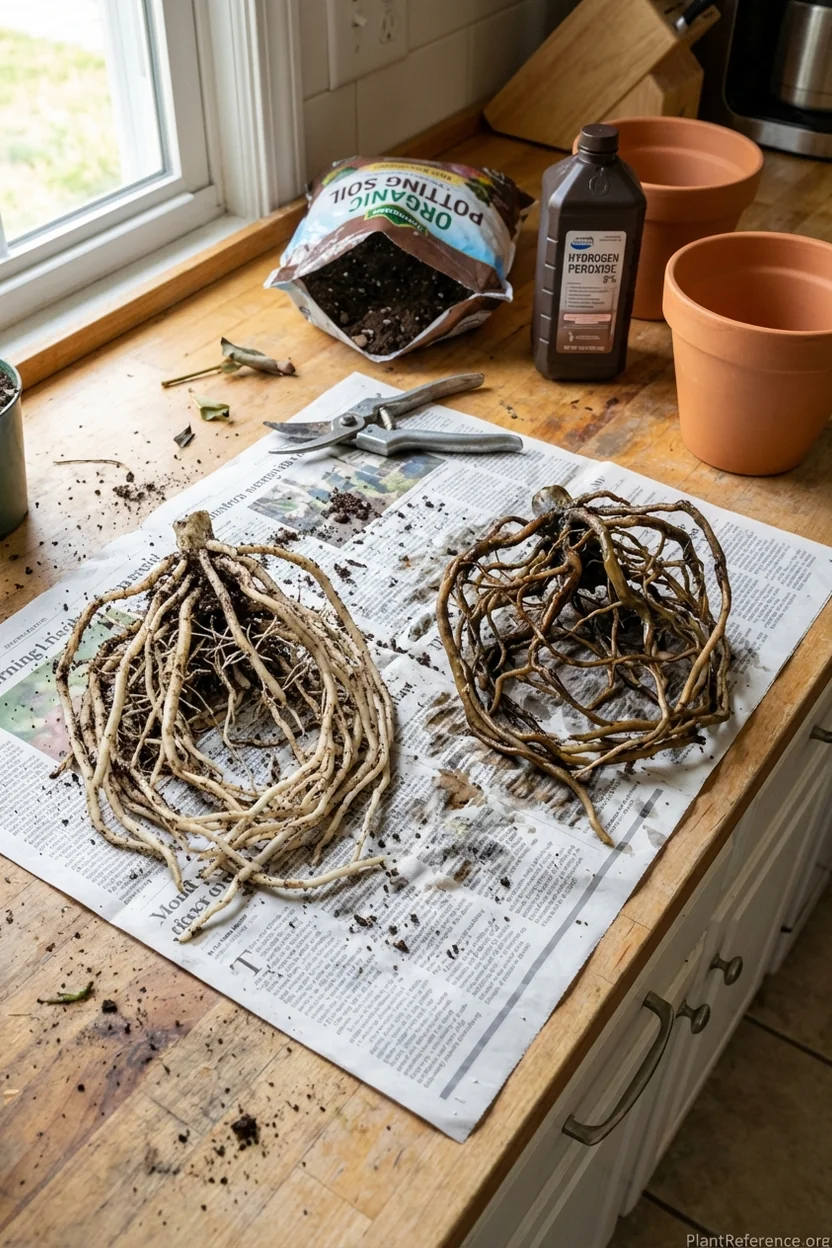
For detailed guidance on recovering from these mistakes, check our emergency care guide: Monstera Root Rot: Emergency Rescue Guide.
Troubleshooting Watering Issues
Problem: Yellow Leaves After Watering
Possible Causes:
Overwatering (most common)
Poor drainage
Wrong water type (chlorinated, softened)
Cold water shock
Solutions:
Check soil drainage—should dry in 7-10 days maximum
Ensure pot has adequate drainage holes
Switch to filtered or dechlorinated water
Reduce watering frequency immediately
Problem: Leaves Drooping Despite Moist Soil
Possible Causes:
Root rot from overwatering
Compacted soil preventing drainage
Pot too large for plant size
Solutions:
Remove plant and inspect roots—trim any brown/mushy areas
Repot in fresh, well-draining soil mix
Choose pot only 2-3 inches (5-7 cm) larger than root ball
Problem: Brown Crispy Leaf Tips
Possible Causes:
Low humidity (not watering issue)
Chlorinated/fluorinated tap water
Fertilizer burn from overfeeding
Solutions:
Increase humidity with humidifier
Switch to filtered water or let tap water sit 24+ hours
Flush soil with plain water to remove salt buildup
Problem: Soil Dries Out Too Quickly (Daily)
Possible Causes:
Pot too small for plant size
Very chunky, fast-draining soil mix
Extremely bright/hot location
Low humidity environment
Solutions:
Repot into next size up container
Add some peat moss or coco coir to soil mix for moisture retention
Move to slightly less bright location
Increase ambient humidity
Problem: Soil Stays Wet for Weeks
Possible Causes:
Poor drainage from blocked holes or no holes
Soil too heavy/dense (regular potting soil instead of aroid mix)
Pot too large for current root system
Cool, low-light location slowing transpiration
Solutions:
Ensure multiple drainage holes are clear
Repot in chunky, well-draining aroid soil mix
Move to smaller pot if current one is oversized
Relocate to brighter, warmer location if possible
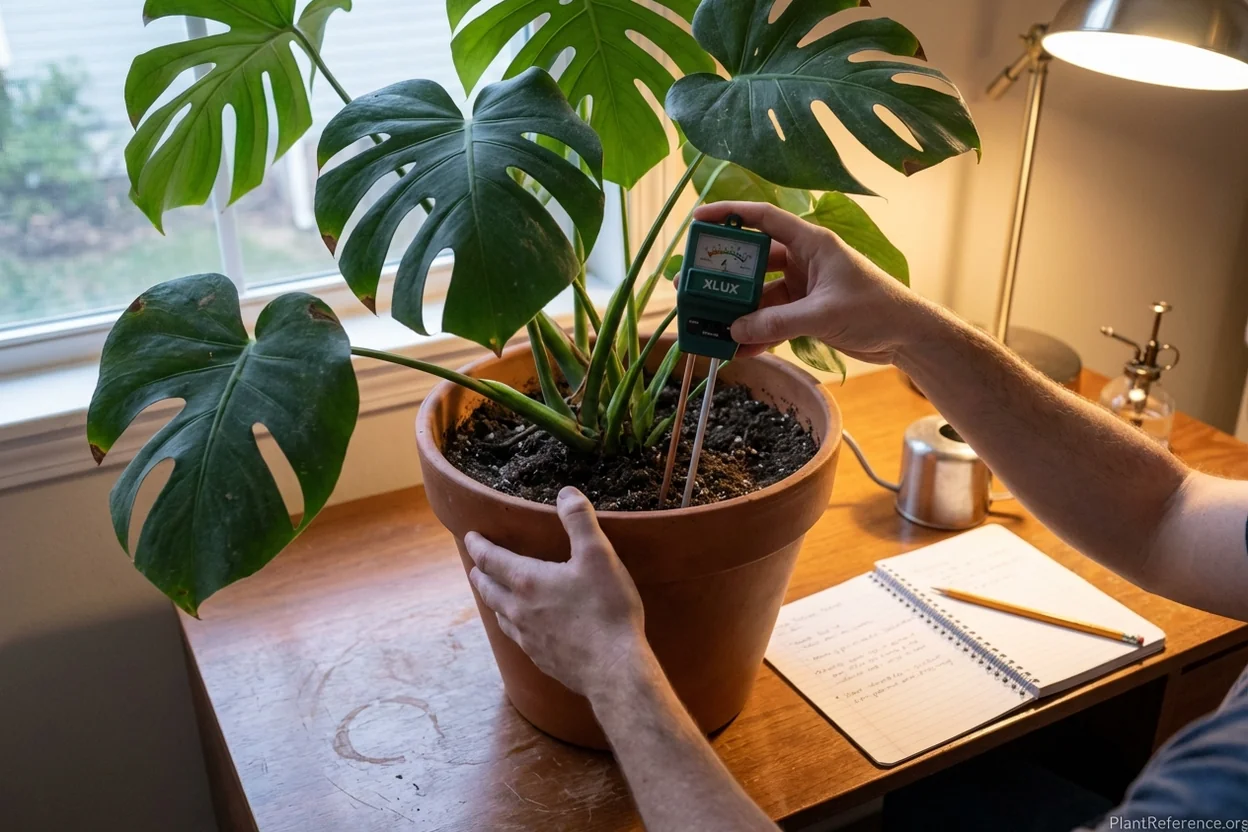
When troubleshooting watering issues, always start by examining the roots. Healthy monstera roots should be white to cream colored, firm, and numerous. Brown, mushy, or foul-smelling roots indicate watering problems that need immediate attention.
For comprehensive care beyond watering, explore our complete Monstera Deliciosa Care: Complete Guide (2025) which covers light, fertilizing, support, and propagation.
Frequently Asked Questions
Reading about plants and recognising them are different skills. These three build the second.
- Daily PlantIdentify the day’s mystery plant from a close-up photograph.
- Keyed OutWork a dichotomous key, lead by lead, to name a hidden specimen.
- Name That PlantName a specimen from botanical clues dealt hardest first.
Free to play, no account needed
Jessica transformed her small Brooklyn balcony into a thriving container garden after moving to New York City. What started as a pandemic hobby turned into a plant care consulting business serving urban apartment dwellers across the city. She specializes in small-space gardening, indoor plant troubleshooting, and helping clients keep houseplants alive in less-than-ideal conditions (dim light, dry heat, tiny spaces). Jessica completed a home gardening certificate program and shares her plant wins and failures on her modest Instagram following. Her partner, Maya, jokes that their apartment is now 40% plants, 60% living space. Jessica's passionate about making plant care accessible to renters who think they don't have room to garden.