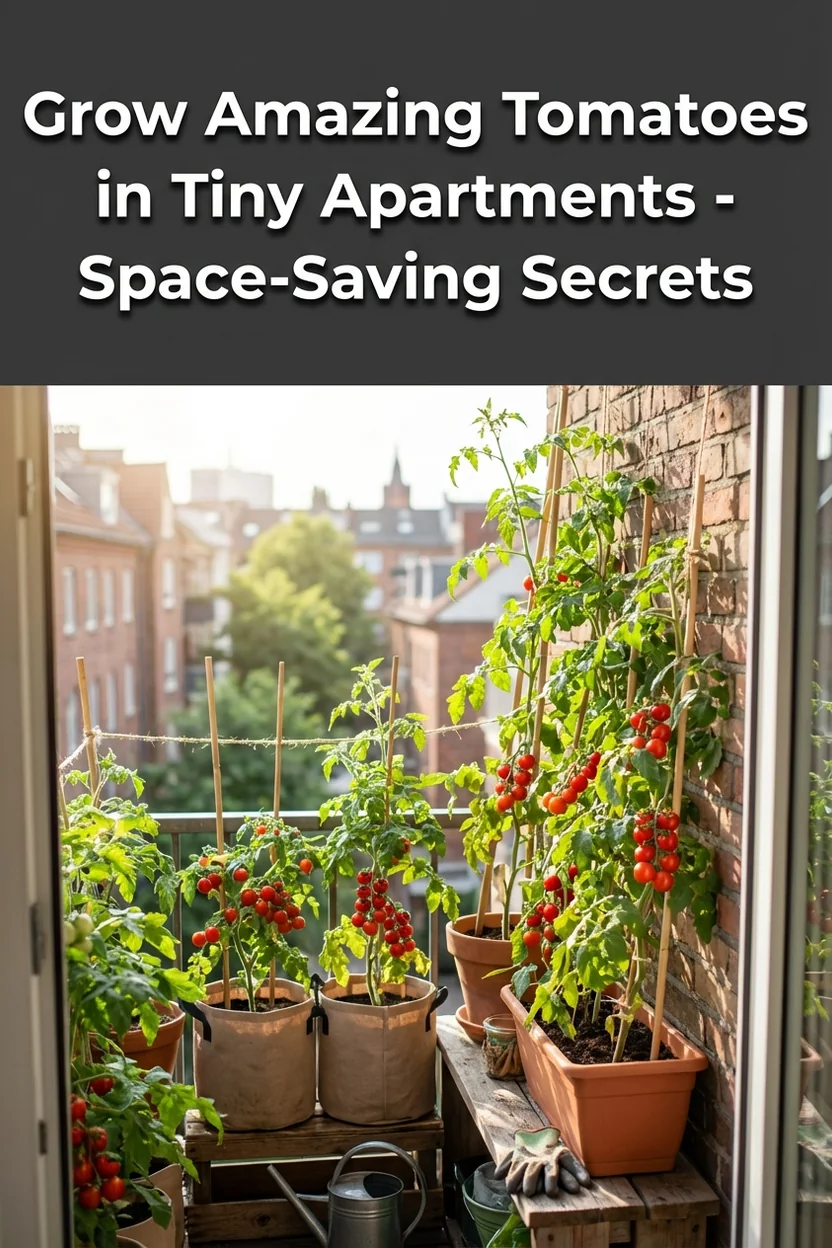
Growing Tomatoes in Small Spaces: Apartment, Balcony, and Patio Solutions
Pets & Toxicity
Recorded toxicity for plants linked in this guide. An unknown status is not a safety assessment.
Solanum lycopersicum 'Phoenix' — Toxicity Warning
Toxic to petsView Solanum lycopersicum 'Phoenix' plant profile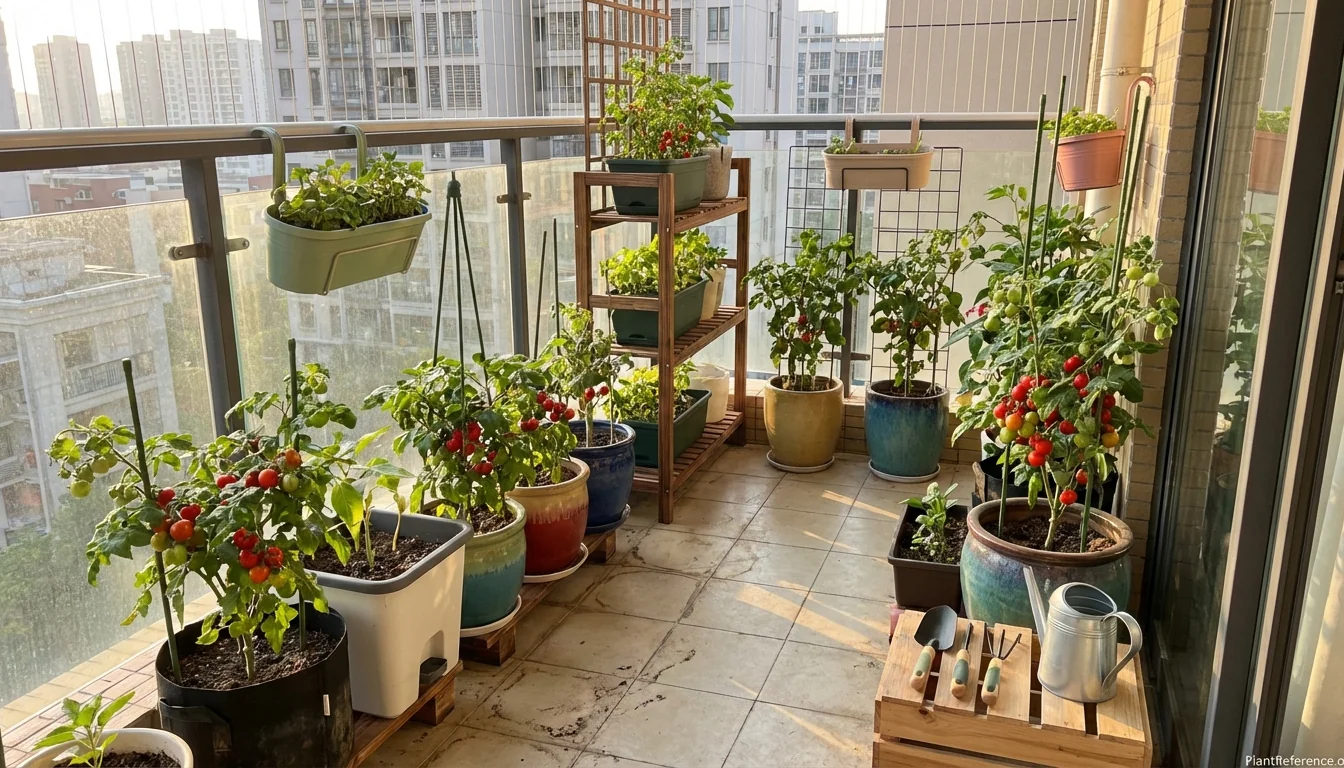
— Image © Plant Reference 2026
Living in an apartment doesn't mean giving up fresh, homegrown tomatoes. With the right approach to apartment tomato growing, even the tiniest balcony or patio can produce enough tomatoes for summer salads, sauces, and snacking. The key lies in smart variety selection, efficient container use, and creative space management.
Choosing the Right Tomato Varieties for Small Spaces
The foundation of successful apartment tomato growing starts with selecting varieties bred specifically for container cultivation. Unlike sprawling garden varieties, compact tomatoes 🌿Solanum lycopersicum 'Yellow Pear' (so-LAH-num ly-ko-PER-si-kum) offer manageable size without sacrificing flavor or yield.
Determinate varieties work best for apartments because they grow to a predetermined height—usually 2-4 feet (60-120 cm)—then stop, making them perfect for limited vertical space. These bushy plants produce their entire crop over 4-6 weeks, ideal for apartment dwellers who want a concentrated harvest.
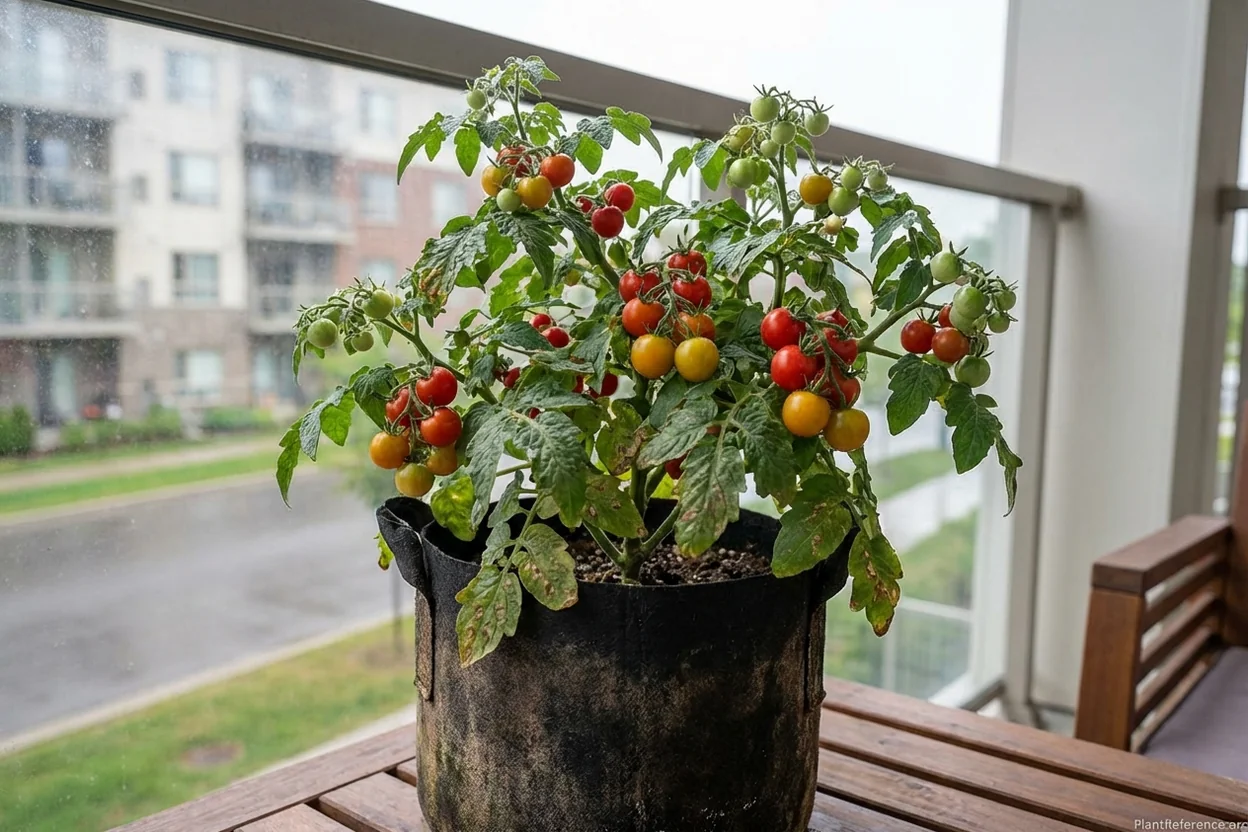
Top compact varieties for apartments include:
'Patio Princess' - 20-24 inches (50-60 cm) tall, large fruit
'Tiny Tim' - 12-18 inches (30-45 cm), perfect for windowsills
'Window Box Roma' - Paste tomato, 24 inches (60 cm) maximum
'Balcony' - Bred specifically for containers, 24 inches (60 cm)
'Red Robin' - Micro cherry, 8-12 inches (20-30 cm) tall
Cherry tomato varieties offer the best return on space investment. A single plant can produce 200+ small fruits throughout the season, providing daily snacking tomatoes from just one container.
For apartment tomato growing success, avoid indeterminate varieties like 'Better Boy' or 'Cherokee Purple' unless you have ceiling height of 8+ feet (240+ cm) and robust support systems. These vigorous varieties can reach 6-8 feet (180-240 cm) and overwhelm small spaces.
Container Selection for Apartments and Balconies
Container choice dramatically impacts both plant health and space efficiency in apartment tomato growing. The minimum viable size is 5 gallons (19 liters) for determinate varieties, though 7-10 gallons (26-38 liters) produces better yields and requires less frequent watering.
Fabric grow bags excel for apartments because they're lightweight, foldable for storage, and promote healthier root systems through air pruning. A 5-gallon fabric bag weighs 60% less than equivalent ceramic pots when filled with soil—crucial for balcony weight limits.
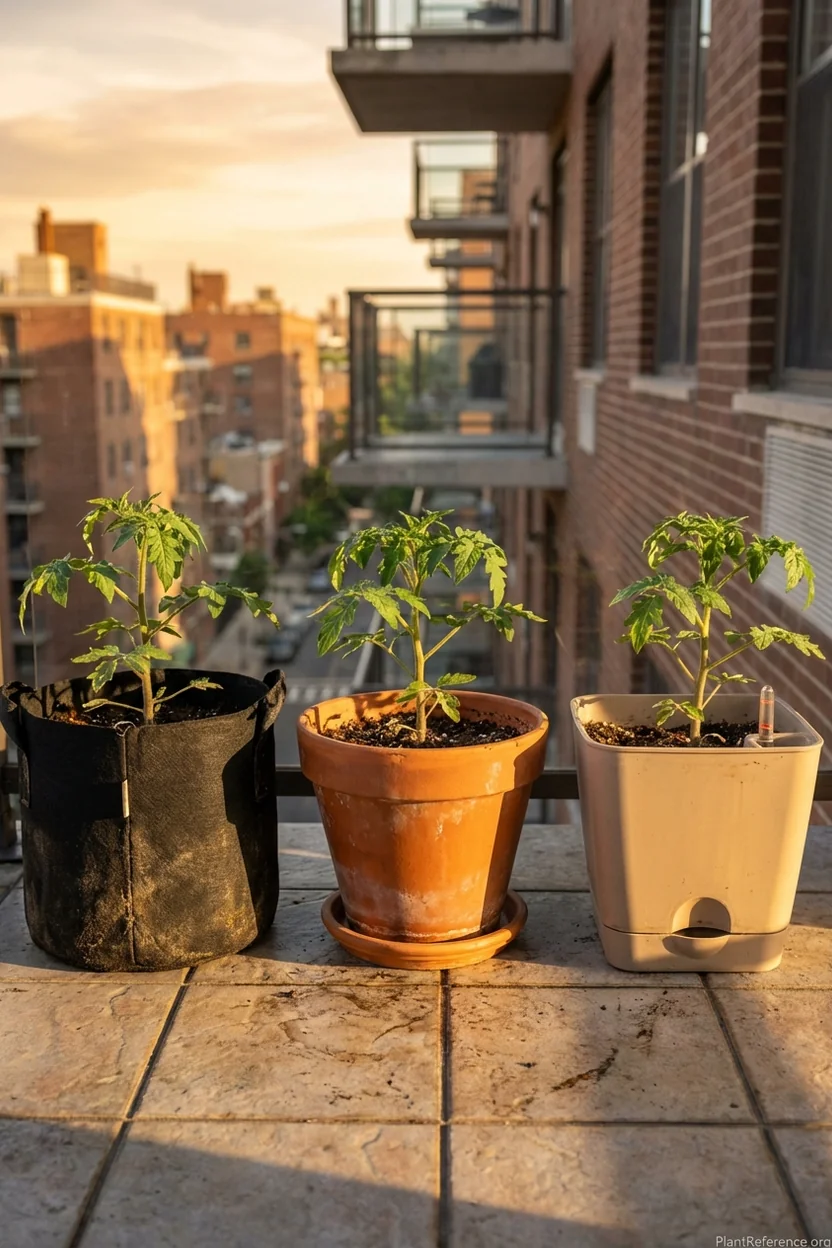
Self-watering containers solve the daily watering challenge of apartment tomato growing. These systems maintain consistent moisture levels—critical for preventing blossom end rot in containers—while reducing maintenance to weekly reservoir refills.
Weight considerations matter significantly for balcony safety. Calculate total weight including:
Container: 1-5 lbs (0.5-2.3 kg) depending on material
Soil: 40 lbs (18 kg) for 5 gallons when wet
Water: 8 lbs (3.6 kg) per gallon
Mature plant: 10-15 lbs (4.5-6.8 kg) with fruit
A fully loaded 5-gallon container weighs approximately 65-70 lbs (29-32 kg). Most balconies support 50-80 lbs per square foot (244-390 kg/m²), but check with building management before loading multiple large containers.
For apartment renters, consider wheeled plant caddies that protect balcony surfaces and allow easy repositioning. These become essential when plants need protection from severe weather or seasonal moves indoors.
Maximizing Vertical Growing Space
Vertical growing transforms limited floor space into productive growing area. Even compact tomato varieties benefit from support structures that keep fruit off container edges and improve air circulation around plants.
Stake systems work best in apartments because they're adjustable and removable. Use 4-6 foot (120-180 cm) bamboo stakes or metal rods, securing them to container rims or balcony railings for stability. This prevents the common apartment growing problem of top-heavy plants toppling containers.
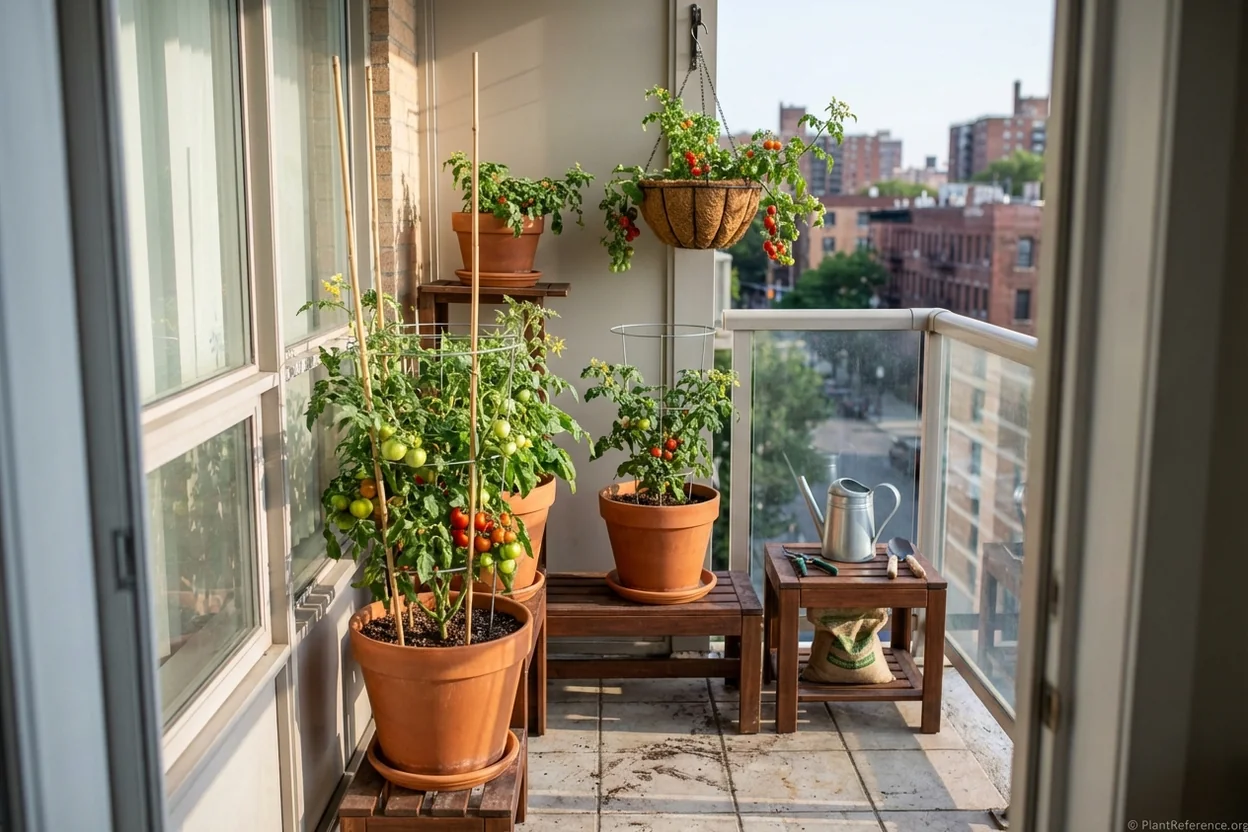
Compact tomato cages designed for containers provide 360-degree support while maintaining small footprints. Look for collapsible models that store flat during off-seasons—essential for apartment storage limitations.
Hanging planters add a third dimension to apartment tomato growing. Cherry tomato varieties like 'Tumbling Tom' cascade beautifully from hanging baskets, turning railings and ceiling hooks into productive space. Ensure hanging containers have drip trays to protect neighbors below.
Trellising techniques from Container Size Matters: The Ultimate Guide to Choosing the Perfect Pot for Tomatoes work excellently for apartments when scaled to smaller spaces. Simple string trellises attached to balcony rails support multiple plants while maintaining access for harvesting.
The key principle of apartment vertical growing is accessibility. All plants should remain reachable for daily maintenance without requiring ladders or stretching over railings—both safety concerns in elevated apartment settings.
Apartment-Friendly Watering Solutions
Consistent watering challenges apartment tomato growing more than any other factor. Container plants dry out faster than ground gardens, while apartment dwellers often travel or work long hours, making daily hand-watering difficult.
Self-watering systems provide the most reliable solution for apartment tomato growing. These containers feature built-in reservoirs that supply water through capillary action, maintaining consistent moisture levels for 5-7 days depending on plant size and weather.
Manual watering requires specific techniques for apartment success. Water slowly until runoff appears in saucers, then wait 30 minutes and empty saucers to prevent root rot. Most apartment tomato containers need 1-2 quarts (1-2 liters) daily during peak summer growth.
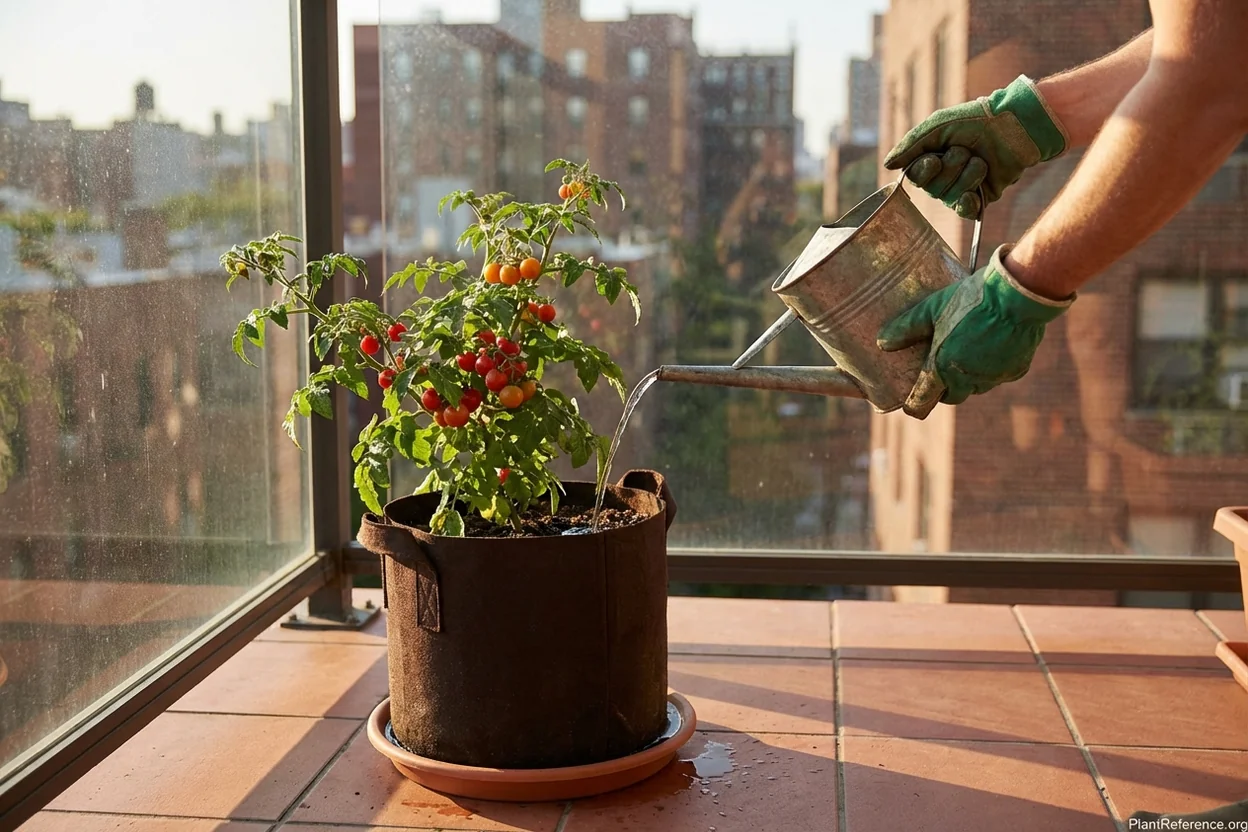
Drip irrigation systems work exceptionally well for apartment balconies with multiple containers. Simple gravity-fed systems using reservoir buckets and tubing deliver consistent water to each plant while you're away. These systems prevent the feast-or-famine watering cycle that causes blossom end rot in apartment-grown tomatoes.
Water quality affects container plants more than garden plants because nutrients can't be drawn from surrounding soil. If apartment water is heavily chlorinated, fill watering containers 24 hours ahead to allow chlorine dissipation. Very hard water may require periodic soil flushing to prevent salt buildup.
For travelers, Watering Container Tomatoes: The Complete Guide to Prevention offers detailed vacation watering strategies including wick systems and plant sitters that work well in apartment settings.
Balcony Weight and Wind Considerations
Apartment tomato growing requires careful attention to structural limitations that ground gardens never face. Balcony weight limits, wind exposure, and neighbor considerations all influence container choices and plant placement.
Weight distribution prevents balcony damage and ensures safety. Spread container weight across balcony surfaces rather than concentrating heavy pots in single areas. Place largest containers near building walls where structural support is strongest, keeping lighter containers toward balcony edges.
Wind protection becomes critical above the third floor where wind speeds increase significantly. Create windbreaks using clear acrylic panels that maintain light while blocking damaging winds. These panels won't obstruct apartment views—important for lease compliance—while protecting plants from desiccation.
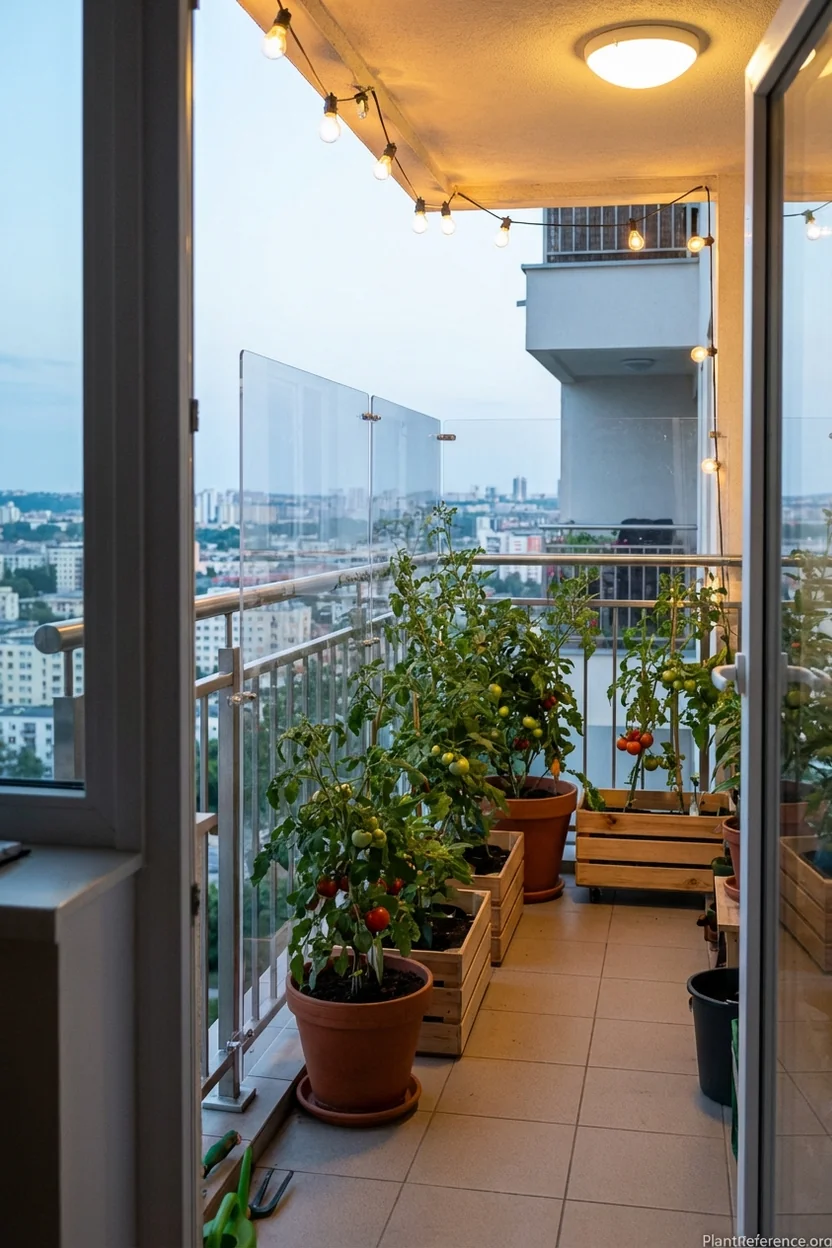
Secure all containers and support structures to prevent wind damage. Use bungee cords or straps to attach pots to railings, and anchor tall stakes to multiple points. Remember that apartment balconies create wind tunnels that can generate surprising force even on seemingly calm days.
Neighbor considerations matter more in apartment tomato growing than suburban gardens. Ensure drainage doesn't drip onto lower balconies, trim plants that encroach on adjacent spaces, and choose odorless fertilizers to maintain good relationships.
Some apartment complexes restrict balcony gardening or require approval for permanent installations. Check lease agreements before investing in extensive setups, and consider portable systems that can be easily removed if needed.
Creative Space-Saving Arrangements
Successful apartment tomato growing requires thinking beyond traditional container placement. Every square inch of balcony or patio space can potentially contribute to your tomato harvest through creative arrangement techniques.
Tiered growing systems multiply growing space by creating plant levels. Use plant stands, overturned pots, or purpose-built tiered planters to create height variations. This arrangement also improves light distribution, ensuring lower plants receive adequate sun exposure.
Corner utilization maximizes awkward balcony spaces often too small for furniture but perfect for plant containers. Corner plant stands or L-shaped arrangements make efficient use of these areas while keeping walking paths clear.
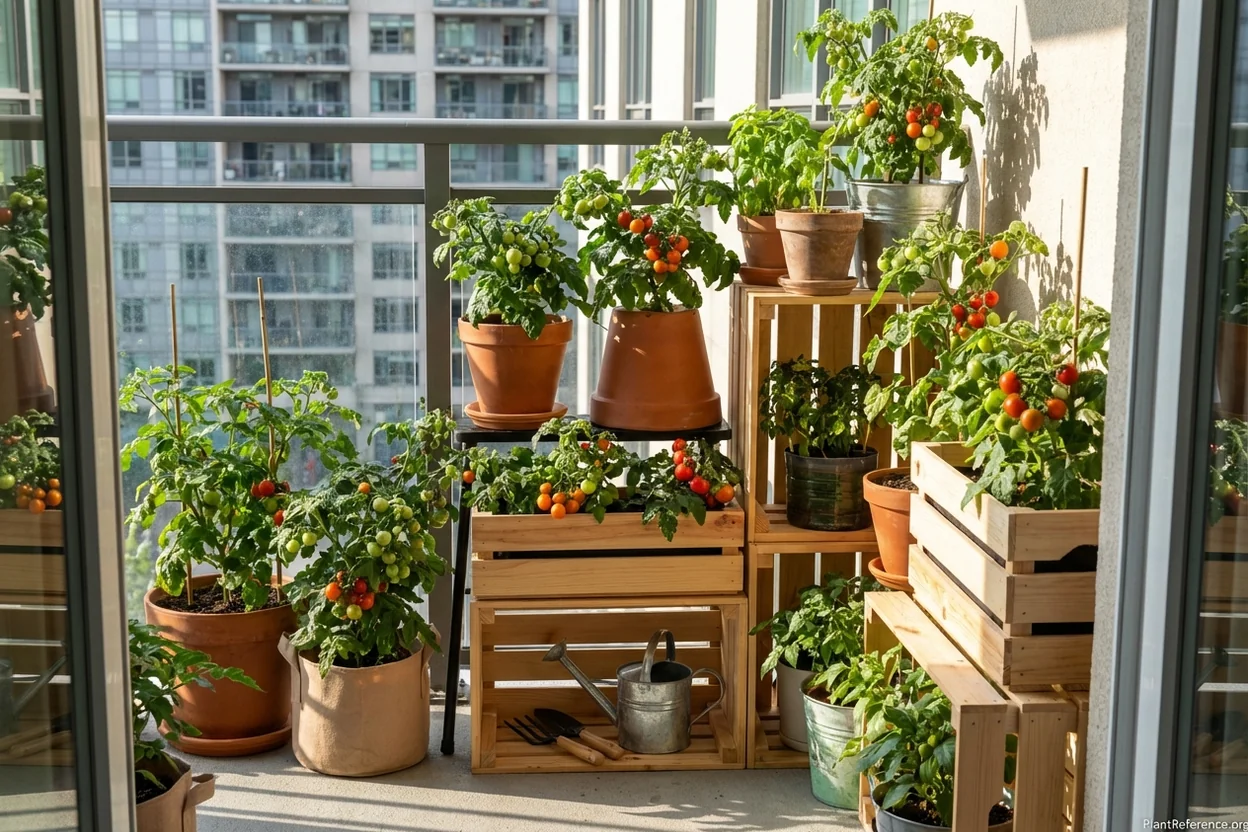
Mobile growing systems solve apartment-specific challenges like seasonal repositioning, weather protection, and lease compliance. Use plant caddies with locking wheels to create moveable gardens that can be rearranged for optimal sun exposure or relocated indoors during extreme weather.
Vertical succession planting extends harvests in limited space by staggering plantings every 2-3 weeks. Start new plants in small containers while established plants mature in large containers, creating continuous harvests throughout the growing season.
Wall-mounted systems work well for apartment tomato growing when building policies allow. Vertical pocket planters or wall-mounted container systems can support cherry tomato varieties while adding virtually no floor footprint to cramped balconies.
For apartments with fire escape access, consider Growing Tomatoes in Small Spaces: Apartment Solutions strategies that utilize emergency stair landings during growing season, provided local fire codes permit and access remains unobstructed.
The most successful apartment tomato growers treat their limited space as a design challenge rather than a limitation. With proper planning, a 4×6 foot (120×180 cm) balcony can easily produce 20-30 pounds (9-14 kg) of fresh tomatoes throughout the season.
Frequently Asked Questions
Reading about plants and recognising them are different skills. These three build the second.
- Daily PlantIdentify the day’s mystery plant from a close-up photograph.
- Keyed OutWork a dichotomous key, lead by lead, to name a hidden specimen.
- Name That PlantName a specimen from botanical clues dealt hardest first.
Free to play, no account needed
Linda's been growing tomatoes in containers on her suburban Pittsburgh balcony—ever since her kids grew up and she finally had time for hobbies again. She's a medical billing specialist by day and a tomato enthusiast by night and weekend. Linda started documenting her container growing experiments on a simple blog and discovered other renters and condo dwellers were desperate for practical advice. She tests different varieties every season, tracking yields, disease resistance, and flavor in a detailed spreadsheet. Linda's approach is practical and budget-conscious—she saves seeds, reuses containers, and makes her own fertilizer from kitchen scraps. Her specialty is maximizing production in small spaces, and she's perfected the art of growing full-size tomatoes in 5-gallon buckets. She's a Pennsylvania Master Gardener and teaches container growing workshops at her local library.