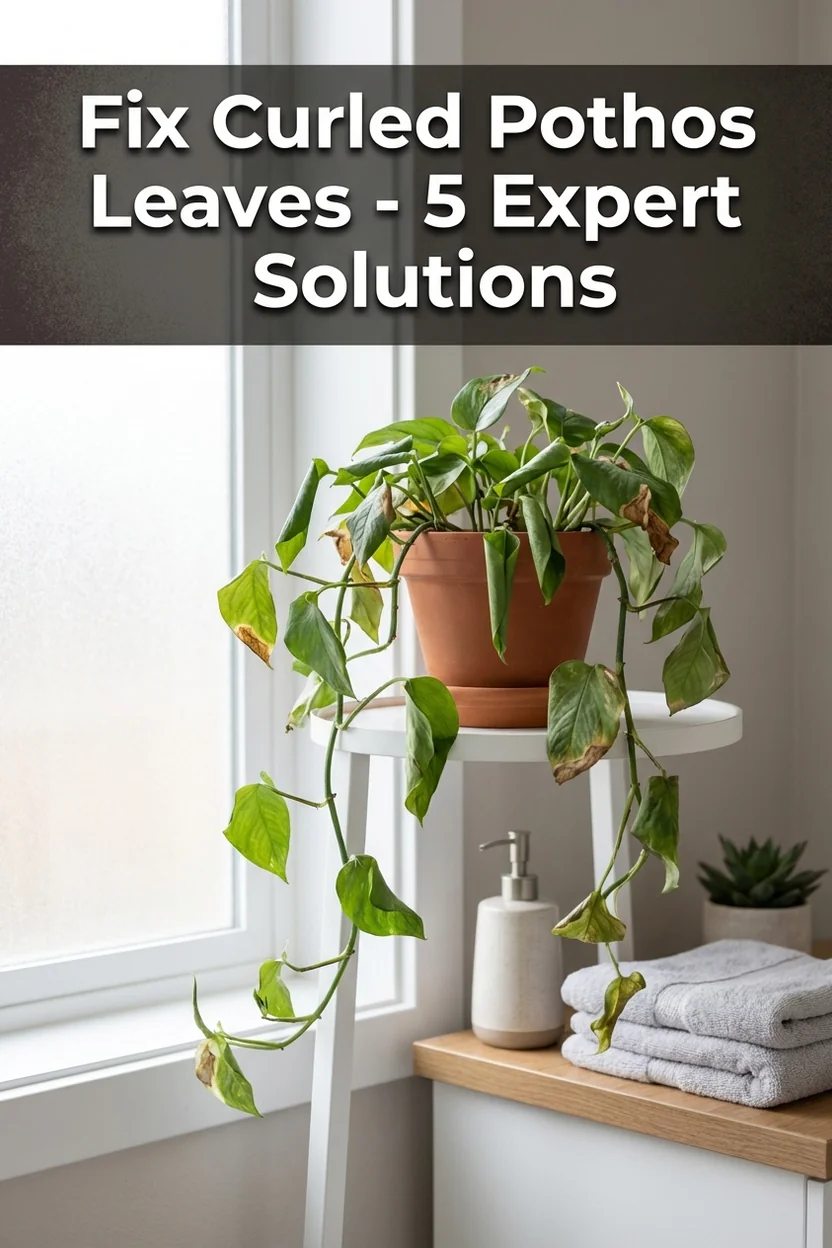
Pothos Leaves Curling: 5 Common Causes and Solutions
Pets & Toxicity
Recorded toxicity for plants linked in this guide. An unknown status is not a safety assessment.
Toxic to pets: golden pothosDetailsHide
Epipremnum aureum — Toxicity Warning
Toxic to pets and humans. All parts contain insoluble calcium oxalate crystals that cause mouth pain, swelling, and drooling if ingested.View Epipremnum aureum plant profile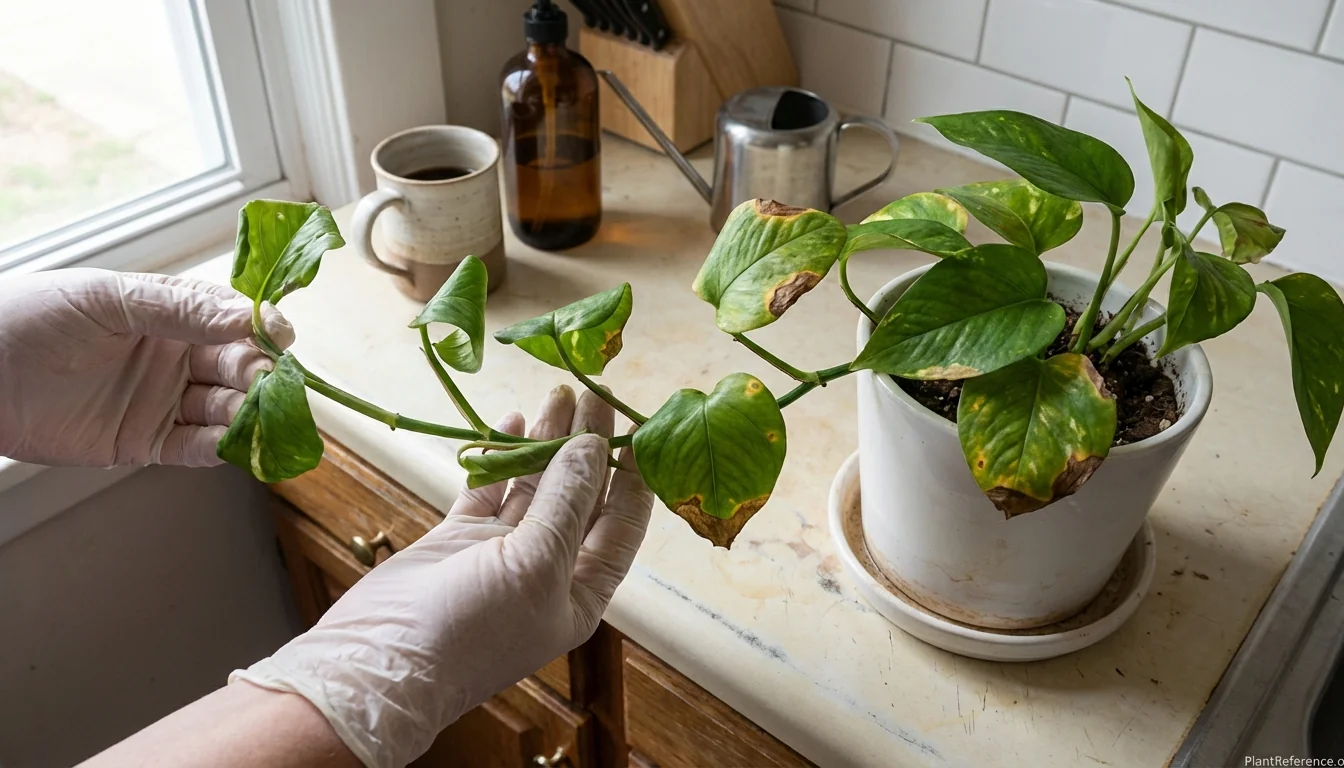
— Image © Plant Reference 2026
Let's be honest—curled pothos leaves are your plant's panic signal. Before you assume your "unkillable" pothos is dying, take a breath. Pothos leaves curling is almost always fixable once you identify the real culprit.
What Curling Pothos Leaves Really Mean
Your pothos 🌿Epipremnum aureum (ep-ih-PREM-num AW-ree-um) curls its leaves inward as a survival mechanism—it's reducing surface area to conserve moisture and protect itself from stress. Think of it like a person hunching their shoulders in cold wind.
The key is figuring out what type of stress is causing the curling. I've diagnosed hundreds of curled pothos cases, and they fall into five distinct categories. Each has different symptoms beyond just curling, and each requires a different fix.
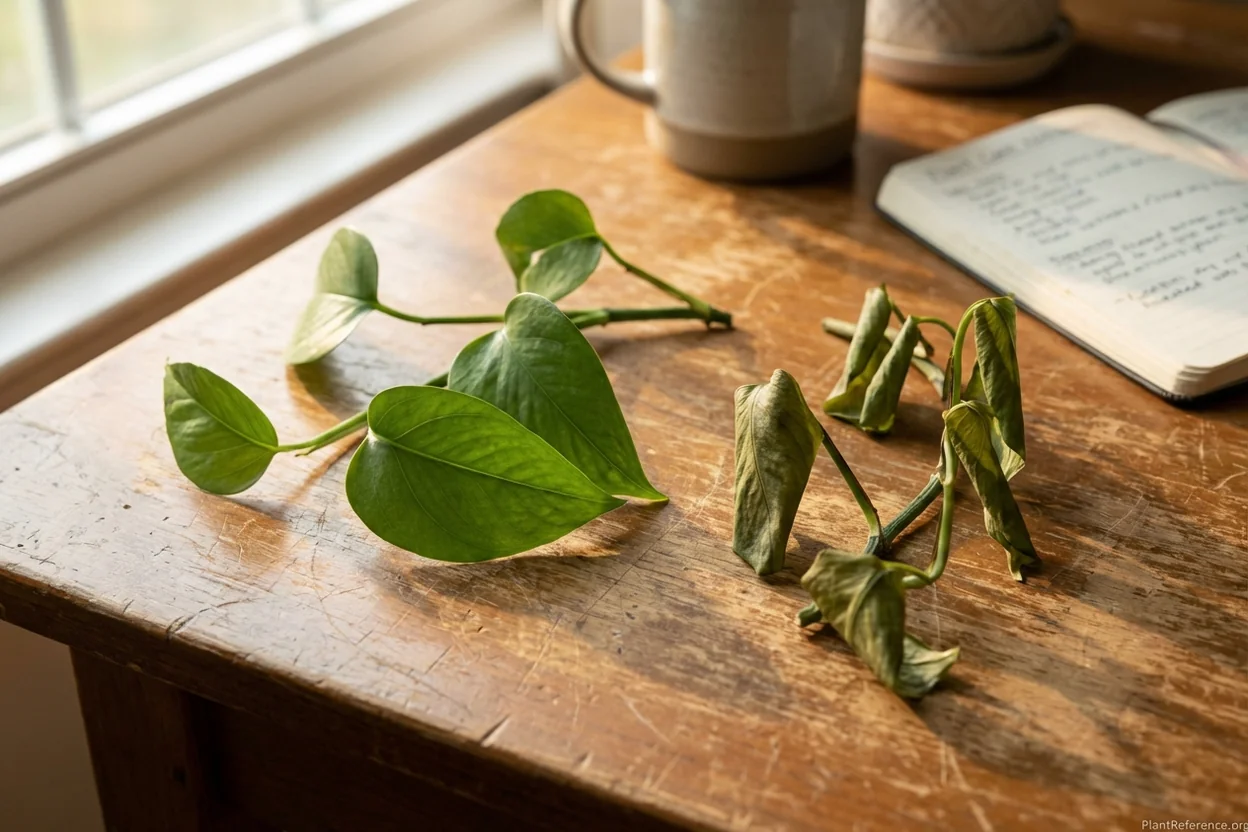
Here's the reality: most people jump straight to "it needs water" without checking the soil. That's mistake number one. Sometimes curling leaves mean you're watering too much, not too little.
Cause #1: Underwatering (Most Common Culprit)
About 70% of curled pothos leaves I see are from underwatering. Here's how to tell if this is your problem:
Diagnostic symptoms:
Soil feels dry 2+ inches (5+ cm) deep when you stick your finger in
Pot feels noticeably lighter than usual
Leaves curl inward starting from the edges
Entire plant has a slightly droopy, wilted appearance
Lower leaves may be turning yellow and dropping
Soil has pulled away from pot edges slightly
The fix: Water thoroughly until water runs out the drainage holes. Don't just sprinkle water on top—that's not reaching the roots. Pour slowly and let the soil absorb it, then pour more until you see runoff.
Timeline for recovery: Properly watered pothos leaves start uncurling within 2-4 hours. Full recovery takes 24-48 hours.
The reason underwatering causes curling is cellular—when plant cells lose water pressure (turgor pressure), they can't maintain their rigid shape. The leaf edges curl inward first because they're farthest from the water supply in the leaf veins.
Cause #2: Low Humidity and Dry Air
Indoor humidity below 30% will cause pothos leaf curling, especially in winter when heating systems dry the air. Your plant is trying to reduce moisture loss through transpiration.
Diagnostic symptoms:
Soil moisture is adequate, but leaves still curl
Leaf tips and edges turn brown and crispy
Curling is more pronounced during winter months
Other houseplants in the same area show stress
You notice static electricity or dry skin issues
Humidifier or humidity meter reads below 35%
→ LEVOIT Humidifiers for Bedroom 6L ($45-55) - Essential oil tray and quiet operation
Large 6-liter capacity runs 50+ hours continuously, covering rooms up to 753 square feet. Whisper-quiet operation under 28dB won't disturb sleep. Top-fill design with essential oil tray for aromatherapy. Auto-shutoff when empty. Remote control and timer settings. Perfect for multiple houseplants in living areas. Easy-to-clean with wide opening.
Quick humidity fixes:
Create pebble trays: shallow dish with pebbles and water under the pot
Group multiple plants together to create a microclimate
Place open water containers near heating vents
Mist the air around (not directly on) the plant 2-3 times weekly
Use a room humidifier targeting 40-60% humidity
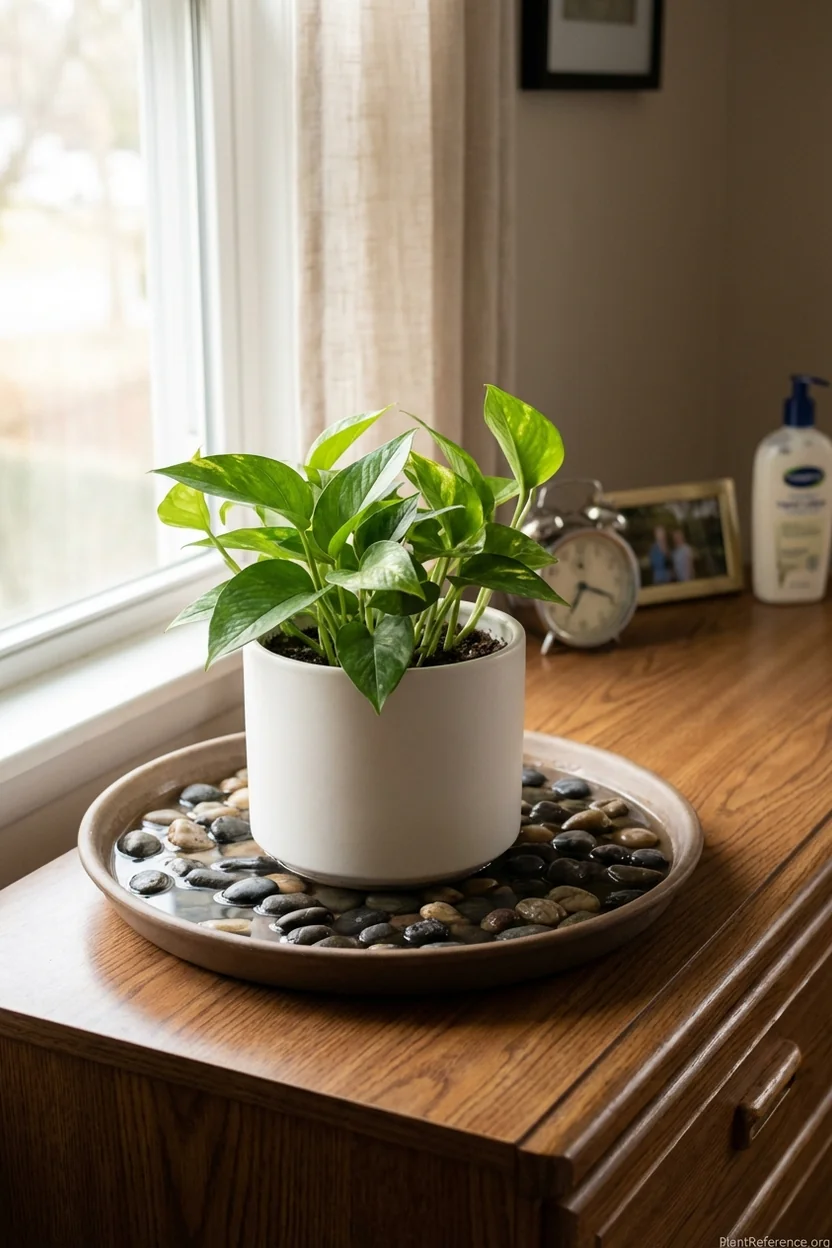
The science behind this: plants lose water through tiny pores called stomata. When air humidity is low, water evaporates faster than the roots can replace it. The plant closes its stomata and curls leaves to reduce surface area exposed to dry air.
Cause #3: Heat Stress from HVAC Systems
Heating vents, air conditioning units, and radiators create hot, dry airflow that pothos absolutely hate. This is especially common in offices and apartments where plants get placed near climate control systems.
Diagnostic symptoms:
Leaves curl most severely on the side facing the heat source
Brown, crispy edges develop quickly (within days)
Plant droops even with adequate soil moisture
New growth is smaller and paler than normal
Symptoms worsen when heating/cooling system runs
Recovery happens when system is off for extended periods
The fix: Move your pothos at least 6 feet (2 meters) away from any heating vent, air conditioner, or radiator. Pothos prefer gentle, indirect airflow, not direct blasts of conditioned air.
If moving isn't possible, redirect airflow using a small fan or vent deflector. The goal is preventing direct hot or cold air from hitting the leaves.
Temperature sweet spot: Pothos thrive between 65-85°F (18-30°C) with minimal temperature swings. Sudden changes of more than 10°F (5°C) trigger stress responses.
Cause #4: Pest Damage You Can't See
Spider mites are nearly invisible but cause distinctive leaf curling as they feed on plant juices. They're especially problematic during winter when indoor air is dry—their favorite condition.
Diagnostic symptoms:
Fine webbing visible on leaf undersides or between stems
Tiny yellow or white stippling dots on leaves
Leaves curl upward from the edges (different from other causes)
Plant looks dusty or slightly faded in color
Curling progresses rapidly from lower to upper leaves
You might see tiny moving specks with a magnifying glass
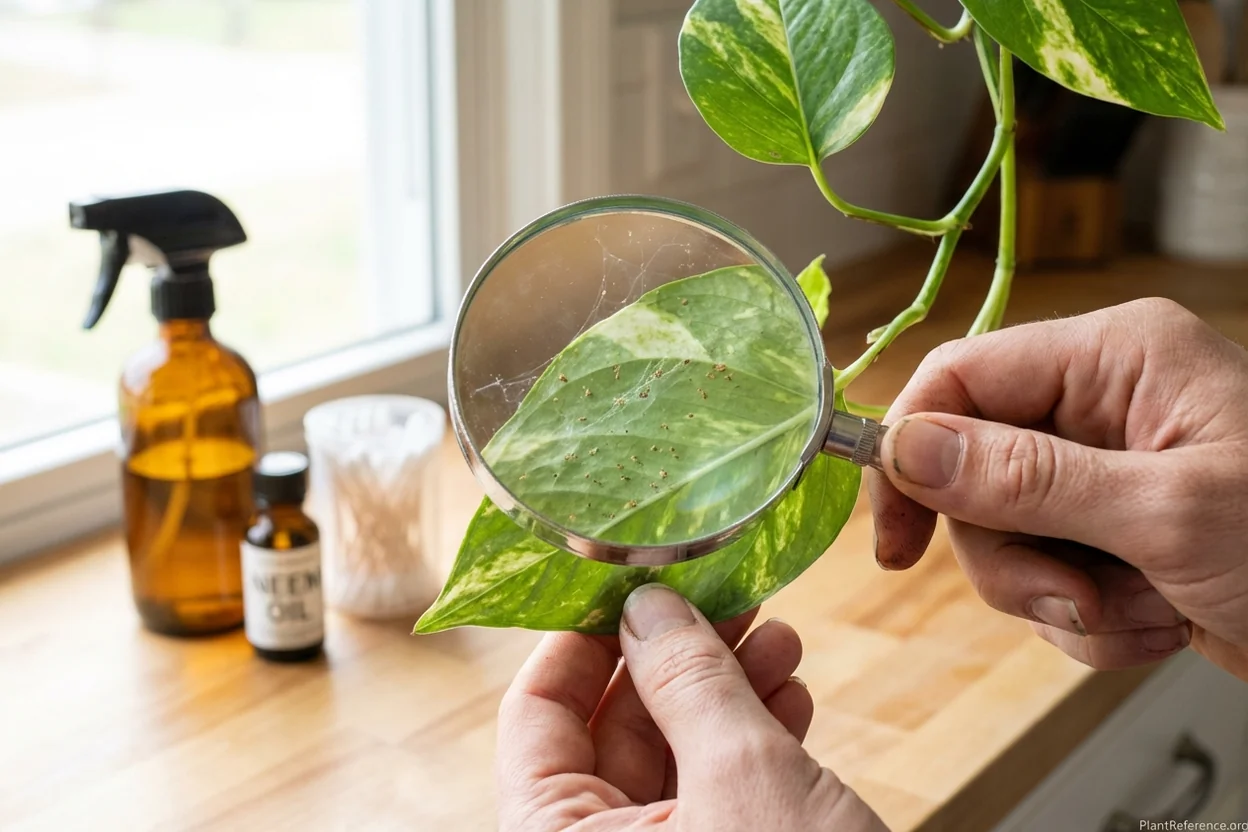
→ Bonide Neem Oil Ready-to-Use 32oz ($12-16) - Organic pest control for spider mites
Ready-to-use organic insecticide, miticide, and fungicide made from neem oil. Controls spider mites, aphids, whiteflies, and scale insects on contact. OMRI-listed for organic gardening. Safe for beneficial insects when used as directed. Apply every 7-14 days during active infestations. Also prevents powdery mildew and other fungal issues. No mixing required—just spray and go.
Treatment protocol: 1. Isolate the plant immediately to prevent spread 2. Spray leaf undersides with neem oil every 5-7 days 3. Wipe leaves with damp cloth to remove webs and mites 4. Increase humidity around the plant (mites hate moisture) 5. Monitor closely for 3-4 weeks until no new damage appears
Cause #5: Root Problems Below the Surface
Sometimes leaf curling is the first visible sign of root rot or a severely rootbound plant. The roots can't function properly, so the leaves curl as the plant conserves energy.
Diagnostic symptoms:
Curling leaves despite proper watering schedule
Soil stays wet for more than a week after watering
Musty, sour smell from soil when you water
Plant feels loose or unstable in the pot
Yellow leaves appear along with curling
Growth has completely stopped for months
Root inspection: Gently remove the plant from its pot. Healthy roots are white to light tan and firm. Black, mushy, or foul-smelling roots indicate rot.
Treatment for root rot:
Trim all black, mushy roots with clean scissors
Rinse remaining roots with lukewarm water
Repot in fresh, well-draining potting soil
Choose a pot only 1-2 inches (3-5 cm) larger than the root ball
Water sparingly until new growth appears
Treatment for rootbound plants:
Gently tease apart circled roots with your fingers
Trim any thick, woody circling roots
Repot in a container 2 inches (5 cm) larger in diameter
Use fresh potting soil with good drainage
Water thoroughly after repotting, then wait until top inch dries
Quick Diagnostic Flowchart
Use this step-by-step process to identify your specific problem:
Step 1:Check soil moisture 2 inches (5 cm) deep
Dry = Underwatering (most likely)
Wet = Root rot or overwatering
Moist = Continue to Step 2
Step 2:Examine leaf curl pattern
Edges curl inward = Humidity or heat stress
Upward cupping = Possible pest damage
Severe drooping + curling = Root problems
Step 3:Check environmental factors
Near heat source = Move plant immediately
Humidity below 35% = Add humidity
Fine webbing present = Treat for spider mites
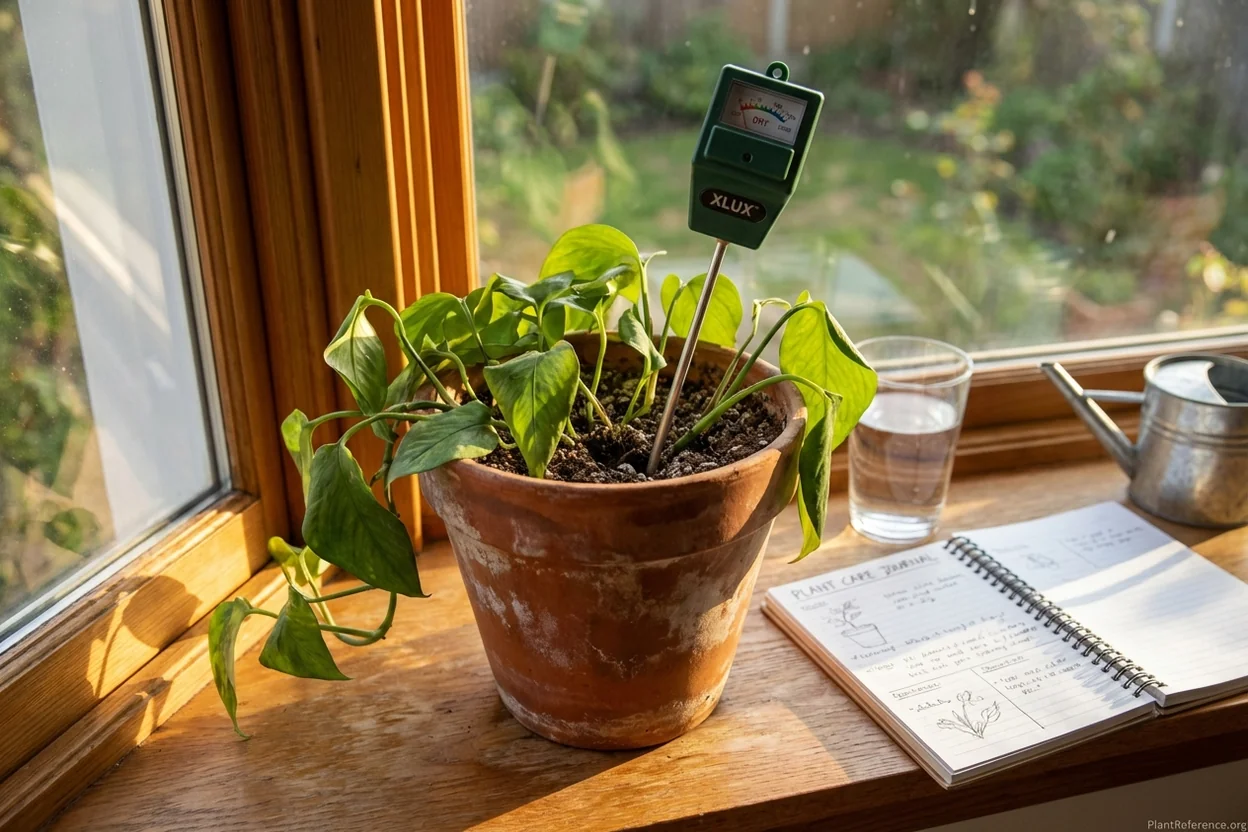
→ XLUX Soil Moisture Meter 3-in-1 ($8-13) - Essential diagnostic tool
Instant moisture readings with no batteries required. Long 10-inch probe reaches deep into soil for accurate root zone measurements. Easy-to-read dial shows dry, moist, or wet conditions clearly. Also tests soil pH and light levels. Single probe design minimizes root disturbance during testing. Durable construction withstands repeated use. Perfect for preventing overwatering disasters. Essential tool for new plant parents learning proper watering schedules.
Step 4:Timeline check
Recent watering = Wait 24-48 hours for improvement
No recent changes = Environmental stress likely
Gradual decline = Root or pest issues
Prevention Strategies That Actually Work
Establish a consistent routine:
Check soil moisture weekly using the finger test or moisture meter
Water only when top 1-2 inches (3-5 cm) of soil is dry
Maintain humidity between 40-60% using pebble trays or humidifiers
Keep plants at least 6 feet (2 meters) from heating/cooling vents
Inspect leaf undersides monthly for early pest detection
Rotate plants quarterly to ensure even light exposure
Environmental monitoring: The most successful pothos parents I know use simple tools to track conditions. A basic hygrometer costs $5-10 and prevents humidity-related problems before they start.
Seasonal adjustments: Reduce watering frequency by 30-50% in winter when growth slows. Increase humidity monitoring during heating season when air becomes driest.
The bottom line: curled pothos leaves are fixable once you identify the cause correctly. Most people guess wrong because they don't check soil moisture first or consider environmental factors. Use the diagnostic steps above, and your pothos will be back to normal within a week.
Remember—pothos are nearly indestructible once you understand what they're trying to tell you. Curled leaves are communication, not a death sentence.
Frequently Asked Questions
Reading about plants and recognising them are different skills. These three build the second.
- Daily PlantIdentify the day’s mystery plant from a close-up photograph.
- Keyed OutWork a dichotomous key, lead by lead, to name a hidden specimen.
- Name That PlantName a specimen from botanical clues dealt hardest first.
Free to play, no account needed
TJ stumbled into plant parenthood when a coworker gave him a neglected pothos. That single plant sparked an obsession that led him to quit his corporate marketing job and start a plant care service for busy professionals in Chicago. TJ maintains over 150 plants for residential clients and runs monthly plant swap meetups at local coffee shops. He's self-taught through YouTube, plant forums, and plenty of expensive mistakes (RIP to his variegated monstera). TJ specializes in troubleshooting common houseplant problems and is known for his blunt, no-BS advice: "Your plant isn't dying because Mercury is in retrograde—you're overwatering it." He's particularly skilled with finicky tropical plants like fiddle leaf figs and calatheas.