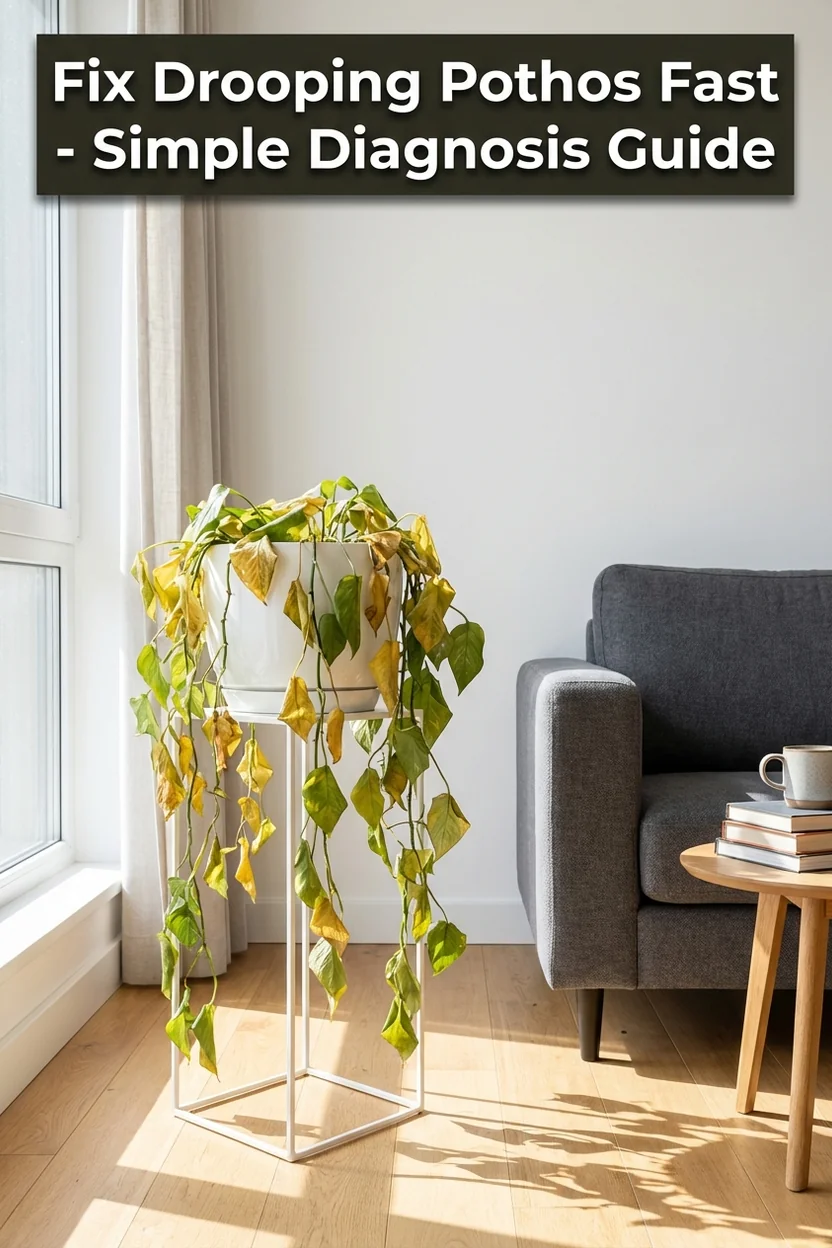
Pothos Leaves Drooping: Quick Diagnostic Guide
Pets & Toxicity
Recorded toxicity for plants linked in this guide. An unknown status is not a safety assessment.
Toxic to pets: golden pothosDetailsHide
Epipremnum aureum — Toxicity Warning
Toxic to pets and humans. All parts contain insoluble calcium oxalate crystals that cause mouth pain, swelling, and drooling if ingested.View Epipremnum aureum plant profile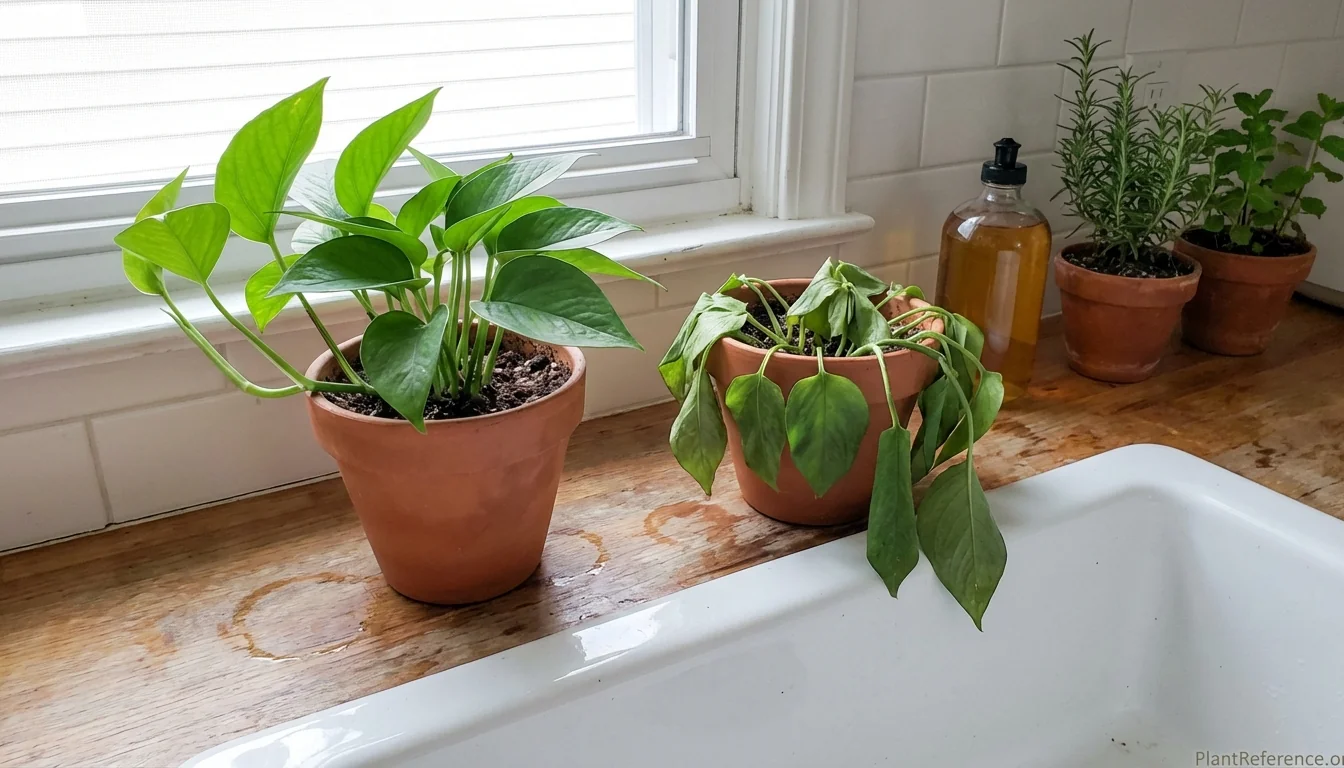
— Image © Plant Reference 2026
Your pothos 🌿Epipremnum aureum (ep-ih-PREM-num AW-ree-um) is sending you a clear message when its leaves start drooping—but the message isn't always what you think. Let's cut through the confusion and get your plant perked up again.
The Quick Finger Test: Dry vs Wet Soil
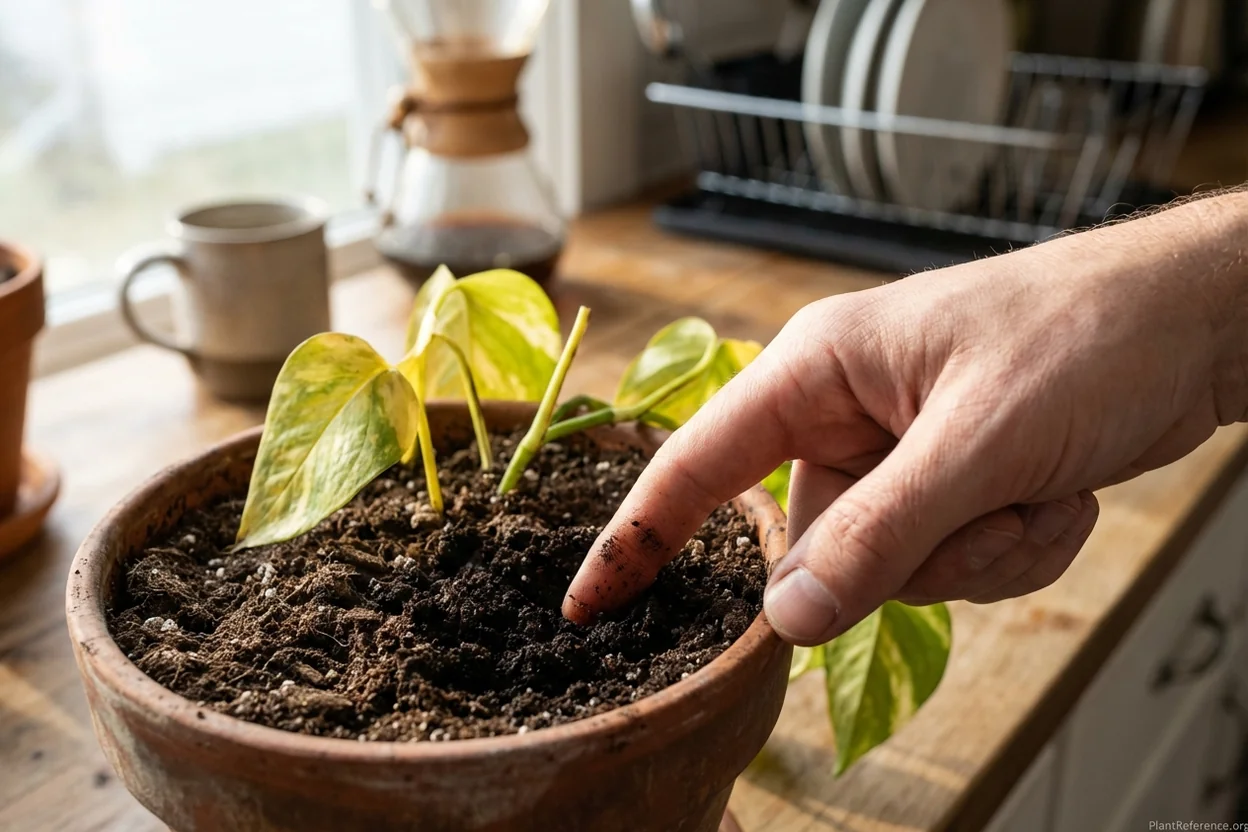
Before you do anything else, stick your finger straight down into the soil about 2 inches (5 cm) deep. This simple test tells you everything you need to know about what's causing the drooping.
Dry soil = Underwatering droop (easy fix) Wet soil = Overwatering droop (more serious)
The finger test works because pothos roots sit deeper than the surface soil that dries out first. Surface soil can look bone dry while the root zone stays waterlogged—or vice versa.
If you hit wet, soggy soil at 2 inches deep, stop watering immediately. Your plant is drowning, not dying of thirst. The drooping leaves are actually suffocating from lack of oxygen around the roots.
Look for these additional clues:
Dry soil symptoms:
Pot feels lighter than usual when lifted
Soil pulls away from pot edges slightly
Plant perks up within hours after watering
Wet soil symptoms:
Pot feels heavy even days after watering
Soil looks dark and feels squishy
Musty or sour smell from soil surface
Underwatering Droop: The Easy Fix
Good news—if your soil test came back dry, you've got the easiest plant problem to fix. Underwatered pothos are incredibly forgiving and bounce back fast.
Here's exactly what to do:
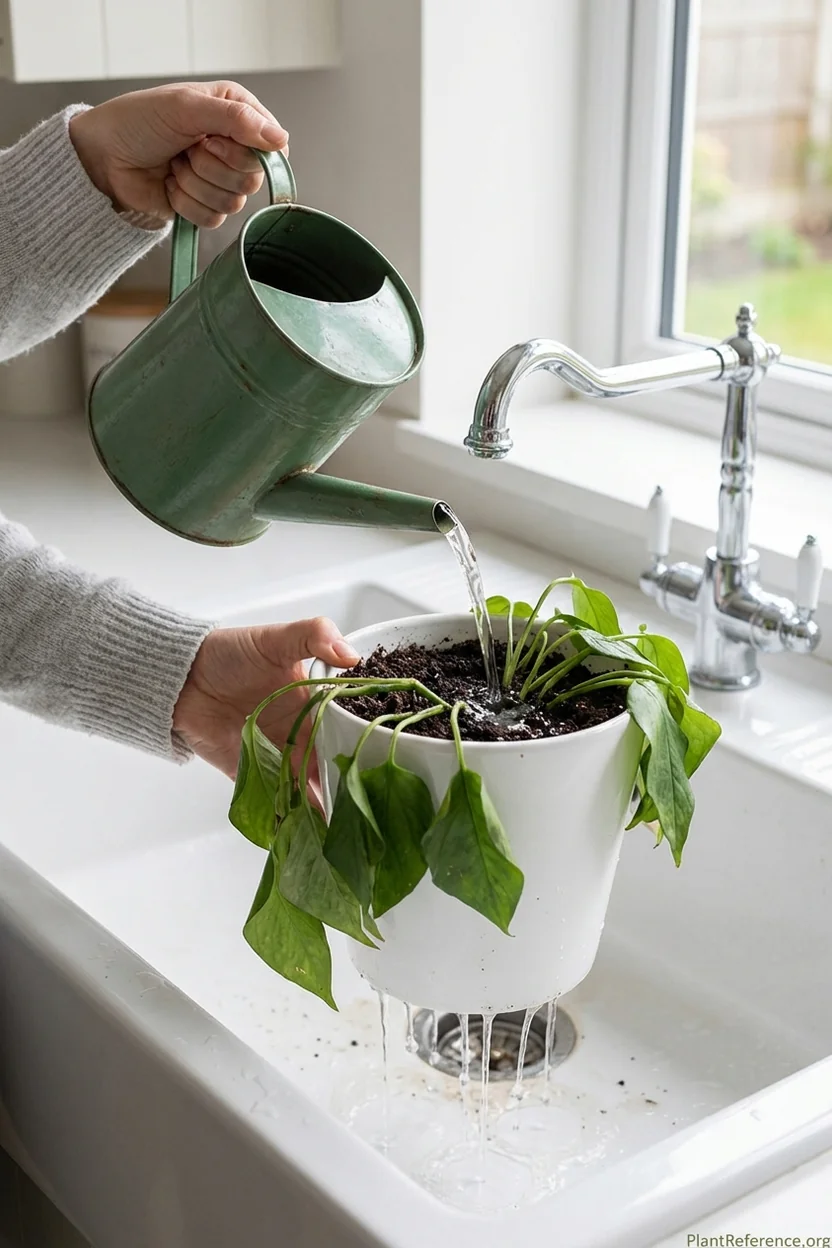
Water thoroughly until water flows from drainage holes
Let excess drain completely—don't let pot sit in standing water
Wait and watch—leaves should perk up within 2-6 hours
Check soil again in 7-10 days for next watering
→ XLUX Soil Moisture Meter ($8-13) - Takes guesswork out of watering schedule
Instant moisture reading with clearly marked dry, moist, and wet zones on easy-to-read display. Single probe design minimizes root damage during testing. No batteries required—simply insert 6-7 inches deep and get immediate results. Eliminates guesswork for pothos watering by showing exactly when soil reaches proper dryness. Durable construction withstands repeated use across multiple plants. Essential tool for preventing both over and underwatering problems.
The drooping happens because pothos leaves lose water faster than the roots can replace it when soil gets too dry. It's actually a protective mechanism—the plant reduces surface area to conserve whatever moisture is left.
Most pothos recover from underwatering droop within 3-4 hours. If leaves don't perk up after 6 hours, double-check that water actually reached the root zone—sometimes dry soil repels water initially.
Overwatering Droop: The Dangerous Look-Alike
This is where things get tricky. Overwatered pothos leaves droop for a completely different reason—the roots are drowning and can't absorb water or oxygen properly.
Key differences from underwatering droop:
Leaves turn yellow while drooping
Soil stays wet days after watering
Plant feels unstable or loose in pot
Musty smell from soil
Brown or black mushy roots when checked
Overwatering droop develops slowly over days or weeks, while underwatering droop happens quickly when soil dries out. The yellowing is your biggest clue—healthy roots don't cause yellow leaves.
Emergency action steps:
Stop watering immediately
Remove from pot and inspect roots
Trim any brown/black mushy roots with clean scissors
Repot in fresh, well-draining soil
Wait 5-7 days before watering again
The tricky part is that both underwatered and overwatered plants look thirsty. But giving water to an overwatered plant makes root rot worse fast.
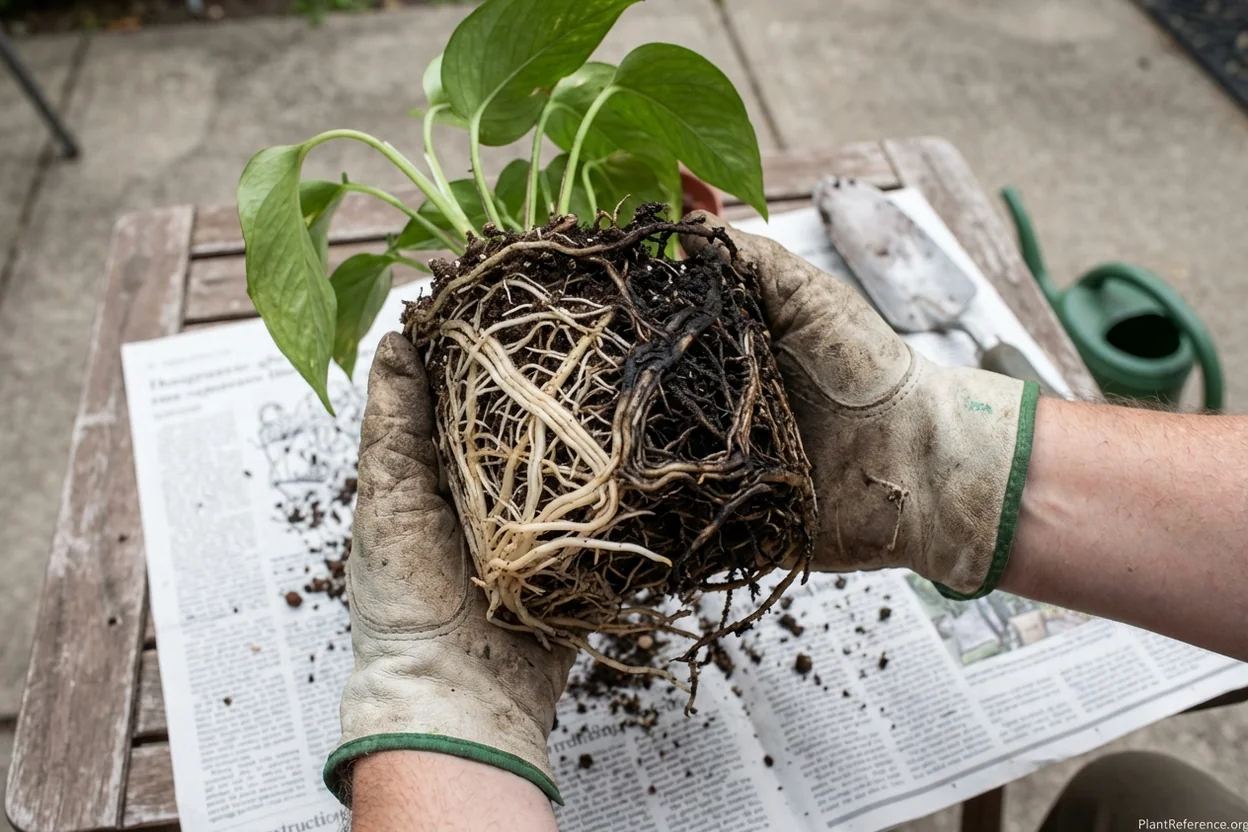
If you catch overwatering early (just starting to yellow, roots still mostly white), simply let the soil dry out completely before watering again. Advanced cases with black roots need the full repotting treatment.
Root Problems That Cause Drooping
Sometimes drooping happens even when watering seems right. The culprit? Root issues that prevent water uptake regardless of soil moisture.
Rootbound pothos can't absorb water efficiently even in moist soil. Roots circle the pot bottom so tightly they strangle themselves. You'll see:
Drooping despite regular watering
Roots growing through drainage holes
Water runs straight through pot without absorbing
Plant topples over easily
Extremely slow growth
Solution: Repot into a pot 1-2 inches (2.5-5 cm) larger in diameter. Gently tease apart circled roots before replanting.
Root damage from pests (rare in pothos) or physical damage during repotting can also cause drooping. Damaged roots can't transport water effectively.
For more details on identifying and fixing root problems, see our guide on Pothos Root Rot: Emergency Rescue in 5 Steps.
Temperature Shock and Environmental Stress
Pothos can droop suddenly when exposed to temperature extremes or environmental changes, even with perfect soil moisture.
Common temperature shock triggers:
Cold drafts from air conditioning
Heat blasts from heating vents
Moving plant from warm indoor to cool outdoor location
Rapid temperature swings (20°F+ difference)
Cold water on warm roots during watering
Temperature shock drooping usually recovers within 24-48 hours once conditions stabilize. The plant just needs time to adjust.
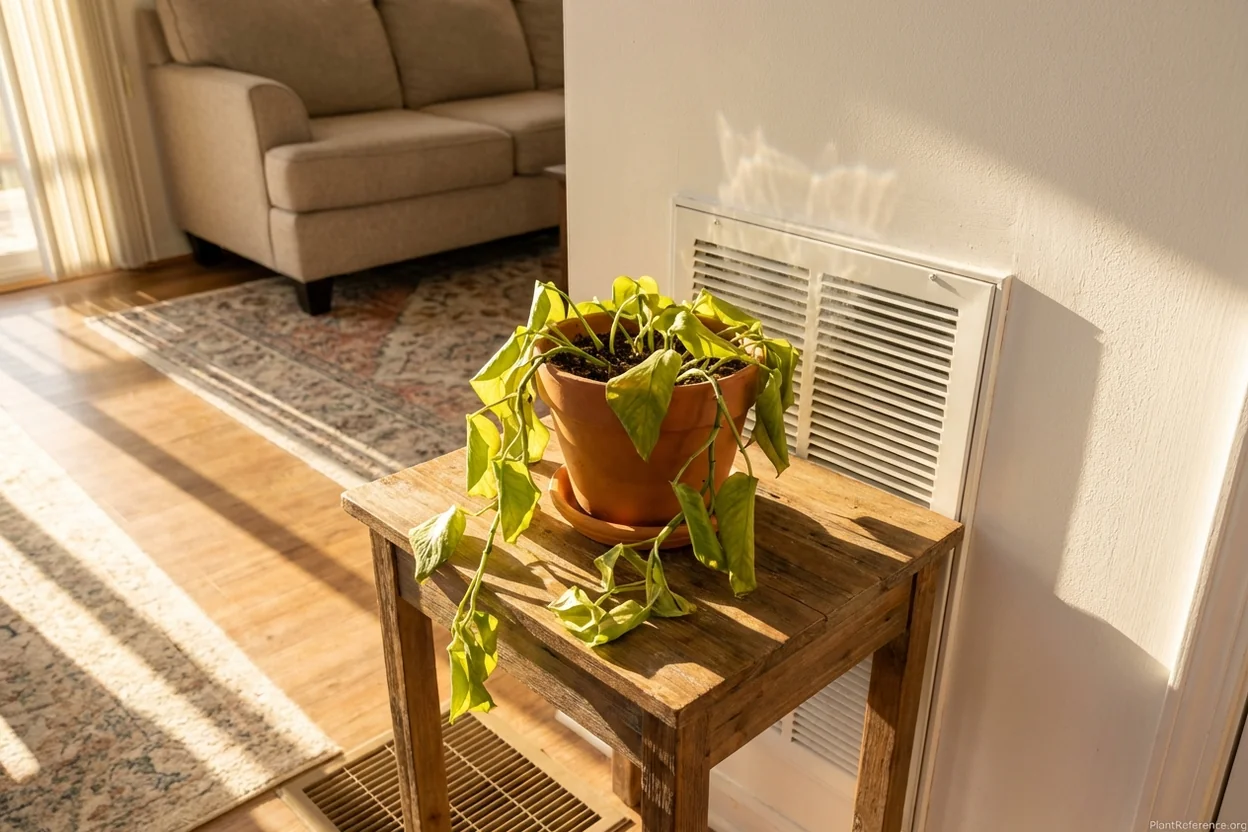
Optimal temperature range: 65-85°F (18-30°C) with minimal fluctuation
Quick fix: Move plant away from heating/cooling vents, direct sunlight, or drafty windows. Room temperature tap water (not ice cold) prevents root shock during watering.
Emergency Revival for Severely Drooping Pothos
When pothos leaves are completely limp and hanging straight down, you need emergency intervention. Here's my proven revival method:
Step 1: Diagnosis
Finger test soil at 2-3 inches (5-7.6 cm) deep
Check root health if soil is wet
Look for pest damage on leaf undersides
Step 2: Immediate action
If dry: Water thoroughly and move to bright indirect light
If wet: Stop watering, improve drainage, consider repotting
If rootbound: Emergency repotting into larger container
Step 3: Recovery environment
Bright indirect light (not direct sun)
Stable temperature 70-75°F (21-24°C)
Higher humidity if possible (40-60%)
No fertilizer until recovery
→ Gardenix Self-Watering Planters ($20-28) - Prevents watering mistakes
Water level indicator shows exactly when reservoir needs refilling, preventing both over and underwatering. Pot-leg drinking system allows plant roots to absorb water as needed naturally. Lasts 10-14 days between refills for most pothos. Includes coconut coir growing medium and detailed setup instructions. Eliminates guesswork from watering schedule while maintaining proper soil moisture levels. Ideal solution for busy plant owners or those learning proper pothos hydration needs.
Most severely drooping pothos recover within 24-48 hours with proper diagnosis and treatment. Don't panic—these plants are incredibly resilient.
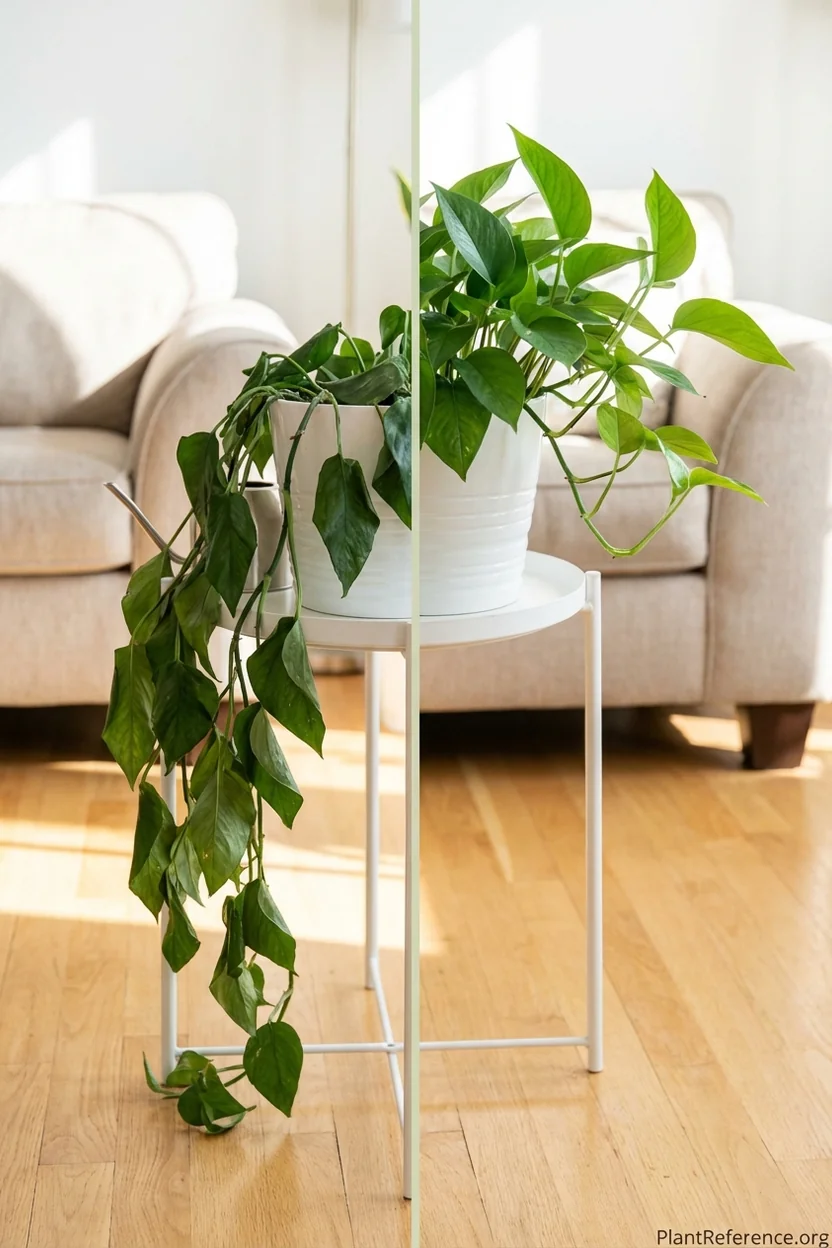
Prevention: Consistent Care Schedule
The best cure for drooping is prevention through consistent care. Pothos are forgiving, but they appreciate routine.
My recommended schedule:
Weekly: Check soil moisture with finger test
Bi-weekly: Water thoroughly when top 25-50% of soil is dry
Monthly: Rotate pot ¼ turn for even growth; wipe leaves with damp cloth
Seasonally: Inspect roots if growth slows; repot if needed
Watering consistency tips:
Use room temperature water only
Water same day each week, but adjust based on soil test
Always water until drainage flows from holes
Empty saucers within 30 minutes of watering
Reduce watering frequency by half in winter months
The key is developing a routine but staying flexible based on actual plant needs rather than calendar dates.
Most pothos prefer to dry out slightly between waterings rather than staying constantly moist. Slightly underwatered is always safer than slightly overwatered for these plants.
For complete care instructions, check out our comprehensive Pothos Care: The Complete Beginner's Guide (2025).
Environmental consistency matters too:
Keep away from heating/cooling vents
Maintain temperatures between 65-85°F (18-30°C)
Provide bright indirect light—no direct sun
Avoid moving plant frequently once established
Group with other plants for stable humidity
Remember, drooping pothos leaves are usually just asking for water. Trust the finger test, address the cause quickly, and your plant will bounce back stronger than ever.
Frequently Asked Questions
Reading about plants and recognising them are different skills. These three build the second.
- Daily PlantIdentify the day’s mystery plant from a close-up photograph.
- Keyed OutWork a dichotomous key, lead by lead, to name a hidden specimen.
- Name That PlantName a specimen from botanical clues dealt hardest first.
Free to play, no account needed
TJ stumbled into plant parenthood when a coworker gave him a neglected pothos. That single plant sparked an obsession that led him to quit his corporate marketing job and start a plant care service for busy professionals in Chicago. TJ maintains over 150 plants for residential clients and runs monthly plant swap meetups at local coffee shops. He's self-taught through YouTube, plant forums, and plenty of expensive mistakes (RIP to his variegated monstera). TJ specializes in troubleshooting common houseplant problems and is known for his blunt, no-BS advice: "Your plant isn't dying because Mercury is in retrograde—you're overwatering it." He's particularly skilled with finicky tropical plants like fiddle leaf figs and calatheas.