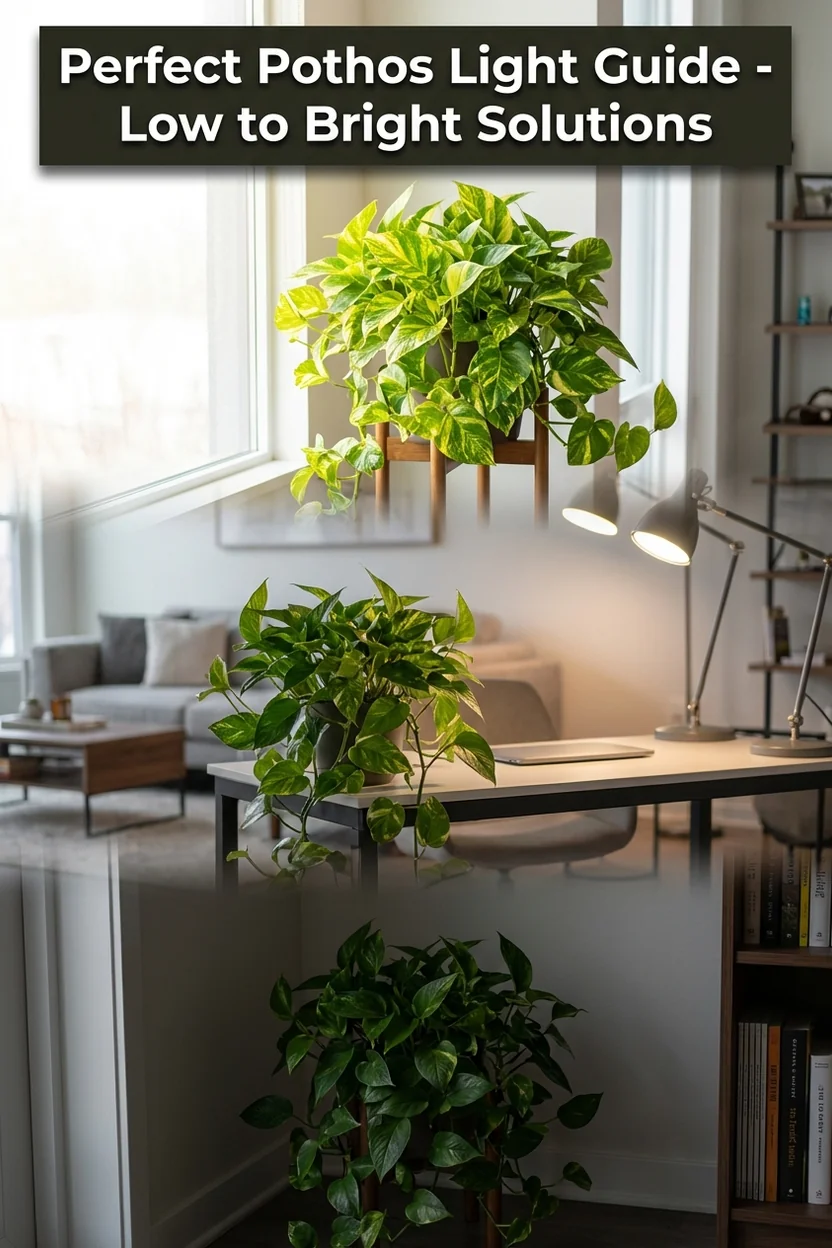
Pothos Light Requirements: Low Light to Bright Indirect Guide
Pets & Toxicity
Recorded toxicity for plants linked in this guide. An unknown status is not a safety assessment.
Toxic to pets: golden pothosDetailsHide
Epipremnum aureum — Toxicity Warning
Toxic to pets and humans. All parts contain insoluble calcium oxalate crystals that cause mouth pain, swelling, and drooling if ingested.View Epipremnum aureum plant profile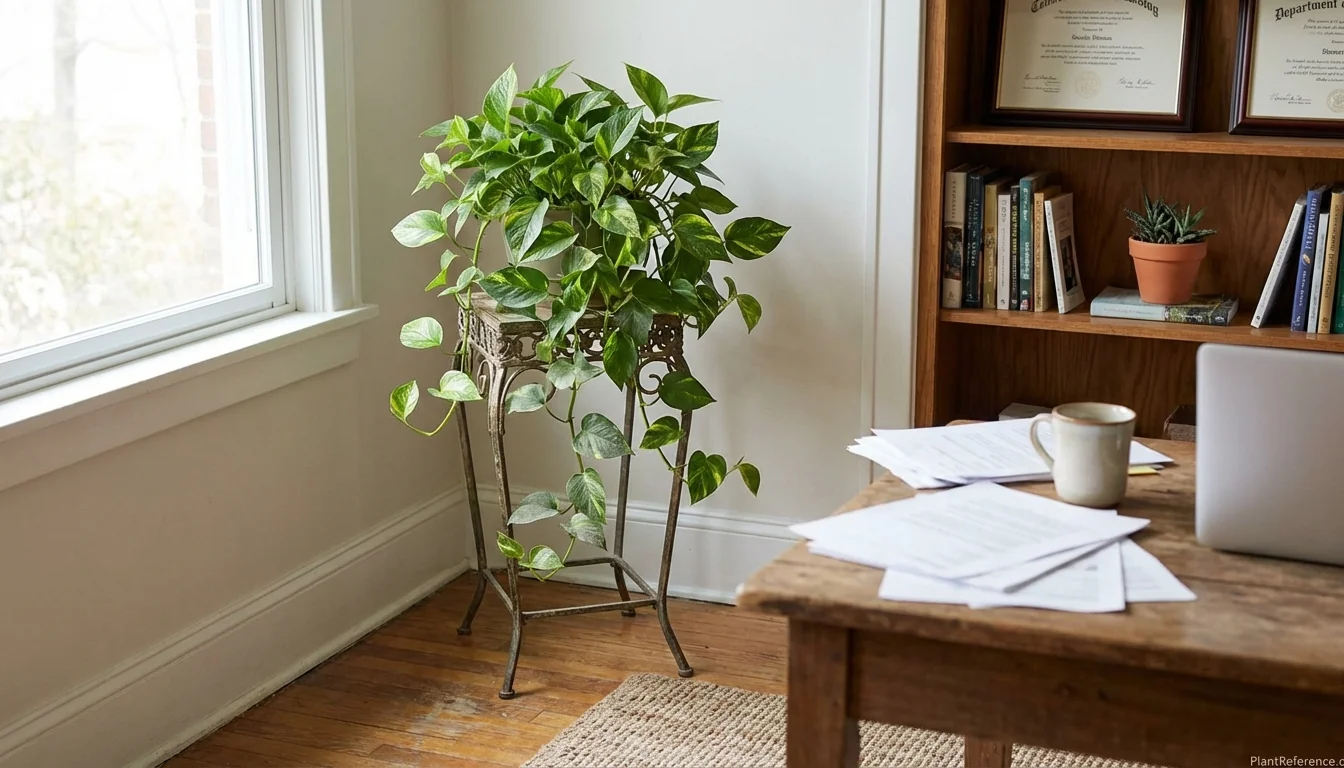
— Image © Plant Reference 2026
Don't have a south-facing window? That's perfectly fine—pothos might just be the most light-flexible houseplant you'll ever grow. While many plants demand specific lighting conditions, pothos light requirements span an impressive range that works for apartments, offices, and even those challenging north-facing rooms where other plants struggle.
Understanding Pothos Light Tolerance
The secret to pothos' incredible adaptability lies in its natural habitat. In the wild, the golden pothos 🌿Epipremnum aureum (ep-ih-PREM-num AW-ree-um) grows as an understory vine, climbing from dark forest floors toward brighter canopy light. This evolutionary background created a plant that literally adapts its appearance based on available light.
In low light conditions, your pothos produces more chlorophyll to capture every photon available. The result? Darker green leaves with less variegation but steady, healthy growth. Move that same plant to brighter conditions, and within weeks you'll see more pronounced variegation patterns emerge as the plant reduces chlorophyll production.
This isn't stress—it's adaptation. Your pothos is essentially fine-tuning its solar panels (leaves) to match your space perfectly.
Light Measurement Basics
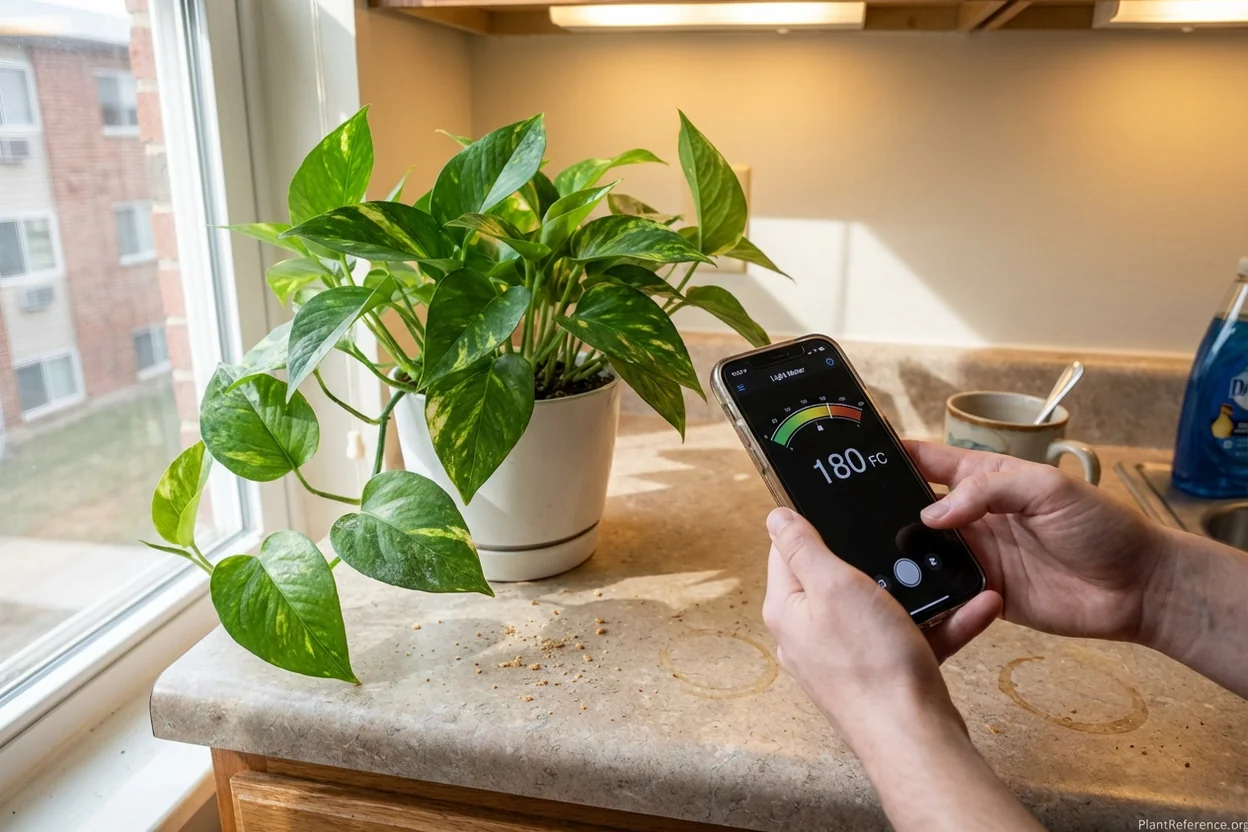
Understanding light levels helps you place your pothos optimally:
Low light: 50-100 foot-candles (typical office lighting, north windows)
Medium light: 100-200 foot-candles (east windows, bright offices)
Bright indirect: 200-300+ foot-candles (south/west windows with sheer curtains)
Direct sun: 1000+ foot-candles (unfiltered south windows - too intense)
Most smartphones have light meter apps that measure foot-candles, making it easy to assess your spaces. I've used these apps to discover that my supposedly "dark" apartment actually provides 75-120 foot-candles in most areas—perfect for pothos.
Low Light Success: Office and Interior Spaces
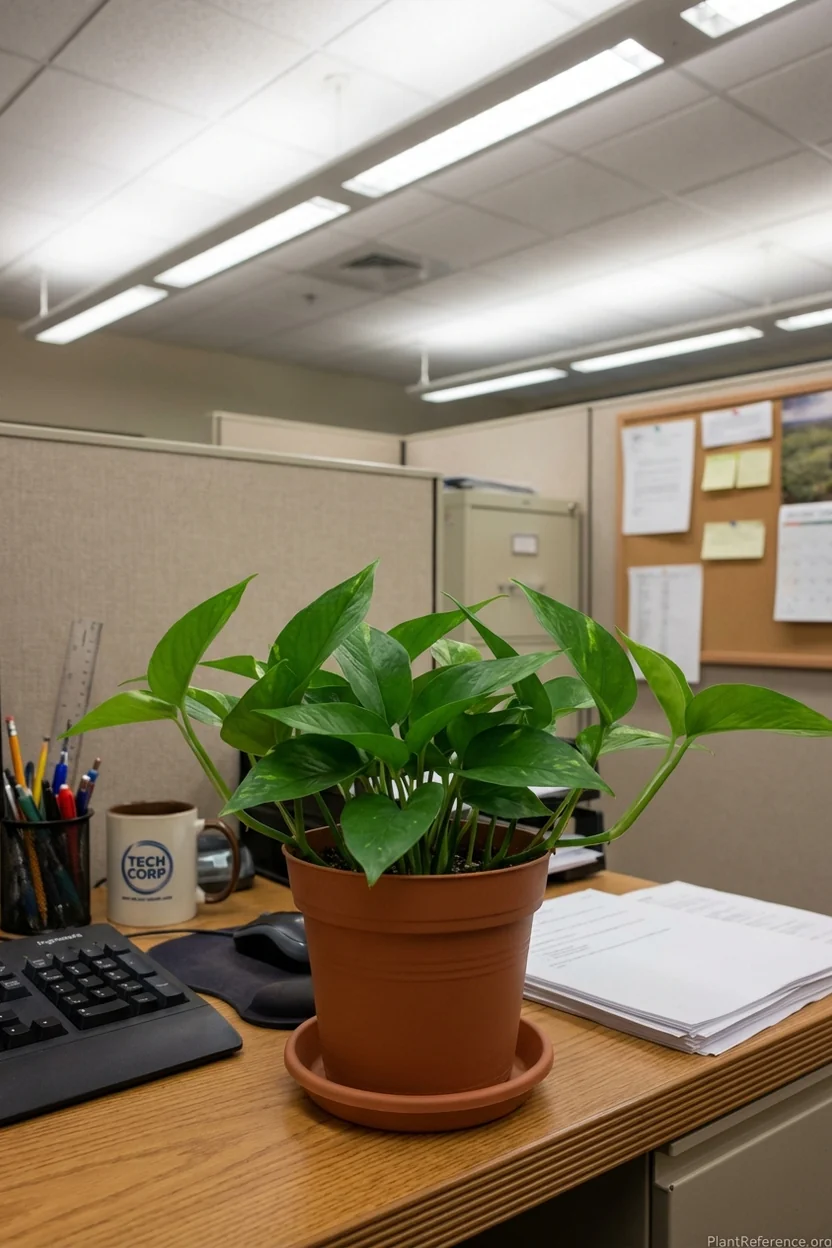
Here's what makes pothos perfect for beginners: it genuinely thrives in conditions that would send other houseplants into decline. I've successfully grown pothos in windowless offices under nothing but fluorescent tubes, in apartments with only north-facing windows, and in those challenging interior rooms where "bright" means you can read without a lamp.
Office Lighting Performance
Standard office fluorescent lighting typically provides 50-150 foot-candles—exactly what pothos needs for steady growth. The key differences you'll see in office conditions:
Growth patterns: Slightly slower vine extension but still consistent new leaf production. In my office experience, plants produced 1-2 new leaves monthly under fluorescents versus 2-4 in brighter home conditions.
Leaf characteristics: Darker green coloration with reduced variegation. Golden pothos becomes more solidly green, while variegated varieties like Marble Queen show narrower white sections.
Care adjustments needed: Less frequent watering since slower growth equals lower water consumption. I water office pothos every 10-14 days versus 7-10 days at home.
Interior Room Solutions
Even rooms without windows can support pothos with strategic light supplementation. Position plants near room entrances where they receive ambient light from adjacent brighter spaces, or add a simple desk lamp for 4-6 hours daily.
The How to Care for Pothos: Complete Beginner Guide covers these placement strategies in detail, but the bottom line is simple: if you can comfortably read in a space during the day, pothos can grow there.
Bright Indirect Light: The Sweet Spot
While pothos tolerates low light beautifully, bright indirect light unlocks its full potential. This is where you'll see the most vibrant variegation, fastest growth, and that coveted full, bushy appearance that makes other plant parents jealous.
Identifying Bright Indirect Light
The perfect bright indirect spot feels bright to your eyes but doesn't cast harsh shadows. Here's how to identify these golden zones in your home:
East-facing windows: Morning sun (6 AM-11 AM) followed by bright ambient light the rest of the day. This is my personal favorite for pothos—gentle morning rays won't burn leaves, while afternoon brightness maintains variegation.
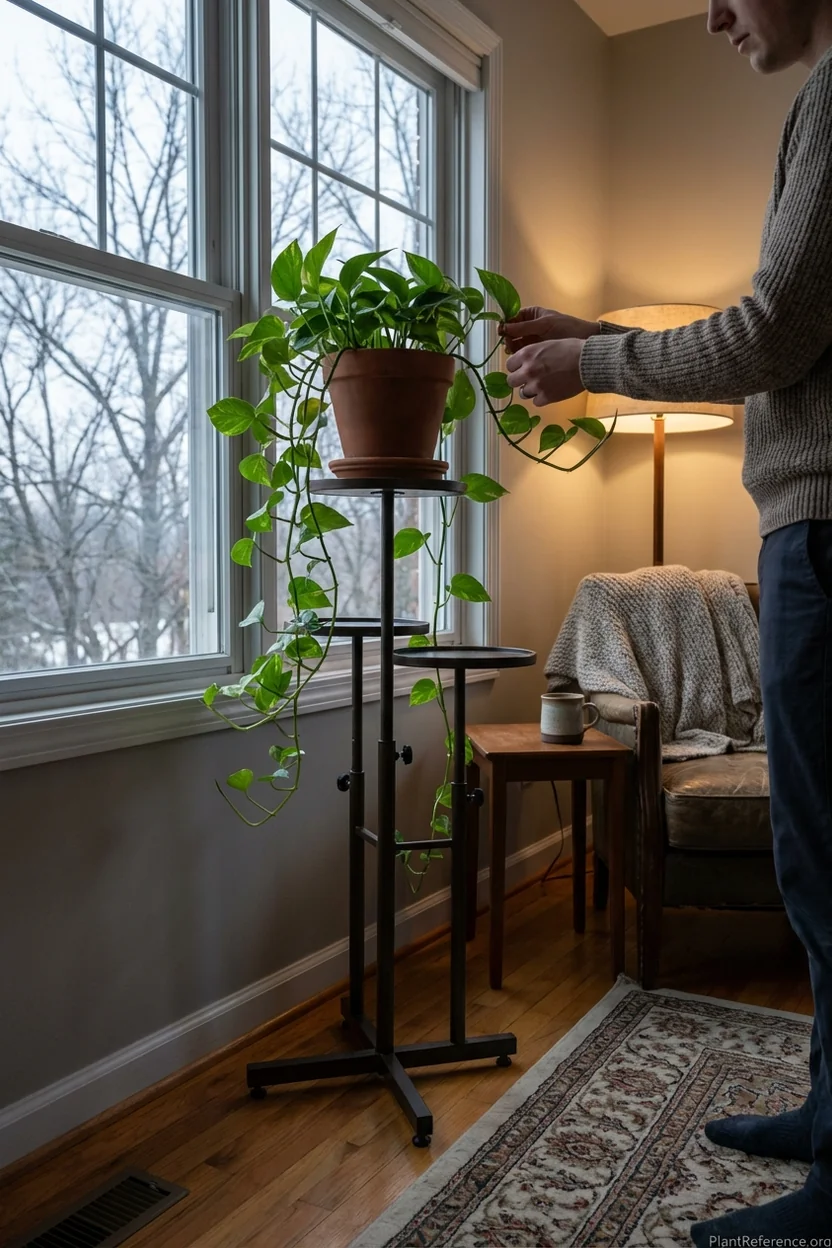
South/west windows with protection: These powerhouse light sources need sheer curtains, blinds, or position 3-6 feet (90-180 cm) back from the window. Direct southern exposure will scorch pothos leaves, but filtered southern light is pothos paradise.
Bright interior spots: Areas that receive reflected light from windows or are positioned between bright rooms often provide ideal conditions.
Growth Benefits in Optimal Light
In bright indirect conditions, you'll notice dramatic improvements within 2-4 weeks:
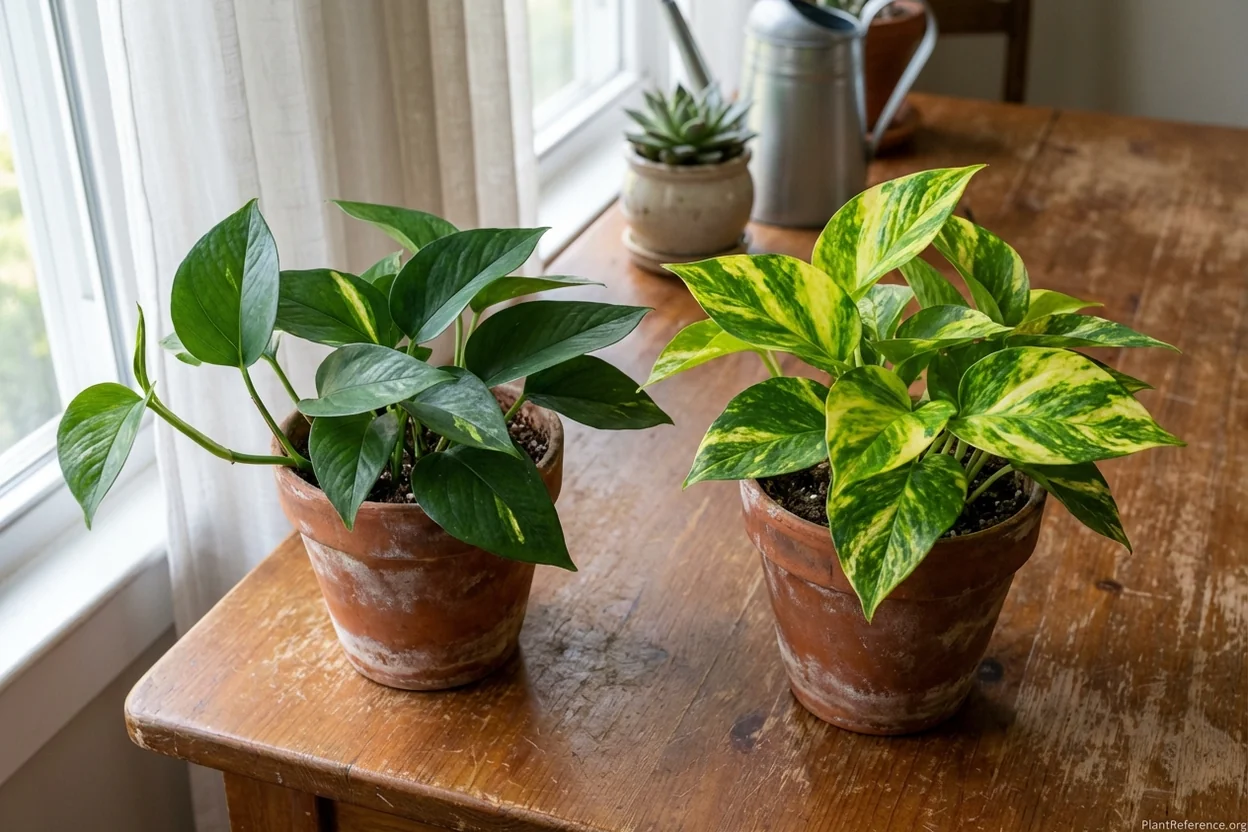
Variegation intensifies: Golden pothos develops more pronounced yellow streaking
Growth accelerates: New leaves every 5-7 days during growing season
Larger leaf size: Optimal light produces leaves 6-8 inches (15-20 cm) versus 4-5 inches (10-13 cm) in low light
Fuller appearance: More branch points create bushier, less leggy growth
Stronger vines: Better able to support climbing on moss poles or trailing from heights
The difference is honestly dramatic. I moved one of my Marble Queen pothos from a medium-light spot to a bright east window, and within a month the new growth showed twice as much white variegation as the older, lower-light leaves.
Signs Your Pothos Needs More Light
Pothos rarely complains dramatically about insufficient light—instead, it quietly adapts in ways that signal its needs to observant plant parents. Learning these subtle signs helps you optimize placement for healthier, more attractive growth.
Growth Pattern Changes
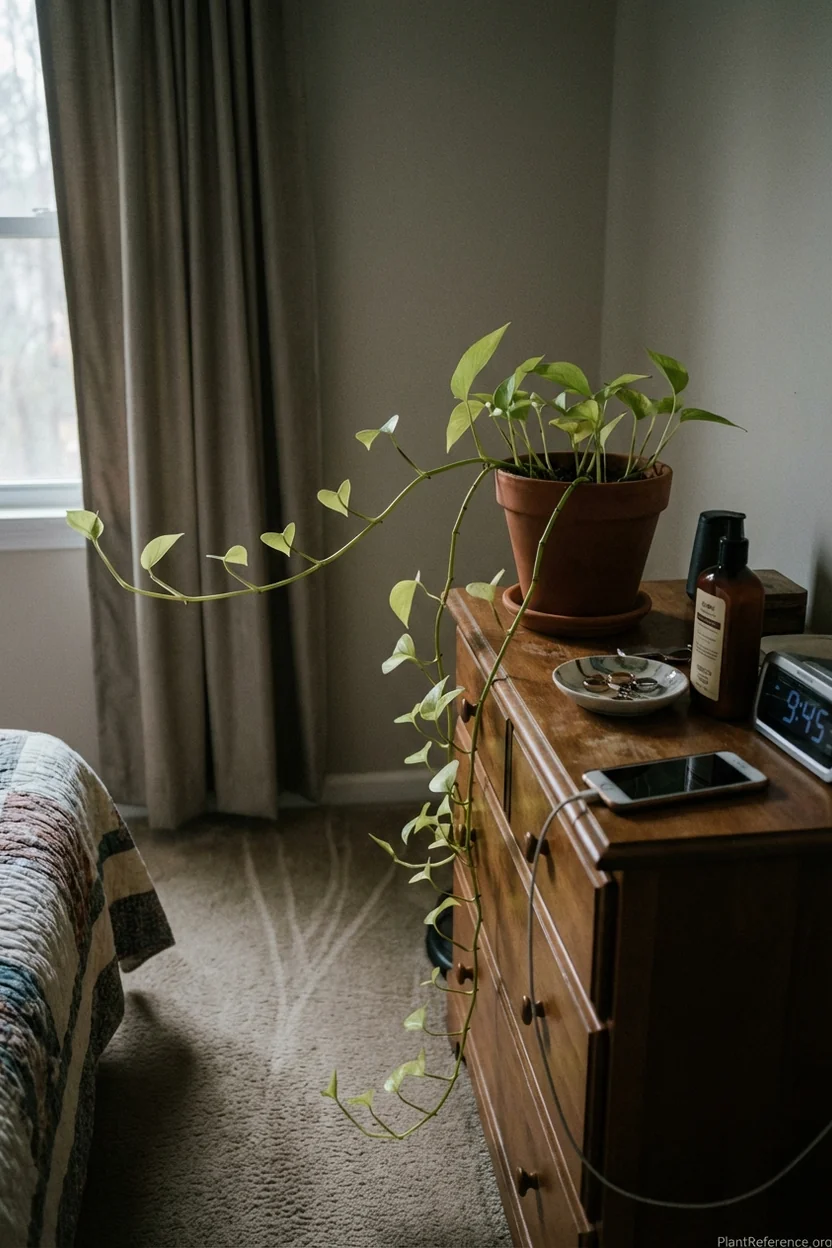
Leggy, stretched growth: The most obvious indicator. In low light, your pothos will stretch toward available light sources, creating long vine sections between leaves. Normal spacing between leaves (nodes) should be 2-3 inches (5-7.5 cm). If you're seeing 4-6 inches (10-15 cm) between leaves, your plant is reaching for more light.
Smaller new leaves: Each new leaf should be roughly the same size or larger than mature leaves. Progressively smaller leaves indicate the plant lacks energy for full leaf development.
Solid green reversion: Variegated varieties gradually lose their patterns, with new growth emerging increasingly green. This isn't permanent damage—move to brighter light and new growth will regain variegation within 2-3 weeks.
Vine Behavior Indicators
Excessive trailing: While pothos naturally trail, insufficient light causes longer, thinner vines with sparse foliage. Healthy pothos in adequate light produces shorter vine sections packed with leaves.
Weak climbing ability: Pothos with insufficient energy struggles to produce the sturdy aerial roots needed for climbing moss poles or walls.
The Pothos Not Growing: Encourage Faster Growth guide provides detailed troubleshooting, but simply increasing light often solves multiple growth issues simultaneously.
Signs of Too Much Light (Sunburn Prevention)
While pothos handles low light gracefully, too much direct sunlight causes immediate, visible damage that can permanently scar leaves. Learning to recognize early warning signs prevents costly mistakes—especially since sunburned leaves never recover their original appearance.
Direct Sun Damage Patterns
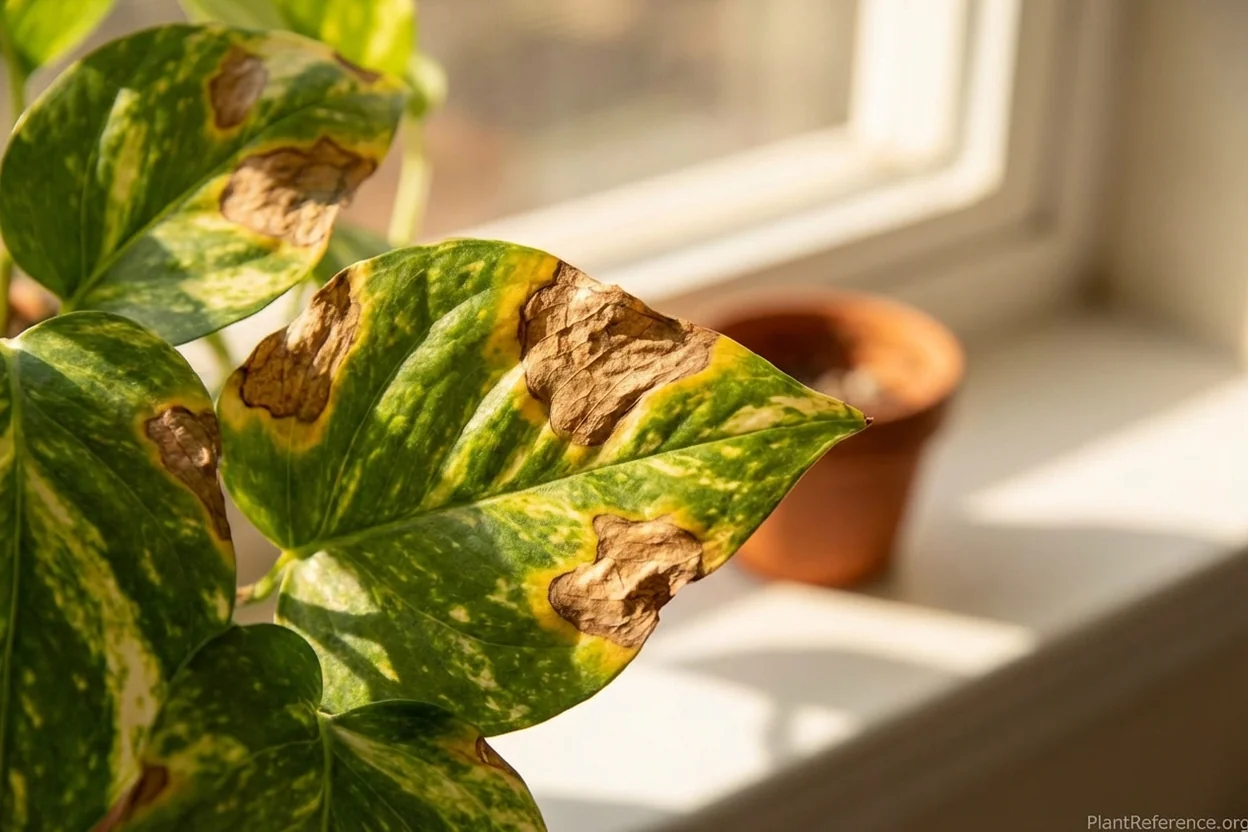
Brown crispy patches: The classic sunburn appearance. These irregular brown spots with yellow halos typically appear on leaf centers and edges where light intensity is highest. Unlike other brown spot causes, sunburn damage has distinct crispy texture and appears within hours of excessive exposure.
Bleached yellow areas: Before browning occurs, you might notice pale yellow or white patches where chlorophyll has been destroyed. This is your warning to move the plant immediately.
Leaf curling and wilting: Intense light causes rapid moisture loss, making leaves curl inward defensively. This can happen even with adequate soil moisture.
Critical Exposure Zones
South-facing windows: Unfiltered afternoon sun (1 PM-5 PM) provides 1000+ foot-candles—far beyond pothos tolerance. Position plants 4-6 feet (120-180 cm) from south windows or use sheer curtains.
West-facing windows: Afternoon heat combined with direct sun creates the most challenging conditions. West windows require consistent protection through curtains or strategic placement.
Seasonal changes: Summer sun sits higher and longer than winter sun. A spot that's perfect in November might burn your pothos by March. I've learned to move plants seasonally or adjust window coverings as sun angles change.
Quick Recovery Protocol
If you notice early sunburn signs, move your pothos immediately to bright indirect light. Trim severely damaged leaves, increase watering frequency slightly (damaged leaves lose more moisture), and wait. New growth will be healthy if lighting is corrected.
The Pothos Brown Spots: Causes and Solutions article covers this in detail, but prevention beats treatment every time.
Variegated vs. Green Pothos Light Needs
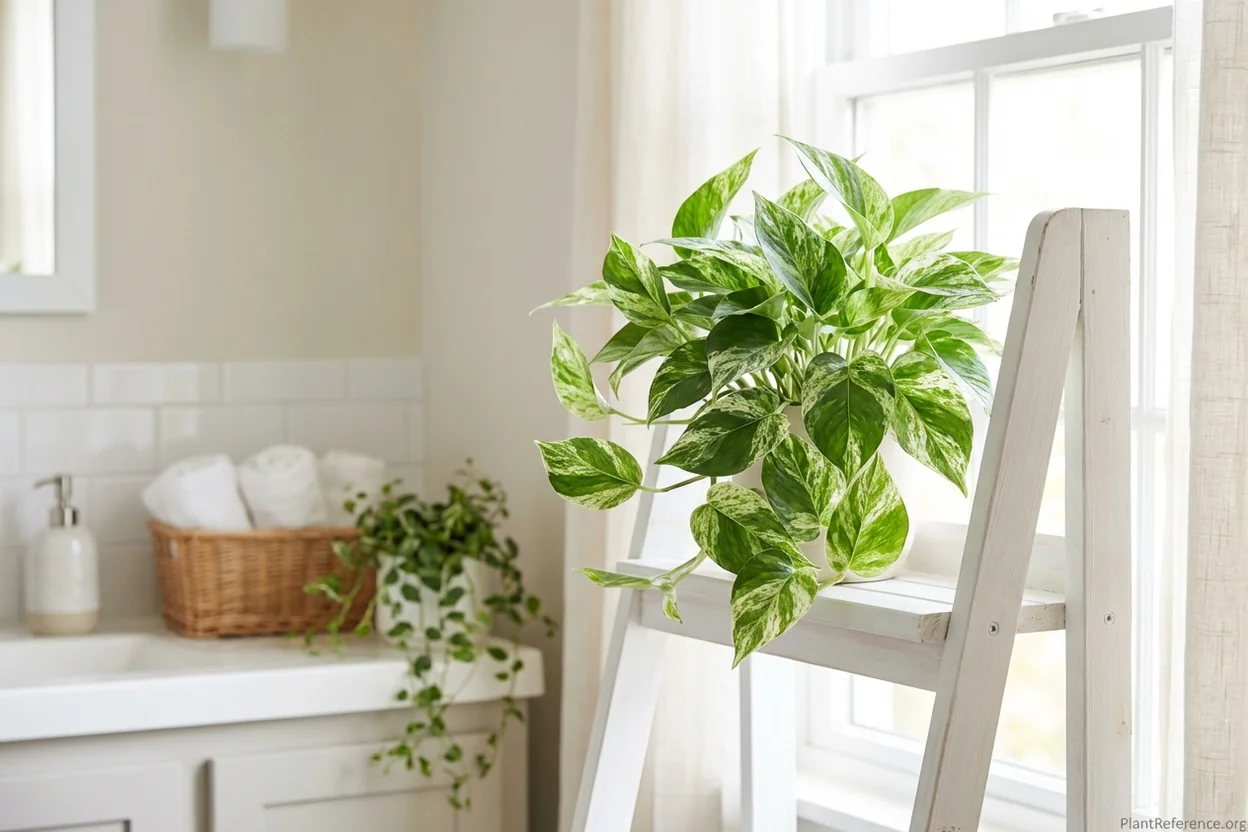
Understanding the relationship between variegation and light requirements is crucial for maintaining those beautiful patterns that make varieties like Marble Queen and Manjula so coveted. The science is straightforward: variegated sections contain less chlorophyll, so these plants need brighter light to photosynthesize effectively.
Variegation and Chlorophyll Science
White, yellow, and cream sections in variegated leaves contain minimal chlorophyll—the green pigment that captures light energy. This means a heavily variegated Marble Queen leaf might only have 40-60% of the light-capturing ability of a solid green Golden Pothos leaf.
Light requirements by variety:
Golden Pothos: 50-200 foot-candles (most tolerant)
Jade Pothos: 50-200 foot-candles (solid green, very adaptable)
Neon Pothos: 100-250 foot-candles (bright chartreuse needs energy)
Marble Queen: 150-300+ foot-candles (heavy variegation demands brightness)
Manjula Pothos: 200-300+ foot-candles (complex variegation pattern)
N'Joy Pothos: 200-350+ foot-candles (sharp white sections need support)
Maintaining Variegation Patterns
Brightness prevents reversion: In insufficient light, variegated pothos gradually produces more solid green leaves to increase chlorophyll production. This genetic reversion helps the plant survive but eliminates the decorative patterns you want.
Pruning strategy: Remove any completely green leaves or vine sections immediately. These "reverted" portions grow faster than variegated sections and will eventually dominate the plant if left unchecked.
Seasonal adjustments: Move variegated varieties closer to windows during winter months when light intensity and duration decrease. I shift my Marble Queen from 4 feet (120 cm) to 2 feet (60 cm) from my east window each October.
The Pothos Losing Variegation: Keep Patterns Bright guide covers advanced techniques, but consistent bright indirect light solves most variegation issues.
→ SANSI LED Grow Light 24W ($25-35) - Full spectrum LED specifically designed for variegated houseplants
Ceramic LED technology provides full spectrum light without purple hues, perfect for maintaining pothos variegation indoors. Fits standard E26 socket for easy installation in existing lamps. 24-watt output equivalent to 150-watt incandescent provides sufficient intensity for variegated varieties up to 3 feet away. No buzzing or flickering, safe for continuous operation. Energy efficient design lasts 25,000+ hours with minimal heat production.
Seasonal Light Adjustments
Your pothos' light environment changes dramatically throughout the year, even if it never moves from its spot. Understanding these seasonal shifts and adjusting accordingly keeps your plants thriving year-round instead of merely surviving the challenging winter months.
Winter Light Challenges
Reduced intensity: Winter sun provides only 20-40% of summer's light intensity, even on clear days. Your bright indirect spot might drop from 250 foot-candles in July to 80 foot-candles in January.
Shorter day length: December provides only 8-10 hours of natural light versus summer's 14-16 hours. This double impact—lower intensity and shorter duration—significantly affects plant growth.
Practical winter adjustments:
Move plants closer to windows: Reduce distance by 50% during October-March
Remove window coverings: Open blinds wider, use lighter curtains, or remove coverings entirely during peak daylight hours
Rotate regularly: Turn plants weekly so all sides receive available light
Consider grow lights: Supplement natural light for variegated varieties or high-light spots
I've found that plants needing 200+ foot-candles during summer often require grow light supplementation to maintain their appearance through winter months, especially in northern climates.
Summer Light Protection
Increased intensity: Summer sun can be 3-4 times more intense than winter, turning previously perfect spots into burn zones. Track sun angles as they change—your east window might receive direct afternoon sun by June.
Heat buildup: Window areas become significantly hotter, causing rapid soil drying and leaf stress even without direct sun exposure.
Summer protection strategies:
Install seasonal window film: Removable films reduce light intensity by 30-50% without completely blocking brightness. I apply these to south-facing windows from May through September.
Use timers for grow lights: If you've added artificial lighting for winter, remember to reduce or eliminate it as natural light increases. Many growers forget this step and accidentally over-light their plants.
Grow Light Solutions for Dark Spaces
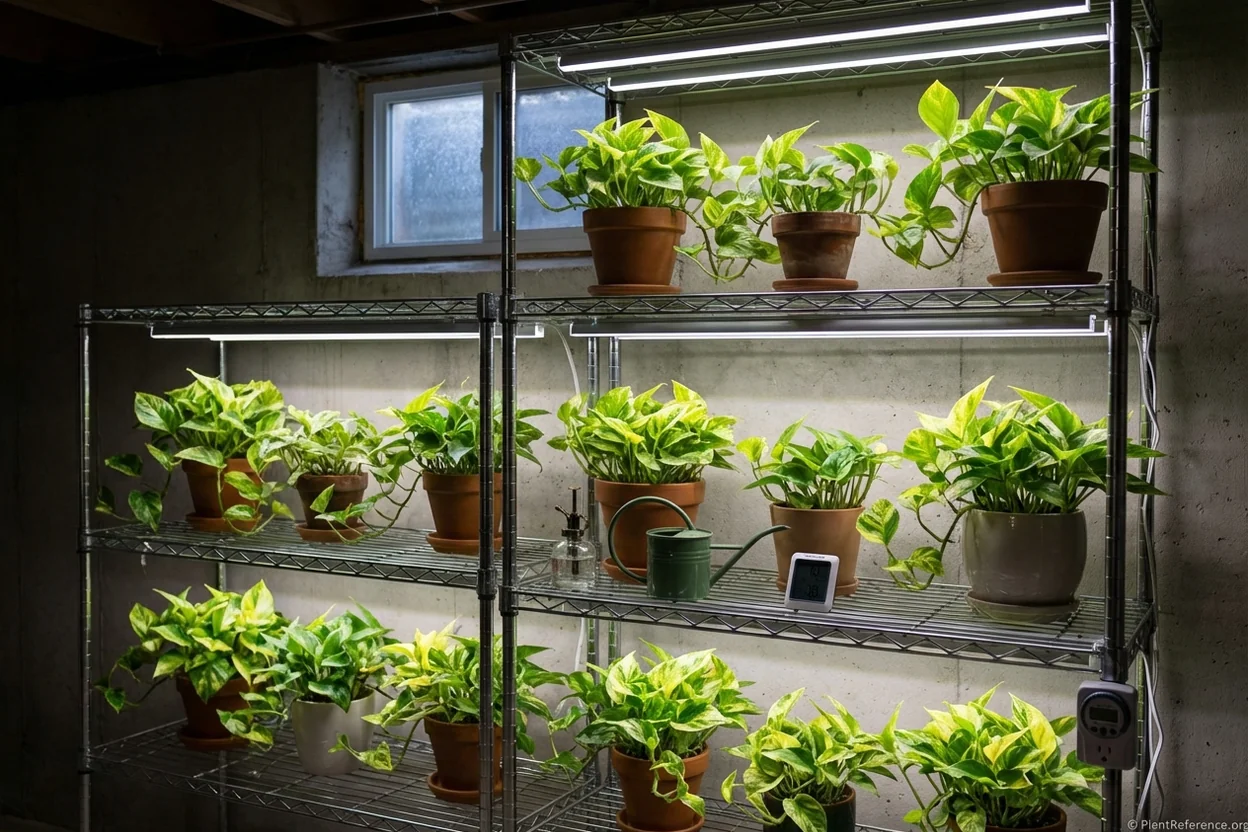
Sometimes natural light just isn't enough—whether you're dealing with a windowless office, a north-facing apartment, or spaces where you want to grow gorgeous variegated pothos. The good news? Modern LED grow lights make supplementing natural light easier and more affordable than ever.
When Grow Lights Make Sense
Insufficient natural light: If your space provides less than 100 foot-candles during peak daylight hours, grow lights will dramatically improve growth and appearance.
Maintaining variegation: Heavily variegated varieties like Marble Queen and N'Joy often need supplemental lighting to prevent reversion, even in moderately bright natural light.
Winter supplementation: Even plants that thrive in summer may benefit from grow light assistance during the darkest months.
Office environments: Fluorescent office lighting keeps pothos alive but doesn't promote vigorous growth. A small desk grow light can make a huge difference.
Choosing the Right Grow Light
Full spectrum LEDs: Modern full-spectrum lights provide the complete light range plants need without the purple glow of older grow lights. These integrate better into living spaces and provide more natural plant appearance.
Wattage recommendations: - Small pothos (6-12 inches): 12-24 watts at 12-18 inches (30-45 cm) distance - Medium pothos (12-24 inches): 24-45 watts at 18-24 inches (45-60 cm) distance - Large/multiple plants: 45+ watts for areas over 2 square feet
Timer necessity: Plants need 12-16 hours of grow light daily to supplement natural light, or 10-14 hours as a complete replacement. Manual switching rarely provides consistent timing.
→ Barrina LED Grow Light Strip 2-Pack ($35-45) - Energy-efficient full spectrum strips perfect for pothos shelves
High-output LED strips provide 2000+ lumens of full spectrum light ideal for pothos shelves and plant collections. Easy installation with included mounting hardware and connecting cables for seamless multi-strip setups. 50,000-hour lifespan with minimal heat generation prevents leaf burn. Linkable design allows coverage of long plant benches or multiple shelf levels. Energy-efficient 40W per strip replaces 200W fluorescent equivalents.
Positioning and Usage Tips
Distance matters: Too close causes leaf burn, too far provides insufficient intensity. Start with manufacturer recommendations and adjust based on plant response over 2-3 weeks.
Overlap with natural light: Position grow lights to supplement rather than compete with natural light. I run mine during early morning and evening hours when natural light is weakest.
Watch for heat: Even LED lights generate some heat. Ensure adequate air circulation and check soil moisture more frequently, as supplemental light often increases water needs.
The key is starting with lower intensity and shorter duration, then gradually increasing as plants adapt. It's much easier to add more light than recover from light burn.
Frequently Asked Questions
Reading about plants and recognising them are different skills. These three build the second.
- Daily PlantIdentify the day’s mystery plant from a close-up photograph.
- Keyed OutWork a dichotomous key, lead by lead, to name a hidden specimen.
- Name That PlantName a specimen from botanical clues dealt hardest first.
Free to play, no account needed
Jessica transformed her small Brooklyn balcony into a thriving container garden after moving to New York City. What started as a pandemic hobby turned into a plant care consulting business serving urban apartment dwellers across the city. She specializes in small-space gardening, indoor plant troubleshooting, and helping clients keep houseplants alive in less-than-ideal conditions (dim light, dry heat, tiny spaces). Jessica completed a home gardening certificate program and shares her plant wins and failures on her modest Instagram following. Her partner, Maya, jokes that their apartment is now 40% plants, 60% living space. Jessica's passionate about making plant care accessible to renters who think they don't have room to garden.