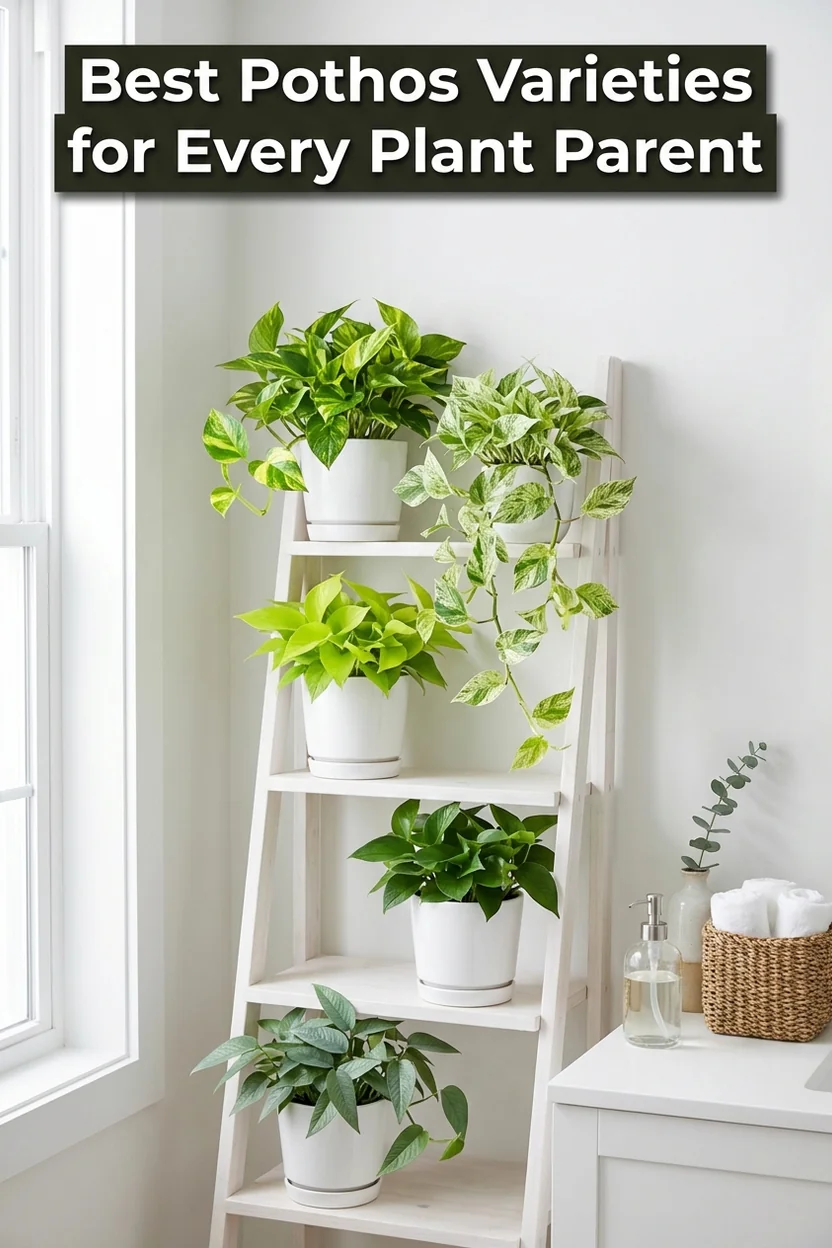
Best Pothos Varieties to Buy: Beginner to Collector Guide
Pets & Toxicity
Recorded toxicity for plants linked in this guide. An unknown status is not a safety assessment.
Toxic to pets: golden pothos, dragon tail plantDetailsHide
Epipremnum aureum — Toxicity Warning
Toxic to pets and humans. All parts contain insoluble calcium oxalate crystals that cause mouth pain, swelling, and drooling if ingested.View Epipremnum aureum plant profileEpipremnum pinnatum — Toxicity Warning
Toxic to pets and humansView Epipremnum pinnatum plant profile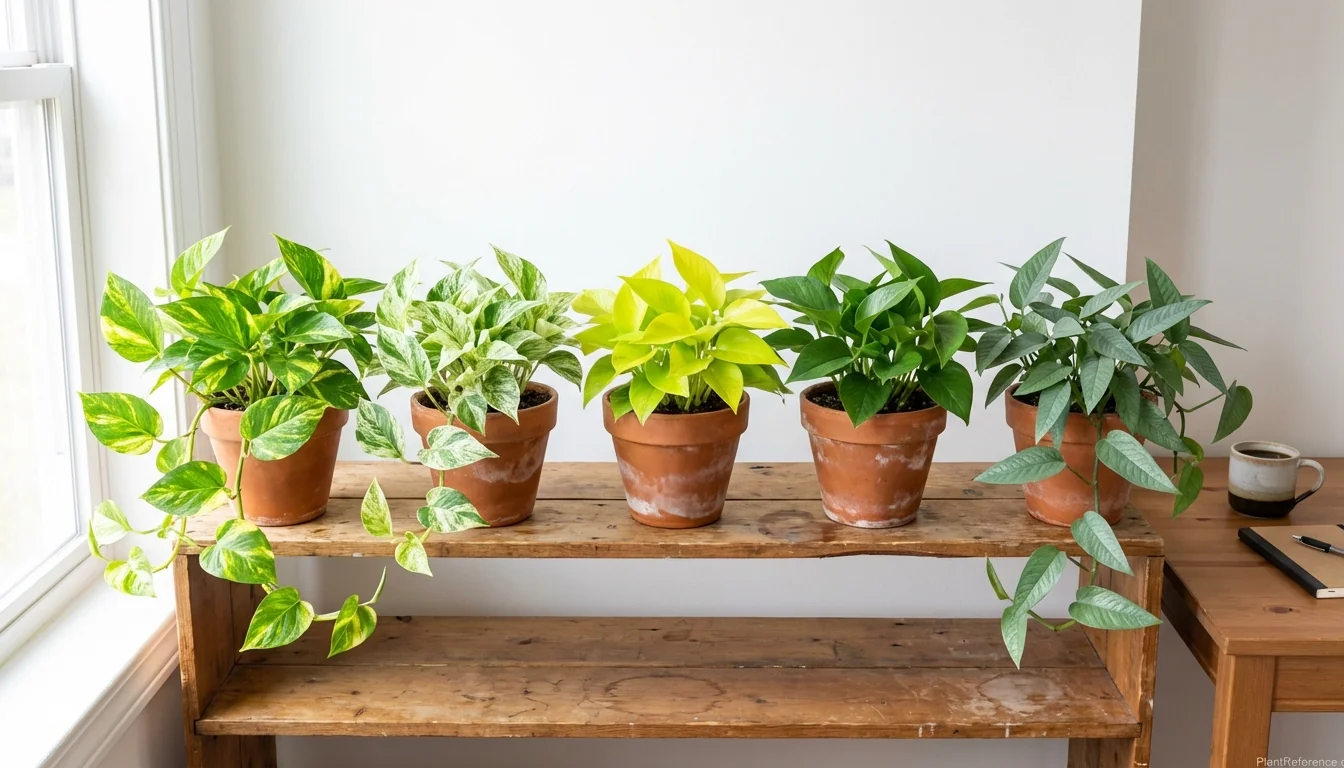
— Image © Plant Reference 2026
Choosing your first pothos can feel overwhelming with so many gorgeous varieties available, but I'm here to help you find the perfect match for your space and experience level. Whether you're looking for a nearly indestructible beginner plant or hunting for that rare collector's variety, the best pothos varieties offer something for every plant parent.
Best Beginner Pothos Varieties
Golden Pothos (Epipremnum aureum 'Golden')
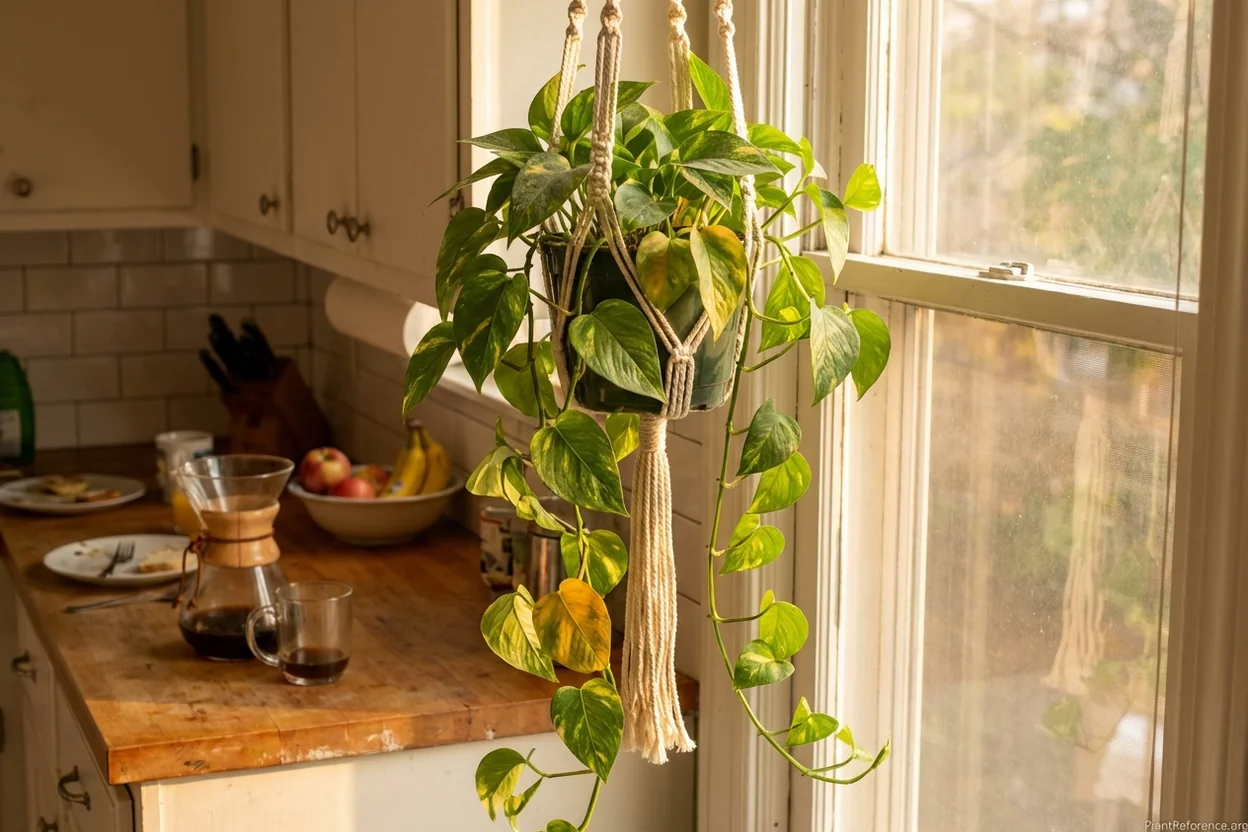
If you've never kept a plant alive before, start here. Golden pothos 🌿Epipremnum aureum (ep-ih-PREM-num AW-ree-um) is practically indestructible and forgives almost every beginner mistake I've made over the years.
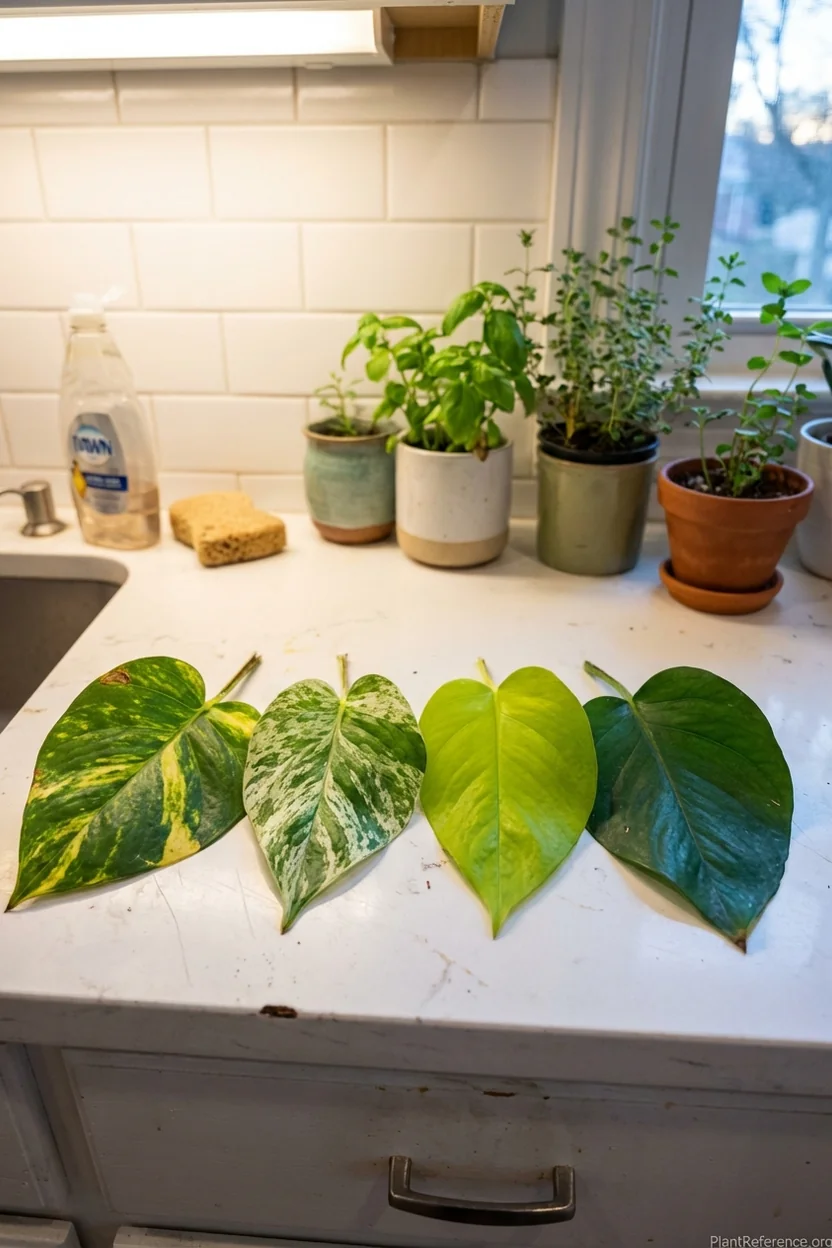
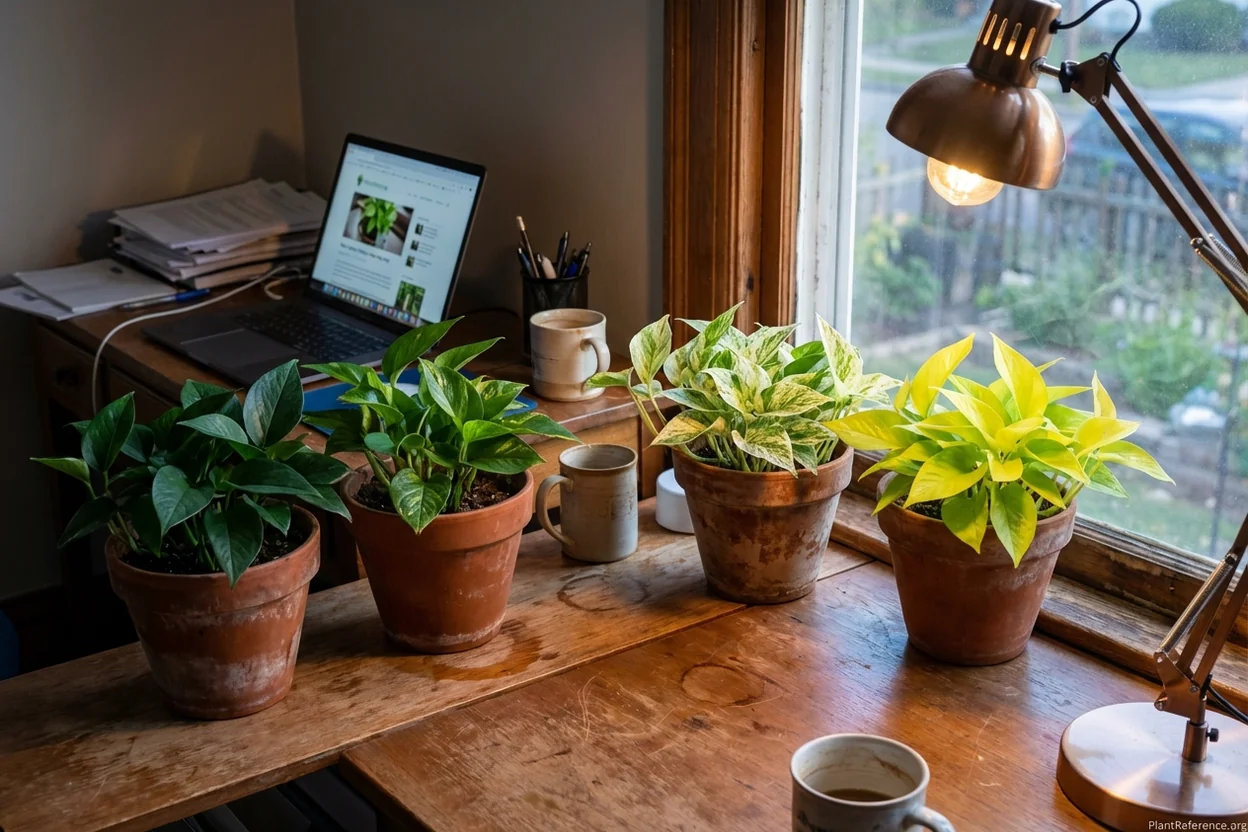
The classic golden variegation creates beautiful yellow and green marbled leaves that brighten any space. What makes this variety so beginner-friendly is its extreme tolerance for neglect—I've forgotten to water mine for three weeks, and it just drooped dramatically to remind me, then bounced back within hours of watering.
Why it's perfect for beginners:
Tolerates low light better than any other variety
Droops dramatically when thirsty (impossible to miss the signal)
Grows quickly to create that lush, trailing look
Available everywhere from grocery stores to big box retailers
Maintains variegation even in darker spaces
The golden variety typically costs $8-15 for a 4-inch pot and $15-25 for a 6-8 inch hanging basket. You'll find it at virtually every plant retailer, making it the most accessible option for new plant parents.
Jade Pothos (Epipremnum aureum 'Jade')
Sometimes called "Green Queen," jade pothos is the solid green version that's even more tolerant of low light conditions. I recommend this variety for darker apartments or offices with minimal natural light.
The deep green leaves create a classic, sophisticated look that complements any decor style. Since there's no variegation to maintain, jade pothos focuses all its energy on growth, often becoming the fastest-growing variety in my collection.
Perfect for:
North-facing windows or rooms without direct window access
Office environments with only fluorescent lighting
Renters who can't add grow lights
Classic, non-variegated plant aesthetic
Those who want maximum growth speed
Jade pothos costs slightly less than variegated varieties, typically $6-12 for a 4-inch pot. The solid green coloring makes it less popular than flashier varieties, but that translates to better availability and lower prices.
Intermediate Pothos Varieties for More Experience
Marble Queen Pothos (Epipremnum aureum 'Marble Queen')
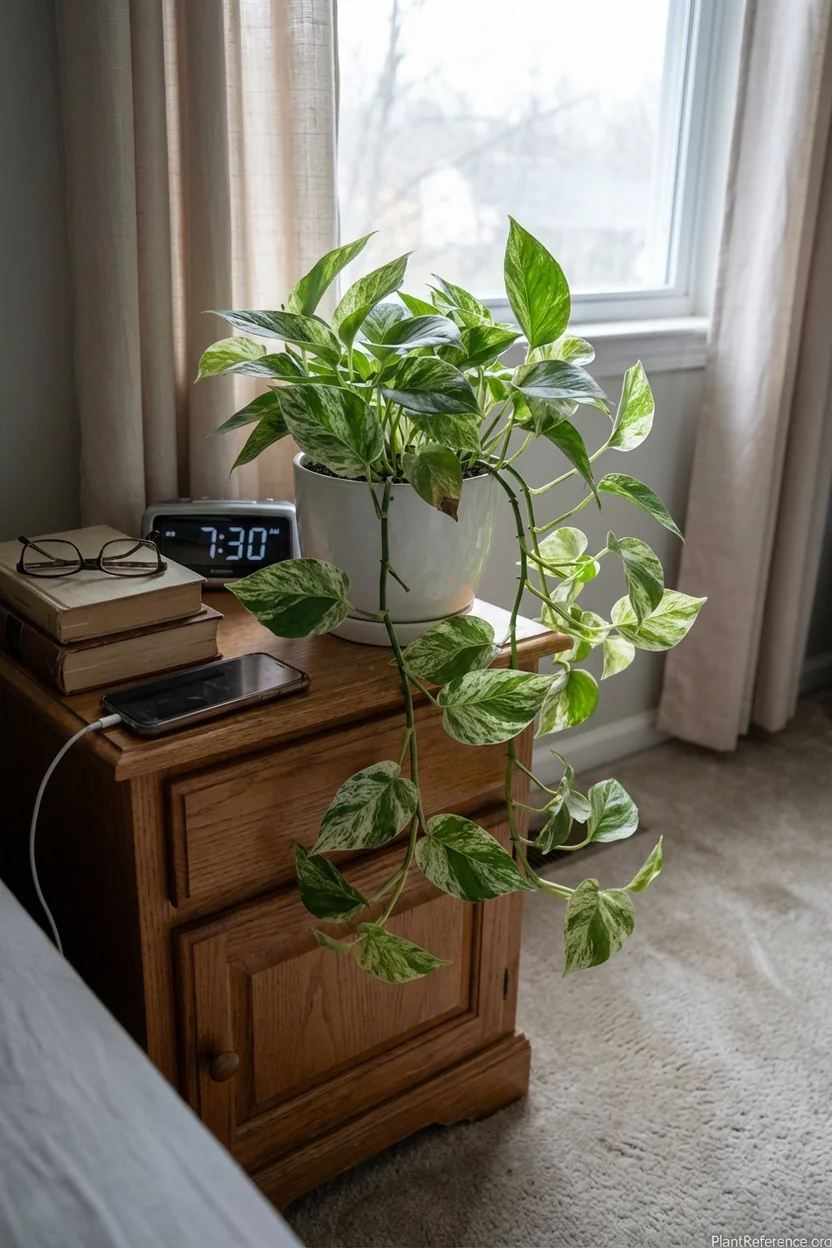
Once you've successfully kept a golden pothos alive for six months, marble queen makes a stunning next step. The dramatic white and green variegation creates an elegant, sophisticated look that elevates any plant collection.
However, marble queen requires more light than golden varieties to maintain its striking white patterns. In my experience, it needs bright indirect light—an east or west-facing window works perfectly. Too little light causes the white areas to revert to green, losing that coveted marble effect.
What makes it intermediate:
Requires consistent bright indirect light for variegation
More sensitive to overwatering due to lower chlorophyll content
Slower growth than solid green varieties
White sections can brown more easily from direct sun
Higher price point reflects increased demand
Expect to pay $15-25 for a 4-inch marble queen, with larger specimens reaching $35-45. The stunning variegation justifies the higher cost, but make sure you can provide adequate lighting first.
Neon Pothos (Epipremnum aureum 'Neon')
Neon pothos brings electric chartreuse color that literally glows in bright light. When I first saw one in person, I couldn't believe how vibrant the yellow-green leaves appeared—photos don't do justice to this variety's intensity.
The solid neon coloring makes it easier to care for than white-variegated types, but it needs more light than golden pothos to maintain that eye-catching brightness. In lower light, neon pothos fades to a more subdued green, losing its signature glow.
Best placement for neon pothos:
South-facing windows with sheer curtains for brightness without burning
East windows with several hours of direct morning sun
Under grow lights positioned 12-18 inches above the plant
Bright bathrooms with frosted windows
Sunrooms or enclosed porches with filtered light
Neon pothos typically costs $12-20 for a 4-inch pot, positioning it between basic green varieties and premium variegated types. The dramatic color impact makes it worth the slight premium for those who can provide adequate lighting.
Pearls and Jade Pothos (Epipremnum aureum 'Pearls and Jade')
This University of Florida hybrid combines white variegation with distinctive green speckles throughout each leaf, creating a unique spotted appearance that stands out from other varieties. The smaller leaf size and compact growth habit make it perfect for tabletop displays.
Pearls and Jade grows more slowly than other varieties due to reduced chlorophyll content, but the intricate leaf patterns make each new leaf worth the wait. It requires similar care to marble queen—bright indirect light and careful watering.
Distinctive features:
Smaller leaves (3-5 inches) with compact growth habit
Green speckles scattered throughout white variegated areas
Slower growth rate means less frequent pruning needed
Patented variety with consistent leaf patterns
Perfect for smaller spaces or tabletop arrangements
As a patented cultivar, Pearls and Jade commands premium pricing: $18-30 for a 4-inch pot, with larger specimens reaching $40-60. The unique appearance and slower growth justify the higher investment.
Advanced and Rare Pothos Varieties
Cebu Blue Pothos (Epipremnum pinnatum 'Cebu Blue')
Technically a different species 🌿Epipremnum pinnatum (ep-ih-PREM-num pin-NAY-tum), Cebu Blue offers silvery-blue elongated leaves that create an entirely different aesthetic from typical pothos varieties. This variety represents the bridge between beginner pothos and advanced collector plants.
What makes Cebu Blue special is its potential to develop fenestrations (natural holes) in mature leaves when allowed to climb a support structure. I've seen stunning specimens with deeply lobed, almost monstera-like leaves on climbing vines.
Collector appeal factors:
Silvery-blue coloring unique among common houseplants
Develops fenestrations when mature and climbing
Different species adds botanical diversity to collections
Still maintains easy pothos care requirements
Increasingly available but maintains collector status
Cebu Blue costs $20-40 for small plants, with mature climbing specimens reaching $60-100. The price reflects its collector appeal and the time needed to develop those coveted fenestrated leaves.
Baltic Blue Pothos (Epipremnum pinnatum 'Baltic Blue')
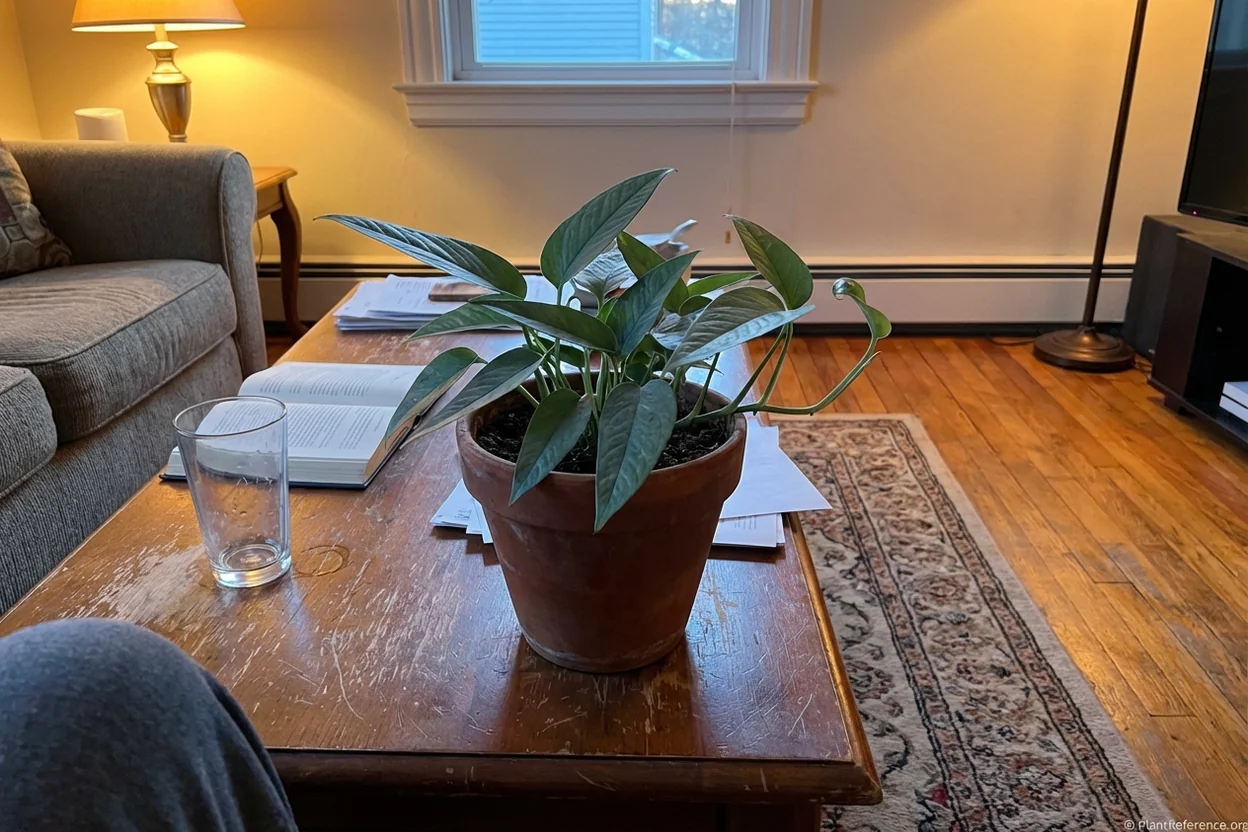
Another 🌿Epipremnum pinnatum variety, Baltic Blue features dark green leaves with distinctive fenestrations even as a juvenile plant. The natural holes and deep lobes create an architectural appearance that bridges the gap between pothos and monstera aesthetics.
Baltic Blue represents the newest trend in pothos collecting—varieties that offer mature characteristics in younger plants. Instead of waiting years for fenestrations to develop, Baltic Blue provides that sophisticated look from the start.
Advanced characteristics:
Natural fenestrations appear on juvenile plants
Dark green coloring with architectural leaf shapes
Climbing habit produces increasingly dramatic leaves
Limited availability maintains collector pricing
Requires moss pole or climbing support for best development
Currently priced $30-60 for small plants, Baltic Blue represents a significant investment. However, the immediate architectural impact and collector status appeal to serious plant enthusiasts willing to pay premium prices.
Manjula Pothos (Epipremnum aureum 'Manjula')
University of Florida's newest patented pothos variety features cream, white, and green variegation with wavy leaf edges that create a ruffled appearance. Each leaf displays unique variegation patterns, making every plant slightly different.
Manjula combines the care ease of standard pothos with the visual complexity of expensive aroids. The wavy leaf edges and varied patterns satisfy collectors seeking something unique while maintaining beginner-friendly growth habits.
Manjula advantages:
Patented variety ensures authentic plant genetics
Wavy leaf edges create distinctive texture
Varied variegation patterns make each leaf unique
Still maintains typical pothos ease of care
Limited commercial availability increases desirability
Manjula pricing reflects its patented status: $25-45 for 4-6 inch plants. The unique leaf shape and reliable variegation justify the premium for collectors seeking the newest releases.
Pothos Variety Care Differences
While all pothos share similar basic requirements, understanding subtle care differences helps optimize growth and appearance for each variety. Here's what I've learned from growing multiple varieties simultaneously:
Light requirements by variety:
Jade/Green: Tolerates lowest light, grows fastest in dim conditions
Golden: Good low-light tolerance, maintains variegation in moderate light
Neon: Needs bright indirect light to maintain electric color
Marble Queen: Requires bright indirect light to prevent reversion
Pearls and Jade: Similar to Marble Queen, avoid direct sun on white areas
Cebu Blue: Bright indirect to moderate direct morning sun
Baltic Blue/Manjula: Bright indirect light, can handle some direct sun
Watering considerations:
Heavily variegated varieties (Marble Queen, Pearls and Jade, Manjula) contain less chlorophyll and photosynthesize less efficiently. This means they process water more slowly and risk overwatering more easily. I water my variegated pothos when the top 50% of soil feels dry, compared to 25-30% for solid green varieties.
Growth rate expectations:
Fastest: Jade, Golden (12-18 inches new growth annually)
Moderate: Neon, Cebu Blue (8-12 inches annually)
Slower: Marble Queen, Pearls and Jade, Manjula (6-10 inches annually)
Variable: Baltic Blue (depends on climbing support availability)
Where to Buy Pothos Varieties Online
Finding quality pothos varieties online requires knowing which retailers specialize in healthy plant shipping and offer the best selection for your experience level.
Best Overall Selection
Costa Farms offers the widest variety selection with consistent quality. Their Golden, Marble Queen, and Neon varieties arrive well-packaged with detailed care instructions. Prices run $15-25 for 6-inch hanging baskets, with frequent sales bringing costs down to $12-18.
The Sill provides premium packaging and plant quality, particularly for their Marble Queen and Pearls and Jade selections. Expect to pay $30-45 for similar sizes, but plants arrive in excellent condition with beautiful ceramic pot upgrades available.
Best for Rare Varieties
Steve's Leaves specializes in hard-to-find varieties like Cebu Blue and Baltic Blue. Their collector-focused approach means higher prices ($25-60 for small plants) but access to varieties unavailable elsewhere. Shipping quality remains excellent for delicate rare plants.
Gabriella Plants offers the newest releases including Manjula and other patented varieties. Pricing reflects collector market rates ($35-55), but authenticity and quality meet serious collector standards.
Budget-Friendly Options
Home Depot and Lowe's online selections focus on common varieties (Golden, Jade, occasional Marble Queen) at the lowest prices: $8-15 for 4-6 inch plants. Quality varies more than specialty retailers, but return policies provide protection.
Amazon plant sellers offer mixed experiences—stick to sellers with hundreds of positive plant reviews and recent photos. Prices compete with big box stores, but shipping stress can affect plant quality.
Variety Selection by Space and Light
Choosing the right pothos variety for your specific environment ensures success and satisfaction with your plant investment. Here's how I match varieties to different living situations:
Low Light Spaces (North windows, interior rooms)
Best choices: Jade Pothos, Golden Pothos Why: Solid green jade focuses all energy on growth rather than maintaining variegation. Golden pothos maintains some variegation even in dimmer conditions while staying healthy. Avoid: Neon, Marble Queen (will lose their distinctive coloring)
Bright Indirect Light (East/West windows)
Best choices: Marble Queen, Neon, Pearls and Jade, Cebu Blue Why: These varieties need bright conditions to showcase their special characteristics—white variegation, electric coloring, or silvery tones. Perfect for: Most living rooms, bedrooms with good window exposure, bright kitchens
Small Spaces (Studio apartments, dorm rooms)
Best choices: Pearls and Jade, Manjula Why: Compact growth habits and smaller leaves create full plants without overwhelming tight spaces. Slower growth means less frequent pruning. Styling tip: Use wall-mounted planters or small tabletop displays to maximize floor space
Large Spaces (Open floor plans, high ceilings)
Best choices: Golden Pothos, Jade Pothos, Cebu Blue with moss pole Why: Fast-growing varieties quickly fill space with lush trailing vines. Climbing varieties add vertical interest to tall rooms. Display ideas: Large hanging baskets, multiple trailing plants at different heights, floor-standing moss pole installations
Budget Considerations
Under $15: Jade Pothos, basic Golden Pothos from big box stores $15-30: Premium Golden Pothos, Neon Pothos, small Marble Queen $30-50: Large Marble Queen, Pearls and Jade, small rare varieties $50+: Mature rare varieties, Baltic Blue, large climbing specimens
Money-saving tips:
Buy small plants and grow them out—pothos grows quickly
Propagate cuttings from friends' plants to try new varieties free
Watch for seasonal sales at major retailers (spring and fall clearances)
Join local plant swaps to trade cuttings with other collectors
Start with one variety and expand gradually as your confidence grows
The best pothos varieties depend on your experience level, available light, and aesthetic preferences. Golden pothos remains the perfect beginner choice, while collectors can explore stunning options like Cebu Blue and Baltic Blue. Remember that all pothos varieties share the same forgiving care requirements—the main differences lie in their light needs and growth characteristics.
Start with a variety that matches your current situation, then expand your collection as you gain confidence. With proper variety selection, you'll enjoy years of lush, trailing beauty from these remarkable plants.
Frequently Asked Questions
Reading about plants and recognising them are different skills. These three build the second.
- Daily PlantIdentify the day’s mystery plant from a close-up photograph.
- Keyed OutWork a dichotomous key, lead by lead, to name a hidden specimen.
- Name That PlantName a specimen from botanical clues dealt hardest first.
Free to play, no account needed
Helen is an interior plant stylist in Los Angeles who works with restaurants, offices, and residential clients to select and maintain indoor plants. She studied design in college and got into plants when a client asked her to "green up" a mid-century modern home. Helen's expertise sits at the intersection of design and plant care—she thinks about light, scale, texture, and color, but she also knows which plants will actually survive in a given space. She's killed enough fiddle leaf figs in dark corners to know better. Helen maintains her own collection of over 80 houseplants in her apartment and writes about indoor plant selection, styling, and the practical side of keeping plants alive in interior environments.