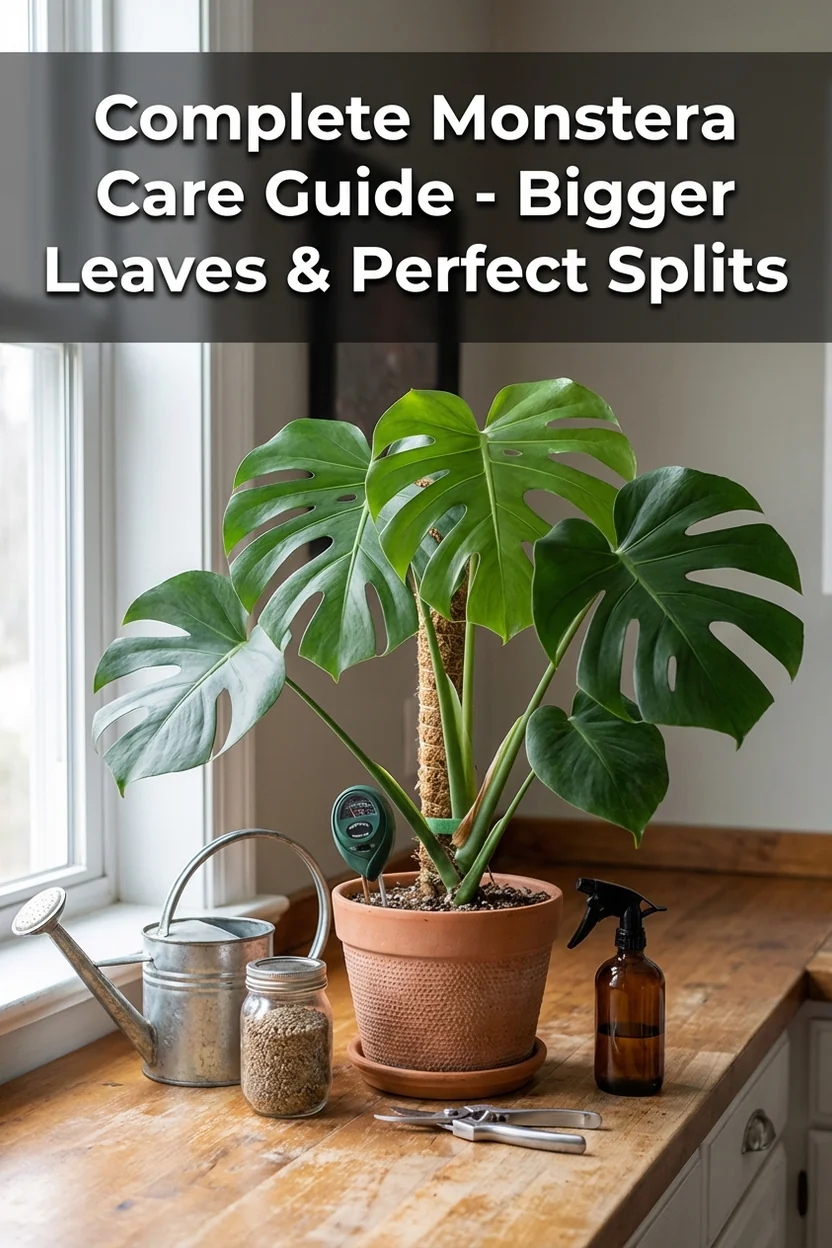
Monstera Deliciosa Care: The Complete Guide (2026)
Pets & Toxicity
Recorded toxicity for plants linked in this guide. An unknown status is not a safety assessment.
Monstera deliciosa — Toxicity Warning
Toxic to pets and humans. All vegetative parts contain calcium oxalate crystals that cause mouth pain, swelling, and drooling if ingested. Unripe fruit also contains calcium oxalate and is toxic; only fully ripened fruit (after 12+ months) is edible.View Monstera deliciosa plant profile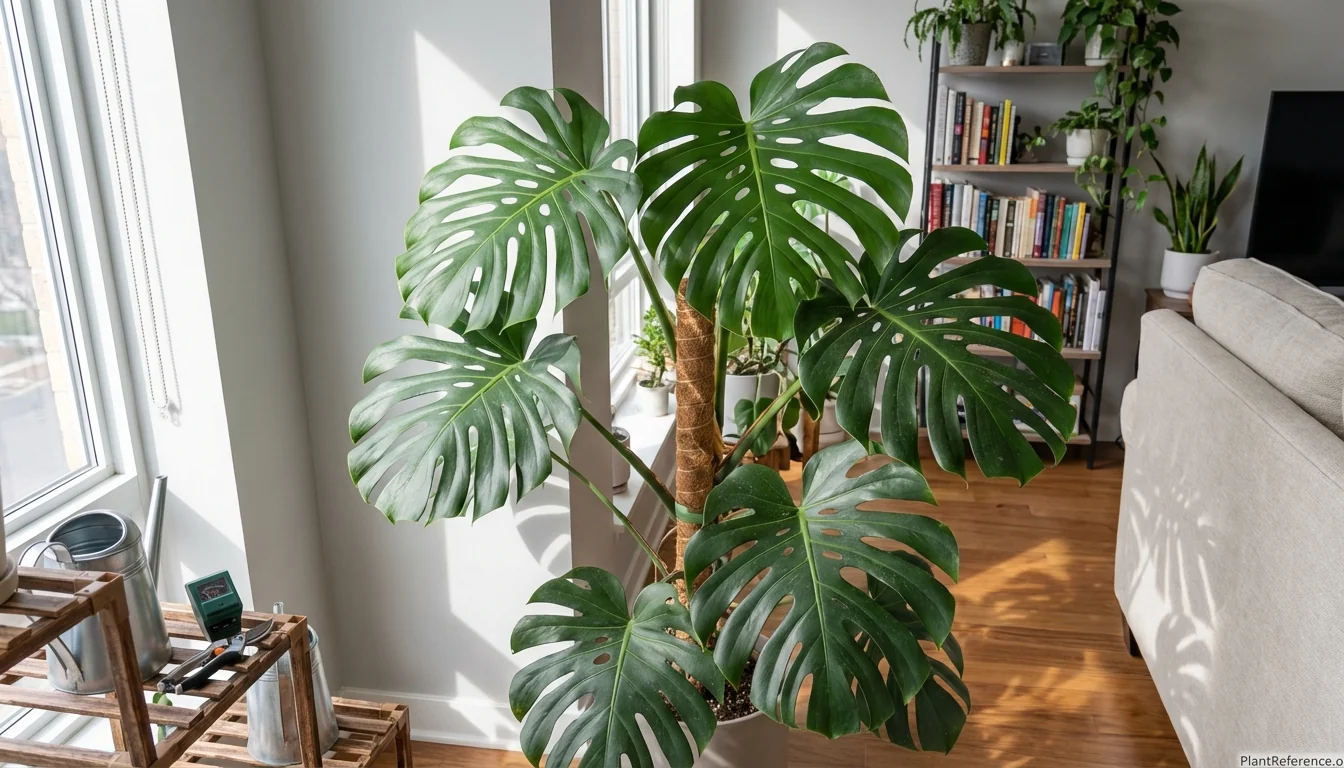
— Image © Plant Reference 2026
Your monstera deliciosa is probably sitting in your living room right now, looking beautiful but maybe not quite achieving those Instagram-worthy split leaves you hoped for. Don't worry—with the right monstera care approach, you can absolutely get those iconic fenestrations and lush, healthy growth that makes this plant such a showstopper.
Understanding Your Monstera Deliciosa
The monstera deliciosa 🌿Monstera deliciosa (mon-STER-ah de-lis-ee-OH-sah) isn't just another houseplant—it's a climbing tropical that can transform your space when you understand its needs. Native to tropical forests of southern Mexico and Guatemala, this member of the Araceae family naturally climbs trees using aerial roots, reaching heights of 30-70 feet (9-21 m) outdoors.
Indoors, your monstera typically reaches 6-8 feet (2-2.5 m) with proper care, producing 1-2 new leaves monthly during the growing season. The famous holes and splits (called fenestrations) develop as the plant matures—usually around 2-3 years old—when it receives adequate light and support.
Key growth characteristics:
Growth rate: 1-2 feet (30-60 cm) per year
New leaf frequency: 1-2 leaves monthly in optimal conditions
Maturity for fenestrations: 2-3 years with proper light
Lifespan: 40+ years with consistent care
Natural habit: Climbing hemiepiphyte requiring support
Understanding that your monstera is a climber, not a bushy plant, completely changes how you'll approach its care. It wants to grow up, not out, which means providing vertical support becomes essential for healthy development.
Light Requirements for Healthy Growth
Bright indirect light is absolutely crucial for monstera care—this single factor determines whether you'll get those coveted split leaves or remain stuck with solid, heart-shaped foliage. I learned this the hard way when my first monstera sat in a dim corner for two years without a single fenestration.
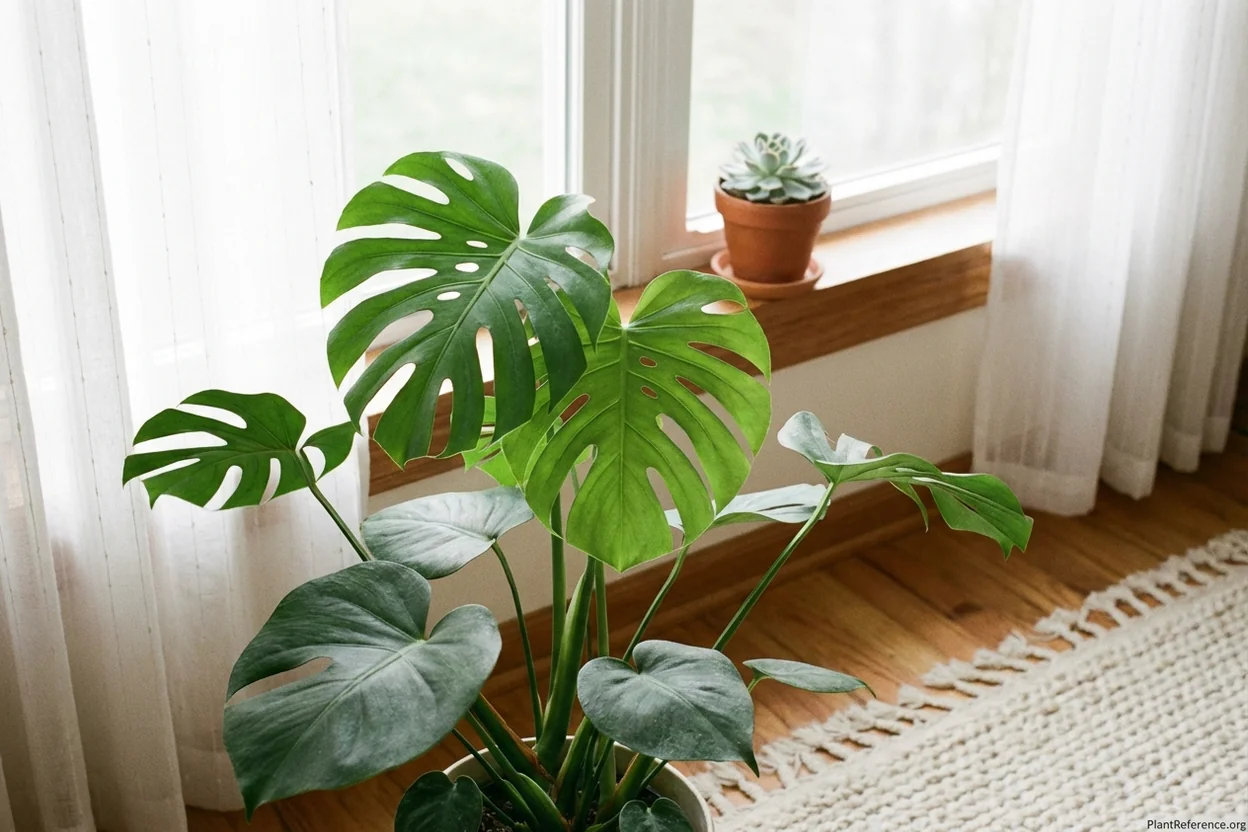
Your monstera needs 200-500 foot-candles (2,000-5,000 lux) of bright, indirect light. East-facing windows work beautifully, providing gentle morning sun without the harsh afternoon rays that can scorch leaves. North-facing windows work too, though growth will be slower. South and west windows require sheer curtains to filter the intense light.
Signs your monstera needs more light:
New leaves smaller than older ones
No fenestrations despite plant maturity (2+ years)
Long spaces between new leaves (etiolation)
Solid green leaves instead of splits
Slow overall growth
Signs of too much light:
Brown, crispy edges on leaves
Yellow patches with brown centers
Faded or washed-out leaf color
Leaves curling inward for protection
If your apartment doesn't have ideal natural light, a grow light can be a game-changer. Position it 12-18 inches (30-45 cm) above your plant, running 10-12 hours daily to supplement natural light.
For more specific guidance on positioning and grow light options, check out our detailed Monstera Light Requirements: Finding the Perfect Spot guide.
Watering Your Monstera Correctly
Watering is where most monstera care goes wrong—and I'll be honest, I've killed more plants with kindness (overwatering) than neglect. Your monstera prefers to dry out slightly between waterings rather than sitting in constantly moist soil.
The golden rule: water when the top 1-2 inches (2.5-5 cm) of soil feels dry to your finger. In most homes, this translates to weekly watering during spring and summer, dropping to every 10-14 days in fall and winter when growth slows.
Proper watering technique:
Check soil moisture with your finger 2 inches deep
Water thoroughly until it drains from the bottom holes
Empty saucer after 30 minutes to prevent root rot
Use lukewarm, filtered water if your tap water is heavily chlorinated
Water in the morning so excess moisture evaporates during the day
Seasonal adjustments:
During winter, your monstera enters a semi-dormant state where it needs significantly less water. I reduce watering to every 2-3 weeks, always checking soil moisture first. Overwatering during winter dormancy is the quickest way to develop root rot.
A moisture meter takes the guesswork out of watering, especially when you're learning your plant's rhythm. The affordable XLUX model gives consistent readings and prevents the most common watering mistakes.
→ XLUX Soil Moisture Meter ($10-15) - Eliminates watering guesswork with accurate soil readings
Simple analog meter with 10-point color-coded scale requiring no batteries for instant readings. Insert probe 6+ inches deep for accurate root zone moisture assessment. Durable construction withstands repeated use across multiple plants. Ideal for beginners learning proper watering rhythm and experienced growers maintaining consistent moisture levels. Prevents both overwatering and underwatering with clear visual feedback.
Signs of overwatering include yellowing lower leaves, musty soil smell, and soft, brown roots. Underwatering shows as drooping leaves, crispy edges, and soil pulling away from pot edges.
For complete watering guidance including seasonal schedules and troubleshooting, see our How to Water a Monstera: Complete Watering Guide.
Soil and Potting Essentials
Your monstera needs soil that drains quickly while retaining some moisture—think forest floor, not swamp. Standard potting soil is usually too dense and holds water too long, leading to root rot. I learned this after losing my second monstera to soggy roots.
Ideal soil characteristics:
Well-draining but moisture-retentive
Slightly acidic to neutral pH (5.5-7.0)
Chunky texture allowing air circulation
Rich in organic matter for nutrition
Fast-draining to prevent waterlogged roots
You can buy pre-made aroid mixes or create your own blend using 3 parts quality potting soil, 1 part perlite, and 1 part orchid bark. This creates the chunky, well-draining texture monstera roots love.
DIY soil mix recipe:
3 parts high-quality potting soil
1 part perlite (for drainage)
1 part orchid bark (for chunkiness and aeration)
Optional: handful of worm castings (for slow-release nutrients)
Pot selection matters enormously. Always choose pots with drainage holes—decorative pots without drainage are death traps for monsteras. I use plastic nursery pots inside decorative cache pots for both function and style.
→ Premium Monstera Potting Soil (Aroid Mix) ($15-25) - Pre-mixed chunky blend optimized for tropical climbing plants
Professionally blended mix containing aged bark, coco coir, perlite, biochar, and worm castings for optimal monstera growth. Fast-draining yet moisture-retentive formula prevents root rot while maintaining consistent hydration. Perfect aroid pH balance supports healthy root development and nutrient uptake. Chunky texture allows air circulation essential for tropical climbing plants. Eliminates guesswork of mixing your own blend.
Climbing Support and Moss Poles
Here's what changed everything for my monstera care: adding a moss pole. Monsteras are natural climbers, and providing support triggers larger leaves, better fenestrations, and more vigorous growth. Without support, they remain juvenile with smaller, less interesting foliage.
Install your moss pole when your monstera reaches 12-18 inches (30-45 cm) tall, before the stems become thick and difficult to train. Push the pole deep into the soil, ensuring stability as the plant grows heavier.
Why climbing support matters:
Triggers hormonal changes that increase leaf size
Encourages fenestration development
Prevents sprawling, messy growth habit
Allows aerial roots to attach naturally
Mimics natural forest environment
I prefer coco coir poles over sphagnum moss because they're more durable and don't decompose as quickly. The DUSPRO 59" forest moss pole has been rock-solid for my large monstera, providing excellent stability and root attachment surface.
Training your monstera to climb:
Gently tie main stems to pole with soft plant ties
Position aerial roots against the pole surface
Mist the pole occasionally to encourage root attachment
Add pole extensions as the plant grows taller
Be patient—climbing behavior develops gradually
→ DUSPRO 59" Non-Bendable Forest Moss Pole ($35-45) - Premium support pole for mature climbing monsteras
Premium 2.4-inch diameter forest moss pole designed for large mature monsteras and heavy climbing plants. Sturdy non-bendable structure supports substantial weight while forest moss retains moisture for aerial root attachment. Fits 14-20 inch diameter pots perfectly. Easy installation with pointed bottom stake. Natural surface encourages healthy aerial root development and attachment. Built to last with superior stability compared to thin poles.
For detailed guidance on selecting and installing support systems, read our comprehensive Best Moss Pole for Monstera: Support Systems Compared guide.
Humidity and Temperature Needs
Monstera care becomes much easier when you maintain proper humidity levels. These tropical plants thrive in 60-70% humidity, though they'll tolerate 40-50% with some adjustments to other care factors.
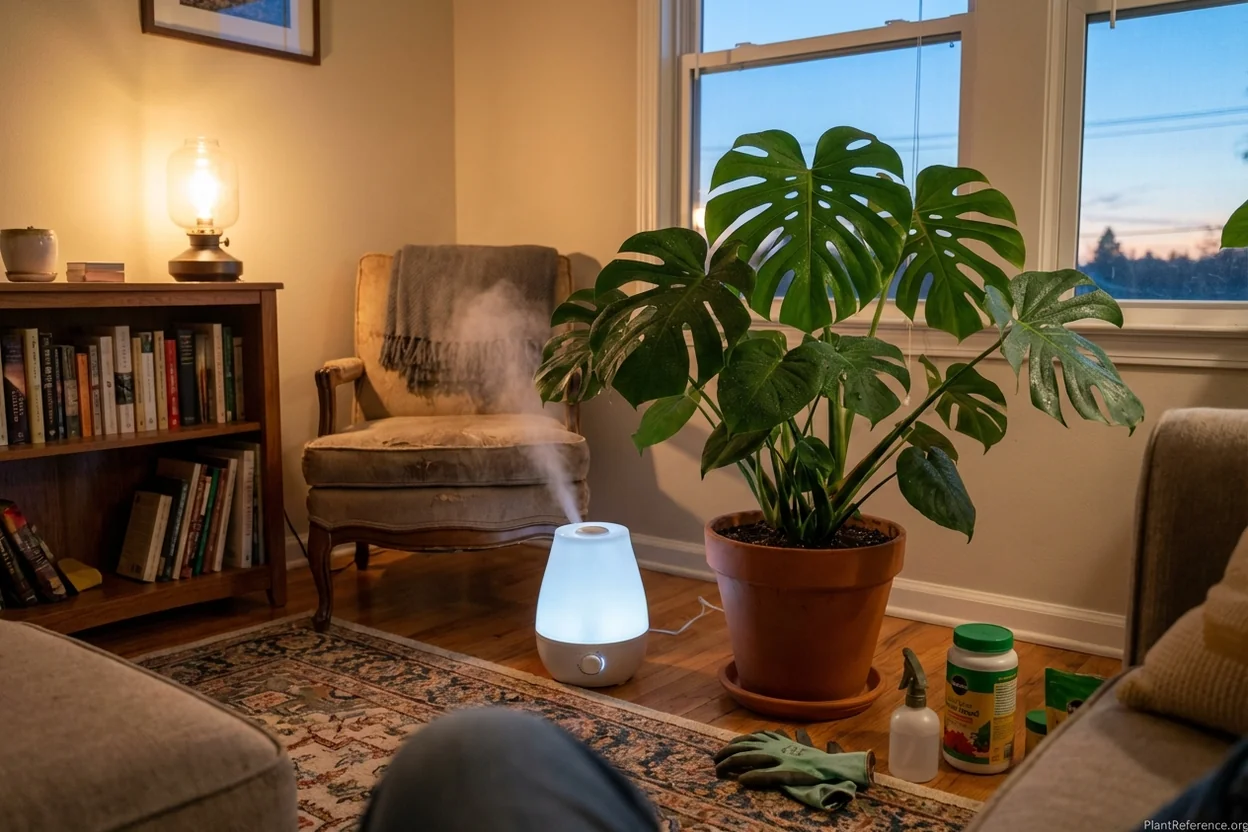
Most homes hover around 30-40% humidity, especially during winter heating season. Low humidity causes brown leaf edges, smaller leaves, and stunted growth. I noticed a dramatic improvement in my monstera's health after adding a humidifier to my plant corner.
Effective humidity solutions:
Humidifier: Most effective for 50%+ humidity consistently
Pebble trays: Provides localized humidity boost around plant
Grouping plants: Creates microclimate with higher moisture
Regular misting: Temporary boost but requires daily attention
Bathroom placement: Natural humidity from showers
Temperature-wise, maintain 65-85°F (18-29°C) year-round. Monsteras stop growing below 60°F (15°C) and suffer damage below 50°F (10°C). Avoid placing near heating vents, air conditioners, or drafty windows where temperature fluctuates dramatically.
→ LEVOIT Classic 300S Smart Humidifier ($50-70) - App-controlled humidity management for plant health
Smart humidifier with app control and Alexa/Google compatibility for precise humidity management. Auto mode maintains set humidity levels automatically. Large 6-liter tank provides 50+ hours runtime covering up to 505 square feet. Quiet operation under 30dB suitable for living spaces. Easy-fill design with transparent tank for monitoring. Top-rated by Good Housekeeping for plant enthusiasts seeking consistent humidity control.
Product link unavailable
Fertilizing for Bigger Leaves
Proper fertilization makes a noticeable difference in monstera leaf size and fenestration development. During the growing season (March through September), I fertilize monthly with a balanced liquid fertilizer diluted to half strength.
Your monstera needs complete nutrition, not just NPK—a balanced 20-20-20 or 10-10-10 works, and so does a nitrogen-forward foliage formula in roughly a 3-1-2 ratio such as 9-3-6, which is closer to what a leafy tropical actually takes up. Fenestration comes from maturity and bright light, not from holding nitrogen back, so feed steadily and give the plant something to climb. I prefer liquid fertilizers because they're easier to control and distribute evenly.
Fertilizing schedule:
Growing season (March-September): Monthly feeding
Winter months (October-February): No fertilizer or quarterly at most
Always water thoroughly before fertilizing
Use liquid fertilizer diluted to 50% recommended strength
Apply to soil, never on leaves to avoid burning
Signs your monstera needs more nutrients:
New leaves significantly smaller than previous ones
Pale green or yellowing foliage
Slow growth despite good light and water
Weak, floppy stems that can't support leaf weight
Over-fertilizing causes more problems than under-fertilizing. Excess nutrients create salt buildup in soil, burning roots and causing brown leaf edges. If you see white crusty deposits on soil surface or pot rim, flush with clear water to remove salt accumulation.
→ Dyna-Gro Grow 9-3-6 ($13-18) - Professional liquid fertilizer for exceptional foliage growth
Professional-grade synthetic liquid fertilizer with complete macro and micronutrients for dramatic monstera growth. 3-1-2 NPK ratio ideal for foliage development and fenestration. Contains all essential elements including calcium, magnesium, and sulfur often missing in standard fertilizers. Can be used as soil drench or foliar spray. Concentrated formula provides excellent value with minimal salt buildup compared to cheaper alternatives.
Product link unavailable
Pruning and Maintenance
Regular monstera maintenance keeps your plant healthy and looking its best. I spend about 10 minutes weekly checking for issues and tidying up my plant—it's become a relaxing routine that helps me stay connected with my green friends.
Weekly maintenance tasks:
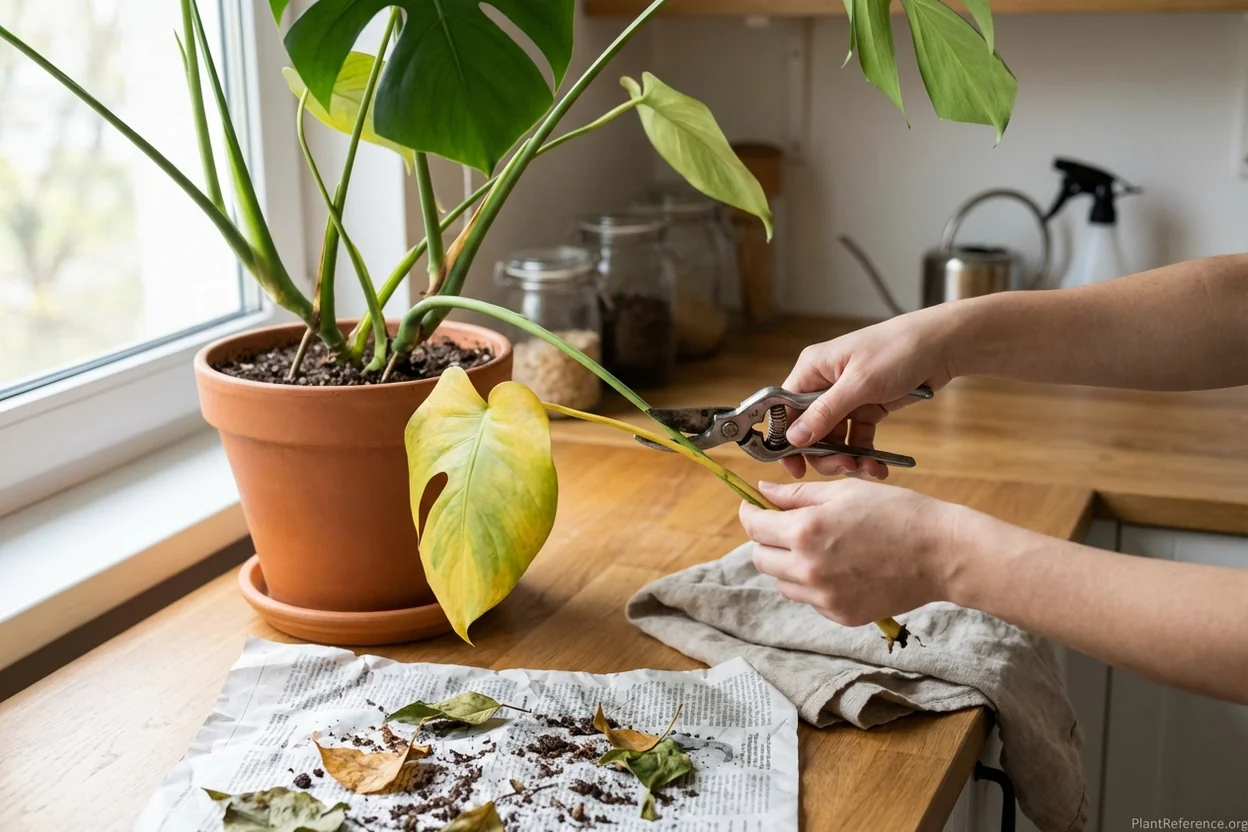
Remove any yellow or damaged leaves with clean pruning shears
Wipe dust from leaves with damp cloth for better photosynthesis
Check soil moisture and water if needed
Inspect for pests, especially under leaves
Rotate plant 1/4 turn for even growth
Monthly maintenance tasks:
Deep cleaning leaves with gentle soap solution
Fertilize during growing season
Check moss pole stability and add extensions if needed
Trim any unruly aerial roots if desired
Inspect pot drainage and empty saucers
When pruning, always use clean, sharp tools to prevent disease transmission. Cut just above a node (the raised bump on the stem) to encourage new growth from that point. Don't be afraid to prune—monsteras respond well to trimming and often produce fuller growth afterward.
Yellow leaves are normal as plants age, but remove them promptly to redirect energy to healthy growth. Cut the entire leaf stem at the base rather than just removing the yellow portion.
Propagation Basics
Monstera propagation is incredibly rewarding and surprisingly easy once you understand the basics. Each monstera cutting needs at least one node—that's the raised bump on the stem where roots develop. Aerial roots aren't necessary but definitely help with faster rooting.
Simple water propagation method:
Cut 4-6 inch stem section with at least one node
Place cutting in jar of filtered water, keeping leaves above water
Change water every 3-4 days to prevent bacteria
Expect root development in 2-4 weeks
Transplant to soil when roots reach 2-3 inches long
I prefer water propagation because you can watch the roots develop, which is endlessly fascinating. Place your propagation jar in bright, indirect light—the same conditions your mature monstera enjoys.
Some people propagate directly in soil, which eliminates transplant shock but requires more attention to prevent the cutting from drying out or rotting. If you choose soil propagation, use the same chunky, well-draining mix as your mature plants.
For complete propagation instructions including advanced techniques like air layering, check out Monstera Propagation: 3 Methods That Actually Work.
Common Problems and Solutions
Even with perfect monstera care, you'll occasionally encounter issues. Here are the most common problems I've dealt with and how to address them quickly:
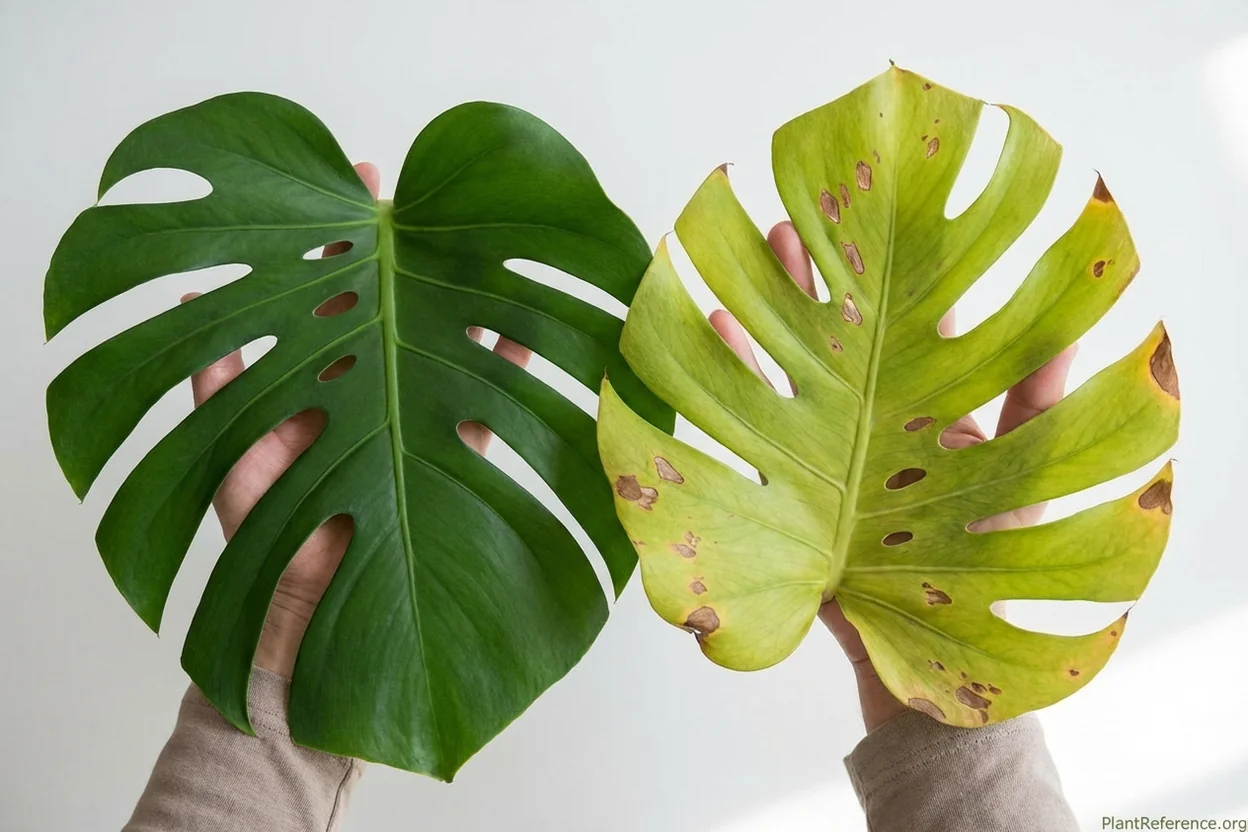
Yellow leaves: Usually overwatering, but can indicate underwatering, natural aging, or nutrient deficiency. Check soil moisture first, then assess watering frequency. If watering seems correct, consider fertilization needs.
Brown spots: Multiple causes including fungal infections, sunburn, or low humidity. Move away from direct sun, increase humidity, and ensure good air circulation. Remove affected leaves if spots are spreading.
No fenestrations: Most commonly insufficient light or plant immaturity. Ensure bright indirect light and be patient—fenestrations typically develop at 2-3 years with proper conditions.
Pest issues: Spider mites, thrips, and mealybugs occasionally target monsteras. Regular inspection helps catch infestations early. Wipe leaves weekly and isolate any new plants for two weeks before introducing them to your collection.
For detailed troubleshooting guides, see our problem-specific articles:
Monstera Not Splitting: Why Your Leaves Won't Fenestrate
Monstera Pests: Identification and Treatment
Repotting Your Monstera
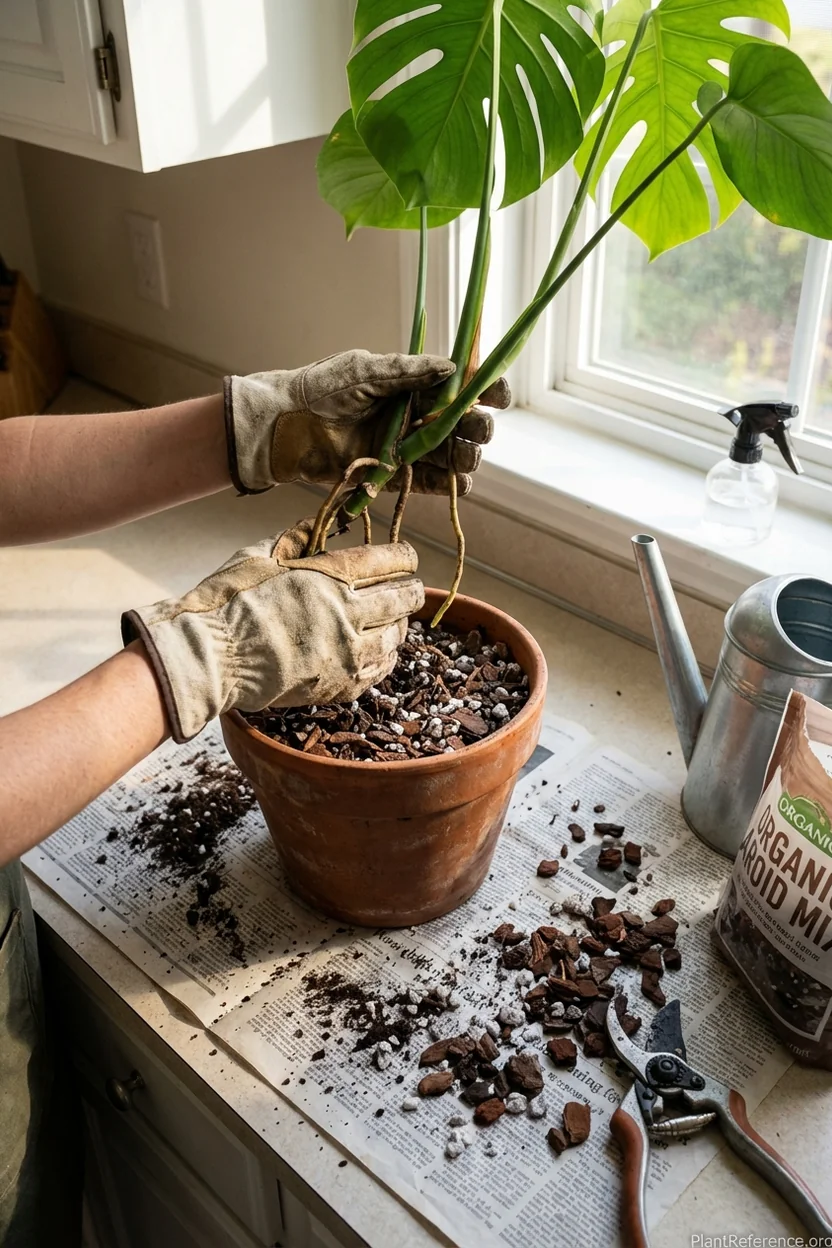
Repot your monstera every 1-2 years or when you notice roots growing from drainage holes. Spring is the ideal time for repotting, giving plants the entire growing season to establish in their new containers.
Choose a pot only 2-3 inches (5-7.5 cm) larger in diameter than the current one. Oversized pots hold too much moisture and can lead to root rot. I learned this lesson after nearly losing a monstera in a pot that was too large—the soil stayed soggy for weeks.
Repotting process:
Water plant 2-3 days before repotting for easier handling
Gently remove plant from current pot, teasing roots apart
Inspect roots, trimming any black, mushy, or damaged portions
Add fresh soil to new pot, position plant at same depth
Install new moss pole if upgrading support system
Water lightly and avoid fertilizing for 6-8 weeks
Some transplant shock is normal—expect slower growth and possible leaf drooping for a few weeks while roots reestablish. Maintain consistent care but avoid the temptation to overwater during recovery.
For detailed repotting instructions including seasonal timing and troubleshooting transplant shock, see How to Repot a Monstera: Complete Step-by-Step Guide.
Seasonal Care Adjustments
Monstera care changes significantly with seasons, especially if you live in areas with distinct winter and summer conditions. Understanding these natural rhythms helps you adjust your care routine for optimal plant health.
Spring (March-May):
Resume monthly fertilization as growth accelerates
Increase watering frequency as days lengthen
Perfect time for repotting and moss pole installation
Begin weekly growth monitoring and maintenance
Summer (June-August):
Peak growing season with fastest leaf development
Maintain consistent weekly watering schedule
Monitor humidity carefully if using air conditioning
Provide maximum bright indirect light
Fall (September-November):
Gradually reduce fertilizer to quarterly or stop completely
Decrease watering frequency as growth slows
Begin monitoring for pest issues as plants come indoors
Prepare grow lights if natural light will decrease
Winter (December-February):
Minimal to no fertilizer during dormancy period
Water only when soil is dry 2-3 inches down
Supplement with grow lights if needed
Maintain humidity despite heating systems
Advanced Care Tips
Once you've mastered basic monstera care, these advanced techniques can help you achieve truly spectacular results:
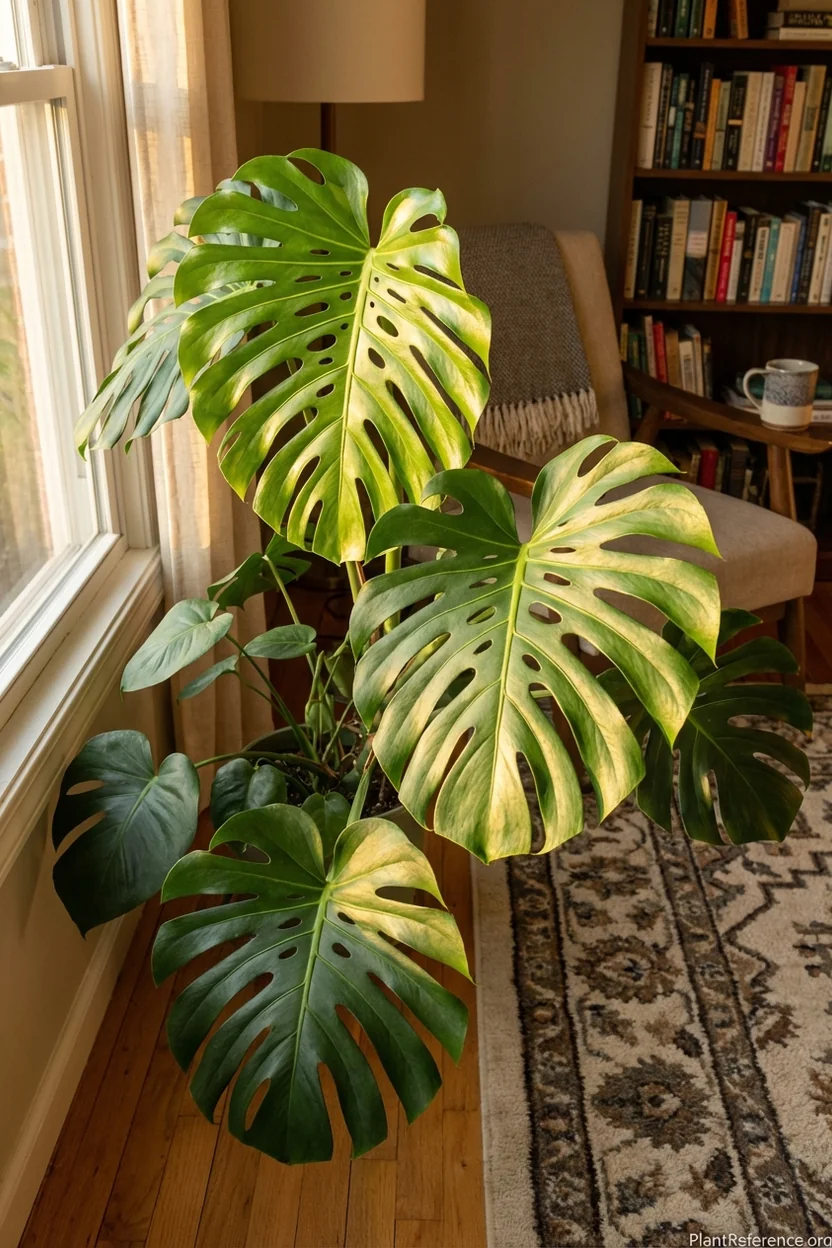
Leaf sizing manipulation: Gradually increase pot size and fertilization to encourage progressively larger leaves. Mature monsteras with optimal care can produce leaves 18-24 inches (45-60 cm) across.
Fenestration enhancement: Provide climbing support early and maintain consistent bright light. The combination of vertical growth and strong light signals triggers better fenestration development.
Multiple pole training: For very large specimens, consider multiple moss poles or a trellis system to support extensive growth and create dramatic living sculptures.
Propagation timing: Take cuttings in late spring when growth is most vigorous for fastest rooting and establishment.
The most important lesson I've learned in monstera care is patience. These plants reward consistent, thoughtful care with incredible growth and beauty, but they develop on their own timeline. Focus on providing stable conditions rather than pushing for rapid changes.
Your monstera deliciosa can become a stunning focal point in your home with proper care. The investment in quality support, appropriate lighting, and consistent care routines pays off with years of healthy growth and those iconic split leaves that make monsteras so beloved.
Remember, every monstera is unique, and yours will develop its own personality and growth patterns. Pay attention to what your specific plant tells you through its growth and adjust your care accordingly. With time and attention, you'll develop the intuitive understanding that makes monstera care feel natural and rewarding.
Frequently Asked Questions
Reading about plants and recognising them are different skills. These three build the second.
- Daily PlantIdentify the day’s mystery plant from a close-up photograph.
- Keyed OutWork a dichotomous key, lead by lead, to name a hidden specimen.
- Name That PlantName a specimen from botanical clues dealt hardest first.
Free to play, no account needed
Jessica transformed her small Brooklyn balcony into a thriving container garden after moving to New York City. What started as a pandemic hobby turned into a plant care consulting business serving urban apartment dwellers across the city. She specializes in small-space gardening, indoor plant troubleshooting, and helping clients keep houseplants alive in less-than-ideal conditions (dim light, dry heat, tiny spaces). Jessica completed a home gardening certificate program and shares her plant wins and failures on her modest Instagram following. Her partner, Maya, jokes that their apartment is now 40% plants, 60% living space. Jessica's passionate about making plant care accessible to renters who think they don't have room to garden.