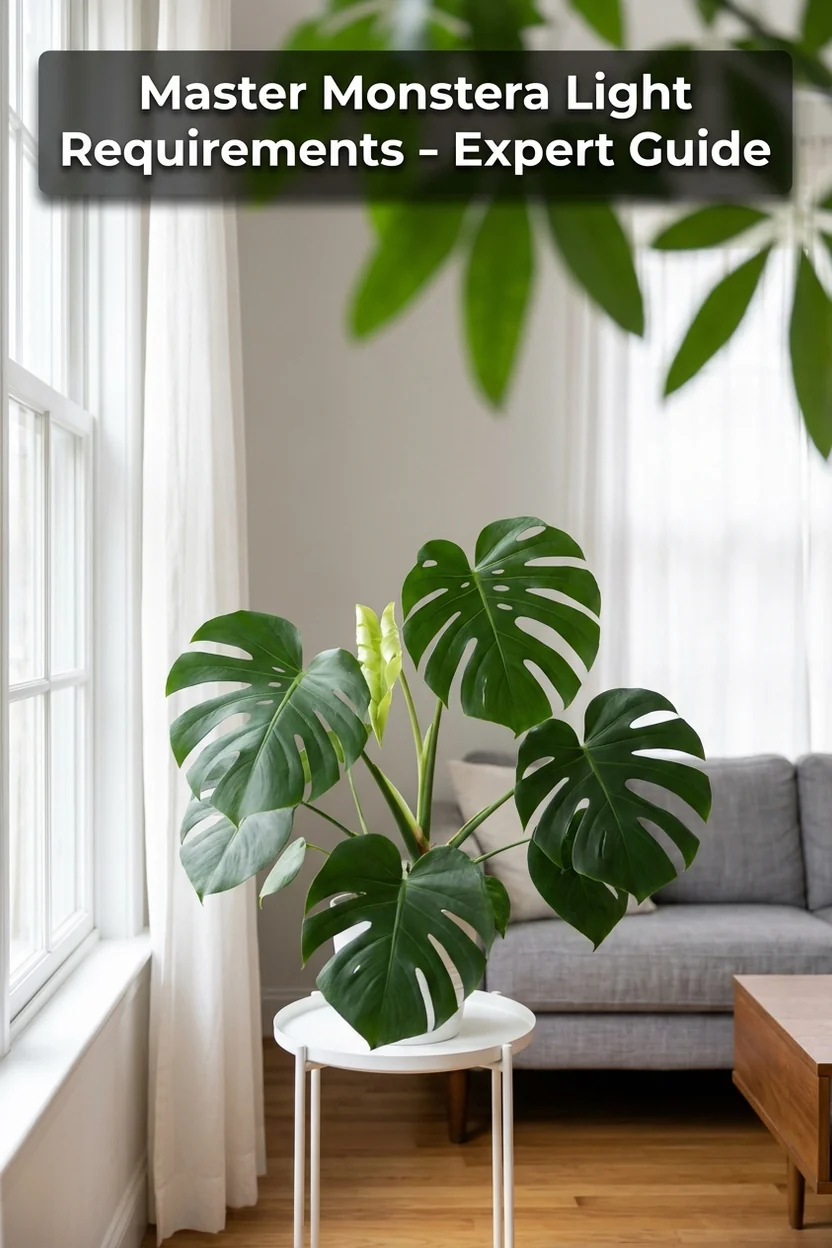
Monstera Light Requirements: Finding the Perfect Spot
Pets & Toxicity
Recorded toxicity for plants linked in this guide. An unknown status is not a safety assessment.
Toxic to pets: Swiss cheese plantDetailsHide
Monstera deliciosa — Toxicity Warning
Toxic to pets and humans. All vegetative parts contain calcium oxalate crystals that cause mouth pain, swelling, and drooling if ingested. Unripe fruit also contains calcium oxalate and is toxic; only fully ripened fruit (after 12+ months) is edible.View Monstera deliciosa plant profile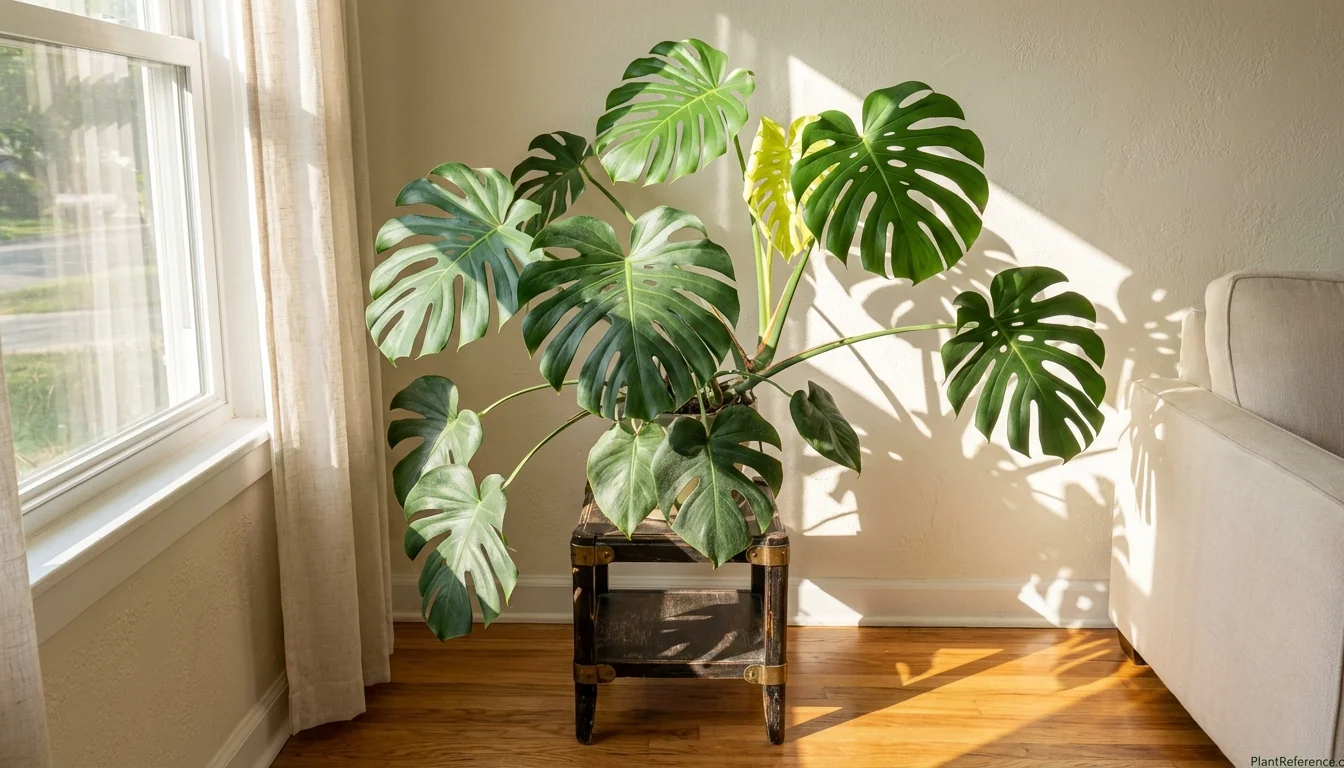
— Image © Plant Reference 2026
Getting monstera light requirements right is the foundation of successful Swiss cheese plant care. The difference between a thriving plant with spectacular fenestrated leaves and a struggling specimen with small, solid leaves often comes down to one factor: light placement.
Understanding Monstera's Natural Light Environment
The monstera deliciosa 🌿Monstera deliciosa (mon-STER-ah de-lis-ee-OH-sah) evolved in the tropical rainforests of Central America, where it grows as a climbing hemiepiphyte beneath the forest canopy. This natural habitat provides crucial insights into optimal indoor light conditions.
In the wild, monsteras receive bright, filtered light that's been softened by multiple layers of leaves above. They never experience direct tropical sun, which would quickly scorch their large, thin leaves. Instead, they thrive in what botanists call "bright shade"—luminous conditions with plenty of ambient light but no harsh, direct rays.
The plant's famous fenestrations (holes and splits) actually evolved as an adaptation to this specific light environment. Research by Christopher Muir published in The American Naturalist demonstrates that fenestrated leaves increase the probability of capturing sunflecks—brief moments when direct light penetrates the canopy. The holes allow light to reach lower leaves while reducing the total leaf biomass the plant must support.
This evolutionary background explains why indoor monstera light requirements center around bright, indirect conditions. When we replicate these forest floor conditions in our homes, monsteras reward us with robust growth and dramatic fenestration development.
Understanding the Araceae family's light preferences also helps optimize care. Most aroids, including monsteras, share similar requirements: bright ambient light without direct exposure. This family-wide trait stems from their common evolutionary history as understory plants in tropical regions.
Optimal Light Conditions for Indoor Monsteras
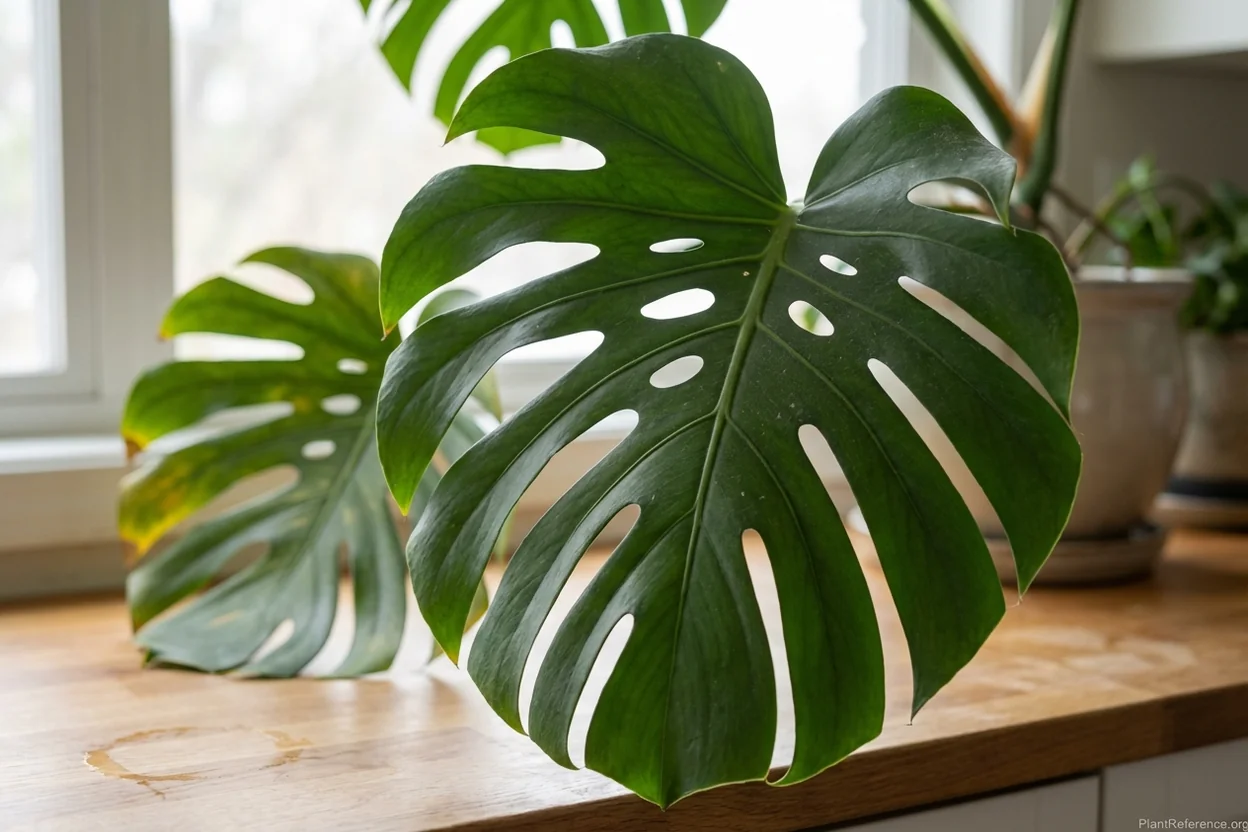
Indoor monstera light requirements translate to specific measurable conditions. The ideal range falls between 200-500 foot-candles (2,000-5,000 lux), with healthy growth possible down to 100 foot-candles (1,000 lux) minimum. This bright indirect light promotes strong growth, proper fenestration, and vibrant leaf color.
To put these numbers in perspective, a typical office receives 100-300 foot-candles, while bright indirect window light measures 400-800 foot-candles. Direct summer sunlight exceeds 10,000 foot-candles—far too intense for monstera leaves.
The key characteristics of optimal monstera lighting include:
Consistent brightness throughout the day without dramatic fluctuations
Diffused quality with no harsh shadows or concentrated beams
Duration of 12-14 hours daily for active growth periods
Spectrum balance including both blue and red wavelengths for photosynthesis
Indirect angle that illuminates leaves without creating hot spots
Bright indirect light supports the complex photosynthetic processes that fuel monstera growth. The large leaves are designed for efficient light capture, but their cellular structure can't handle the intense energy of direct sunlight. When light levels drop below 100 foot-candles, photosynthesis slows significantly, leading to etiolation (stretching), smaller leaves, and complete absence of fenestration.
The relationship between light and fenestration deserves special attention. Fenestrations only develop when plants receive adequate light intensity combined with structural support. Young monsteras won't fenestrate regardless of light levels, but mature plants (2+ years old) require bright conditions to trigger the genetic programming that creates holes and splits.
Window Direction Guide: Best Placement Options
Window orientation dramatically affects the quality and intensity of light your monstera receives. Each direction offers distinct advantages and challenges for meeting monstera light requirements.
East-facing windows provide ideal conditions for most monsteras. Morning sun is gentle and won't scorch leaves, while afternoon shade prevents overheating. The gradually increasing then decreasing light intensity mimics forest conditions where light filters through the canopy as the sun moves across the sky. Position monsteras 2-3 feet (60-90 cm) from east windows for optimal results.
North-facing windows offer consistent, bright indirect light throughout the day in the Northern Hemisphere. This steady illumination supports healthy growth without risk of sun damage. However, north light is typically lower in intensity, so position monsteras closer—within 1-2 feet (30-60 cm) of the glass. During winter months, north windows may require supplemental grow light support.
West-facing windows can work but require careful positioning. Afternoon western sun is intense and can quickly burn monstera leaves. Place plants 4-6 feet (1.2-1.8 m) from west windows or use sheer curtains to diffuse the light. Monitor closely for signs of heat stress during summer months.
South-facing windows provide the brightest natural light but are challenging for monsteras. Direct southern exposure causes immediate leaf scorch, but filtered south light can support exceptional growth. Use sheer curtains, position plants 6+ feet (1.8+ m) from windows, or place them to the side where they receive bright reflected light without direct exposure.
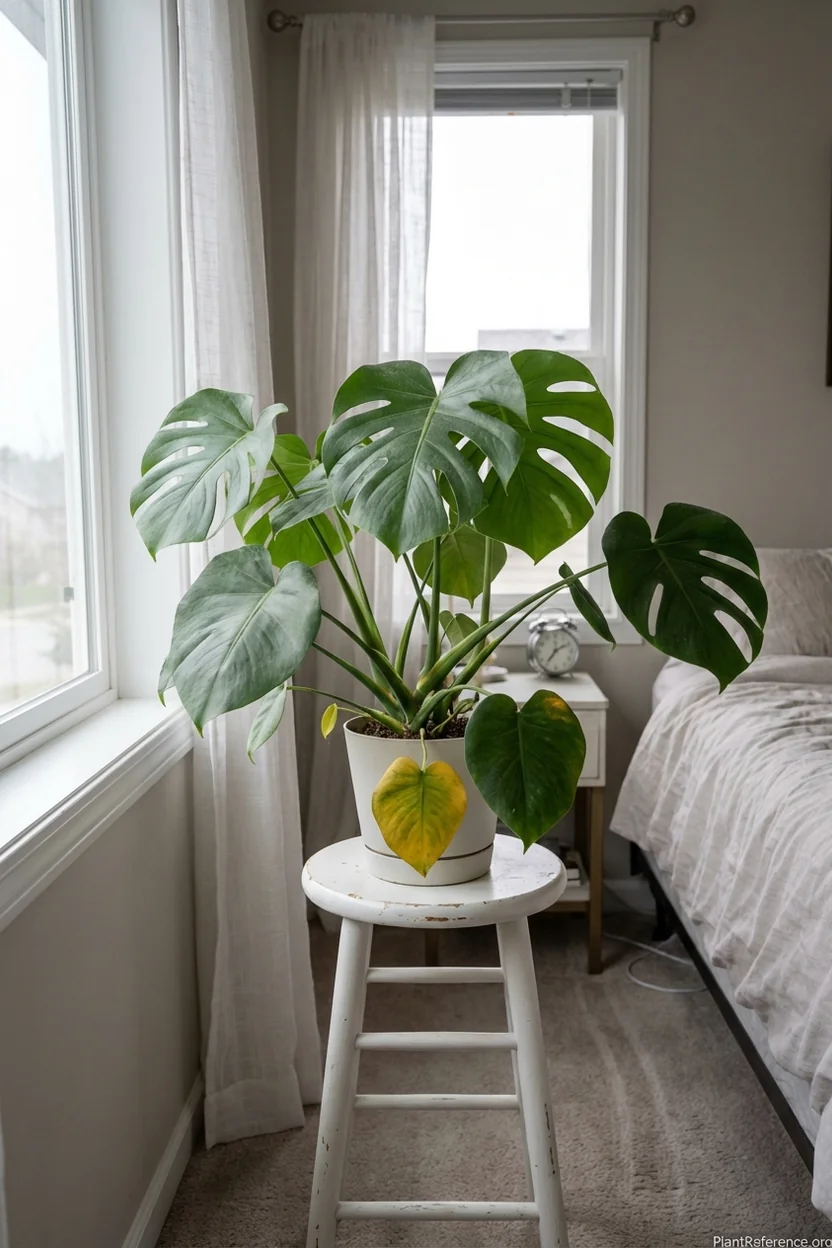
The quality of light matters as much as direction. Windows with obstacles like trees, buildings, or overhangs significantly reduce light intensity. Similarly, tinted or dirty glass filters out beneficial wavelengths. Clean windows regularly and consider how external factors affect the light reaching your monstera.
Seasonal changes also impact window light quality. Winter sun sits lower in the sky, potentially bringing direct light through previously safe windows. Summer foliage on nearby trees can create unexpected shade. Monitor your monstera's response and adjust positioning seasonally to maintain optimal conditions.
For apartments or homes with limited window options, Best Grow Lights for Monstera: Complete Comparison provides detailed guidance on artificial lighting solutions.
Signs Your Monstera Needs More Light
Insufficient light is the most common cause of disappointing monstera performance. Recognizing the early warning signs allows you to adjust placement before permanent damage occurs.
Lack of fenestration is the clearest indicator of inadequate light. Mature monsteras (2+ years old) that produce only solid, heart-shaped leaves are communicating their need for brighter conditions. New leaves should begin showing splits and holes once plants reach maturity, provided they receive adequate light.
Smaller leaf size develops when light levels drop below optimal ranges. Each successive leaf becomes noticeably smaller than the previous one as the plant conserves energy for basic survival rather than impressive foliage. Healthy monsteras in proper light produce progressively larger leaves throughout their growing season.
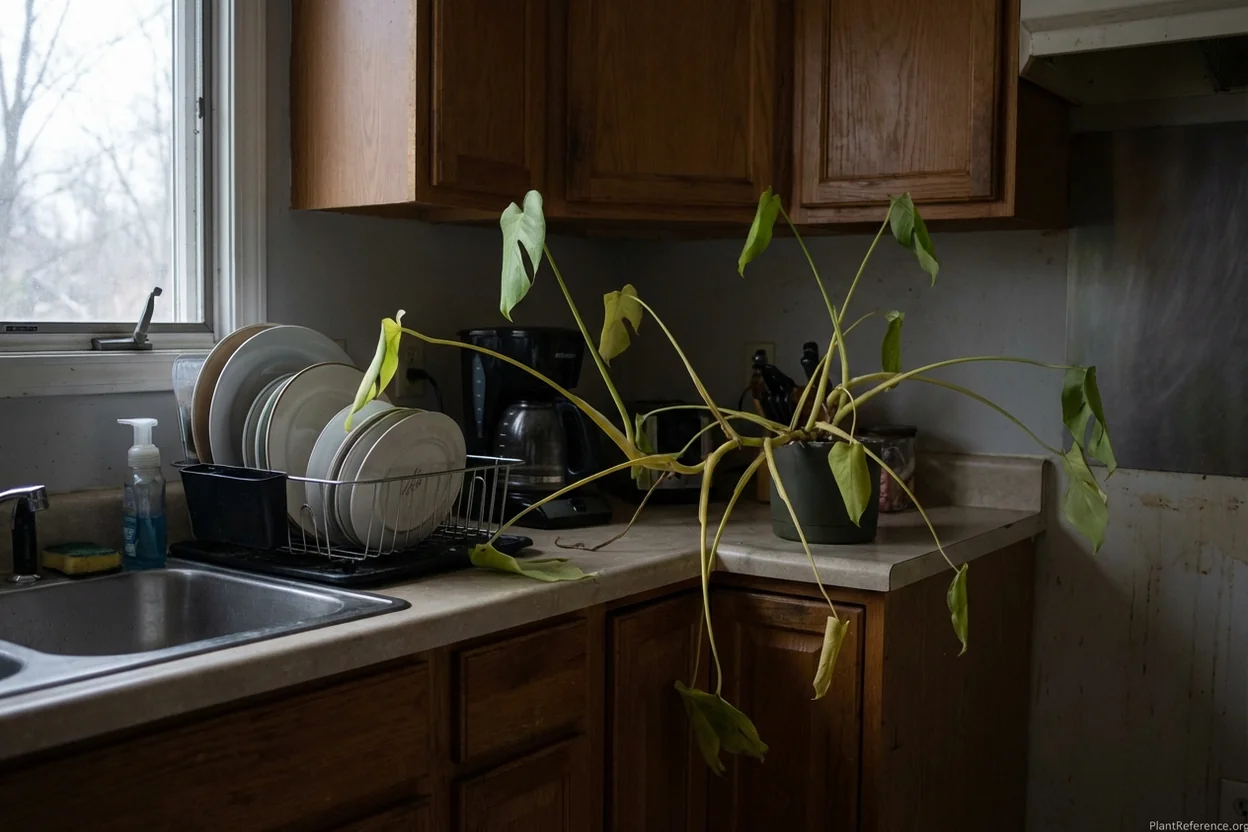
Etiolation symptoms include stretched internodes (spaces between leaves), pale green coloration, and weak stems that can't support the plant's weight. The monstera literally reaches toward any available light source, creating a sparse, elongated appearance instead of the compact, bushy growth pattern seen in well-lit specimens.
Reduced growth rate becomes apparent when comparing seasonal progress. Monsteras in optimal light produce 1-2 new leaves monthly during active growing periods. Plants struggling with insufficient light may produce only 4-6 leaves annually, with long delays between new growth.
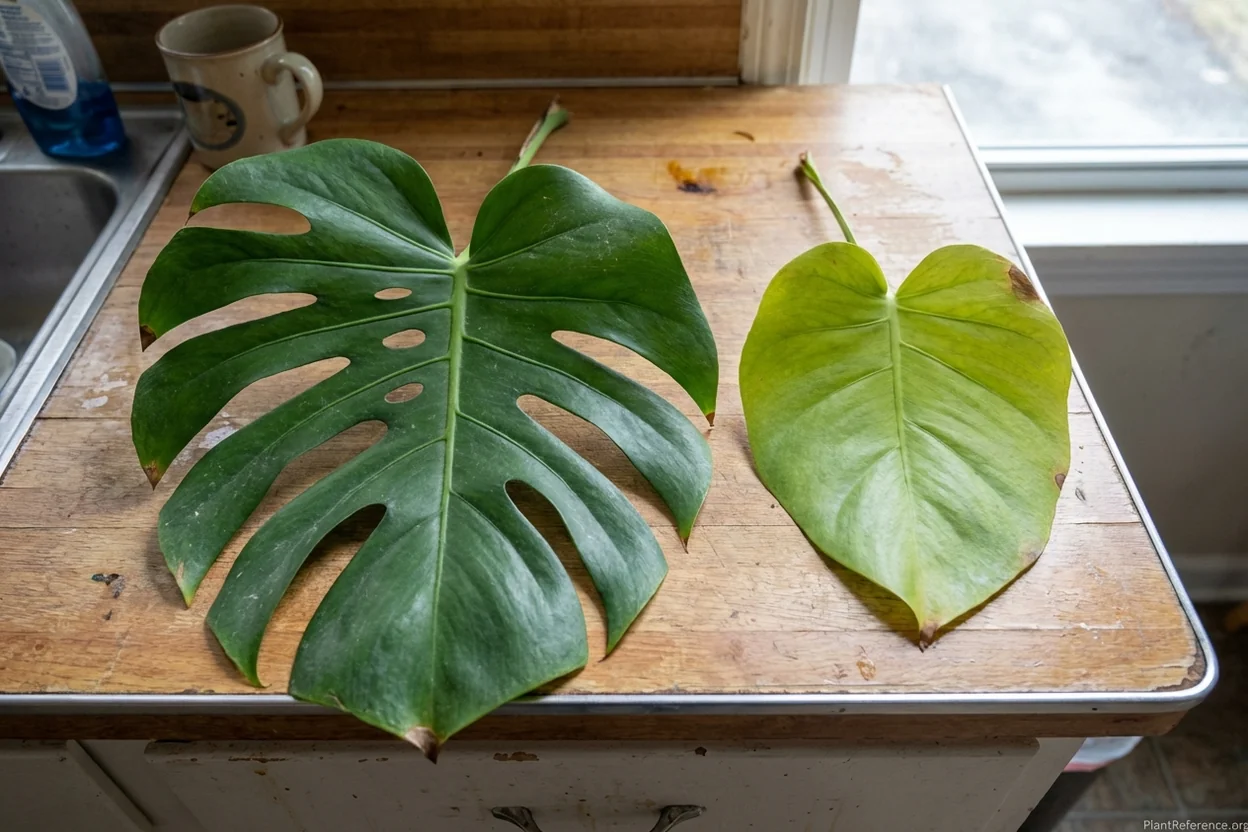
Pale or yellowing leaves often indicate light stress combined with other factors. While yellow leaves can signal overwatering, consistent pale green coloration throughout the plant suggests insufficient light for proper chlorophyll production. The plant appears washed out rather than vibrant.
Leaning or reaching growth shows the plant's attempt to find better light. Monsteras naturally grow toward their strongest light source, but excessive leaning indicates the current position isn't meeting their needs. This behavior often precedes other symptoms of light deficiency.
Early intervention prevents long-term damage to plant health and appearance. Moving a monstera to brighter conditions can reverse etiolation symptoms within 6-8 weeks, though previously solid leaves won't develop fenestrations retroactively. For detailed solutions, see Monstera Not Splitting: Why Your Leaves Won't Fenestrate and Small Monstera leaves: How to Get Bigger Growth.
Recognizing Too Much Light Damage
While insufficient light is common, too much direct sun can quickly damage monstera leaves. Understanding overexposure symptoms helps prevent permanent scarring and maintains plant health.
Brown, crispy leaf edges appear within hours of direct sun exposure. Unlike the gradual browning from low humidity, sun scorch creates distinct brown margins that feel papery and brittle. This damage typically starts on the leaf areas most directly exposed to sunlight.
Bleached or yellow patches develop when chloroplasts become overwhelmed by excessive light energy. These pale spots often appear in the center of leaves where light intensity peaks. The affected tissue can't recover and will remain permanently discolored.
Rapid wilting despite adequate soil moisture indicates heat stress from intense light. The large leaves lose water faster than the root system can replace it when exposed to hot, direct sun. This wilting occurs even when the soil feels appropriately moist.
Scorched brown spots with defined edges, often circular or irregular patches
Leaf curling as the plant attempts to reduce surface area exposed to intense light
Accelerated aging where lower leaves yellow and drop rapidly under light stress
Stunted growth as the plant redirects energy to damage repair rather than new development
Heat damage to aerial roots which become brown and shriveled in direct sun
The speed of sun damage varies with intensity and duration. Morning sun exposure rarely causes immediate problems, but afternoon sun can scorch leaves within 30-60 minutes. South and west-facing windows pose the highest risk, especially during summer months when sun angles are most direct.
Recovery from light damage requires patience and proper care. Remove severely damaged leaves with clean pruning shears to prevent energy waste. Move the plant to appropriate indirect light and maintain consistent watering while new, healthy growth develops. Recovery typically takes 6-8 weeks for new leaves to fully emerge.
Prevention is always preferable to treatment. Use sheer curtains, adjust plant positioning seasonally, and monitor for early warning signs during the hottest months. Remember that grow lights, while safer than direct sun, can also cause heat damage if positioned too closely to foliage.
Grow Light Solutions for Low-Light Homes
When natural light falls short of monstera requirements, quality grow lights bridge the gap effectively. Modern LED technology makes it possible to provide optimal lighting conditions regardless of window availability or orientation.
Full-spectrum LED lights offer the best solution for supplementing natural light. Unlike older fluorescent technologies, LEDs provide the complete wavelength range monsteras need for photosynthesis, including both red wavelengths (660-730nm) for flowering and blue wavelengths (400-500nm) for foliage growth.
The key specifications for monstera grow lights include adequate intensity, proper coverage area, and appropriate mounting options:
→ Soltech Solutions Aspect Grow Light ($150-200) - Premium pendant-style design
Premium pendant-style LED delivers 500-800 foot-candles at 4 feet distance, perfect for monsteras. Elegant home decor design fits any interior style. Most powerful consumer grow light available with adjustable cord length. Full spectrum includes UV and IR wavelengths for optimal plant health. Exceptional build quality with 5-year warranty and remarkable customer satisfaction ratings.
Product link unavailable
→ SANSI 70W LED Grow Light ($35-50) - High-output panel option
High-output panel provides 3000+ foot-candles at 1 foot distance with multiple mounting options. Full spectrum includes strong blue and red wavelengths essential for monstera growth. Measures actual 70 watts with ceramic heat sink for cool operation. Outstanding value combining performance with affordability. Easy installation with included mounting hardware and detailed instructions.
Light positioning requires careful consideration of intensity and coverage. Most grow lights should be positioned 12-24 inches (30-60 cm) above monstera foliage, adjusted based on the light's specifications and the plant's response. Too close causes heat stress; too far reduces effectiveness below useful levels.
Duration and timing matter as much as intensity. Provide 12-14 hours of artificial light daily during active growing seasons (spring through early fall). Use timers to maintain consistency, as irregular lighting schedules stress plants and reduce effectiveness.
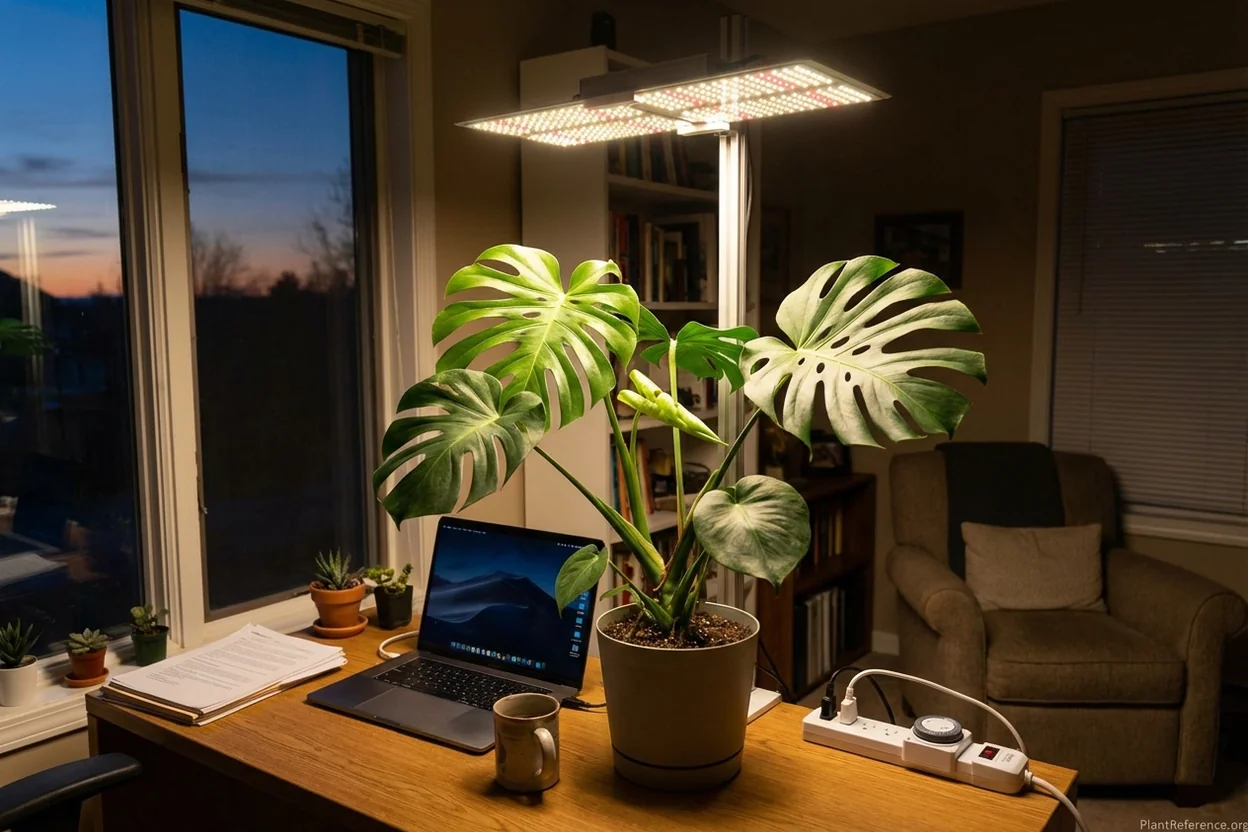
Energy efficiency and heat output are important considerations for long-term use. Quality LED grow lights consume 30-70 watts while providing equivalent output to much higher wattage fluorescent or incandescent options. Choose lights with good heat management to prevent leaf damage and reduce cooling costs.
For detailed comparisons and recommendations, Best Grow Lights for Monstera: Complete Comparison provides comprehensive testing results and buying guidance for various budgets and space requirements.
Variegated vs Green Varieties: Different Light Needs
Variegated monsteras, including the popular 'Thai Constellation' and 'Albo Variegata' cultivars, have distinctly different light requirements compared to solid green varieties. Understanding these differences prevents disappointment and optimizes growth for these premium plants.
Higher light requirements for variegated varieties stem from reduced chlorophyll content. The white or cream-colored portions of variegated leaves contain no chlorophyll, so the remaining green sections must work harder to produce energy for the entire plant. This necessitates brighter conditions—typically 400-600 foot-candles compared to 200-400 for green varieties.
Fenestration development in variegated monsteras requires optimal light conditions. The reduced photosynthetic capacity means variegated plants need every advantage to produce the energy required for fenestration. Insufficient light results in smaller leaves with minimal or no holes, regardless of plant maturity.
Variegation stability depends on proper light balance. Too little light causes variegated sections to revert to solid green as the plant prioritizes survival over aesthetics. Conversely, excessive light can burn the chlorophyll-free white portions, creating permanent brown damage.
Growth rate differences are noticeable between variegated and green monsteras under identical conditions. Variegated plants grow 25-40% slower due to reduced photosynthetic efficiency. This slower growth requires patience but produces stunning results when light conditions are optimized.
Position closer to windows (1-2 feet vs 2-4 feet for green varieties)
Extend grow light duration to 14-16 hours daily during growing season
Monitor for stress signs more carefully due to reduced resilience
Provide consistent conditions as variegated plants recover slower from light stress
Expect smaller mature size as energy limitations affect overall growth potential
The investment in variegated monsteras justifies extra attention to lighting conditions. These plants can cost $200-2000+ depending on variety and size, making proper light management essential for protecting the investment and achieving the desired aesthetic results.
For optimal results with any monstera variety, consider supplementing natural light with grow lights during winter months when daylight hours shorten and intensity decreases. This consistency supports year-round growth and maintains plant health through seasonal transitions.
Measuring Light Levels: Tools and Techniques
Accurate measurement removes guesswork from meeting monstera light requirements. Several tools and methods help determine whether your plant receives adequate illumination for healthy growth.
Smartphone light meter apps provide convenient, reasonably accurate measurements for plant care purposes. Apps like "Light Meter" or "Lux Light Meter Pro" use the phone's camera sensor to measure foot-candles or lux. While not laboratory-precise, these apps give reliable relative measurements for adjusting plant placement.
Dedicated light meters offer superior accuracy for serious plant enthusiasts. The Dr. Meter LX1330B Digital Light Meter ($15-25) provides precise foot-candle and lux readings with a separate sensor for better positioning flexibility.
Measurement technique affects accuracy regardless of tool choice:
Hold sensor at leaf level where the plant actually receives light
Take readings at different times throughout the day to understand light patterns
Measure in multiple locations around the plant to assess coverage consistency
Account for seasonal changes by measuring monthly as sun angles shift
Record readings to track improvements or decline over time
Understanding the numbers helps interpret measurements meaningfully. Monsteras show clear responses at different light levels:
Below 75 fc (750 lux): Survival mode with etiolation and declining health
75-150 fc (750-1500 lux): Slow growth, no fenestration, small leaves
150-300 fc (1500-3000 lux): Moderate growth, possible fenestration in mature plants
300-500 fc (3000-5000 lux): Optimal growth with excellent fenestration and vigor
500+ fc (5000+ lux): Risk of overexposure if direct sun is involved
Seasonal monitoring reveals how light changes throughout the year. Many plant owners discover their "perfect" spring and summer locations become inadequate during winter months when sun angles drop and daylight hours decrease.
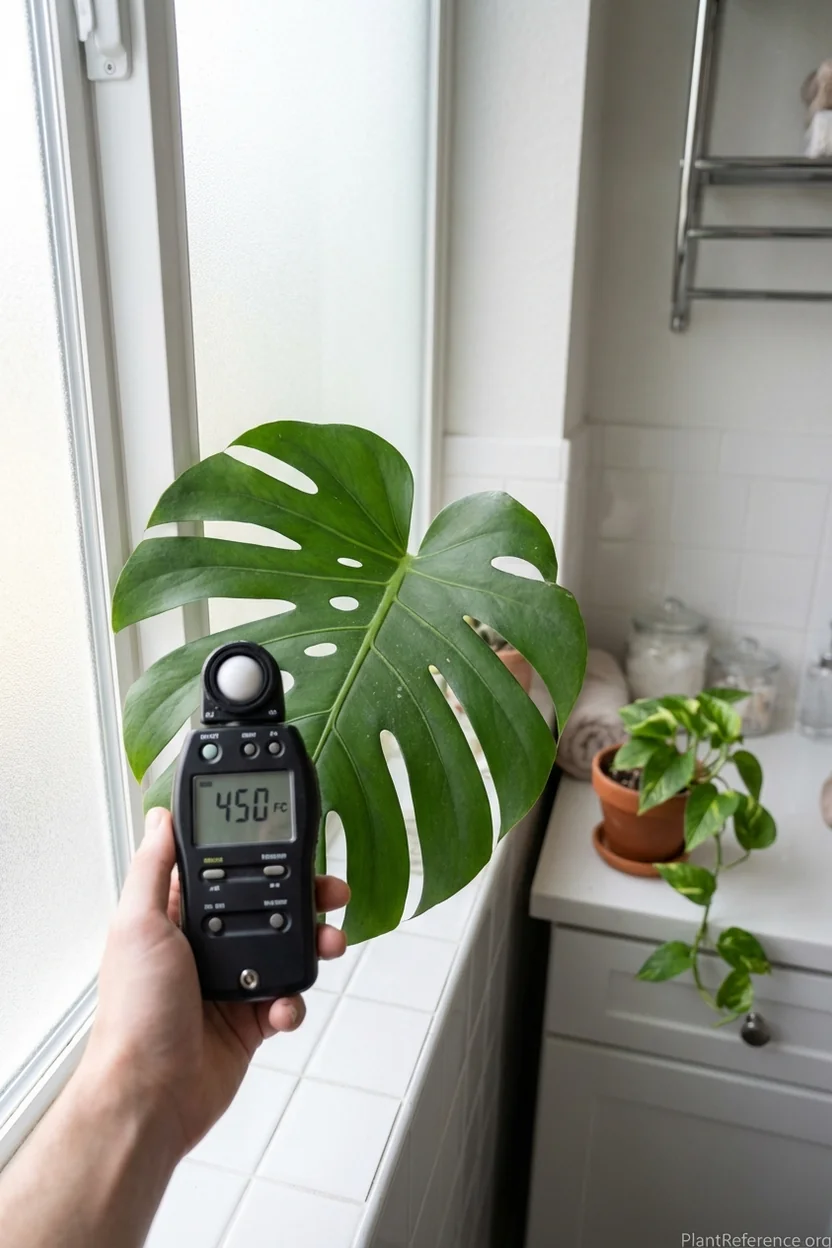
Regular measurement builds understanding of how factors like weather, seasonal changes, and nearby obstacles affect light availability. This knowledge enables proactive adjustments rather than reactive problem-solving when plants show stress symptoms.
Seasonal Light Adjustments
Monstera light requirements shift throughout the year as daylight hours and sun angles change dramatically. Proactive seasonal adjustments maintain optimal conditions and prevent the growth stagnation common during winter months.
Spring adjustments (March-May) focus on transitioning from winter survival mode to active growth. As daylight hours increase and sun intensity strengthens, gradually move monsteras closer to windows or reduce supplemental grow light duration. Monitor for new growth emergence, which typically begins when daily light exposure exceeds 10-12 hours.
Summer optimization (June-August) requires balancing maximum growth potential with overexposure protection. The intense summer sun can quickly scorch leaves previously safe in the same location. Move plants slightly further from south and west-facing windows, or add sheer curtains to filter excessive intensity while maintaining bright conditions.
Fall preparations (September-November) anticipate the approaching dormant period by gradually increasing supplemental lighting as natural daylight decreases. This transition period is crucial for maintaining plant health entering the challenging winter months.
Winter maintenance (December-February) presents the greatest lighting challenges in temperate climates. Daylight hours drop to 8-10 hours, sun angles are low and indirect, and cloud cover is often persistent. Most monsteras require grow light supplementation during this period to prevent dormancy-related decline.
Key seasonal indicators help time adjustments appropriately:
New growth rate slowing indicates insufficient light for current season
Leaf size reduction suggests the need for increased artificial supplementation
Yellowing lower leaves during winter is normal but excessive yellowing indicates stress
Aerial root development slows in low light conditions but should resume with proper lighting
Fenestration quality in new leaves reflects current light adequacy
Regional variations significantly impact seasonal needs. Northern locations require earlier and more extensive winter supplementation, while southern regions may need more summer protection from intense sun.
Year-round consistency in light quality produces the best results. Rather than allowing dramatic seasonal swings, gradual adjustments maintain steady growth and prevent the stress cycles that weaken plants over time.
For specific guidance on winter care, How to Water a Monstera: Complete Watering Guide covers seasonal watering adjustments that complement lighting changes for comprehensive year-round care.
Common Light-Related Problems and Solutions
Several recurring issues stem from suboptimal light conditions for monsteras. Recognizing these patterns enables quick diagnosis and effective solutions.
Problem: Solid leaves on mature plants This indicates insufficient light for fenestration development. Adult monsteras (2+ years old) should produce split leaves when conditions are adequate.
Solution: Increase light intensity to 300-500 foot-candles through better window placement or grow light addition. New leaves will begin fenestrating within 6-8 weeks of improved conditions, though existing solid leaves won't change retroactively.
Problem: Progressively smaller leaves Each new leaf is noticeably smaller than the previous one, indicating declining light adequacy over time.
Solution: Reassess placement relative to seasonal changes. Often occurs during fall/winter transition when natural light decreases. Add supplemental lighting or move closer to windows to restore growth vigor.
Problem: Brown leaf scorch despite indirect placement Occurs when reflected or concentrated light creates hot spots more intense than anticipated.
Solution: Check for reflective surfaces like mirrors, white walls, or glass tables that concentrate light. Move plants to eliminate hot spots or add filtering between the light source and plant.
Problem: Uneven growth toward light source Normal phototropism becomes excessive when light comes from only one direction.
Solution: Rotate plant weekly 90 degrees to promote even growth. Consider adding reflective surfaces opposite the light source to balance illumination, or supplement with grow lights for more even coverage.
Problem: Variegated sections reverting to green Occurs when variegated varieties don't receive adequate light to maintain variegation patterns.
Solution: Immediately increase light intensity and duration. Variegated monsteras need 20-30% more light than green varieties to maintain their patterns. Consider grow light supplementation even with good natural light.
Problem: Aerial roots browning and shriveling Often accompanies insufficient humidity but can also indicate excessive direct light on roots.
Solution: Assess both light and humidity conditions. Shield aerial roots from direct light while maintaining bright conditions for foliage. Increase ambient humidity to 50-60% to support healthy root development.
Prevention strategies for light-related problems include regular monitoring, seasonal adjustment planning, and understanding each plant's individual response to light changes. Keep detailed records of placement changes and plant responses to build knowledge for future adjustments.
For comprehensive troubleshooting of all monstera issues, Monstera Deliciosa Care: The Complete Guide provides detailed diagnostic guidance and solutions for optimal plant health.
Understanding monstera light requirements forms the foundation for successful Swiss cheese plant cultivation. By providing bright, indirect light equivalent to their natural forest habitat, you'll be rewarded with spectacular fenestrated growth and years of tropical beauty in your home.
Frequently Asked Questions
Reading about plants and recognising them are different skills. These three build the second.
- Daily PlantIdentify the day’s mystery plant from a close-up photograph.
- Keyed OutWork a dichotomous key, lead by lead, to name a hidden specimen.
- Name That PlantName a specimen from botanical clues dealt hardest first.
Free to play, no account needed
Jessica transformed her small Brooklyn balcony into a thriving container garden after moving to New York City. What started as a pandemic hobby turned into a plant care consulting business serving urban apartment dwellers across the city. She specializes in small-space gardening, indoor plant troubleshooting, and helping clients keep houseplants alive in less-than-ideal conditions (dim light, dry heat, tiny spaces). Jessica completed a home gardening certificate program and shares her plant wins and failures on her modest Instagram following. Her partner, Maya, jokes that their apartment is now 40% plants, 60% living space. Jessica's passionate about making plant care accessible to renters who think they don't have room to garden.