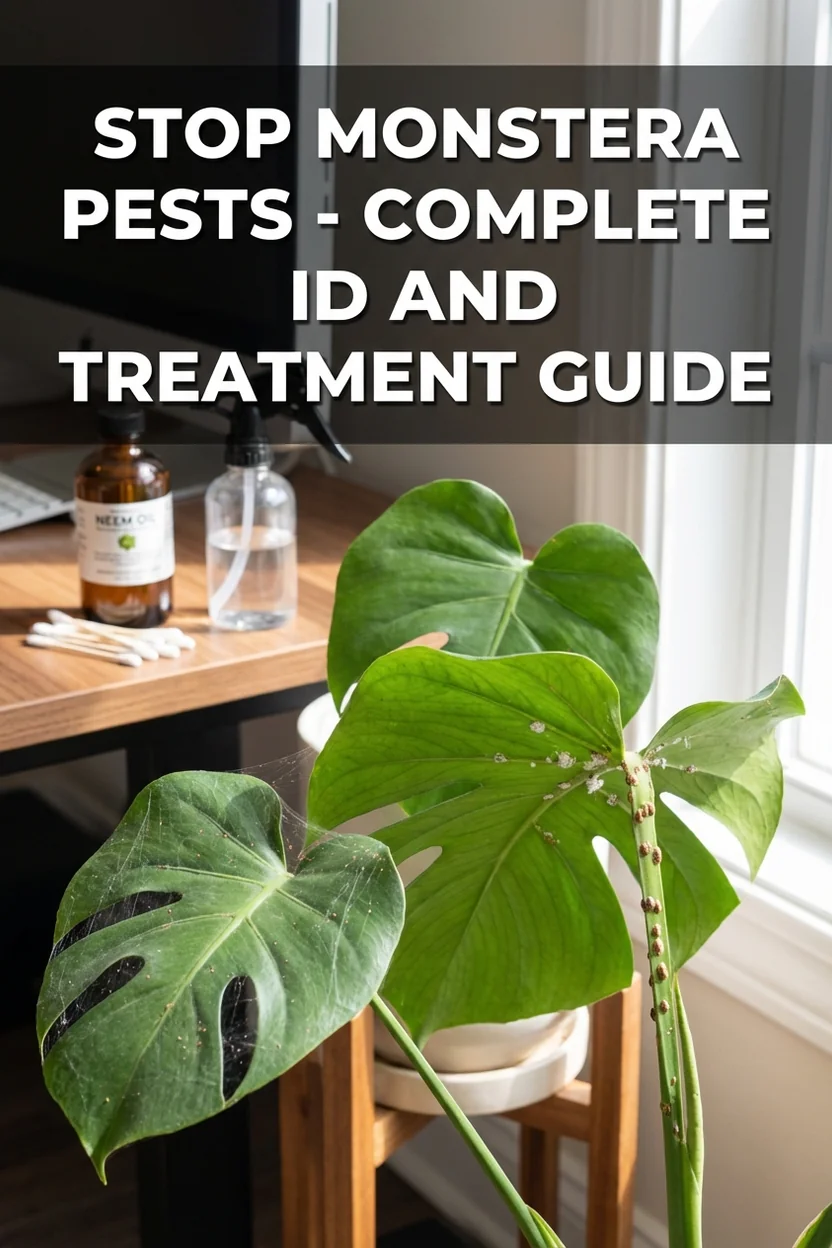
Monstera Pests: Identification and Treatment Guide
Pets & Toxicity
Recorded toxicity for plants linked in this guide. An unknown status is not a safety assessment.
Toxic to pets: Swiss cheese plantDetailsHide
Monstera deliciosa — Toxicity Warning
Toxic to pets and humans. All vegetative parts contain calcium oxalate crystals that cause mouth pain, swelling, and drooling if ingested. Unripe fruit also contains calcium oxalate and is toxic; only fully ripened fruit (after 12+ months) is edible.View Monstera deliciosa plant profile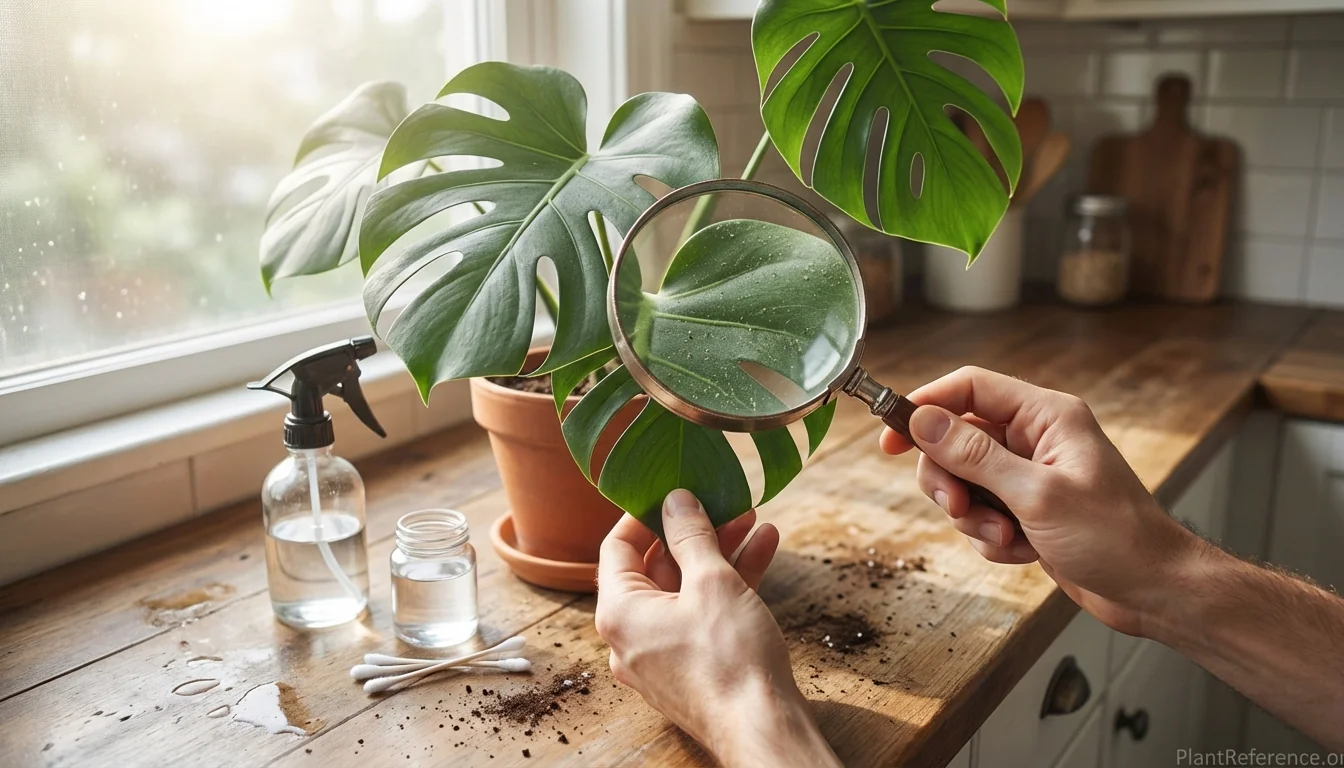
— Image © Plant Reference 2026
Let's be honest—finding bugs crawling on your beautiful monstera 🌿Monstera deliciosa (mon-STER-ah de-lis-ee-OH-sah) is every plant parent's nightmare. But here's the reality: monstera pests are common, predictable, and completely treatable when you catch them early and use the right approach.
Common Signs Your Monstera Has Pests
Your monstera will tell you when something's wrong—you just need to know what to look for. Here are the universal warning signs that scream "pest problem":
Yellow stippling or spots on leaves (especially spider mites) Sticky honeydew residue on leaves or surfaces below the plant White cottony masses in leaf joints and stem crevices Tiny holes or silvery streaks on leaf surfaces Webbing on leaf undersides or between stems Black sooty mold growing on sticky honeydew Stunted growth or leaves dropping unexpectedly
I inspect every monstera weekly using this systematic approach: Check leaf undersides first (that's where most pests hide), examine stem joints and new growth areas, look for sticky spots on nearby surfaces, and feel for unusual textures on leaves.
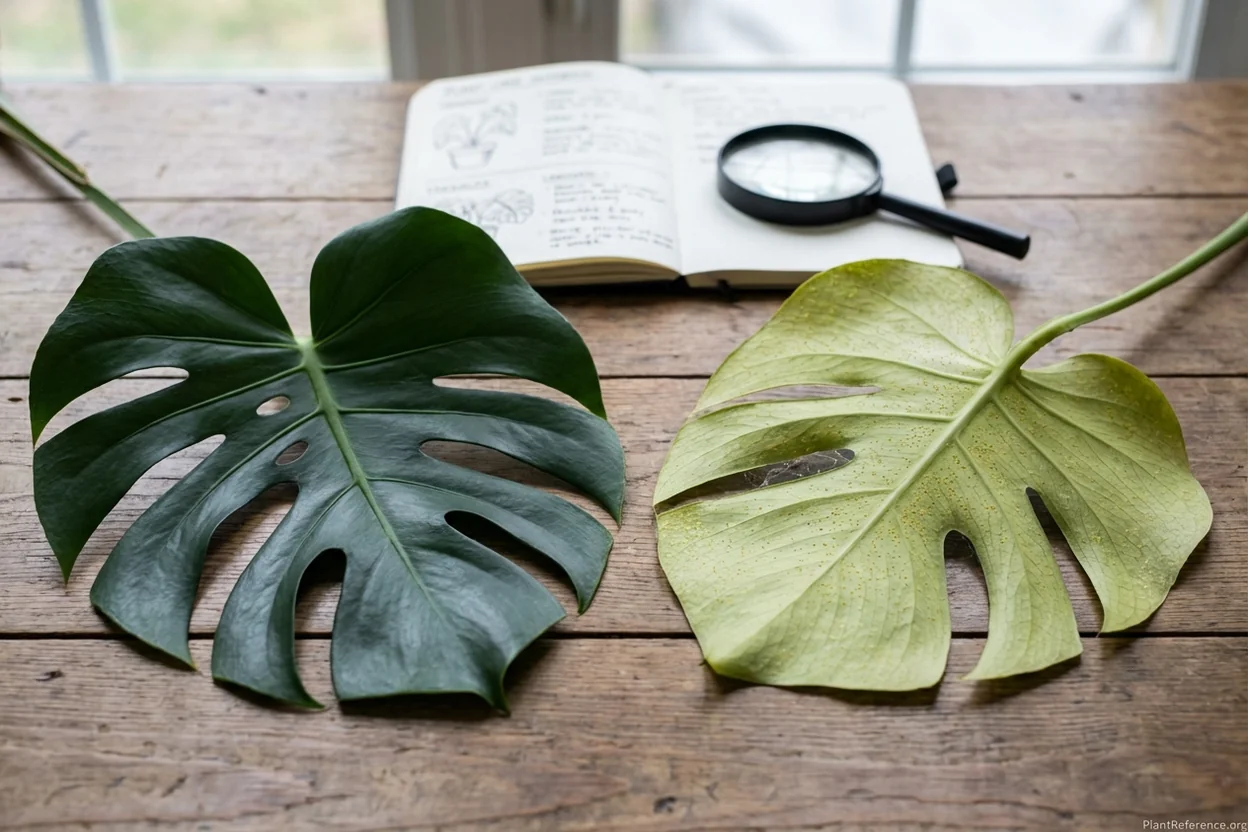
The key is catching problems when they're still small. A few spider mites are manageable—thousands aren't. Check your How to Water a Monstera: Complete Watering Guide|watering routine too, because stressed plants attract pests faster than healthy ones.
Spider Mites on Monstera: Red Alert
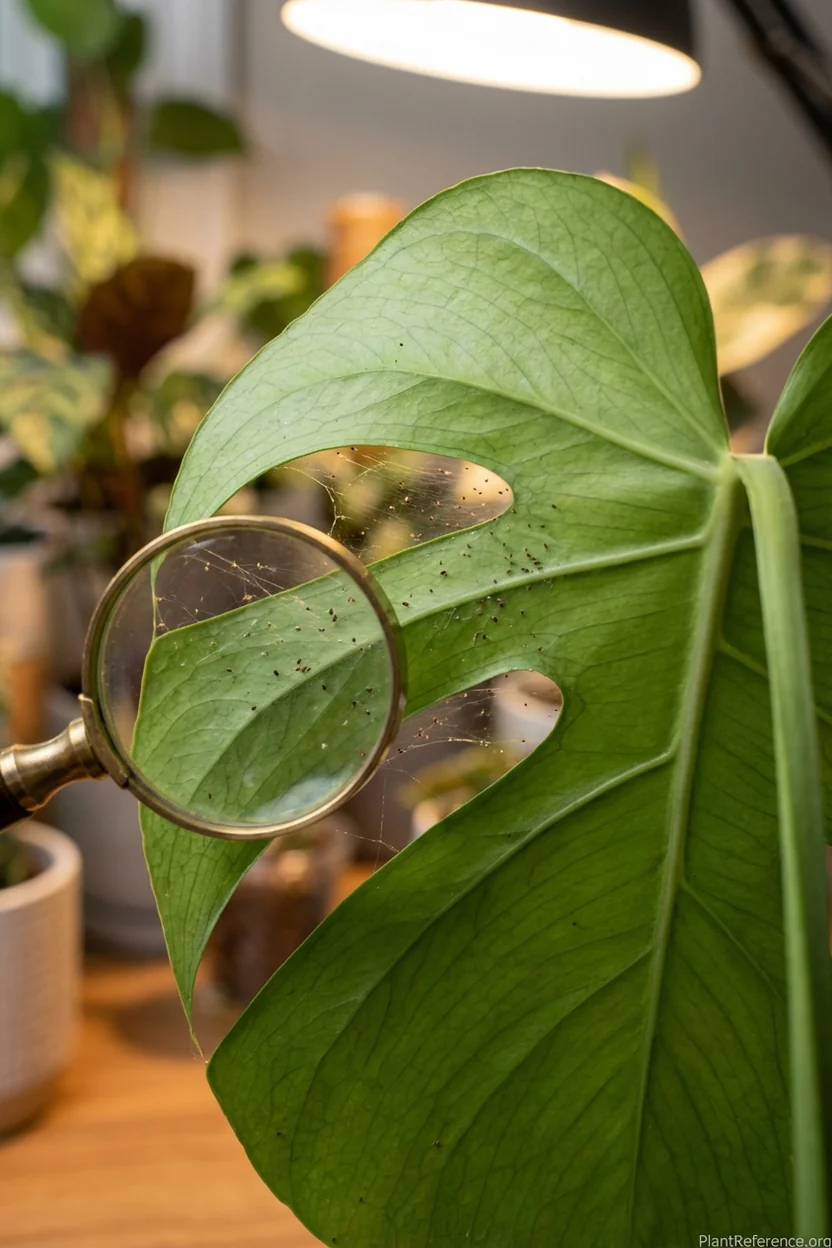
Spider mites are the #1 enemy of indoor monstera plants, and they multiply fast in dry indoor air. These microscopic pests pierce leaf cells and suck out the contents, leaving behind those telltale yellow dots.
What they look like: Barely visible to the naked eye, appearing as moving specks on leaf undersides. Use a magnifying glass—they look like tiny spiders.
Damage signs: Fine webbing between leaves and stems, yellow stippling that progresses to bronzed or gray leaves, leaves eventually dropping off the plant.
Why they love monstera: Large leaf surfaces provide plenty of feeding area, and dry indoor air (below 40% humidity) creates perfect breeding conditions.
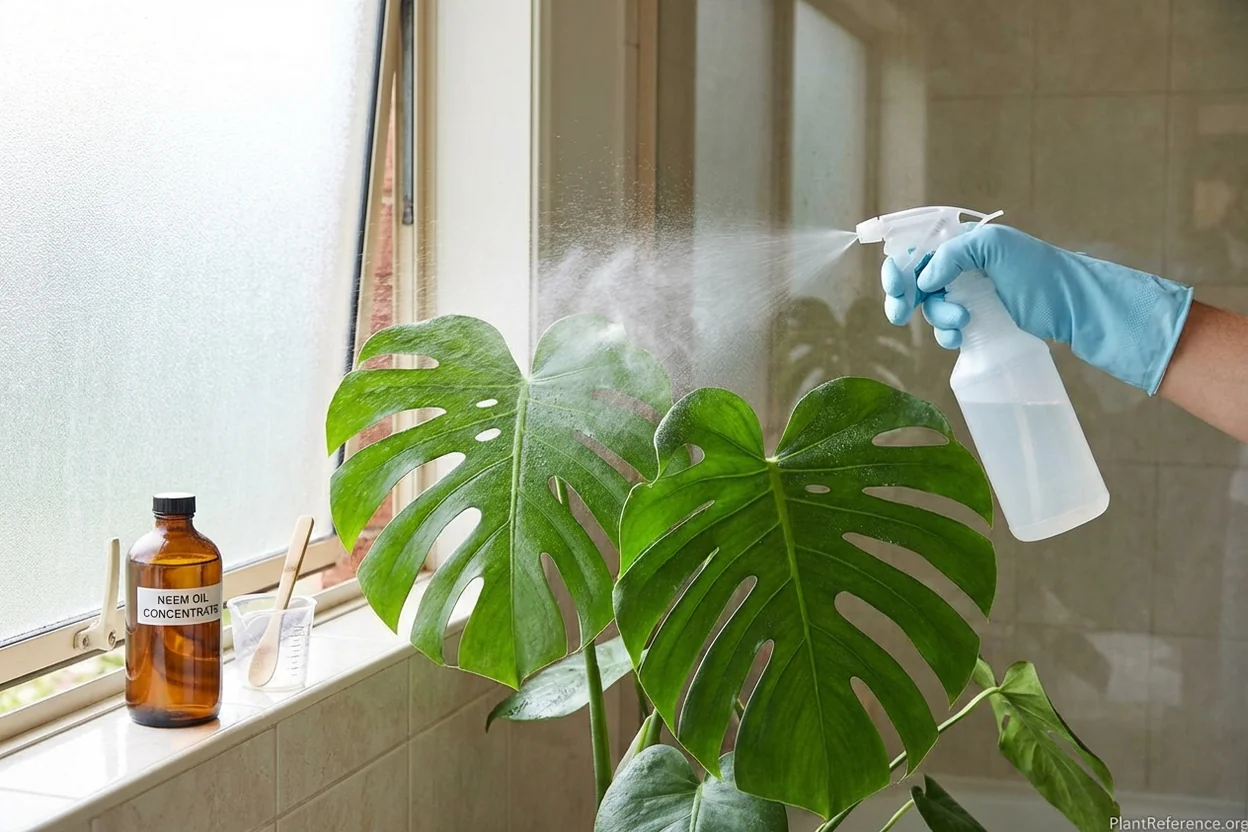
Treatment protocol: Shower the entire plant with lukewarm water to knock off mites, then spray all surfaces with neem oil every 3 days for 2 weeks. Increase humidity immediately—spider mites hate moisture.
I've saved hundreds of monstera from spider mite infestations using this exact protocol. The shower step is crucial because it physically removes 70-80% of the population instantly.
Mealybugs: White Cottony Invaders
Mealybugs look like someone dabbed cotton balls in the joints of your monstera stems. These slow-moving insects suck plant juices and excrete sticky honeydew that attracts ants and promotes fungal growth.
What they look like: White, oval, fuzzy insects about 3-5mm long that cluster in stem joints, leaf undersides, and new growth areas.
Damage signs: White cottony masses, yellowing leaves, sticky honeydew on surfaces, stunted growth, black sooty mold developing on honeydew.
Life cycle: Females lay 300-600 eggs in cotton-like sacs. Development from egg to adult takes 30-50 days, so you need sustained treatment.
My proven treatment: Dab individual bugs with rubbing alcohol on a cotton swab (kills on contact), then spray entire plant with insecticidal soap every 5 days for 3 weeks. The alcohol kills adults; the soap kills emerging nymphs.
Don't skip the alcohol step—it provides immediate knockdown of visible adults while the soap works on the eggs and juveniles you can't see.
Scale Insects: Hard-Shell Hitchhikers
Scale insects are sneaky because they look like natural bumps on stems and leaves. These armored pests attach permanently and drain your monstera slowly over months.
Two types affect monstera: Hard scale (brown, oval, firmly attached) and soft scale (slightly raised, waxy, easier to scrape off).
What they look like: Small brown or tan oval bumps, 1-3mm diameter, usually along stems and leaf veins. Soft scale may appear waxy or slightly yellow.
Damage signs: Yellowing leaves, stunted growth, sticky honeydew (soft scale), small yellow halos around scale insects, branches dying back.
Treatment approach: Scrape off scales with fingernail or soft brush, then apply systemic insecticide every 2 weeks for 6 weeks. Scale insects are tough—contact sprays often don't penetrate their shells.
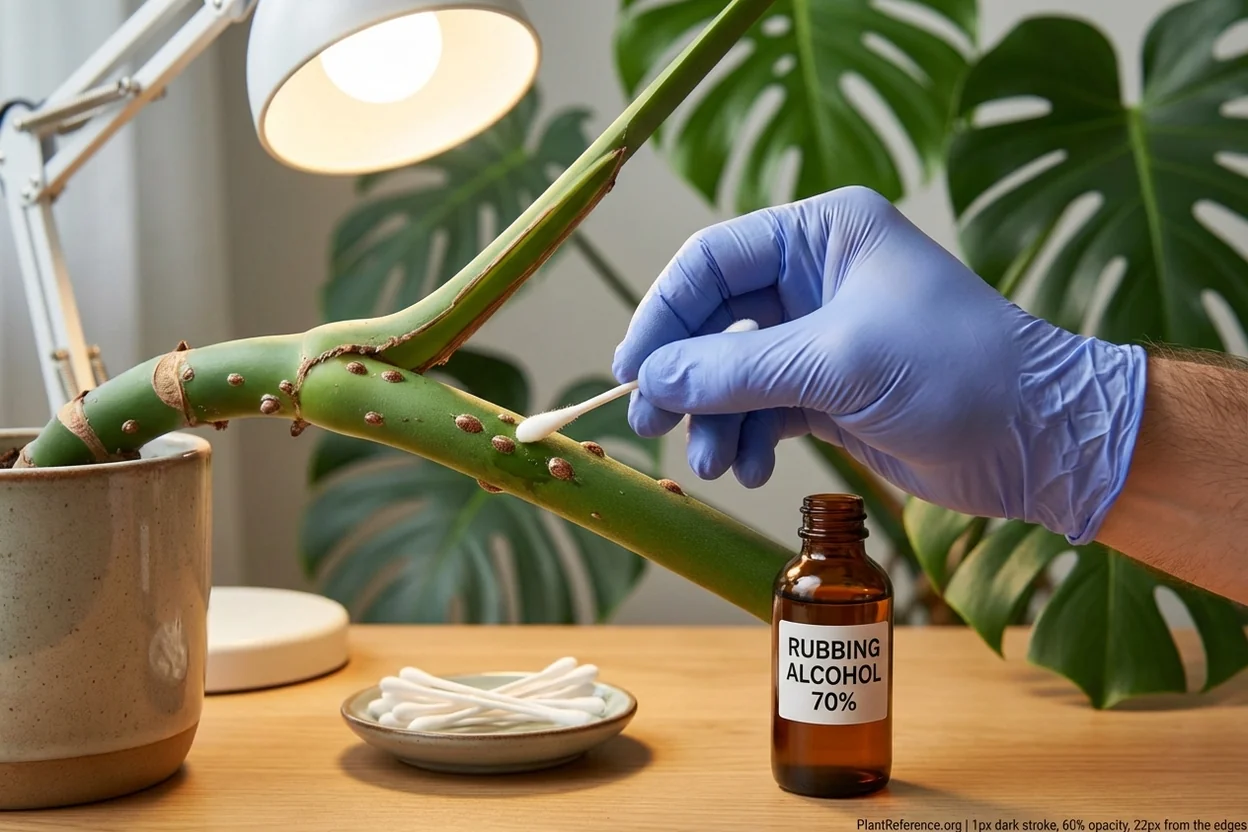
I've found that persistence beats strength with scale insects. Weekly physical removal combined with systemic treatment eventually wins, but it takes 6-8 weeks minimum.
Thrips: Tiny Rasping Menace
Thrips are slender, fast-moving insects that rasp leaf surfaces and suck out the cellular contents. They're harder to spot than other pests but leave distinctive damage.
What they look like: Tiny (1-2mm), slender, yellow to brown insects that move quickly when disturbed. Hold a white paper under leaves and tap—they'll fall off and be visible against the white background.
Damage signs: Silvery streaks or stippling on leaves, tiny black specks of thrip excrement, leaves with papery appearance, reduced growth vigor.
Feeding behavior: Unlike other sucking insects, thrips rasp the leaf surface with their mouthparts, creating the characteristic silvery damage.
Treatment strategy: Blue sticky traps catch adults, while weekly spraying with spinosad (organic) or systemic insecticides controls nymphs. Thrips have a 2-3 week life cycle, so treatment must continue for 4-5 weeks.
The sticky trap component is essential because thrips are highly mobile and will reinfest from other plants or even fly in from outdoors.
Fungus Gnats: Soil-Dwelling Annoyance
Fungus gnats are those annoying little flies that hover around your monstera's soil. While adults don't damage plants directly, their larvae feed on organic matter and fine root hairs in constantly moist soil.
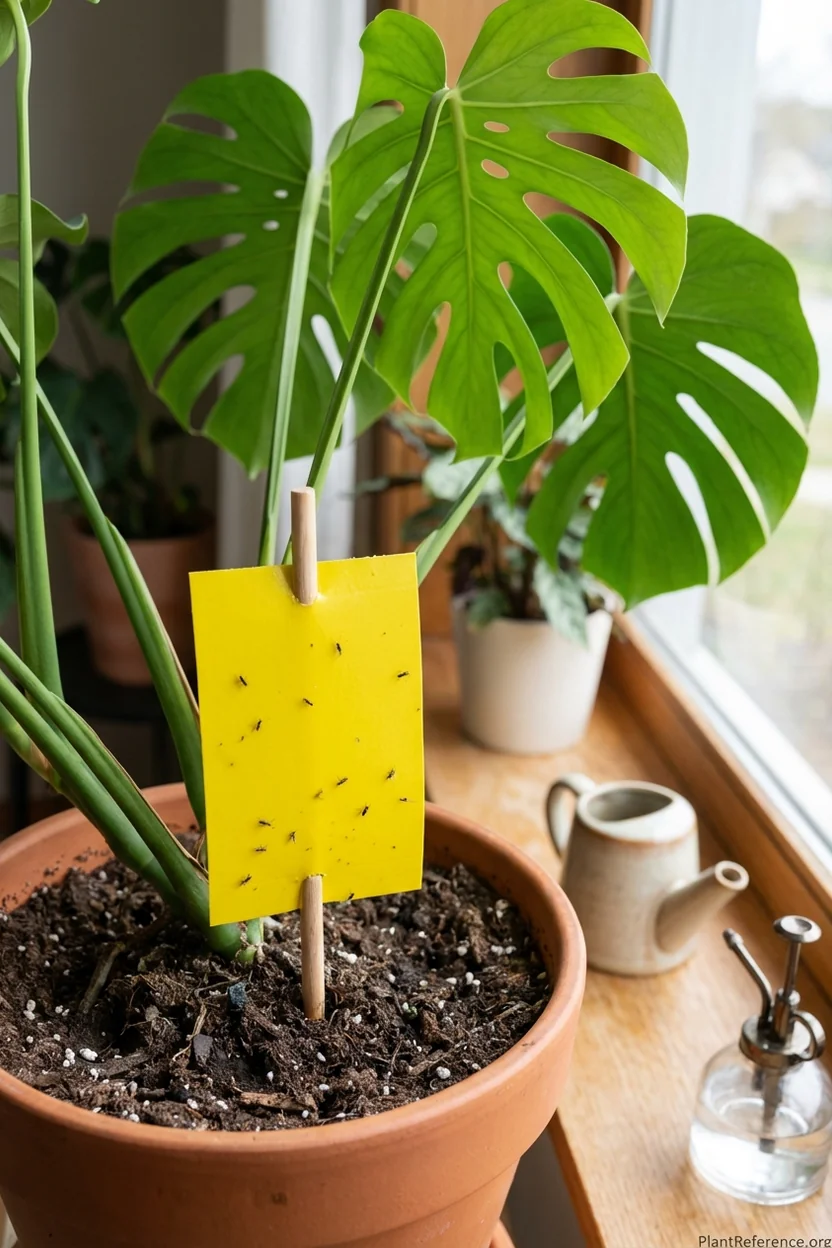
What they look like: Small dark flies, 2-3mm long, that fly in zigzag patterns when disturbed. Larvae are small white maggots in the soil.
Damage signs: Flying insects around plant, larvae visible in soil when you water, stunted growth in severe infestations, increased susceptibility to root rot.
Root cause: Overwatering and poor drainage create perfect breeding conditions in constantly moist soil.
Treatment approach: Let soil dry more between waterings, apply beneficial nematodes to soil, use yellow sticky traps for adults. Bottom-up watering reduces surface moisture where gnats lay eggs.
This connects directly to proper How to Water a Monstera: Complete Watering Guide|monstera watering practices—solving the moisture problem solves the gnat problem.
Treatment Protocol: What Actually Works
Here's my field-tested approach for treating any monstera pest infestation:
Immediate response (Day 1):
Isolate the infected plant immediately to prevent spread
Identify the specific pest using magnifying glass if needed
Physical removal of visible pests (alcohol swabs for mealybugs/scale)
Shower plant with lukewarm water to knock off mobile pests
Begin appropriate chemical treatment based on pest type
Week 1-2 treatment schedule:
Neem oil spray every 3 days for spider mites and general prevention
Insecticidal soap every 5 days for mealybugs and soft-bodied pests
Systemic insecticide every 2 weeks for scale and thrips
Daily inspection for new pest activity or eggs hatching
Continue physical removal of visible pests
Weeks 3-4 monitoring:
Reduce spray frequency to weekly as pest numbers decline
Watch for new outbreaks from missed eggs or reinfestations
Begin preventive care measures (humidity, air circulation)
Don't reintroduce plant to collection until 2 weeks pest-free
The biggest mistake I see is people stopping treatment too early. Pest eggs can hatch for weeks after you think the problem is solved.
→ Garden Safe Neem Oil Extract ($12-18) - Organic broad-spectrum treatment
Cold-pressed neem oil concentrate effective against spider mites, mealybugs, scale, and thrips. Mix 2 tablespoons per gallon water. Organic and safe for indoor use. Controls both insects and fungal diseases. Apply early morning or evening to prevent leaf burn. Works by disrupting pest feeding and reproduction cycles. Biodegradable formula won't harm beneficial insects when used properly.
Prevention: Stop Pests Before They Start
Prevention is 10 times easier than treatment. Here's how I keep my monstera collection pest-free:
Quarantine protocol: Every new plant gets 30 days isolated before joining my collection. New pests usually show up within 2-3 weeks if they're going to appear.
Weekly inspections: I check every monstera Thursday mornings—same day, same systematic approach. Leaf undersides first, then stems, then soil surface for fungus gnats.
Environmental controls: Maintain 50-60% humidity (spider mites hate this), ensure good air circulation with a small fan, avoid overcrowding plants.
Plant hygiene: Wipe down leaves monthly with damp cloth, remove any dropped leaves immediately, don't reuse soil from infected plants.
Stress reduction: Healthy plants resist pests better. Proper Monstera Light Requirements: Finding the Perfect Spot|lighting, consistent watering, and appropriate fertilization create strong plants that fight off minor infestations naturally.
The connection between plant health and pest resistance is huge. I've noticed that stressed monstera (wrong light, inconsistent watering, wrong humidity) get infested faster and take longer to recover.
→ LEVOIT Classic 300S Smart Humidifier ($50-70) - Prevents spider mites
App-controlled humidifier maintains consistent 50-60% humidity levels that prevent spider mite infestations. Large 1.6-gallon tank runs 25+ hours on high setting. Compatible with Alexa and Google Assistant for automated scheduling. Top-fill design with easy cleaning access. Auto mode adjusts output based on current humidity readings. Whisper-quiet operation under 28dB won't disturb daily activities.
Product link unavailable
Understanding integrated pest management is crucial for long-term success. Rather than relying solely on chemical treatments, combine environmental controls, biological factors, and targeted interventions for sustainable pest-free growing.
For severe infestations affecting multiple plants, consider consulting with local extension services or plant pathologists who can identify specific pest strains and recommend targeted biologicals or systemic treatments appropriate for your specific situation.
Frequently Asked Questions
Reading about plants and recognising them are different skills. These three build the second.
- Daily PlantIdentify the day’s mystery plant from a close-up photograph.
- Keyed OutWork a dichotomous key, lead by lead, to name a hidden specimen.
- Name That PlantName a specimen from botanical clues dealt hardest first.
Free to play, no account needed
TJ stumbled into plant parenthood when a coworker gave him a neglected pothos. That single plant sparked an obsession that led him to quit his corporate marketing job and start a plant care service for busy professionals in Chicago. TJ maintains over 150 plants for residential clients and runs monthly plant swap meetups at local coffee shops. He's self-taught through YouTube, plant forums, and plenty of expensive mistakes (RIP to his variegated monstera). TJ specializes in troubleshooting common houseplant problems and is known for his blunt, no-BS advice: "Your plant isn't dying because Mercury is in retrograde—you're overwatering it." He's particularly skilled with finicky tropical plants like fiddle leaf figs and calatheas.