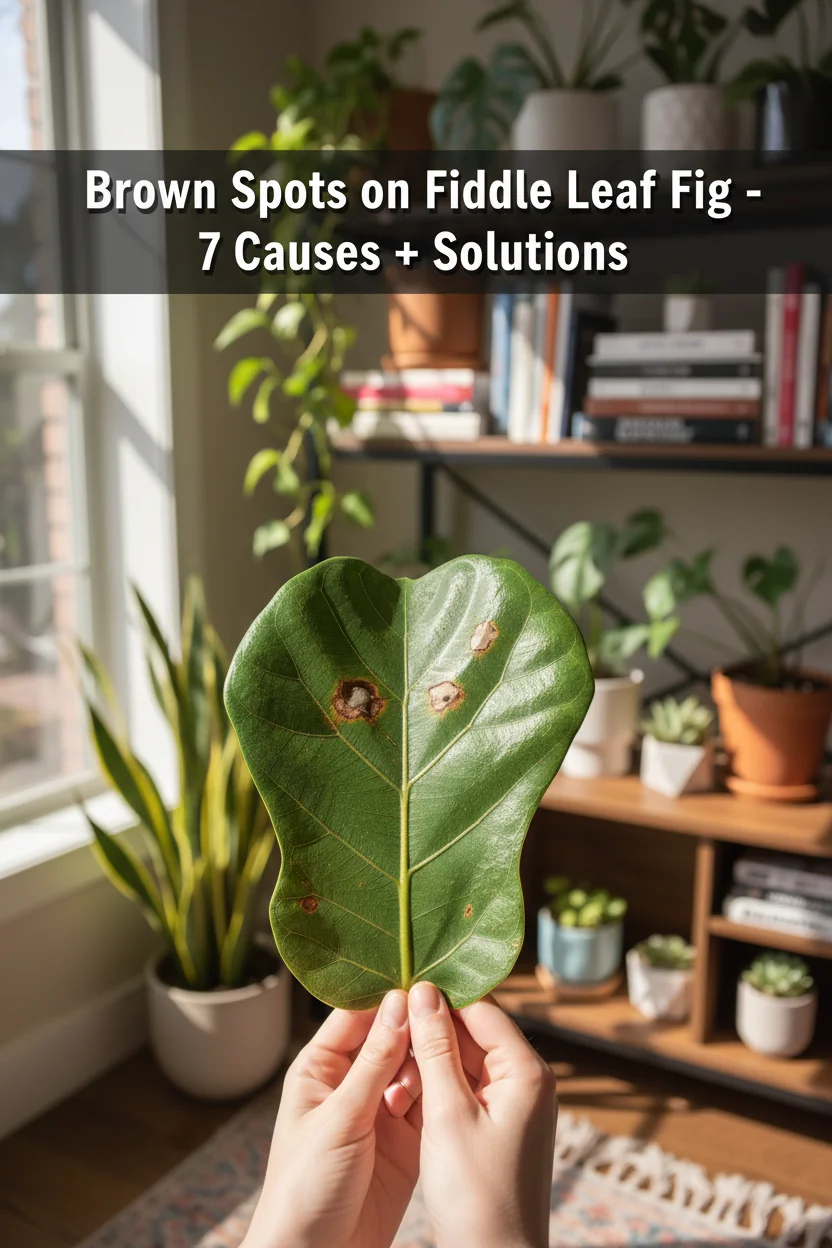
Brown Spots on Fiddle Leaf Fig: 7 Causes + Solutions
Pets & Toxicity
Recorded toxicity for plants linked in this guide. An unknown status is not a safety assessment.
Toxic to pets: fiddle leaf figDetailsHide
— Image © Plant Reference 2026
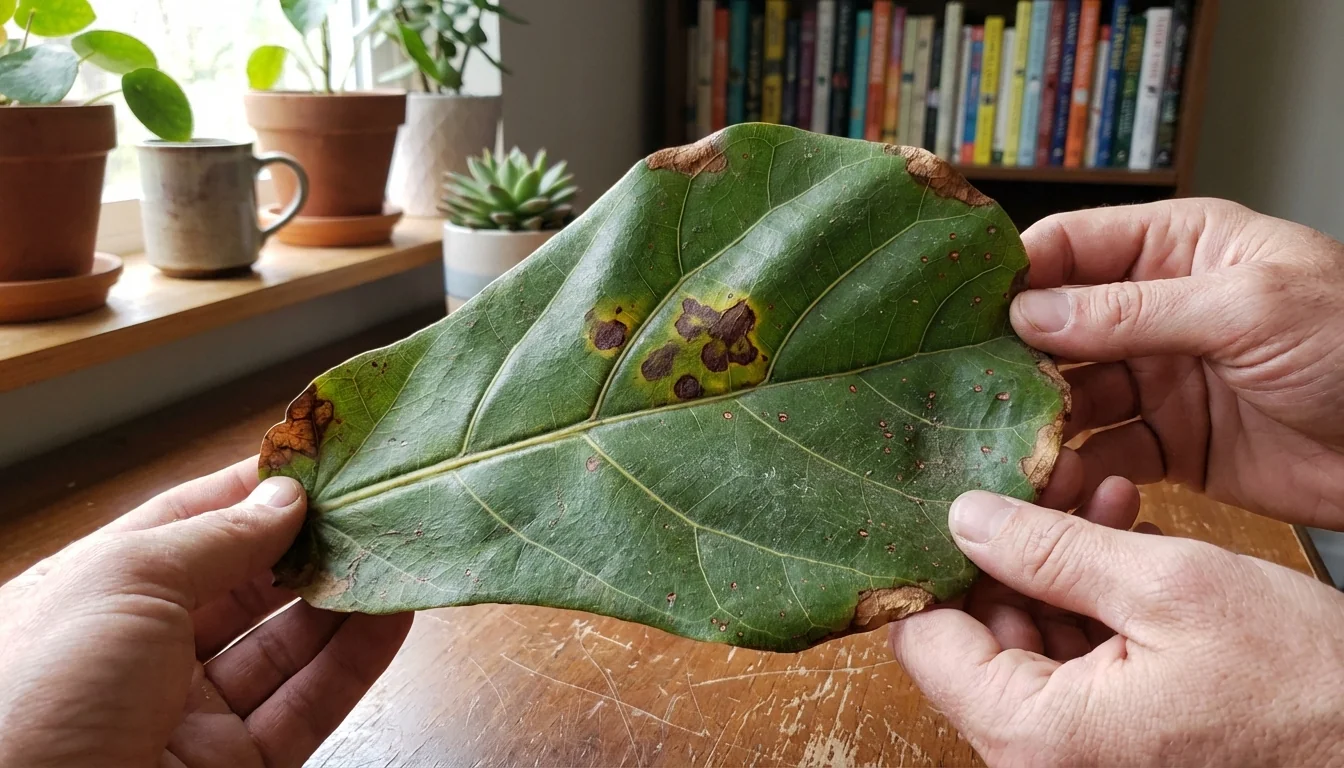
Let's be honest—brown spots on your fiddle leaf fig 🌿Ficus lyrata (FYE-kus lye-RAY-tuh) aren't just ugly. They're your plant screaming that something's wrong. I've diagnosed hundreds of spotted fiddle leaf figs, and here's what most people get wrong: they treat all brown spots the same. They don't. Location, color, and texture tell you exactly what's killing your plant.
Here's the truth: dark brown or black spots spreading from leaf centers mean root rot from too much water. Crispy tan edges mean not enough water or humidity. Light brown patches on top leaves mean sunburn. Each cause needs a completely different fix, and using the wrong treatment makes things worse.
This guide breaks down all seven causes of brown spots with clear diagnostic criteria, immediate solutions, and prevention strategies that actually work. No fluff—just what you need to save your plant.
Understanding Brown Spot Patterns: Location Matters
Before we dive into causes, you need to understand that brown spot location tells you 90% of what you need to know. The fiddle leaf fig's vascular system—the xylem vessels that transport water and nutrients—works from roots to leaf edges through the central vein structure. When problems start at roots, spots appear at leaf centers. When problems are environmental, spots show up at edges or on specific leaf surfaces.
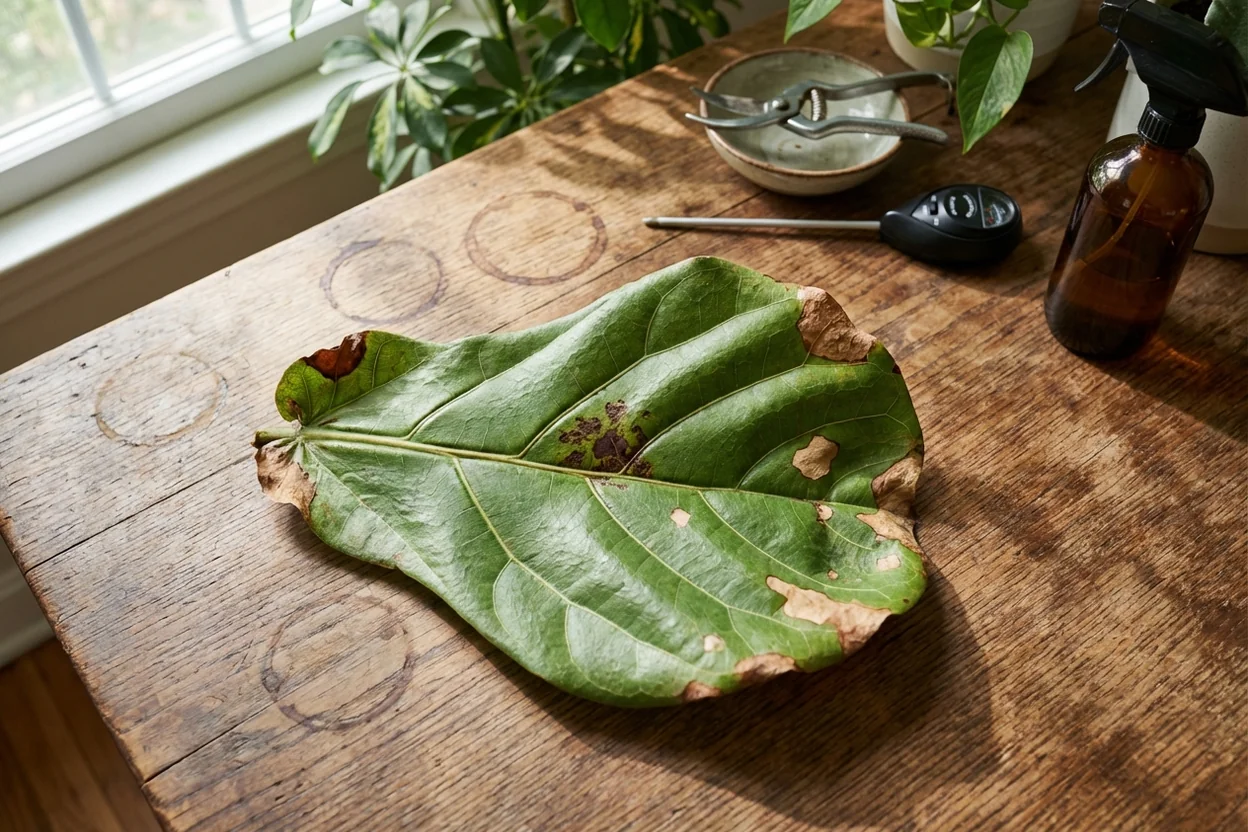
Center spots (starting from main vein outward): Root issues, fungal/bacterial infection, systemic problems from overwatering
Edge spots (leaf margins and tips): Environmental stress, underwatering, low humidity, temperature extremes
Top surface spots (upper leaf only): Sunburn, physical damage, pest feeding
Random scattered spots (throughout leaf): Pest damage, edema, or infection spreading
Now let's diagnose your exact problem.
Cause #1: Root Rot and Overwatering (Dark Center Spots)
This is the most common and most serious cause of brown spots. When you overwater, roots sit in saturated soil where oxygen can't reach them. Root cells die, turning brown and mushy. Dead roots can't transport water or nutrients, so leaves develop dark brown or black spots that start at the center and spread outward. These spots often have a yellow halo around them.
How to diagnose root rot:
Check if spots are dark brown or black (not light tan)
Spots start near the central vein and spread toward edges
Soil feels wet or soggy when you stick your finger 2-3 inches (5-7 cm) deep
Yellow halos often surround brown spots
Multiple leaves affected, usually starting with lower leaves
Leaves may feel soft or droopy
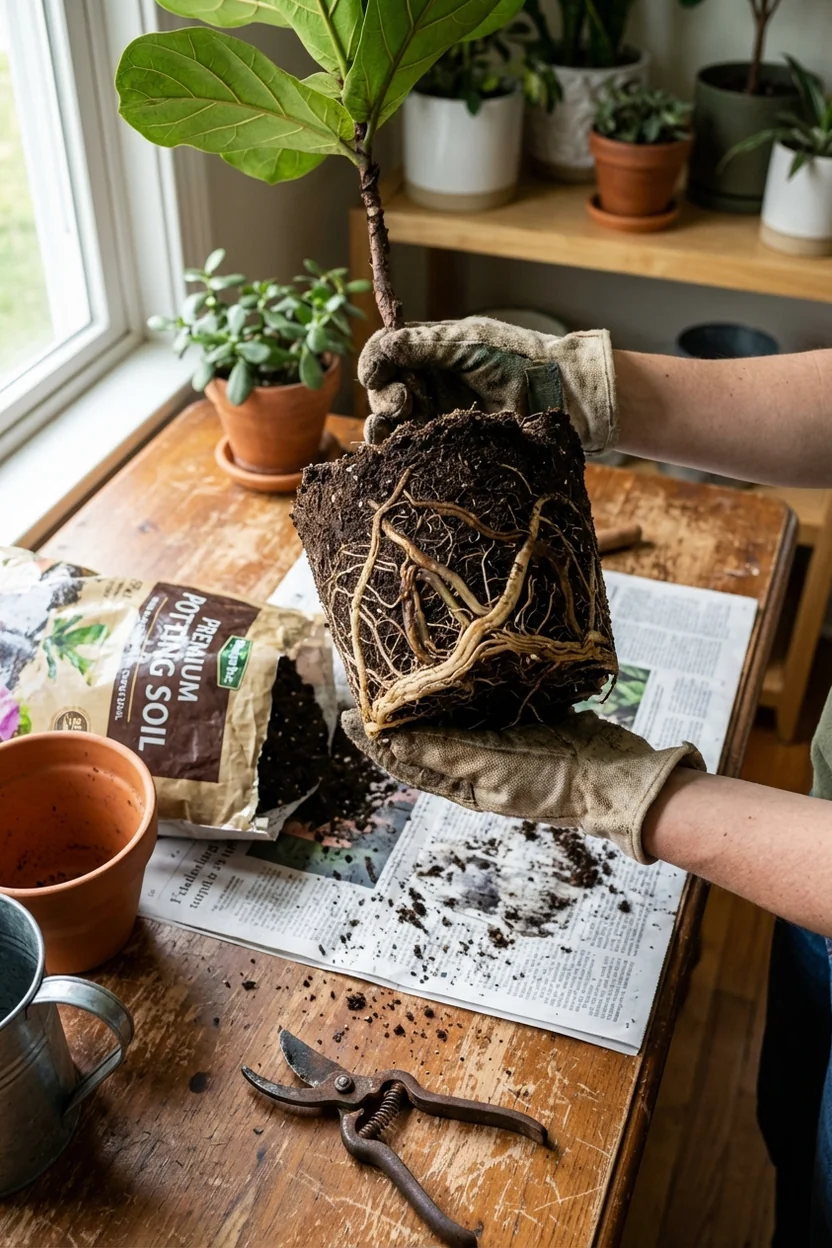
Pull your plant from its pot. Healthy roots are white or light tan and firm. Rotted roots are brown, black, or gray and feel mushy or slimy. If you've got root rot, you need to act immediately.
Immediate fixes for root rot:
Remove plant from pot and wash all soil from roots with room temperature water
Use sterilized pruning shears to cut away all brown, black, or mushy roots—cut until you see only white or light tan firm tissue
Let roots air dry for 2-3 hours on newspaper
Prepare fresh pot with drainage holes and new well-draining soil mix
Repot plant at same depth as before, pressing soil gently around roots
Water lightly—just enough to settle soil, not saturate it
Place in bright indirect light and don't water again until top 2-3 inches (5-7 cm) of soil are completely dry
Cut off leaves with severe brown spotting to redirect energy to recovery
For detailed repotting instructions that prevent further damage, check out How to Repot a Fiddle Leaf Fig (Step-by-Step).
Recovery timeline: With aggressive root trimming and proper aftercare, you should see new growth within 4-6 weeks. Existing spotted leaves won't recover—they stay damaged—but new leaves will grow healthy if you've fixed the root problem.
Cause #2: Underwatering (Crispy Brown Edges)
When fiddle leaf figs don't get enough water, leaves can't maintain turgor pressure—the water pressure inside cells that keeps leaves firm and upright. The stomata on leaf surfaces close to conserve water, but cells at leaf margins dry out first because they're furthest from the central vein. Result: crispy, dry, brown edges that curl and eventually flake off.
Low humidity causes similar symptoms through excessive transpiration. When ambient humidity drops below 40%, water evaporates from leaf surfaces faster than roots can replace it, even if soil is moist.
How to diagnose underwatering:
Brown spots are dry and crispy (not soft or wet)
Damage concentrated at leaf edges and tips
Spots are light to medium brown (tan colored)
Leaves may curl slightly inward at edges
Soil is dry when you stick finger 2-3 inches (5-7 cm) deep
Lower leaves may also be yellowing
Immediate fixes for underwatering:
Water thoroughly until water runs from drainage holes—let it drain completely and empty saucer
Establish consistent watering schedule: check soil every 5-7 days and water when top 2 inches (5 cm) are dry
Increase humidity to 40-60% using humidifier placed 3-4 feet (90-120 cm) from plant
Alternative humidity methods: pebble tray filled with water under pot (don't let pot sit in water), group plants together, or mist leaves 2-3 times weekly
Move plant away from heating vents, AC vents, or drafty windows that accelerate water loss
For complete watering guidance including seasonal adjustments, see How to Water a Fiddle Leaf Fig (Never Kill Yours Again).
Prevention: Use a moisture meter to take guesswork out of watering. I recommend the XLUX T10 model—it's cheap, reliable, and doesn't need batteries. Stick it 2-4 inches (5-10 cm) deep near pot edge (not directly against roots) and water when it reads in the "Dry" zone.
Cause #3: Bacterial or Fungal Infection
Sometimes brown spots aren't about watering—they're about infection. Bacterial leaf spot (Xanthomonas campestris) and fungal infections like anthracnose create brown or black spots that spread rapidly and may have yellow halos or water-soaked margins. These infections enter through wounds, natural leaf openings, or when humidity and poor air circulation create ideal conditions.
How to diagnose infection:
Spots have irregular shapes (not clean circles)
Yellow or water-soaked halos surround brown areas
Spots spread rapidly across multiple leaves within days
May see small raised bumps or pustules on spot surfaces
Often follows periods of high humidity or leaf wetness
Spots may ooze liquid when pressed gently
Immediate fixes for infection:
Isolate plant immediately from other houseplants to prevent spread
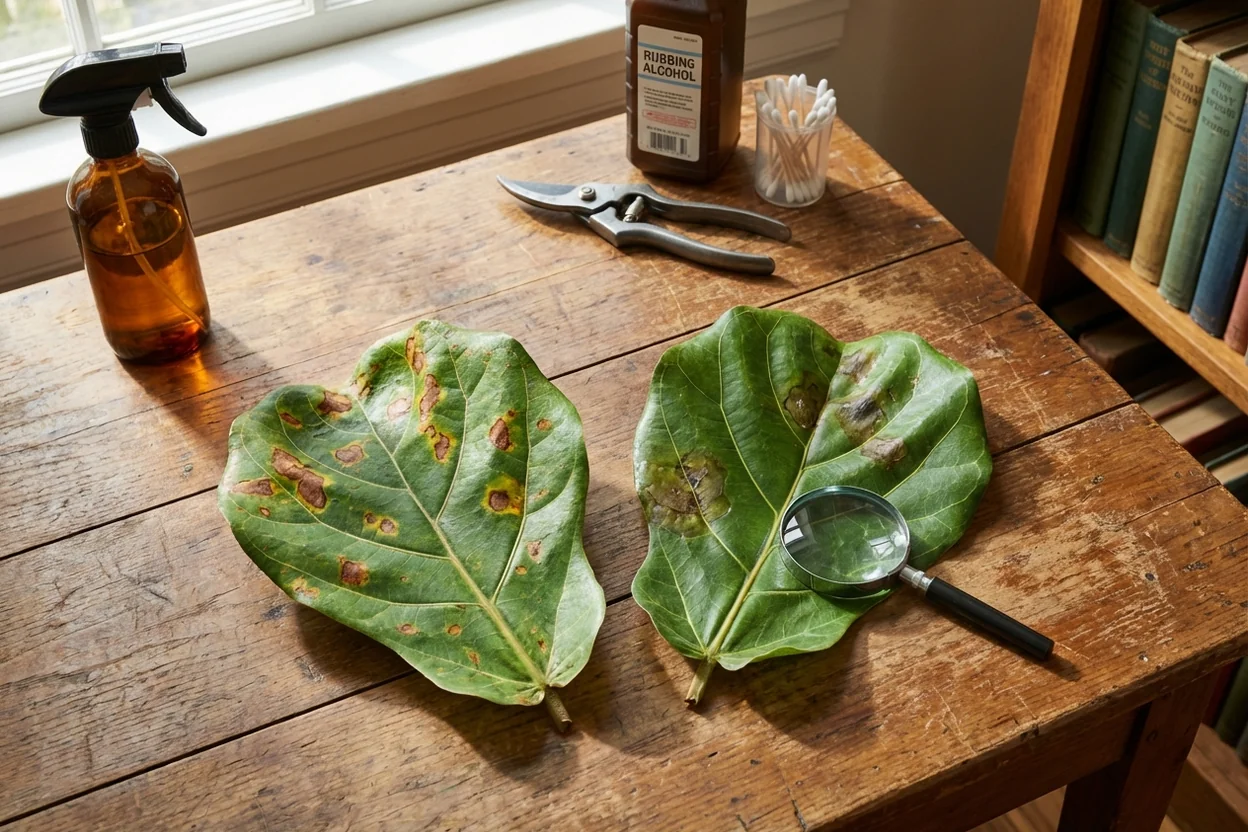
Remove all affected leaves with sterilized pruning shears—cut entire leaf at base of petiole
Sterilize shears between each cut with rubbing alcohol or 10% bleach solution
Improve air circulation around plant with small fan on low setting
Reduce humidity if above 65%
Avoid getting water on leaves when watering
Water only soil, not foliage
Consider applying copper-based fungicide if infection is widespread (follow product instructions)
Prevention: Bacterial and fungal infections thrive in stagnant humid conditions. Ensure good air circulation, avoid misting if humidity is already high, and never let leaves stay wet overnight. When pruning, always sterilize tools between cuts to prevent spreading pathogens.
Cause #4: Sunburn and Light Damage
Fiddle leaf figs evolved on rainforest floors under dense canopy cover receiving filtered, indirect light. Direct afternoon sun is like pointing a laser at their leaves—photosynthetic cells get more light energy than they can process, creating reactive oxygen species that damage cell membranes. Result: light brown or bleached-looking patches on upper leaf surfaces closest to the light source.
How to diagnose sunburn:
Spots are light tan, brown, or bleached/yellow (not dark brown or black)
Damage concentrated on top surfaces of upper leaves
Spots appear within days of moving plant to sunnier location
Leaf tissue in spots feels papery or crispy
Lower leaves and undersides remain unaffected
Plant is near unfiltered south or west-facing window
Immediate fixes for sunburn:
Move plant 3-5 feet (90-150 cm) back from window or to east-facing window with gentler morning light
Use sheer curtains to filter intense afternoon sun if moving isn't possible
Remove severely damaged leaves that are more than 50% brown
Leave partially damaged leaves if less than 30% affected—plant can still photosynthesize with them
Prevention: Fiddle leaf figs need bright light but not direct sun. East-facing windows provide ideal morning light. South or west windows work if plant is 4-6 feet (120-180 cm) from glass or if sheer curtains filter light. If you must increase light exposure, acclimate gradually over 2-3 weeks, moving plant closer to window in 1-foot (30 cm) increments every 5-7 days.
For complete lighting requirements and window placement strategies, see Fiddle Leaf Fig Light Requirements: The Ultimate Guide.
Cause #5: Edema from Inconsistent Watering
Edema occurs when roots absorb water faster than leaves can transpire it away. Cells in leaf tissue swell with excess water, burst, and die, creating small brown or red-brown spots or bumps primarily on new growth. This happens when you alternate between letting soil get bone dry, then flooding it, creating inconsistent water availability.
How to diagnose edema:
Small brown or reddish-brown raised bumps on leaf surfaces
Appears primarily on new growth and young leaves
Spots may look corky or crusty
Often occurs after period of drought followed by heavy watering
May be accompanied by slight leaf curling
Immediate fixes for edema:
Establish consistent watering schedule based on soil moisture, not calendar dates
Water when top 2-3 inches (5-7 cm) dry, but before soil becomes completely dry throughout pot
Avoid "feast or famine" watering cycles
Use moisture meter to maintain consistent soil moisture in middle range
Improve drainage if water sits on soil surface before absorbing
Prevention: Consistency is everything. Check soil moisture at same depth every time and water when it reaches same dryness level. This trains roots to expect regular water supply and prevents the boom-bust cycle that causes edema.
Cause #6: Pest Damage
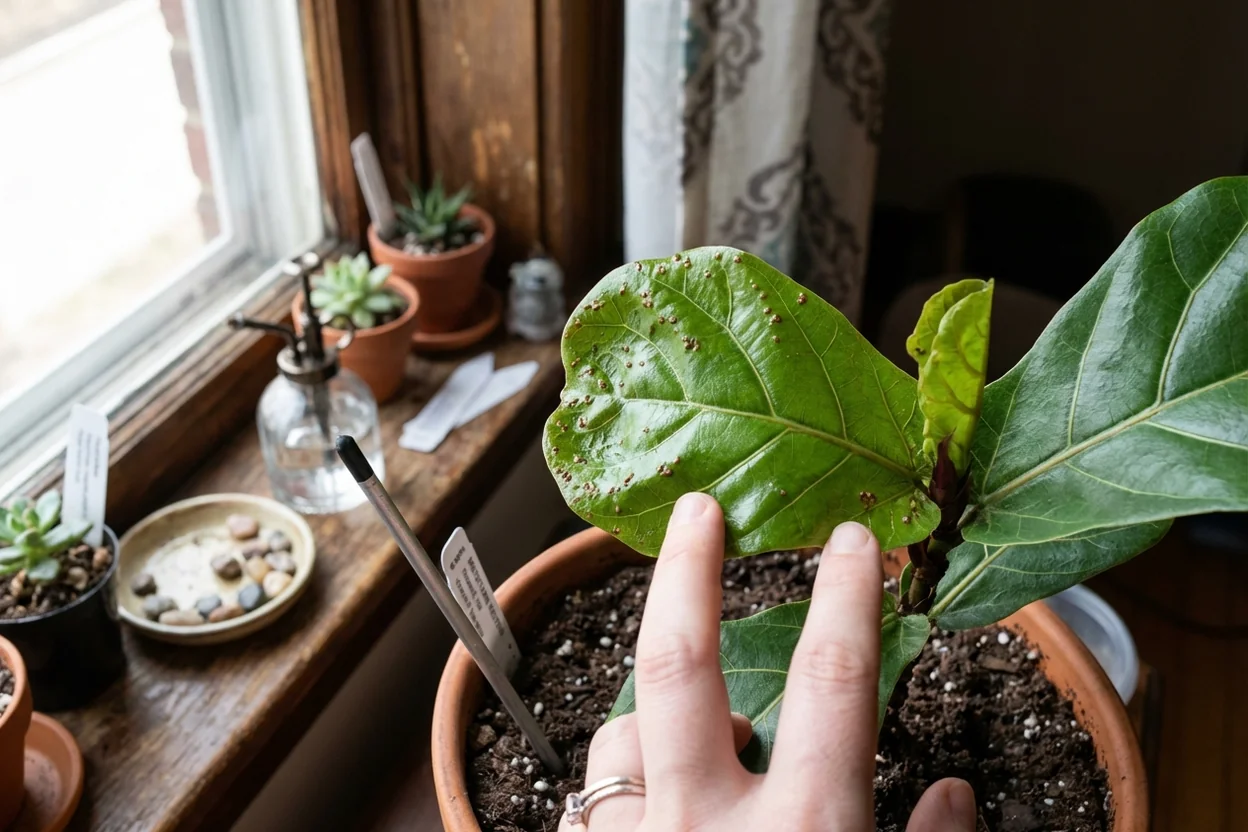
Pests like spider mites, thrips, and scale insects puncture leaf cells to feed on sap, creating small brown spots where cells die. Spider mites cause stippling—tiny brown or yellow dots clustered together. Scale insects leave brown spots where they attach and feed. Thrips create silvery-brown streaks or patches.
How to diagnose pest damage:
Multiple small brown dots or spots scattered randomly across leaves
May see tiny moving insects with magnifying glass (spider mites look like moving dust specks)
Fine webbing between leaves or on undersides (spider mites)
Sticky residue on leaves or surfaces below plant (scale, aphids)
White cottony masses in leaf joints (mealybugs)
Silver or bronze streaking (thrips)
Immediate fixes for pest damage:
Isolate plant from other houseplants immediately
Spray entire plant with strong stream of water to dislodge insects (take outside or use shower)
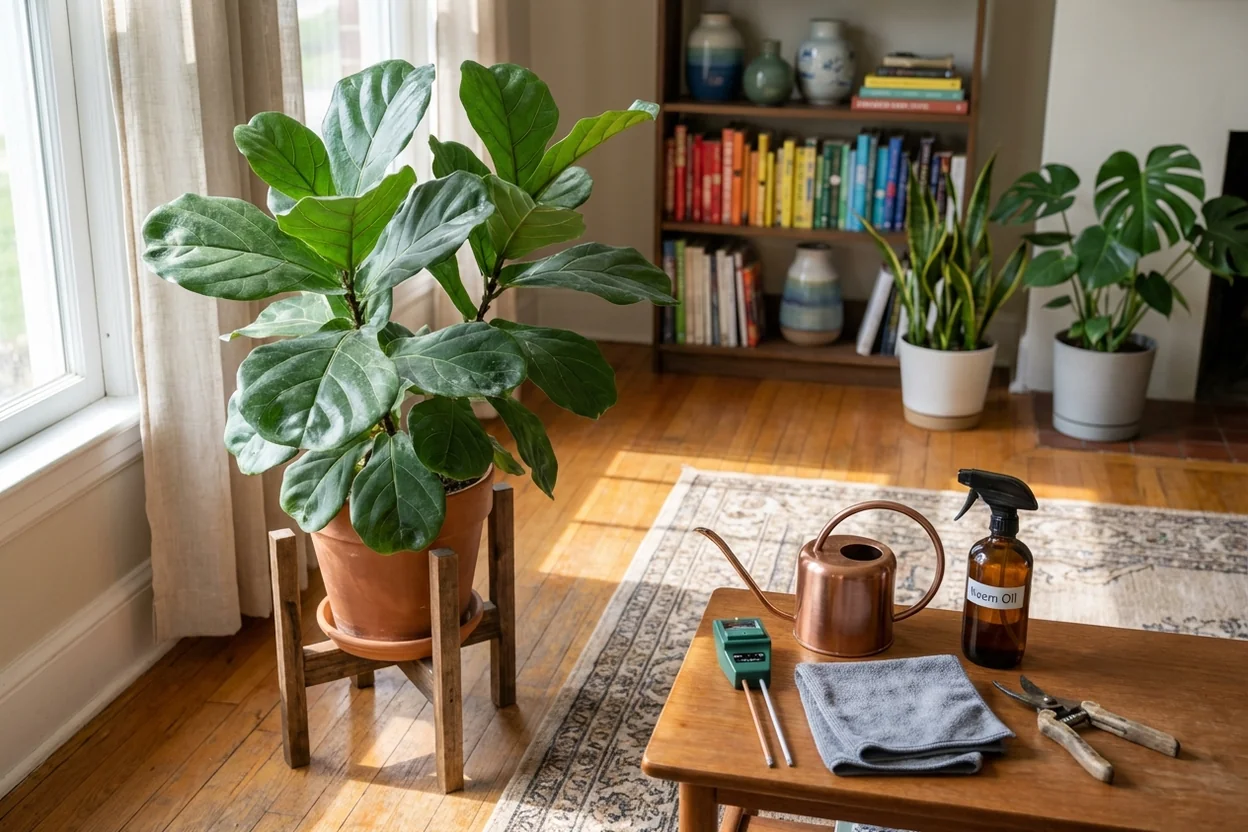
Apply neem oil spray: Mix 2 tablespoons neem oil with 1 teaspoon mild liquid soap in 1 gallon (3.8 L) water, spray all leaf surfaces until dripping
For scale, manually remove visible insects with cotton swab dipped in rubbing alcohol
Apply insecticidal soap for heavy infestations following product directions
Repeat treatment every 7-10 days for 3-4 weeks until no insects visible
Inspect new growth weekly during treatment
Prevention: Inspect your fiddle leaf fig weekly, especially undersides of leaves and new growth where pests congregate. Wipe leaves monthly with damp cloth to remove dust and discourage pest establishment. Quarantine new plants for 2-3 weeks before placing near other houseplants.
For detailed pest identification and treatment protocols, see Fiddle Leaf Fig Pests: Identification & Treatment.
Cause #7: Natural Aging (Lower Leaves Only)
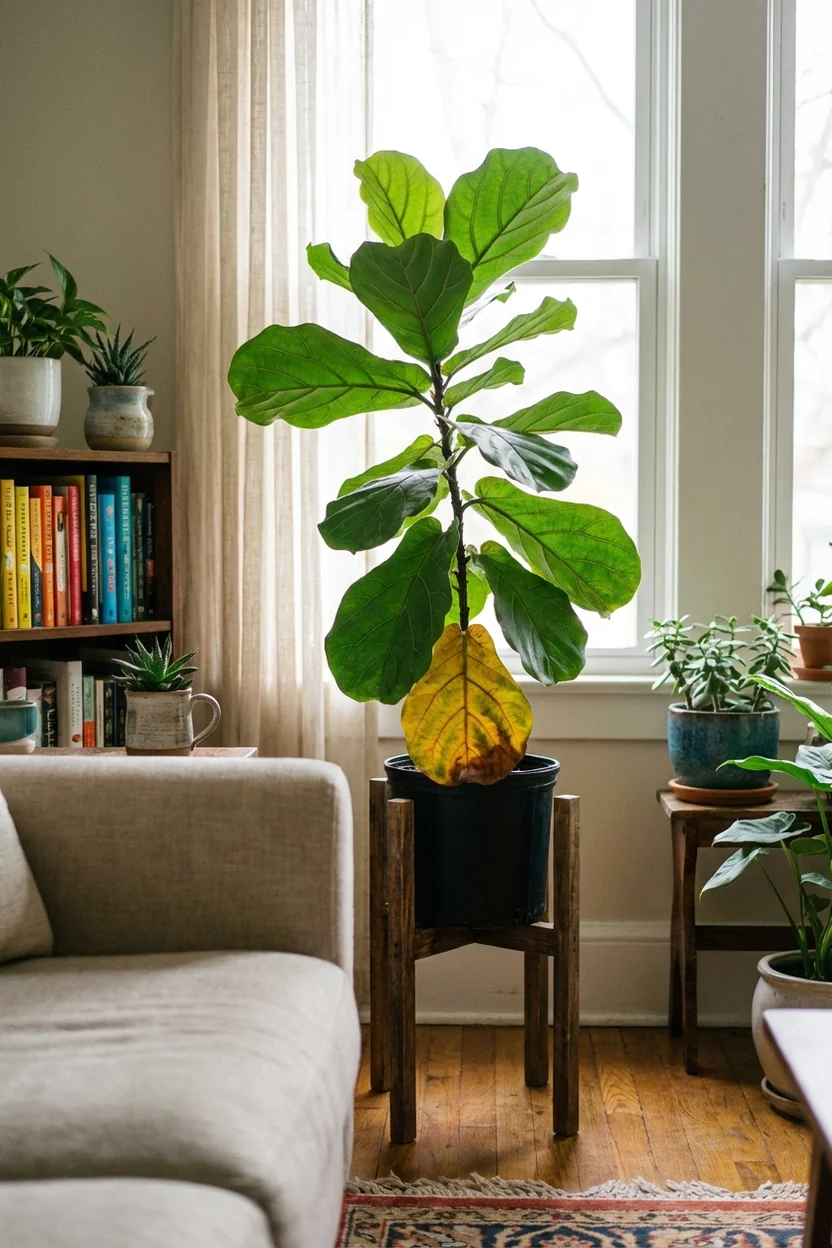
Here's what nobody tells you: fiddle leaf figs naturally shed 1-2 lower leaves per year as they mature. As plant grows taller and produces new leaves at top, it redirects resources away from oldest leaves at bottom. These leaves gradually yellow, develop brown spots, and eventually drop. This is completely normal and not a sign of problems—if it's limited to 1-2 of the lowest leaves and rest of plant looks healthy.
How to diagnose natural aging:
Only 1-2 of the very lowest, oldest leaves affected
Browning progresses slowly over several weeks
Leaf yellows before developing brown spots
All other leaves above remain vibrant green and healthy
New growth at top is robust
Plant growing actively with new leaves forming
No other symptoms present (no drooping, no pest signs, soil moisture appropriate)
What to do: Nothing. Let the leaf complete its natural cycle and fall off, or trim it once more than 50% is brown. This is your plant being healthy and growing, not dying.
Diagnostic Flowchart: Identifying Your Exact Problem
Still not sure which cause you're dealing with? Use this decision tree:
Start here: Where are the brown spots located?
Spots primarily at leaf edges and tips (crispy, dry):
Check soil moisture 2-3 inches (5-7 cm) deep
Dry? →
Underwatering (Cause #2) - Moist but spots still crispy? → Low humidity (also Cause #2)
Spots in leaf centers or spreading from central vein:
Check soil moisture
Wet or soggy? → Remove plant and check roots
Mushy brown roots? →
Root rot (Cause #1) - Roots look healthy? → Bacterial/fungal infection (Cause #3)
Spots on top leaf surfaces only (upper leaves): - Light tan or bleached appearance? → Sunburn (Cause #4) - Near bright window with direct sun exposure? → Definitely sunburn
Small raised bumps or spots on new growth: - Recent watering inconsistency? → Edema (Cause #5)
Many small scattered spots with possible insect signs: - Inspect with magnifying glass for moving insects → Pest damage (Cause #6)
1-2 lowest leaves only, rest of plant healthy: - Slow progression over weeks? → Natural aging (Cause #7), no action needed
For comprehensive troubleshooting across all fiddle leaf fig problems, reference Fiddle Leaf Fig Care: The Complete Guide (2025).
Prevention: Stop Brown Spots Before They Start
Here's the truth: preventing brown spots is 100 times easier than fixing them. Most brown spot problems come down to four factors you can control right now.
1. Master the watering schedule:
Use moisture meter to remove guesswork (XLUX T10 is $10 and lasts years)
Water only when top 2-3 inches (5-7 cm) of soil are dry
Water thoroughly until it drains from bottom, then empty saucer
Frequency changes seasonally: every 7-10 days in summer, every 10-14 days in winter
Never let soil become waterlogged or completely bone-dry
2. Optimize soil drainage:
Use fast-draining soil mix specifically for fiddle leaf figs
Soil should contain perlite, bark, and coco coir for drainage and aeration
Ensure pot has drainage holes (non-negotiable)
Repot every 2-3 years with fresh soil to prevent compaction
For soil recommendations and DIY mix recipes, check Best Soil for Fiddle Leaf Fig (Tested & Compared).
3. Provide proper light without burning:
Place in bright indirect light 6-8 hours daily
East-facing windows ideal for gentle morning sun
Filter afternoon sun through sheer curtains if using south/west windows
Keep 4-6 feet (120-180 cm) from unfiltered bright windows
Rotate plant 1/4 turn weekly for even light exposure
4. Maintain consistent environment:
Keep temperature between 60-75°F (15-24°C) year-round
Maintain humidity 40-60% with humidifier if needed
Avoid placing near heating vents, AC vents, or drafty windows
Don't move plant frequently—let it acclimate to its location
5. Regular maintenance prevents problems:
Inspect leaves weekly for early pest detection
Wipe leaves monthly with damp cloth to remove dust and improve photosynthesis
Prune damaged leaves once more than 50% brown to redirect energy
Fertilize monthly spring-summer with 3:1:2 NPK ratio formula, none in winter
Sterilize pruning tools between cuts to prevent disease spread
For comprehensive seasonal care adjustments, see Fiddle Leaf Fig Winter Care (Keep Yours Thriving).
Bottom line: brown spots on your fiddle leaf fig aren't a death sentence. They're a diagnostic tool. Learn to read the pattern, identify the cause, and apply the right fix. Most importantly, shift from reactive to proactive care. Consistent watering, proper light, good drainage, and regular inspection prevent 90% of brown spot problems before they start.
Your fiddle leaf fig can recover from brown spots if you act fast and fix the underlying cause. Spotted leaves won't heal, but new growth will emerge healthy once conditions are correct. Focus your energy on prevention and creating the environment where your plant thrives naturally, not on constantly treating problems.
Frequently Asked Questions
Reading about plants and recognising them are different skills. These three build the second.
- Daily PlantIdentify the day’s mystery plant from a close-up photograph.
- Keyed OutWork a dichotomous key, lead by lead, to name a hidden specimen.
- Name That PlantName a specimen from botanical clues dealt hardest first.
Free to play, no account needed
Sarah earned her doctorate in plant biology and spent time working in botanical garden education before transitioning to freelance writing and consulting. Now based in Portland, Oregon, she teaches plant identification workshops at local community centers and maintains a modest collection of over 60 houseplants in her small apartment. Sarah specializes in helping beginners understand plant science without the jargon—her approach focuses on practical observation over theory. She's killed her fair share of fiddle leaf figs and finally cracked the code on keeping them alive.