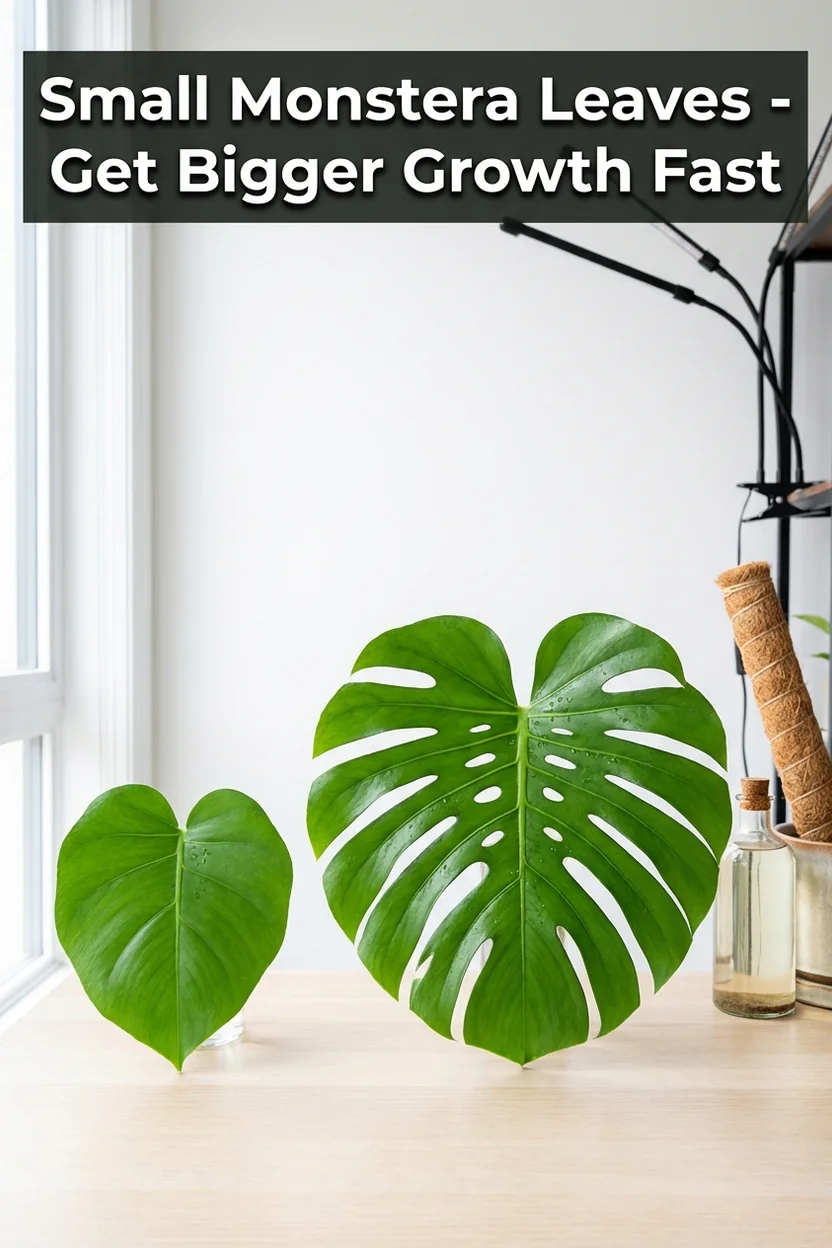
Small Monstera Leaves: How to Get Bigger Growth
Pets & Toxicity
Recorded toxicity for plants linked in this guide. An unknown status is not a safety assessment.
Toxic to pets: Swiss cheese plantDetailsHide
Monstera deliciosa — Toxicity Warning
Toxic to pets and humans. All vegetative parts contain calcium oxalate crystals that cause mouth pain, swelling, and drooling if ingested. Unripe fruit also contains calcium oxalate and is toxic; only fully ripened fruit (after 12+ months) is edible.View Monstera deliciosa plant profile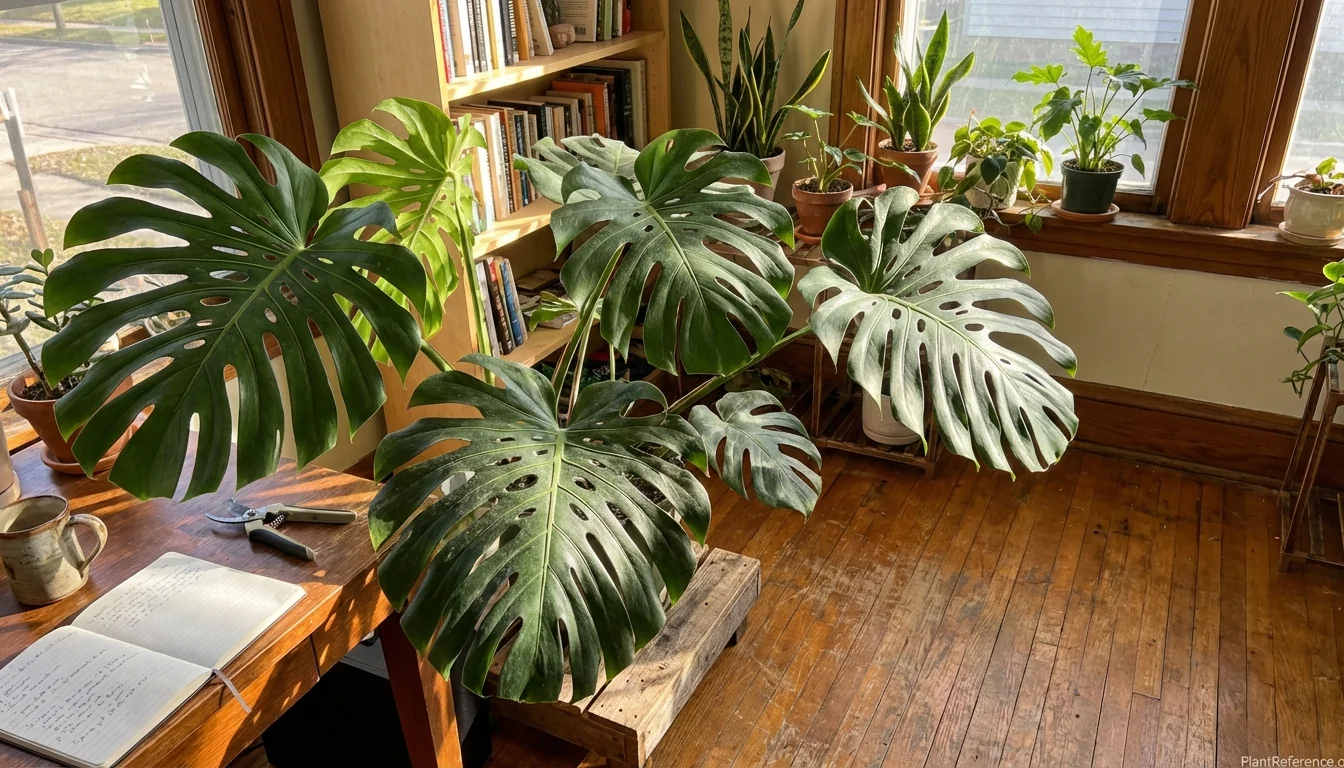
— Image © Plant Reference 2026
Watching your monstera produce tiny, solid leaves month after month is incredibly frustrating—especially when you see those gorgeous Instagram photos of massive, fenestrated leaves. The good news? Small monstera leaves aren't permanent, and with the right adjustments, you can dramatically increase leaf size within just a few growing seasons.
Why Monstera Leaves Stay Small
Your monstera 🌿Monstera deliciosa (mon-STER-ah de-lis-ee-OH-sah) produces small leaves as a survival response to environmental stress. In nature, young plants start small and gradually increase leaf size as they mature and climb higher toward more light. When indoor conditions aren't optimal, your plant stays in "survival mode" rather than shifting into impressive growth.
The most common causes of monstera small leaves include:
Insufficient bright indirect light (under 200 foot-candles)
Lack of vertical climbing support structure
Rootbound conditions preventing proper nutrient uptake
Under-fertilization during growing season
Plant still too young (under 2-3 years old)
Poor soil drainage causing root stress
Understanding that small leaves are your plant's way of conserving energy helps you address the root causes rather than just hoping for miraculous overnight change.
Light: The Primary Growth Driver
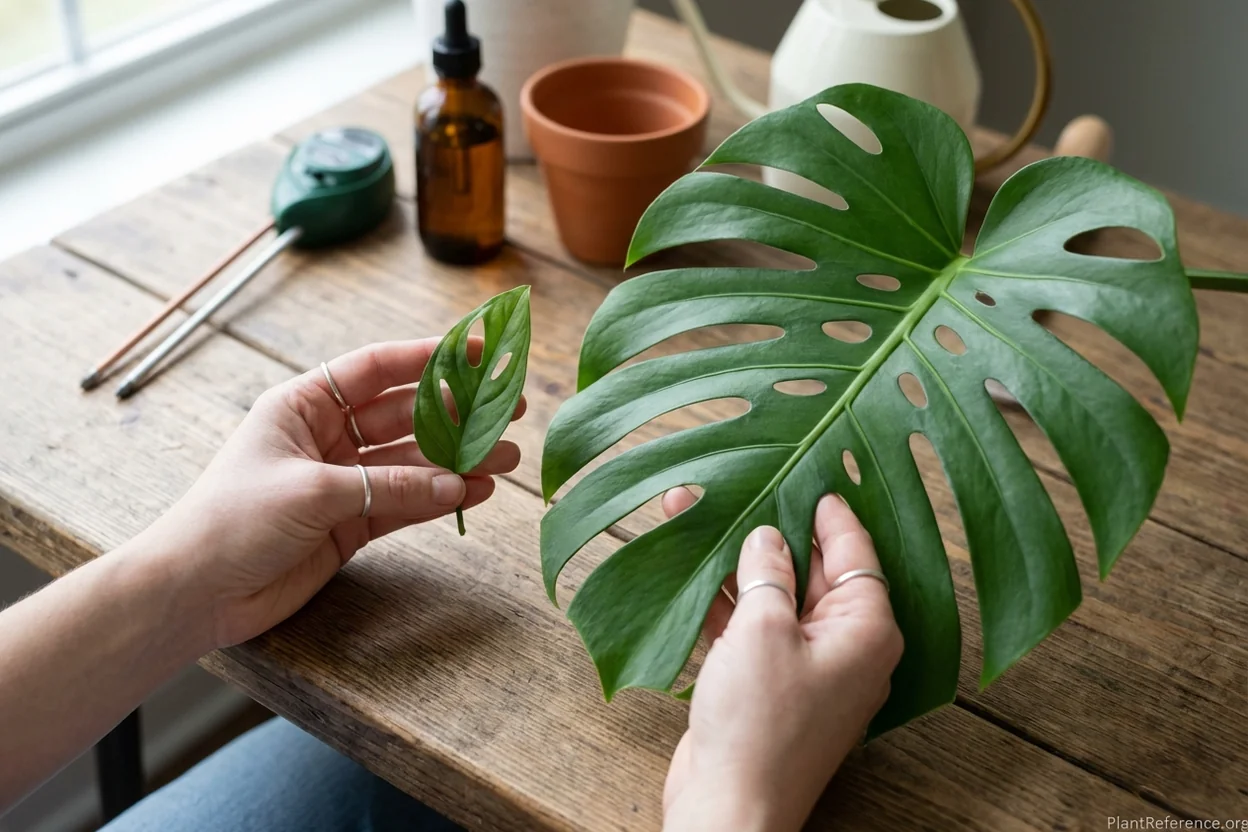
Insufficient light is the number one reason monsteras produce small leaves. These plants evolved as climbing hemiepiphytes in tropical rainforests, where reaching higher elevations means accessing significantly more light. When your indoor monstera doesn't receive adequate brightness, it responds by producing smaller, more energy-efficient leaves.
Optimal Light Requirements: - Foot-candles: 200-500 fc for impressive growth; 400+ fc for maximum leaf size - Lux equivalent: 2,000-5,000 lux - Window placement: East or south-facing windows with bright indirect light - Duration: 12+ hours of consistent bright light daily
Most apartments provide only 50-100 foot-candles of natural light, which keeps monsteras alive but limits growth potential. You can measure your light levels using a light meter app or dedicated device to determine if supplementation is needed.
Signs Your Light Is Insufficient:
New leaves consistently smaller than previous ones
Leaves remain solid without developing fenestrations
Long internodes (spaces between leaves on stem)
Plant leaning dramatically toward light source
Yellow lower leaves from energy conservation
Slow growth with months between new leaves
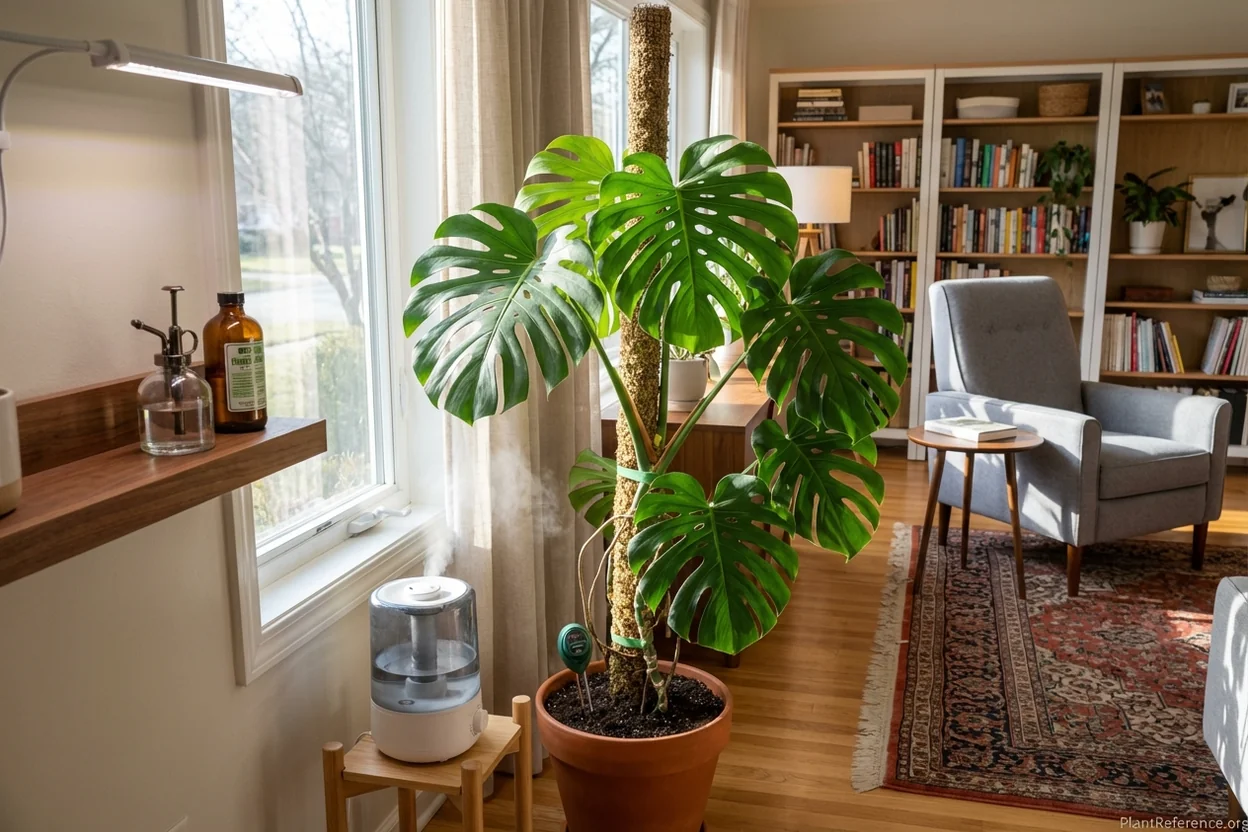
Moving your plant within 3-4 feet of a bright window often produces noticeable improvements within 2-3 months. Monstera Light Requirements: Finding the Perfect Spot provides detailed window positioning guides and light measurement techniques.
Climbing Support Creates Larger Leaves
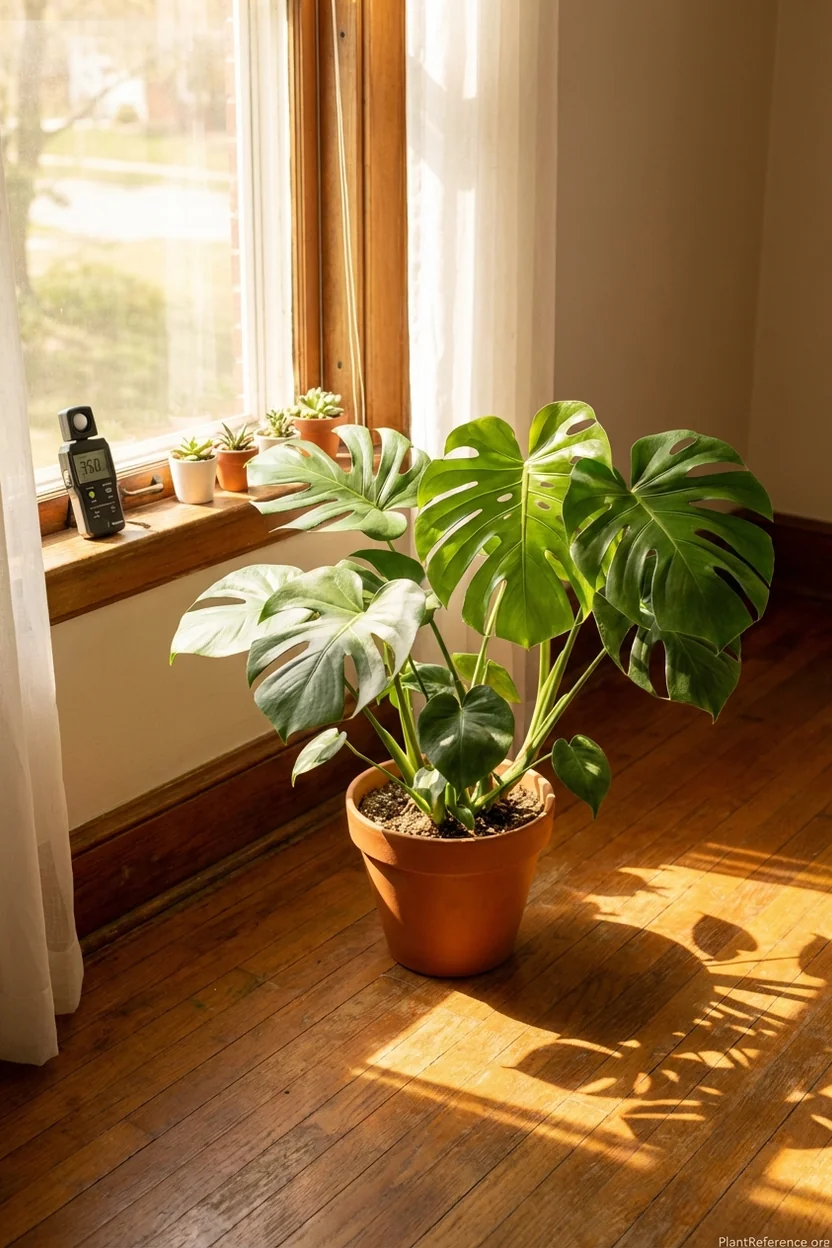
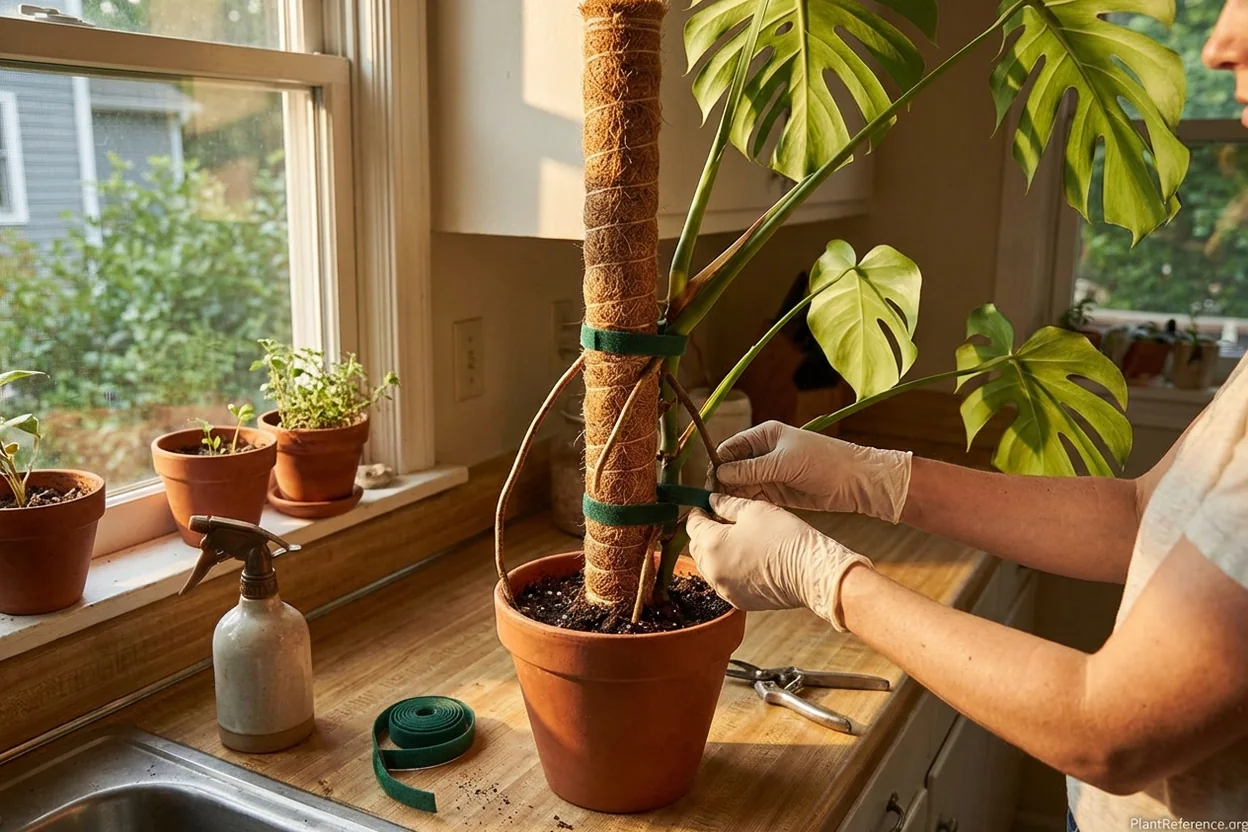
Here's something many plant parents don't realize: monsteras produce significantly larger leaves when given proper climbing support. In nature, these plants climb trees using aerial roots, and the physical act of climbing triggers hormonal changes that result in bigger, more fenestrated leaves.
Without support, your monstera stays in its juvenile "ground phase" and continues producing smaller, solid leaves indefinitely. Installing a moss pole or similar support structure signals to the plant that it's time to enter its mature climbing phase.
Support Options for Larger Leaves:
Moss poles: Coco coir or sphagnum moss poles 3-4 feet tall minimum
Cedar planks: Rough-textured wood for aerial root attachment
Trellis systems: Sturdy metal or wooden frameworks
Tree fern poles: Natural climbing surface with good moisture retention
Install support structures when your plant reaches 12-18 inches tall, before aerial roots become unruly. Train existing aerial roots to the support using soft plant ties, and new growth will begin attaching naturally. Best Moss Pole for Monstera: Support Systems Compared covers installation techniques and product comparisons.
The transformation can be dramatic—plants with proper support often double their leaf size within 6-12 months while developing impressive fenestrations.
→ DUSPRO 59" Non-Bendable Forest Moss Pole ($35-45) - Premium support for maximum leaf size
Premium 2.4-inch diameter moss pole designed for mature monstera support. Forest moss surface provides excellent aerial root attachment while retaining moisture for healthy root development. Internal steel structure supports heavy climbing plants. Natural coconut fiber exterior encourages root penetration. Fits pots 14-20 inches diameter. Includes installation guide and ties. Transforms small-leafed plants into impressive climbers with proper structure.
Product link unavailable
When Root Bound Plants Stop Growing
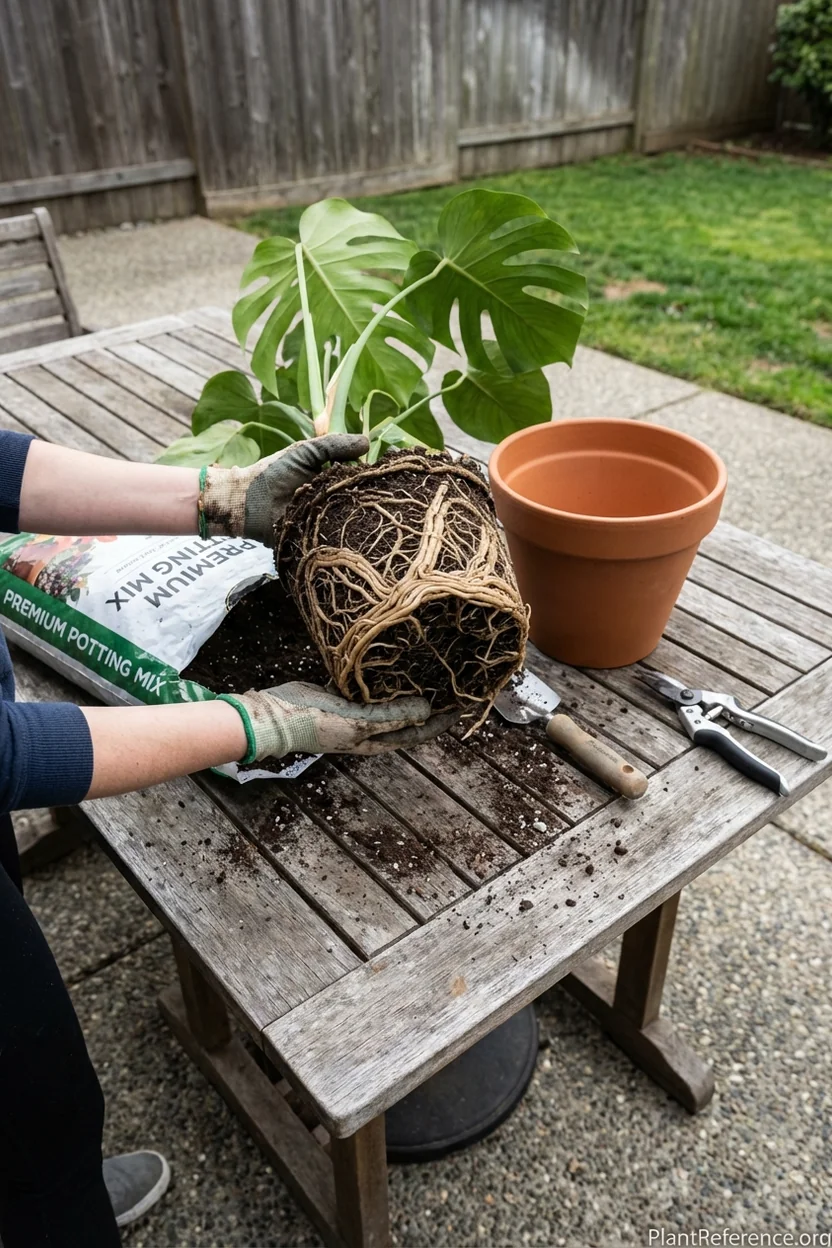
A rootbound monstera cannot produce larger leaves regardless of perfect light and support conditions. When roots completely fill the pot and begin circling, nutrient and water uptake becomes severely limited, forcing the plant to conserve energy through smaller leaf production.
Signs Your Monstera Is Rootbound:
Roots visible growing through drainage holes
Water runs straight through soil without absorption
Soil dries out within 2-3 days of watering
New leaves progressively smaller despite good care
Growth completely stalled for 2+ months
Pot feels extremely light when lifted
Surface roots visible above soil line
Most monsteras need repotting every 1-2 years, moving up only 2-3 inches in diameter to prevent shock. The best time for repotting is early spring when active growth resumes.
Repotting for Larger Leaves: Choose pots with excellent drainage and sufficient depth for moss pole installation. Terra cotta or ceramic pots with drainage holes work well, while decorative cache pots provide aesthetic appeal. How to Repot a Monstera: Complete Step-by-Step Guide covers timing, pot selection, and root health assessment.
After repotting with fresh, well-draining soil, most plants show renewed growth within 4-6 weeks, often producing noticeably larger leaves as root systems establish.
Fertilization for Leaf Size
Proper fertilization directly impacts monstera leaf size by providing essential nutrients for cellular expansion and chlorophyll production. Under-fertilized plants produce smaller, paler leaves as they conserve nutrients for basic survival functions.
Optimal Fertilization Schedule: - Growing season (March-September): Monthly feeding with balanced fertilizer - Dormant season (October-February): Reduce to every 6-8 weeks or pause completely - NPK ratio: Balanced 20-20-20 or slightly nitrogen-rich 3-1-2 ratio - Application: Dilute to half-strength to prevent root burn
Key Nutrients for Leaf Development:
Nitrogen: Promotes leaf expansion and deep green coloration
Phosphorus: Supports overall plant energy and root health
Potassium: Strengthens cell walls and improves fenestration development
Magnesium: Essential for chlorophyll production and leaf color
Iron: Prevents yellowing and supports healthy leaf development
Liquid fertilizers provide faster nutrient availability, while slow-release granules offer steady feeding over 3-6 months. Best Fertilizer for Monstera: Organic vs Synthetic Tested compares various fertilizer types and feeding schedules.
Over-fertilization causes more problems than under-fertilization, so always err on the side of caution and monitor your plant's response to feeding adjustments.
→ Dyna-Gro Grow 9-3-6 ($13-18) - Professional liquid fertilizer for dramatic growth
Professional-grade liquid fertilizer with complete macro and micronutrient profile formulated for foliage plants. 3-1-2 NPK ratio promotes vigorous leaf development and deep green coloration. Contains all essential micronutrients including iron, magnesium, and calcium for optimal growth. Can be used as foliar spray or soil application. Concentrated formula provides excellent value with 1 teaspoon per gallon application. Used by commercial operations. Produces dramatic improvements within 4-6 weeks with consistent application.
Product link unavailable
Plant Maturity and Patience
Sometimes small leaves simply indicate a young plant that needs time to mature. Monsteras don't develop impressive fenestrated leaves until they reach 2-3 years of age, regardless of care quality. This natural timeline frustrates many plant parents who expect immediate results.
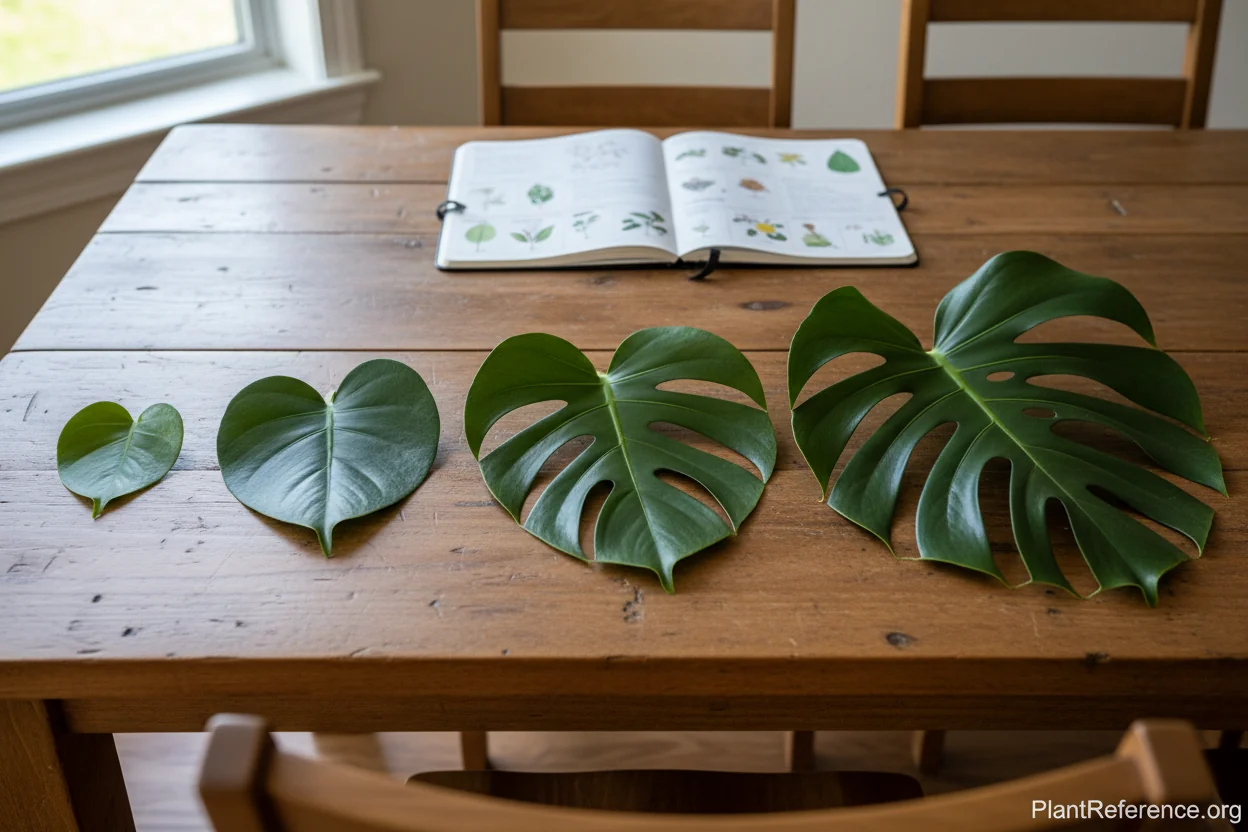
Natural Development Timeline: - 0-1 year: Heart-shaped solid leaves 2-4 inches - 1-2 years: Larger solid leaves 4-8 inches, possible small holes - 2-3 years: First true fenestrations appear with proper support - 3+ years: Dramatic splits and holes with optimal care
Young plants from big box stores are often 6-18 months old, meaning you'll need patience before seeing mature characteristics. However, providing optimal light, support, and nutrition from day one ensures your plant develops impressive leaves as quickly as genetically possible.
Accelerating Maturity: While you can't rush natural development, optimal conditions help plants reach maturity faster. Consistent bright light, climbing support, and regular fertilization can reduce the timeline by 6-12 months compared to marginal care conditions.
Variegated vs Green Varieties
Variegated monsteras naturally produce smaller leaves than their solid green counterparts due to reduced chlorophyll content in white or yellow sections. If you have a Monstera deliciosa 'Thai Constellation', 'Albo Borsigiana', or other variegated variety, adjust your expectations accordingly.
Variegated Growth Characteristics:
Typically 20-40% smaller leaves than green varieties
Slower growth rate due to reduced photosynthesis capacity
Higher light requirements for optimal leaf size
More sensitive to environmental stress
May revert to solid green under low light conditions
However, variegated plants still benefit from optimal light, support, and nutrition. While they may never achieve the massive 18-inch leaves of green varieties, proper care can help them reach their genetic potential of 8-12 inches with beautiful fenestrations.
Maximizing Variegated Growth: Provide the brightest indirect light possible without causing leaf scorch. Morning sun through east-facing windows works well, while south-facing windows may require sheer curtains for protection.
Environmental Factors
Temperature fluctuations, low humidity, and poor air circulation can all contribute to smaller leaf production. Monsteras thrive in stable conditions that mimic their native tropical environment.
Optimal Environmental Conditions:
Temperature: 65-85°F (18-29°C) consistently
Humidity: 50-70% for best growth; 40% minimum
Air circulation: Gentle movement prevents fungal issues
Water quality: Filtered or distilled water preferred
Seasonal adjustments: Reduced care during winter dormancy
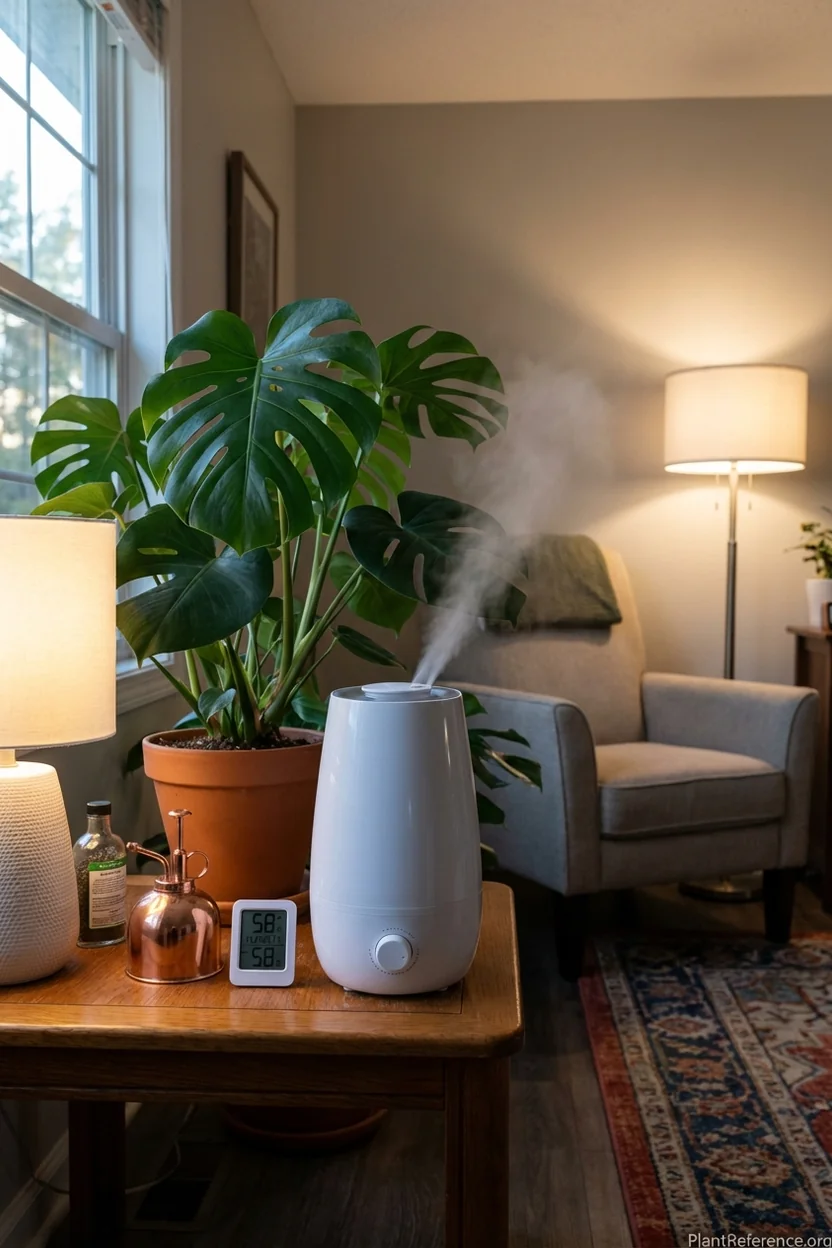
Low humidity particularly affects leaf expansion, as dry air causes plants to reduce leaf surface area to minimize moisture loss. Using a humidifier, grouping plants together, or placing pebble trays nearby can significantly improve growing conditions.
→ LEVOIT Classic 300S Smart Humidifier ($50-70) - Precise humidity control for optimal growth
Top-rated smart humidifier with app control and precise humidity monitoring. Auto mode maintains optimal 50-60% humidity levels perfect for monstera growth. Large 6-liter tank provides 60+ hours of operation on low setting. Whisper-quiet operation won't disturb daily activities. Compatible with Alexa and Google Assistant for voice control. Digital display shows real-time humidity levels. Easy-fill top opening simplifies maintenance. Essential oil tray for aromatherapy. Good Housekeeping Seal winner with excellent build quality.
Product link unavailable
Creating the Perfect Growth Setup
Combining all growth factors creates the ideal environment for maximum leaf size development. Here's how to create a setup that encourages impressive monstera growth:
The Complete Large-Leaf Formula:
Position within 3-4 feet of bright east or south window
Install 3-4 foot moss pole before plant reaches 18 inches
Maintain 50-60% humidity with humidifier or grouping method
Fertilize monthly during growing season with balanced liquid fertilizer
Repot every 1-2 years with well-draining aroid soil mix
Provide consistent temperatures between 70-80°F (21-27°C)
Use filtered water to prevent mineral buildup
Rotate plant weekly for even growth development
This combination typically produces noticeable improvements within 2-3 months and dramatic results within 6-12 months. Monstera Deliciosa Care: The Complete Guide provides detailed implementation guides for each care aspect.
Patience remains crucial—even with perfect conditions, natural leaf development follows biological timelines. However, optimal care ensures your plant reaches its genetic potential as quickly as possible.
Remember that every plant is individual, and growth rates vary based on genetics, starting condition, and care consistency. Focus on providing optimal conditions and enjoying the journey rather than comparing your plant to social media photos that may show plants several years older or different varieties entirely.
The transformation from small, solid leaves to impressive fenestrated foliage is one of the most rewarding experiences in plant parenthood—and with proper care, absolutely achievable for any monstera owner.
Frequently Asked Questions
Reading about plants and recognising them are different skills. These three build the second.
- Daily PlantIdentify the day’s mystery plant from a close-up photograph.
- Keyed OutWork a dichotomous key, lead by lead, to name a hidden specimen.
- Name That PlantName a specimen from botanical clues dealt hardest first.
Free to play, no account needed
Jessica transformed her small Brooklyn balcony into a thriving container garden after moving to New York City. What started as a pandemic hobby turned into a plant care consulting business serving urban apartment dwellers across the city. She specializes in small-space gardening, indoor plant troubleshooting, and helping clients keep houseplants alive in less-than-ideal conditions (dim light, dry heat, tiny spaces). Jessica completed a home gardening certificate program and shares her plant wins and failures on her modest Instagram following. Her partner, Maya, jokes that their apartment is now 40% plants, 60% living space. Jessica's passionate about making plant care accessible to renters who think they don't have room to garden.